
Gemstone Guides
Gemstone Hardness vs Toughness: The Durability Guide

Key Takeaways: Gemstone Hardness, Toughness, and Stability
- Gemstone hardness is only one of three durability factors. GIA defines durability as hardness, toughness, and stability together. Most jewelry writing quotes the first and omits the other two.
- The Mohs scale is ordinal, not linear. Devised in 1812 by the German mineralogist Friedrich Mohs, it ranks minerals by which scratches which. Britannica notes the step from corundum to diamond, 9 to 10, represents a hardness increase of more than 300 percent, while the step from 3 to 4 is about 25 percent.
- Hardness and toughness can run in opposite directions. On GIA’s toughness scale, corundum measures roughly 600 and nephrite jade roughly 225,000 — jade is roughly 370 times tougher while sitting two and a half points lower on the Mohs scale.
- Mohs 7 is the practical threshold for a ring worn daily, because ordinary household dust contains quartz at Mohs 7 to 7.5. Below that line, a stone is abraded by the act of wiping it clean.
- Cleavage overrides hardness. Diamond at Mohs 10 and topaz at Mohs 8 both have cleavage planes along which a single well-placed knock can split a stone that nothing in the room could scratch.
What Is the Difference Between Gemstone Hardness and Toughness?
Gemstone hardness is resistance to scratching, measured on the Mohs scale from 1 to 10. Toughness is resistance to chipping, cracking, and breaking, and it is a separate property with separate values. A gem can be extremely hard and still fracture easily, or relatively soft and almost impossible to break. Both matter, and so does a third factor, stability.
Gem Durability at a Glance
| Factor | What it resists | How it is measured | What fails when it is low |
|---|---|---|---|
| Hardness | Scratching and surface abrasion | Mohs scale, 1 to 10 — an ordinal ranking, not a linear measurement | The polish dulls. Facet edges soften. The stone looks tired long before it looks damaged |
| Toughness | Chipping, cracking, and breaking under impact | The work required to separate two surfaces of a crystal; GIA also rates it Exceptional to Poor | A single knock takes a chip out of the girdle, or splits the stone outright |
| Stability | Heat, light, humidity, and chemicals | Not numerically — described per species from documented behavior | Color fades, the surface crazes, oil or filler is lost, the stone dulls with no impact at all |
What Does the Mohs Scale Actually Measure?
How Gemstone Hardness Is Ranked
The Mohs scale was devised in 1812 by the German mineralogist Friedrich Mohs, and its method is exactly as simple as it sounds: a mineral that scratches another is assigned the higher number. It is a comparative ranking built from ten reference minerals — talc, gypsum, calcite, fluorite, apatite, orthoclase, quartz, topaz, corundum, diamond — and it answers one question only. Will this scratch that?
Two consequences follow, and both are routinely lost in jewelry writing.
First, the scale is ordinal rather than linear. Britannica puts it plainly: “each increment of one in the scale does not indicate a proportional increase in hardness.” The step from calcite to fluorite, 3 to 4, is an increase of roughly 25 percent. The step from corundum to diamond, 9 to 10, is an increase of more than 300 percent. A chart that draws those two steps the same width is describing the scale incorrectly, and nearly every chart does.
Second, gemstone hardness describes scratching and nothing else. It says nothing about whether a stone will chip when it strikes a doorframe, nothing about whether its color survives a decade on a sunlit shelf, and nothing about how it behaves under a jeweler’s torch. Those are different properties with different answers.
Workshop insight: The most useful number on the Mohs scale is not 10 but 7. Ordinary household dust contains quartz at Mohs 7 to 7.5, which means any stone below that line is being abraded by the cloth used to clean it and by the air it sits in. This is why a Mohs 6 stone in a ring worn every day loses its polish within a few years while a Mohs 8 stone does not — the damage is not dramatic, it is cumulative, and it arrives through completely ordinary handling.
What Is Gemstone Toughness, and Why Is It Different?
Where gemstone hardness measures the surface, toughness measures the structure. Toughness is resistance to breaking rather than to scratching, and it depends on how strongly a crystal holds together across its internal planes rather than on how hard its surface is. GIA describes the measurement as the work required to separate two surfaces of a crystal, and the numbers involved are startling next to the tidy one-to-ten of the Mohs scale.
| Material | Mohs hardness | Relative toughness | What the pairing means in practice |
|---|---|---|---|
| Nephrite jade | 6–6.5 | ≈ 225,000 — the highest of any gem material | Scratches comparatively easily, yet is so resistant to breaking that it was worked into tools and weapons for millennia |
| Diamond | 10 | ≈ 5,000–8,000, and directional | Nothing scratches it, but it has cleavage in four directions and a sharp blow at the wrong angle will chip or split it |
| Corundum (ruby, sapphire) | 9 | ≈ 600 | Lower on the toughness figure than either of the above, yet with no cleavage it remains the most practical choice for hard daily wear |
Read that table carefully, because it contains the single fact this article exists to establish. Nephrite jade is roughly three hundred and seventy times tougher than corundum by the measure GIA cites, while sitting two and a half points lower on the Mohs scale. Diamond, the hardest natural substance known, is less than half as tough as its own hardness reputation implies and is directionally vulnerable in a way that corundum is not. Gemstone hardness and toughness are not two names for the same quality, and they do not move together.
Gemologists also rate toughness descriptively, from Exceptional down to Poor, which is more useful at the counter than a raw number. These are the ratings we use consistently across our gemstone guides:
- Exceptional — jade. In a class of its own.
- Excellent — ruby and sapphire. High hardness, no cleavage, nothing for an impact to exploit.
- Good — diamond (with the cleavage caveat above), aquamarine, morganite, spinel, and the quartz family: amethyst, citrine, rose quartz, and onyx.
- Fair — garnet at Fair to Good, tourmaline, peridot, and pearl, which is not brittle but is very soft.
- Poor — topaz, emerald, tanzanite, moonstone, opal, and coral. Stones where cleavage, brittleness, or crazing undercuts the hardness figure, and which call for protective settings as a matter of course.
What Is Stability, the Third Factor Nobody Mentions?
Stability is resistance to heat, light, humidity, and chemicals, and it is the factor that damages jewelry without anyone touching it — the one failure mode that no gemstone hardness figure predicts. GIA’s own definition of durability — “a gemstone’s ability to withstand wear, heat, light, household chemicals, and low or high humidity” — puts three stability terms in a single sentence, yet stability almost never appears in consumer-facing durability content, which stops at the Mohs number.
It should not, because stability failures are frequently the ones that cannot be repaired.
| Gem | Stability risk | What happens |
|---|---|---|
| Opal | Humidity and heat | Contains water. Sudden drying or thermal shock can produce crazing — a network of fine surface cracks that cannot be polished out |
| Emerald | Heat, solvents, ultrasonic cleaning | Fracture-filling oil or resin is driven out or degraded, and the fissures it was masking reappear |
| Pearl and coral | Acid and chemicals | Calcium carbonate reacts with acid, so perfume, hairspray, and citrus etch the surface permanently |
| Amethyst and rose quartz | Light and heat | Color can fade with sustained light exposure, and heat alters or destroys it outright |
| Tanzanite | Thermal shock, ultrasonic cleaning | Combined with cleavage, sudden temperature change is a realistic route to a cracked stone |
| Blue topaz | Heat, and light in some material | The color is the product of irradiation and heat treatment, and further heat can alter it |
Workshop insight: Stability is the factor a client almost never asks about and the one that most often brings a piece back to the bench. It is also the factor that governs our own procedure rather than the wearer’s. Emerald, opal, tanzanite, amethyst, rose quartz, pearl, and coral all come out of their settings before any soldering or sizing, because the heat of a torch sits well above what those materials tolerate. A jeweler who works around a heat-sensitive stone to save ten minutes is gambling with something the client cannot replace.
Why Does Cleavage Matter More Than Hardness?
Cleavage is the single property most capable of overturning a reassuring gemstone hardness figure. It is the tendency of a crystal to split cleanly along specific internal planes where the atomic bonding is weakest. It is not a flaw in a particular stone; it is a property of the mineral species, present in every specimen of it. And it is the most direct route by which a hard gem becomes a broken one.
- Diamond, Mohs 10, perfect cleavage in four directions. The hardest natural material has four planes along which it will split cleanly. Diamond cutters have relied on this for centuries; so does the doorframe that a ring catches on at the wrong angle.
- Topaz, Mohs 8, perfect basal cleavage. A hardness figure that suggests worry-free wear, attached to a single plane running straight through the stone. GIA’s guidance on setting explicitly names topaz as a stone whose cleavage demands careful mounting.
- Tanzanite, Mohs 6–7, cleavage plus thermal sensitivity. Two vulnerabilities compounding each other, which is why tanzanite is generally better placed in earrings and pendants than in a ring worn daily.
- Moonstone, Mohs 6–6.5, cleavage. A soft stone with a splitting plane — the least forgiving combination of the four.
Emerald is the case worth understanding in most detail, because it fails for a related but distinct reason. Emerald sits at Mohs 7.5 to 8, comfortably above the quartz-dust threshold, and yet its toughness is rated only Poor. The cause is not cleavage but inclusions: the internal fissures and crystals known collectively as the jardin are intrinsic to the species, and each one is a plane of weakness. A stone that resists scratching perfectly well is nonetheless brittle, which is why emerald is the classic teaching example for this entire subject and why the emerald cut — with its cropped, protected corners — was developed in the first place.
Related: Emerald Meaning & May Birthstone Guide · Topaz Meaning: November Birthstone & the Blue Topaz Question
Which Gemstone Is Most Durable for a Ring?
For a ring worn every day, the answer is sapphire or ruby before diamond — a conclusion that surprises people who know only the Mohs number.
Corundum, the mineral species that produces both sapphire and ruby, sits at Mohs 9 with excellent toughness and, critically, no cleavage. There is no internal plane along which a knock can split it. Diamond is harder, and for pure scratch resistance nothing else comes close, but its cleavage in four directions means that a sharp impact at an unlucky angle can chip a stone that no abrasive on earth could scratch. Both are outstanding choices; the reasoning behind them is different, and it is worth stating accurately rather than defaulting to the hardest number on the chart.
Gemstone Hardness Tiers for Everyday Wear
| Tier | Stones | Mohs | Recommended setting and wear |
|---|---|---|---|
| Daily wear, worry-free | Diamond, ruby, sapphire | 9–10 | Any setting, including open prong, channel, and flush. Suitable for rings, bracelets, and cufflinks |
| Daily wear, sensible care | Aquamarine, morganite, garnet | 7–8 | Prong, halo, or bezel all suitable. Avoid deliberate impact |
| Daily wear, protect the corners | Topaz, tanzanite, kunzite | 6–8 with cleavage | Bezel or protected mounting. Avoid channel and flush settings, which apply pressure to a cleavage plane |
| Regular wear | Amethyst, citrine, rose quartz, onyx, peridot | 6.5–7 | Suitable for rings; a bezel is prudent where internal fractures are visible |
| Occasional wear only | Emerald | 7.5–8, Poor toughness | Protected setting, cropped corners. Never ultrasonic, never steam |
| Protective settings only | Opal, pearl, coral | Below 6.5, or soft and brittle | Bezel or halo. Prefer earrings, brooches, and pendants over rings worn every day |
Related: Sapphire Meaning, Colors & September Birthstone · Ruby Meaning, Symbolism & July Birthstone Guide · Diamond Meaning, Symbolism & April Birthstone
How Much Does the Setting Change a Stone’s Durability?
More than most buyers expect, and this is the part of the subject over which a jeweler has real control. Gemstone hardness is fixed by nature. How much of that stone is exposed to the world is a design decision.
GIA’s own design guidance is direct on the point: fractures and inclusions near the girdle edge contribute disproportionately to a stone’s fragility, as does cleavage. The girdle — the thin outer edge where the stone is widest — is both the most vulnerable part of a gem and the part a setting can most easily protect.
- Bezel. A continuous metal collar around the girdle. The most protective standard setting, and the correct default for anything below Mohs 7, anything with visible fractures, and any cabochon.
- Halo. A ring of small stones surrounding the center stone, which raises the effective height of the surrounding metal and absorbs glancing contact before the center stone does.
- Prong. Maximum light, minimum protection. Excellent for corundum and diamond; a compromise for anything softer or cleavage-prone.
- Channel and flush. Structurally secure but set under pressure, which is precisely the wrong condition for a stone with a cleavage plane. GIA names topaz directly as a stone that would likely break in a channel or flush setting, and extends the warning to any stone that is fragile or easily cleaved — which takes in tanzanite, kunzite, and pearl.
- Change the category, not just the setting. The most effective protection available is to place a fragile stone in an earring, a pendant, or a brooch rather than a ring. A hand strikes things all day; an ear does not.
Workshop insight: When we set a stone below Mohs 7 into a ring, we bezel it and hold the girdle slightly below the plane of the surrounding gold, so that gold takes the impact rather than the gem. It costs a fraction of a millimeter of visible stone and it is the difference between a piece that survives a decade and one that comes back chipped. The same instinct governs which stones we will set in a channel at all: a cleavage plane under set pressure is a fracture waiting for a reason.
How Should You Clean Jewelry Based on Durability?
Cleaning method should follow the stability rating, not the hardness rating, which is why so much generic cleaning advice does damage. An ultrasonic bath is entirely safe for a sapphire and a genuine hazard for an emerald, and the Mohs difference between them explains none of that.
| Method | Safe for | Never use for |
|---|---|---|
| Ultrasonic cleaner | Diamond, ruby, sapphire, most garnet — when free of visible fractures | Emerald, opal, pearl, coral, tanzanite, amethyst, rose quartz, onyx, any fracture-filled or heavily included stone |
| Steam cleaner | Diamond, ruby, sapphire | Anything heat-sensitive or containing water, filler, or dye — opal, emerald, pearl, coral, treated stones |
| Warm soapy water and a soft brush | Nearly everything, including quartz varieties, garnet, peridot, and onyx | Pearl and coral, which should be wiped rather than soaked |
| Soft dry or barely damp cloth | Pearl, coral, and any porous or treated material | Nothing — this is the universally safe method, and where to start when a stone is unidentified |
Three habits do more for a collection than any cleaning product. Apply cosmetics, perfume, and hairspray before putting jewelry on rather than after. Store pieces separately, so that a diamond is not resting against an opal in a shared box. And tell a jeweler exactly what is in a piece before any repair, because the difference between a stone removed before soldering and a stone worked around is often the difference between a repair and a replacement.
Related: Opal Meaning, Play-of-Color & October Birthstone · Pearl Meaning, Types & June Birthstone Guide
Does Durability Tell You Anything About Value?
Almost nothing. Gemstone hardness and price are set by entirely different mechanisms, and conflating the two is a common error worth naming directly. Emerald is rated Poor for toughness and is among the most valuable gems in the world. Nephrite jade is the toughest gem material known and is, in most grades, inexpensive. Quartz sits at a perfectly serviceable Mohs 7 and costs a fraction of a beryl one point above it.
Value is set by rarity, color, clarity, size, and demand. Durability is set by atomic structure. The two are independent, and the practical consequence is that durability should inform how a stone is used rather than whether it is worth buying. An emerald is not a bad purchase because its toughness rating is Poor; it is a bad choice for a channel-set ring worn while gardening, and an excellent choice for a pendant that will be admired for fifty years.
The same logic runs the other way. A gemstone hardness figure of 7 does not make a stone cheap or unserious. Amethyst, citrine, and rose quartz all sit at Mohs 7 with good toughness and no cleavage, which makes them genuinely practical for rings — considerably more practical, in daily terms, than some stones that cost a hundred times more.
Related: Gemstone Meanings & Symbolism: The Complete Guide · Birthstones by Month: All 12 Explained
What Should You Remember About Gemstone Durability?
Gemstone hardness is the first of three questions, not the whole of the answer. Hardness resists scratching, toughness resists breaking, stability resists heat, light, humidity, and chemicals, and a stone can rate very differently on each. The Mohs scale, useful as it is, was designed in 1812 to answer one narrow question and should not be asked to carry the other two.
The numbers that matter most are unintuitive. Seven, because household dust contains quartz and anything below that line dulls through ordinary handling. Nine, because corundum combines high hardness with no cleavage, which is what actually makes a ring survivable. And the toughness figures, which put nephrite jade at roughly three hundred and seventy times the toughness of corundum despite being softer — the clearest possible proof that hardness and toughness are separate properties.
The practical conclusion is that a stone should be chosen for a purpose rather than ranked in the abstract. Match the gem to how the piece will actually be worn, protect the girdle where the material calls for it, clean by stability rather than by hardness, and put fragile stones into earrings and pendants rather than into rings. Done that way, almost any gem can be worn for a lifetime — and no amount of hardness will save a stone that is set and cleaned as though only hardness mattered.
Sources: GIA — More Than the Mohs Scale: Understanding Gem Durability · GIA — Gemstone Durability: Design to Display · Encyclopaedia Britannica — Mohs Hardness · International Gem Society — Gemstone Hardness and Wearability · Jewelers of America — Official Birthstone List
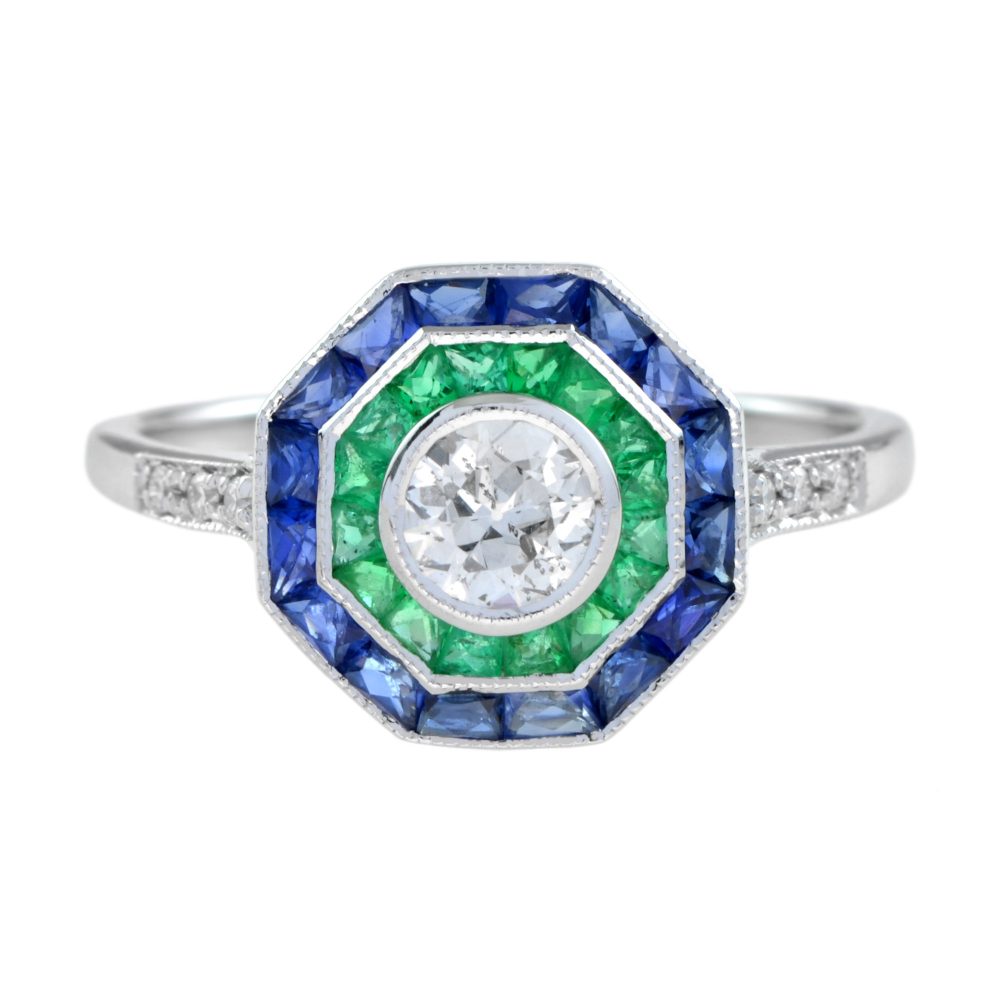
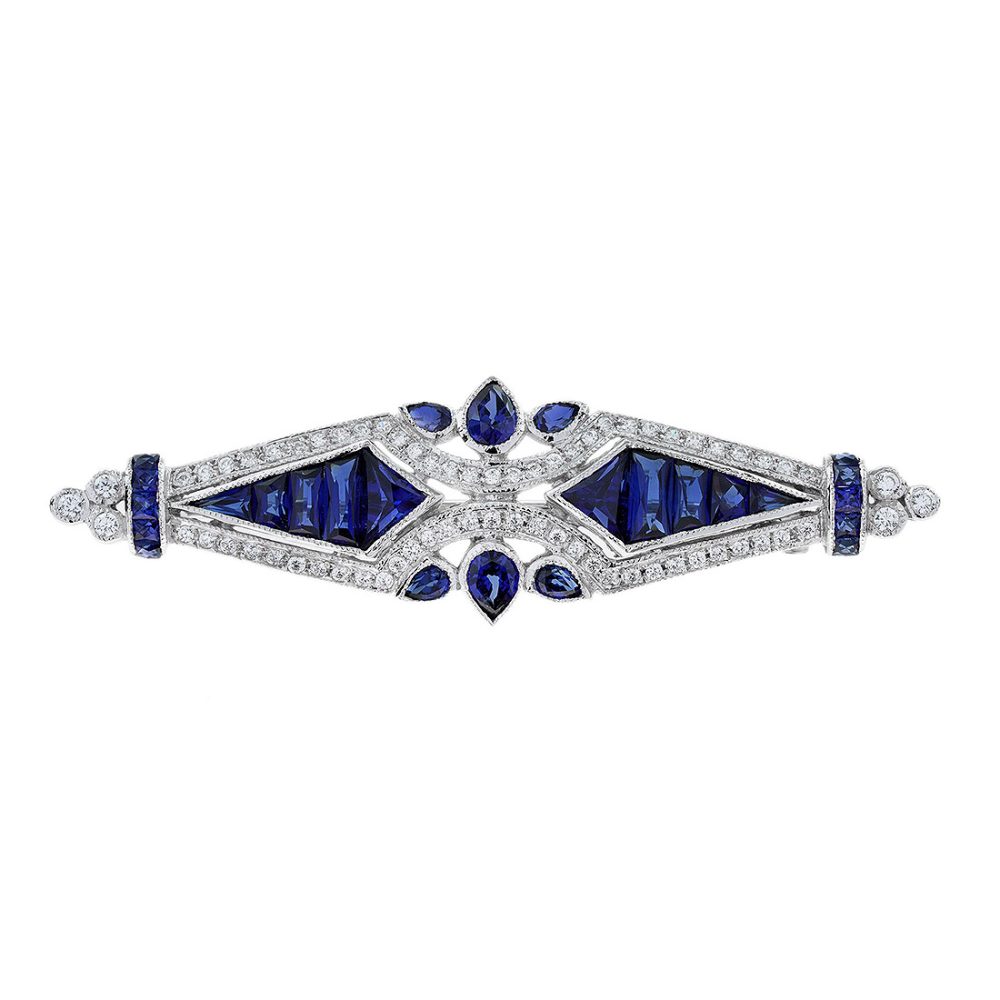
The Art of the Wild
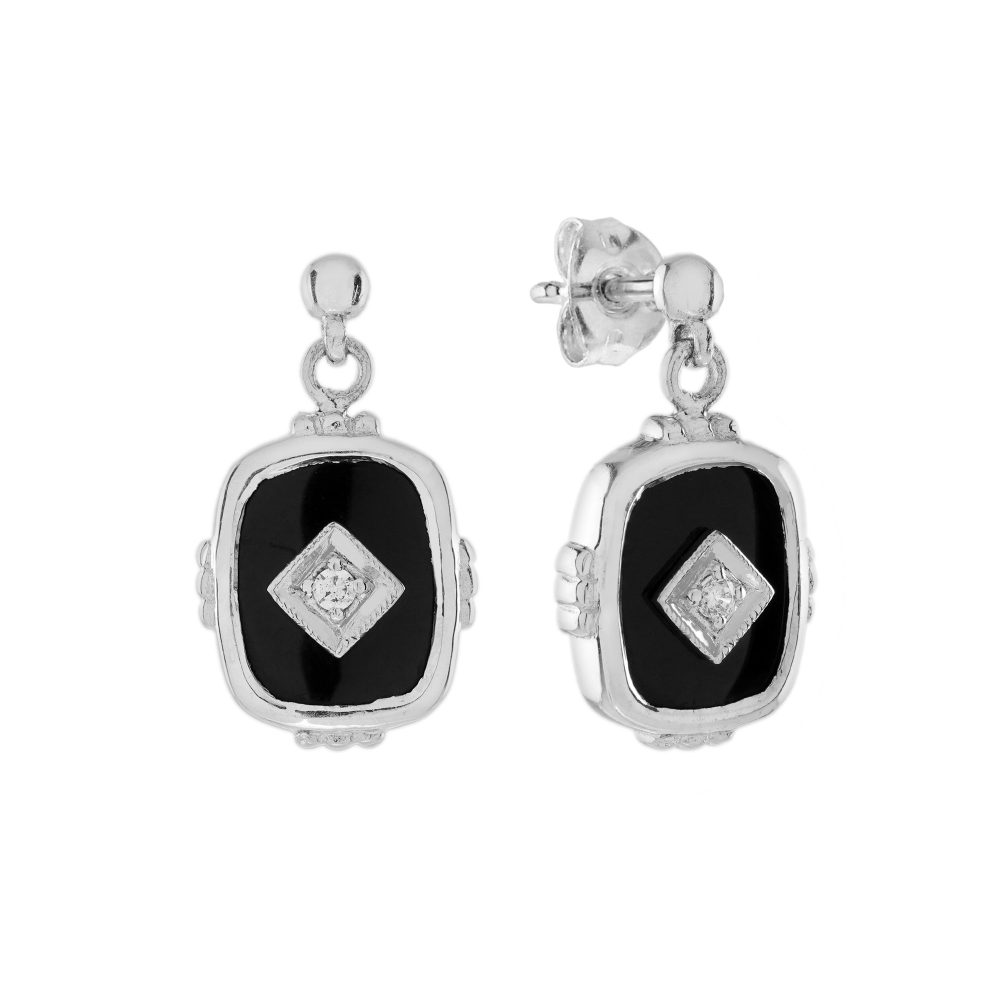
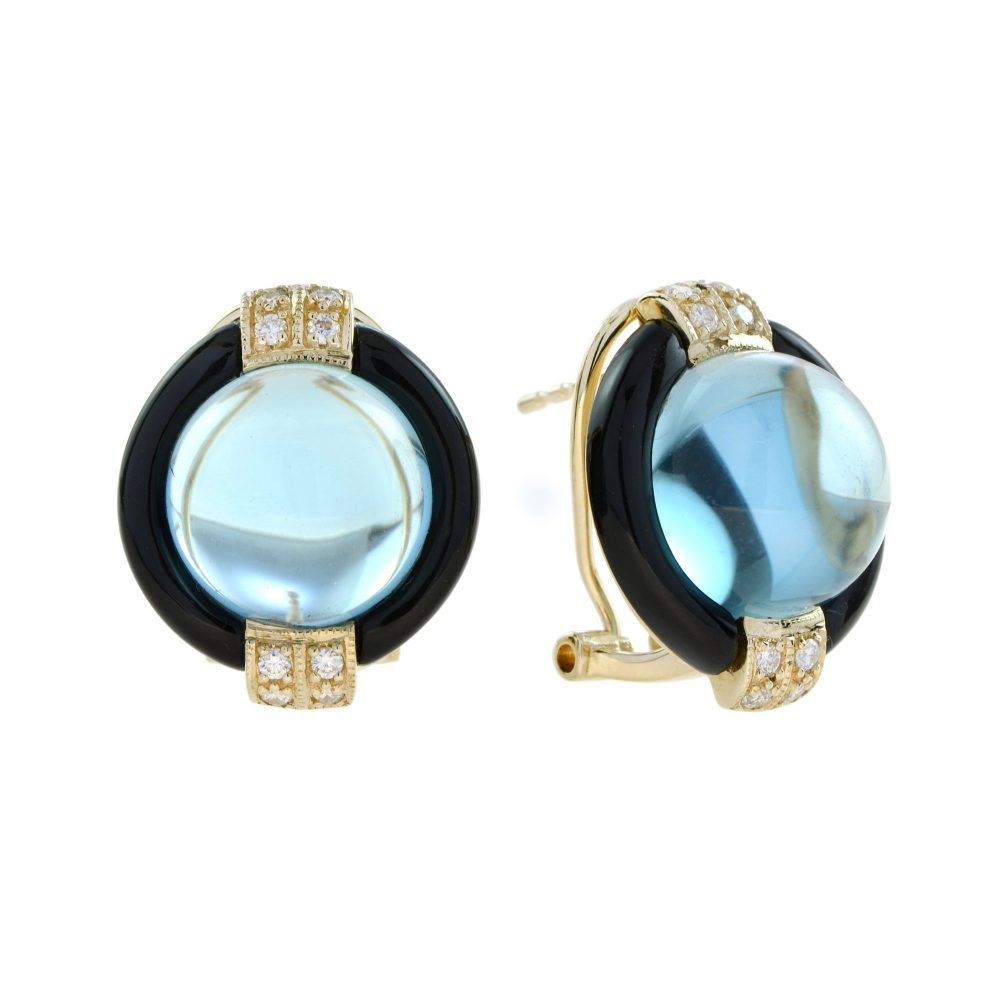
Stud Earrings
Frequently Asked Questions About Gemstone Hardness and Durability
What is the difference between gemstone hardness and toughness?
Hardness is resistance to scratching, measured on the Mohs scale from 1 to 10. Toughness is resistance to chipping, cracking, and breaking, and it is measured separately. The two do not move together: nephrite jade is far tougher than sapphire while being softer, and diamond is the hardest natural material yet chips along its cleavage planes.
What is the most durable gemstone for a ring?
Sapphire and ruby, both varieties of corundum, are the most practical choice for a ring worn daily. At Mohs 9 with excellent toughness and no cleavage plane, there is no internal weakness for an impact to exploit. Diamond is harder still, but its cleavage in four directions makes it marginally more vulnerable to a sharp knock.
Is the Mohs scale linear?
No. The Mohs scale, devised in 1812 by Friedrich Mohs, is an ordinal ranking based on which mineral scratches which. Britannica notes that the step from corundum to diamond, 9 to 10, represents a hardness increase of more than 300 percent, while the step from calcite to fluorite, 3 to 4, is only about 25 percent.
What Mohs hardness is safe for daily wear?
Mohs 7 is the practical threshold, because ordinary household dust contains quartz at Mohs 7 to 7.5. A stone below that line is abraded by everyday handling and by the cloth used to clean it. Above it, scratch resistance is adequate for a ring, provided toughness and cleavage are also considered.
What is gemstone stability?
Stability is resistance to heat, light, humidity, and chemicals, and it is the third component of durability alongside hardness and toughness. It explains failures that impact does not: opal crazing when it dries, emerald losing its fracture filling in an ultrasonic cleaner, pearl and coral etching on contact with perfume, and amethyst fading in sustained light.