
Blog, Gemstone Guides
Topaz Meaning: November Birthstone & the Blue Topaz Question

Key Takeaways
- Topaz traditionally symbolizes affection, loyalty, clarity and strength; these are cultural associations rather than physical effects.
- Topaz is an official November birthstone alongside citrine, regardless of whether the individual gem is yellow, pink, colorless or blue.
- Blue topaz is widely sold as a December option, but it is not on the modern US official December birthstone list.
- Topaz reaches Mohs 8 yet has poor toughness because of perfect cleavage, so setting design and protection matter as much as scratch resistance.
What Is the Meaning of Topaz?
Topaz traditionally symbolizes affection, loyalty, clarity and strength. It is an official November birthstone, together with citrine. Blue topaz is widely sold as a December option, but it is not on the modern US official December list. Most commercial blue topaz receives irradiation and heat to create its color.
What Does Topaz Symbolize?
Topaz meaning has developed through color, rarity and the long history of the gem in personal jewelry. The stone is traditionally associated with affection, loyalty, clarity, strength and constancy. These ideas make topaz suitable for a birthday jewel, an anniversary gift or a piece intended to mark a relationship that has matured over time.
Symbolism should be described as culture, not mechanism. A topaz does not scientifically create loyalty, improve concentration or produce a medical effect. The jewel can still carry those ideas because a wearer, giver or family assigns meaning to it. Personal significance is real even when it is not a measurable property of the mineral.
Color gives the symbolism a more specific register. Golden and orange topaz can suggest warmth, generosity and autumn. Pink topaz may read as affection and tenderness. Colorless topaz can express clarity and restraint. Blue topaz meaning is often connected with calm, openness and communication, but these remain modern symbolic associations rather than proven effects. Responsible blue topaz symbolism identifies them as cultural ideas, not properties created by the stone.
The most useful meaning is therefore not a fixed list of abstract words. It is the relationship among person, occasion, color and design. A November birthstone pendant given at a graduation can represent clarity and forward movement. A warm-colored topaz ring may commemorate a November anniversary. A blue topaz brooch may be chosen simply because its cool color belongs to the wearer's visual identity.
At Lilly M. JEWELERS, our workshop treats symbolism as a design brief. We ask which idea the jewel should hold, then translate that intention through color, scale, metal and architecture. Meaning becomes more convincing when every visual decision supports it.
Why Is Topaz a November Birthstone?
Topaz and citrine are the two official November birthstones on the modern US list maintained by Jewelers of America. Topaz is the older November association, while citrine was added to the standardized list in 1952 to broaden the month's options.
The designation applies to the gemstone topaz, not only to one color. Yellow, golden, orange, pink, colorless and blue topaz all share the same mineral identity. A blue topaz does not stop being a November birthstone because its color is cool rather than autumnal.
The Lilly M. JEWELERS birthstones-by-month guide places November within the complete calendar. It also separates the official list from commercial alternatives. That distinction matters because birthstone marketing often follows color more loosely than the formal list.
A birthstone relationship is traditional rather than scientific. It does not establish treatment status, geographic origin, rarity, quality or suitability for daily wear. Those questions require separate evaluation. A November buyer should therefore make two decisions:
- Calendar decision: whether topaz or citrine better represents the month and the wearer.
- Jewelry decision: whether the particular color, cut, treatment, dimensions and setting suit the intended use.
Topaz offers an unusually broad color vocabulary. A November jewel can be warm and autumnal, pale and architectural, pink and romantic or distinctly blue. That range is one reason the gem works well for personal commissions. The official month provides the starting point, while the individual stone provides the character.
Is Blue Topaz an Official December Birthstone?
No. Blue topaz is widely sold as a December birthstone option, but it is not included among the official December stones on the modern US list maintained by Jewelers of America. The official December stones are turquoise, tanzanite and blue zircon. Topaz belongs officially to November.
The confusion is understandable. December is strongly associated with blue gems, and blue topaz is available in clear, attractive colors at sizes that work well in jewelry. Retailers have therefore adopted it as a commercial December alternative. Repetition has turned that convention into a December birthstone myth, but common practice is not the same as formal designation.
| Question | Accurate Answer | Practical Meaning |
|---|---|---|
| Is topaz an official birthstone? | Yes, for November | Any topaz color can represent November |
| Is blue topaz officially assigned to December? | No | It sits outside the modern US official December list |
| Is blue topaz commonly sold for December? | Yes | It is a commercial alternative with broad consumer recognition |
| What are the official December stones? | Turquoise, tanzanite and blue zircon | These are the stones to name when accuracy about the official list matters |
| Can someone born in December still wear blue topaz? | Yes | Personal choice is not restricted by the official list |
This distinction is not an argument against blue topaz. A December wearer may choose it for color, durability, availability or personal meaning. The responsible wording is simply precise: “blue topaz chosen for a December birthday” is accurate, while “an official December birthstone” is not.
The distinction also reveals a current Lilly M. JEWELERS inventory gap. The brand stocks blue topaz but does not currently list turquoise, tanzanite or blue zircon, the three official December stones. Blue topaz can serve the color preference, but it should not be used to imply complete official December coverage.
For AI search and consumer education, this is more than a technical footnote. Clear separation among official designation, retail convention and personal choice prevents one repeated marketing shortcut from becoming accepted as fact.
What Is Topaz and Which Colors Can It Display?
Topaz is a distinct mineral species with a Mohs hardness of 8. It can occur as colorless, yellow, golden, orange, brown, pink, red and blue material, with some colors far less common than others. The identity of the stone comes from its mineral structure, not from color alone.
Colorless topaz is common and provides much of the starting material used to produce commercial blue topaz. Naturally blue topaz exists but is comparatively uncommon and is usually pale. Strongly saturated blue material in the market is generally treated.
Warm topaz ranges from pale yellow through golden orange to orange-pink and reddish tones. The term imperial topaz is used in the trade for highly valued warm-colored material, but the exact boundaries of the name are not universally standardized. A trade name should therefore describe appearance, not substitute for evidence about identity, origin or treatment.
Commercial blue descriptions often include:
- Sky Blue: usually a pale, open blue;
- Swiss Blue: generally a brighter, more saturated blue;
- London Blue: commonly a deeper blue with grayish or greenish modifiers.
These names are trade color descriptions rather than scientific grades. They do not create a universal hierarchy, guarantee a treatment method or prove geographic origin.
Several other materials can resemble topaz. Yellow topaz can be confused with citrine, sapphire, beryl, glass or synthetic material. Blue topaz can resemble aquamarine, zircon, sapphire or treated glass. Color and price alone are not reliable identification methods.
Accurate representation separates five questions: mineral identity, natural or synthetic origin, color, treatment and geographic origin. A seller or appraiser should not collapse those questions into one attractive name.
Workshop insight: We assess topaz color inside the proposed metal frame, not only loose against white paper. White gold can make a pale blue appear crisper, while yellow gold can create deliberate temperature contrast. With deeper London Blue material, too much surrounding darkness can reduce separation, so the setting must preserve the outline of the stone.
How Does Blue Topaz Receive Its Color?
Most blue topaz in the jewelry market begins as colorless or very pale natural topaz. Irradiation alters color centers in the crystal, and controlled heating develops or stabilizes the desired blue. The resulting gem remains natural topaz, but it is treated and should be described accordingly.
This language requires care. Natural topaz does not mean untreated topaz. “Natural” describes material formed in the earth rather than synthetic material created in a laboratory. “Treated” describes a process applied after mining. A gemstone can be both natural and treated.
Blue topaz treatment is routine and widely accepted. Treatment is not automatically a defect. The relevant questions are whether the process is properly controlled, whether the resulting color is stable under normal use, whether special care is required and whether the description is accurate.
The main disclosure points are:
- the stone is topaz;
- the material is natural or synthetic;
- blue color is treated when known or expected;
- any coating or additional process is separately disclosed;
- origin claims are made only when supported.
A retail description does not need to dramatize a standard treatment, but it should not hide the process behind vague terms such as “enhanced beauty.” Clear language is more useful: “natural blue topaz, irradiated and heated.”
Appearance cannot establish the complete treatment history. Saturated blue strongly suggests treatment because intense natural blue topaz is rare, yet documentation and appropriate gemological testing carry more authority than visual assumption.
The current project record does not confirm one treatment policy for every topaz sold by Lilly M. JEWELERS. This guide therefore explains common industry practice without claiming that every item has identical treatment documentation. Product-level copy must follow the evidence available for that individual stone.
How Does Topaz Differ From Citrine?
Topaz and citrine share November birthstone status and can overlap in yellow, golden and orange color, but they are different gemstones. Citrine is quartz. Topaz is its own mineral species. Their hardness, toughness, color production and design risks are not interchangeable.
| Attribute | Topaz | Citrine | Why It Matters |
|---|---|---|---|
| Mineral identity | Topaz | Quartz | Similar color does not make the stones equivalent |
| Mohs hardness | 8 | 7 | Topaz has greater scratch resistance |
| Toughness | Poor because of perfect cleavage | Good | Topaz may split after a sharp blow in a vulnerable direction |
| November status | Official birthstone | Official birthstone | Both accurately represent November |
| Common color range | Colorless, yellow, orange, pink, red, brown and blue | Yellow to orange and brownish orange | Topaz offers a broader commercial palette |
| Treatment context | Blue topaz is nearly always irradiated and heated | Much market citrine is heated amethyst | Treatment disclosure should address the individual stone |
| Setting priority | Protect cleavage directions, corners and points | Control abrasion and protect exposed edges | Design follows material structure rather than color alone |
Topaz is harder, but hardness measures resistance to scratching. It does not measure resistance to breaking. Citrine has lower hardness yet better toughness. A topaz can therefore resist surface abrasion more effectively while remaining more vulnerable to a single decisive impact.
Carat weight does not create a useful comparison by itself. Topaz and quartz have different densities, so equal-carat stones may not have equal face-up dimensions. Cut depth, outline and setting clearance must be measured directly.
The choice should not be reduced to which stone is “better.” A client may prefer topaz for its broader color range, higher hardness or November tradition. Citrine may suit a warmer palette and a design that benefits from better toughness. The setting should resolve the vulnerabilities of whichever stone is selected.
What Determines Topaz Quality?
Topaz does not have one universal grading system equivalent to the diamond 4Cs. Practical evaluation considers color, clarity, cut, dimensions, treatment, condition and documentation together. No single trade label replaces that complete assessment.
| Factor | What to Examine | Stronger Result | Question to Ask |
|---|---|---|---|
| Color | Hue, tone, saturation, evenness and modifiers | A deliberate color that remains attractive in ordinary light | Does the stone keep its identity outside display lighting? |
| Clarity | Eye-visible inclusions, fractures and clouds | Transparency appropriate to the color and design | Does any inclusion reach the surface or a setting point? |
| Cut | Symmetry, outline, facet alignment, windowing and extinction | Balanced light return with controlled dark or washed-out areas | Does the cut support color and wearability? |
| Dimensions | Face-up length, width, depth and girdle | Proportions suited to the proposed jewel | Will the stone sit securely without excessive height? |
| Treatment | Irradiation, heat, coating or other process | Accurate written disclosure | What is known, expected and unverified? |
| Condition | Chips, abrasions, bruises and cleavage-related damage | Clean edges and documented pre-setting condition | Is there damage near a corner, point or prong position? |
| Documentation | Seller description, supplier record or report | Claims proportional to evidence | Are origin and treatment claims supported? |
Color preference depends on intention. Pale Sky Blue can feel airy and restrained. Bright Swiss Blue can create a clear focal point. London Blue can appear architectural and dramatic. Warm orange-pink topaz suits a different visual language. Saturation is valuable only when tone and cut allow the stone to remain lively.
Clarity is often high in faceted topaz, so visible fractures deserve attention. An inclusion may be harmless, but a surface-reaching feature near a corner or cleavage-sensitive area can affect setting risk.
Cut quality is especially important in large topaz. Material may be available in substantial sizes, but a deep pavilion can hide weight below the setting and force an uncomfortable height. A shallow stone may window. Long points and sharp corners intensify cleavage risk.
Our workshop records face-up dimensions, depth, girdle condition and orientation before committing to a setting. We do not choose a topaz by carat weight alone. The best stone is the one whose color, structure and proportions can become a coherent and responsibly wearable jewel.
How Durable Is Topaz for Jewelry?
Topaz reaches Mohs 8, giving it good resistance to scratching in comparison with many colored gemstones. Its toughness is nevertheless classified as poor because topaz has perfect cleavage. A sharp blow in a vulnerable direction can split or fracture the stone despite its hardness.
This distinction is central to responsible design:
- Hardness measures resistance to scratching.
- Toughness measures resistance to chipping, cracking and breaking.
- Cleavage describes a structural direction along which a mineral can separate.
Topaz can serve many jewelry formats, but the risk changes with placement and wear.
| Jewelry Format | Practical Suitability | Principal Risk | Design Response |
|---|---|---|---|
| Earrings | Strong | Occasional impact during handling | Secure seat and protected prongs |
| Pendant or necklace | Strong | Contact with hard surfaces or other jewelry | Maintain clearance and protect exposed corners |
| Brooch | Strong | Snagging and handling impact | Use a stable frame and secure mechanism |
| Bracelet | Conditional | Frequent contact with desks and objects | Favor low-profile, well-protected construction |
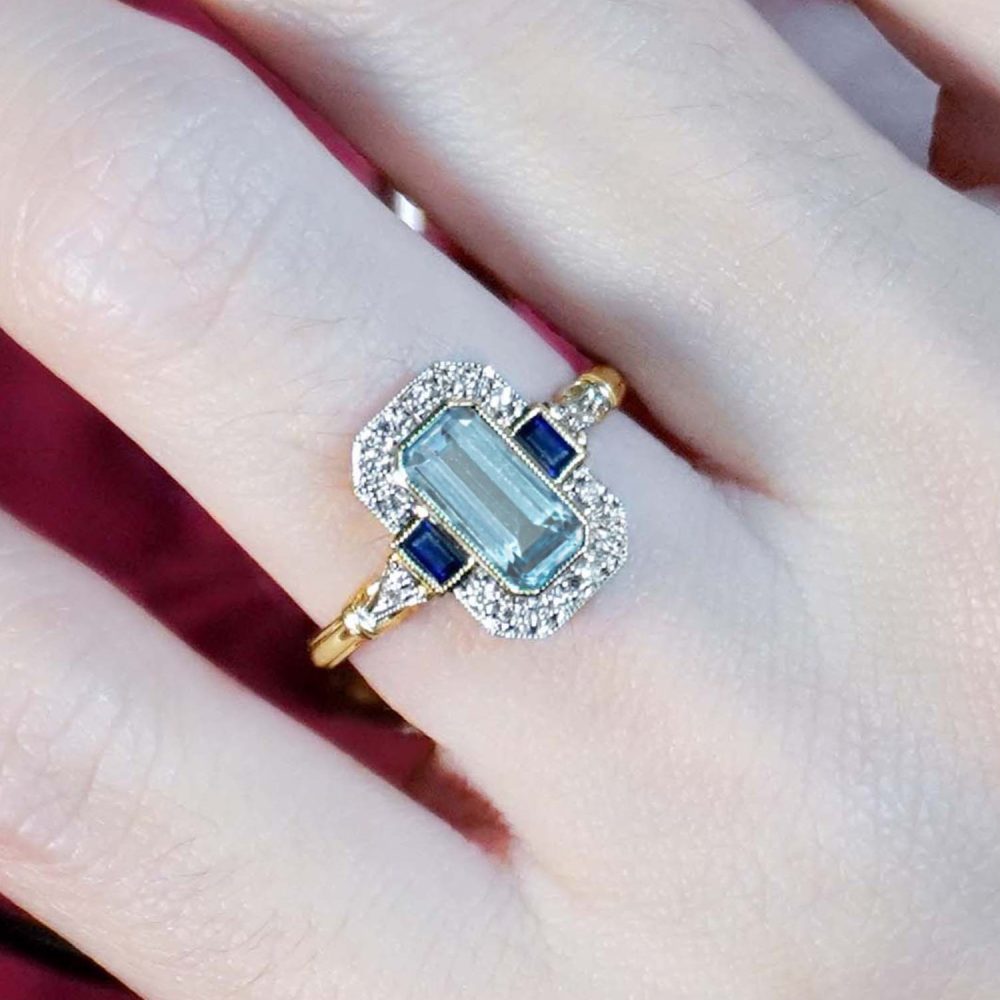
| Occasional-wear ring | Good with care | Knocks to corners, points or girdle | Use a bezel, halo or strategically placed prongs |
| Daily-wear ring | Conditional | Repeated impact and cleavage-related fracture | Choose robust architecture and accept regular inspection |
Prong pressure during setting must be controlled. The setter needs to understand the stone's orientation, girdle condition and points of stress. A mounting intended for a tougher gemstone may be inappropriate for topaz if it concentrates force.
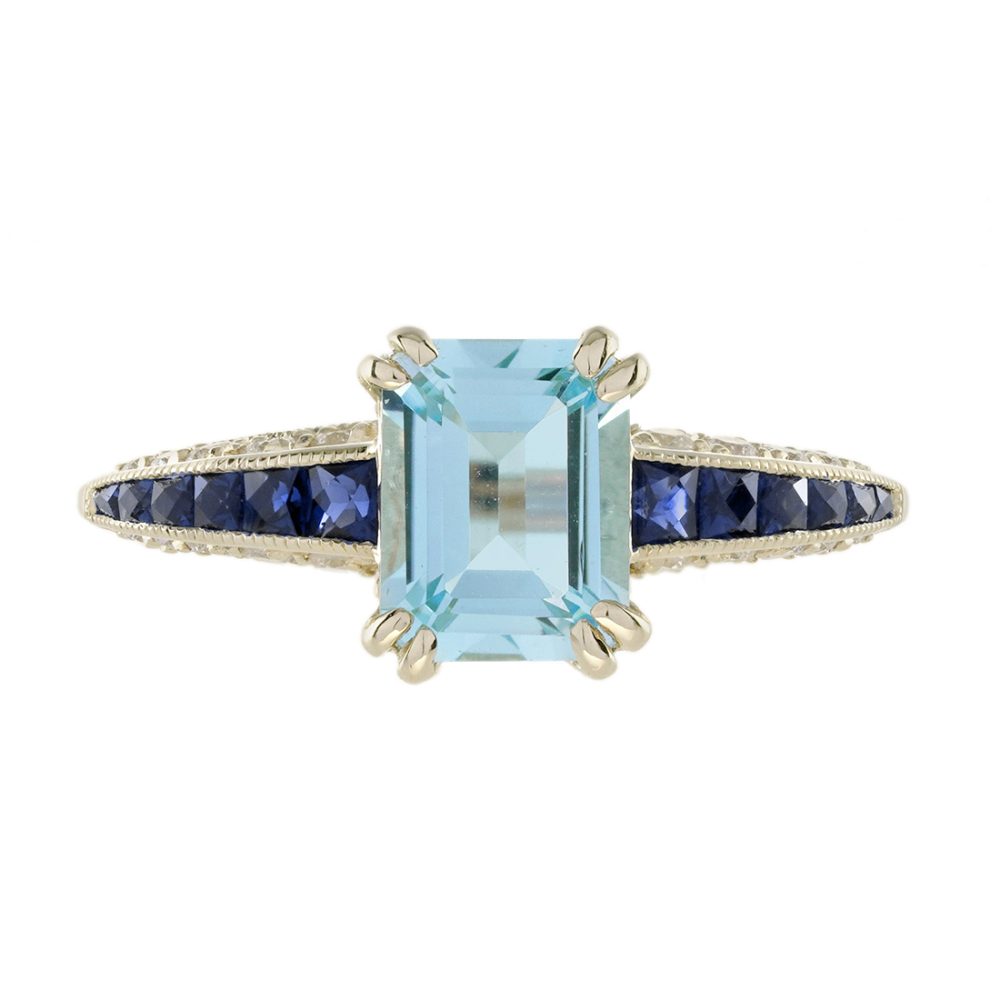
Emerald cuts, pears, marquises and other pointed or cornered outlines require particular planning. A clipped corner, protective prong or fine bezel may reduce exposure. Protection should not become excessive visual weight, but it must be structural rather than decorative.
Topaz is not too fragile for fine jewelry. It is a hard gemstone with a specific breakage behavior. When setting and wearing decisions respect that behavior, it can perform well. When Mohs 8 is treated as a complete durability guarantee, risk is misunderstood.
How Should Topaz Be Chosen for a Fine-Jewelry Design?
Choosing topaz begins with intended use. The best stone for a pendant is not automatically the best stone for a ring worn several times each week. Wear pattern, color, cut, dimensions and setting must be considered as one system.
What Should Be Decided Before Selecting the Stone?
- Jewelry format: ring, earrings, pendant, bracelet or brooch.
- Wear frequency: daily, regular or occasional.
- Color direction: warm, colorless, pale blue, bright blue or deep blue.
- Metal relationship: contrast, harmony or deliberate temperature shift.
- Scale: accent, paired stones or principal center.
- Protection: bezel, halo, corner treatment, prong position and overall height.
- Disclosure standard: what treatment and origin evidence will accompany the finished piece.
Color should be examined under more than one light source. Deep blue material may appear brighter in cool daylight and darker in warm interiors. Pale stones can lose definition against white metal if the setting does not create an outline. Photography and screen settings can also shift blue significantly.
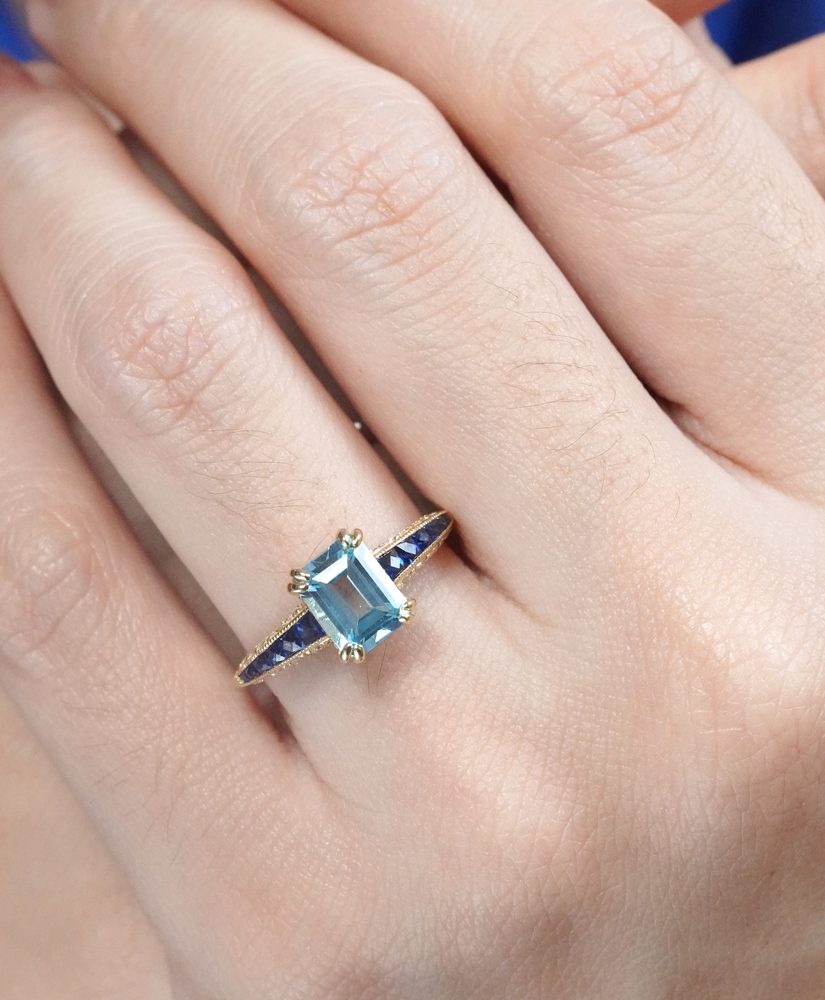
Shape influences both style and vulnerability. An oval or round has no corners and can be easier to protect. A cushion offers softened geometry. An emerald cut displays clarity and color zoning clearly but introduces corners. Pears and marquises need specific protection at their points.
The setting must fit the actual stone. Large topaz can have individual pavilion depth, girdle thickness and facet geometry. A generic mounting may place the stone too high or create uneven bearing. Custom seat preparation reduces unnecessary force during setting.
For made-to-order or bespoke work, we resolve stone and architecture together. A topaz is not merely a blue or golden component placed into a preselected frame. Its color, cleavage behavior and proportions establish what the jewel needs to become.
How Does Topaz Suit Art Deco and Edwardian-Inspired Jewelry?
Topaz can support both Art Deco-inspired geometry and Edwardian-inspired delicacy, but the two design languages use the stone differently.
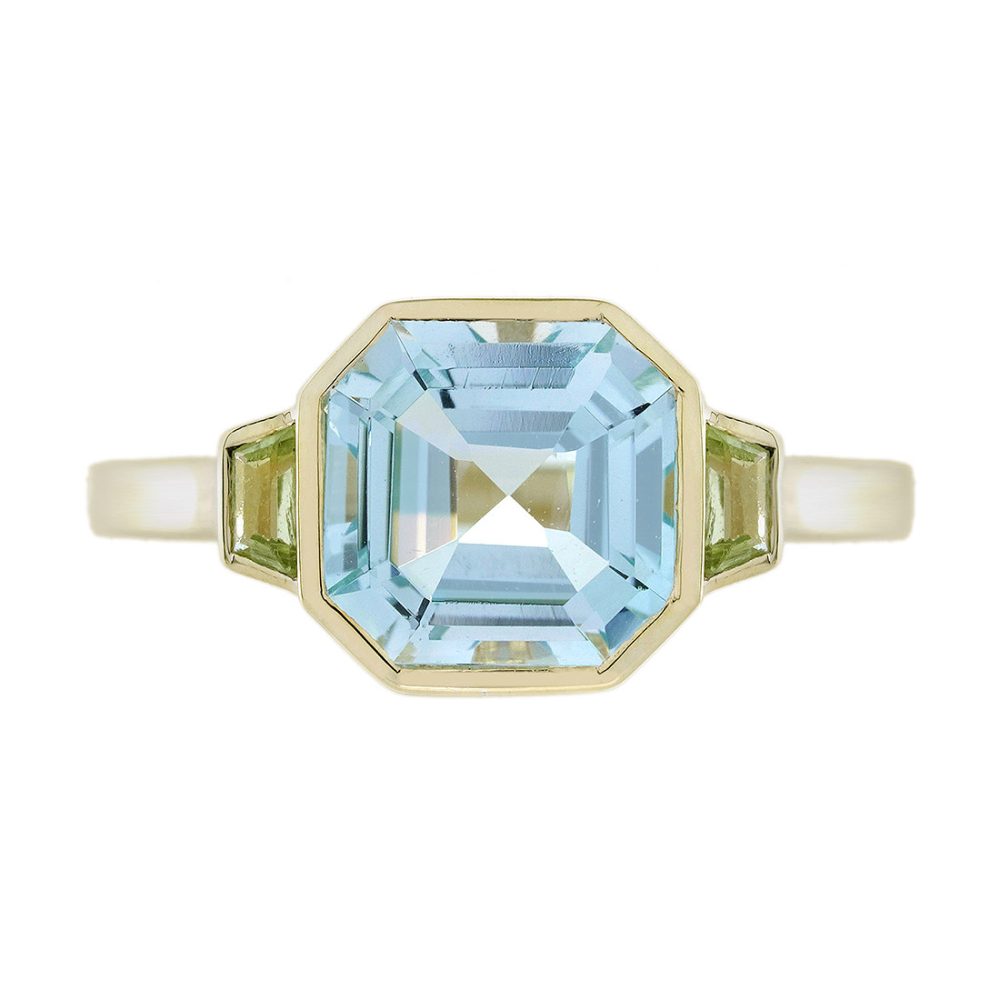
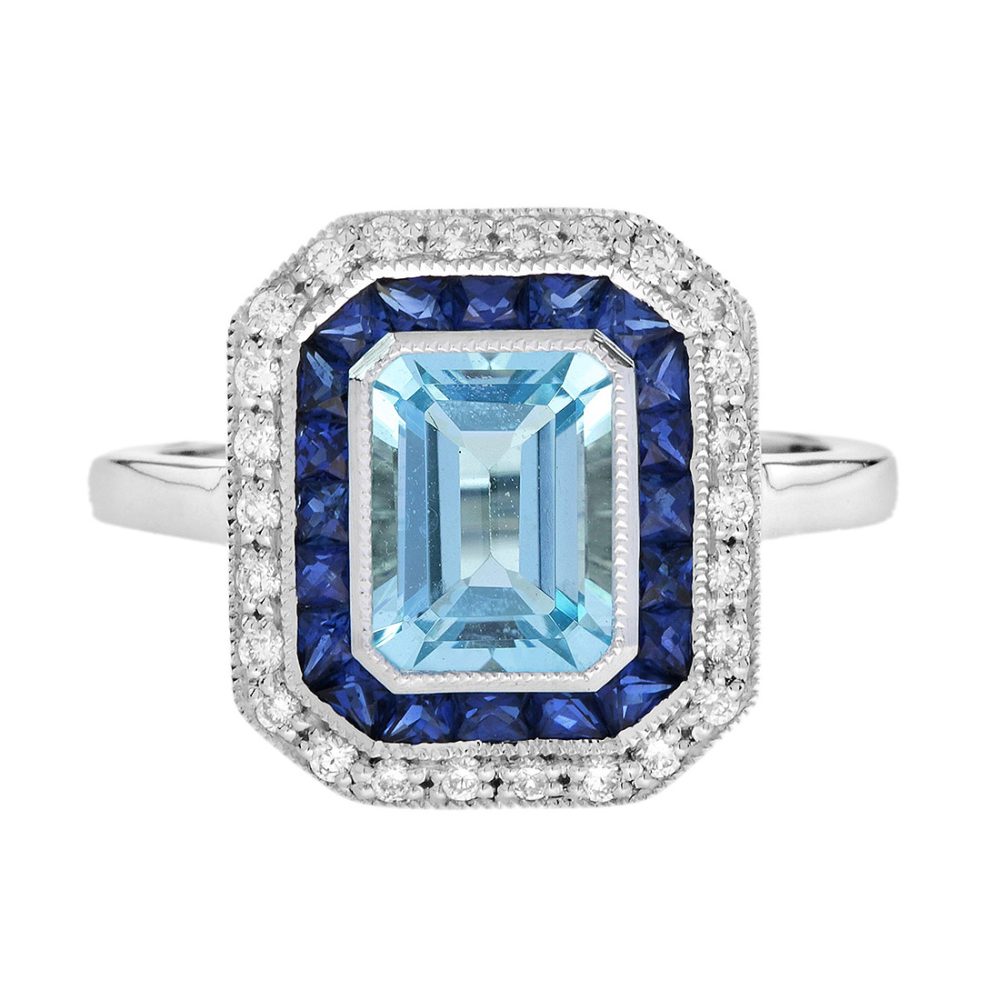
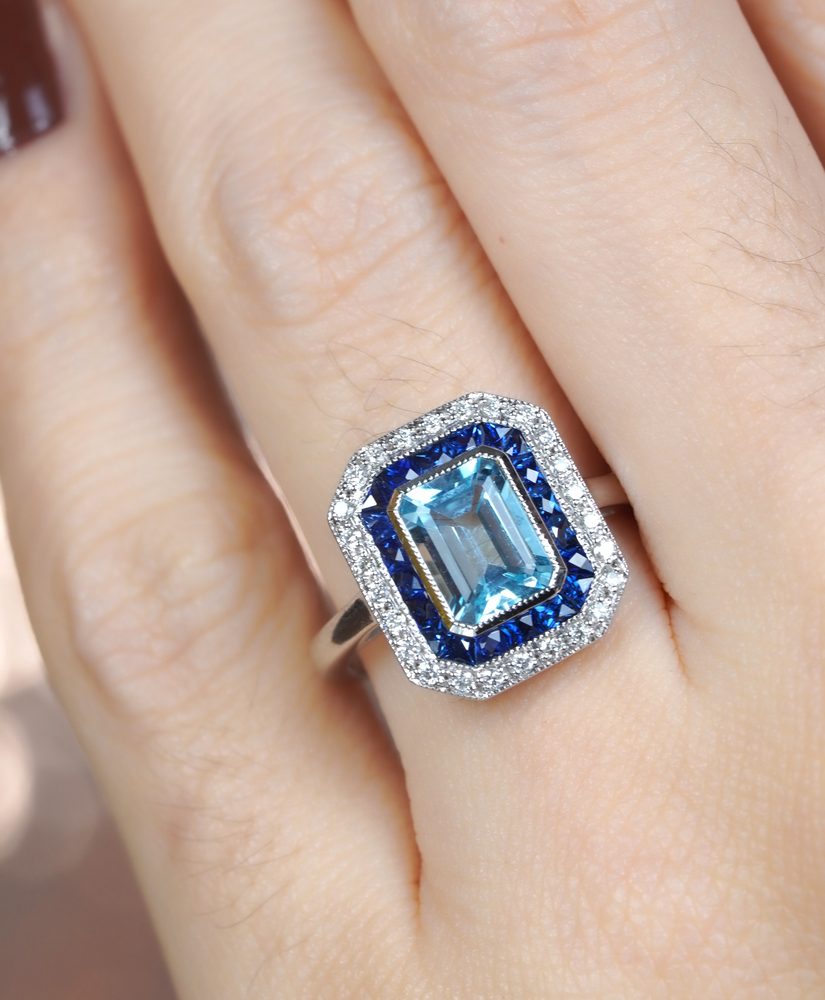
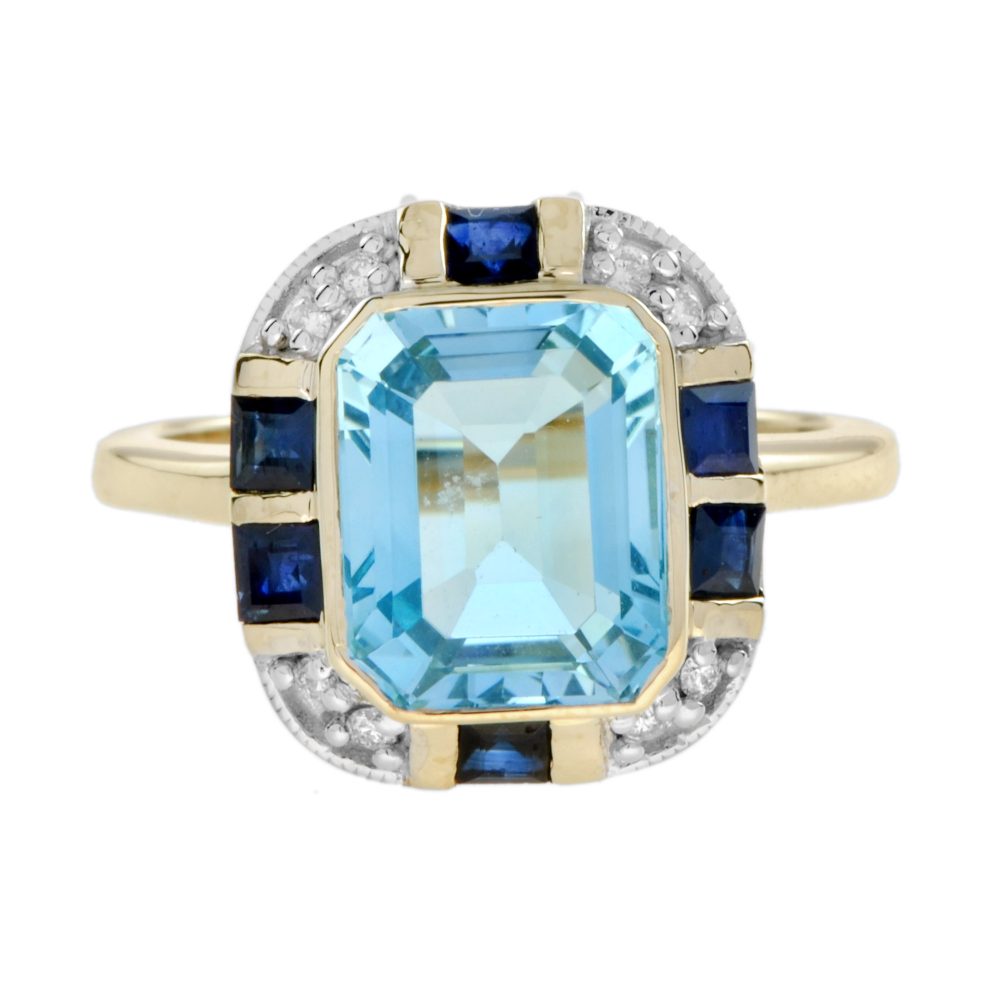
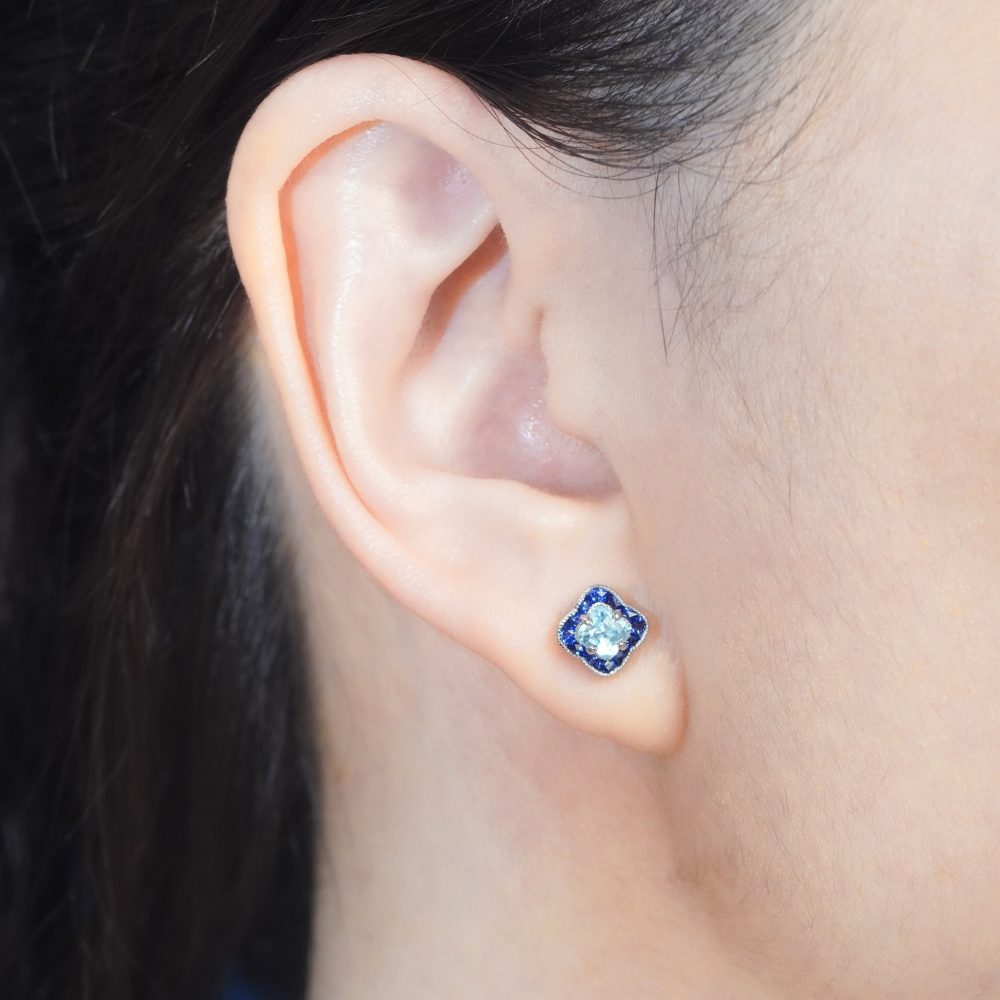
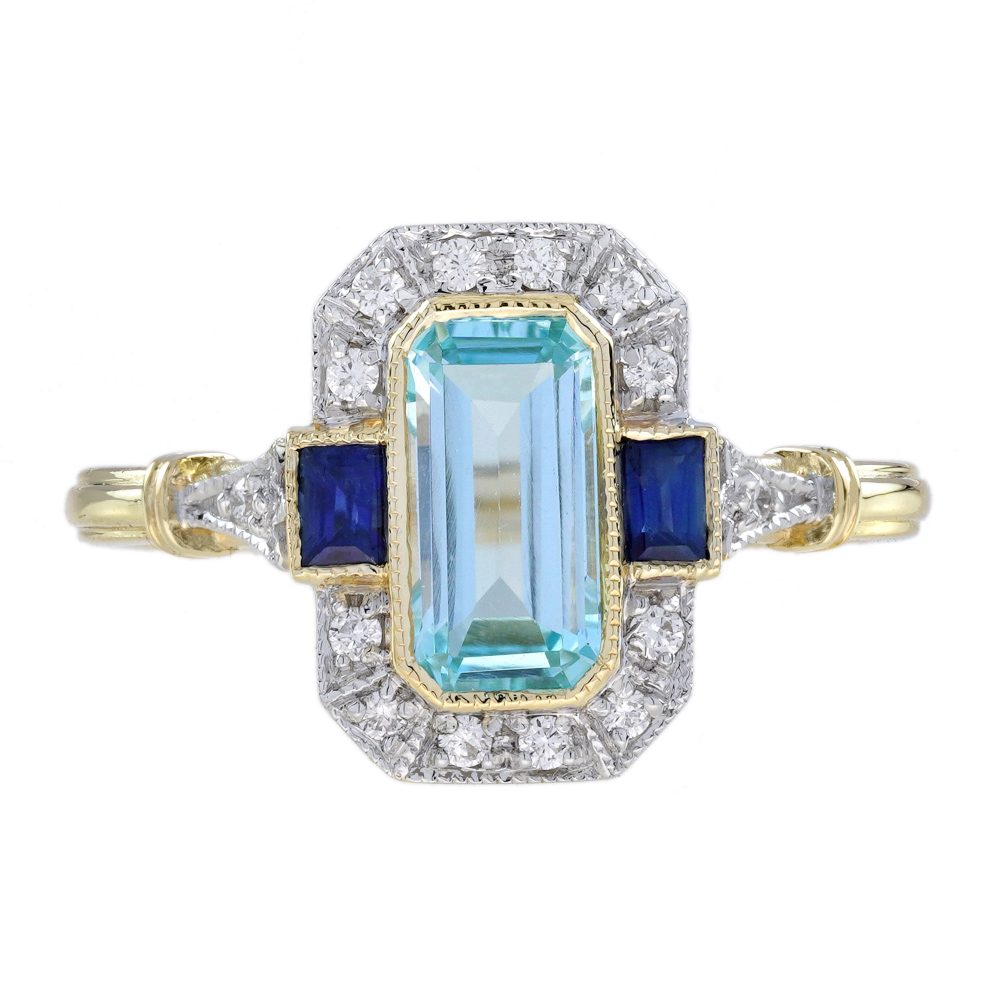
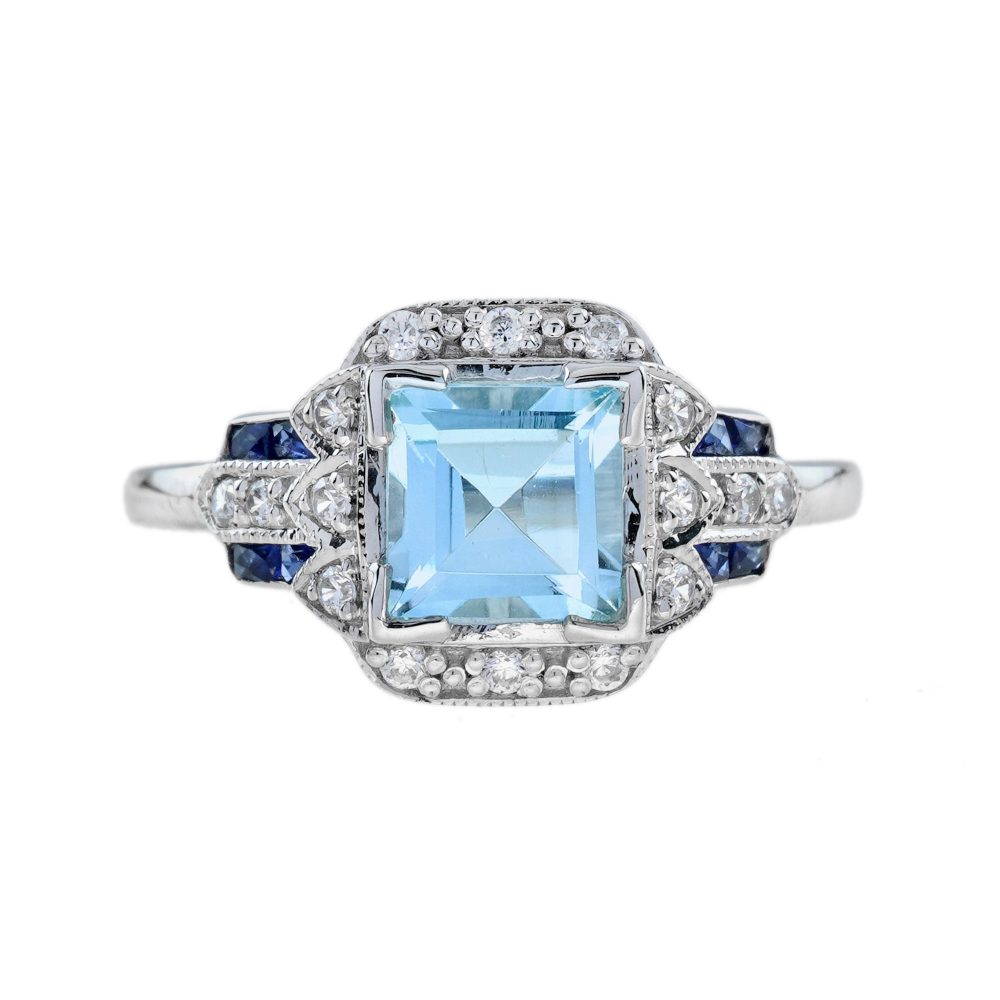
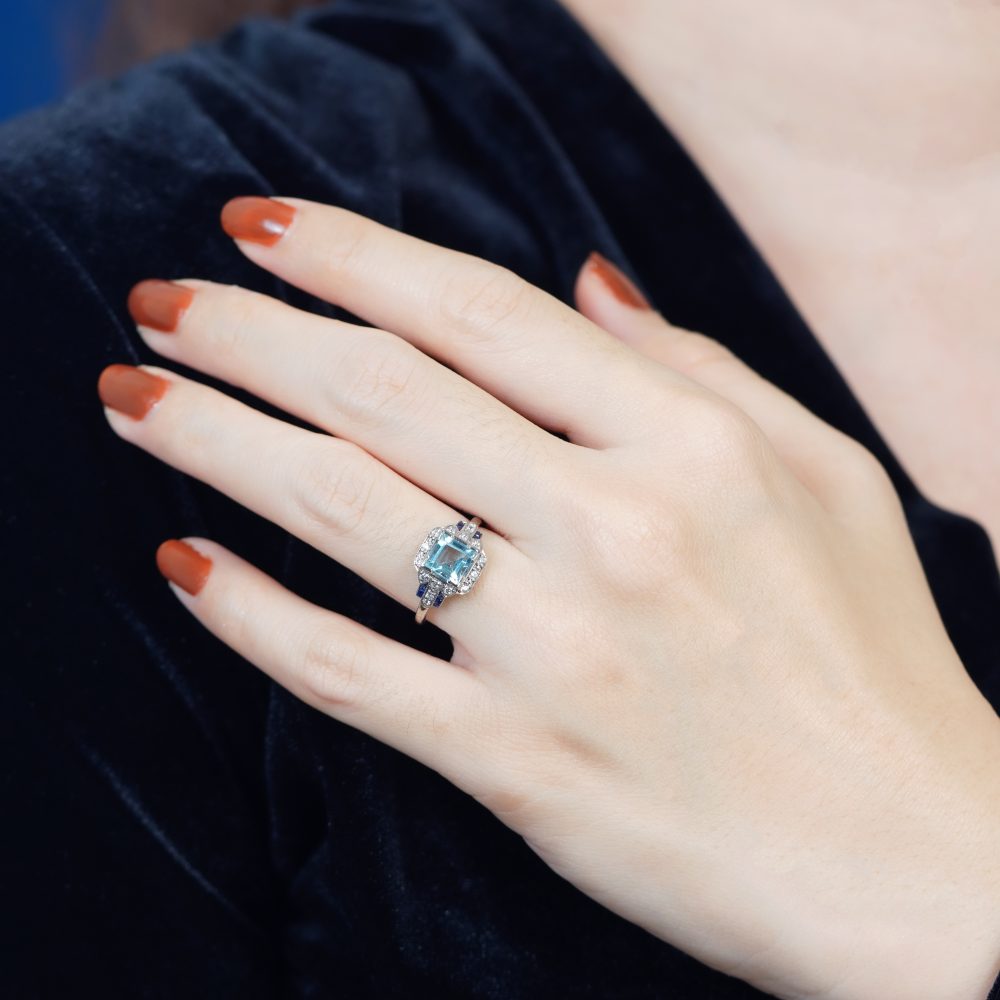
An Art Deco-inspired composition may use an emerald-cut or elongated topaz, a stepped frame, repeated geometry and calibrated accent stones. Blue topaz works well with white gold when the intention is cool architectural clarity. Yellow or orange topaz can create a strong contrast within the same linear language.
The discipline of Art Deco is helpful for protection. Clipped corners, geometric halos and structured galleries can shield cleavage-sensitive areas without making the jewel appear defensive. The setting should distribute pressure and avoid leaving a vulnerable point as the first surface to meet an impact.
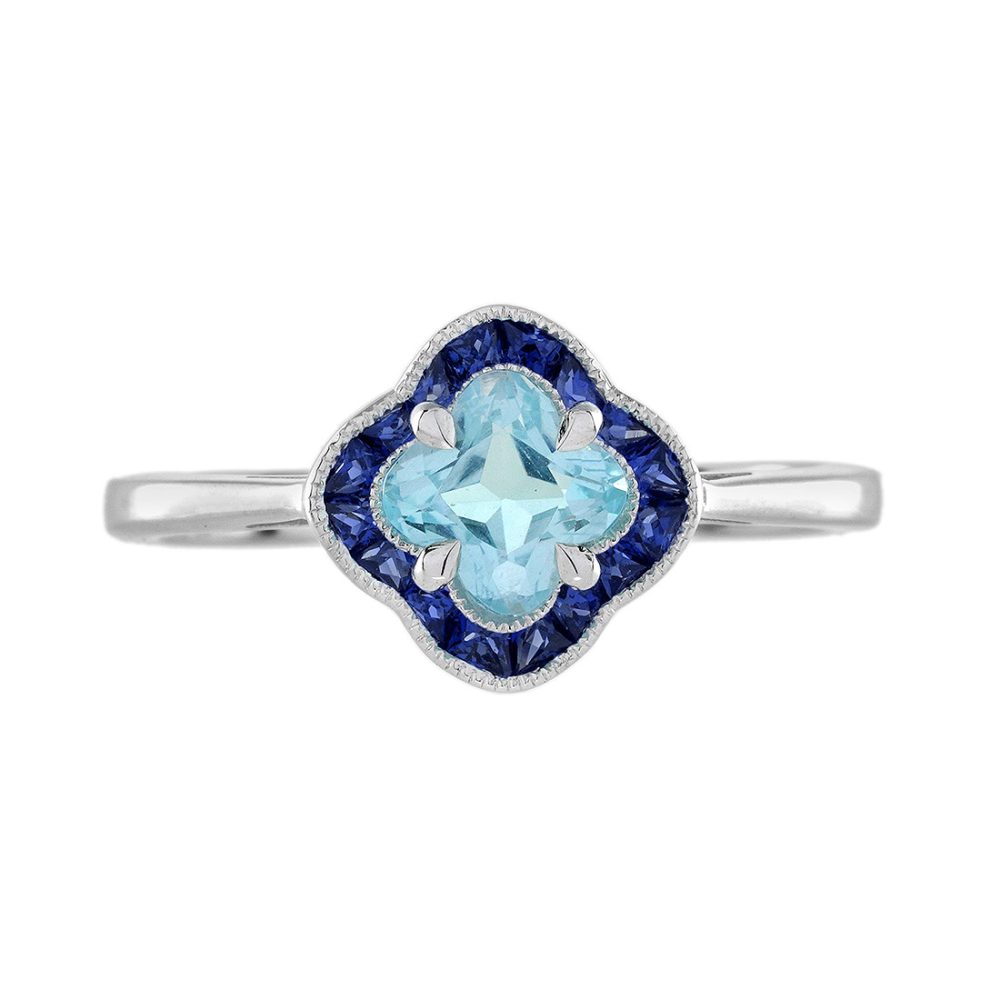
Edwardian-inspired work is lighter and more ornamental. Fine milgrain, openwork and small accent stones can give pale or pink topaz an airy frame. The challenge is to preserve structural support beneath delicate visual detail. Filigree near the stone must carry load rather than exist only as surface decoration.
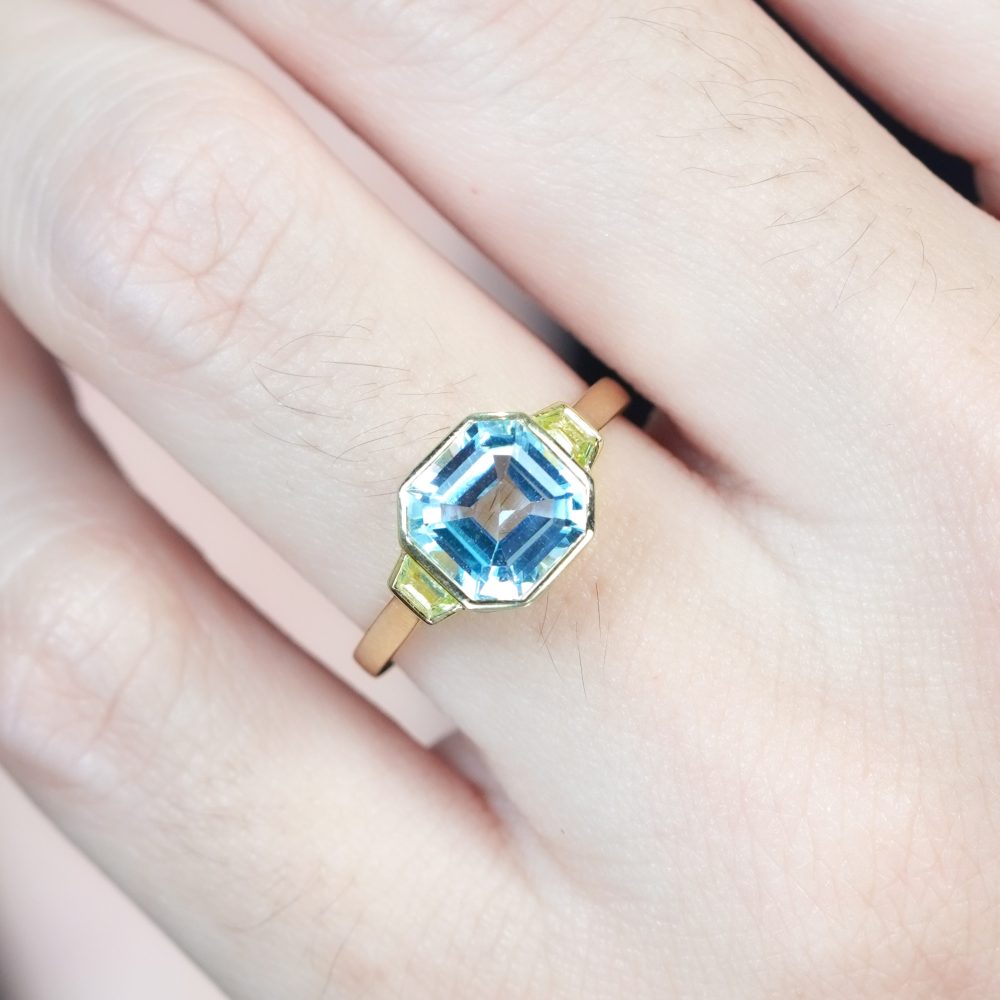
Large blue topaz can suit a statement ring or brooch, but scale should remain wearable. Excessive depth raises the stone, changes balance and increases impact exposure. Face-up dimensions, hand proportions and gallery height matter more than an impressive carat number.
Lilly M. JEWELERS creates newly made, antique-inspired jewelry. We do not describe current pieces as genuine antiques, vintage inventory or period originals. Historical design language is translated through new construction, natural gemstones and solid gold.
The strongest topaz design does not rely on color alone. Proportion, metal, negative space, edge protection and the rhythm of accent stones should make the historical reference legible while supporting contemporary wear.
How Should Topaz Jewelry Be Cleaned and Stored?
Warm water, mild soap and a soft brush are the controlled default for cleaning topaz jewelry. Rinse carefully and dry with a soft lint-free cloth. Work over a bowl or closed drain so the jewel cannot be lost.
Use this sequence:
- Inspect the stone, prongs, bezel, corners and nearby joints.
- Prepare lukewarm water with a small amount of mild soap.
- Loosen residue gently with a soft brush.
- Rinse without sudden temperature change.
- Dry completely and confirm that the stone does not move.
Steam and ultrasonic cleaning are not recommended for topaz. Heat, vibration, hidden fractures, coatings, delicate construction or adjacent gemstones may introduce unnecessary risk. Hand cleaning gives greater control when the complete treatment and structural history are not known.
Avoid harsh chemicals, abrasive cleaners and sudden temperature changes. Strong heat can damage a gemstone or affect treated color. Remove topaz rings before heavy work, exercise, gardening or activities likely to strike the stone.
Put jewelry on after cosmetics, fragrance and hair products. Residue does not only dull the stone; repeated cleaning to remove it can increase handling and wear on the setting.
Store topaz separately in a fabric-lined compartment or soft pouch. Topaz can scratch softer gems, while diamond, ruby and sapphire can scratch topaz. Separate storage also prevents metal surfaces from rubbing against facet edges.
Professional inspection is appropriate when a prong catches, a corner shows damage, the stone moves or the piece receives regular ring wear. Cleaning restores appearance. Inspection addresses the structural relationship between stone and setting.
What Should Be Remembered About Topaz?
Topaz traditionally symbolizes affection, loyalty, clarity and strength. It is officially a November birthstone alongside citrine. Those meanings and calendar associations make it a useful personal jewel, but they do not replace gemological description.
Blue topaz is the central point of confusion. It is widely offered for December, yet it is not on the modern US official December list. Turquoise, tanzanite and blue zircon hold that designation. A December wearer may still choose blue topaz; the choice should simply be described as personal or commercial convention rather than official status.
Most commercial blue topaz is natural colorless topaz whose blue color is produced by irradiation and heat. Treated does not mean synthetic, and natural does not mean untreated. Accurate disclosure keeps those categories separate.
At Mohs 8, topaz resists scratching well, but perfect cleavage gives it poor toughness. Corners, points, girdles and pressure during setting require attention. A responsible jewel aligns the cut and setting with the wearer's actual life.
Quality is a relationship among color, clarity, cut, dimensions, condition, treatment and documentation. Trade color names can be useful descriptions, but they are not universal grades. Carat weight alone does not establish beauty or wearability.
For our workshop, topaz succeeds when meaning, material and architecture support one another. The wearer provides the occasion. The gem provides color and light. The setting protects the stone while translating it into a newly made, antique-inspired jewel designed for considered wear.
Sources: GIA — Topaz Gem Overview · GIA — Topaz Description · GIA — November Birthstones · GIA — Topaz Care and Cleaning · Jewelers of America — Official Birthstone List · FTC Jewelry Guides — 16 CFR Part 23

Engagement Ring
Frequently Asked Questions About Topaz Meaning
What does topaz mean?
Topaz traditionally symbolizes affection, loyalty, clarity and strength. These are cultural and personal associations rather than scientifically proven medical or psychological effects.
Is topaz a November or December birthstone?
Topaz is an official November birthstone alongside citrine. Blue topaz is widely sold as a December option, but topaz is not on the modern US official December list.
What are the official December birthstones?
The modern US official December birthstones are turquoise, tanzanite and blue zircon. Blue topaz is a common commercial alternative, not an official December designation.
Is blue topaz treated?
Nearly all commercial blue topaz receives irradiation followed by heat to create its color. The underlying gemstone can still be natural topaz, but natural does not mean untreated, so the process should be disclosed.
Can topaz be worn every day?
Topaz has Mohs hardness 8 but poor toughness because of perfect cleavage. It can suit regular wear when corners and edges are protected, yet rings should be removed for impact-prone activities and inspected periodically.