
Blog, Gemstone Guides
Birthstones by Month: All 12 Explained
Key Takeaways
- The official US birthstone list was standardized in 1912 by the American National Retail Jewelers Association — known today as Jewelers of America — and has been formally amended three times since: 1952, 2002 and 2016.
- Five months have more than one official stone: June, August, October, November and December. The other seven have a single stone each.
- Birthstones are not equally durable. Diamond (Mohs 10), ruby and sapphire (Mohs 9) are safe for daily wear. Pearl (2.5–4.5) and opal (5–6.5) need protective settings and gentler handling.
- Blue topaz is widely sold as a December birthstone, but it does not appear on the official Jewelers of America list, which names turquoise, tanzanite and blue zircon.
What are the birthstones by month?
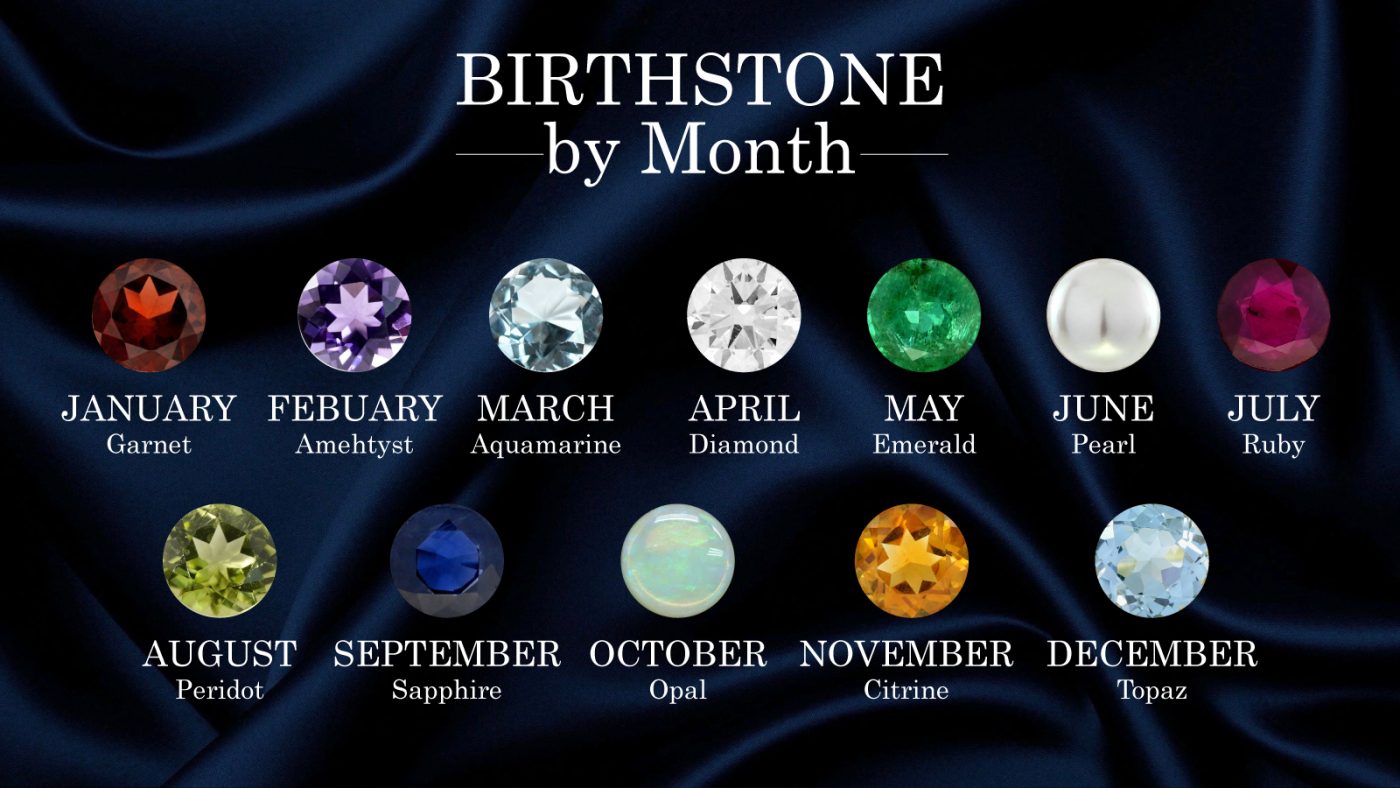
The twelve birthstones by month are garnet (January), amethyst (February), aquamarine (March), diamond (April), emerald (May), pearl (June), ruby (July), peridot (August), sapphire (September), opal (October), citrine (November) and turquoise (December). Five of those months also carry officially recognized alternative stones, listed in the chart below.
The complete birthstone chart
This chart follows the official list published by Jewelers of America, the organization that originated it. Mohs values indicate scratch resistance on a 1–10 scale.
| Month | Official birthstone(s) | Color | Traditional meaning | Mohs hardness |
|---|---|---|---|---|
| January | Garnet | Deep red (also green, orange, purple) | Protection, loyalty, friendship | 6.5–7.5 |
| February | Amethyst | Lilac to deep violet | Clarity, calm, sobriety | 7 |
| March | Aquamarine | Pale blue to blue-green | Courage, serenity, safe travel | 7.5–8 |
| April | Diamond | Colorless (and fancy colors) | Strength, enduring love | 10 |
| May | Emerald | Vivid green | Rebirth, wisdom, fertility | 7.5–8 |
| June | Pearl, Moonstone, Alexandrite | White/cream, silvery, color-change | Purity, intuition, good fortune | 2.5–4.5 / 6–6.5 / 8.5 |
| July | Ruby | Red | Passion, vitality, courage | 9 |
| August | Peridot, Spinel | Yellow-green / many colors | Renewal, protection from nightmares | 6.5–7 / 8 |
| September | Sapphire | Blue (and every color but red) | Wisdom, truth, nobility | 9 |
| October | Opal, Tourmaline | Iridescent / many colors | Hope, creativity, imagination | 5–6.5 / 7–7.5 |
| November | Citrine, Topaz | Golden yellow / many colors | Abundance, warmth, confidence | 7 / 8 |
| December | Turquoise, Tanzanite, Blue Zircon | Blue to blue-violet | Calm, transformation, protection | 5–6 / 6–7 / 6–7.5 |
A note on blue topaz. Many jewelers — including us — offer blue topaz as a December stone, and you will see it on most commercial birthstone charts. It is worth knowing that it is not on the official Jewelers of America list. Topaz itself is officially a November stone. If you want a December piece and prefer blue topaz to turquoise or tanzanite, that is a perfectly common choice; it is simply an alternative rather than an official designation.
What is a birthstone?
A birthstone is a gemstone associated with a specific calendar month, traditionally worn by people born in that month or given as a personalized gift. Each stone carries symbolic meaning inherited from centuries of folklore, religion and astrology. Modern birthstone lists are also shaped by practical factors: which gems are available, durable and appealing enough to be set in fine jewelry at scale.
Where the birthstone tradition comes from
The idea is far older than the modern list. Its earliest ancestor is the breastplate of Aaron, described in the Book of Exodus, which was set with twelve stones representing the twelve tribes of Israel. The first-century historian Josephus proposed a link between those twelve stones, the twelve months of the year and the twelve signs of the zodiac.
By the 8th and 9th centuries, collectors owned all twelve stones but wore only the one matching the current month, believing its powers peaked then. The habit of wearing only your own birth-month stone is generally traced to Poland and Germany in the 16th century, spreading across Europe over the following two hundred years.
The list most of the world uses today, however, is an American invention — and a surprisingly recent one.
How the official list was built (and revised)
| Year | Change | Why it matters |
|---|---|---|
| 1912 | The American National Retail Jewelers Association (now Jewelers of America) standardizes the official list | Opaque stones like bloodstone and sardonyx are replaced by transparent gems, better suited to modern settings |
| 1952 | Alexandrite added for June; citrine added for November | Broadens options in months where the original stone was rare or costly |
| 2002 | Tanzanite added for December | A gem discovered only in the 1960s, in a single region of Tanzania, joins the list |
| 2016 | Spinel added for August | Long mistaken for ruby throughout history, spinel finally gets its own recognition |
Two things follow from this. First, the list is a living standard, not an ancient decree. Second, the stones you see on it were chosen partly for beauty and meaning, and partly because jewelers could reliably source and set them — which is exactly why some are far better suited to everyday wear than others.
Birthstones by month, one at a time
January — Garnet
Garnet has represented January since antiquity. Its name comes from the Latin granatum — pomegranate — for the resemblance to the fruit’s glowing red seeds. Most garnets are a deep, warm red, but the family also produces green (tsavorite, demantoid), orange (spessartine) and even purple varieties.
At Mohs 6.5–7.5, garnet is durable enough for regular wear, though we recommend a protected setting for a ring worn daily. Traditionally it symbolizes protection, loyalty and enduring friendship — a garnet was the talisman travelers and warriors carried.
Read more: Garnet Meaning & January Birthstone Guide
February — Amethyst
Amethyst is the purple variety of quartz, ranging from soft lilac to deep reddish-violet. Its name comes from the Greek amethystos, “not intoxicated” — the ancient Greeks believed it protected the wearer from drunkenness.
Once as valuable as diamond, amethyst became widely affordable after enormous deposits were found in Brazil in the 18th century. At Mohs 7 it wears well in any piece. It has long stood for clarity, calm and emotional balance, and its royal purple made it a favorite of both monarchs and clergy.
Read more: Amethyst Meaning & February Birthstone Guide
March — Aquamarine
Aquamarine is the blue to blue-green member of the beryl family — the same family as emerald and morganite. Its name is Latin for “seawater,” and sailors once carried it as a charm against shipwreck.
At Mohs 7.5–8, aquamarine is one of the more resilient colored stones and takes a large, clean cut beautifully. It symbolizes courage, serenity and clear communication. March’s traditional stone was bloodstone; aquamarine replaced it in 1912 as part of the shift toward transparent gems.
Read more: Aquamarine Meaning & March Birthstone Guide
April — Diamond
Diamond is the hardest natural substance known, sitting alone at Mohs 10. That hardness is why it dominates engagement rings: it resists scratching better than any other gem, which matters enormously for a piece worn every day for decades.
Diamond symbolizes strength and enduring love. Quality is assessed using the 4Cs — cut, color, clarity and carat weight — of which cut has the greatest influence on how a stone actually looks in the light.
Read more: Diamond Meaning & the 4Cs · The Diamond 4Cs Explained
May — Emerald
Emerald is the green beryl, and one of the most instantly recognizable gems in the world. Its color comes from traces of chromium or vanadium.
Emerald is where a common misunderstanding shows up. Its Mohs hardness is 7.5–8, which sounds robust — but emeralds are typically full of internal fractures and inclusions (the jardin, or garden), which makes them brittle. Hardness resists scratches; toughness resists breaking. An emerald is hard but not tough, so we almost always set it protectively and advise against wearing an emerald ring while gardening, lifting or cleaning.
Read more: Emerald Meaning & May Birthstone Guide
June — Pearl, Moonstone & Alexandrite
June has three official stones, and they could hardly be more different.
Pearl is the only gem produced by a living creature. Almost all pearls sold today are cultured. At Mohs 2.5–4.5 it is by far the softest birthstone — pearls scratch easily, and perfume, hairspray and even perspiration can dull their nacre. Moonstone (Mohs 6–6.5) has a floating blue-white shimmer called adularescence. Alexandrite (Mohs 8.5) is the rarest of the three: it appears green in daylight and red under incandescent light.
Read more: Pearl Meaning & June Birthstone Guide
July — Ruby
Ruby is corundum with a dominant red hue — chemically identical to sapphire, differing only in color. At Mohs 9 it is second only to diamond in hardness, making it genuinely excellent for everyday rings.
Fine rubies are among the most expensive gems on earth, with record stones exceeding $1 million per carat. Ruby has always been linked to blood, vitality and courage; warriors wore it believing it increased strength and stamina.
Read more: Ruby Meaning & July Birthstone Guide
August — Peridot & Spinel
Peridot is unusual: it occurs in only one color, a fresh yellow-green, because the color comes from the mineral’s own iron content rather than an impurity. It was mined on the Egyptian island of Zabargad for over 3,500 years. At Mohs 6.5–7 it is best in earrings, pendants and occasional-wear rings.
Spinel, added in 2016, spent centuries being mistaken for ruby — several famous “rubies” in royal collections are in fact spinels. At Mohs 8, it is considerably more durable than peridot.
Read more: Peridot Meaning & August Birthstone Guide
September — Sapphire
Sapphire is corundum in every color except red, though blue is what most people picture. At Mohs 9, it shares ruby’s exceptional hardness — which is why sapphire has become the leading colored-stone choice for engagement rings.
The most famous example is the blue sapphire and diamond cluster ring given to Princess Diana, now worn by Catherine, Princess of Wales — a single piece that has driven sapphire engagement ring demand for over forty years. Sapphire symbolizes wisdom, truth and nobility.
October — Opal & Tourmaline
Opal is prized for play-of-color: flashes of spectral color that shift as the stone moves. It is also delicate. At Mohs 5–6.5 and containing up to 20% water, opal can scratch, crack or craze if exposed to sudden temperature change or dry heat. It belongs in pendants, earrings and bezel-set rings, not in a ring you wear to the gym.
Tourmaline (Mohs 7–7.5) is the practical alternative, and it comes in a broader color range than almost any other gem.
Read more: Opal Meaning & October Birthstone Guide
November — Citrine & Topaz
Citrine is the golden-yellow variety of quartz (Mohs 7). A point worth knowing as a buyer: most commercial citrine is heat-treated amethyst. This is standard, accepted industry practice — but a reputable jeweler should tell you.
Topaz (Mohs 8) is harder, and occurs naturally in yellow, orange, pink, blue and colorless. Golden imperial topaz from Brazil is far rarer, and far more valuable, than the ubiquitous blue topaz. Topaz has one caveat: it has perfect cleavage, meaning a sharp knock in the wrong direction can split it despite its hardness.
Read more: Citrine Meaning & November Birthstone Guide · Blue Topaz Guide
December — Turquoise, Tanzanite & Blue Zircon
December’s official stones are all cool-toned blues. Turquoise (Mohs 5–6) is one of the oldest gems used by humankind, revered from Persia to Mesoamerica. Tanzanite (Mohs 6–7) was discovered only in the 1960s and is found in a single small area near Mount Kilimanjaro; it was added to the list in 2002. Blue zircon (Mohs 6–7.5) has exceptional brilliance and fire, and should not be confused with cubic zirconia — an entirely different, synthetic material.
Blue topaz is also very widely offered for December, though, as noted above, it sits outside the official list.
Which birthstones can you actually wear every day?
This is the question we are asked most often in the workshop, and it is the one birthstone charts almost never answer.
Two properties matter, and they are not the same thing:
- Hardness (measured on the Mohs scale) is resistance to scratching.
- Toughness is resistance to chipping, cracking and breaking.
A gem can be hard but not tough. Emerald is the classic example — hard enough to scratch steel, yet brittle enough to fracture from a single knock against a door frame. Topaz and tanzanite both have cleavage planes and share the same weakness.
Here is how the birthstones actually sort out in practice.
| Tier | Stones | Mohs | Practical guidance |
|---|---|---|---|
| Daily wear, worry-free | Diamond, Ruby, Sapphire | 9–10 | Suitable for rings worn every day, in any setting, for a lifetime |
| Daily wear, sensible care | Alexandrite, Spinel, Topaz, Aquamarine, Tourmaline, Amethyst, Citrine | 7–8.5 | Fine for regular rings. Topaz and tanzanite have cleavage — avoid hard knocks |
| Occasional wear | Garnet, Peridot, Tanzanite, Blue Zircon, Moonstone | 6–7.5 | Best in earrings, pendants, or rings for evenings and special occasions |
| Protective settings only | Emerald (brittle), Opal, Turquoise, Pearl | 2.5–6.5 | Bezel or halo settings. Remove before cleaning, gardening, swimming or exercise |
What this means for how your piece is made
Durability is not only about the stone — it is about the setting, and this is where the choice of jeweler genuinely changes the outcome.
- Softer stones (pearl, opal, turquoise, emerald) are safest in a bezel — a rim of metal that surrounds and shields the girdle of the stone — or in a halo, where a ring of accent diamonds absorbs the knocks a center stone would otherwise take. Better still, put them where they will be hit less often: pendants and earrings take a fraction of the abuse a ring does.
- Harder stones (diamond, ruby, sapphire) can carry an open prong setting, which lets in more light and shows more of the stone.
- Cleavage-prone stones (topaz, tanzanite) should avoid designs where a corner or point is left exposed.
If you are commissioning a birthstone piece for a soft gem, tell your jeweler how it will be worn. That single sentence changes the design.
Related: Fine Jewelry Care Guide · How to Care for Pearls & Opals · Bespoke Jewelry
Modern vs traditional birthstones: what’s the difference?
You will see two lists in circulation, and they disagree in several months.
| Month | Modern (official, 1912+) | Traditional (pre-1912) |
|---|---|---|
| March | Aquamarine | Bloodstone |
| June | Pearl, Moonstone, Alexandrite | Alexandrite |
| August | Peridot, Spinel | Sardonyx |
| October | Opal, Tourmaline | Tourmaline |
| November | Citrine, Topaz | Topaz |
| December | Turquoise, Tanzanite, Blue Zircon | Turquoise, Lapis Lazuli |
The traditional list is older, rooted in European folklore and astrology, and includes opaque stones such as bloodstone, sardonyx and lapis lazuli. The 1912 committee deliberately favored transparent, faceted gems — easier to set, easier to match, and better suited to the mothers’ rings and multi-stone pieces that were becoming popular.
Which should you use? Practically speaking: the modern list. It is what jewelers stock, what gift guides reference, and what a recipient will recognize. The traditional list is worth knowing if you want something less expected, or if a particular stone carries family meaning.
How to choose birthstone jewelry
- Start with how it will be worn. A birthstone ring for daily wear rules out pearl and opal in an exposed setting. A pendant opens up every stone on the list.
- If the month offers a choice, choose the stone, not the month. October’s wearer may simply prefer tourmaline’s color to opal’s shimmer. Both are official.
- Match the metal to the stone. Cool stones (sapphire, aquamarine, tanzanite) sharpen against white gold and platinum; warm stones (garnet, citrine, ruby) glow in yellow gold. Morganite and pearl sit beautifully in rose gold.
- Ask about treatment. Heat treatment is normal and disclosed for many gems (citrine, blue topaz, sapphire). What matters is that your jeweler tells you.
- Get the size right before you commission. Resizing a bezel-set or eternity-style piece is far harder than resizing a simple band. (See our ring size guide.)
At Lilly M. JEWELERS, every piece is made with natural gemstones set in solid gold, and every birthstone commission is discussed stone-first: what it is, how you will wear it, and how it should be protected to last.
Ring
Earrings
Pendant & Necklace
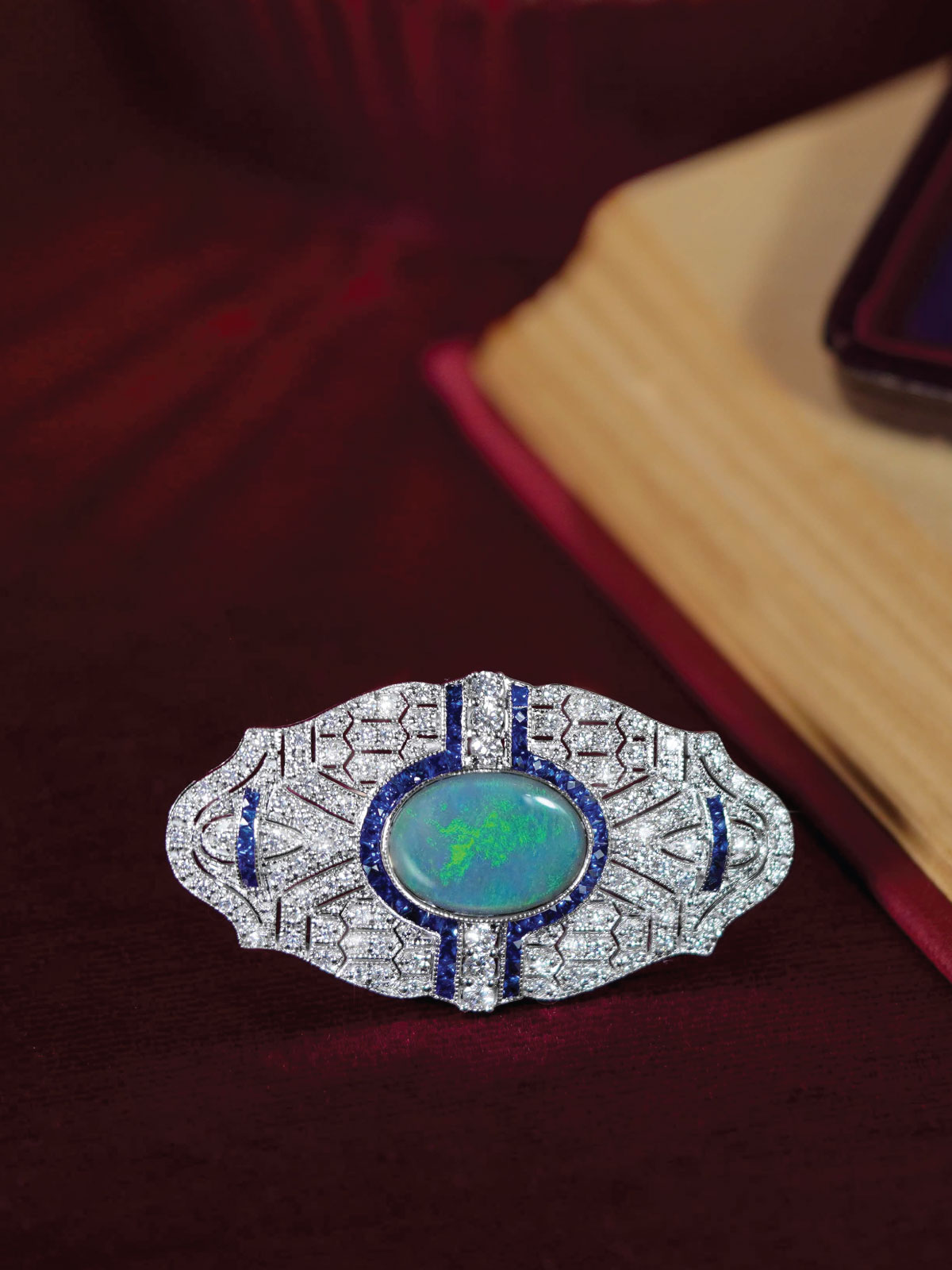
Brooch
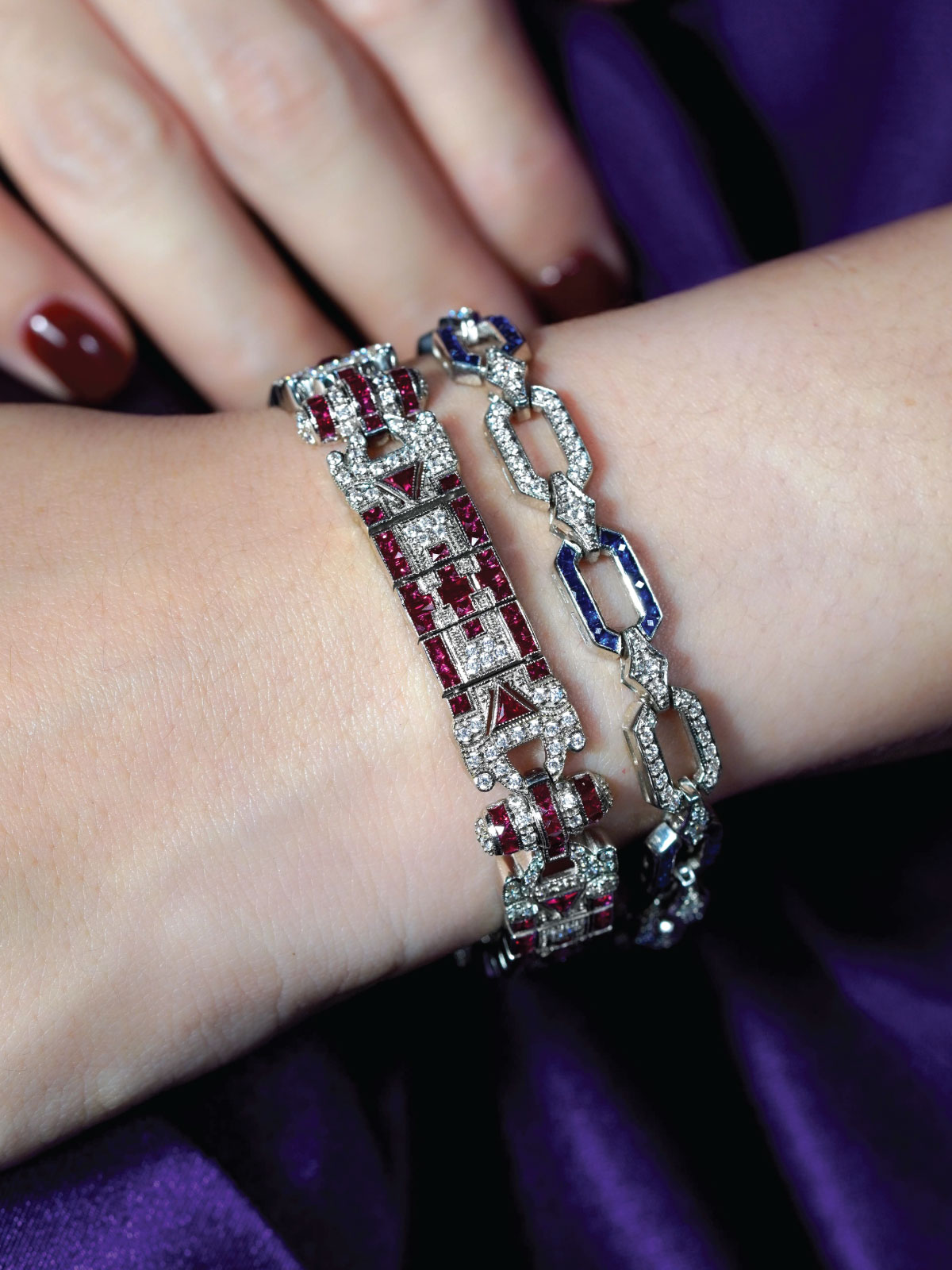
Bracelet
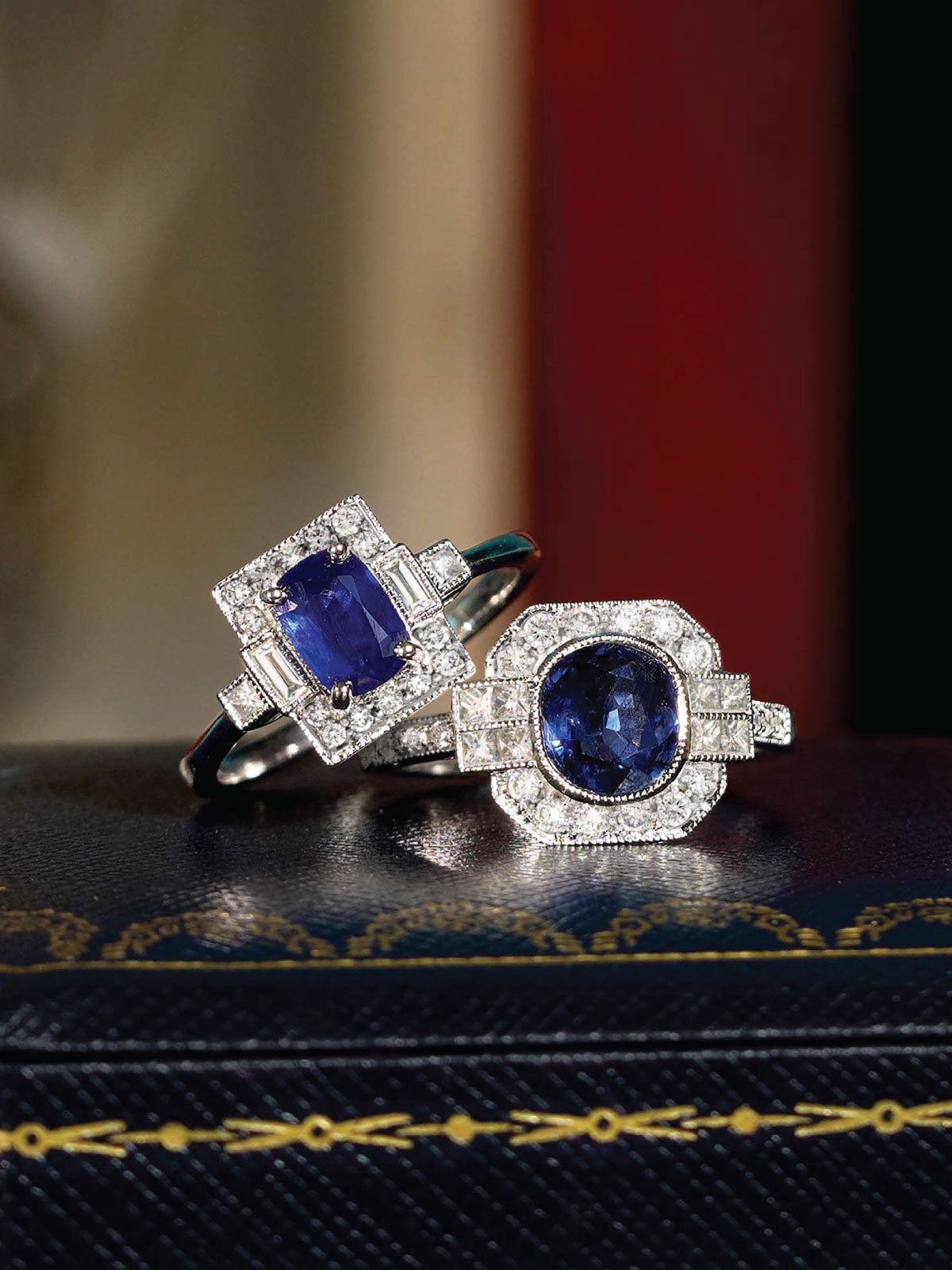
Jewelry Set
Frequently asked questions
What is my birthstone if I was born in December?
December has three official birthstones: turquoise, tanzanite and blue zircon. Blue topaz is also widely offered by jewelers as a December stone, although it is not on the official Jewelers of America list. Any of the four is an accepted choice.
Why do some months have more than one birthstone?
Five months — June, August, October, November and December — carry multiple official stones. Extra stones were added over time to give buyers options at different price points, and to recognize gems that were rare or unknown in 1912, such as tanzanite (added 2002) and spinel (added 2016).
Can I wear a birthstone that isn’t my birth month?
Yes. There is no rule against it. Many people choose a stone for its color, meaning, or because it represents a child, parent or partner. Birthstone jewelry is more often given as a gift representing someone else than worn for one’s own month.
Which birthstone is the most durable?
Diamond, at Mohs 10, is the hardest natural gemstone and the most scratch-resistant birthstone. Ruby and sapphire follow at Mohs 9. All three are safe choices for a ring worn every day.
Which birthstone is the most delicate?
Pearl, at Mohs 2.5–4.5, is the softest birthstone by a wide margin. It scratches easily and can be damaged by perfume, cosmetics and acids. Opal and turquoise also require protective settings and careful handling.
In short
The birthstone list is a living tradition — part folklore, part 20th-century industry standard, and still being revised within living memory. Knowing which stone belongs to which month is the easy part. The part that decides whether a piece survives thirty years of wear is knowing how hard the stone is, how tough it is, and how it should be set.
That is the conversation we have with every client who commissions a birthstone piece.
Sources: Jewelers of America — Official Birthstone List. Mohs hardness values are standard gemological ranges.