
Blog, Gemstone Guides
Garnet Meaning & January Birthstone Guide
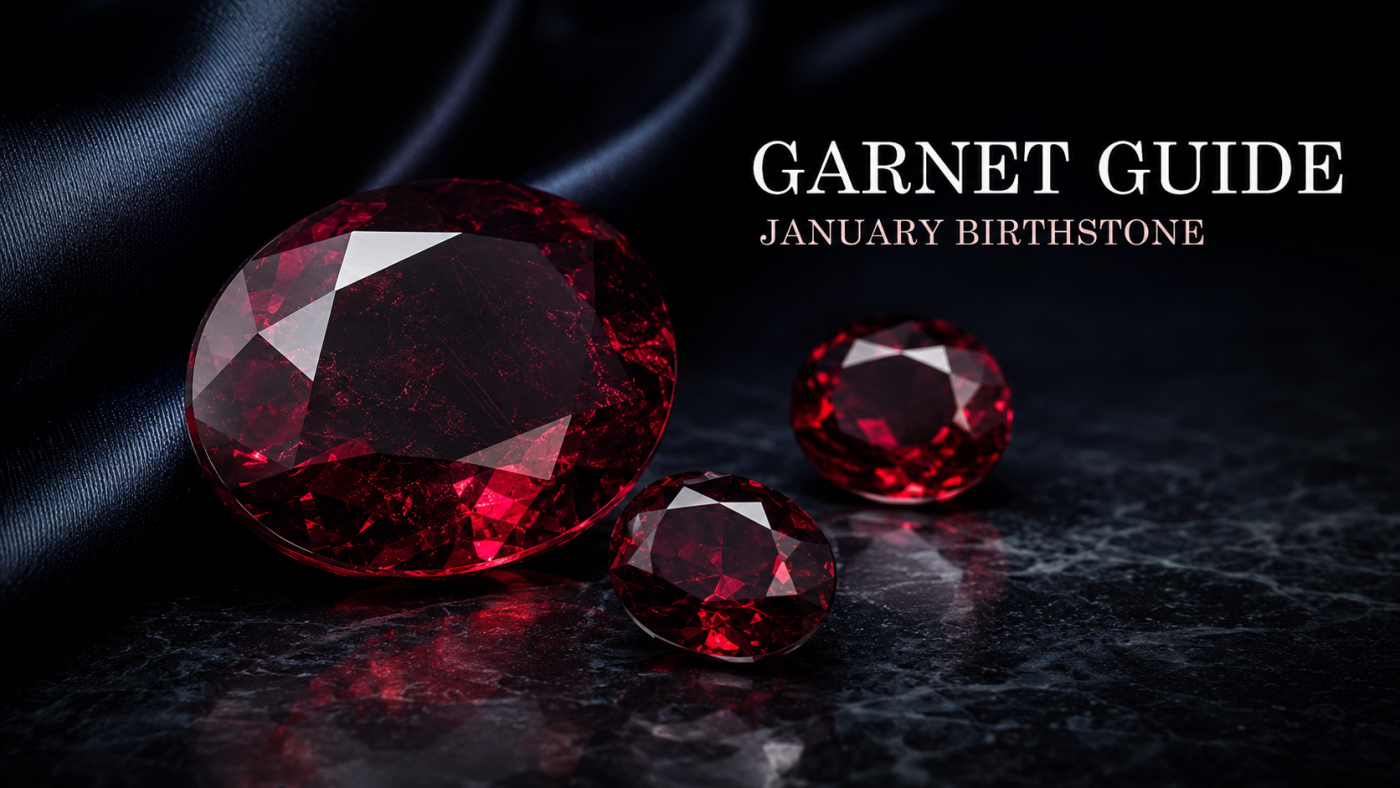
Key Takeaways
- Garnet meaning centers on protection, constancy, friendship and enduring connection, and garnet is the official January birthstone on the modern Jewelers of America list.
- Garnet is a gemstone group, not one red mineral — its members occur in red, orange, green, yellow, purple and color-changing varieties.
- Garnet ranges from Mohs 6.5 to 7.5 with fair-to-good toughness, so setting design and wearing pattern are practical choices, not afterthoughts.
- Most garnets are rarely treated, but natural origin is not a blanket guarantee that every individual stone is untreated — ask for the specification.
Garnet meaning centers on protection, constancy, friendship and vital color in historical and modern jewelry traditions. Garnet is January’s official birthstone and a diverse gemstone group, not a single red mineral. It ranges from Mohs 6.5 to 7.5, so its symbolism should be matched with considered setting design and sensible wear.
What Does Garnet Symbolize?
Garnet symbolism commonly centers on protection, constancy, friendship, commitment and renewed energy. These are cultural associations, not physical effects produced by the gemstone. Their value lies in the way a jewel can hold an intention, a memory or a relationship in visible form.
Protection is among the oldest themes attached to garnet. The stone’s dark red appearance invited comparisons with blood, fire and a steady lamp, so historical traditions often placed it in the role of a traveler’s safeguard or a light carried through uncertainty. Such accounts should be read as historical belief. Garnet does not prevent injury or change health outcomes.
Constancy and friendship developed as equally durable meanings. A garnet given between friends may mark loyalty across distance; in a partnership, it may represent commitment that remains present through change. The association feels particularly apt for January because the month marks both an ending and a beginning. The gem can acknowledge what has endured while giving form to what is being renewed.
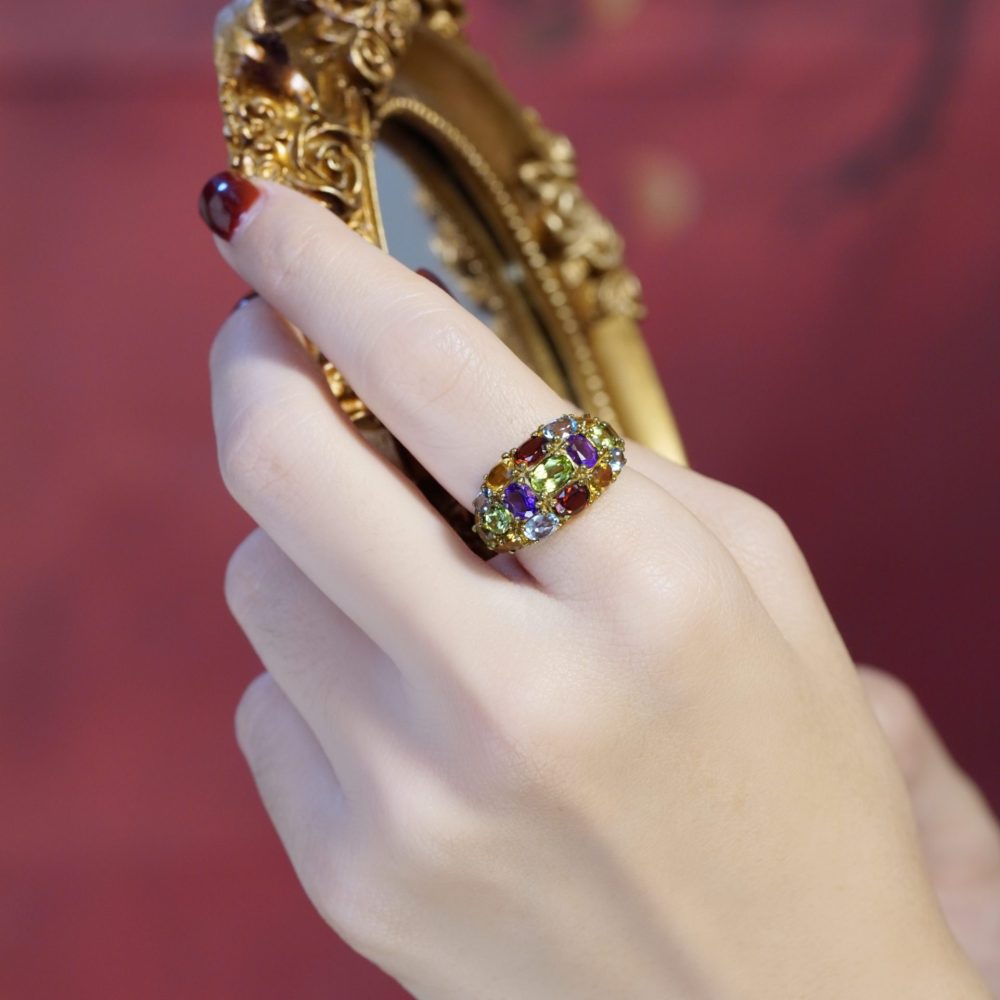
Red garnet meaning often emphasizes affection, courage and deep attachment. Green or orange garnets can create a different emotional register, but color does not impose a fixed symbolic code. A green garnet may suggest growth to one wearer and simply recall a place or person to another. The personal brief should therefore take precedence over generic lists of color meanings.
Workshop insight. Garnet meaning is strongest when the symbolism, color and intended wear agree. A stone chosen to represent enduring friendship should not be placed in a fragile, exposed design merely because the outline is fashionable. The construction should support the story the jewel is meant to carry.
Why Is Garnet the January Birthstone?
Garnet is the official January birthstone on the modern US list maintained by Jewelers of America. The association is singular: unlike June, August, October, November and December, January has one official stone on that list.
The modern list was standardized in 1912 by the American National Retail Jewelers Association, the organization now known as Jewelers of America. Earlier traditions connected groups of twelve stones with tribes, months or zodiac signs, but the identities and interpretations changed across languages and periods. The 1912 list created a practical industry standard rather than preserving one unchanged ancient system.
Garnet suits January in part because it carries themes of continuity and renewal. The symbolism is cultural rather than scientific, yet it gives a January birthstone gift a clear purpose. The piece can mark a birthday, a new year, an anniversary in January or a personal beginning that has no calendar convention at all.
Our birthstones by month guide places garnet within the complete official sequence. That wider context is useful when a design represents several people, such as a family jewel combining more than one birth month.
Does Garnet Always Mean a Red Gemstone?
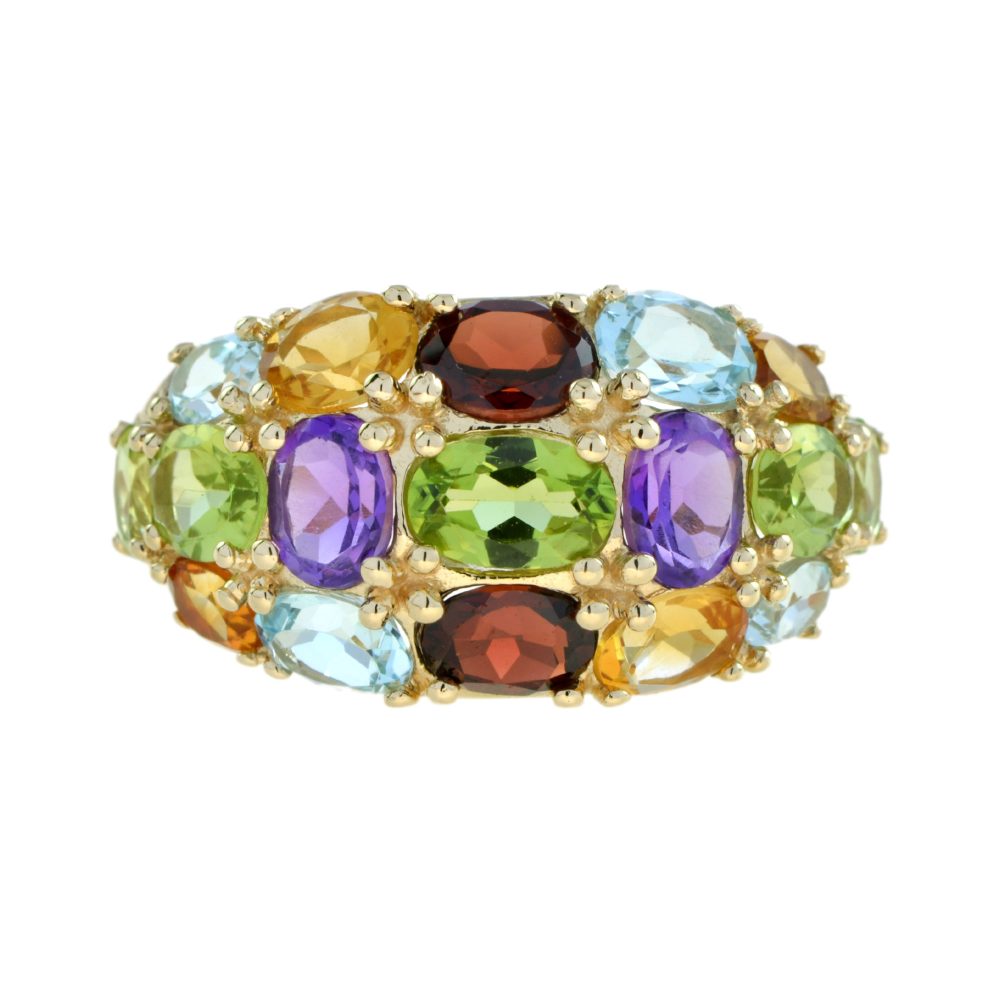
No. Garnet is a group of related minerals that share a crystal structure but differ in chemical composition. Deep red almandine and pyrope are the forms most people recognize, yet the group also includes orange spessartine, green grossular and andradite varieties, and other colors. The GIA garnet overview describes this diversity and explains why the word garnet identifies a gem family rather than one uniform material.
Commercial names can make the family appear simpler than it is. Rhodolite generally refers to a purplish-red garnet associated with pyrope and almandine composition. Tsavorite is a green grossular garnet. Demantoid is a green andradite garnet known for strong dispersion. Hessonite is an orange-to-brown grossular variety. These names describe meaningful varieties, but a color label alone is not a laboratory identification.
The table below separates species or variety language from the design impression a reader may encounter. Color ranges overlap, and an individual stone should be evaluated on its own appearance, identification and specification.
| Garnet name | Typical color impression | Family position | Design character |
|---|---|---|---|
| Almandine | Deep red to brownish red | Garnet species | Formal, saturated and traditional |
| Pyrope | Red to purplish red | Garnet species | Clear, intense and classical |
| Rhodolite | Rose-red to purplish red | Pyrope-almandine variety name | Softer, lighter and more contemporary |
| Spessartine | Orange to reddish orange | Garnet species | Warm, vivid and graphic |
| Tsavorite | Green | Grossular variety | Crisp, botanical and high-contrast |
| Hessonite | Honey-orange to brownish orange | Grossular variety | Warm, autumnal and textured |
| Demantoid | Yellowish green to rich green | Andradite variety | Bright, lively and precise |
Red garnet remains the clearest visual shorthand for January, but it is not the only legitimate choice. A buyer who values the birthstone connection may choose any garnet variety. A buyer who values the familiar January look may prefer almandine, pyrope or rhodolite. The best description names the gemstone accurately and allows the color to speak without forcing it into a universal meaning.
Where Did Garnet Meaning Come From?
Garnet meaning accumulated through language, material appearance, long use in adornment and later birthstone custom. It did not arrive as one fixed doctrine.
How Did the Name Shape Garnet Symbolism?
The name is commonly connected with the Latin word granatus, meaning seed-like, and with the resemblance between small red garnets and pomegranate seeds. The comparison gave the gem a natural language of abundance, continuity and life held within a protective form. It also explains why deep red remains central to the public image of garnet even though the mineral group has a much broader palette.
How Did Historical Jewelry Shape Garnet Meaning?
Garnet has appeared in jewelry across ancient and later cultures. The GIA account of garnet history and lore documents its long record in adornment and the beliefs that gathered around it. Durable use across time made the gem a natural carrier of ideas such as loyalty, remembrance and protection.
Historical use must be described carefully. A garnet set in a newly made piece is not an ancient object and does not acquire archaeological provenance from its design language. At Lilly M. JEWELERS, our pieces are newly made with natural gemstones set in solid gold. Art Deco-inspired, Edwardian-inspired and vintage-inspired details refer to design vocabulary, not the age of the jewel.
How Did Modern Birthstone Custom Shape Garnet Meaning?
The 1912 standard placed garnet firmly in January. From that point, personal identity became as important as older protective symbolism. Garnet could signify a birth month, a family connection or a shared January anniversary. Modern jewelry therefore carries several layers at once: a historical gem, a standardized birthstone and a private symbol chosen by the wearer.
This layered history is more credible than claiming that garnet has always meant one thing. Symbols remain useful precisely because people reinterpret them while retaining a recognizable thread.
How Durable Is Garnet for Jewelry?
Garnet ranges from 6.5 to 7.5 on the Mohs scale and has fair-to-good toughness. Mohs hardness measures resistance to scratching. Toughness measures resistance to chipping and breaking. The two properties answer different questions and must not be treated as interchangeable.
Compared with sapphire or ruby at Mohs 9, garnet is more likely to show wear over many years of frequent ring use. That does not make it unsuitable for jewelry. It means the wearing pattern, variety, cut and setting need to be considered together. Earrings and pendants are naturally protected from many impacts. Rings and bracelets meet hard surfaces more often and deserve more deliberate protection.
| Property | What it measures | Garnet position | Practical implication |
|---|---|---|---|
| Hardness | Resistance to scratching | Mohs 6.5–7.5 | Suitable for jewelry, but long-term surface wear is possible |
| Toughness | Resistance to chipping and breaking | Fair to good | Avoid sharp impacts and exposed vulnerable outlines |
| Cleavage | Tendency to split along a structural plane | Generally not the defining risk | Edge protection and sound setting remain important |
| Treatment pattern | Whether enhancement is routine in the market | Rarely treated in the canonical standard | Ask about the individual stone rather than relying on a group-level assumption |
| Recommended wear | Relationship between material and use | Occasional wear for rings; broader flexibility for earrings and pendants | Match the setting to how often and where the jewel will be worn |
Our workshop approach is to design from the likely impact pattern outward. A low-profile bezel or protective halo can make sense for a garnet ring worn regularly. An occasional evening ring may permit a more open composition. Earrings can use lighter settings because the stones are less exposed to knocks. The right answer is not determined by Mohs hardness alone.
The most important practical distinction is that a gemstone can carry enduring symbolism without being physically indestructible. Good jewelry design does not deny vulnerability. It manages it.
Which Garnet Jewelry Suits Different Wearing Patterns?
The best garnet jewelry type depends on frequency, activity and the role the piece will play.
When Is a Garnet Ring Appropriate?
A garnet ring can be appropriate for occasional or considered wear. For regular use, a lower profile and protective edge treatment reduce exposure. Bezel settings, halos and substantial prongs can be useful, provided they suit the individual stone and design. Rings intended for gardening, weight training, workshop activity or other impact-heavy tasks should be removed.
When Are Garnet Earrings or Pendants Preferable?
Earrings and pendants experience fewer direct impacts than rings and bracelets, so they offer a practical way to wear garnet frequently. They also allow color to be the primary visual statement. A pendant can hold private January symbolism close to the wearer, while earrings can create a formal pair without requiring daily contact with hard surfaces.
When Does a Garnet Bracelet Need Extra Care?
Bracelets move against desks, doors and other objects. A garnet bracelet should use secure settings and enough structure to limit stone-to-surface contact. The bracelet must also be stored separately so that metal and gemstones from neighboring pieces do not abrade it.
Wearability is not a ranking of jewelry types. It is a design constraint. Once the constraint is named, the gemstone and setting can be chosen with greater precision.
How Should a Garnet Be Chosen?
- Choose the color before the label. Decide whether the design calls for wine red, purplish red, orange, honey, or green. A respected variety name cannot compensate for a color that does not suit the wearer.
- Examine tone and saturation. A garnet that is too dark may lose visible color in ordinary light. A balanced stone should retain identity without appearing opaque in the conditions where it will be worn.
- Consider inclusions in context. Eye-visible inclusions may affect beauty or durability, but expectations differ among garnet varieties. A laboratory report or professional identification may be appropriate for a significant stone or a variety whose name materially affects value.
- Judge the cut as a system. Proportion, symmetry and polish determine how the stone handles light. A cut that preserves weight but creates a dark center may not serve the design.
- Match scale to setting. A large garnet may be visually commanding, yet additional surface area can create more exposure in a ring. A smaller stone with a considered frame may communicate the intended meaning more effectively.
- Confirm material identity and disclosures. Natural garnet, a garnet simulant and red glass are not the same material. The description should be precise, and any relevant treatment should be disclosed for the individual stone.
Meaning should enter after these material questions, not replace them. A jewel can represent protection or friendship while still requiring a clear specification. Sentiment deserves accuracy.
Are Garnets Usually Treated?
Garnets are rarely treated and are usually encountered without routine enhancement. That group-level pattern is useful, but it is not a guarantee about every individual stone.
“Natural” describes geological origin. It does not automatically mean “untreated.” The specification for a particular garnet should state the material accurately and include any relevant disclosure. This distinction is especially important because treatment practices can differ among gems and may change the expectations for cleaning, repair or value assessment.
Lilly M. JEWELERS works with natural gemstones. Because natural origin does not establish treatment status, this article does not claim that every garnet offered by the brand is untreated. Product-level information should govern the final purchase decision.
How Should Garnet Jewelry Be Cared For?
Garnet jewelry should be cleaned gently, protected from impact and stored separately. The GIA garnet care guidance supports a conservative routine based on warm soapy water and a soft brush.
For routine home care, use lukewarm water, mild soap and a soft brush. Work around the back of the setting where residue collects, then rinse carefully and dry with a soft, lint-free cloth. Do not use an abrasive cleaner or a stiff brush. Avoid sudden temperature changes and unknown chemical solutions.
Ultrasonic or steam cleaning should not be treated as a universal default. The suitability of a cleaning method depends on the specific garnet, any inclusions or treatments, and the construction and condition of the jewel. When those details are not known, gentle manual cleaning is the more conservative approach.
Store garnet jewelry in a separate fabric-lined compartment or pouch. Harder gemstones can scratch garnet, while exposed metal edges can damage neighboring pieces. Remove garnet rings and bracelets before impact-heavy work, sport, gardening or cleaning with chemicals.
Periodic inspection matters because the setting can wear even when the stone appears unchanged. A loose prong, a bent gallery or thinning metal changes the risk profile of the piece. Maintenance protects the gemstone and preserves the meaning attached to it.
How Can Garnet Meaning Guide an Antique-Inspired Design?
Garnet works naturally with Art Deco-inspired and Edwardian-inspired design languages because its color can carry both geometry and ornament. The design should remain newly made and clearly described as inspired by historical aesthetics, never as an antique, vintage or period piece.
How Can Geometry Express Garnet Meaning?
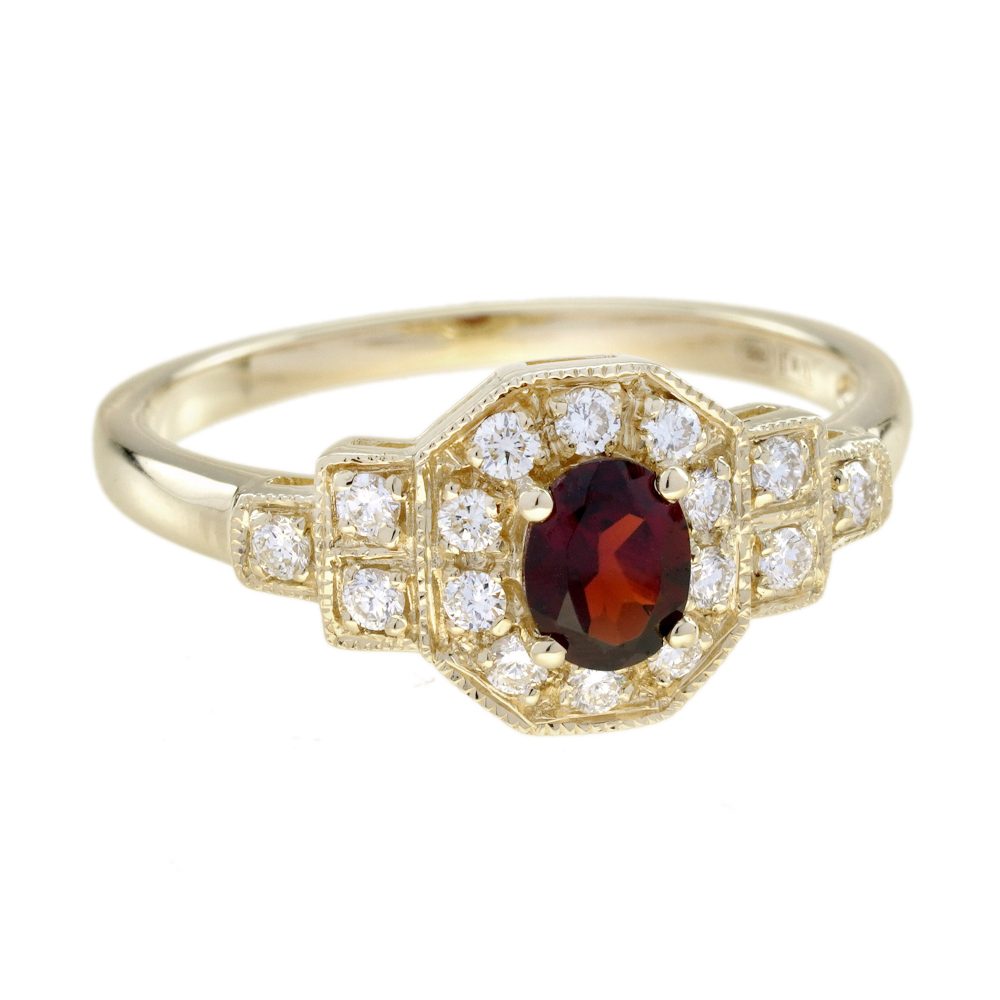
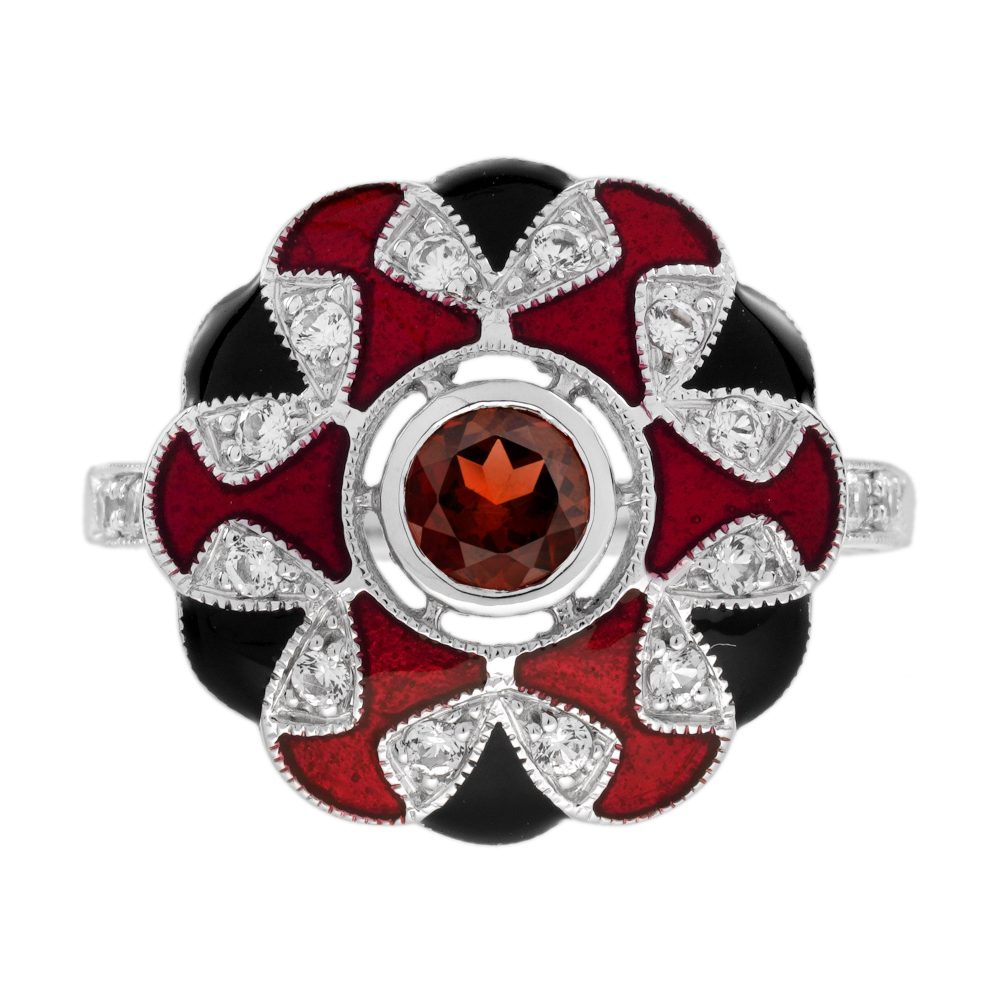
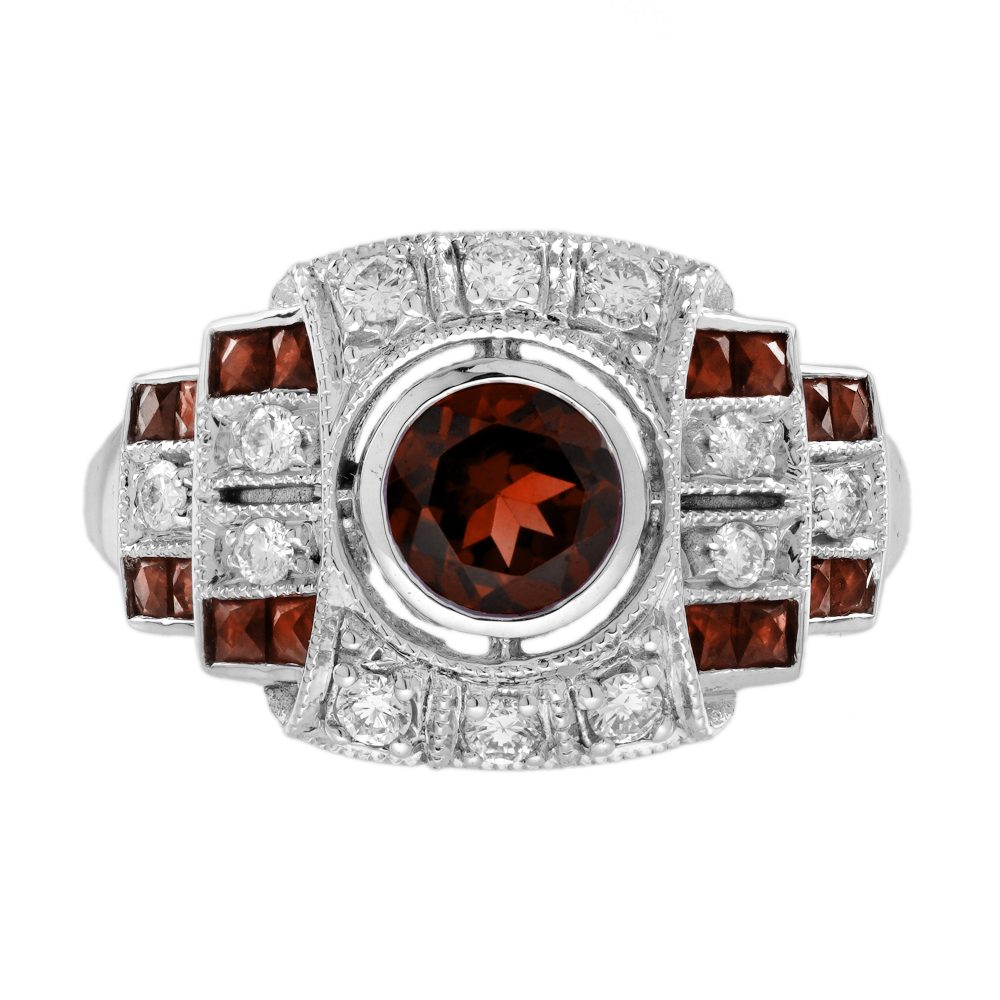
Symmetry, stepped outlines and calibrated accents can express constancy and order. Deep red garnet against white gold creates sharp contrast, while yellow gold gives the stone a warmer, more historical register. A border of small diamonds can frame the color, but the setting must still protect the garnet rather than expose it for the sake of light alone.
How Can Botanical Detail Express Garnet Meaning?
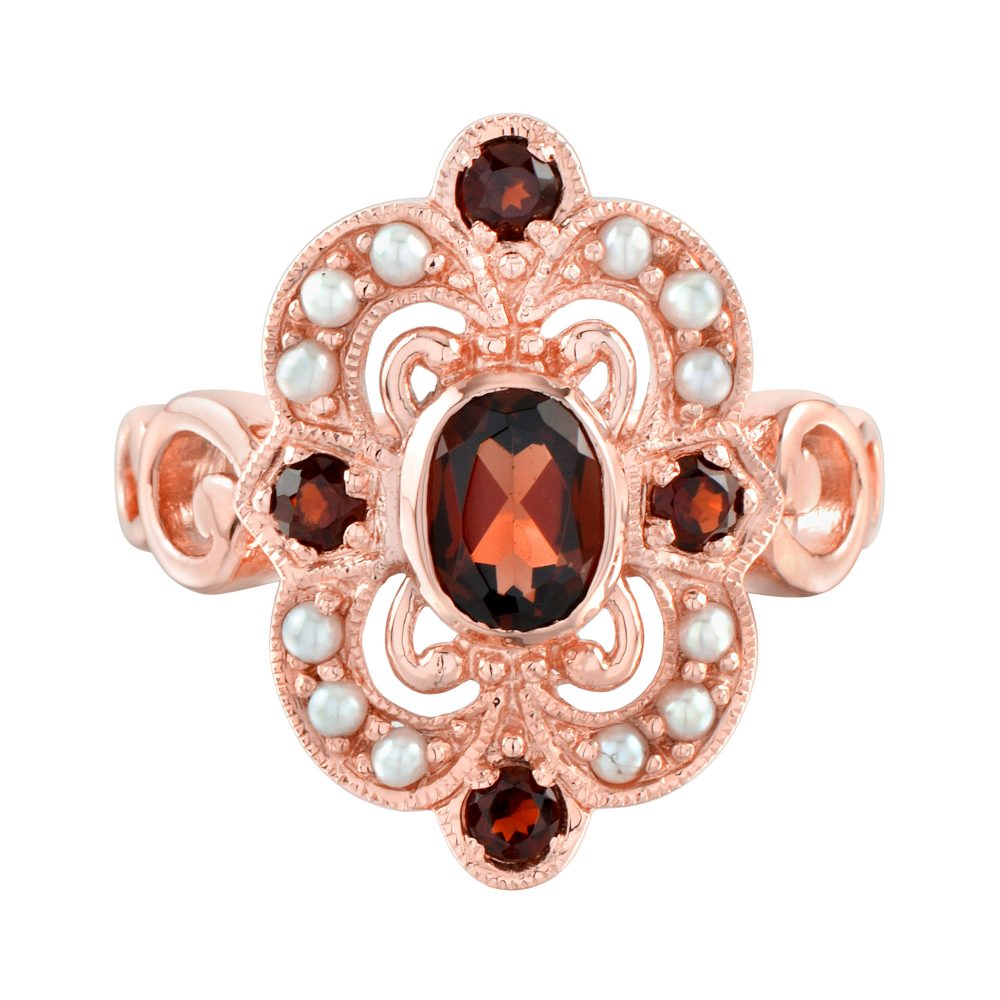
Pomegranate-like clusters, seed forms, leaves and radiating motifs can connect the gem with the linguistic history of its name. The reference can remain subtle. A group of small garnets may suggest abundance more effectively than a literal fruit motif.
How Can a Bespoke Brief Keep the Symbol Personal?
Begin with the relationship or event, then translate it into structure. A January birthstone may sit at the center. Two garnets may represent a friendship. Garnet combined with another verified birthstone may represent a family. Milgrain, filigree and geometric framing can establish the Art Deco-inspired or Edwardian-inspired character without pretending that the piece comes from an earlier period.
At Lilly M. JEWELERS, the strongest design brief aligns meaning, material and maintenance. The symbolism supplies purpose, the natural gemstone supplies color, and the solid-gold setting supplies the architecture that allows the piece to be worn.
What Should You Remember About Garnet Meaning?
Garnet represents protection, constancy, friendship and enduring connection in historical and modern jewelry traditions. It is January’s official birthstone, but it is not one uniformly red mineral. Garnet is a diverse group whose colors and varieties can support very different designs.
Its practical character is equally important. At Mohs 6.5–7.5 with fair-to-good toughness, garnet is suitable for fine jewelry but should not be treated as invulnerable. Earrings and pendants offer broad wearing flexibility; rings benefit from considered use and protective construction.
The most credible garnet jewel does not rely on symbolism alone. It combines an accurately described natural gemstone, a design suited to the wearer and a setting suited to the stone. That is how meaning becomes durable: not through a promise of supernatural effect, but through material honesty and thoughtful workmanship.
Sources: GIA — Garnet Gem Overview · GIA — January Birthstone · GIA — Garnet History and Lore · GIA — Garnet Care and Cleaning · Jewelers of America — Official Birthstone List. Mohs hardness values are standard gemological ranges.
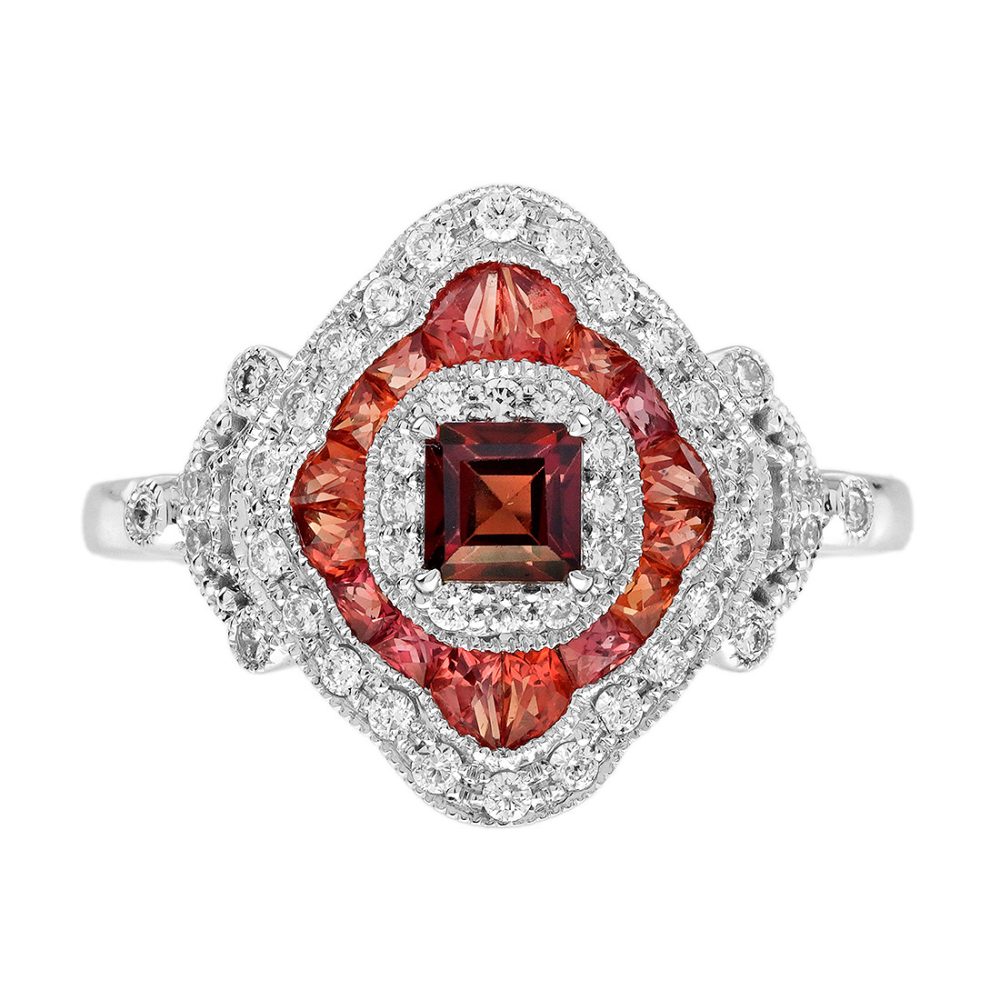
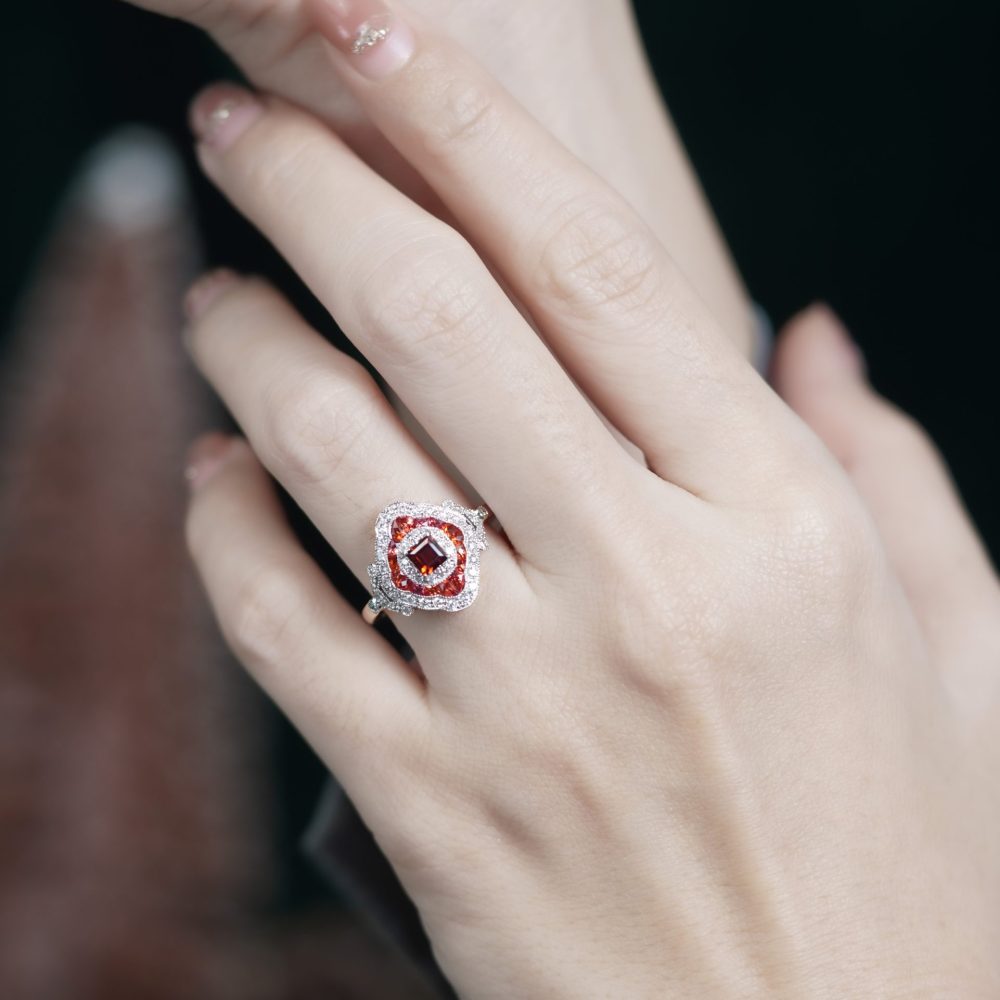
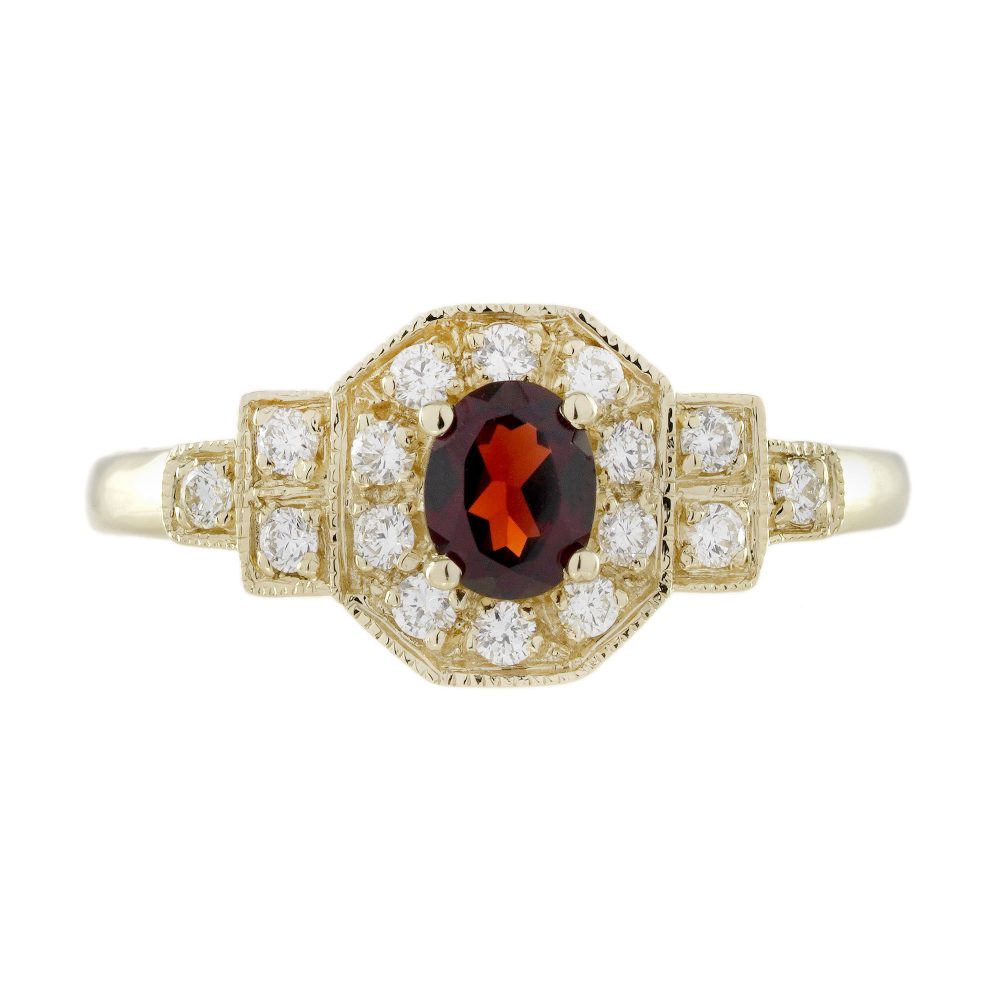
White Gold
White Gold
Frequently Asked Questions About Garnet Meaning
What does garnet symbolize?
Garnet traditionally symbolizes protection, constancy, friendship, commitment and enduring connection. These meanings come from history, language and jewelry custom. They are cultural associations rather than medical, physical or supernatural effects produced by the gemstone.
Why is garnet the birthstone for January?
Garnet is January’s official birthstone on the modern US list standardized in 1912 by the American National Retail Jewelers Association, now Jewelers of America. Earlier twelve-stone traditions influenced birthstone culture, but the modern month-by-month list is comparatively recent.
Is every garnet red?
No. Garnet is a mineral group with red, orange, green, yellow, purple and color-changing varieties. Deep red almandine and pyrope are the familiar January look, while tsavorite, demantoid, spessartine and other garnets show the group’s broader palette.
Can garnet be worn every day?
Garnet can be worn regularly with considered care, but it is less scratch-resistant than ruby or sapphire. It ranges from Mohs 6.5 to 7.5 with fair-to-good toughness. Earrings and pendants are practical for frequent wear; rings benefit from protective settings and removal during impact-heavy activity.
Are natural garnets usually treated?
Garnets are rarely treated and are usually encountered without routine enhancement, but natural origin is not a guarantee that an individual stone is untreated. Ask for the specification and any relevant disclosure for the particular garnet.