
Blog, Gemstone Guides
Peridot Meaning & August Birthstone Guide

Key Takeaways
- Peridot is an official August birthstone and is traditionally associated with light, renewal, protection and prosperity.
- Peridot is the gem-quality form of olivine and occurs only in green, usually with a yellow or golden undertone created by iron within its structure.
- At Mohs 6.5–7 with fair toughness and sensitivity to acid and thermal shock, peridot is best matched with considered settings and wearing habits.
- Peridot is rarely treated, but natural origin still does not establish the treatment status of every individual stone.
What Is the Meaning of Peridot?
Peridot means light, renewal, protection and prosperity in historical and modern jewelry traditions. It is an official August birthstone and the gem-quality form of olivine, recognized by its yellow-green color. At Mohs 6.5–7 with fair toughness, its bright symbolism is best supported by protective design and considered wear.
What Does Peridot Symbolize?
Peridot symbolism commonly centers on light, renewal, protection, prosperity and growth. These are cultural associations rather than physical effects produced by the gemstone. Their value lies in the way a jewel can give visible form to a private intention, a birthday, a relationship or the beginning of a new chapter.
The association with light is easy to understand from the stone itself. Peridot remains green in daylight and artificial light, often carrying a yellow or golden undertone that can appear illuminated from within. Historical traditions used this luminous appearance to connect the gem with the sun and with protection from darkness. Such accounts describe belief and symbolism. Peridot does not prevent illness, injury or misfortune.
Renewal and growth are modern extensions of the same color language. Green suggests leaves, cultivated landscapes and the return of life after a dormant season. An August birthstone jewel may therefore represent a birthday while also marking change or a deliberate fresh start. Prosperity belongs to a similar symbolic family, but it should never be presented as a promise of financial gain.
Green peridot meaning is not fixed by hue alone. A vivid yellow-green stone may feel energetic and graphic; a more muted olive-green stone may feel restrained and organic. Personal context should take precedence over a generic list of meanings. A stone may represent renewal for one wearer and a particular place, person or August memory for another.
Workshop insight: Peridot meaning is most convincing when brightness and protection are designed together. A setting that permits light to reach the gem while guarding its exposed edges translates the stone's symbolism into construction. The jewel does not merely describe renewal; its architecture supports continued wear.
Why Is Peridot an August Birthstone?
Peridot is an official August birthstone on the modern US list maintained by Jewelers of America. August is not limited to one official gem: spinel also appears on the current list. The distinction matters because a buyer may prefer peridot's yellow-green identity or spinel's wider color range without weakening the birthstone connection.
The modern list was standardized in 1912 by the American National Retail Jewelers Association, now Jewelers of America. The list has changed over time, and spinel was added for August in 2016. This is an industry standard with a documented modern history, not one uninterrupted ancient code.
Peridot suits August because its green and golden tones echo the fullness of late summer. That seasonal connection is interpretive rather than scientific, yet it gives an August birthstone gift a coherent visual language. The piece may mark a birthday, an August anniversary or a family relationship represented by several birth months.
Our birthstones by month guide places peridot and spinel within the complete official sequence. The wider context is useful when a design combines several people or when the wearer wants to understand why a month can have more than one recognized stone.
What Makes Peridot’s Green Color Distinctive?
Peridot is the gem-quality form of olivine. Unlike gems that occur in many unrelated colors, peridot is defined by green. Its range extends from yellowish green and lime green to deeper olive tones. Iron within the mineral structure produces the color, so the hue belongs to the material itself rather than being routinely introduced by treatment.
The GIA peridot overview describes peridot's identity, color and formation. A strong peridot generally shows a recognizable green rather than a brown-dominant appearance. The ideal color is not one universal swatch, however. Skin tone, metal color, scale and design can change which balance of yellow and green appears most considered.
Peridot can be confused visually with other green stones, but visual resemblance is not identification. Emerald is beryl, green garnets belong to the garnet group, and peridot is olivine. A seller or appraiser should name the material accurately rather than using "emerald green" as if it established species.
| Selection factor | What to observe | Why it matters | Workshop interpretation |
|---|---|---|---|
| Hue | Balance of green and yellow | Establishes the stone's immediate identity | Yellow-green reads luminous; olive green reads restrained |
| Tone | Relative lightness or darkness | A stone that is too dark may lose visible life | Judge it in the lighting where it will be worn |
| Saturation | Strength of the green | Brown or gray modifiers can soften the color | Favor coherence with the design rather than a label alone |
| Clarity | Inclusions visible to the eye | Some inclusions affect beauty or durability | Inspect their position, not only their presence |
| Cut | Symmetry, proportion and polish | Determines how the gem returns light | A lively smaller stone may outperform a heavier dull one |
| Scale | Face-up size in relation to setting | Larger surfaces create more visual color and more exposure | Match size to wearing pattern and protective architecture |
Peridot's narrow color family is a strength. It gives the gem a clear identity while leaving enough variation for personal choice. The best stone is not necessarily the darkest or largest. It is the one whose hue remains alive in ordinary light and whose scale suits the setting that will protect it.
Where Did Peridot Meaning Come From?
Peridot meaning developed through its unusual color, geological origin, long use in jewelry and modern birthstone status. It did not begin as one fixed definition that remained unchanged.
How Did Light Shape Peridot Symbolism?
The stone's yellow-green appearance invited comparisons with sunlight, cultivated growth and illumination. Historical traditions associated peridot with protection from darkness and with the power of light. These beliefs are part of the gem's cultural record, not evidence that peridot produces a physical or supernatural effect.
How Did Geological Origin Shape Peridot Meaning?
Most gem materials form within the earth's crust. Peridot forms deeper in the upper mantle and reaches the surface through geological processes associated with volcanic rock. This origin gives the stone a useful symbolic contrast: a bright green gem carried upward from depth. The scientific formation and the symbolic interpretation should remain distinct, but they can coexist in an informed design brief.
How Did Historical Jewelry Shape Peridot Meaning?
Peridot has a long history in adornment, documented in the GIA account of peridot history and lore. Historical sources and later retellings do not always use modern gemological identification, so old references to green stones should be treated with care. Similar color does not prove that a historical "emerald" was peridot.
A peridot set today does not acquire ancient provenance from that history. Lilly M. JEWELERS creates newly made jewelry with natural gemstones set in solid gold. Art Deco-inspired, Edwardian-inspired and vintage-inspired details describe design language, never the age of the piece.
How Did Modern Birthstone Custom Shape Peridot Meaning?
The standardized August association made identity as important as older protective symbolism. Peridot may now represent a birth month, a shared anniversary or one person within a family jewel. The modern meaning is layered: geological material, historical adornment, official birthstone and personal symbol.
How Durable Is Peridot for Jewelry?
Peridot reaches 6.5–7 on the Mohs scale and has fair toughness. Mohs hardness measures resistance to scratching. Toughness measures resistance to chipping and breaking. The two properties answer different questions and should never be used interchangeably.
Peridot is suitable for fine jewelry, but it is more vulnerable to surface wear and impact than ruby or sapphire. It is also sensitive to acids and sudden temperature change. These characteristics do not disqualify it from rings. They make wearing pattern, setting height and edge protection important parts of the design.
| Property | What it measures | Peridot position | Practical implication |
|---|---|---|---|
| Hardness | Resistance to scratching | Mohs 6.5–7 | Surface wear is possible with frequent unprotected contact |
| Toughness | Resistance to chipping and breaking | Fair | Avoid sharp impact and exposed vulnerable edges |
| Thermal response | Reaction to sudden temperature change | Sensitive to thermal shock | Avoid steam and abrupt hot-to-cold changes |
| Chemical sensitivity | Reaction to acids and harsh cleaners | Sensitive to acid | Use mild soap and controlled manual cleaning |
| Treatment pattern | Whether enhancement is routine in the market | Rarely treated | Confirm the individual stone rather than assuming |
| Recommended wear | Relationship between material and use | Occasional rings; broader flexibility for earrings and pendants | Match construction to frequency and activity |
Our workshop approach is to design from the likely impact pattern outward. A low-profile bezel, protective halo or substantial prong arrangement may suit a peridot ring intended for regular but considered wear. An occasional dress ring can permit a more open composition. Earrings and pendants naturally avoid many of the impacts that rings and bracelets encounter.
The central principle is simple: enduring symbolism does not make a gemstone physically indestructible. Good jewelry design acknowledges vulnerability and gives it a structure in which it can be worn with confidence.
Which Peridot Jewelry Suits Different Wearing Patterns?
The best peridot jewelry type depends on frequency, activity and the role the piece will play.
When Is a Peridot Ring Appropriate?
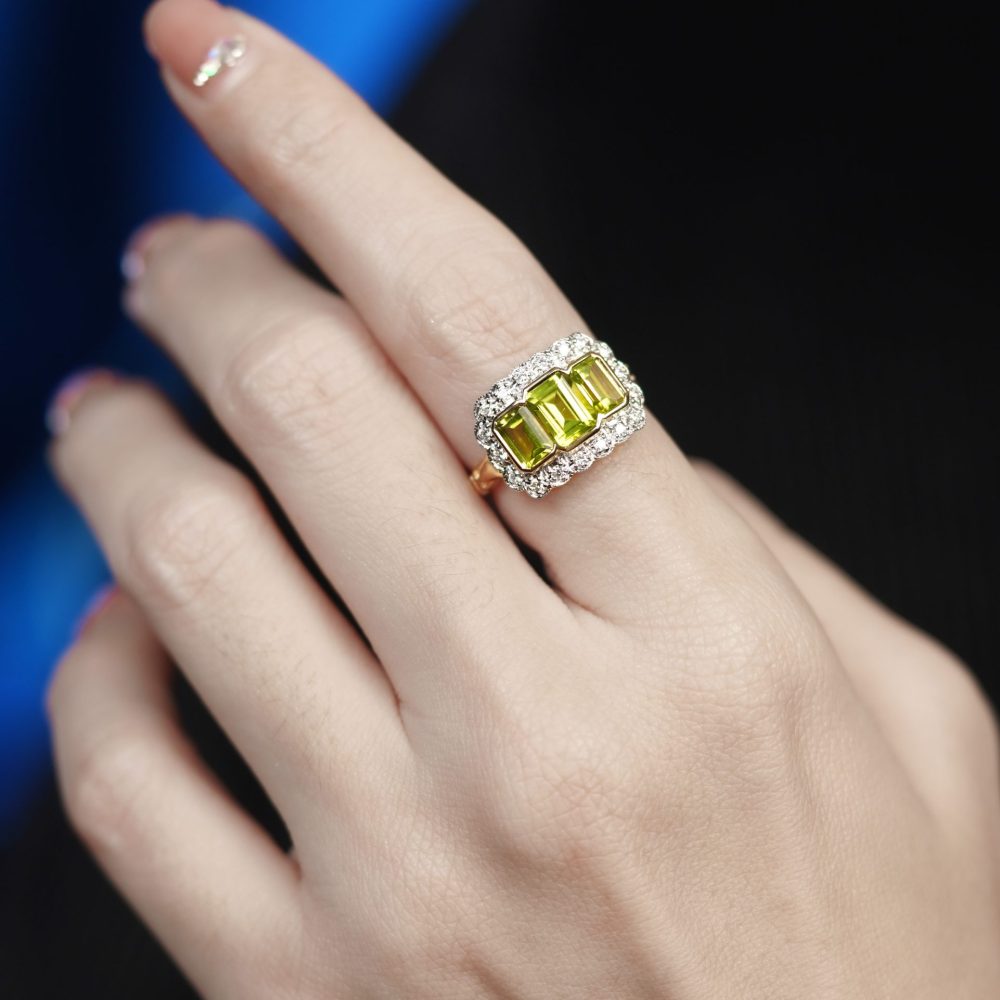
A peridot ring is appropriate for occasional or considered wear. For regular use, a low profile and protective edge treatment reduce exposure. A bezel, halo or substantial prong arrangement may be useful, provided the construction suits the individual stone. The ring should be removed for gardening, weight training, workshop activity, household cleaning and other impact-heavy tasks.
An engagement ring set with peridot requires an honest discussion about maintenance. The symbolism and color may be personally exact, but the wearer must accept more attentive care than a harder center stone would require. A protective setting and a realistic wearing routine matter more than a generic statement that peridot is "suitable for jewelry."
When Are Peridot Earrings or Pendants Preferable?
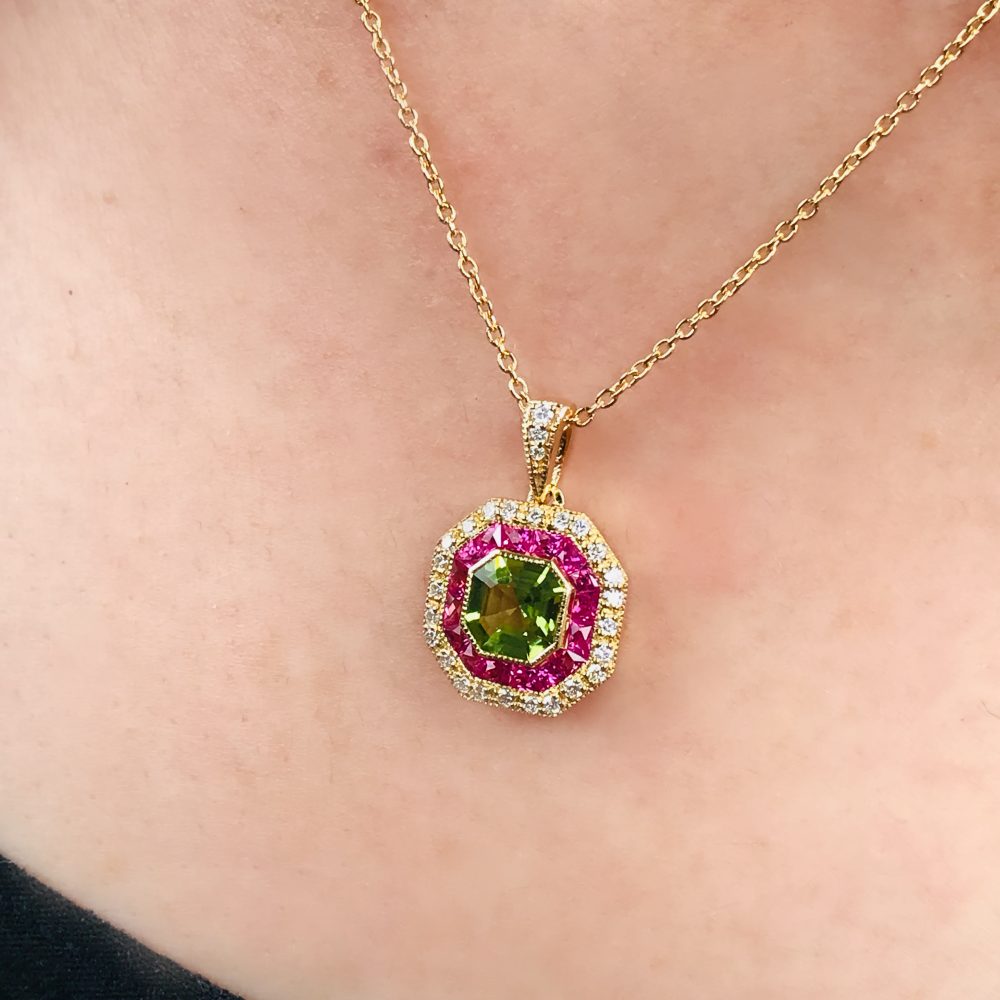
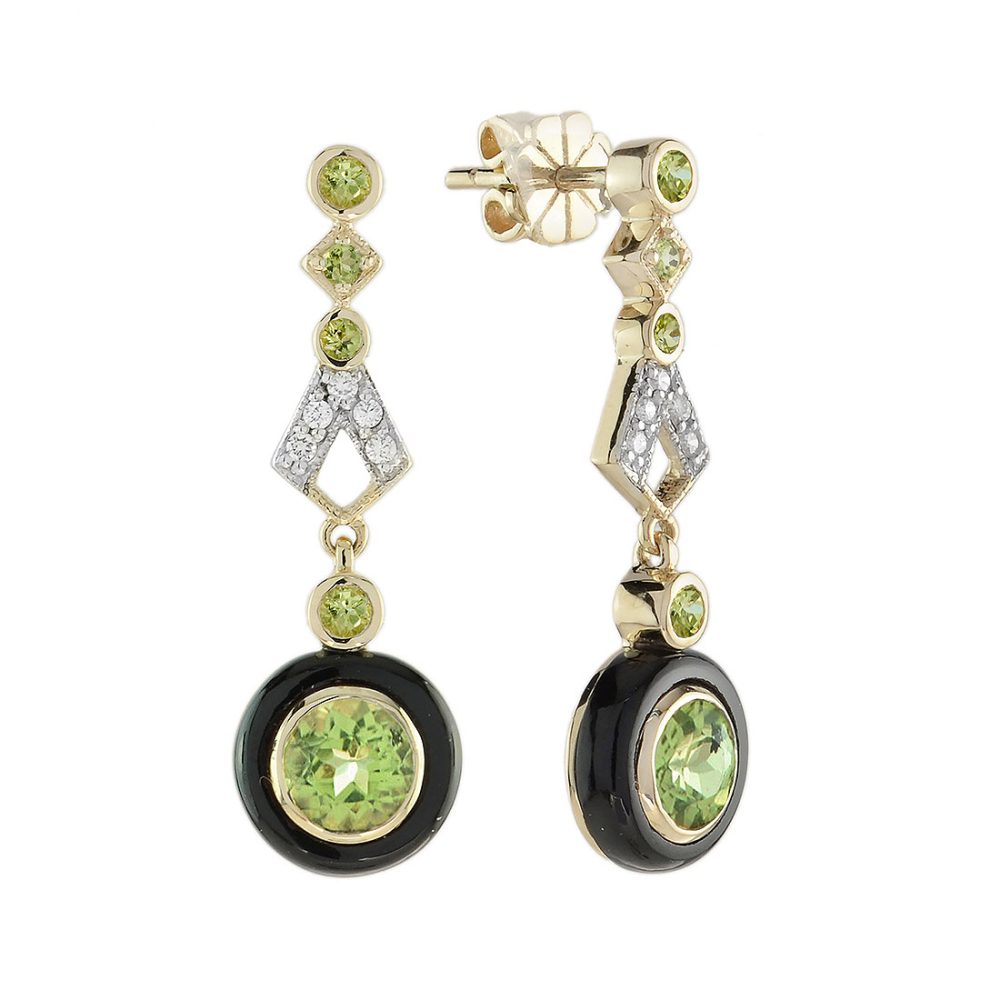
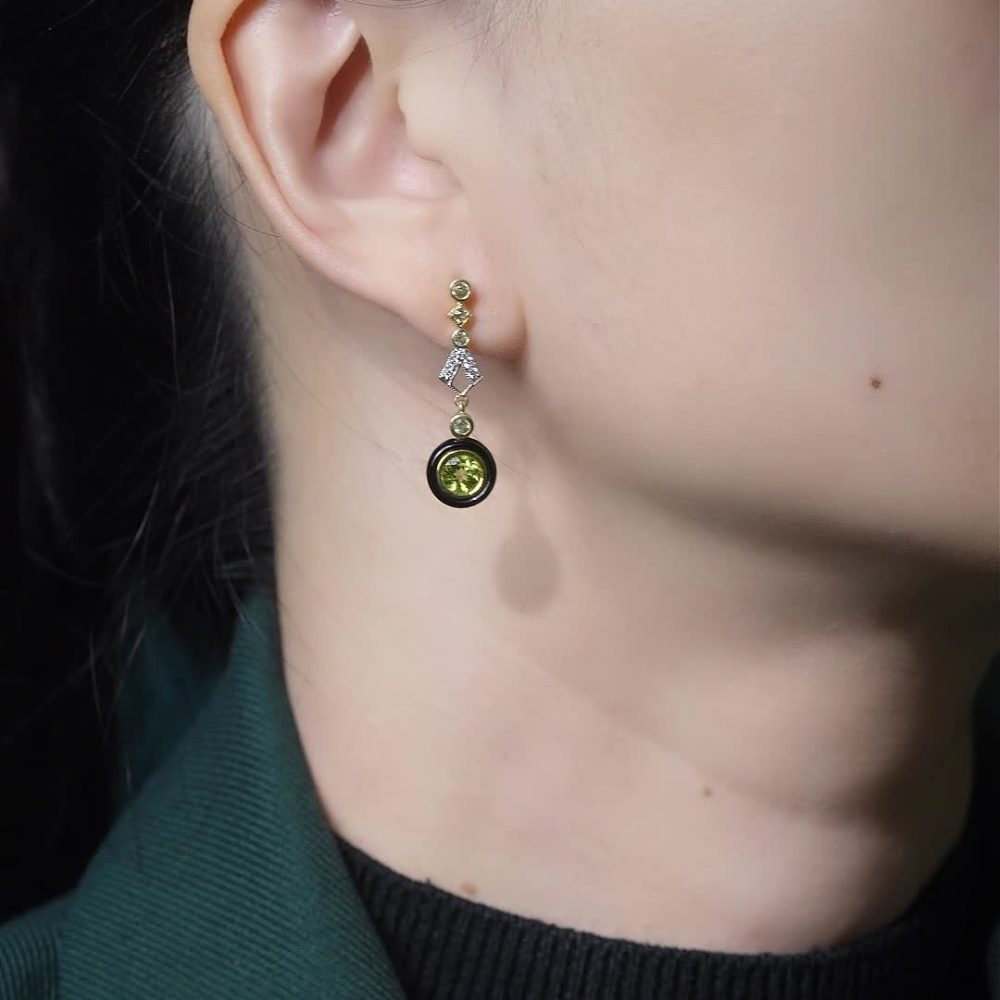
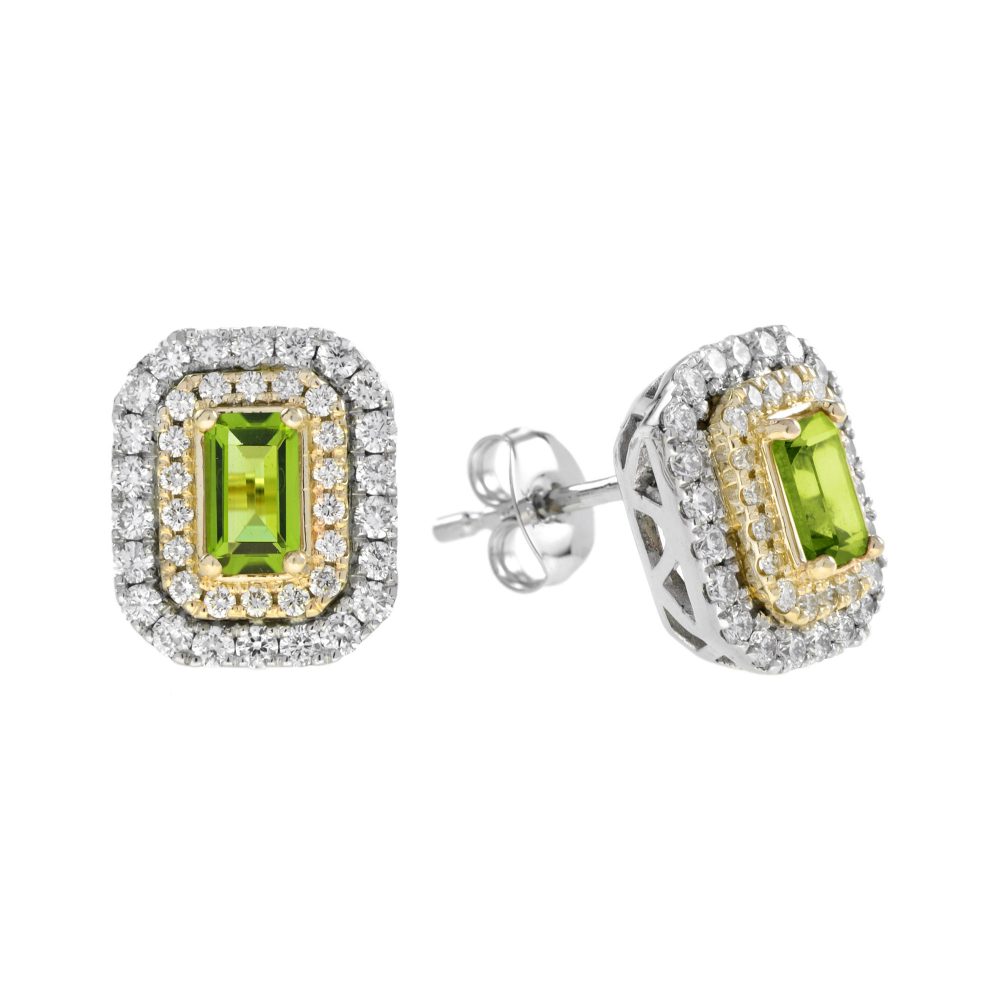
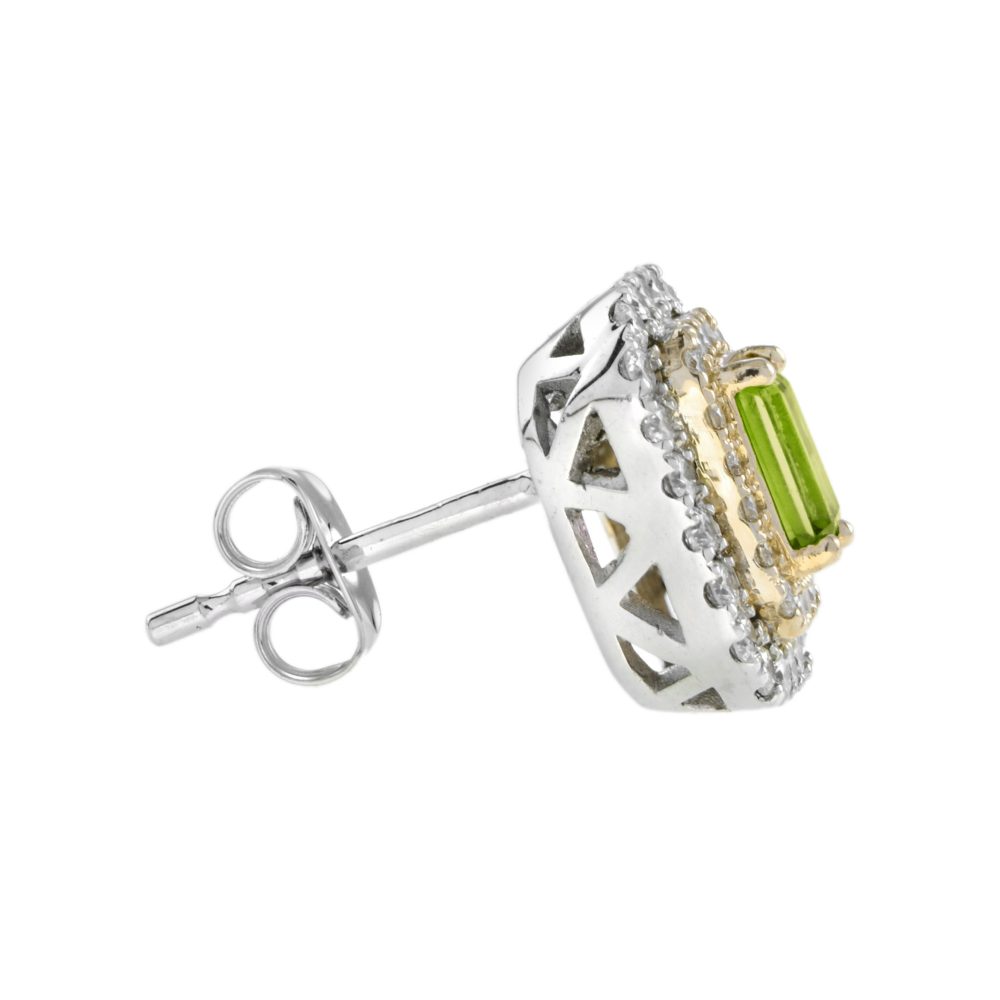
Earrings and pendants experience fewer direct impacts than rings and bracelets, making them practical choices for frequent wear. They also allow the green color to remain the principal visual statement. A pendant can hold August symbolism close to the wearer, while earrings can create a balanced pair without repeated contact with hard surfaces.
When Does a Peridot Bracelet Need Extra Care?
Bracelets move against desks, doors and other objects. A peridot bracelet needs secure settings and enough structure to limit stone-to-surface contact. It should also be stored separately so that harder gemstones and exposed metal edges from neighboring pieces do not abrade it.
Wearability is not a ranking of jewelry categories. It is a design constraint. Once the constraint is named, the gemstone, scale and setting can be chosen with greater precision.
How Should a Peridot Be Chosen?
Choose peridot by beginning with color and intended wear, then assess the individual stone as a complete optical and structural object.
- Choose the green that suits the wearer. Decide whether the design calls for lively yellow-green, balanced leaf green or a more restrained olive tone. A market preference cannot compensate for a color that does not suit the person or the metal.
- Examine tone in ordinary light. A stone that appears vivid under a jeweler's lamp may look dull or brownish in everyday conditions. Judge it in more than one lighting environment.
- Consider clarity in context. Eye-visible inclusions may affect beauty or durability depending on their position and character. Small inclusions are not automatically defects, and a distinctive inclusion is not a substitute for professional identification.
- Judge the cut as a system. Symmetry, proportion and polish determine how the stone returns light. A shallow or poorly centered cut may create a window, while excessive depth can retain weight without improving face-up beauty.
- Match scale to setting. A large peridot offers more color but also exposes more surface area in a ring. A smaller stone with a deliberate frame may produce a stronger and more wearable design.
- Confirm material identity and disclosures. Natural peridot, green glass and other green gems are not interchangeable. The description should identify the material accurately and disclose any relevant treatment for the individual stone.
Meaning should enter after these material questions, not replace them. A jewel may represent renewal, August or protection while still requiring an exact specification. Sentiment deserves accuracy.
Is Peridot Usually Treated?
Peridot is rarely treated and is generally encountered without routine enhancement. That group-level pattern is useful, but it is not a guarantee about every individual stone.
"Natural" describes geological origin. It does not automatically mean "untreated." The specification for a particular peridot should identify the material accurately and include any relevant disclosure. Treatment practices differ among gemstones, so assumptions carried from one material to another are unreliable.
Lilly M. JEWELERS works with natural gemstones. Because natural origin does not establish treatment status, this article does not claim that every peridot offered by the brand is untreated. Product-level information should govern the final purchase decision.
How Should Peridot Jewelry Be Cared For?
Peridot jewelry should be cleaned gently, protected from impact and stored separately. The GIA peridot care guidance supports a conservative routine based on warm soapy water and careful manual cleaning.
For routine home care, use lukewarm water, mild soap and a very soft brush. Work around the back of the setting where residue collects, then rinse carefully and dry with a soft, lint-free cloth. Do not use an abrasive cleaner, stiff brush, acidic solution or unknown chemical mixture.
Steam cleaning should be avoided because peridot is sensitive to thermal shock. Ultrasonic cleaning should not be treated as a universal default; inclusions, settings and the condition of the jewel may introduce additional risks. When those details are not known, controlled manual cleaning is the more conservative approach.
Store peridot jewelry in a separate fabric-lined compartment or pouch. Harder gemstones can scratch peridot, while exposed metal edges can damage neighboring pieces. Remove peridot rings and bracelets before impact-heavy work, sport, gardening, swimming or cleaning with chemicals.
Periodic inspection matters because the setting can wear even when the stone appears unchanged. A loose prong, a bent gallery or thinning metal changes the risk profile of the piece. Maintenance protects the gemstone and preserves the meaning attached to it.
How Can Peridot Meaning Guide an Antique-Inspired Design?
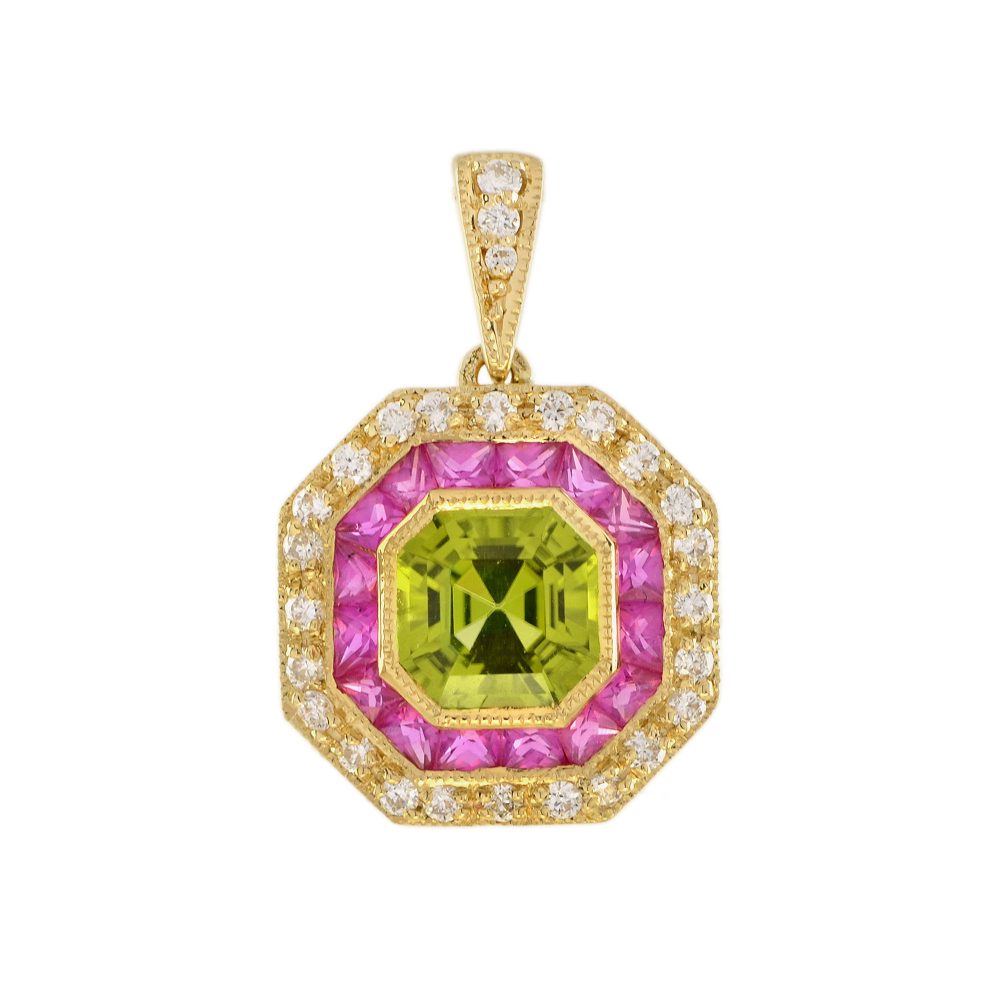
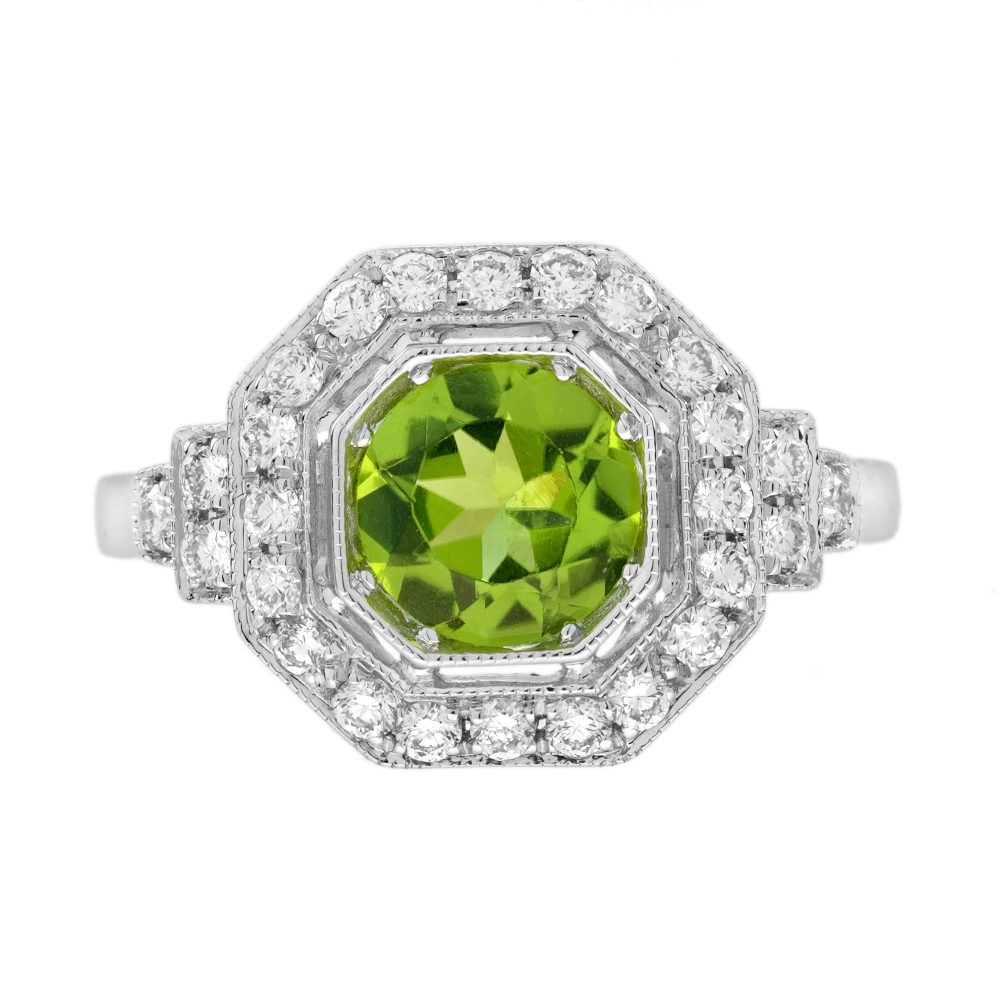
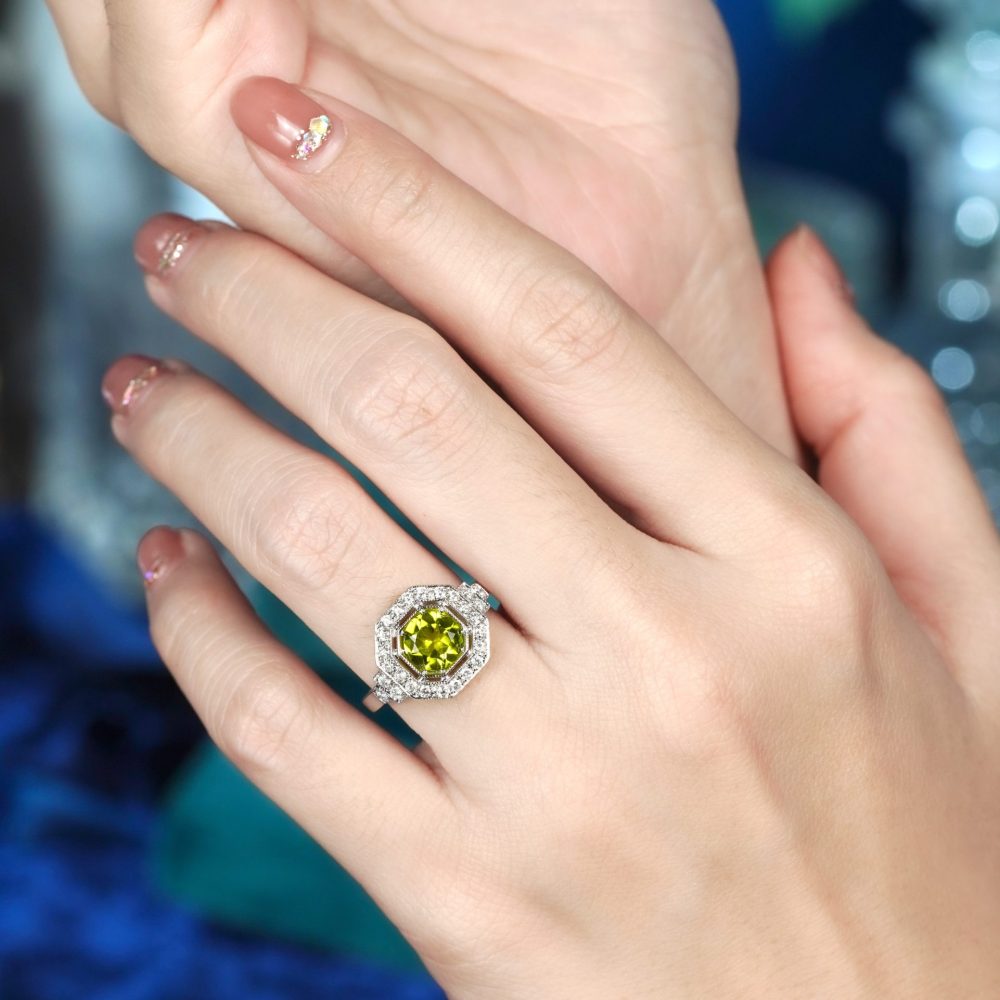
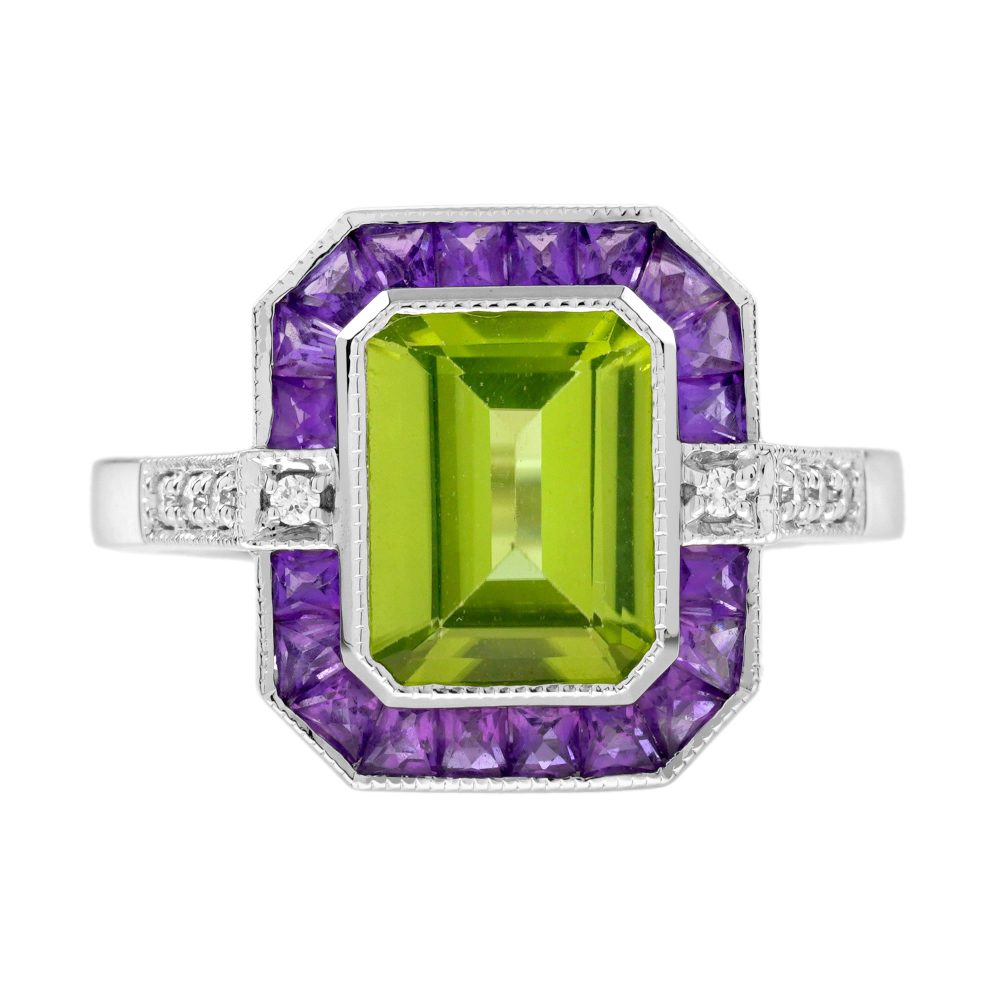
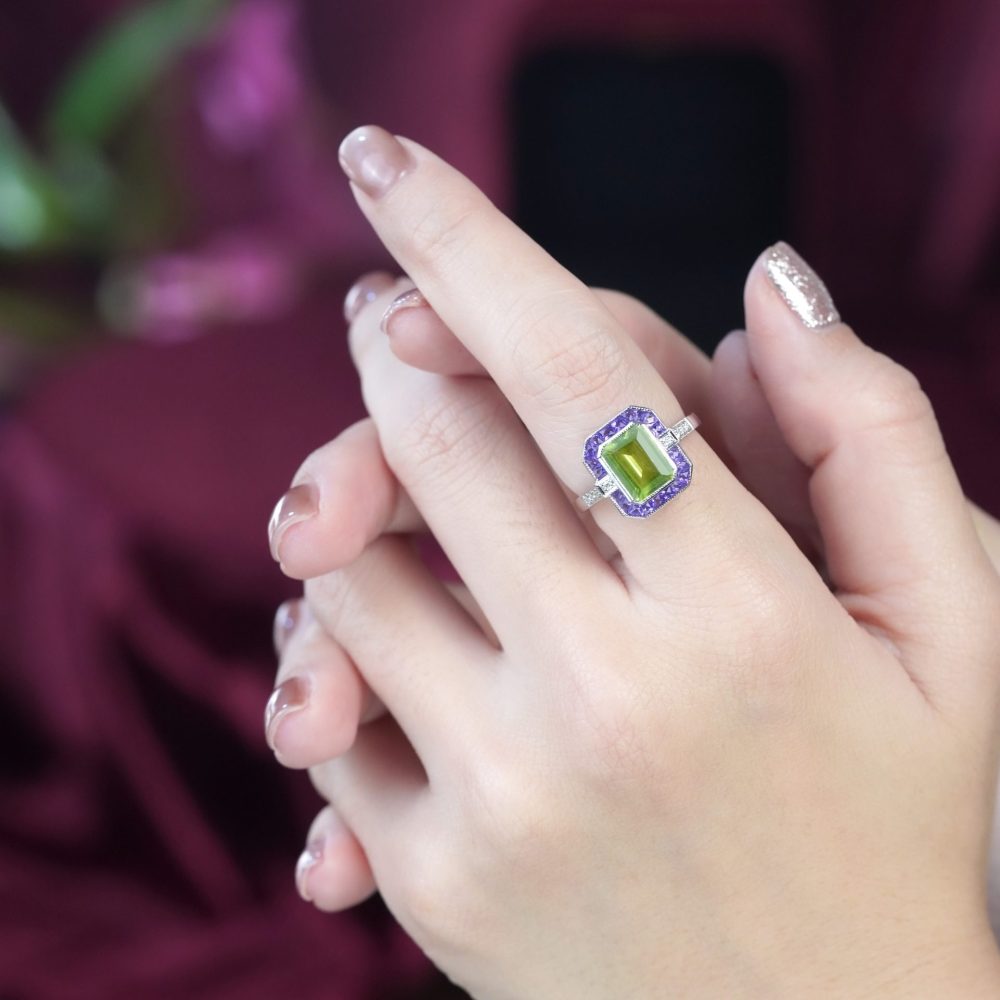
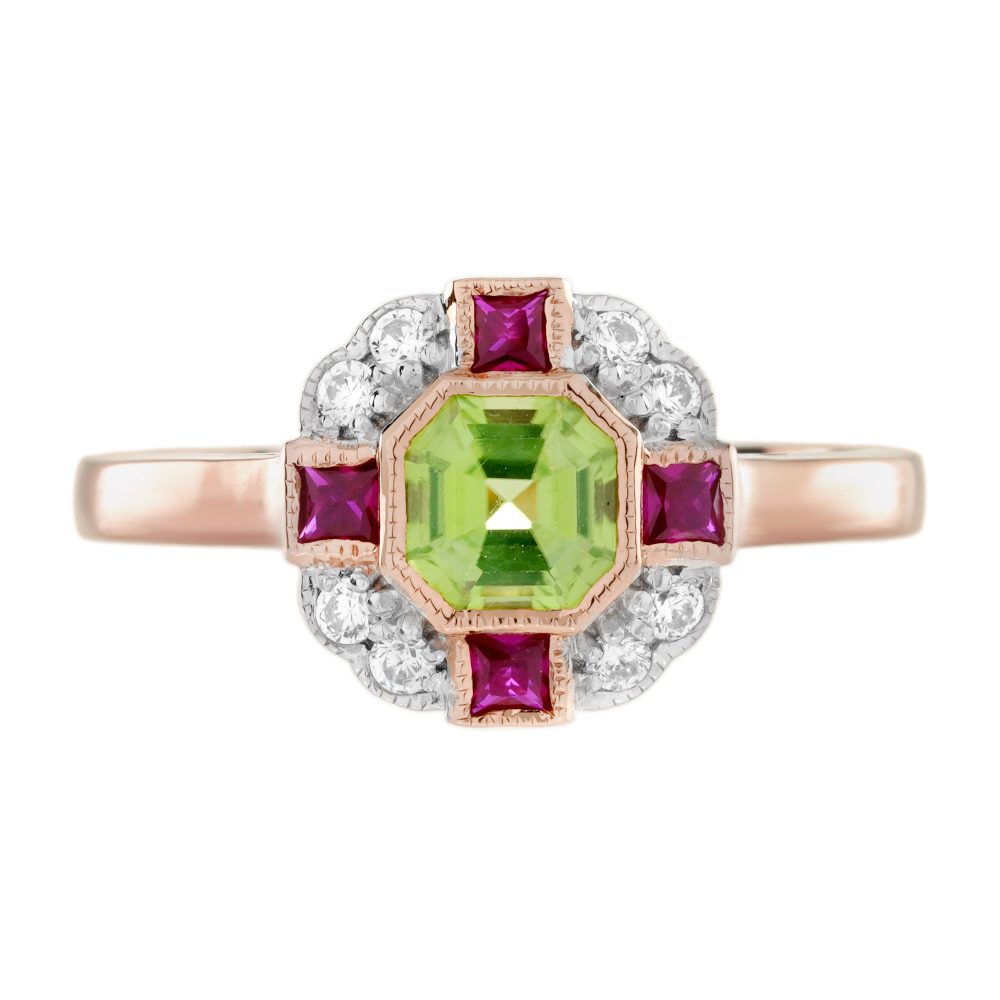
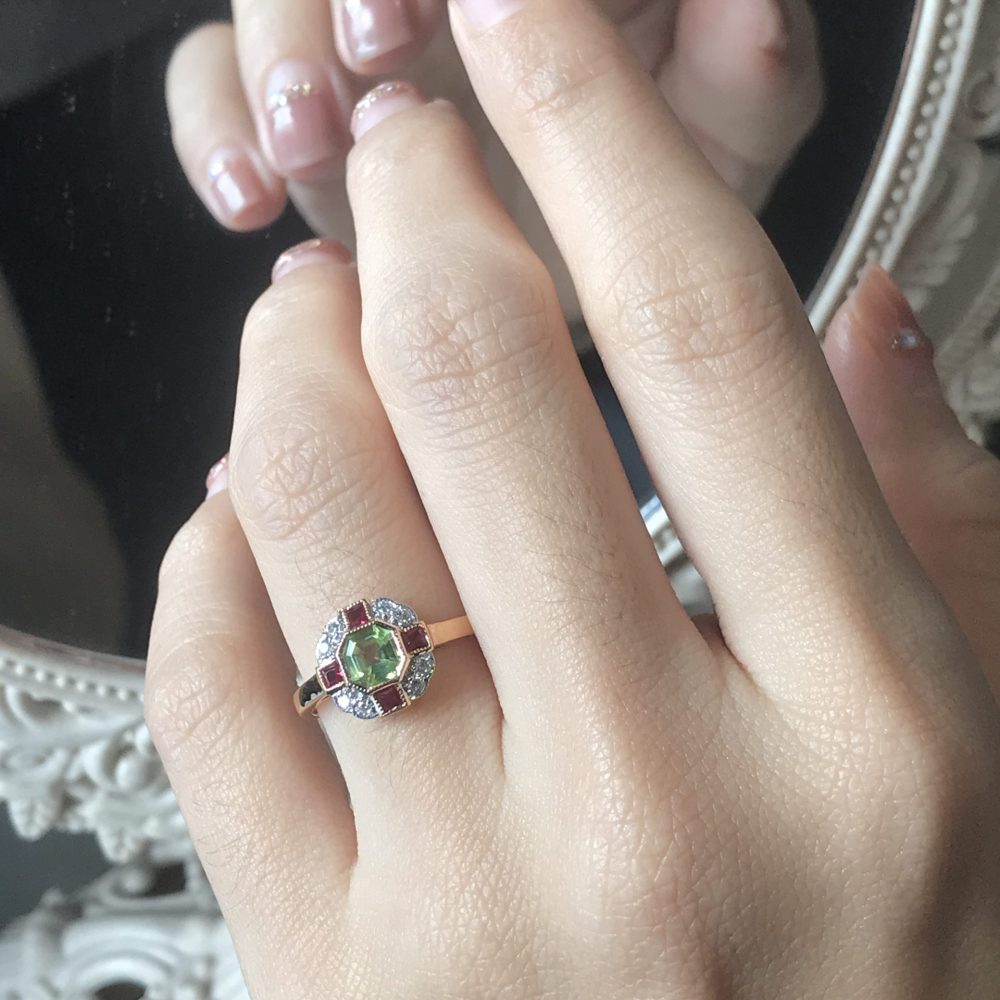
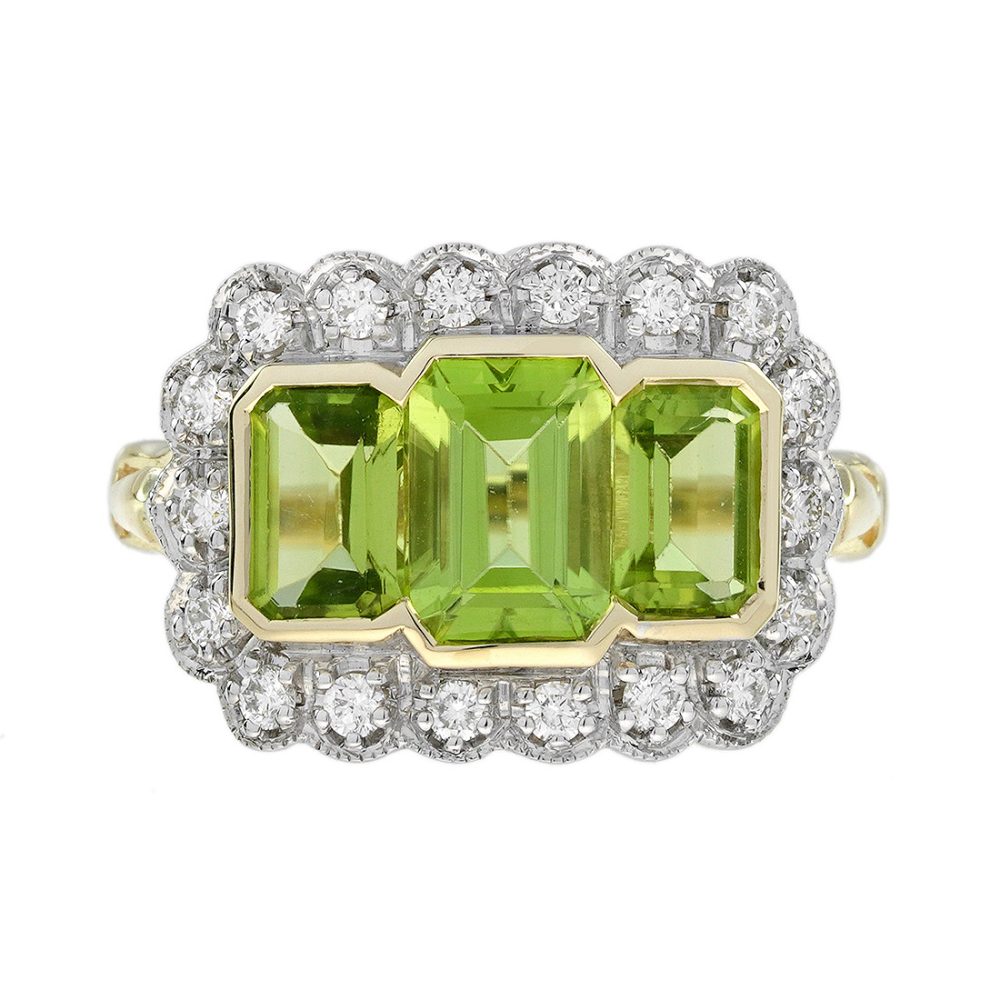
Peridot works naturally with Art Deco-inspired and Edwardian-inspired design languages because its yellow-green color can carry both graphic geometry and botanical ornament. The jewel remains newly made and must be described as inspired by historical aesthetics, never as an antique, vintage or period piece.
How Can Geometry Express Peridot Meaning?
Symmetry, stepped outlines and calibrated accents can give peridot a precise, architectural character. White gold produces a cooler contrast; yellow gold draws out the gem's golden undertone. A border of small diamonds can sharpen the green, but the setting must still protect the peridot rather than expose it for light alone.
How Can Botanical Detail Express Peridot Meaning?
Leaves, radiating petals, seed forms and ordered vine motifs can connect the stone with renewal and growth without becoming literal. The green may function as a single center or as a measured sequence of accents. Milgrain and filigree can soften the geometry while a protective border supports the stone.
How Can a Bespoke Brief Keep the Symbol Personal?
Begin with the relationship or event, then translate it into structure. An August birthstone may sit at the center. Two peridots may represent people who share the month. Peridot combined with another verified birthstone may represent a family. Geometry, milgrain and botanical detail can establish an Art Deco-inspired or Edwardian-inspired character without pretending that the piece comes from an earlier period.
At Lilly M. JEWELERS, the strongest design brief aligns meaning, material and maintenance. Symbolism supplies purpose, the natural gemstone supplies color, and the solid-gold setting supplies the architecture that allows the piece to be worn.
What Should You Remember About Peridot Meaning?
Peridot represents light, renewal, protection and prosperity in historical and modern jewelry traditions. It is an official August birthstone alongside spinel, and it is the gem-quality form of olivine. Its defining identity is green, commonly modified by yellow or golden undertones.
Its practical character is equally important. At Mohs 6.5–7 with fair toughness and sensitivity to acid and thermal shock, peridot is suitable for fine jewelry but should not be treated as invulnerable. Earrings and pendants offer broad wearing flexibility; rings benefit from considered use and protective construction.
The most credible peridot jewel does not rely on symbolism alone. It combines an accurately described natural gemstone, a setting designed for the wearing pattern and a meaning specific enough to remain personal. That union of light, story and structure is what allows the jewel to endure.
Sources: GIA — Peridot Gem Overview · GIA — August Birthstone · GIA — Peridot History and Lore · GIA — Peridot Care and Cleaning · Jewelers of America — Official Birthstone List
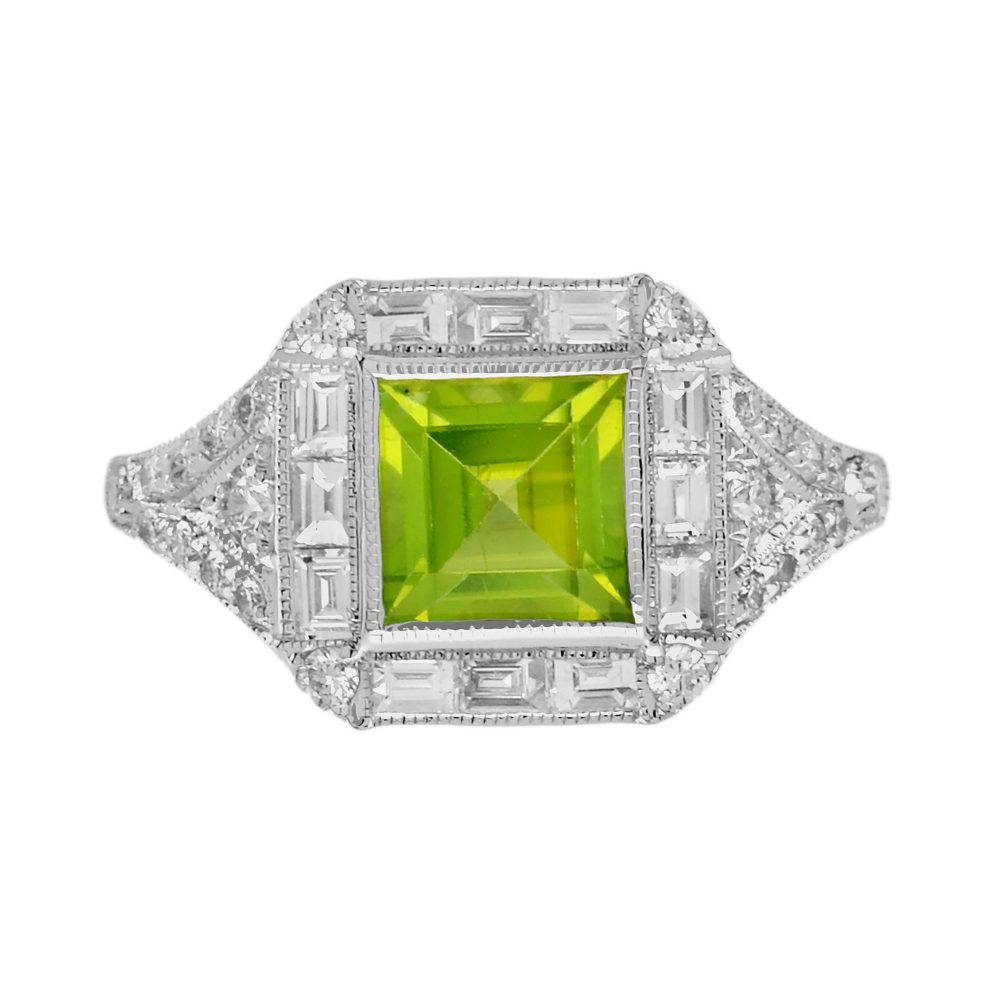

Engagement Ring
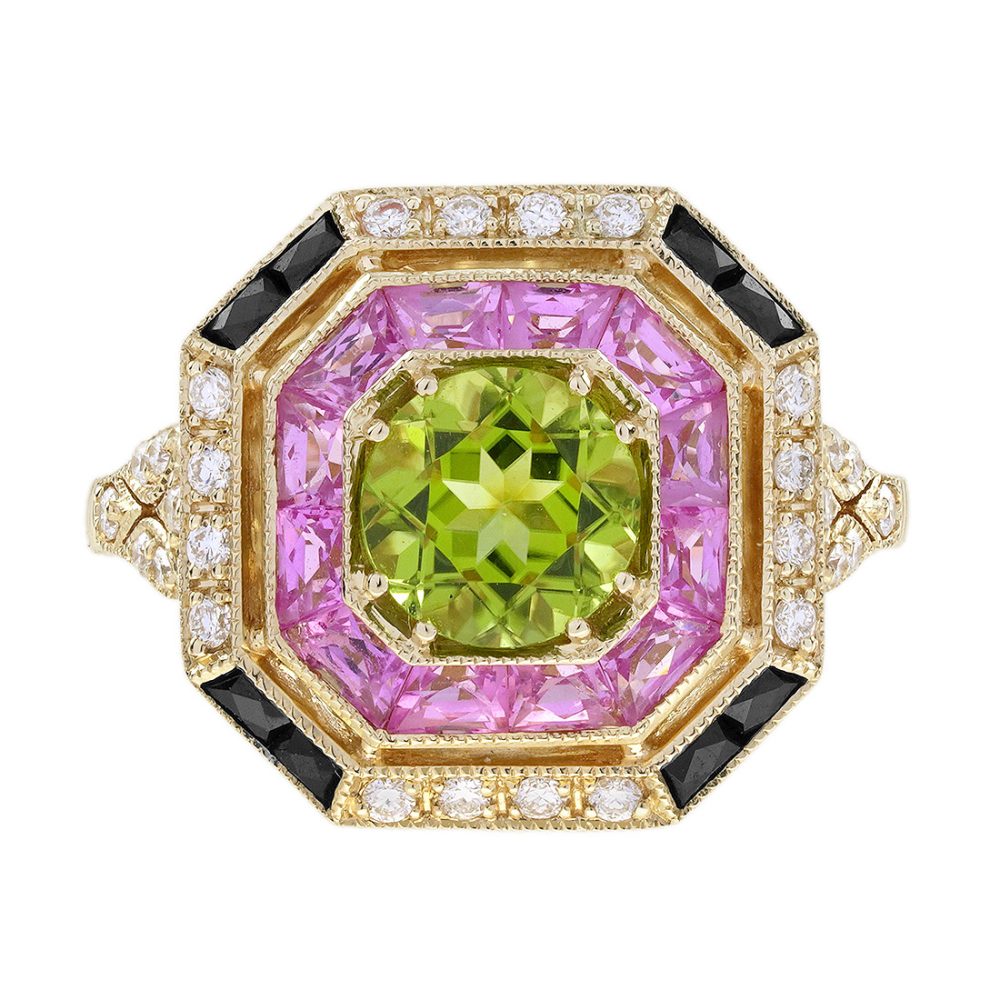


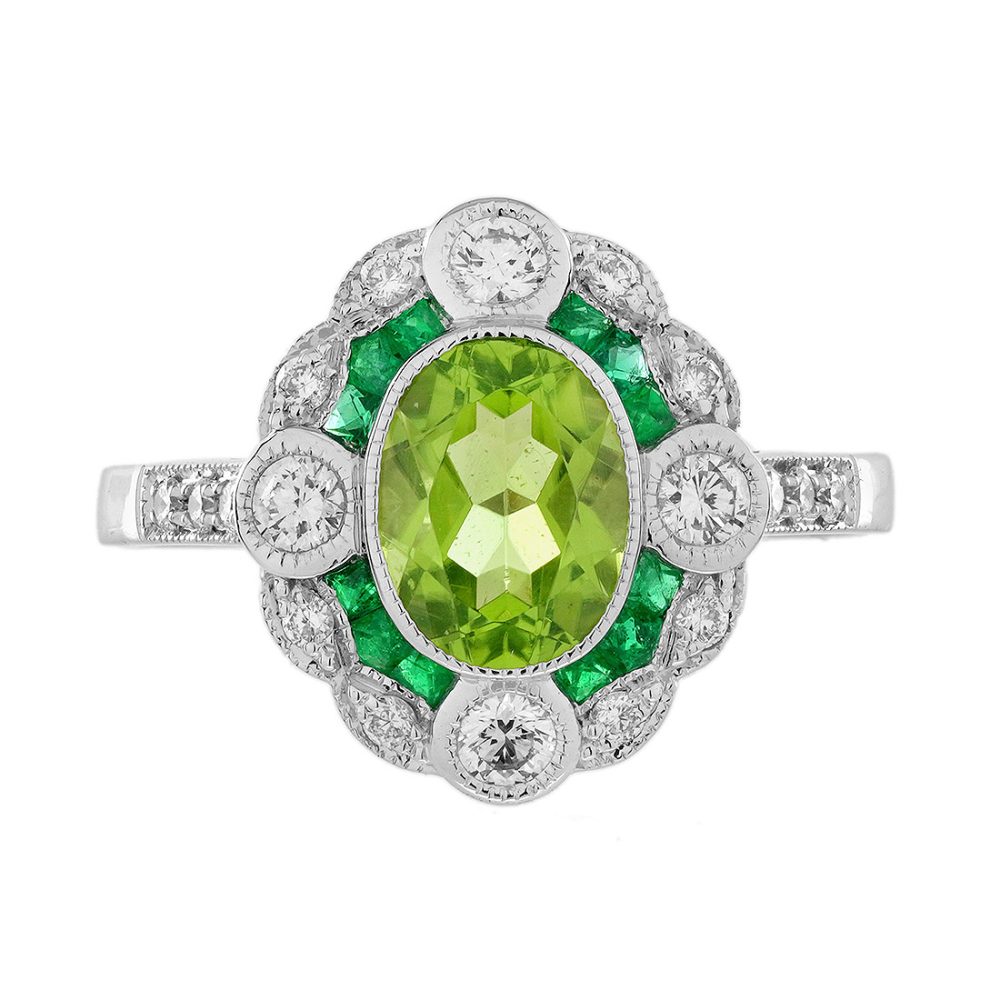
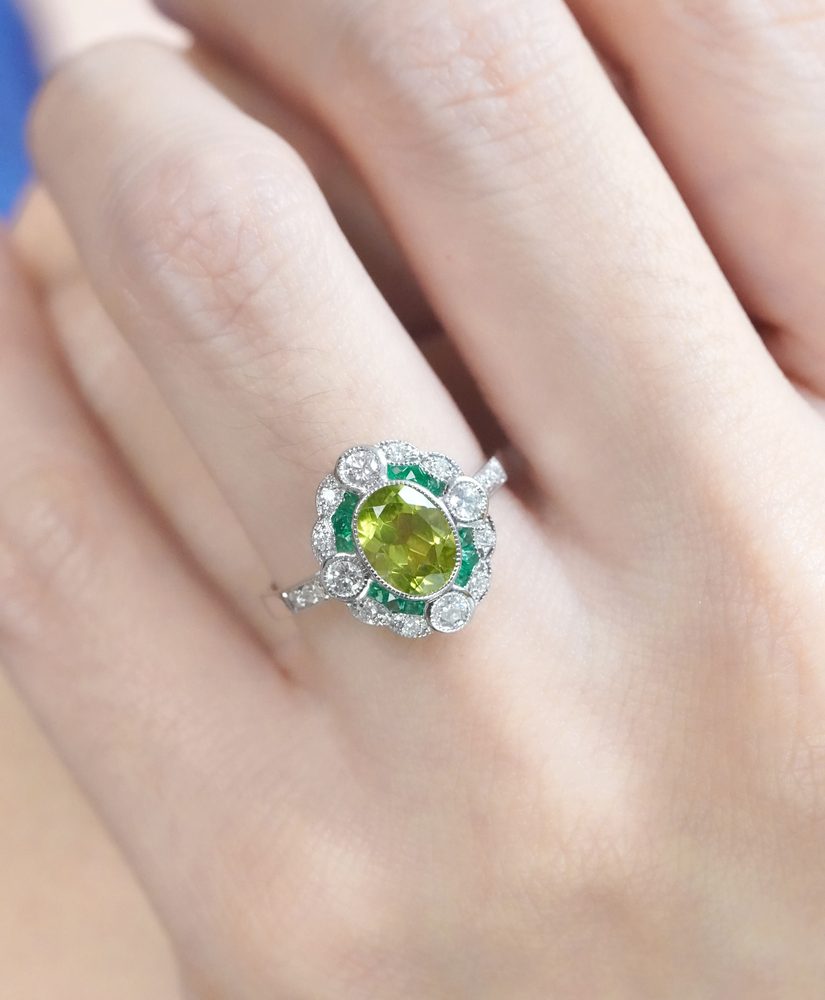
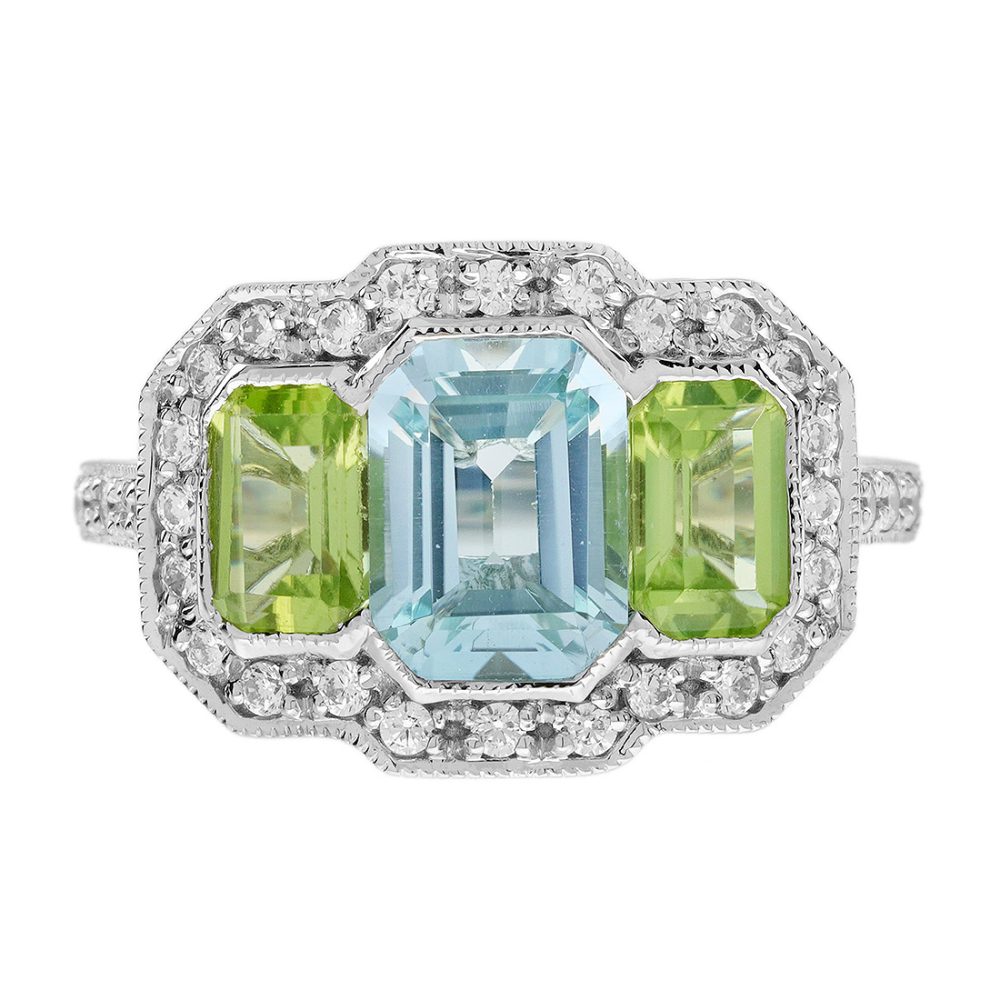

Three Stone Ring
Frequently Asked Questions About Peridot Meaning
What does peridot mean?
Peridot traditionally represents light, renewal, protection, prosperity and growth. These are cultural associations rather than physical effects. The most personal meaning comes from the relationship, event or intention that the wearer chooses to connect with the gemstone.
Is peridot the only August birthstone?
No. Peridot and spinel are official August birthstones on the modern US list maintained by Jewelers of America.
Does peridot occur only in green?
Yes. Peridot is the gem-quality form of olivine and occurs within a green color range, often with yellow or golden undertones. Brown modifiers may appear, but a non-green stone is not peridot.
Can peridot be worn every day?
Peridot can be worn regularly with attentive care, but at Mohs 6.5–7 with fair toughness it is more vulnerable than ruby or sapphire. Rings benefit from protective settings and removal during impact-heavy activity; earrings and pendants are less exposed.
Is peridot usually treated?
Peridot is rarely treated, but that group-level pattern is not a guarantee about an individual stone. Natural origin and treatment status are separate facts, so product-level disclosure should govern the purchase.