
Blog, Gemstone Guides
Amethyst Meaning, Symbolism & February Birthstone Guide

Key Takeaways: Amethyst Meaning
- Amethyst is the official February birthstone and traditionally represents sobriety, clear judgment, moderation, composure, and royal or sacred authority. These are cultural meanings, not physical effects.
- Amethyst is the purple variety of quartz. It ranks 7 on the Mohs scale and has good toughness, making it suitable for most jewelry with sensible protection from scratches, heat, and sharp impacts.
- Color is the leading quality factor. Strong reddish purple to purple is preferred, but a stone should remain bright rather than appearing black, and obvious color zoning generally reduces value.
- Natural does not mean untreated. Heat may lighten very dark amethyst or change some material toward citrine; dyeing, rare fracture filling, and laboratory-grown amethyst also exist.
What Does Amethyst Mean?
Amethyst traditionally symbolizes sobriety, clear judgment, moderation, composure, and royal or sacred authority. It is the official February birthstone and the purple variety of quartz. These meanings come from history and folklore rather than measurable effects; its practical character comes from color, cut, Mohs hardness of 7, and good toughness.
The central amethyst tradition begins with its name. GIA traces it to the Greek amethystos, associated with being “not drunk.” Greek and Roman stories connected the wine-colored stone with Dionysus or Bacchus, and people historically believed that wearing it encouraged clear thinking and protected against intoxication. That belief belongs to cultural history. Amethyst does not prevent intoxication or produce a medical effect.
Purple also carried meanings beyond wine. Fine amethyst appeared in religious jewelry, bishops’ rings, royal collections, and coronation regalia. The stone therefore came to signify restraint, dignity, authority, and the sacred. For a modern wearer, its meaning may be personal rather than inherited: a February birthday, a sixth anniversary, a family connection, or simply an attachment to purple.
Why Is Amethyst the February Birthstone?
Jewelers of America lists amethyst as the single official birthstone for February. The American birthstone list was standardized in 1912 by the American National Retail Jewelers Association, the organization now known as Jewelers of America. Amethyst’s earlier history is much older, but its place in the modern American calendar is a twentieth-century standard.
The February association gives the stone a clear gifting role without imposing one fixed interpretation. It may represent the wearer’s birth month, a loved one born in February, or a milestone attached to that month. GIA also identifies amethyst with the sixth and seventeenth wedding anniversaries. These conventions provide a shared language; the personal meaning comes from the occasion and the finished jewel.
Unlike months with several official options, February has one recognized stone on the Jewelers of America list. Any natural purple amethyst can therefore serve as a February birthstone, although color quality, identity, treatment, and construction still determine whether the individual jewel is a considered choice.
Claim-level sources: Jewelers of America, Official Birthstone List; GIA, Amethyst.
What Is Amethyst?
Amethyst is the purple variety of quartz, with the chemical composition SiO₂. Its color ranges from pale lilac and lavender to saturated purple and reddish purple. The material can form as individual crystals or inside geodes, and it can be fashioned into calibrated stones, large center gems, beads, cabochons, carvings, and matched layouts.
GIA records a Mohs hardness of 7. Mohs hardness measures resistance to scratching, not resistance to breaking. Amethyst also has good toughness, so it is suitable for rings, earrings, pendants, bracelets, brooches, and jewelry sets when the design and care are appropriate. It remains softer than ruby, sapphire, and diamond, and those harder stones can scratch it in storage.
Amethyst is available in natural and laboratory-grown forms. Synthetic amethyst has essentially the same chemical, physical, and optical properties as natural amethyst, but it is grown in a laboratory rather than formed geologically. The distinction must be disclosed; visual inspection alone may not always be sufficient.
Which Amethyst Facts Matter Most?
| Attribute | Amethyst | Why It Matters in Jewelry |
|---|---|---|
| Mineral family | Quartz | It shares the quartz family with citrine and other varieties, but purple color defines amethyst. |
| Color | Lilac to deep purple or reddish purple | Color is normally the leading quality and value factor. |
| Mohs hardness | 7 | It resists many ordinary scratches but can be scratched by harder gems and abrasives. |
| Toughness | Good | It is suitable for most jewelry, including rings, with sensible care. |
| Common treatments | Heat; dyeing in lower-quality material; rare fracture filling | Treatment can affect color, identification, care, and disclosure. |
| Natural and synthetic forms | Both exist | Origin of growth should be disclosed and may require laboratory testing to confirm. |
| Birthstone | February | The official American list was standardized in 1912. |
Claim-level sources: GIA, Amethyst; GIA, February Birthstone; GIA, Amethyst Care and Cleaning.
How Does Purple Amethyst Meaning Differ from Gemological Color?
Symbolic purple and gemological purple answer different questions. In cultural history, purple has represented rank, restraint, devotion, and sacred authority. In gemology, purple is examined through hue, tone, saturation, uniformity, and the way the cut returns light. A stone can carry the complete symbolic language of amethyst while being commercially pale, overly dark, or visibly zoned.
GIA describes the finest amethyst color as strong reddish purple or purple without visible color zoning. Saturation should be strong, but darkness is not a virtue by itself. If the tone becomes too dark, the gem may appear black in dim or ordinary lighting. Brownish or bronze-colored components and conspicuous bands of lighter and darker purple generally reduce value.
This distinction matters when choosing jewelry. The phrase “deep purple” can sound desirable in a product description, yet a very dark stone may lose life once it leaves display lighting. We recommend assessing whether the purple remains legible in daylight, diffused interior light, and movement. Meaning may begin with purple; quality depends on how that purple behaves.
Claim-level sources: GIA, Amethyst Quality Factors; GIA, Amethyst History and Lore.
What Determines Amethyst Quality and Value?
Color usually leads the evaluation, followed by clarity and cut. Much faceted amethyst is eye-clean, meaning that no inclusions are visible without magnification. An included stone can still be attractive when its color is exceptional, but inclusions that interrupt transparency, reach the surface, or weaken an edge require closer assessment.
Cut determines whether the stone appears bright and evenly colored. A shallow pavilion can create a window through the center. Excessive depth may retain weight while making the face-up size smaller or the tone darker. Extinction, uneven light return, and poorly placed color zoning can make an otherwise saturated stone feel inactive.
Carat weight behaves differently from many rarer colored gemstones. GIA notes that amethyst is available in large sizes and that price per carat does not rise dramatically merely because the stone becomes larger. Size can create presence, but it should not distract from color distribution, cut, and proportion.
What Should You Examine Before Buying?
| Quality Factor | What to Examine | Why It Matters | Practical Question |
|---|---|---|---|
| Color | Hue, tone, saturation, zoning, behavior in ordinary light | Usually the leading influence on beauty and value | Does the purple remain lively rather than closing to black? |
| Clarity | Eye-visible inclusions, transparency, surface-reaching fractures | Affects appearance and occasionally durability | Are inclusions distracting or structurally important? |
| Cut | Symmetry, windowing, extinction, depth, light return | Controls brilliance, face-up size, and color distribution | Does the cut reveal the color evenly? |
| Carat weight | Weight together with face-up dimensions | Large amethyst is available, so weight alone does not establish quality | Does the stone look its weight from above? |
| Treatment | Heat, dye, filling, and available disclosure | Can affect color, identity, care, and price | What has been identified or disclosed for this stone? |
| Natural status | Natural or laboratory-grown origin | The materials can be difficult to separate without advanced testing | Is a laboratory report proportionate to the purchase? |
Claim-level sources: GIA, Amethyst Quality Factors; GIA, Amethyst Buyer’s Guide.
Why Do Cut and Scale Matter More Than Carat Weight?
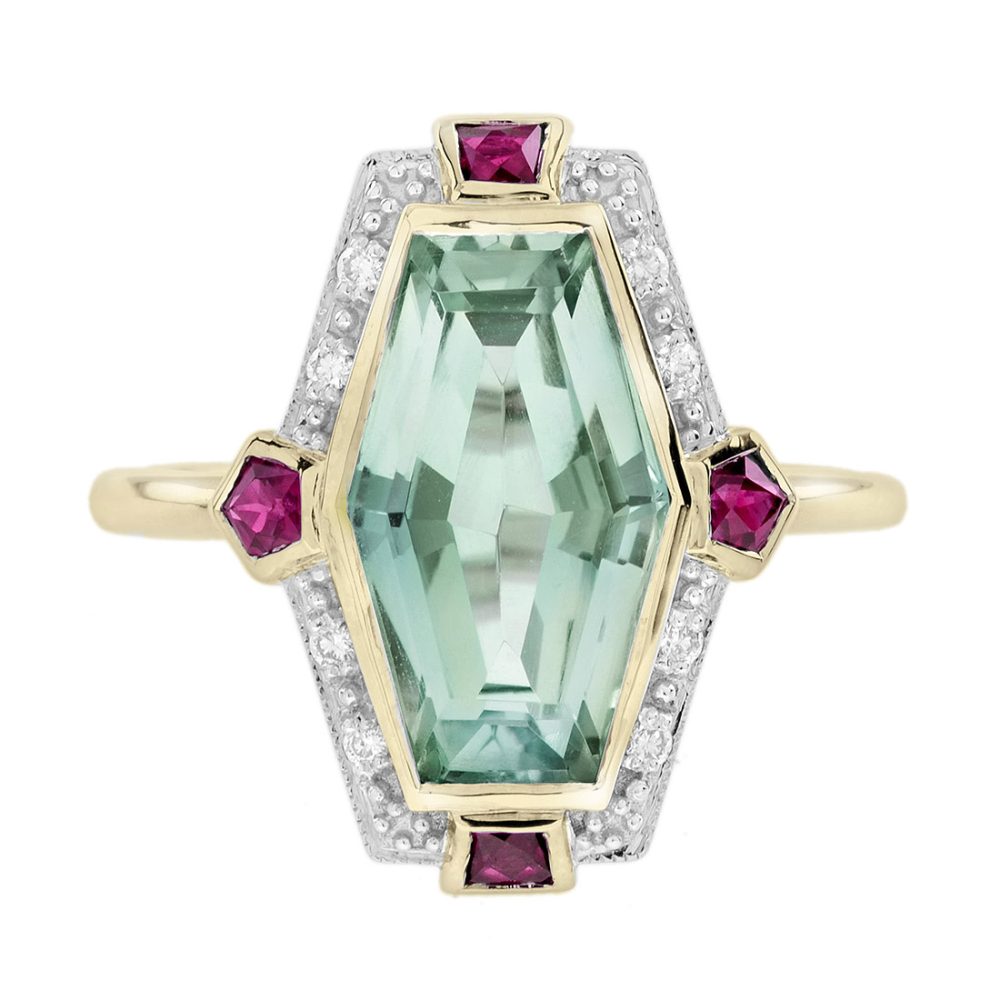
Amethyst permits a design freedom that rarer stones often do not. Because large sizes are available and the per-carat price does not rise sharply on size alone, the buyer can consider silhouette, geometry, and light return before treating carat weight as the central achievement. A broad step cut, elongated oval, architectural shield, or calibrated border can be selected for the composition rather than merely for weight retention.
In our workshop, we treat amethyst as a geometry-and-light stone. Purple becomes convincing when the cut, metal, and surrounding accents control how it is read. A stone with impressive weight but a dark center or uneven zoning can be less successful than a smaller gem with balanced color and lively return. The setting should complete the color rather than simply hold the mass.
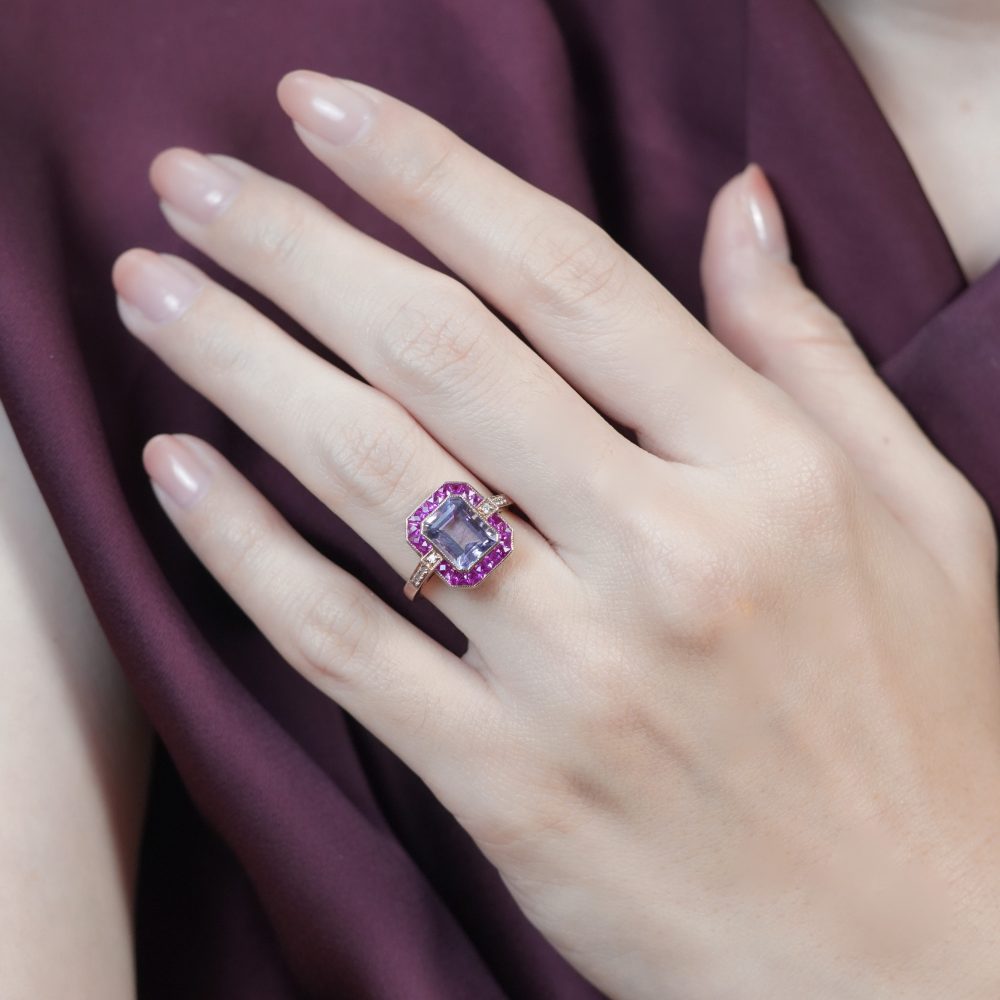
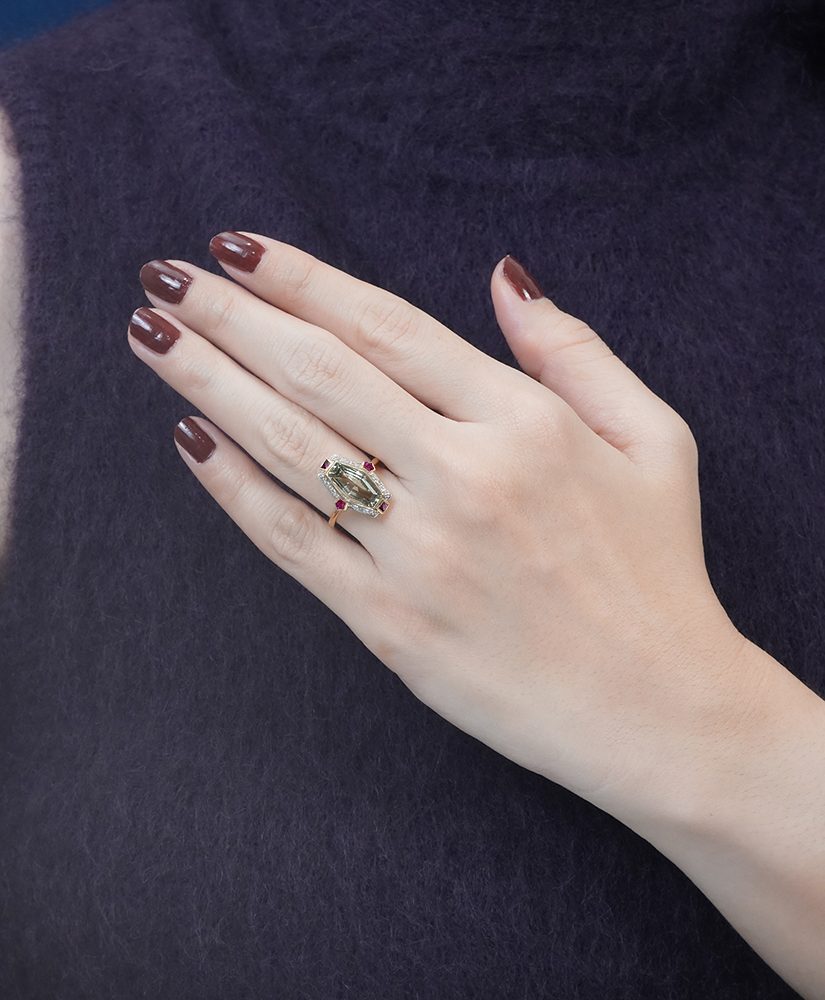
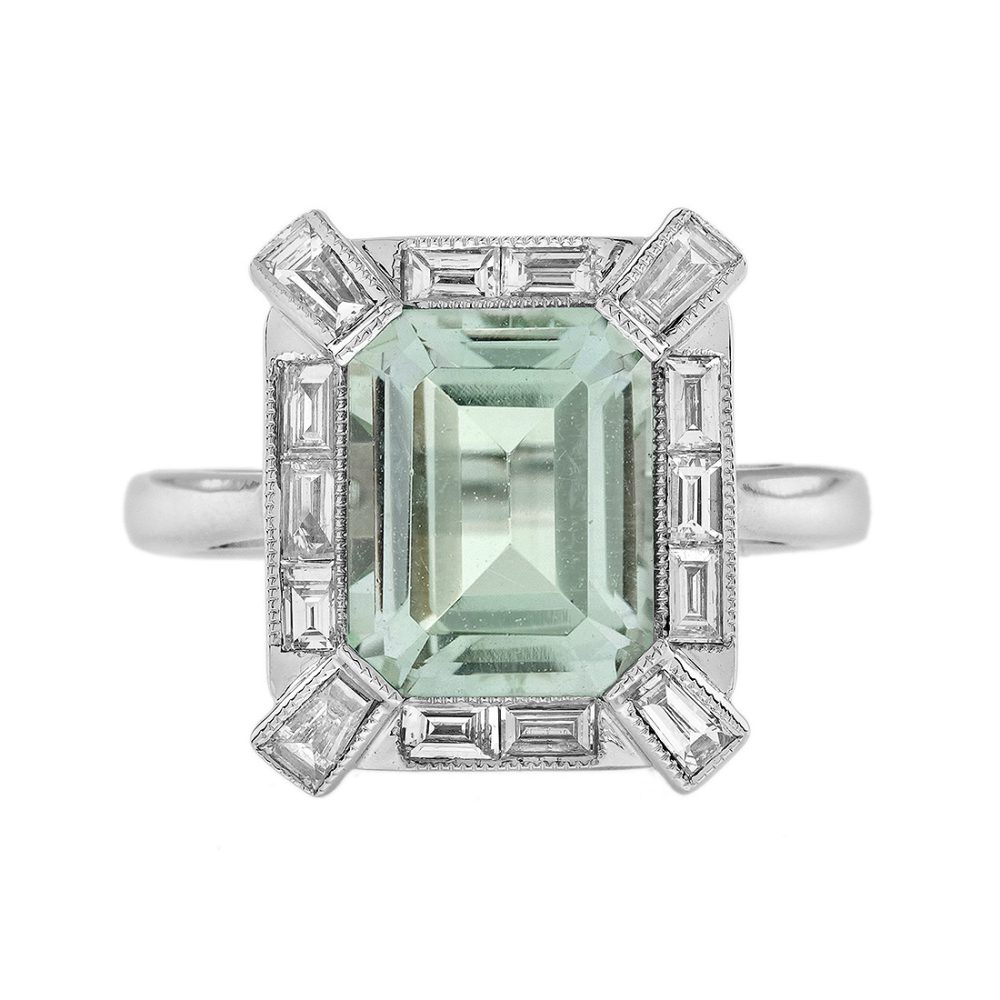
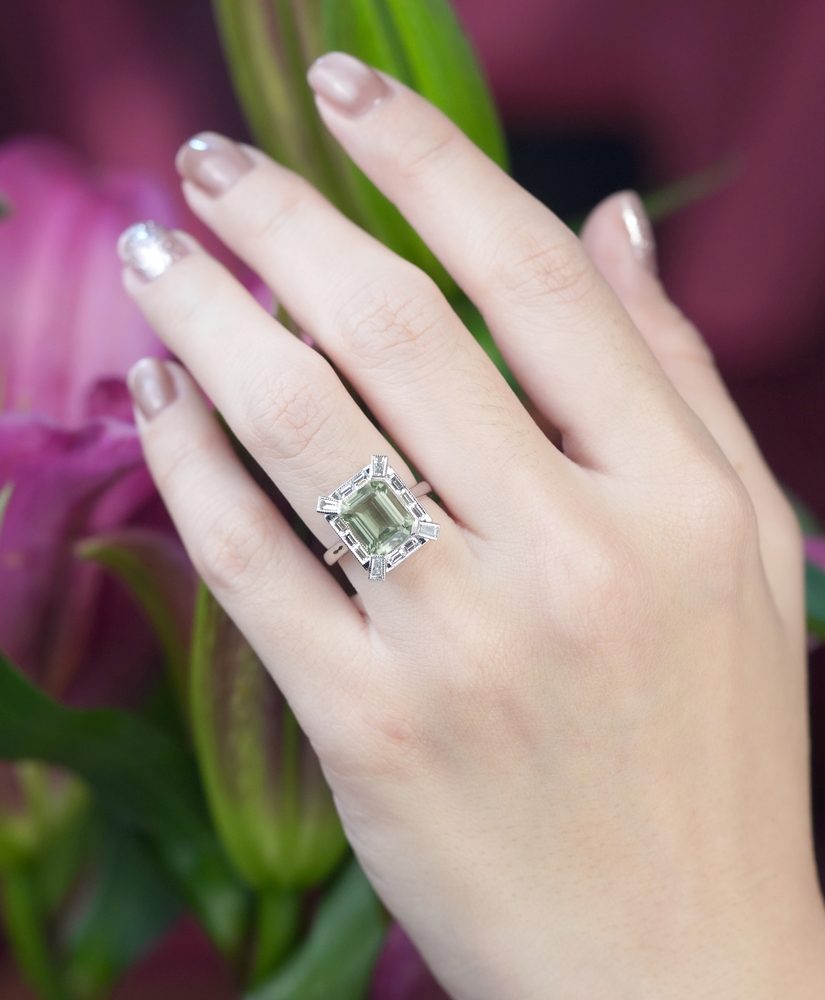
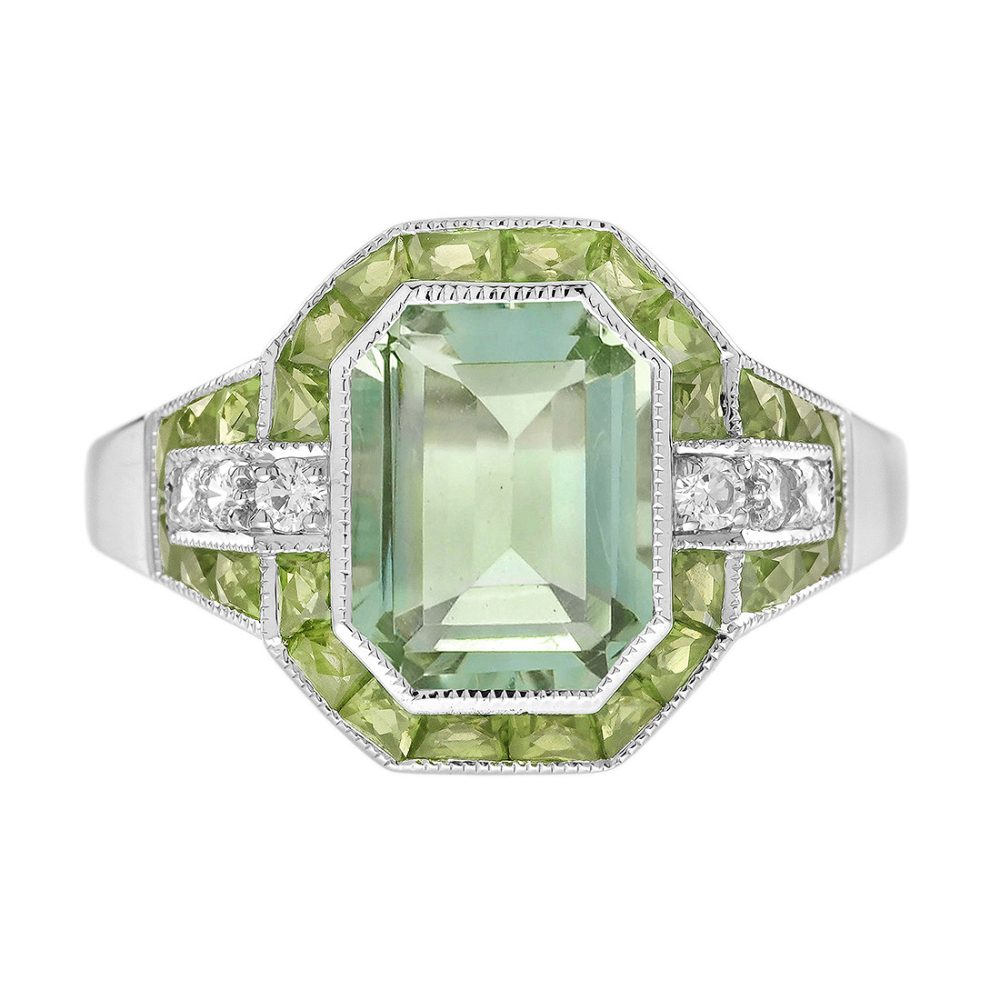
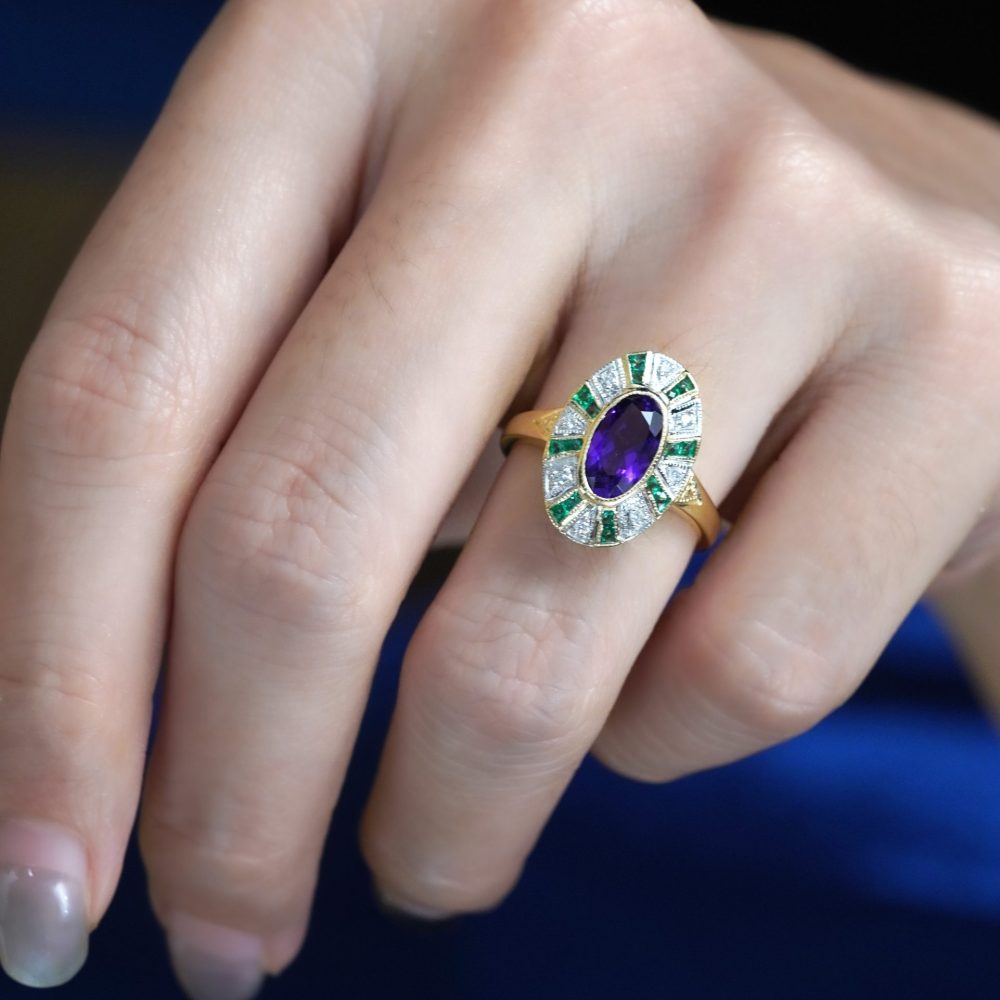
This is especially relevant to Art Deco-inspired design. Amethyst can occupy a large central plane, repeat through calibrated accents, or contrast with diamonds and colored gems in stepped, target, or halo arrangements. Its relative availability allows the architecture to be deliberate. The expert question is not “How many carats?” but “What proportion of the stone contributes to the finished design?”
Claim-level sources: GIA, Amethyst Quality Factors; GIA, Amethyst Buyer’s Guide.
Is Amethyst Durable Enough for Everyday Jewelry?
Amethyst is suitable for everyday jewelry with sensible care. At Mohs 7 and with good toughness, it performs well in rings, earrings, pendants, brooches, and bracelets. It is not as scratch-resistant as ruby, sapphire, or diamond, and frequent-wear rings receive more contact than pendants or earrings.
The Mohs number requires context. Dust and sand commonly contain quartz, the same mineral family as amethyst, so accumulated abrasive particles can gradually mark a polished surface. Another amethyst or quartz object can also scratch it. Harder jewelry stored against it can cause more obvious wear.
Shape and setting affect risk. A rounded oval or cushion has fewer exposed points than a sharp marquise, pear, kite, or shield. Prongs may be appropriate, while a bezel or halo can provide additional edge protection for a ring expected to encounter regular impact. Even a durable stone depends on sound prongs, an accurate seat, and periodic inspection.
| Jewelry Type | Typical Exposure | Setting Direction | Care Priority |
|---|---|---|---|
| Ring | Frequent contact with hard surfaces | Secure prongs, halo, or bezel according to shape and wear | Remove for heavy manual work and inspect the setting periodically. |
| Earrings | Low direct impact | Prong, bezel, or decorative gallery | Protect from hairspray and store separately. |
| Pendant or necklace | Moderate movement, limited impact | Prong or bezel with a stable bail | Avoid pulling, sharp knocks, and prolonged intense light. |
| Bracelet | Repeated contact with desks and hardware | Low-profile, protected construction | Check links, clasps, and stone security more often. |
| Brooch | Low abrasion but possible snagging | Secure seat and fastening mechanism | Pin and clasp condition matter as much as the stone. |
Claim-level sources: GIA, Amethyst Care and Cleaning.
Are Amethysts Treated or Lab-Created?
Some amethyst is treated. GIA states that heat treatment is the most common technique used to improve the color and marketability of natural amethyst. Heat can lighten very dark material and may remove some unwanted brownish appearance. It cannot make pale amethyst darker. Under certain conditions, heating amethyst can change it toward yellow citrine.
Lower-quality pale material may be dyed purple, and fracture filling is reported rarely where surface-reaching fractures are filled to improve apparent clarity. These treatments are not equivalent, and they can create different care requirements. Treatment should therefore be considered at the level of the individual stone rather than reduced to a single yes-or-no label.
Laboratory-grown amethyst also exists. Synthetic material has essentially the same chemical and physical properties as natural amethyst, and separation can require advanced gemological testing. A laboratory report can confirm natural identity for a significant purchase, although GIA notes that reports are not commonly requested for most amethyst because the report cost may be high relative to the stone.
“Natural” describes geological origin; it does not mean “untreated.” The project-level treatment policy for individual Lilly M. JEWELERS stones remains unconfirmed. This guide therefore makes no blanket statement that our amethysts are untreated or that one treatment applies across the collection. Product-specific written information and documentation should govern the individual purchase.
Claim-level sources: GIA, Amethyst Quality Factors; GIA, February Birthstone; GIA, Amethyst Buyer’s Guide.
Where Is Amethyst Found, and Does Origin Affect Value?
Amethyst occurs in many regions. GIA identifies Brazil as a major supplier and describes large crystal-lined geodes from Brazilian deposits. Bolivia’s Anahí mine produces amethyst and the bicolored quartz known as ametrine. Zambia is an important African source associated with richly saturated material. Fine amethyst also comes from the Four Peaks area of Arizona in the United States.
Origin can help explain the geology, color tendencies, and history of a stone, but it does not create an automatic quality grade. GIA’s buyer guidance states that country of origin alone does not add value to amethyst. Color remains the most important factor regardless of whether a stone is described as Brazilian, Zambian, Bolivian, or American.
Trade descriptions such as “Siberian” are sometimes used as color language rather than as verified geographic origin. A consequential origin claim should therefore be supported rather than inferred from appearance. For most amethyst purchases, the more useful questions concern color, cut, clarity, treatment, and whether the stone remains lively in ordinary light.
| Source | Context | Appearance Often Associated | Buying Significance |
|---|---|---|---|
| Brazil | Major modern supplier; large geodes are well known | Often lighter material, with wide variation | Judge the individual stone rather than the country name. |
| Zambia | Important African production | Richly saturated purple or raspberry tones may occur | Strong color can justify inclusions that would be less acceptable in pale material. |
| Bolivia | Anahí mine produces amethyst and ametrine | Purple amethyst and bicolored ametrine | Confirm whether the material is amethyst or ametrine and assess the cut. |
| Arizona, United States | Four Peaks is a recognized domestic source | Dark purple to purplish red in fine examples | Origin interest does not replace color and cut evaluation. |
Claim-level sources: GIA, February Birthstone; GIA, Amethyst Buyer’s Guide.
How Should Amethyst Be Set in Fine Jewelry?
The appropriate setting begins with shape, size, intended wear, and the stone’s internal condition. Rounded cuts can be held securely in prongs, bezels, or halos. Pointed shapes require careful protection at their tips. A large center stone may need a gallery that supports the pavilion without adding unnecessary height.
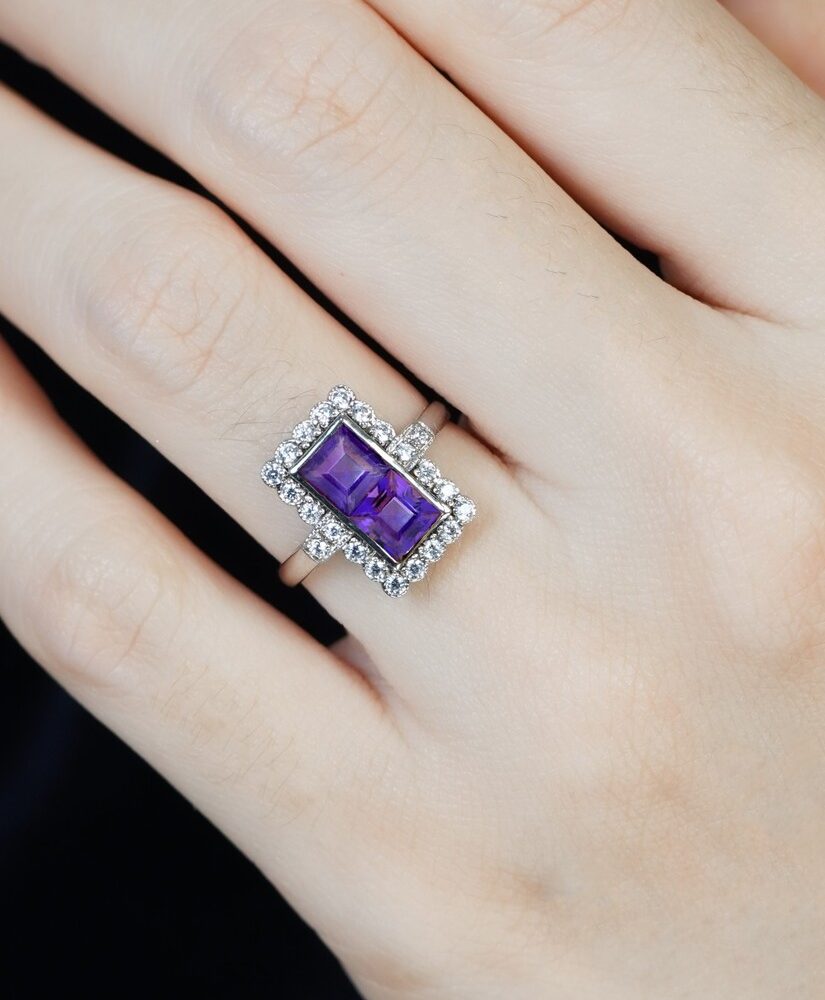
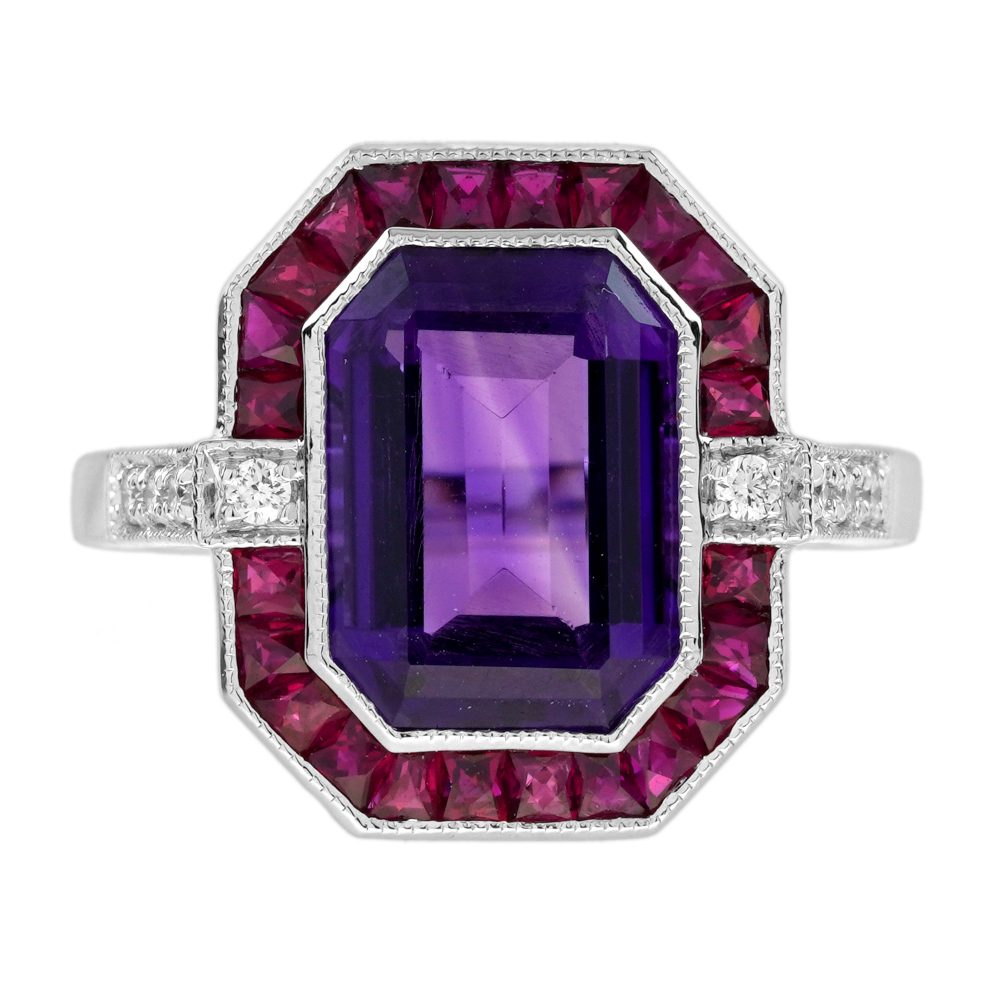
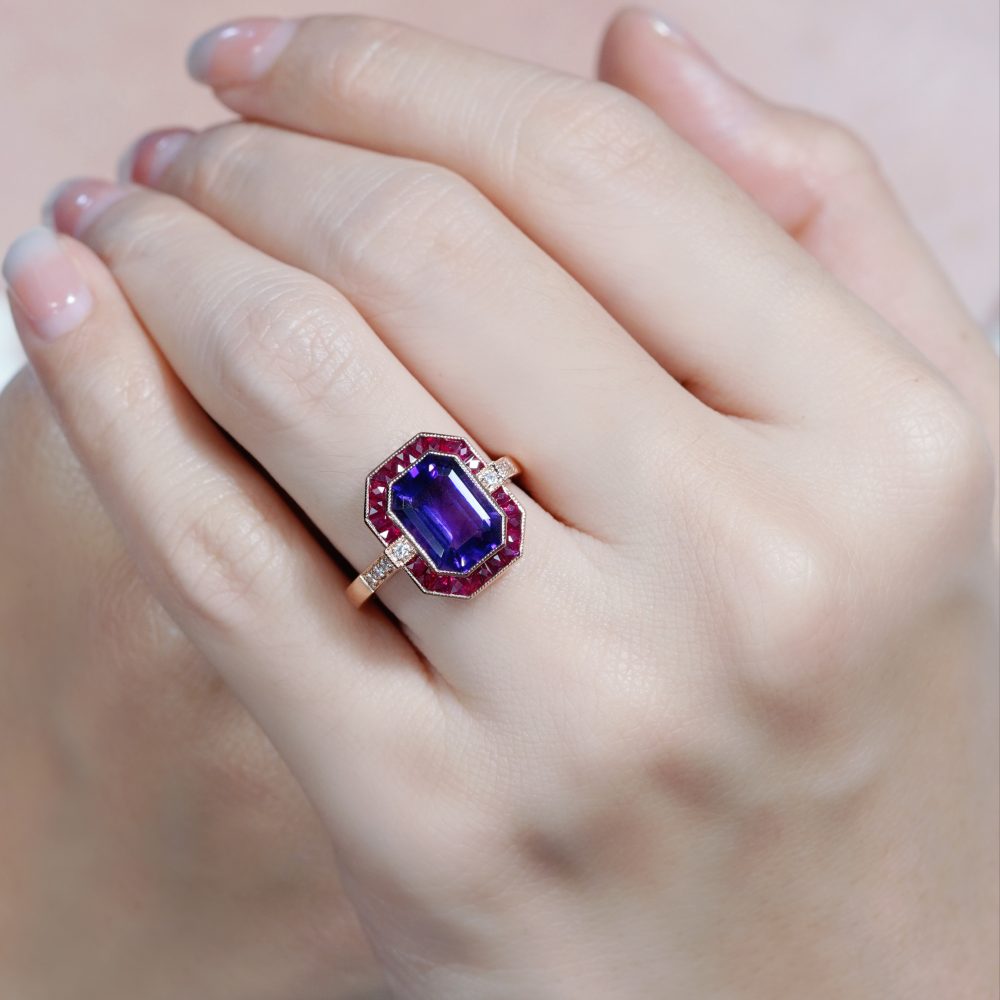
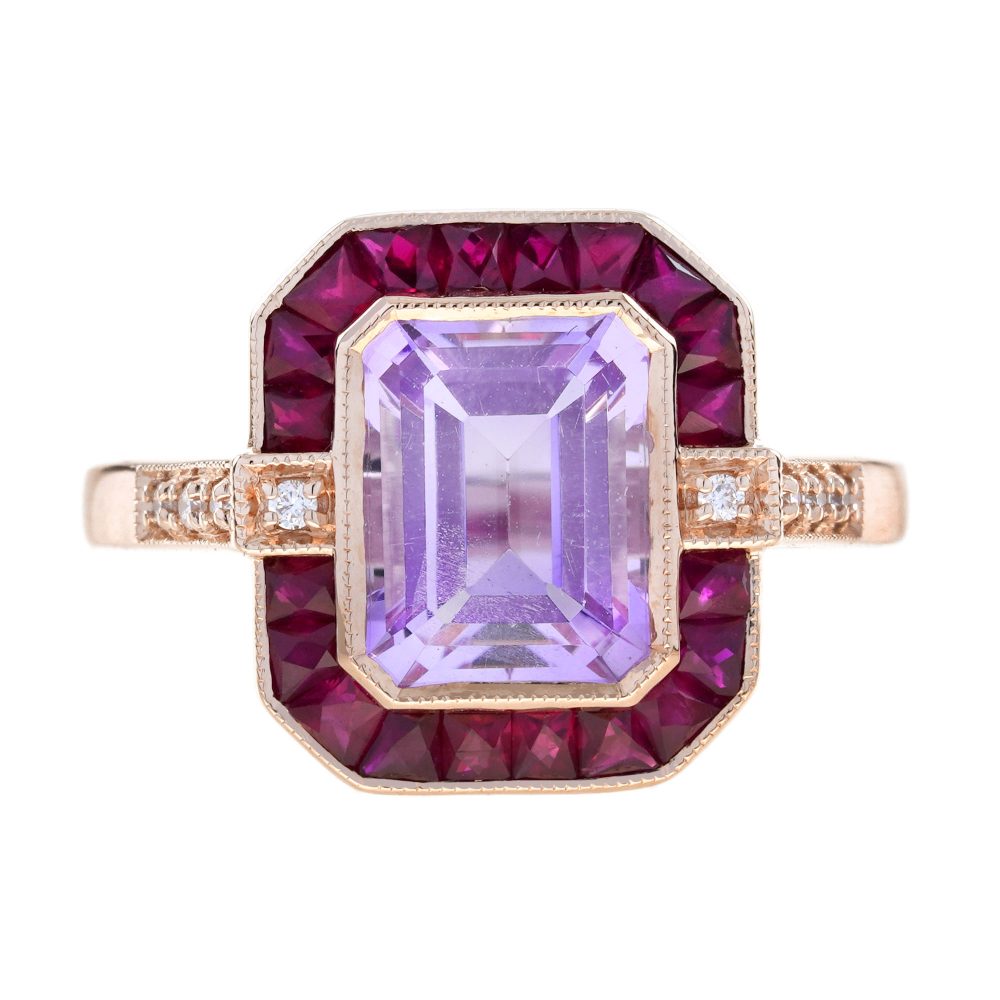
White gold can sharpen cooler violet and lavender tones. Yellow gold can create a warmer contrast, while rose gold may soften pale or pinkish purple material. Diamonds provide tonal separation; ruby, emerald, sapphire, peridot, or enamel can turn purple into part of a broader color composition. These choices do not change the gem’s inherent hue, but they change how the eye interprets it.
Art Deco-inspired geometry is particularly useful because it can organize protection and color at the same time. A halo can buffer the edge, a target composition can distribute contrast, and calibrated accents can repeat purple through the design. Newly made, antique-inspired work also allows the setting to be proportioned for the actual stone rather than forcing it into a fatigued historical mounting.
For a ring worn often, we recommend a low, balanced profile and secure corners. For earrings and pendants, the designer has greater freedom to use larger stones, open galleries, and more elaborate silhouettes because direct impact is lower.
How Should Amethyst Jewelry Be Cleaned and Stored?
Warm water, mild soap, and a soft brush are the safest general cleaning method. Rinse carefully and dry with a soft, lint-free cloth. GIA states that ultrasonic cleaning is usually safe except when the stone is dyed or fracture filled. When treatment is unknown, conservative hand cleaning is the more prudent choice.
Steam cleaning is not recommended, and amethyst should not be exposed to intense heat. Abrupt temperature changes can cause fracture. Prolonged exposure to intense light may fade some amethyst color, so a jewel should not be left for extended periods in strong sun, beneath a heat lamp, or on a bright windowsill.
Store amethyst separately from harder gemstones. Diamond, ruby, and sapphire can scratch it, while amethyst can scratch softer materials. A lined compartment or individual pouch protects both the stone and the metal. Remove rings before heavy cleaning, exercise involving equipment, gardening, or other work where impact and abrasive particles are likely.
Before repair, tell the jeweler that the piece contains amethyst and share any known treatment information. Heat from workshop procedures can be more consequential than ordinary wear, particularly near sharp points or treated material.
Claim-level sources: GIA, Amethyst Care and Cleaning; GIA, February Birthstone.
How Should You Choose Amethyst Jewelry?
Begin with the color that remains convincing in ordinary light. Compare several stones side by side, because relative comparison makes differences in saturation, darkness, and zoning easier to see. Strong reddish purple may command a premium, but the preferred stone should still show brightness and movement.
Then evaluate cut. Look for even light return across the face, without a transparent window through the center or large dead areas. Consider face-up dimensions as well as carat weight. Amethyst’s availability in larger sizes means that a deep, weight-retaining cut should not be rewarded merely for its number on the scale.
Examine clarity and edges. Many faceted amethysts are eye-clean, so conspicuous inclusions deserve explanation. Surface-reaching fractures, damaged facet junctions, and vulnerable pointed corners matter more for a ring than for a pendant.
Ask whether the stone is natural or laboratory-grown and what treatments have been identified or disclosed. For a significant purchase, an independent laboratory report can confirm natural identity, although it may not be proportionate for every amethyst.
Finally, match the design to the intended wear. A daily ring needs a secure seat and protected profile. An evening ring can carry more scale. Earrings and pendants permit large, clean color fields with less impact risk. At Lilly M. JEWELERS, the amethyst category includes newly made, Art Deco and Edwardian-inspired fine jewelry with natural gemstones set in solid gold; the individual stone and written product information remain the authority for each piece.
Claim-level sources: GIA, Amethyst Buyer’s Guide; GIA, Amethyst Quality Factors.
In Short
Amethyst meaning joins an ancient tradition of sobriety and clear judgment with the broader symbolism of purple: restraint, dignity, royalty, and the sacred. It is also a practical February birthstone, combining Mohs hardness of 7 and good toughness with broad freedom of cut and scale.
The most considered amethyst is not necessarily the darkest or the heaviest. It is the stone whose color remains lively, whose cut distributes that color, whose treatment and natural status are accurately described, and whose setting suits the way it will be worn. Meaning explains why the stone is chosen; construction determines how well it endures.
Claim-level sources: GIA, Amethyst; GIA, Amethyst Quality Factors; GIA, Amethyst Care and Cleaning; Jewelers of America, Official Birthstone List.
Sources: GIA, Amethyst · GIA, Amethyst History and Lore · GIA, February Birthstone · GIA, Amethyst Quality Factors · GIA, Amethyst Buyer’s Guide · GIA, Amethyst Care and Cleaning · Jewelers of America, Official Birthstone List. Traditional meanings are recorded as cultural history and folklore, not as medical, physical, financial, or guaranteed supernatural effects.
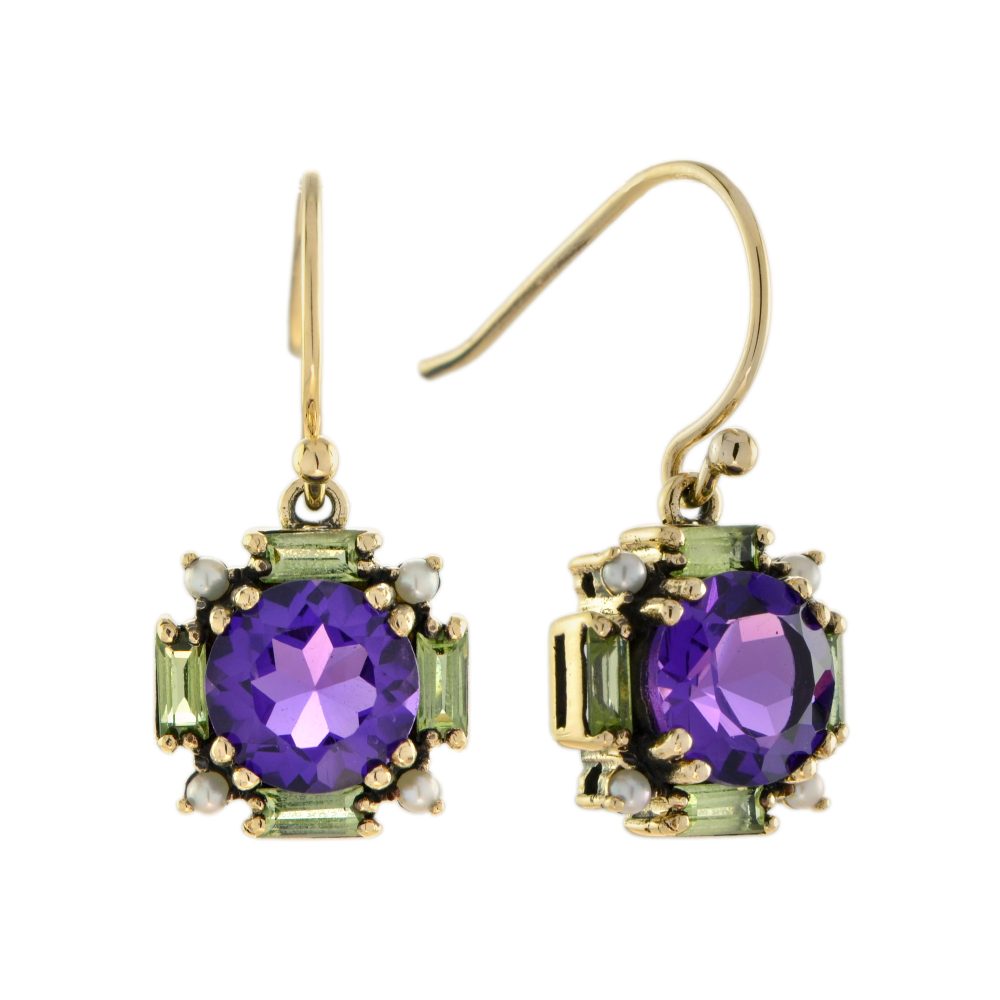

Drop Earrings
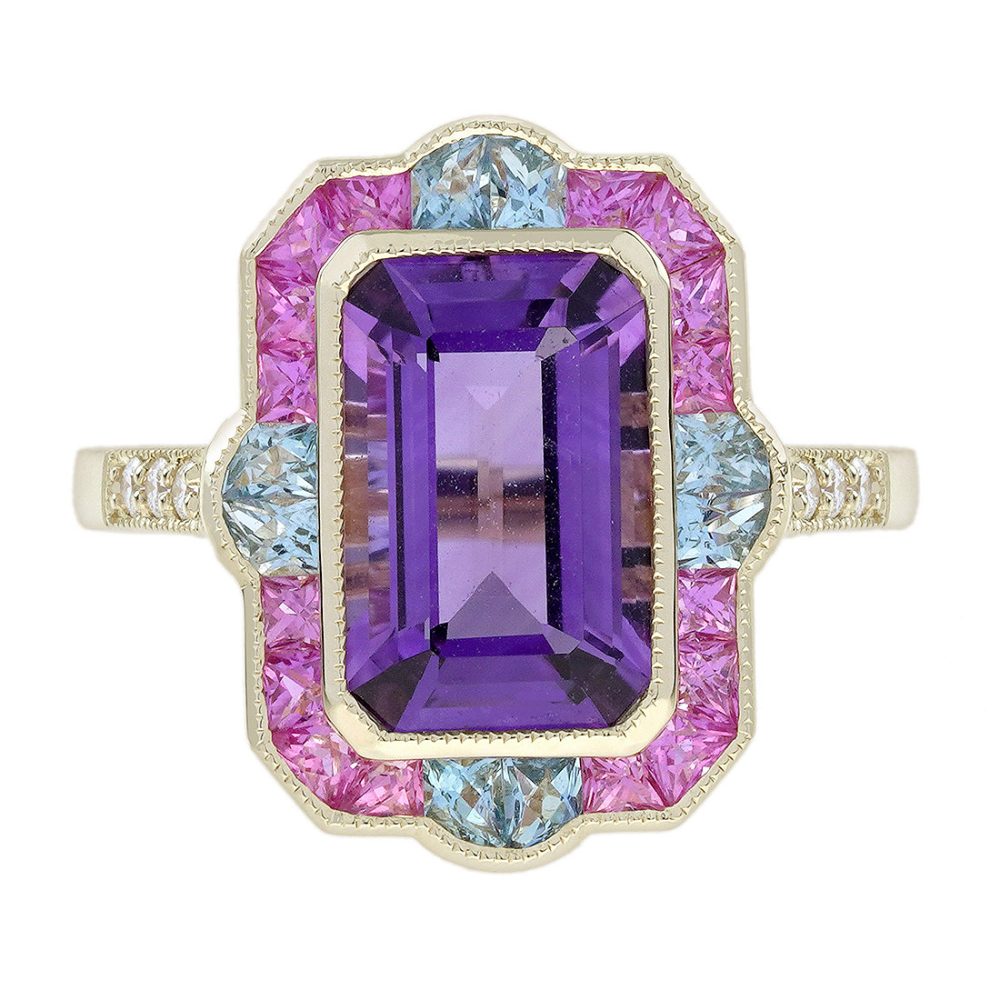
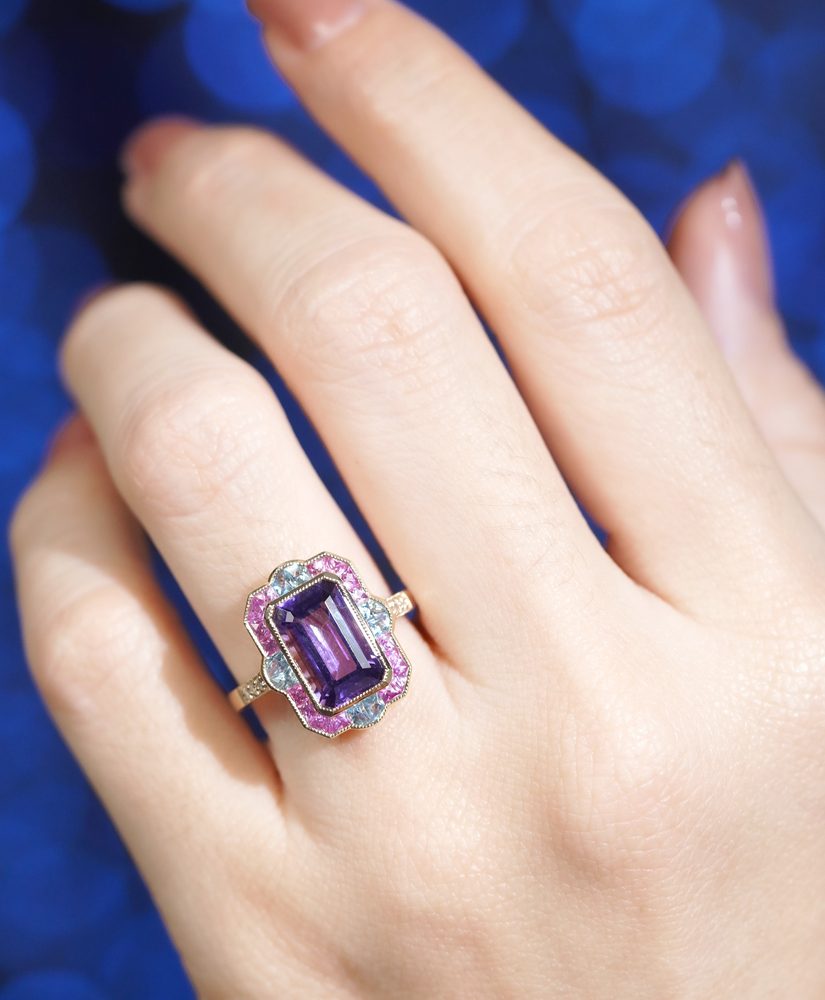
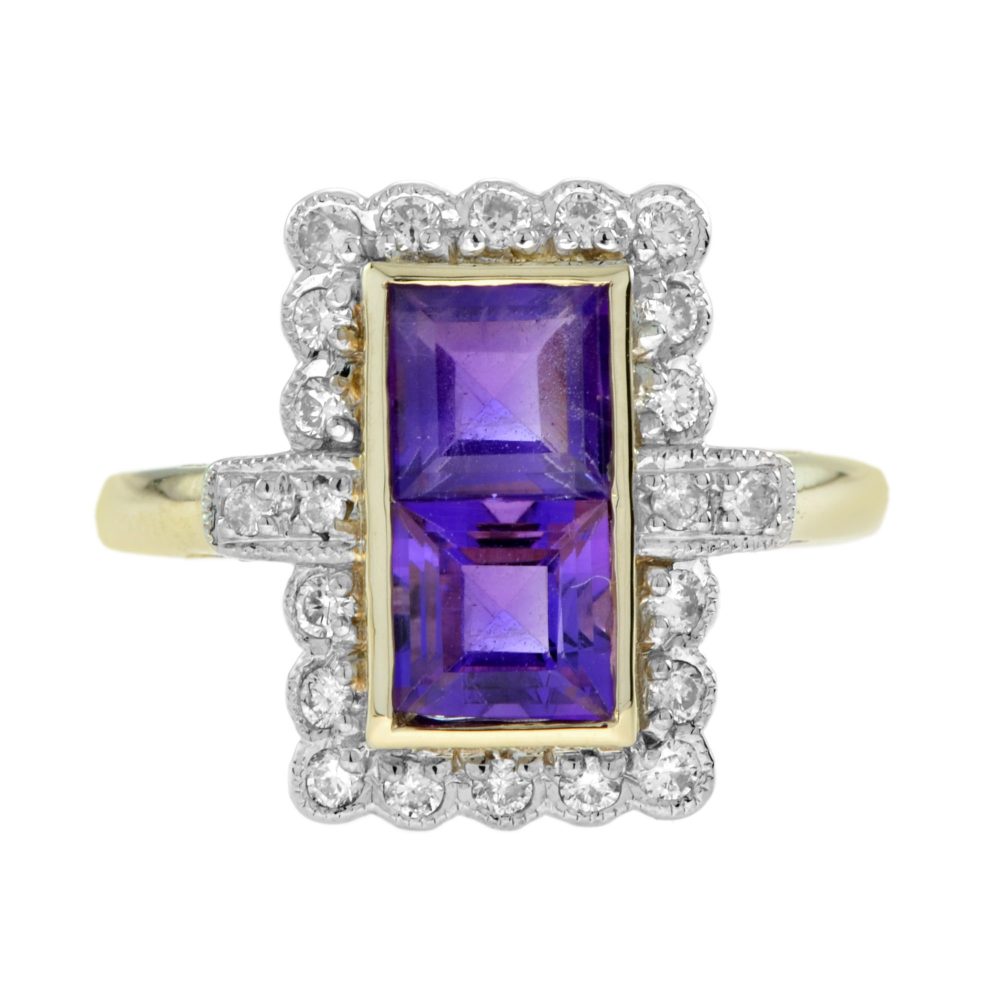
White Gold
The Art of the Wild
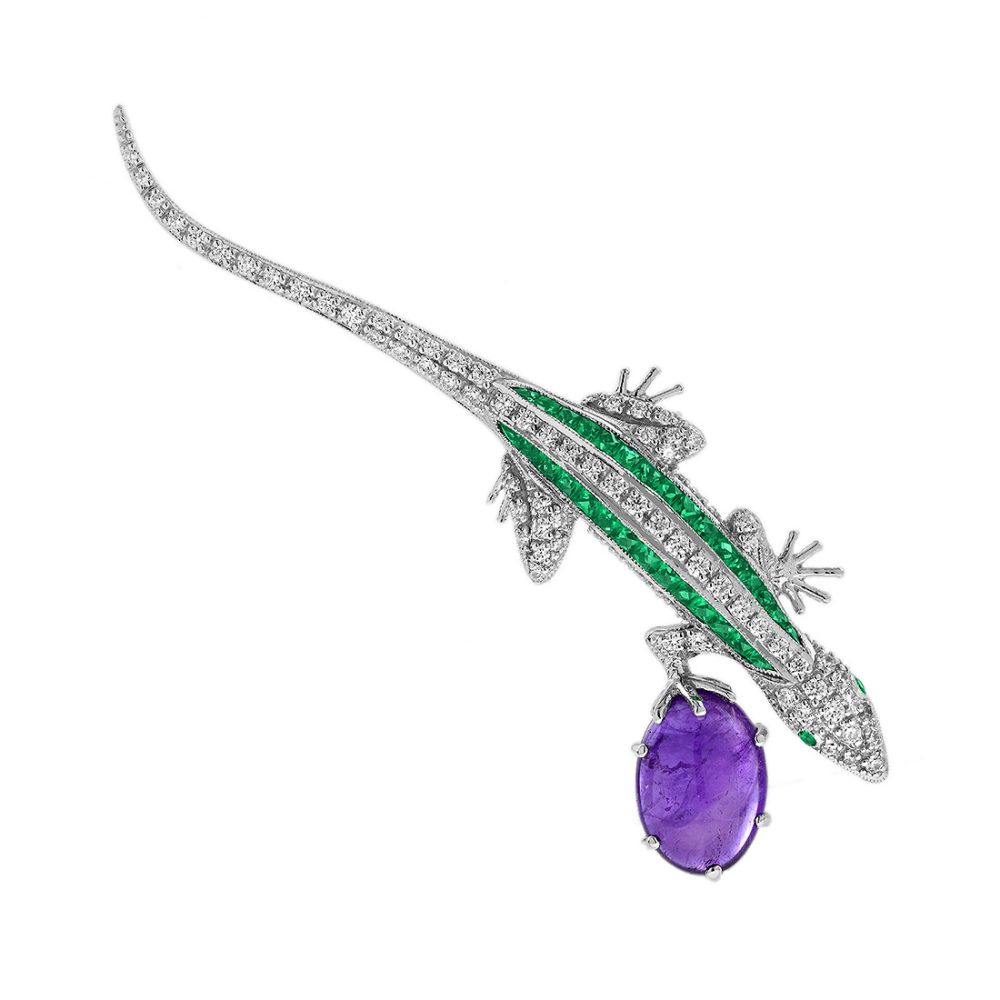
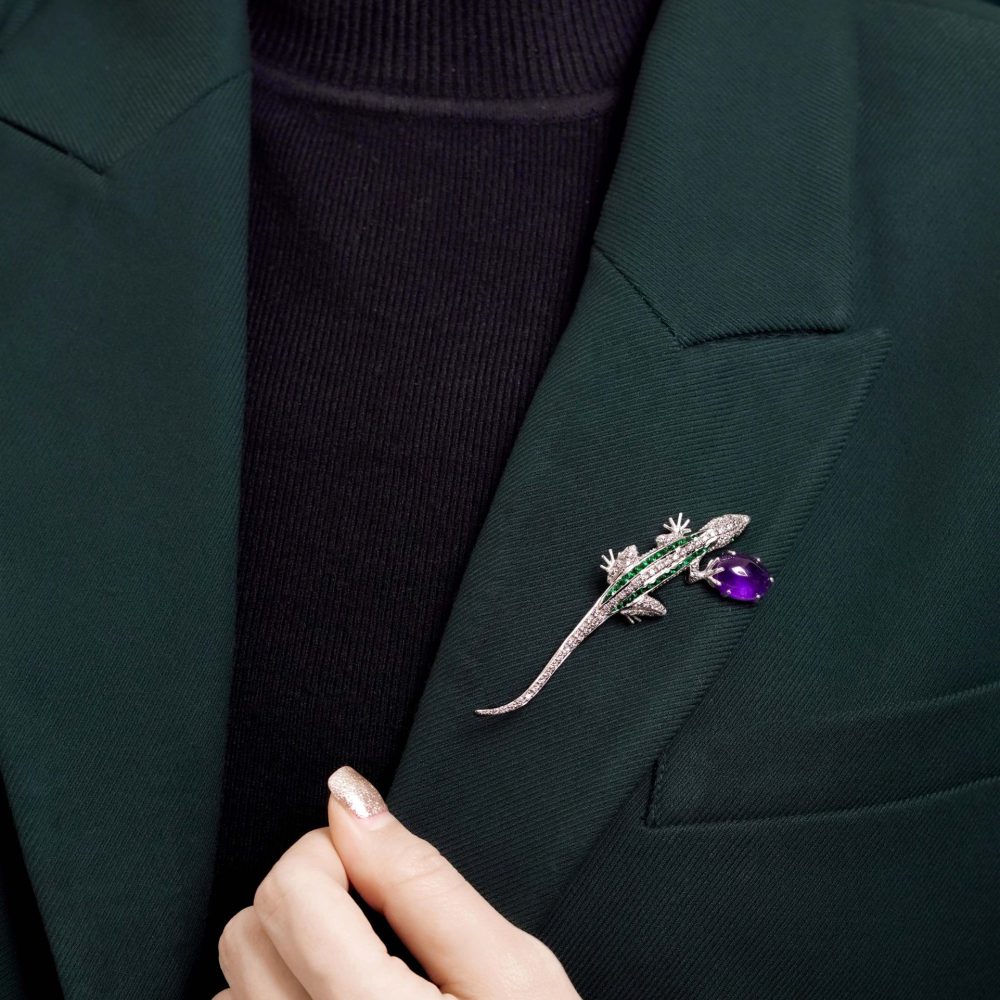
Cabochon Amethyst Emerald Diamond Art Deco Style Lizard Brooch
Frequently Asked Questions About Amethyst Meaning
What does amethyst symbolize?
Amethyst traditionally symbolizes sobriety, clear judgment, moderation, composure, and royal or sacred authority. These associations come from history, color symbolism, and folklore rather than from a medical, physical, or guaranteed supernatural effect.
Is amethyst the February birthstone?
Yes. Jewelers of America lists amethyst as the single official February birthstone. The modern American list was standardized in 1912, although amethyst jewelry and its symbolic traditions are far older.
Can amethyst be worn every day?
Yes, with sensible care. Amethyst ranks 7 on the Mohs scale and has good toughness, so it is suitable for rings and other jewelry. It should still be protected from harder gemstones, abrasive dust, sharp impacts, intense heat, and abrupt temperature changes.
Are natural amethysts treated?
Some are. Heat may lighten very dark amethyst or change some material toward citrine. Dyeing and rare fracture filling also occur. Natural describes geological origin and does not mean untreated, so the disclosure for the individual stone should be reviewed.
What color amethyst is most valuable?
GIA identifies strong reddish purple to purple as the preferred range, provided the stone remains bright and does not appear black. Obvious color zoning, weak saturation, and brownish or bronze components generally reduce value.