
Blog, Gemstone Guides
Aquamarine Meaning & March Birthstone Guide
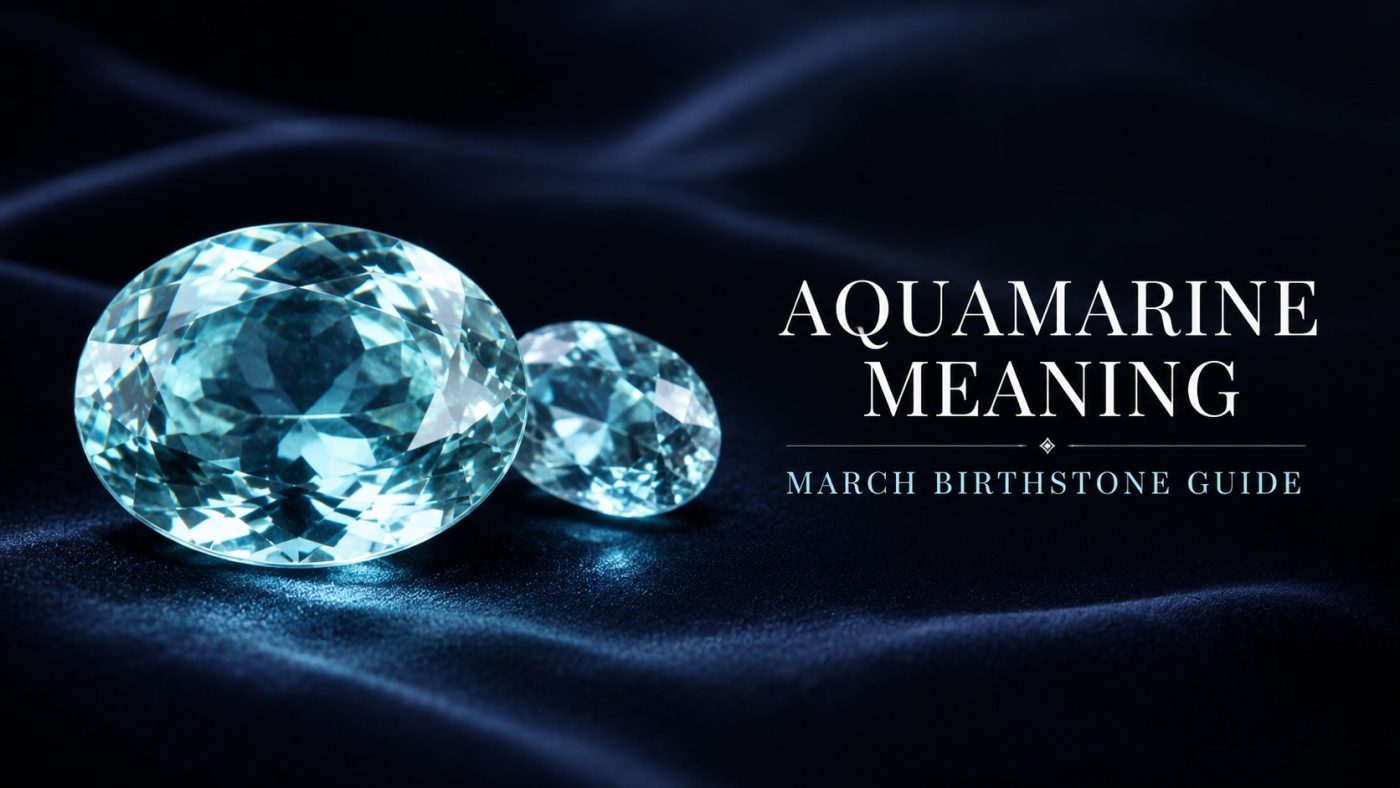
Key Takeaways: Aquamarine Meaning
- Aquamarine is the blue to blue-green variety of the mineral beryl and the modern March birthstone. Its traditional meanings — courage, serenity, safe passage and clear communication — are cultural associations, not physical or medical effects.
- The Gemological Institute of America recognizes two March birthstones, aquamarine and bloodstone. Bloodstone is the older, traditional stone; aquamarine is the modern gem most buyers and jewelers now recognize for the month.
- “Santa Maria” and origin labels describe color, not a graded quality standard or a guarantee of source, and most commercial aquamarine is heat-treated to remove its green component — a standard, permanent and effectively undetectable process. Natural does not mean untreated.
- A very deep blue stone offered at a low price may be irradiated “Maxixe”-type beryl, whose color can fade in light. For a consequential purchase, ask for documentation of treatment and, where relevant, origin.
What Is the Meaning of Aquamarine?
Aquamarine is the blue to blue-green variety of the mineral beryl and the modern March birthstone, traditionally associated with courage, serenity, safe travel and clear communication. These meanings are cultural rather than physical. Measuring 7.5 to 8 on the Mohs scale with good toughness, it suits regular wear when the setting is chosen with care.
Aquamarine at a Glance
| Property | Detail |
|---|---|
| Mineral species | Beryl — the same family as emerald and morganite |
| Cause of color | Iron within the crystal. Ferrous iron (Fe²⁺) gives blue; ferric iron (Fe³⁺) adds a yellow-green component |
| Color range | Pale, almost colorless blue through greenish blue to a stronger medium blue |
| Mohs hardness | 7.5–8 — good scratch resistance for regular wear |
| Toughness | Good — no cleavage plane forces the design, and clean crystals resist breaking far better than emerald |
| Clarity expectation | Usually transparent and often eye-clean (a GIA Type I stone), unlike heavily included emerald |
| Birthstone | March — with bloodstone as the traditional companion stone |
| Routinely treated? | Yes — heating to remove green is standard, permanent and effectively undetectable |
| Best settings | Broad freedom; secure prongs, partial or full bezel, or a protective halo for a daily ring |
| Cleaning | Warm water, mild soap and a soft brush. Avoid ultrasonic and steam when clarity or treatment is uncertain |
What Does Aquamarine Symbolize?
Aquamarine meaning begins with the sea. The name derives from the Latin words for seawater, and the stone has been read for centuries through the language of clear water: composure, honesty and safe passage. Ancient mariners were said to carry aquamarine as a protective charm, and later traditions extended that symbolism toward calm speech, courage and clarity of thought.
- Safe travel and protection. The maritime association made aquamarine a talisman for a favorable relationship with the sea and, by extension, for any significant journey.
- Serenity and clear communication. The transparent blue color invited associations with calm, honesty and unclouded expression.
- Courage and constancy. Cool blue has long been linked with steadiness, which is why aquamarine appears in older traditions as a stone of resolve.
These are traditional beliefs and cultural associations, recorded across centuries of folklore. They are part of why people choose the stone. They are not claims about what a gemstone can do for your health, your relationships or your finances, and we will not present them as such.
The most defensible modern use of this symbolism is personal rather than predictive. Aquamarine may represent a March birthday, a connection to the sea, a meaningful journey or simply a preference for quiet blue color. The meaning is held by the context the giver and wearer choose, and a considered piece allows that meaning to last.
Is Aquamarine the March Birthstone?
Yes. Jewelers of America, the organization that originated the modern United States list in 1912, names aquamarine as the March birthstone. The Gemological Institute of America goes a step further and recognizes two stones for March: aquamarine and bloodstone.
This is where many birthstone charts are imprecise. A large number of them list only one stone for March, and they disagree on which. The accurate position is that March has a modern stone and a traditional one. Bloodstone — a dark green chalcedony marked with red iron-oxide spots — is the older birthstone, used in ancient, medieval and traditional European systems long before 1912. The 1912 modern list favored transparent faceted gems suited to twentieth-century jewelry, and aquamarine became the stone most buyers and jewelers now associate with the month.
The birthstone designation does not require a particular shade. A pale, icy blue, a greenish sea-blue and a stronger medium blue all represent March equally. The stone can therefore be selected for the wearer’s preferred color rather than for a single standardized tone.
Related: Birthstones by Month: All 12 Explained places aquamarine within the complete modern sequence, which is helpful when a commission combines several birth months.
How Durable Is Aquamarine for Everyday Wear?
Two properties decide whether a gem survives daily life, and they are not the same:
- Hardness (the Mohs scale) is resistance to scratching.
- Toughness is resistance to chipping, cracking and breaking.
Aquamarine measures 7.5 to 8 on the Mohs scale and has good toughness. It resists scratching better than quartz and is more resistant than emerald to breaking, although it is softer than ruby, sapphire and diamond. In practical terms it is well suited to rings, earrings, pendants, bracelets and brooches worn with sensible care.
| Gemstone | Mohs | Toughness | Practical view |
|---|---|---|---|
| Diamond | 10 | Good, but cleavage can permit chipping | Excellent scratch resistance; protect exposed points |
| Ruby / Sapphire | 9 | Excellent | Well suited to frequent, worry-free wear |
| Aquamarine | 7.5–8 | Good | Suitable for regular wear with sensible care |
| Emerald | 7.5–8 | Poor — brittle | Same hardness as aquamarine, but needs protective design |
| Amethyst | 7 | Good | Durable, but scratches more readily than aquamarine |
Workshop insight: Aquamarine and emerald are the same mineral, beryl, and share a Mohs range of 7.5 to 8. At the bench, however, we handle them very differently. Emerald is a GIA Type III stone, expected to carry the network of fractures and inclusions gemologists call the jardin, which makes it comparatively brittle. Aquamarine is a GIA Type I stone, typically clean and structurally sound, so it resists chipping far better. The hardness is nearly identical; the practical durability is not. The difference is written inside the crystal, not on the Mohs scale — which is precisely why hardness alone is a poor guide to how a stone should be worn.
A regularly worn aquamarine ring should still be removed for heavy manual work, gardening and cleaning with abrasive materials. Prongs and the stone seat should be inspected periodically, because a worn or distorted setting can place any gemstone at risk regardless of its hardness.
What Determines Aquamarine Color and Quality?
Color is normally the first quality factor a buyer notices, and for aquamarine it is the dominant one. The stone may be almost colorless, softly blue, greenish blue or a stronger medium blue. A richer, more even blue is generally more visually commanding, but the ideal choice depends on the intended design, the budget and personal preference.
How Should Tone and Saturation Be Read?
Tone and saturation must be considered together. A very pale stone can appear delicate and luminous, particularly in a larger cut. A darker stone can look more dramatic, but it should still return light rather than appear closed. Greenish blue is part of aquamarine’s natural range; many buyers prefer a cleaner blue, although some now appreciate an untreated stone that retains a slight sea-green cast.
Does Clarity Matter for Aquamarine?
Clarity matters because aquamarine is commonly expected to look transparent to the unaided eye. It is a GIA Type I gemstone, which means eye-clean material is the normal commercial standard rather than a rarity. Obvious fractures, distracting crystals or cloudy zones therefore stand out and may reduce both beauty and value. A clean stone allows the cut and color to read clearly.
How Does Cut Affect Appearance?
Cut has a major effect on apparent color. Aquamarine shows its strongest blue along the length of the crystal, so a cutter orients the stone to bring that color face-up. A deep pavilion may intensify color but make the gem look smaller; a shallow cut may create a pale window through the center. Long emerald cuts and ovals suit the elongated crystals aquamarine often forms, while rounds and cushions can add brilliance. The most successful cut balances color, brightness, symmetry and visible size.
Are “Santa Maria” and Origin Names Quality Grades?
No. Certain intense blue aquamarines are sold under trade names such as “Santa Maria,” and others are described by origin labels such as “Brazilian” or “Madagascar.” These terms are useful shorthand for a look, but they are not graded quality standards, and they are not guarantees of where a stone was mined.
“Santa Maria” is named after the Santa Maria de Itabira mine in Brazil, where a particularly saturated blue was first found. Stones of very similar color have since been recovered elsewhere, so the name now describes a color impression more than a source. An origin label carries the same caution: a stone marketed as “Brazilian” or “Madagascar” may simply be describing color, and true provenance requires documentation.
A trade name describes a color, not a grade. This mirrors a pattern we explain across our gemstone guides — the ruby term “pigeon’s blood” behaves the same way. Attractive language is not a substitute for an accurate description of color, clarity, cut, treatment and, where it matters, a documented origin.
The practical consequence is straightforward. Judge the individual stone in ordinary light, and treat a memorable name as a starting point for questions rather than an answer. For a consequential purchase, ask what the name is actually claiming and request written support for any origin statement.
Is Aquamarine Routinely Treated?
Yes. Most commercial aquamarine is heated. Much rough emerges from the ground with a green or yellow component, and gentle heating near 375 °C converts the ferric iron (Fe³⁺) responsible for that tint into ferrous iron (Fe²⁺), leaving a purer blue. The change is permanent, because the color centers responsible for the green are removed rather than merely masked, and it is effectively undetectable. For that reason, gemologists commonly describe pure blue aquamarine as “probably heat-treated.”
Heat treatment should not be read as a fault. A correctly heated stone can be beautiful, stable and appropriate for fine jewelry. Heating to convert blue-green to blue is a long-accepted trade practice. The important issues are accurate description, proportionate pricing and disclosure of what is known about the individual gem.
What Is “Maxixe” Beryl, and Why Does It Matter?
There is one form of blue beryl that behaves very differently. “Maxixe”-type beryl is an irradiated material that shows an unusually deep, saturated blue. Its color is not stable and can fade with exposure to light. A very deep blue stone offered at a price that appears too favorable therefore warrants caution. When a strong blue is important to a buyer, laboratory documentation is the reliable way to confirm that the color is stable and that the stone has been described accurately.
Natural does not mean untreated. “Natural” describes geological origin — the stone grew in the earth rather than in a laboratory. It says nothing about whether the gem has been heated or irradiated. Those are separate facts, and each should be established for the individual stone.
The treatment policy for Lilly M. JEWELERS stones has not been confirmed at project level, and this guide therefore makes no universal claim that our aquamarines are untreated, treated in a particular way or covered by a blanket disclosure promise. Product descriptions and any available documentation should govern the decision for a specific stone. At Lilly M., every gemstone we set is a natural gemstone in solid gold.
How Is Aquamarine Used in Art Deco-Inspired Jewelry?
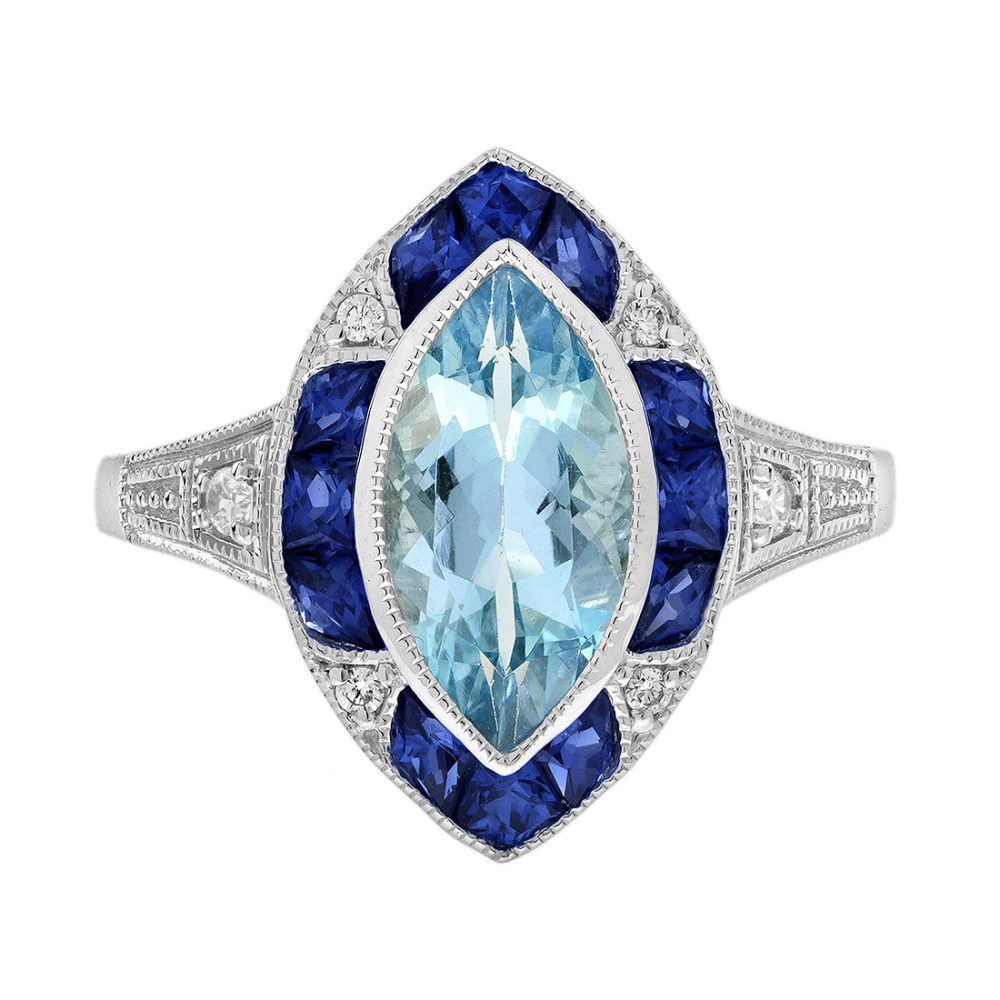
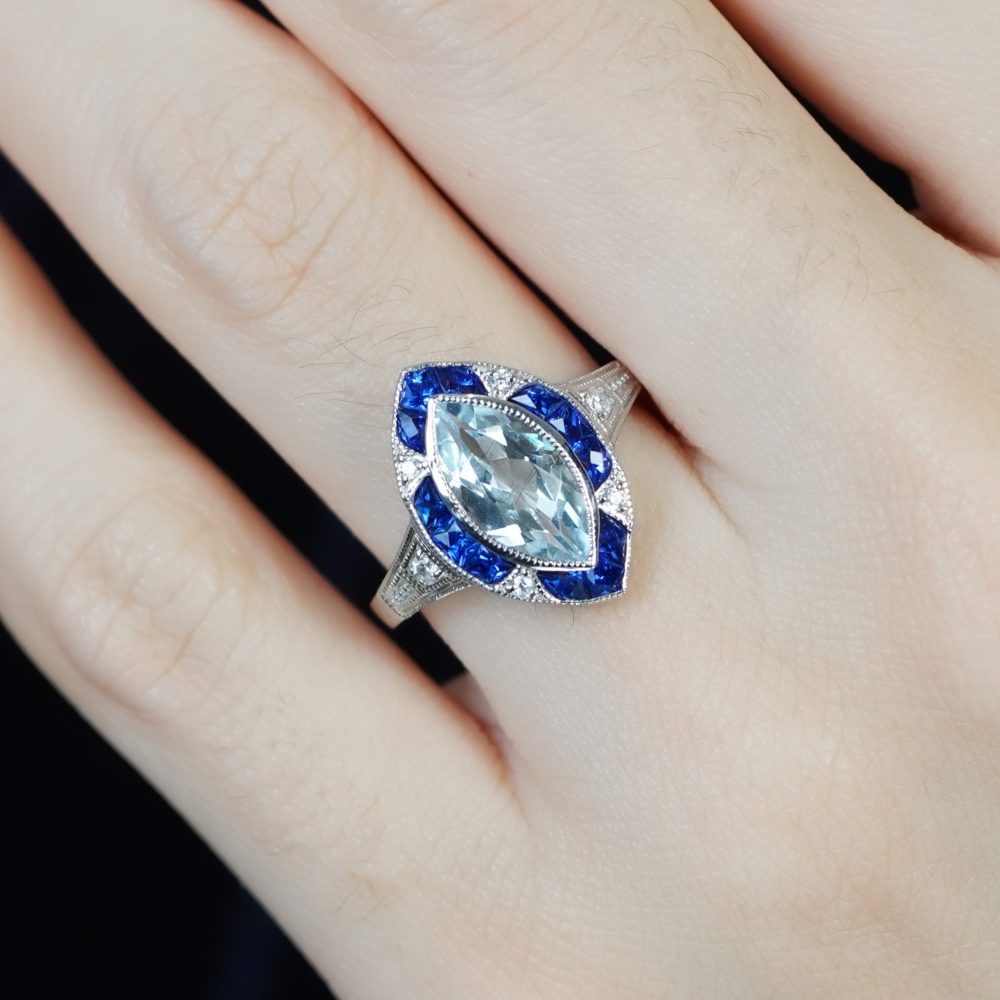
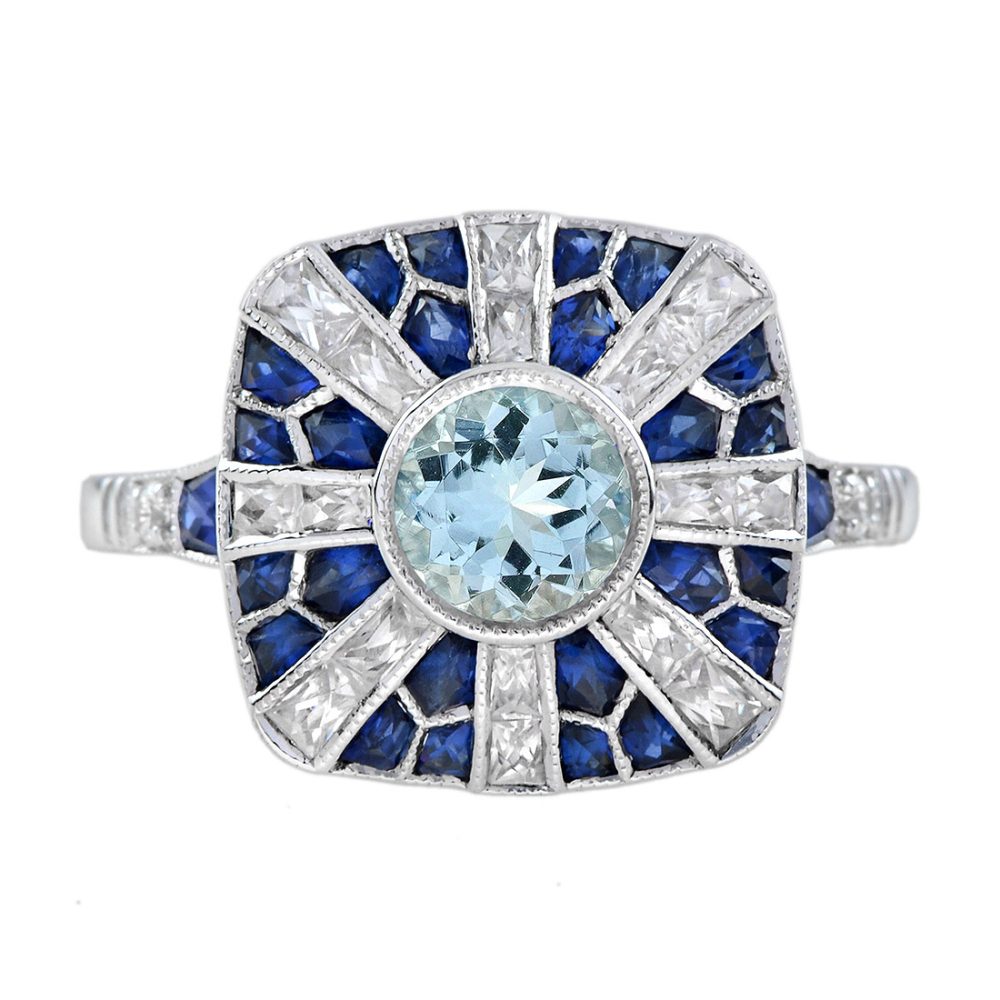
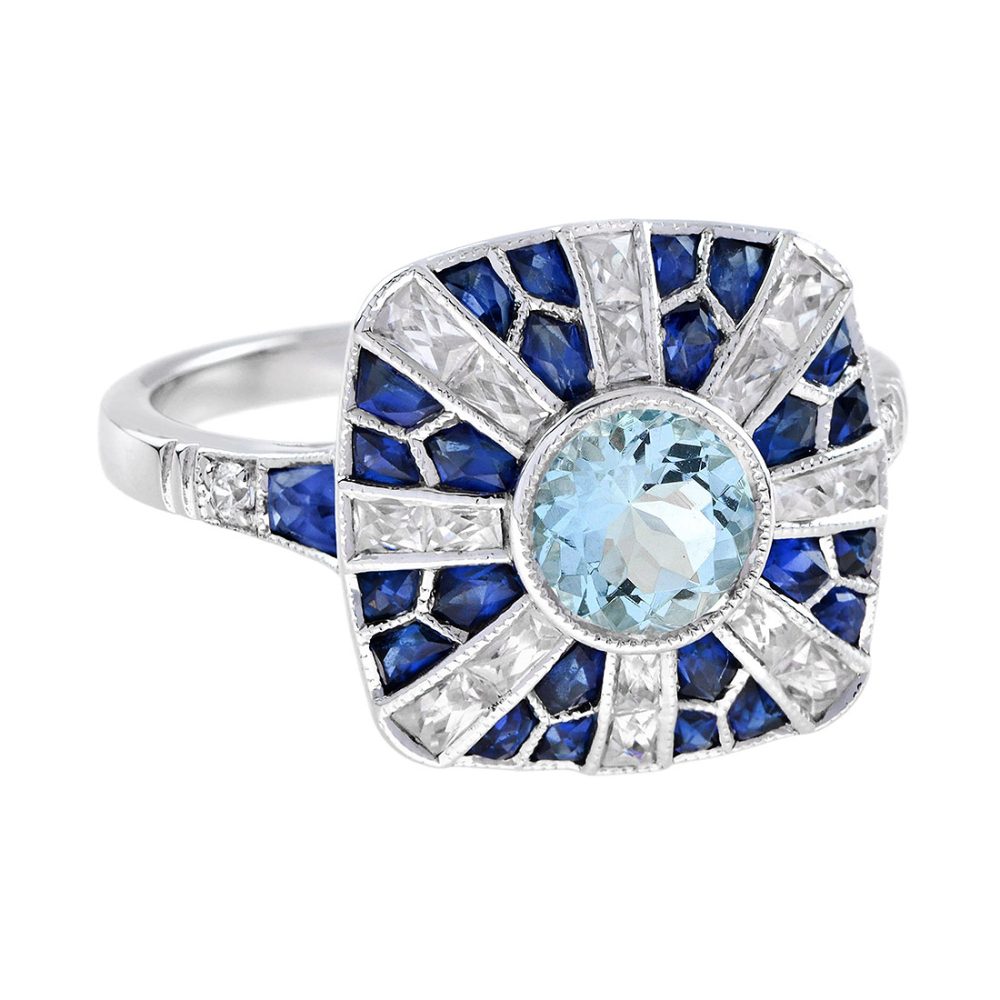
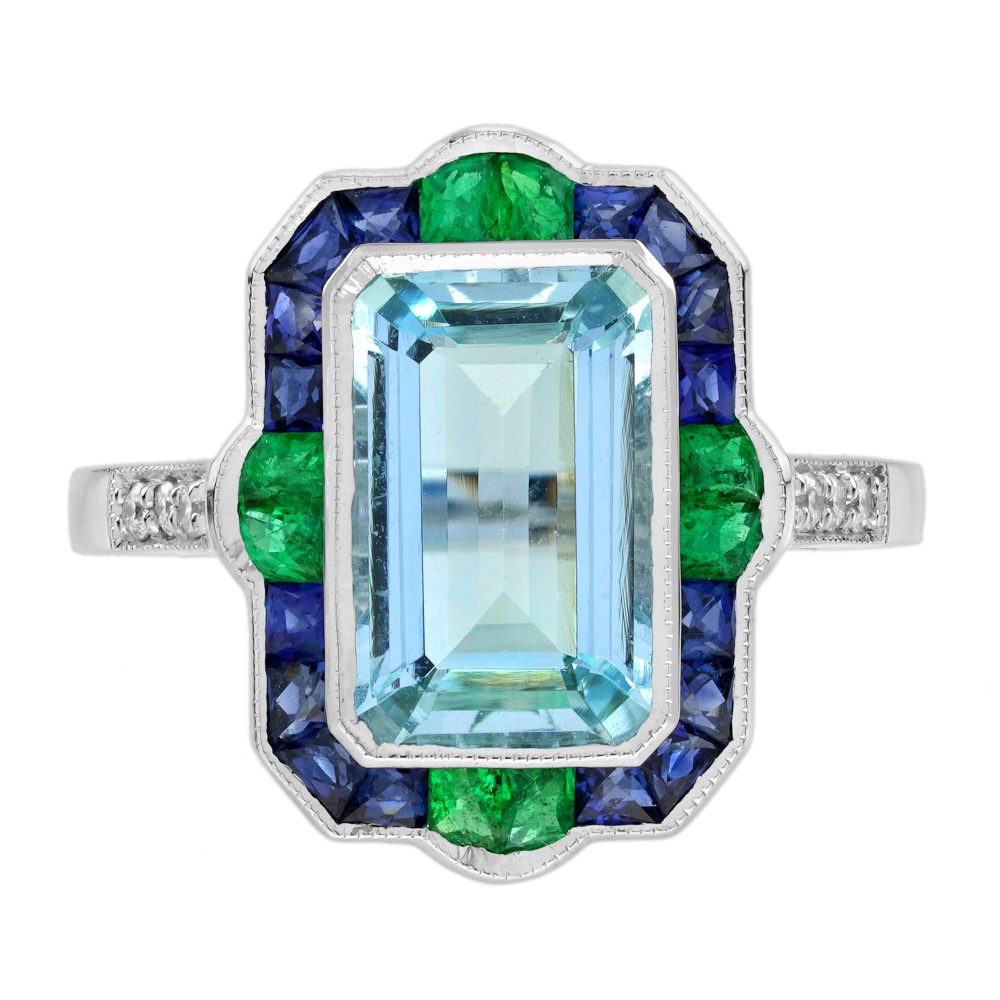
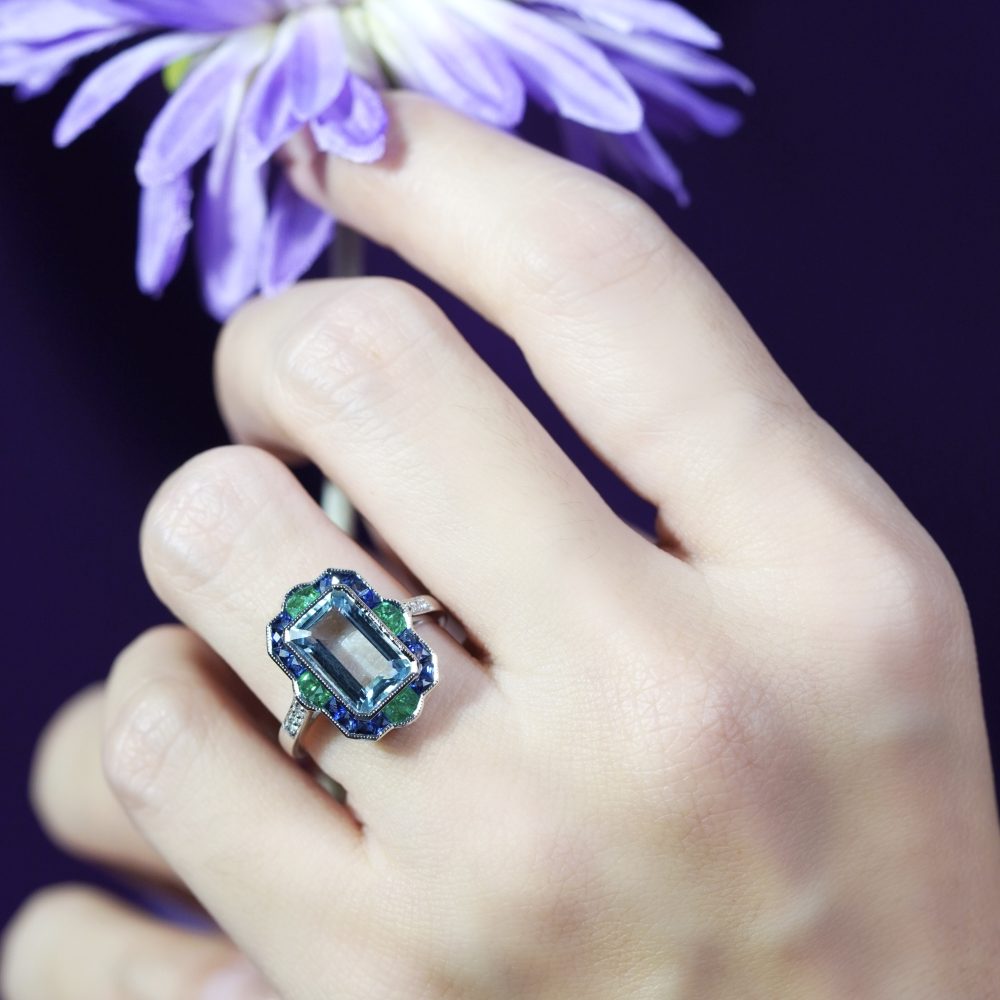
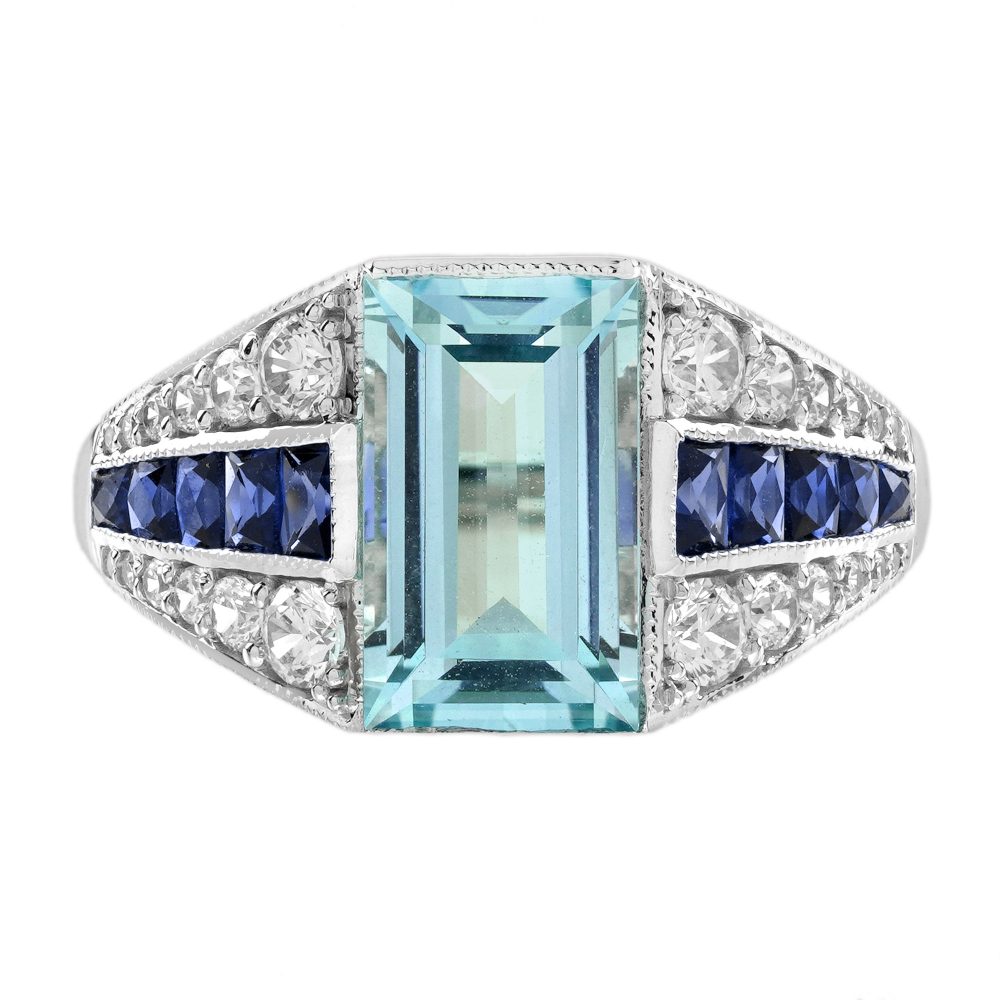
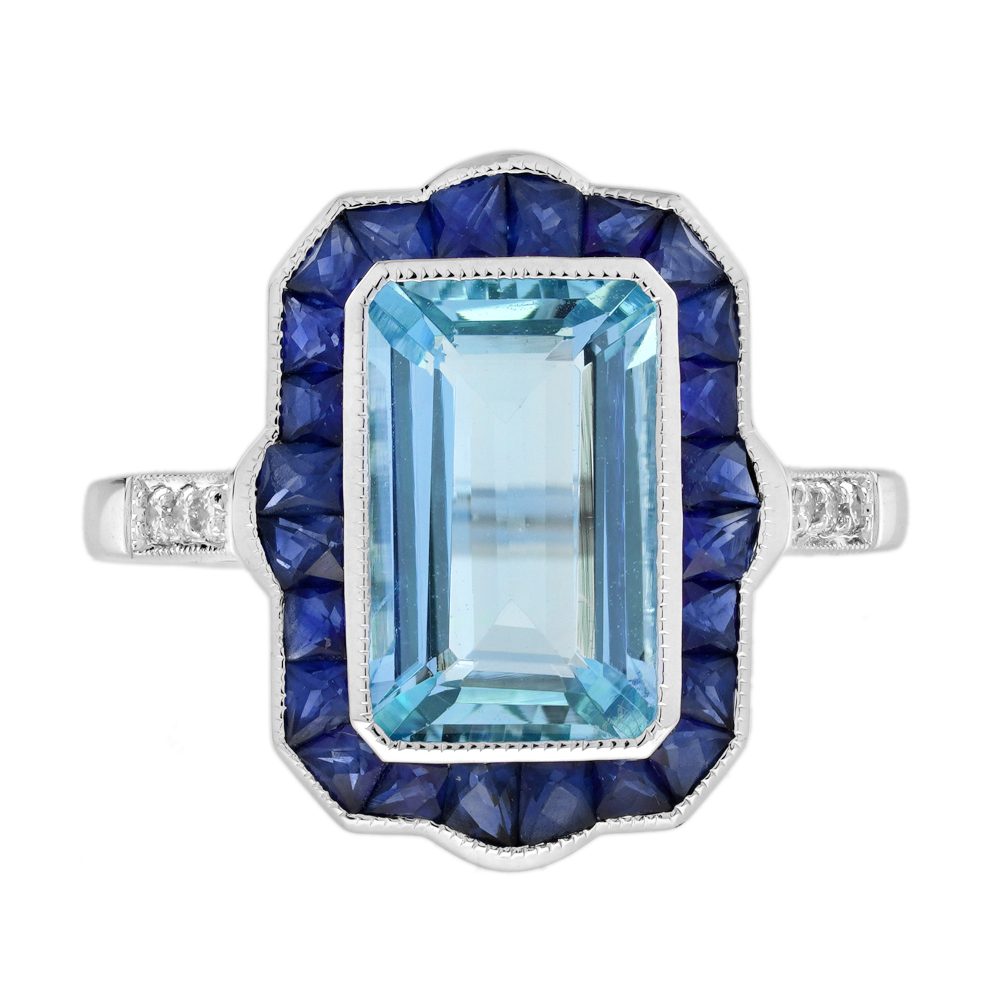
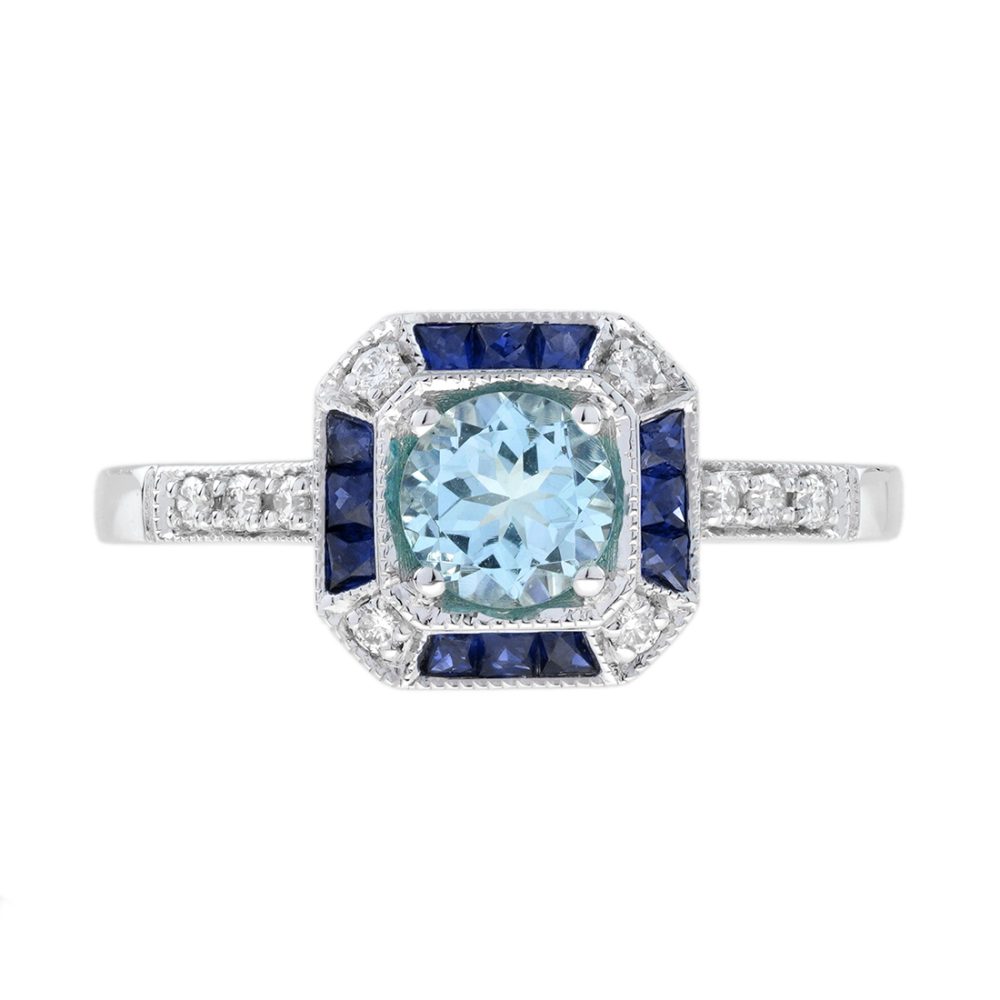
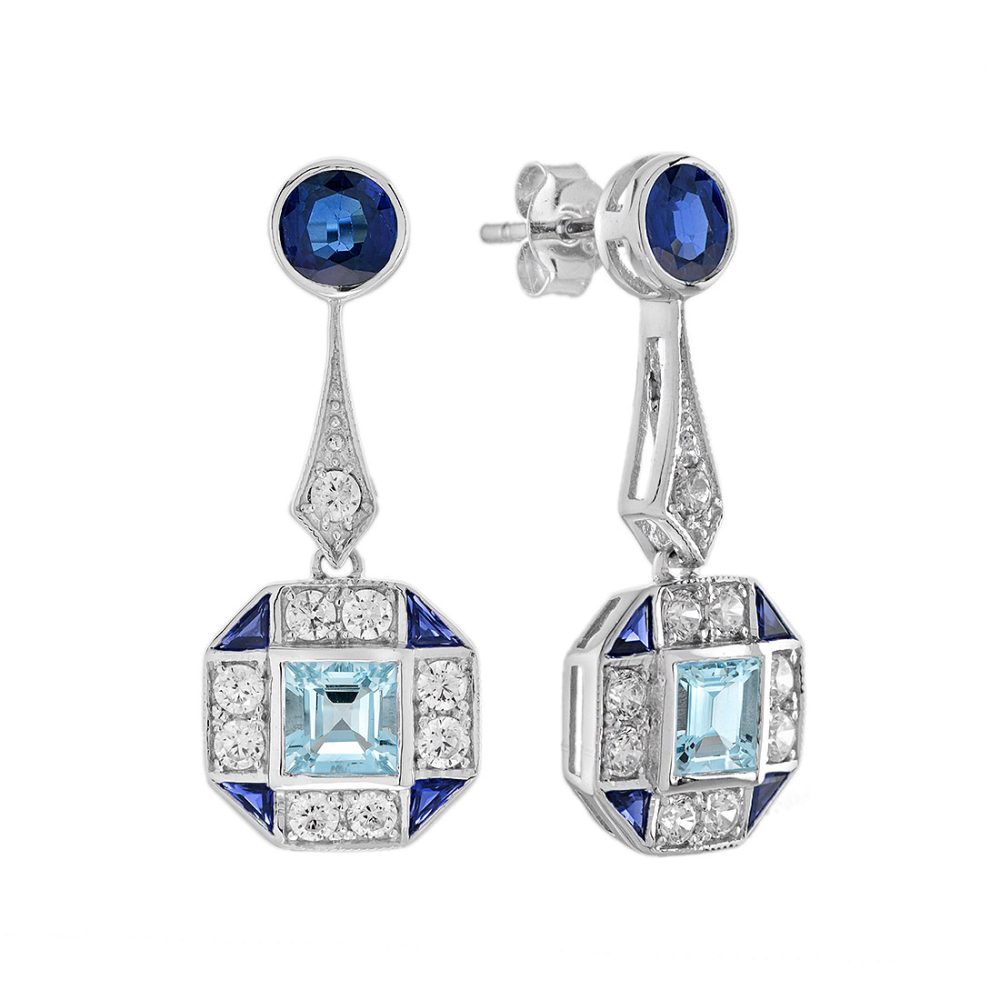
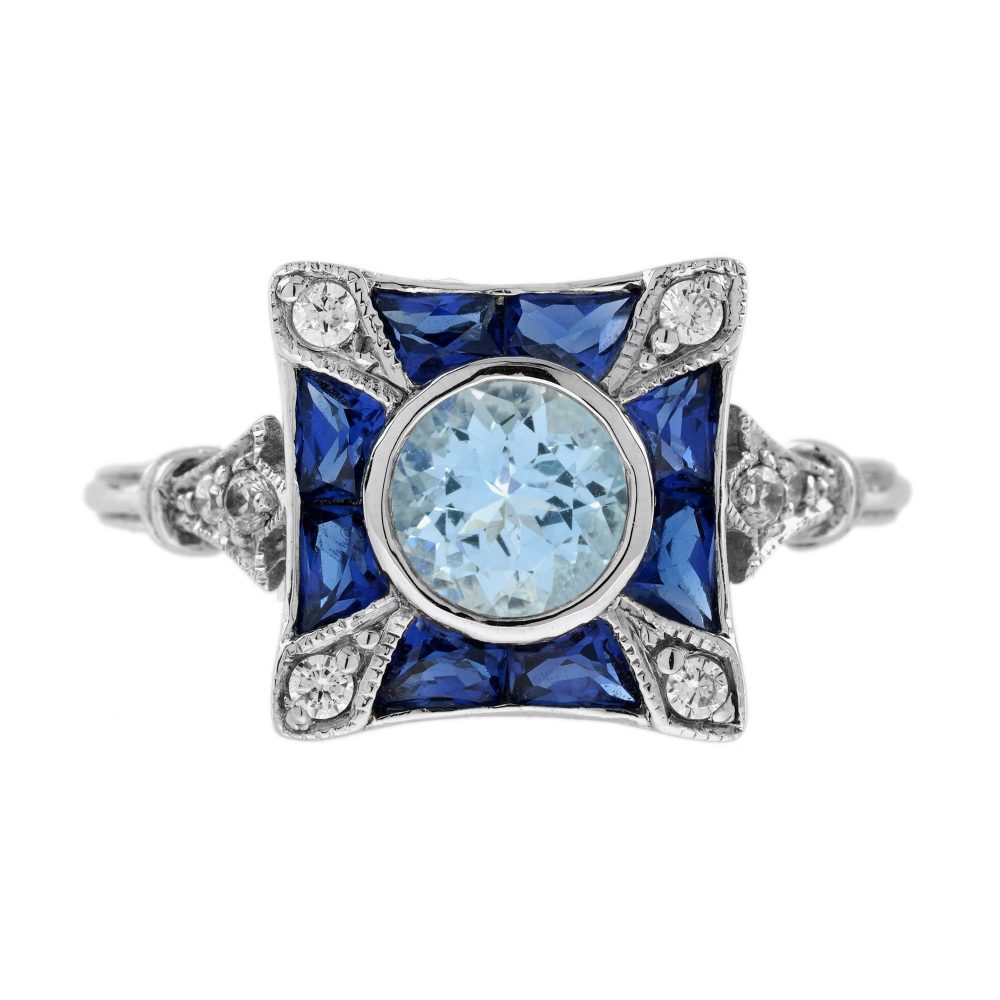
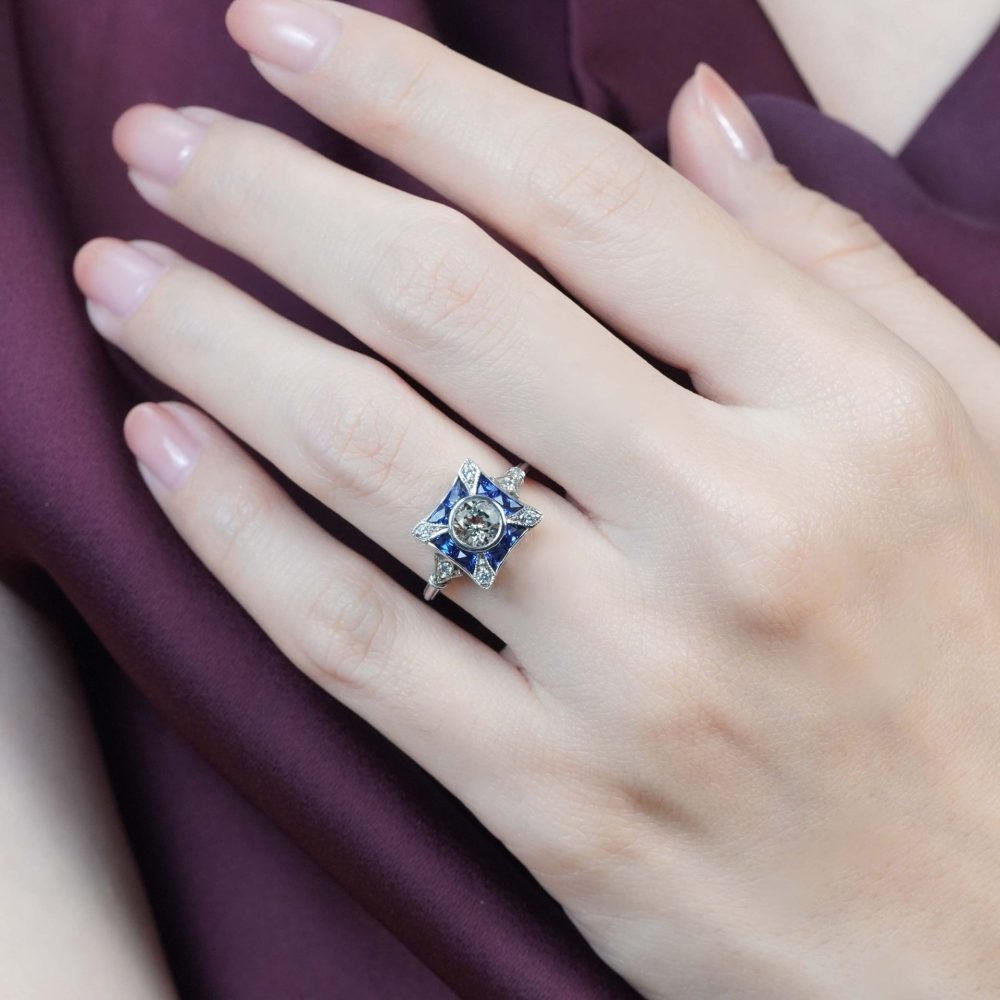
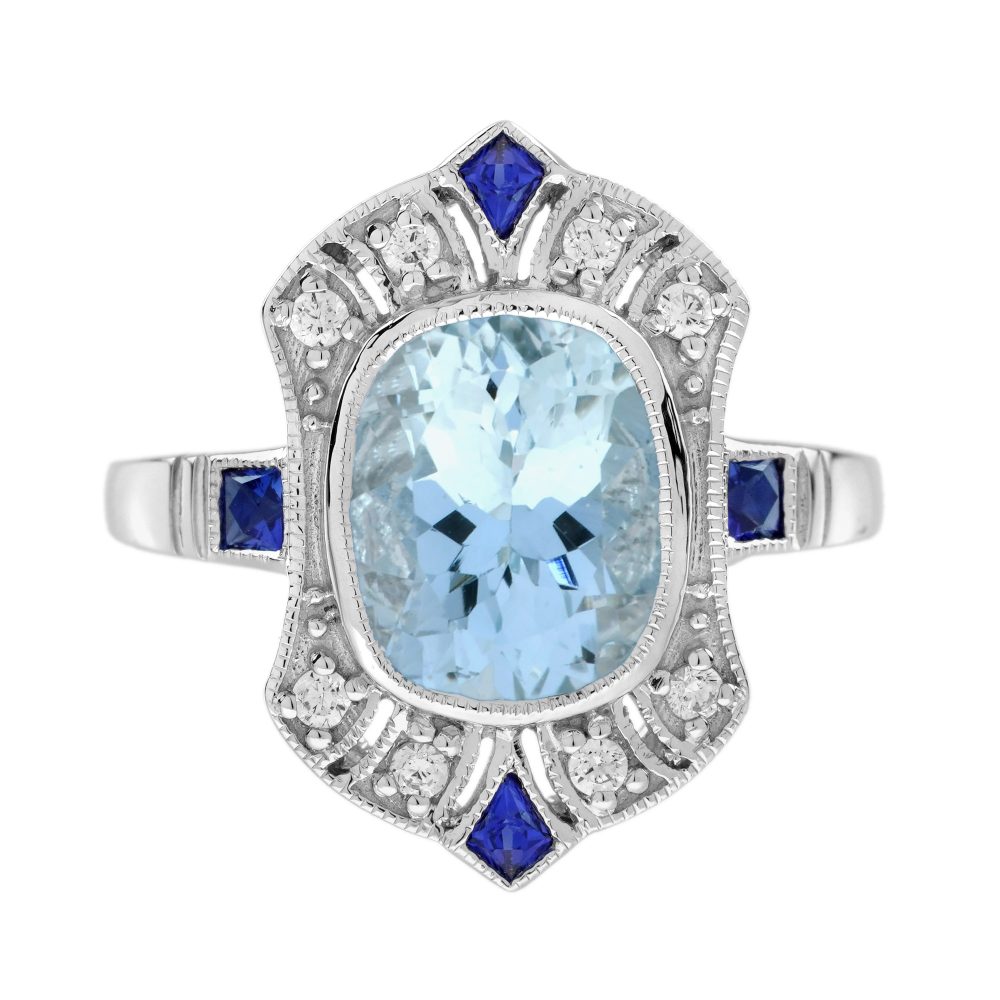
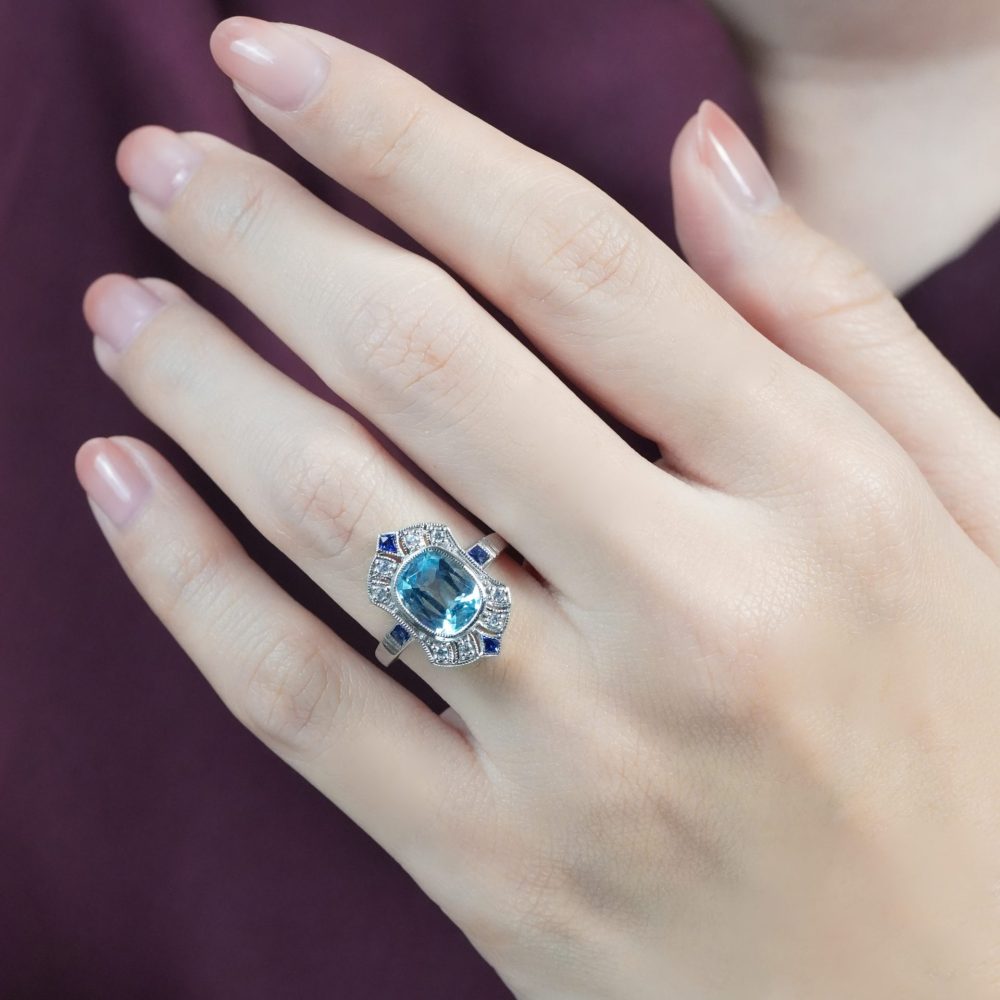
Aquamarine and Art Deco-inspired design suit one another unusually well. The stone is often highly transparent and frequently grows in elongated crystals, which lends itself to the step cuts, emerald cuts and long ovals that geometric design favors. Its cool, calm color also responds strongly to the metal and accent stones placed around it.
How Should a Setting Frame a Pale Stone?
In our workshop, aquamarine is treated as a problem of light architecture rather than a stone simply to be held. Pale blue can be weakened by too much surrounding metal or strengthened by considered contrast. White gold preserves a cool, icy reading. Yellow gold introduces warmth and can make the blue appear cleaner by contrast. Rose gold offers a softer, more romantic temperature. Diamonds, milgrain and calibrated accents can add scale and brightness without competing with the stone’s quiet color.
Which Setting Suits Each Type of Wear?
The intended pattern of wear should guide the setting before decorative details are finalized. Good hardness and toughness give aquamarine broad freedom, but a daily ring still benefits from protective architecture, while earrings and pendants can carry more open construction.
| Intended wear | Suggested direction | Reason |
|---|---|---|
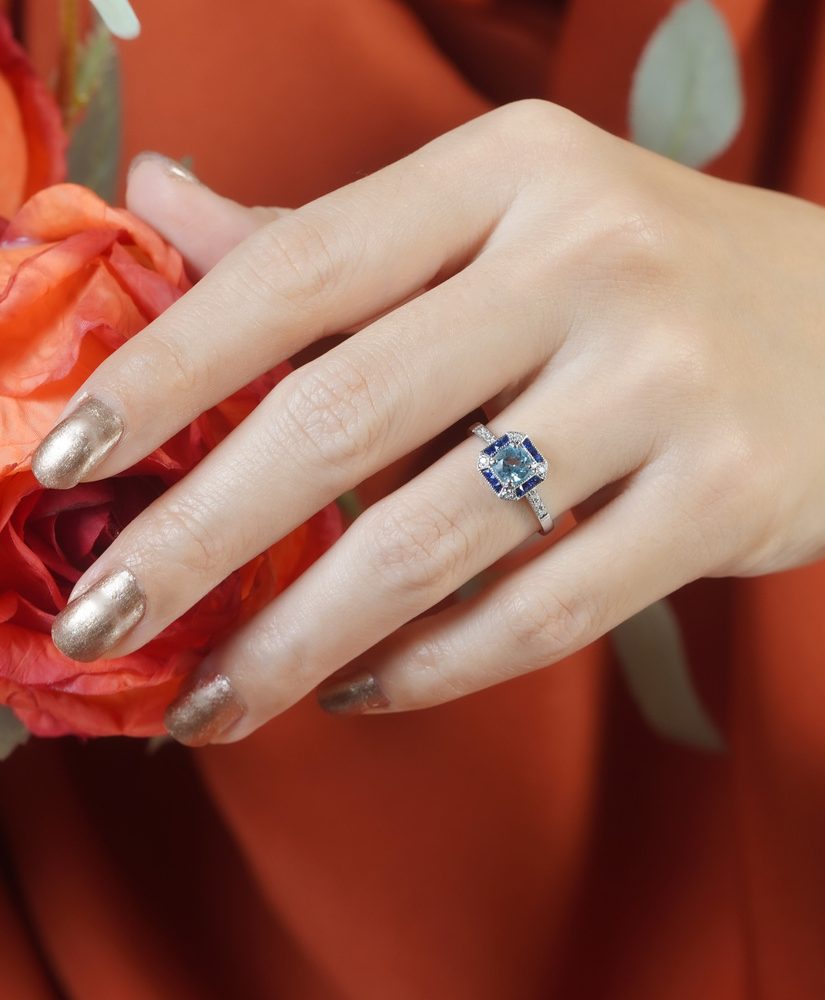
| Daily ring | Secure prongs, partial bezel, full bezel or protective halo | Reduces exposure of the stone and its corners during frequent hand use |
| Occasional statement ring | Open prongs or an architectural gallery, after the stone is assessed | Less frequent wear allows greater emphasis on light entry |
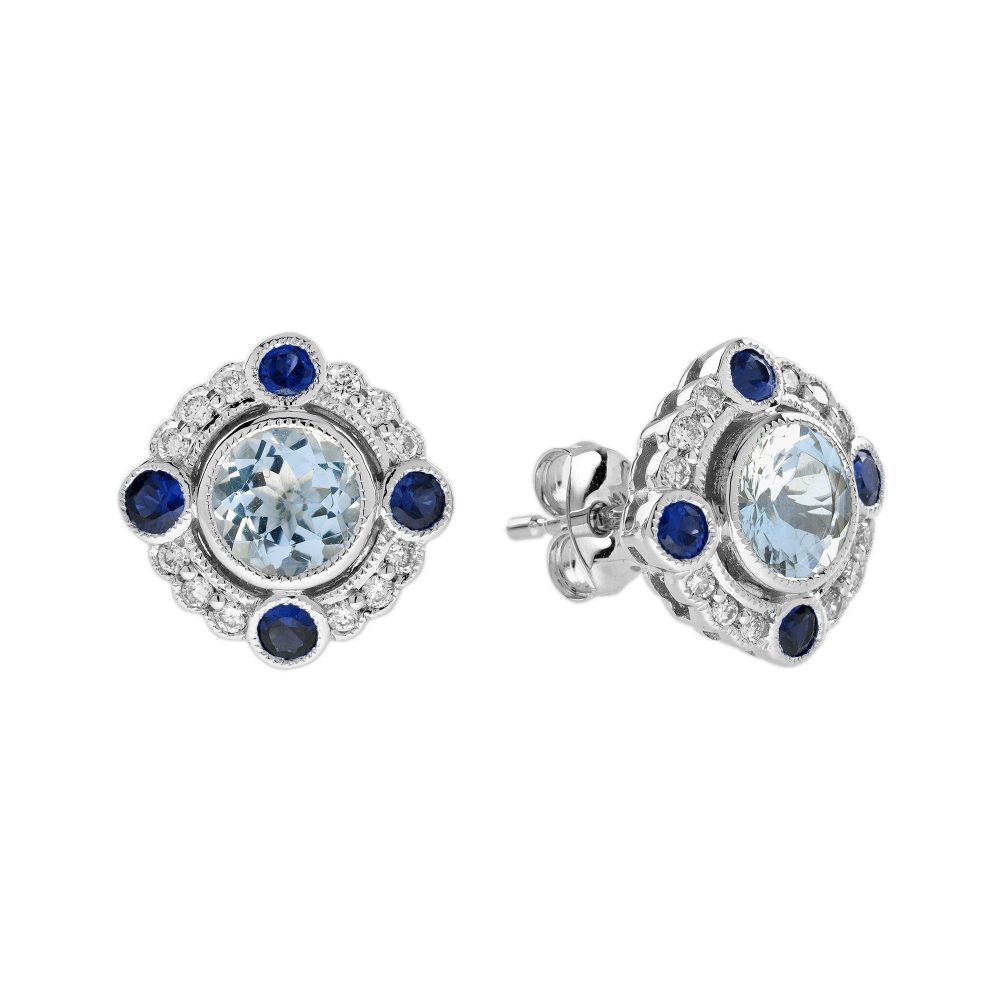
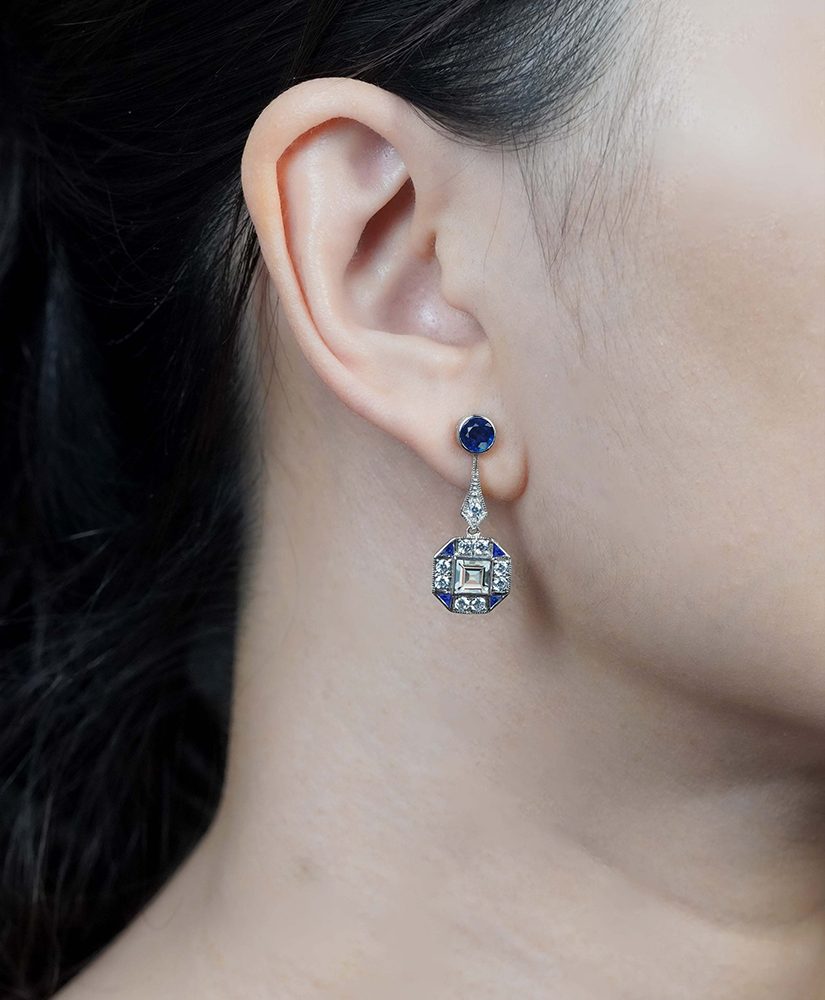
| Earrings | Prong, halo, bezel or drop design | Earrings usually experience fewer impacts than rings |
| Pendant | Prong or bezel with a stable bail | Gives visibility while limiting contact with hard surfaces |
| Bracelet | Low-profile, protective architecture | Wrist movement increases contact with desks, doors and other surfaces |
Our own work is made with natural gemstones set in solid gold. Every piece is newly made and antique-inspired; it is not an antique, an estate piece or a period original. The Art Deco and Edwardian traditions inform the geometry and finish, while the stone, the metal and the construction are all new and made to order.
How Do You Choose Fine Aquamarine Jewelry?
- Judge color in ordinary light first. Decide whether you prefer a nearly colorless icy blue, a greenish sea-blue or a stronger blue. Move the stone away from intense display lighting to see whether brilliance and color remain balanced.
- Assess transparency and cut. Look for a pale window through the center, large dark zones or excessive depth that hides weight beneath the setting. Consider face-up dimensions as well as carat weight, because aquamarine can occur in larger sizes.
- Ask about treatment and, where relevant, origin. Assume heating unless documentation states otherwise, and be cautious of an unusually deep blue offered cheaply. For a consequential purchase, a laboratory report can confirm treatment status and clarify any origin claim.
- Match the setting to intended wear. A daily ring needs secure, protective architecture; earrings and pendants allow more open construction.
- Weigh the relationship between stone, metal and accents. Pale aquamarine can disappear in a weak composition. A considered setting supplies enough contrast and scale for the color to read clearly without overwhelming it.
How Do You Care for Aquamarine?
Warm water, a mild soap and a soft brush are the safest general home-care method. Clean gently behind the stone and around the setting where residues collect, rinse carefully, and dry with a soft, lint-free cloth.
Avoid harsh chemicals and sudden temperature changes. Ultrasonic and steam cleaning can be acceptable for a clean, untreated aquamarine, but they are not a safe default: a stone with fractures, liquid inclusions or an uncertain treatment history can be damaged. When the condition or history of a stone is not known, conservative cleaning is the wiser choice, and a jeweler should inspect a frequently worn ring before any intensive cleaning.
Store aquamarine separately from harder gems such as diamond, ruby and sapphire, which can scratch it, and away from softer stones that it can scratch in turn. Individual fabric-lined compartments or soft pouches reduce contact between pieces and protect both the stone and its setting over time.
What Should You Remember About Aquamarine?
Aquamarine is the blue to blue-green beryl that serves as the modern March birthstone, traditionally associated with courage, serenity, safe travel and clear communication. Bloodstone is its older, traditional companion, and both are recognized by the Gemological Institute of America for March. The cultural meaning should remain separate from the material facts.
Those material facts reward a little precision. Aquamarine shares emerald’s mineral family and hardness, yet it is usually a clean, tougher stone, which is why it wears more freely. Most aquamarine on the market is heated, permanently and undetectably, so natural does not mean untreated. Trade names such as “Santa Maria” describe color rather than grade, and an unusually deep blue may be irradiated beryl whose color can fade.
The most credible aquamarine jewel combines an honestly described stone, a color chosen for the wearer and a setting matched to how the piece will be worn. Meaning gives the stone its purpose; considered construction allows that purpose to accompany a lifetime of occasions.
Sources: GIA — March Birthstones (Aquamarine & Bloodstone) · Jewelers of America — Official Birthstone List
Engagement Ring
Halo Ring
Rose Gold

Stud Earrings
Cocktail Ring
Frequently Asked Questions About Aquamarine Meaning
What does aquamarine symbolize?
Aquamarine traditionally symbolizes courage, serenity, safe travel and clear communication. These meanings come from maritime folklore, color symbolism and cultural history rather than from a medical, physical or guaranteed supernatural effect. The most personal meaning comes from the birthday, journey or connection the wearer attaches to the stone.
Is aquamarine the only March birthstone?
No. The Gemological Institute of America recognizes two March birthstones, aquamarine and bloodstone. Bloodstone is the older, traditional stone, while aquamarine is the modern gem named on the Jewelers of America list and the one most buyers now recognize for March.
Is “Santa Maria” aquamarine a quality grade?
No. “Santa Maria” is a trade name for a saturated blue, taken from a Brazilian mine, and origin labels such as “Brazilian” often describe color rather than a documented source. These terms are not graded standards. Judge the individual stone and request documentation for any origin claim.
Are natural aquamarines treated?
Most are. Aquamarine is commonly heated to remove a green or yellow component and produce a cleaner blue. The process is permanent and effectively undetectable, so natural describes geological origin, not the absence of treatment. Treatment information should be reviewed for the individual stone.
Can aquamarine be worn every day?
Aquamarine can be worn regularly with sensible care. It measures 7.5 to 8 on the Mohs scale and has good toughness, so it wears more freely than emerald despite sharing the beryl family. Rings should still be protected from hard impacts, abrasives and worn settings.