
Blog, Gemstone Guides
Sapphire Meaning, Colors & September Birthstone
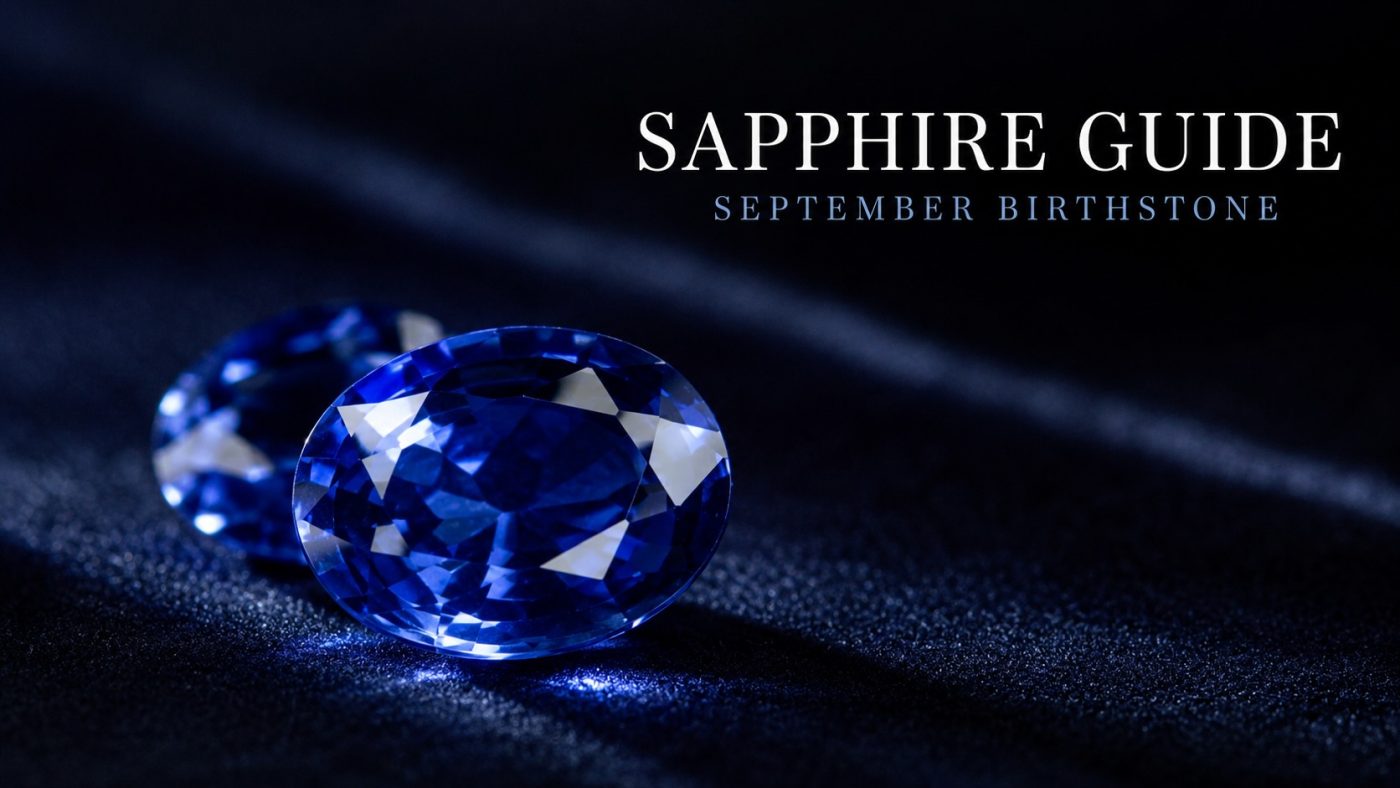
Key Takeaways: Sapphire Meaning
- Sapphire is the September birthstone and traditionally symbolizes sincerity, truth, faithfulness, and nobility.
- Sapphire is corundum in every gem-quality color except red; red corundum is ruby.
- Color is the leading quality factor, but origin, treatment, cut, clarity, and carat weight also affect identification and value.
- Sapphire ranks 9 on the Mohs scale and has excellent toughness, making it suitable for daily-wear jewelry with sensible care.
What Does Sapphire Mean?
Sapphire traditionally represents sincerity, truth, faithfulness, and nobility, and it is the official September birthstone. Although blue sapphire is the best-known variety, sapphire is corundum in nearly every color except red, which is ruby. Its meaning is cultural; its quality depends chiefly on color, treatment, cut, clarity, and documented origin.
Sapphire has long been associated with sincerity, truth, faithfulness, and nobility. These are historical and cultural associations, not physical properties of the mineral. GIA records that sapphire has appeared in royal and clerical dress for centuries, while people in ancient Greece and Rome traditionally believed blue sapphire offered protection from envy and harm. Medieval clergy connected its blue color with Heaven.
The distinction matters. A sapphire can carry personal, religious, romantic, or dynastic meaning without being assigned a medical or supernatural effect. For a September birthday, the stone may mark birth month and identity. In an engagement ring, its established associations with fidelity and truth can give the gem an appropriate symbolic language. In an heirloom, the meaning often develops through the person who wore it and the events it witnessed.
Blue sapphire remains the visual archetype, yet the mineral family is much broader. Pink, yellow, orange, green, purple, violet, colorless, and parti-colored sapphires all belong to corundum. Red corundum alone receives a different name: ruby. This shared mineral identity explains why ruby and sapphire have the same Mohs hardness and broadly comparable durability.
How Do Sapphire Colors Differ in Meaning and Appearance?
| Sapphire Color | Typical Appearance | Common Symbolic Association | Design Consideration |
|---|---|---|---|
| Blue | Pale blue to deep violetish blue | Truth, loyalty, nobility | Tone must remain lively rather than appearing black in ordinary light |
| Pink | Delicate blush to vivid pink | Affection, tenderness, romance | White metal can emphasize a cooler pink; rose gold can create tonal warmth |
| Yellow | Pale lemon to saturated golden yellow | Optimism, clarity, warmth | Yellow gold may harmonize with the stone; white metal creates sharper contrast |
| Padparadscha | A rare pinkish orange | Individuality, balance, rarity | The balance of pink and orange is central; laboratory documentation is prudent |
| Green | Yellowish green to bluish green | Renewal, composure, growth | Mixed or parti-color zoning may become a deliberate feature of the design |
| Purple or violet | Lavender to saturated violet | Reflection, dignity, imagination | Observe the stone in several light sources because purple can shift in character |
| Colorless | Transparent and without dominant body color | Restraint, clarity, simplicity | Cut and transparency become especially visible when color is absent |
| Parti-color | Two or more distinct colors in one stone | Complexity, duality, individuality | Cut orientation determines whether the color zones appear balanced or fragmented |
GIA identifies the fancy sapphire colors as pink, orange, yellow, green, purple, and violet, with padparadscha reserved for a notable pinkish-orange range. The market value of a sapphire does not follow symbolic meaning. In general, stronger and more uniform color is preferred, but the ideal appearance depends on hue, tone, saturation, transparency, zoning, and how the cut returns light.
Why Is Blue Sapphire the Best-Known Variety?
Fine blue sapphire is judged first by color. A desirable stone usually shows strong to vivid saturation while retaining enough lightness to reveal its blue in varied conditions. A stone that is too pale may lack presence; one that is too dark may look inky or nearly black away from direct light. Color zoning, extinction, and windowing can also alter the impression. Extinction describes dark areas that return little light. Windowing occurs when the center appears transparent enough to see through, often because the pavilion is too shallow.
What Makes Sapphire the September Birthstone?
The September association gives sapphire a clear gifting role, but it does not restrict the wearer to blue. A pink, yellow, green, or parti-colored sapphire remains a sapphire and therefore remains a September birthstone. This is useful when the traditional deep-blue palette does not suit the recipient or the intended design.
Sapphire is also associated with the fifth and forty-fifth wedding anniversaries according to GIA. As with birthstones, this anniversary convention is cultural. The strongest meaning still comes from the relationship between the stone, the design, and the person receiving it.
Where Do Ceylon, Kashmir, and Other Sapphires Come From?
“Ceylon sapphire” is the traditional trade term for sapphire from Sri Lanka, formerly called Ceylon. Sri Lanka is known for a broad range of sapphire colors, including blue and padparadscha. Lilly M. JEWELERS currently lists designs featuring Ceylon sapphire, but this does not mean that every sapphire in the collection has Sri Lankan origin.
Kashmir sapphire occupies a particular place in gem history because exceptional stones from the region are associated with intensely saturated, velvety blue. The source is rare and commercially important, which is why an origin claim for a significant stone should rest on an independent laboratory report rather than appearance, seller language, or color alone.
Origin can influence rarity and market value, but it does not replace quality assessment. Two stones from the same country may differ greatly in color, clarity, cut, treatment, and beauty. Conversely, a fine sapphire from a less celebrated source may be a better stone than an ordinary example from a famous locality.
| Origin | Historical or Market Context | Appearance Often Associated | What Evidence Is Needed? |
|---|---|---|---|
| Sri Lanka (Ceylon) | Historic and continuing source of many colors | Blue stones may be bright and lively; the country also produces fancy colors | Independent laboratory origin opinion for a consequential claim |
| Kashmir | Rare historic source with strong collector interest | Intensely saturated, velvety blue in celebrated examples | Independent laboratory report; appearance alone is insufficient |
| Myanmar | Long-established source of important sapphires | Fine blue material occurs, but quality varies | Laboratory opinion when origin affects price or description |
| Madagascar | Major modern source with broad production | Wide range of blue and fancy colors | Laboratory testing for origin, treatment, and natural status as appropriate |
| Montana | Recognized United States source | Blue, greenish blue, and parti-colored material | Traceable sourcing or laboratory evidence for a formal origin claim |
How Durable Is Sapphire for Everyday Jewelry?
Durability is not invulnerability. A hard strike can chip a facet edge or damage a setting. Diamonds and other corundum can scratch sapphire, and sapphire can scratch many softer gems when pieces are stored together. Rings receive more impact than earrings or pendants, so prongs, bezels, and accent stones should still be checked periodically.
At the bench, we also distinguish between the durability of the stone and the security of the setting. A sapphire can be in excellent condition while worn prongs, a distorted gallery, or a loose seat puts it at risk. For daily wear, periodic inspection is as important as the mineral’s hardness.
Are Sapphires Commonly Treated?
“Natural” and “untreated” are not synonyms. Natural describes geological origin rather than the absence of enhancement. An unheated sapphire may command a rarity premium when fine quality and the absence of heat are supported by a respected independent laboratory, but an attractive heated sapphire can remain a legitimate natural gemstone.
The treatment policy for individual Lilly M. JEWELERS sapphires has not yet been confirmed at project level. This guide therefore makes no blanket claim that the brand’s sapphires are untreated or that any specific treatment applies. A buyer should consult the product description, available documentation, and direct disclosure for the individual stone.
What Determines a Sapphire’s Quality and Value?
| Factor | What to Examine | Why It Matters | Practical Question |
|---|---|---|---|
| Color | Hue, tone, saturation, uniformity, zoning | Usually the leading influence on beauty and value | Does the color remain lively in ordinary light? |
| Clarity | Inclusions, transparency, surface-reaching fractures | Affects appearance, rarity, and sometimes durability | Are inclusions distracting or structurally important? |
| Cut | Proportions, symmetry, windowing, extinction, color zoning | Controls light return and the face-up distribution of color | Does the cut reveal color or merely retain weight? |
| Carat weight | Weight together with face-up dimensions | Fine larger stones become progressively rarer | Does the stone look its weight when viewed from above? |
| Treatment | Heat, diffusion, filling, dyeing, supporting report | Affects rarity, price, disclosure, and sometimes care | What treatment has been identified or disclosed? |
| Origin | Independent laboratory origin opinion | Can affect rarity and market value for notable stones | Is the claim documented, and is the premium justified? |
The four familiar factors of color, clarity, cut, and carat weight remain useful, but colored stones do not behave like standardized colorless-diamond grading. Sapphire color is more complex, and there is no single universal clarity scale applied across the retail market. The stone must be assessed as a complete object.
How Should a Sapphire Be Set in Fine Jewelry?
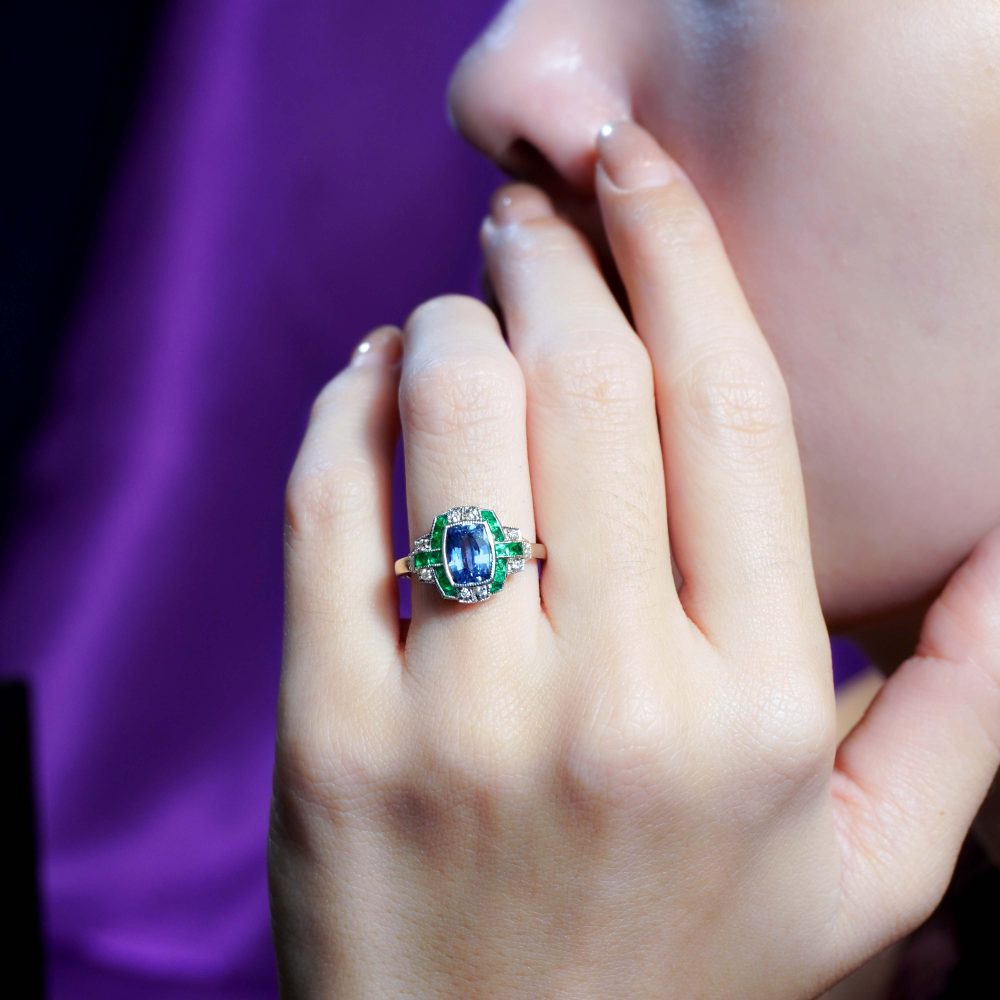
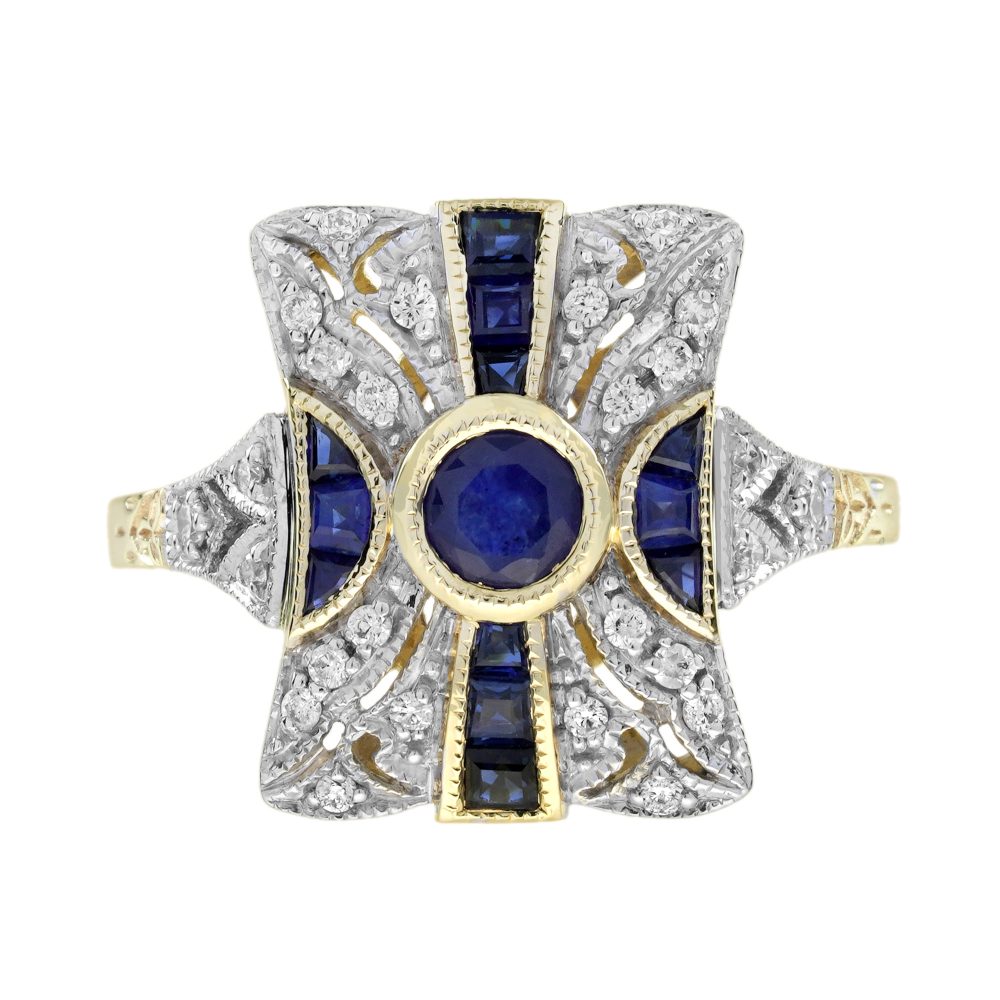
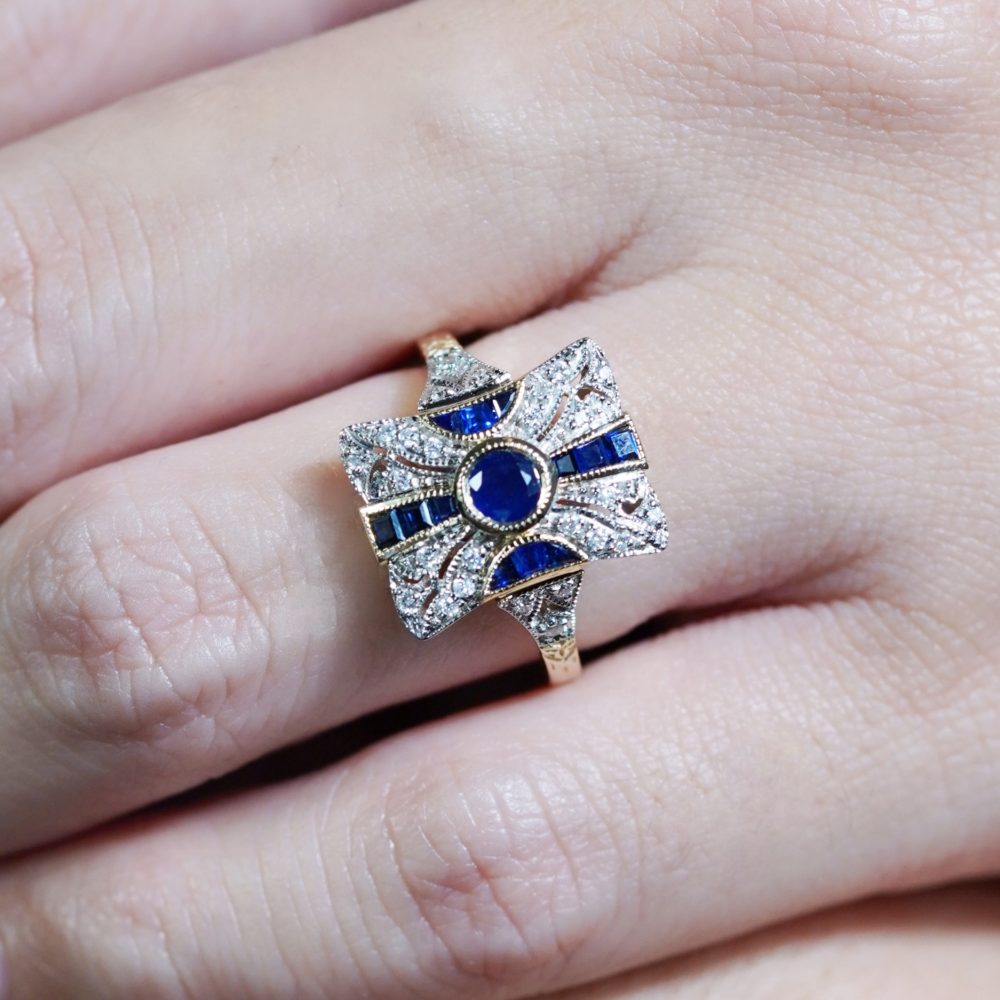
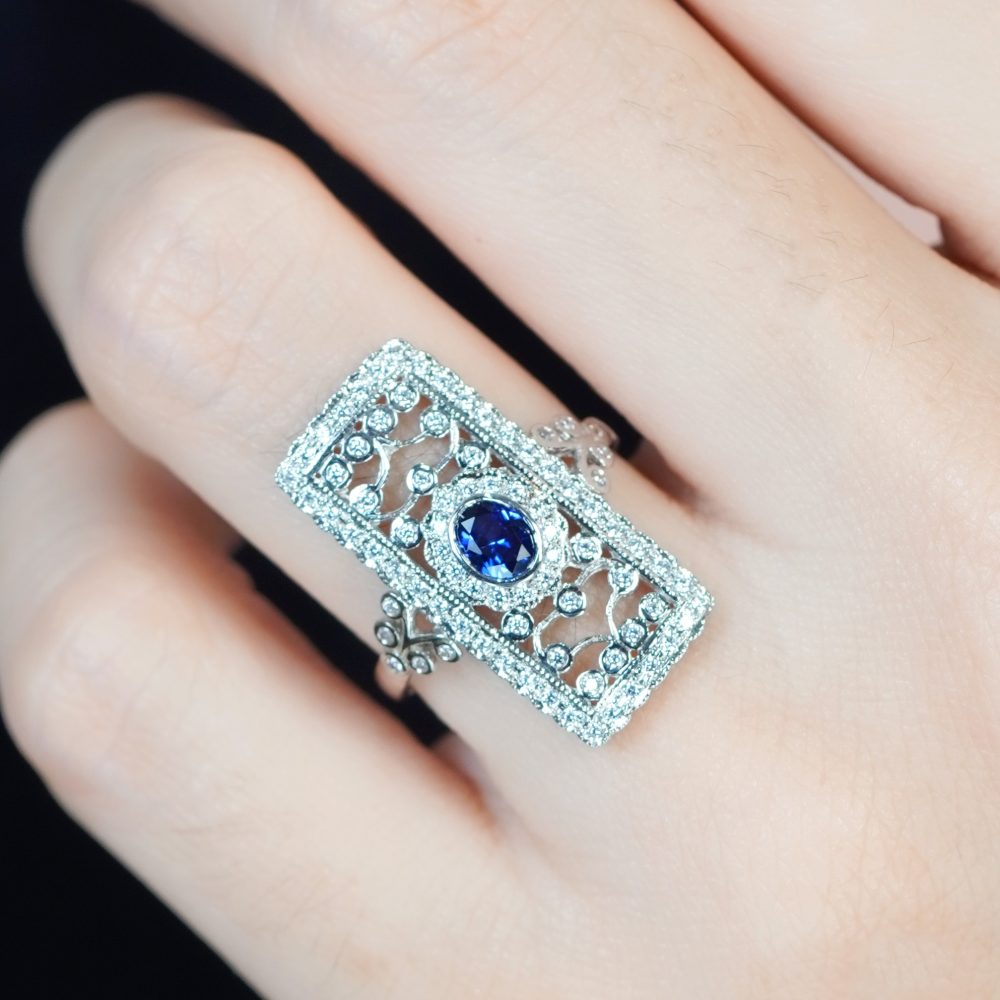
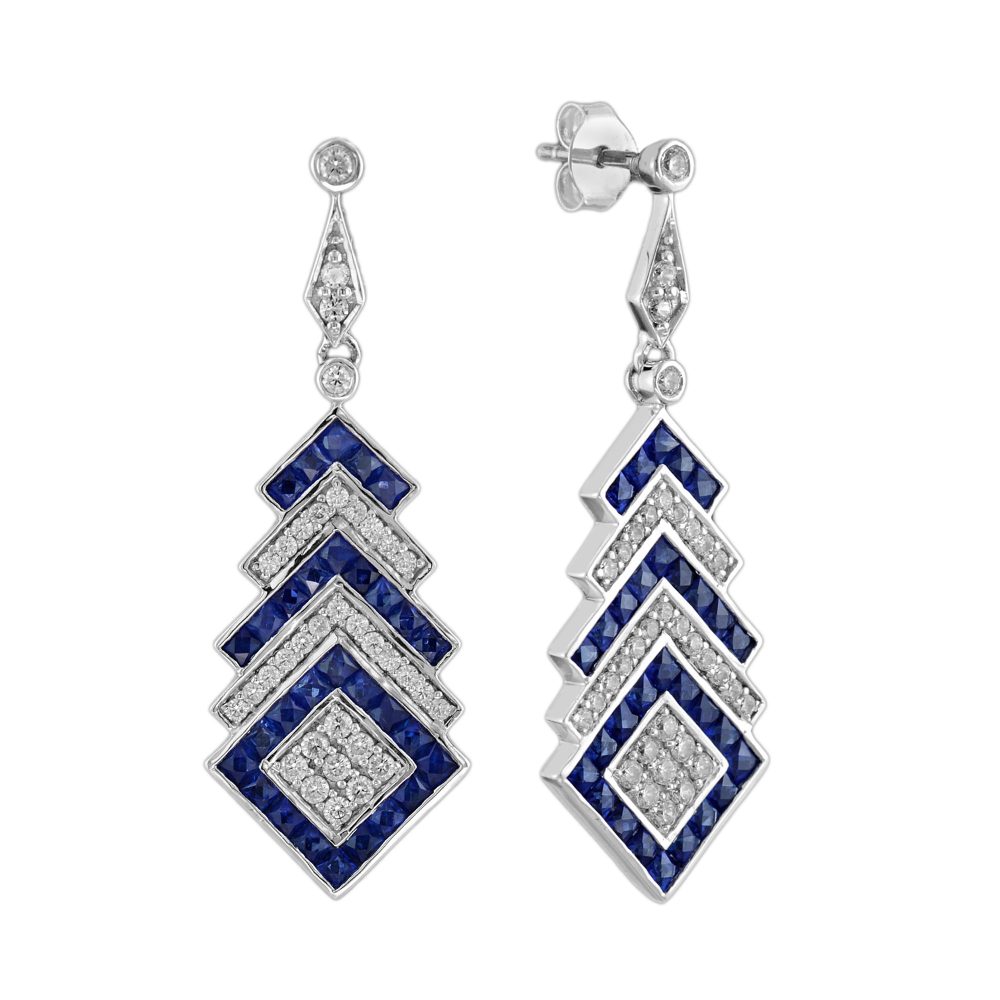
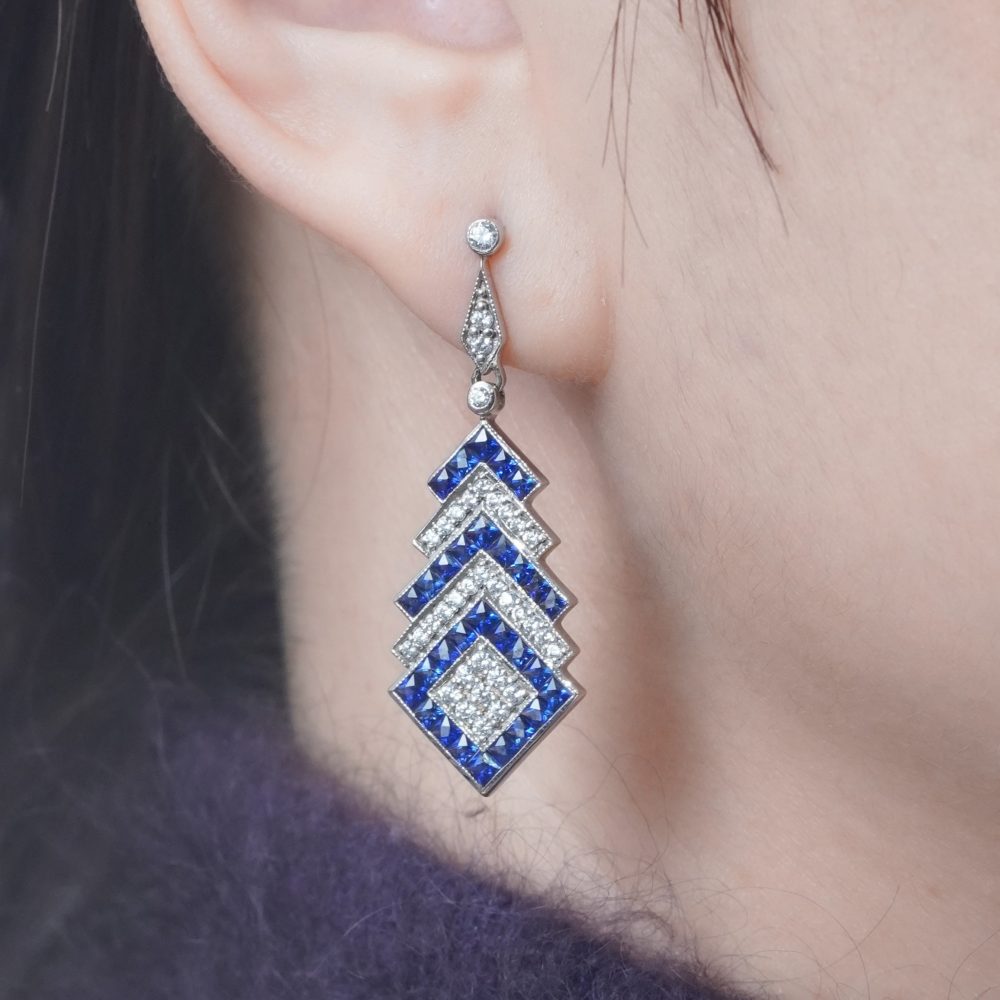
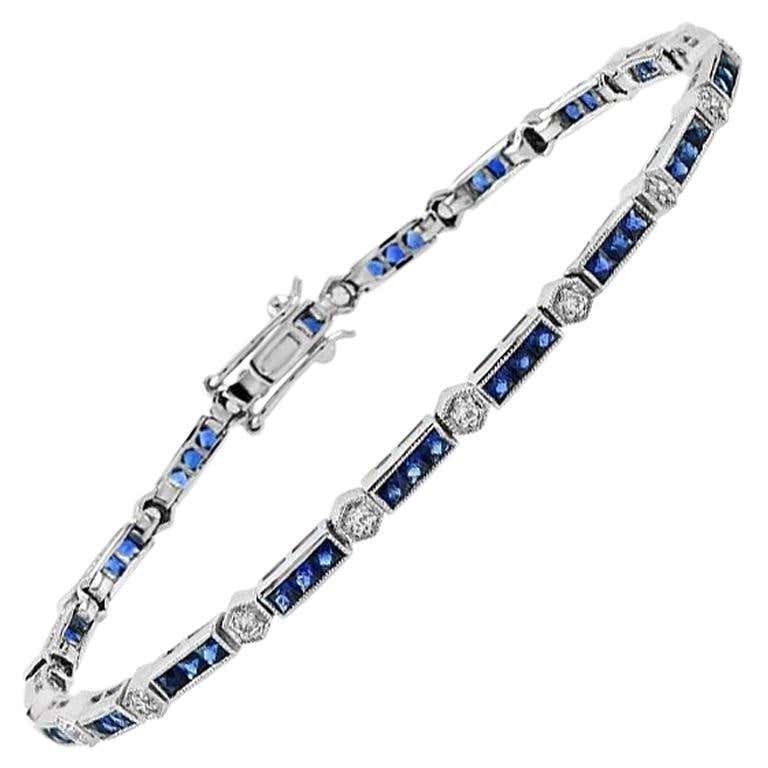
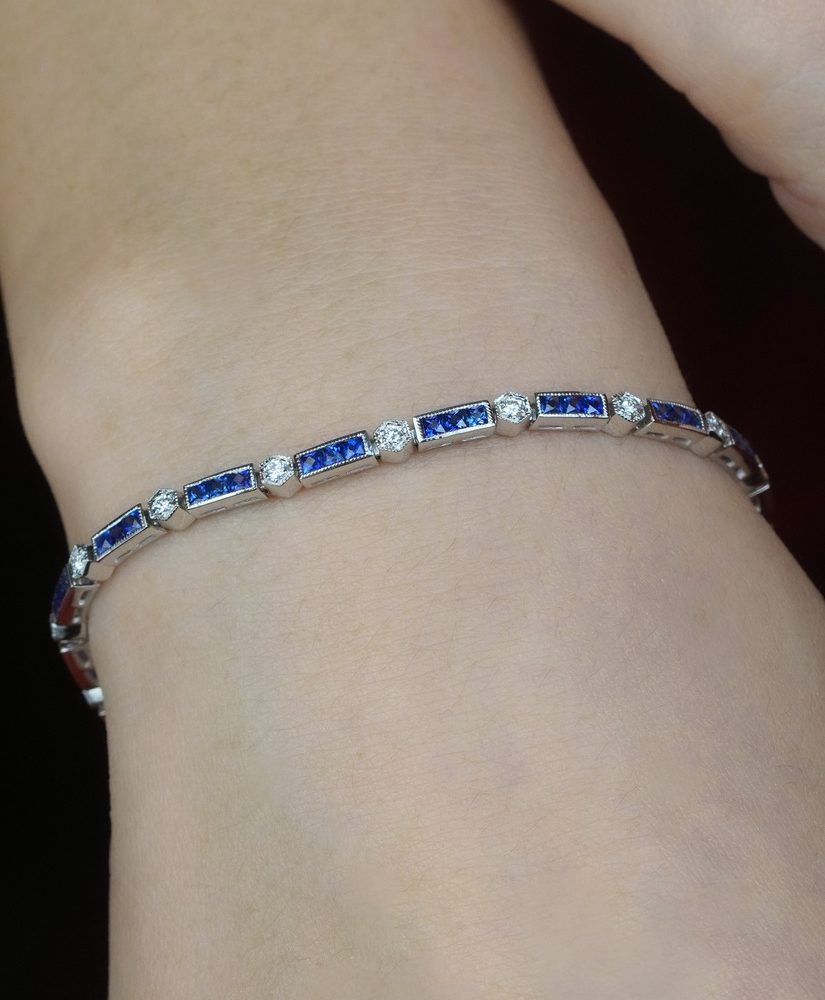
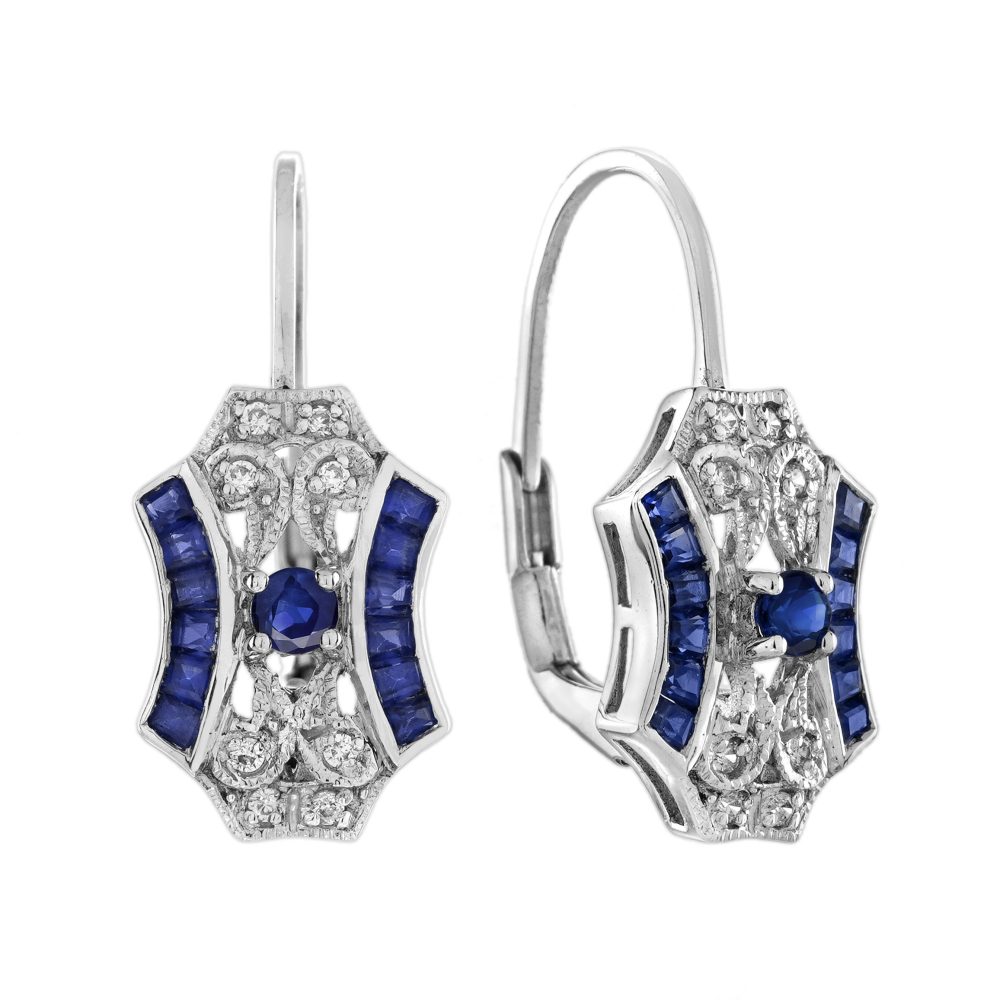
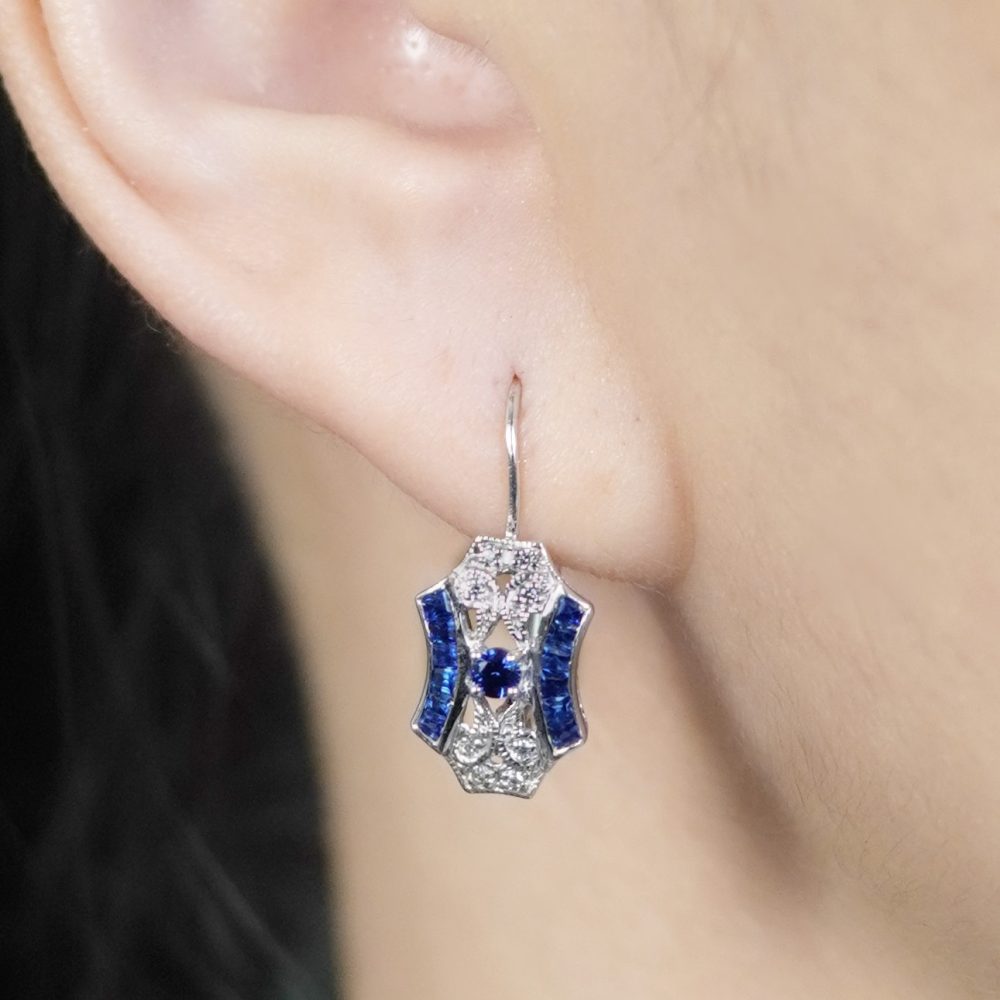
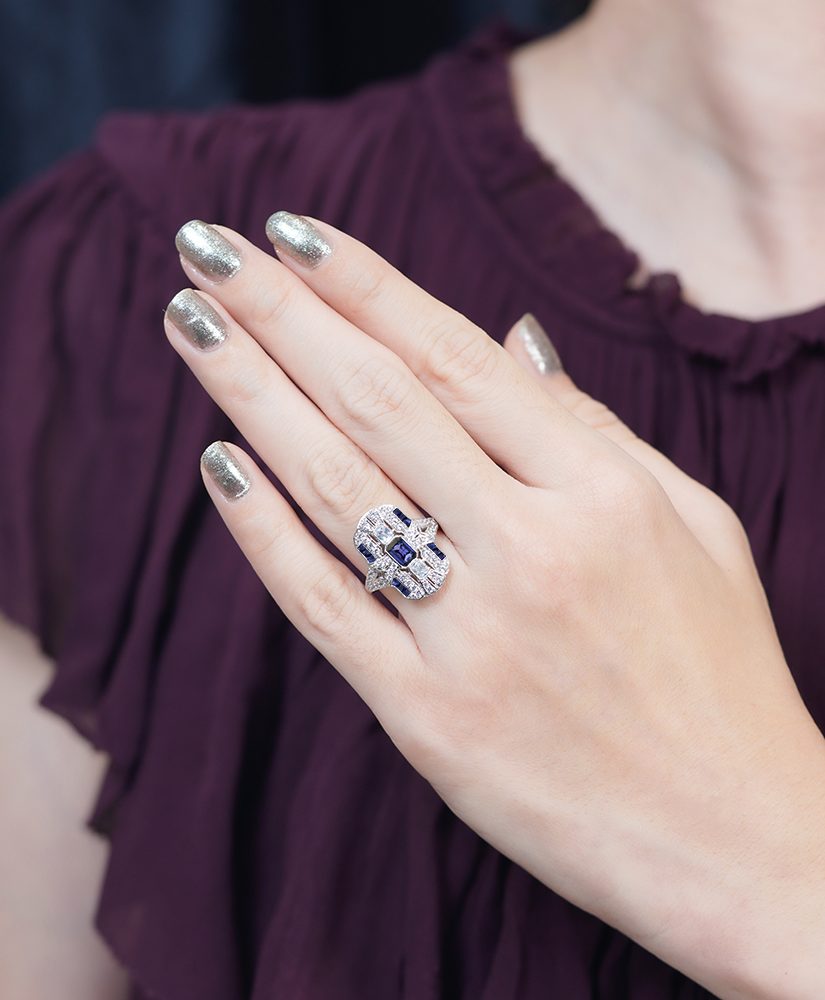
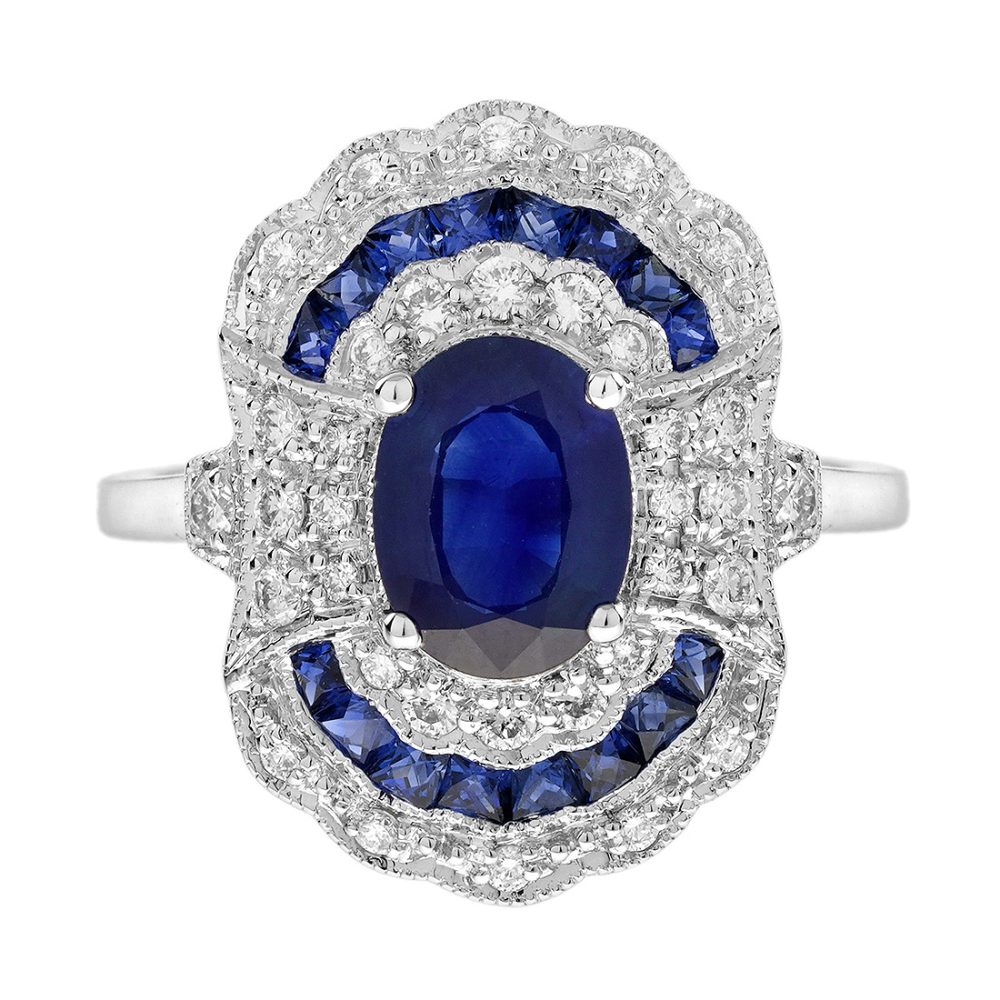
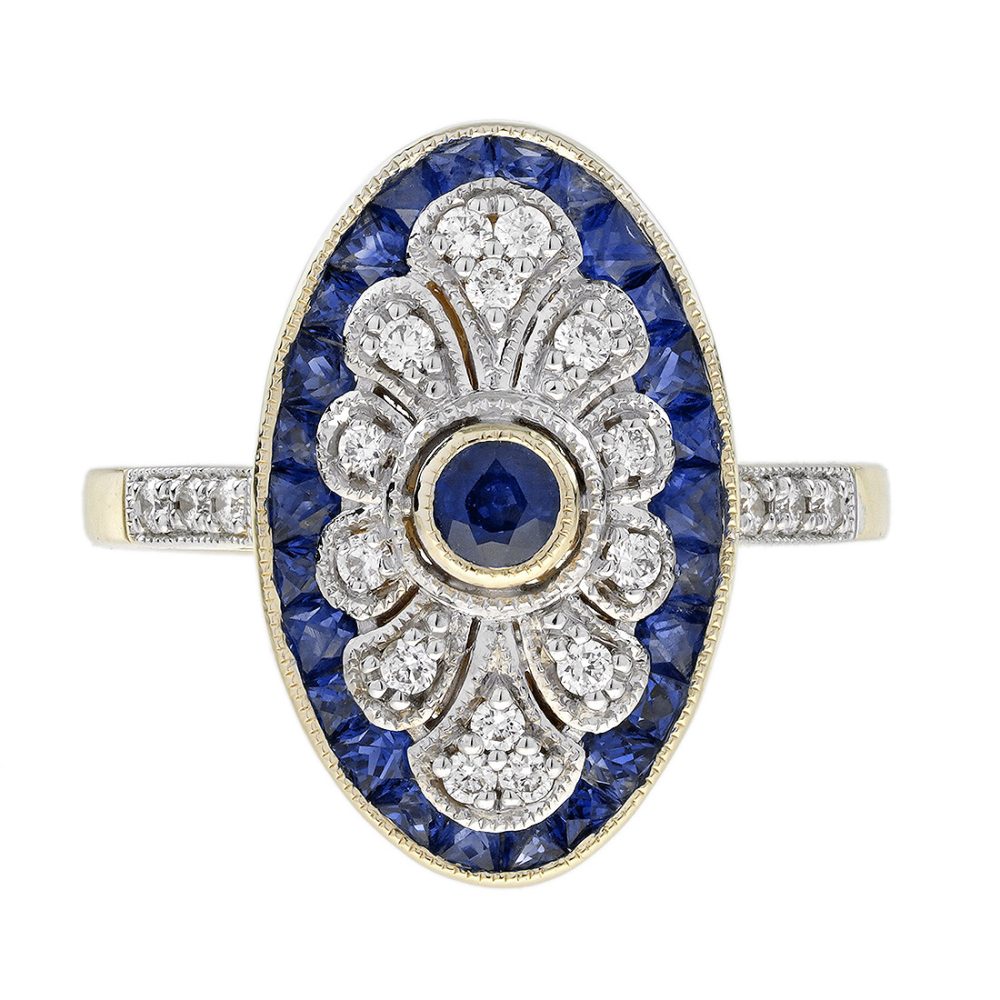
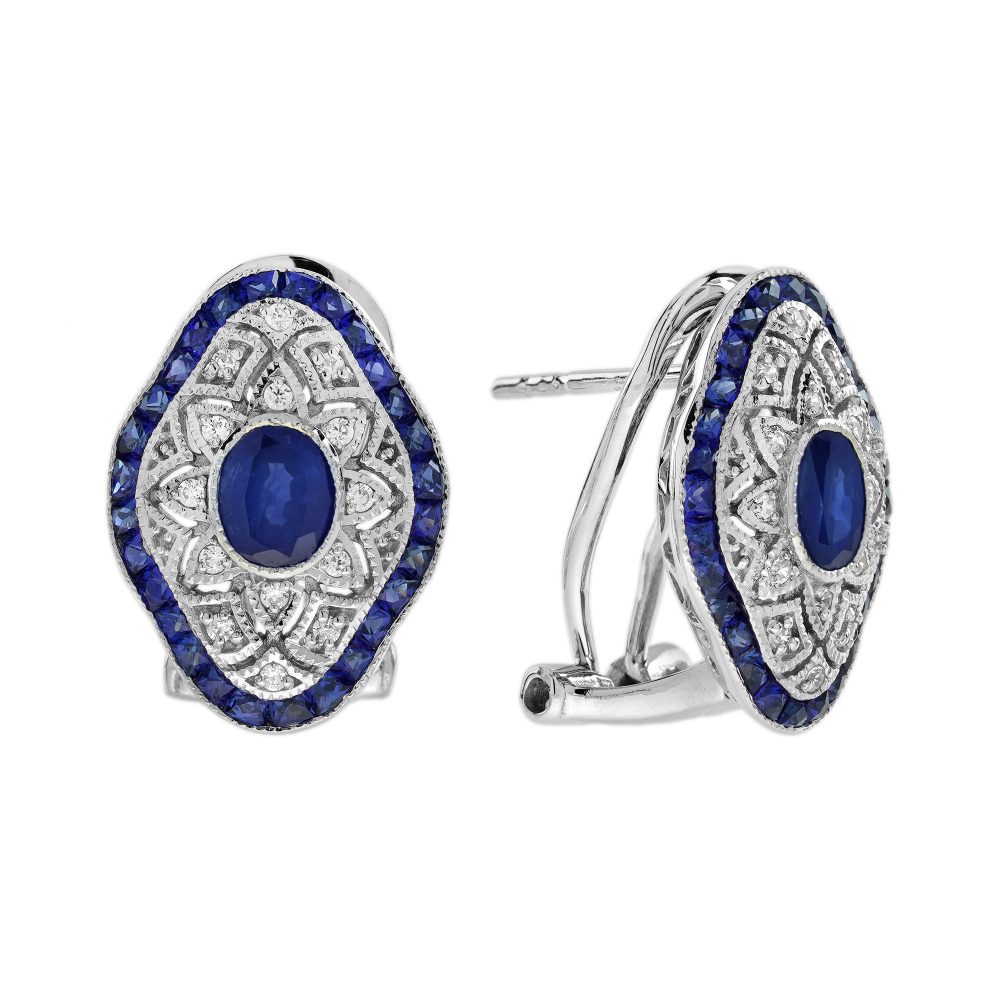
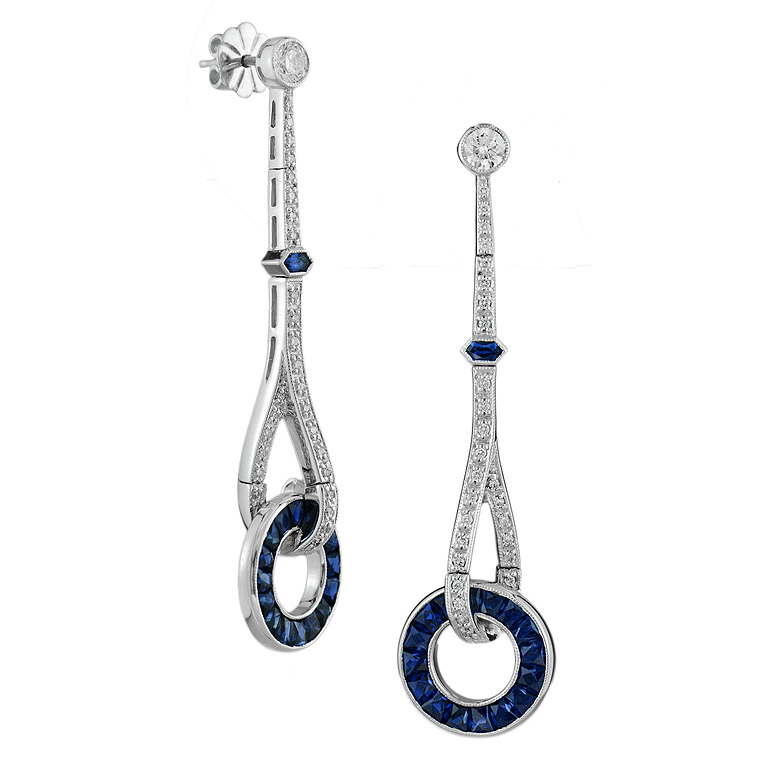
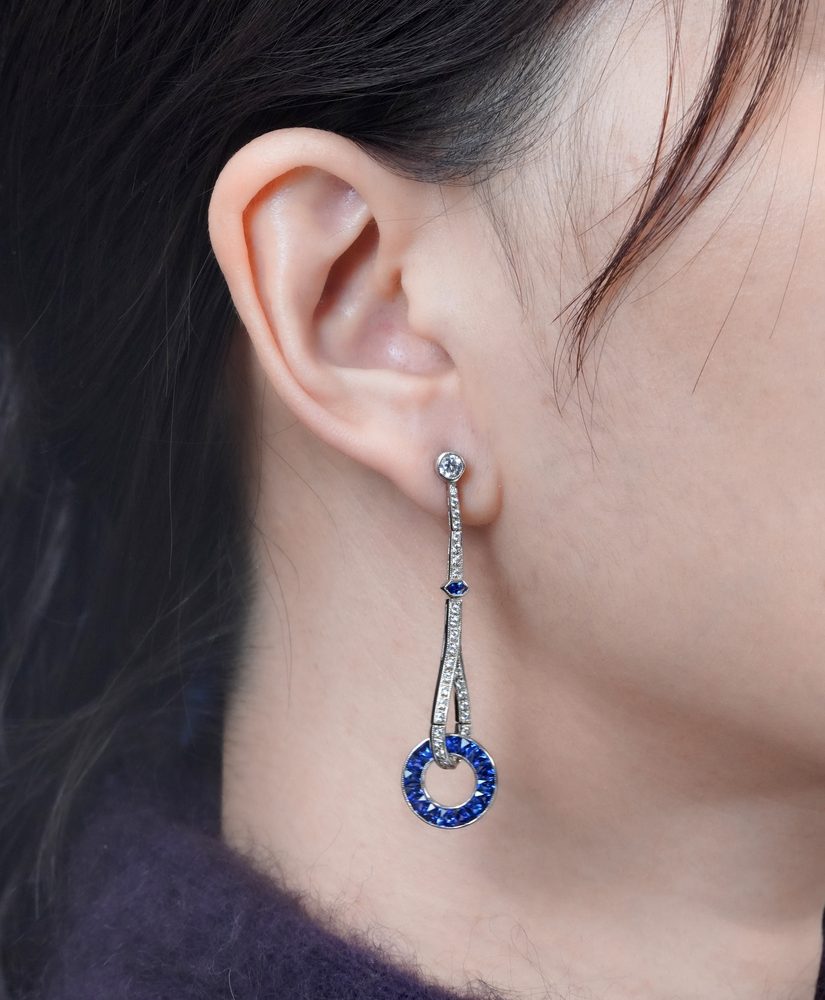
In Art Deco-inspired work, sapphire is especially responsive to geometry. Calibrated blue sapphires can form borders, steps, targets, and linear accents. French-cut sapphires create broad planes of color that behave differently from round brilliant accents. A strong center sapphire can be framed by diamonds for contrast, while a multi-sapphire composition can treat blue as architecture rather than ornament.
None of these choices changes the gem’s inherent color, but each changes how the eye perceives it. The setting does not merely hold the stone; it completes the reading of its color.
How Should Sapphire Jewelry Be Cleaned and Stored?
When treatment status is unknown, choose warm, soapy water rather than assuming that steam or ultrasonic cleaning is appropriate. Remove sapphire rings before heavy manual work, impact-prone exercise, or handling abrasive materials. Store each piece separately so that sapphire does not scratch softer gems and is not scratched by diamond or another corundum stone.
Have frequently worn rings inspected for loose stones and worn prongs. Cleaning improves appearance; inspection protects structure.
How Should You Choose a Sapphire?
Ask whether the sapphire is natural or laboratory-grown and what treatments have been identified or disclosed. For a high-value stone, request an independent laboratory report that addresses natural status, detectable treatment, and origin when relevant. Then consider the setting: daily-wear rings need secure architecture, while earrings and pendants permit greater freedom.
Finally, decide whether the design supports the sapphire’s color. A technically fine stone can feel unresolved in the wrong metal or proportion. A well-composed setting allows color, geometry, and wearability to reinforce one another.
In Short
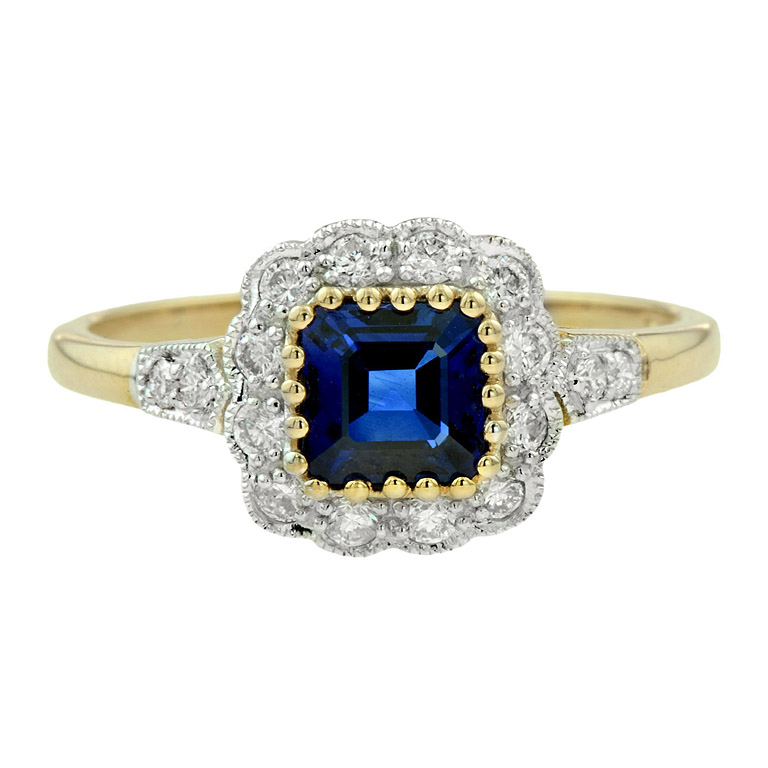
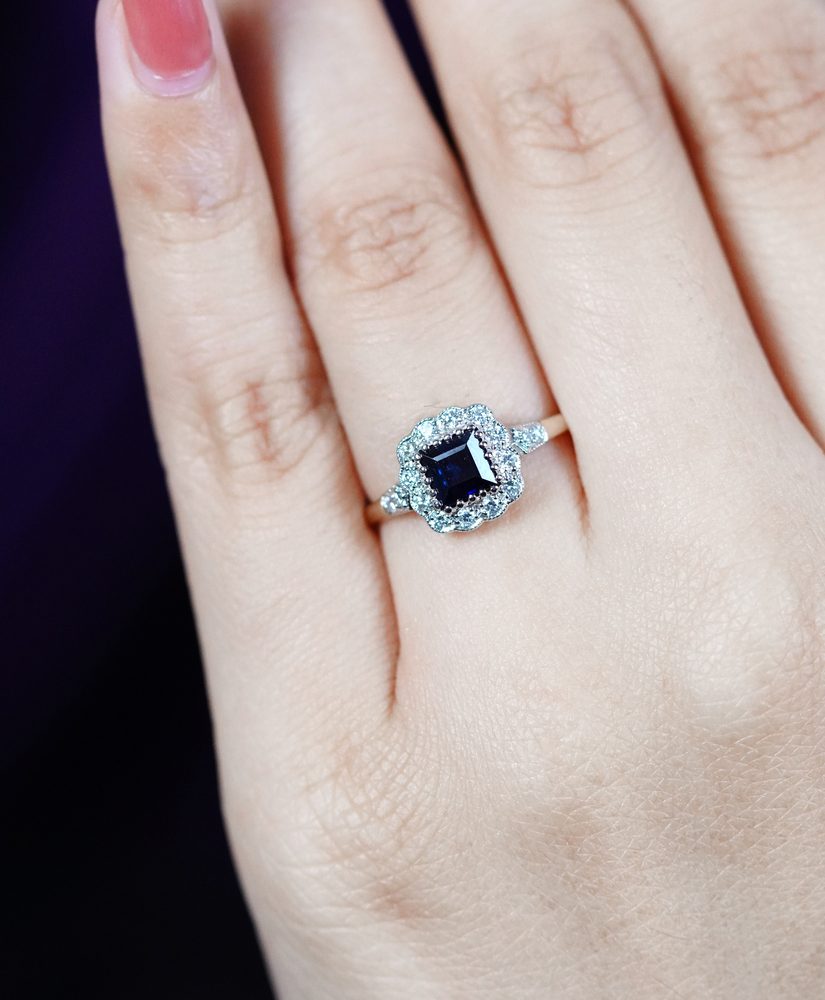
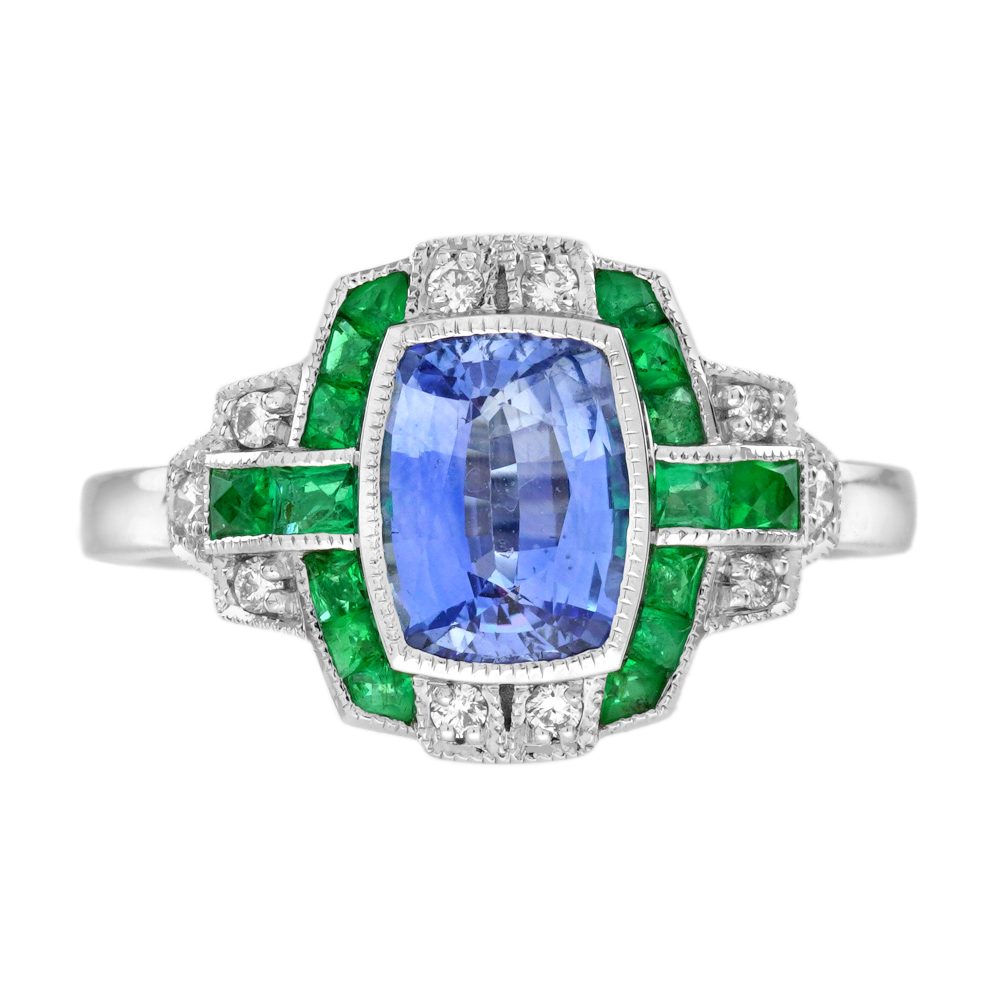
Cocktail Ring



Frequently Asked Questions About Sapphire Meaning
What does sapphire symbolize?
Sapphire traditionally symbolizes sincerity, truth, faithfulness, and nobility. These meanings come from history and culture rather than from a physical property or guaranteed effect of the gemstone.
Is sapphire only blue?
No. Sapphire occurs in pink, yellow, orange, green, purple, violet, colorless, and parti-colored varieties. Gem-quality red corundum is called ruby rather than red sapphire.
Is sapphire the September birthstone?
Yes. Jewelers of America lists sapphire as the official September birthstone. Any sapphire color can represent September, although blue is the traditional and best-known choice.
Is Ceylon sapphire different from other sapphire?
Ceylon sapphire is the traditional trade term for sapphire from Sri Lanka. The name indicates claimed geographic origin, not a separate mineral species or an automatic level of quality. Important origin claims should be supported by an independent laboratory.
Is sapphire suitable for an engagement ring?
Yes. Sapphire ranks 9 on the Mohs scale and has excellent toughness, making it suitable for frequent wear. The stone still needs a secure setting, sensible care, and periodic inspection.