
Blog, Gemstone Guides
Pearl Meaning, Types & June Birthstone Guide
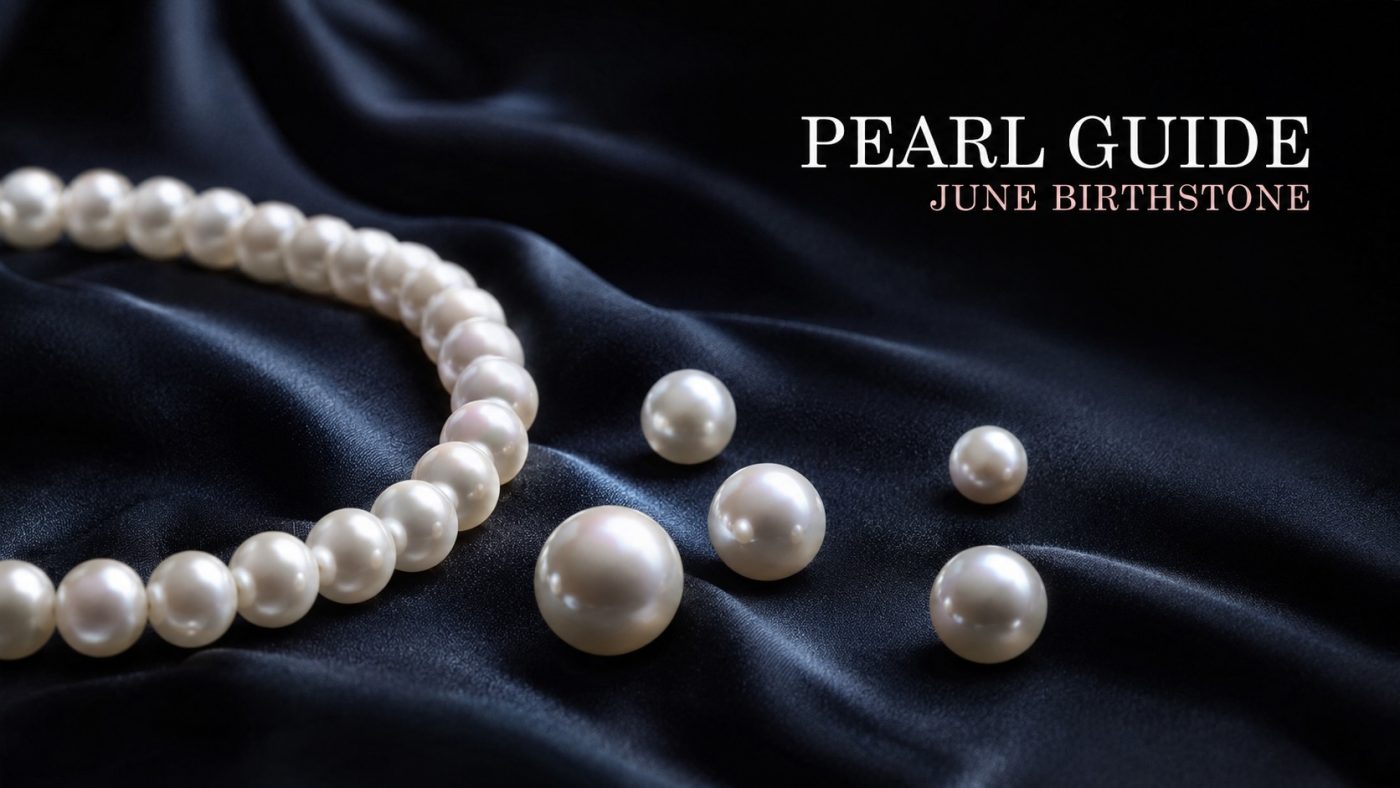
Key Takeaways: Pearl Meaning
- Pearls traditionally symbolize wisdom, purity, integrity and new beginnings, but their most credible meaning comes from the person or occasion attached to the jewel.
- Pearl is an official June birthstone alongside alexandrite and moonstone on the modern US birthstone list.
- Freshwater, Akoya, Tahitian and South Sea pearls differ in mollusk, growing environment, typical size, color and visual character; type alone does not determine quality.
- Pearls measure about Mohs 2.5–4.5 and can be affected by abrasion, chemicals and heat, so careful wearing, separate storage and gentle cleaning are essential.
What Is the Meaning of Pearl?
Pearl meaning traditionally centers on wisdom, purity, integrity and new beginnings. Pearl is also an official June birthstone. Unlike gems mined and cut from rock, pearls form within mollusks, giving them a distinctive association with patience and transformation. Their soft surface requires gentle wear, careful storage and protection from chemicals.
Pearl at a Glance
| Property | Detail |
|---|---|
| Material | Organic gem formed within a living mollusk, not mined from rock |
| Mohs hardness | Approximately 2.5–4.5 — among the softest gems used in fine jewelry |
| Main vulnerabilities | Abrasion, chemicals, heat and dryness. Hardness alone does not describe the risk |
| Birthstone | June, alongside alexandrite and moonstone |
| Principal categories | Freshwater, Akoya, Tahitian, South Sea — categories, not quality grades |
| Natural or cultured | Cultured pearls are genuine pearls. Imitation pearls are manufactured products |
| Routinely treated? | Cleaning, bleaching, polishing, dyeing and irradiation are all possible. Treatment that materially affects appearance must be disclosed |
| Best formats | Earrings and pendants. Rings and bracelets require protective architecture |
| Cleaning | Soft, slightly damp cloth. Never ultrasonic or steam |
What Do Pearls Symbolize?
Pearl symbolism commonly includes wisdom, purity, integrity, serenity and new beginnings. These associations developed through appearance, rarity, cultural tradition and the unusual way a pearl forms. They are symbolic interpretations, not physical effects produced by the gem.
The connection with wisdom is often expressed through time. A pearl develops gradually within a living mollusk as layers of material accumulate around an irritant or implanted nucleus. That process makes patience, maturity and experience natural metaphors. A pearl gift can therefore mark a graduation, a professional milestone, an anniversary or a decision reached after careful thought.
Purity is associated with the luminous surface of white and cream pearls, particularly in bridal jewelry. The idea should not be treated as a rule about the wearer. Pearls occur in many colors, and a black, gray, golden, pink or green-toned pearl can carry the same personal significance. Color changes the visual language of the jewel, not the worth of its meaning.
New beginnings connect pearls with weddings, births, June birthdays and transitions. The symbolism can be especially effective when the pearl is chosen for a precise reason: a birth month, a family relationship, a place connected with water or a quality the wearer wants the jewel to represent.
Workshop insight: Pearl meaning becomes visible through restraint. Because luster is produced at the surface, an effective design allows the pearl room to receive and return light while protecting it from unnecessary contact. The space around the pearl is not empty decoration; it is part of how symbolism, material and wearability are made coherent.
Why Is Pearl a June Birthstone?
Pearl is an official June birthstone on the modern US list maintained by Jewelers of America. June also includes alexandrite and moonstone. A person born in June may therefore choose among three recognized gems without weakening the birthstone connection.
The modern US birthstone list was standardized by the American National Retail Jewelers Association, now Jewelers of America, in 1912 and has been revised over time. Birthstone lists also draw on older cultural and religious traditions, but the present month-to-gem sequence should not be described as one unchanged ancient system.
Pearl gives June a distinctive option because it is formed by a living organism rather than mined as a mineral crystal. Its soft luster and association with water suit wedding jewelry, family gifts and quiet everyday pieces. Alexandrite offers a rare color-change phenomenon, while moonstone is known for adularescence. The choice can therefore follow meaning, appearance, wearing pattern and budget.
Our birthstones by month guide places pearl, moonstone and alexandrite within the complete modern sequence. That wider view is helpful when a bespoke jewel combines several birth months or when a family wants different stones to represent people who share June.
How Are Natural and Cultured Pearls Different?
Natural and cultured pearls both form within mollusks. The difference is how the pearl-forming process begins. A natural pearl develops without deliberate human intervention. A cultured pearl develops after a skilled technician introduces tissue, and in many methods a bead nucleus, into the mollusk so that pearl growth can begin.
Cultured does not mean imitation. Freshwater, Akoya, Tahitian and South Sea cultured pearls are genuine pearls produced by mollusks. Imitation pearls are manufactured products designed to resemble pearls and may be made from glass, shell or plastic with a surface coating.
Natural pearls are exceptionally uncommon in the contemporary market. Their rarity does not make cultured pearls inferior as a category. Cultured pearl quality varies widely, and fine examples can show strong luster, attractive color, clean surfaces and well-matched form. Accurate disclosure is more useful than a vague hierarchy.
Visual inspection alone may not reveal whether a pearl is natural, cultured or imitation. Internal structure can require professional examination and radiography. A seller should describe the product accurately, and important natural-pearl claims should be supported by appropriate documentation.
The distinction matters because the word "natural" must not be used loosely. Lilly M. JEWELERS works with natural gemstones, but pearl descriptions require their own precise vocabulary. Product-level information should state whether pearls are cultured and identify any relevant treatments or assembled construction.
What Are the Main Types of Cultured Pearls?
The four names most buyers encounter are Freshwater, Akoya, Tahitian and South Sea. These categories relate to mollusk species, growing environment and production region. They are not simple quality grades. Every type includes variation in luster, surface, shape, color and matching.
| Pearl type | Growing environment | Typical visual character | Common size impression | Design considerations |
|---|---|---|---|---|
| Freshwater | Primarily freshwater mussels | White, cream, peach, pink and other tones; broad shape range | Small to large, with many non-round forms | Versatile for organic clusters, graduated arrangements and accessible bespoke work |
| Akoya | Saltwater oysters, principally associated with Japan and China | Classic white or cream body color with bright, sharp luster | Usually refined and relatively compact | Well suited to precise symmetry, matched strands and restrained geometric settings |
| Tahitian | Saltwater black-lipped oysters, associated with French Polynesia | Naturally dark body colors with green, gray, blue, aubergine or peacock overtones | Often visually substantial | Strong as a single focal pearl or in graphic high-contrast compositions |
| South Sea | Saltwater silver- or gold-lipped oysters, associated with Australia, Indonesia, the Philippines and nearby regions | White, silver or golden body colors with a soft, deep luster | Commonly among the largest cultured pearls | Requires proportionate settings and careful management of weight and exposed surface |
Freshwater pearls offer the broadest variety of forms and can be especially expressive in antique-inspired floral or asymmetrical compositions. Akoya pearls are associated with the classic round white pearl look and crisp luster. Tahitian pearls are not simply "black"; their dark body colors may carry complex overtones. South Sea pearls are valued for scale and a distinctive satin-like visual depth.
Labels such as "Japanese," "Tahitian" or "South Sea" should be used accurately. Geographic and species terms are not interchangeable with color descriptions. A dark-colored pearl is not automatically Tahitian, and a golden-colored pearl is not automatically a golden South Sea pearl.
Type should be the beginning of comparison, not the conclusion. A smaller pearl with strong luster and a coherent setting can produce a more compelling jewel than a larger pearl selected only for category or diameter.
How Should Pearl Quality Be Evaluated?
Pearl quality is evaluated through a group of interacting factors rather than one universal grading system. Important considerations include luster, surface, shape, color, size, nacre quality and matching when more than one pearl is used. Terminology and grading scales can vary among sellers, so the written description should explain what a grade represents.
Why Is Luster Important?
Luster describes the intensity and sharpness of light reflected from the pearl's surface and from within the nacre. Strong luster makes reflections appear bright and distinct. Weak luster can make the pearl appear chalky or flat. Because luster is central to pearl beauty, it should be judged in diffused daylight as well as controlled jewelry lighting.
How Should Surface Characteristics Be Read?
Pearls form biologically, so small pits, ridges, wrinkles or spots may occur. Fewer prominent surface characteristics are generally preferred, but placement matters. A minor mark near a drill hole may be less visually important than one on the main face. Surface perfection should not be promised unless it is genuinely supported.
Do Pearls Need to Be Round?
Roundness is prized in some classic designs, but shape is not a direct measure of beauty. Near-round, oval, drop, button, baroque and circled pearls can offer distinctive design possibilities. Baroque form can be especially effective when the setting responds to the individual outline rather than forcing the pearl into a generic mount.
How Do Color and Overtone Work?
Pearl color includes body color, overtone and sometimes orient, an iridescent play of color. White is not one neutral shade. Cream, silver, rose or green overtones can respond differently to skin tone and metal color. Dyed or otherwise treated color must be disclosed when relevant.
Why Do Nacre and Matching Matter?
Nacre quality affects appearance and, in some cultured pearl types, can influence durability. When a jewel contains several pearls, matching considers size, shape, color, luster and surface. Deliberate graduated or mixed arrangements do not need uniformity, but the variation should appear intentional.
How Do Pearls Form Their Luster?
A pearl forms when a mollusk deposits layers around a nucleus or irritant. In nacreous pearls, those layers include microscopic platelets of aragonite held within an organic matrix. Light interacts with the layered structure to create the surface glow and depth recognized as pearl luster.
The formation process differs among pearl types and culturing methods. Many saltwater cultured pearls are bead-nucleated, while many freshwater cultured pearls are tissue-nucleated. These statements describe common production methods, not a way to identify an individual pearl by appearance alone.
Nacre is central to the visual identity of many pearls, but not every pearl material is described in exactly the same way. The category also includes non-nacreous pearls such as conch pearls, which have a different structure and flame-like appearance. This guide focuses on the nacreous cultured pearl types most often encountered in fine jewelry.
The biological origin explains why no two pearls are precisely identical. Even closely matched pearls reveal small differences under magnification. Fine matching is therefore an exercise in controlled similarity rather than mechanical duplication.
The GIA pearl overview provides a gemological introduction to pearl formation and identification.
How Durable Are Pearls for Jewelry?
Pearls measure approximately 2.5–4.5 on the Mohs scale. They are much softer than diamond, sapphire, ruby or quartz and can be scratched by common materials. Their surface can also be affected by chemicals, heat, dryness and repeated abrasion.
Mohs hardness describes resistance to scratching, not resistance to every form of damage. A pearl may avoid a scratch yet suffer worn nacre, a damaged drill hole, a loosened adhesive joint or a mark caused by impact. Setting condition and wearing pattern are therefore as important as the numerical hardness.
| Jewelry format | Exposure level | Practical suitability | Protective approach |
|---|---|---|---|
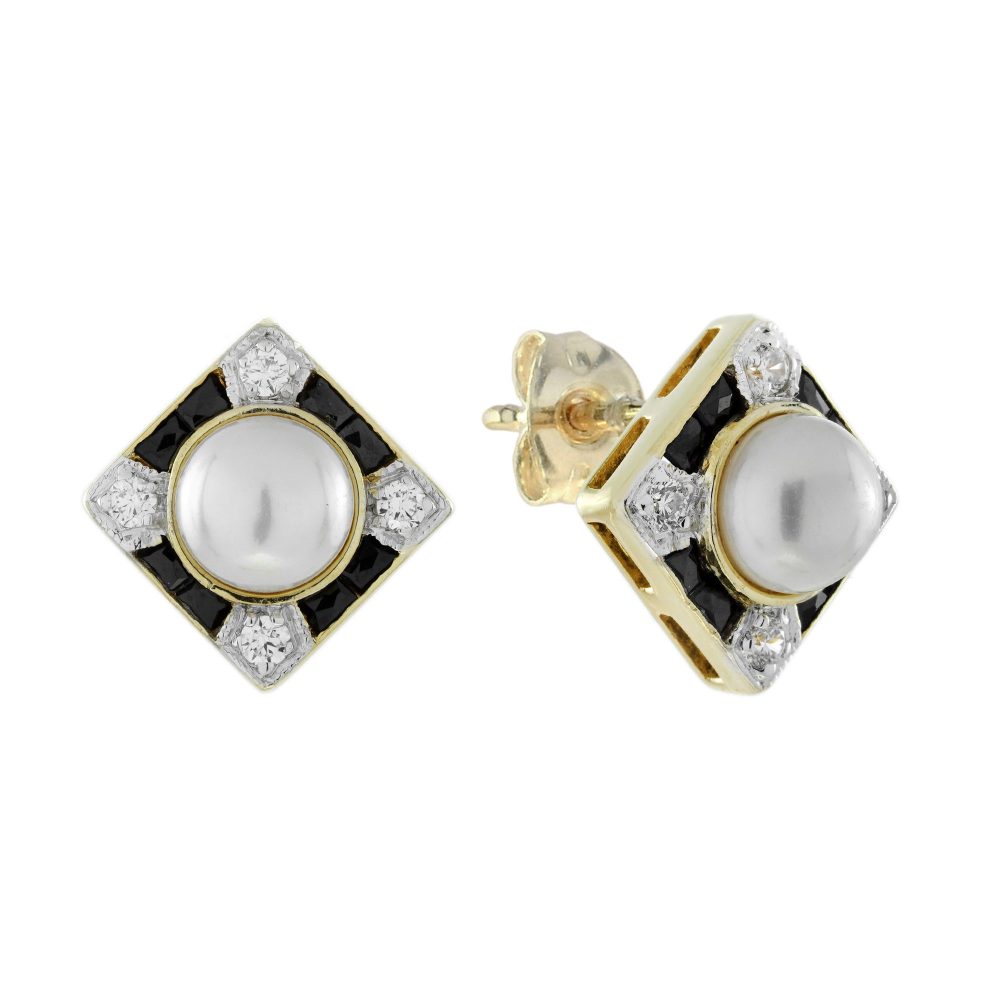
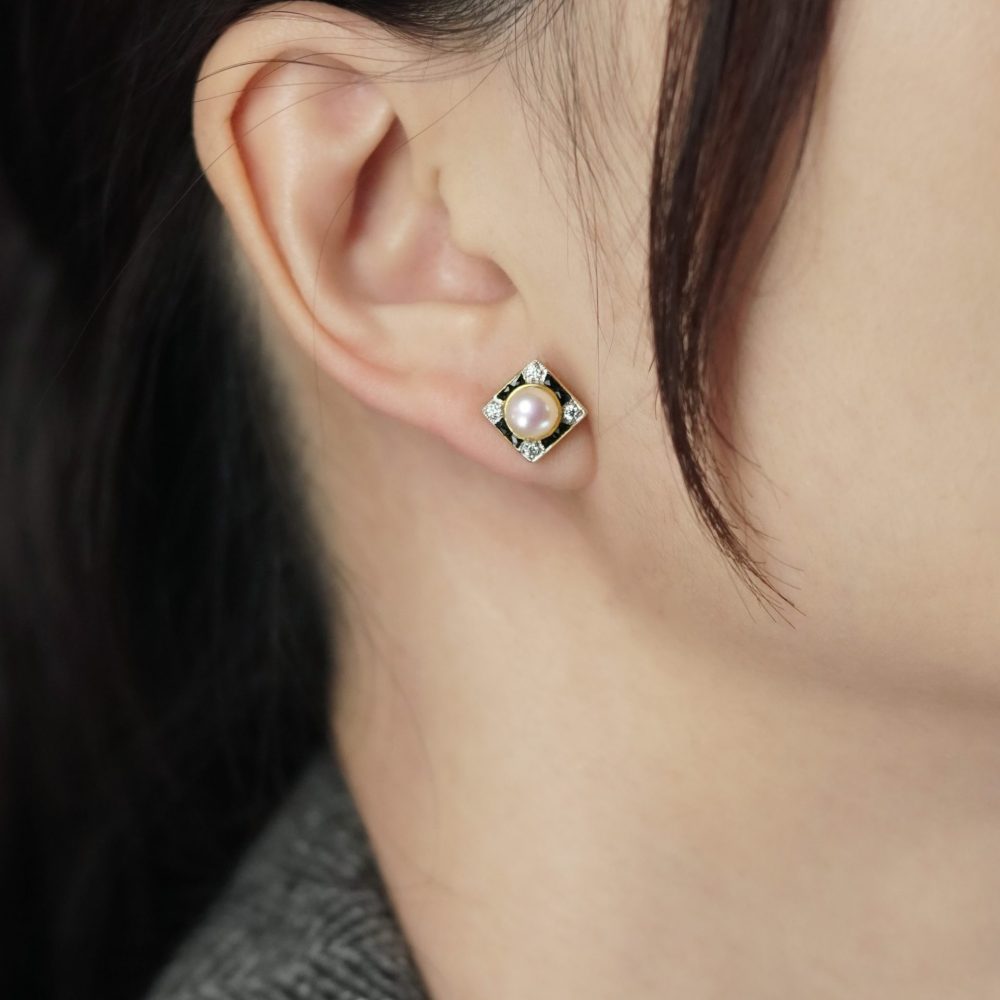
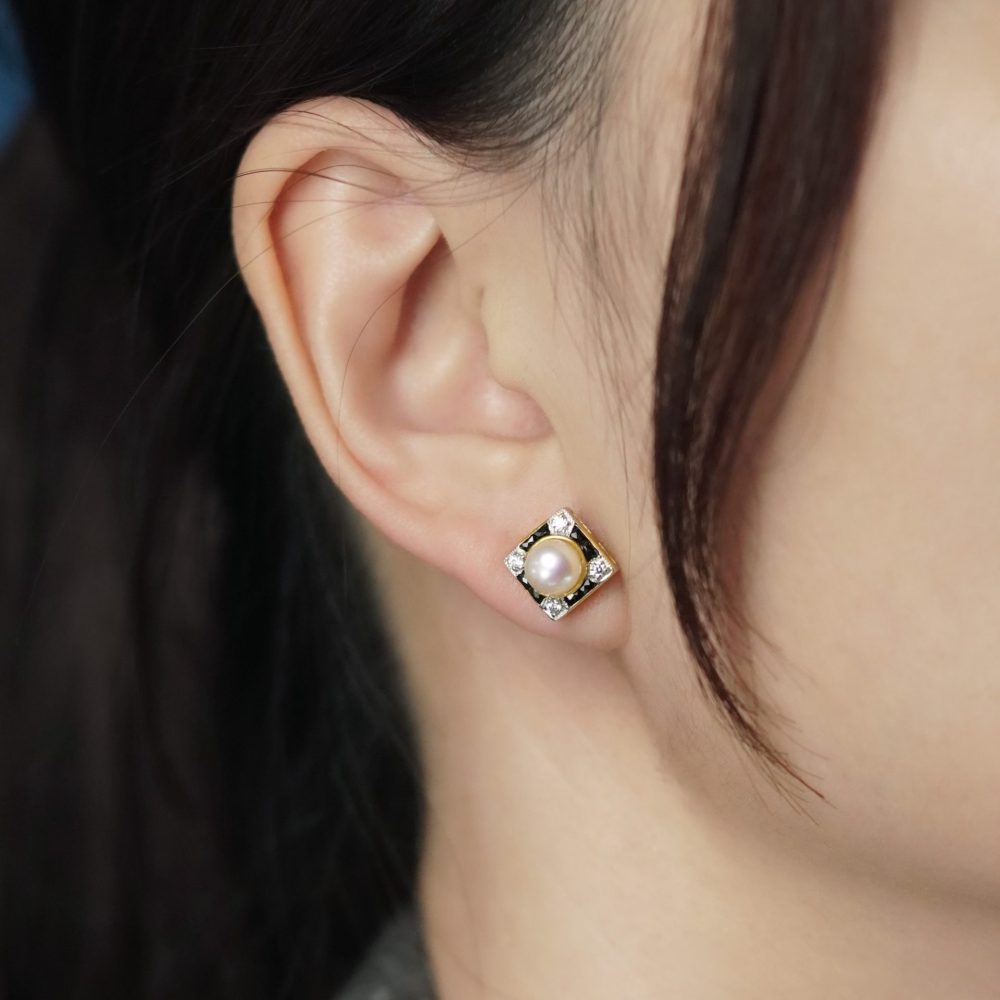
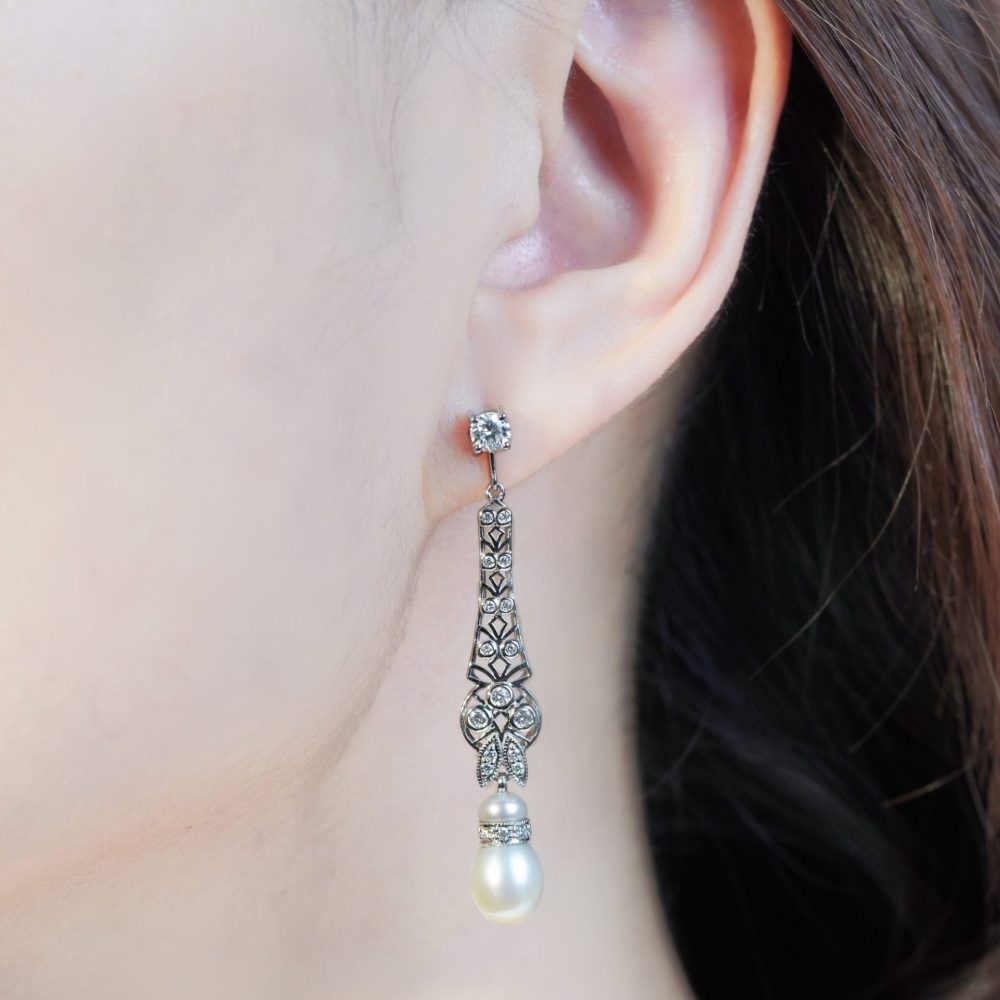
| Earrings | Low | Well suited to regular wear when applied products have dried | Protect posts and settings; avoid pulling directly on the pearl |
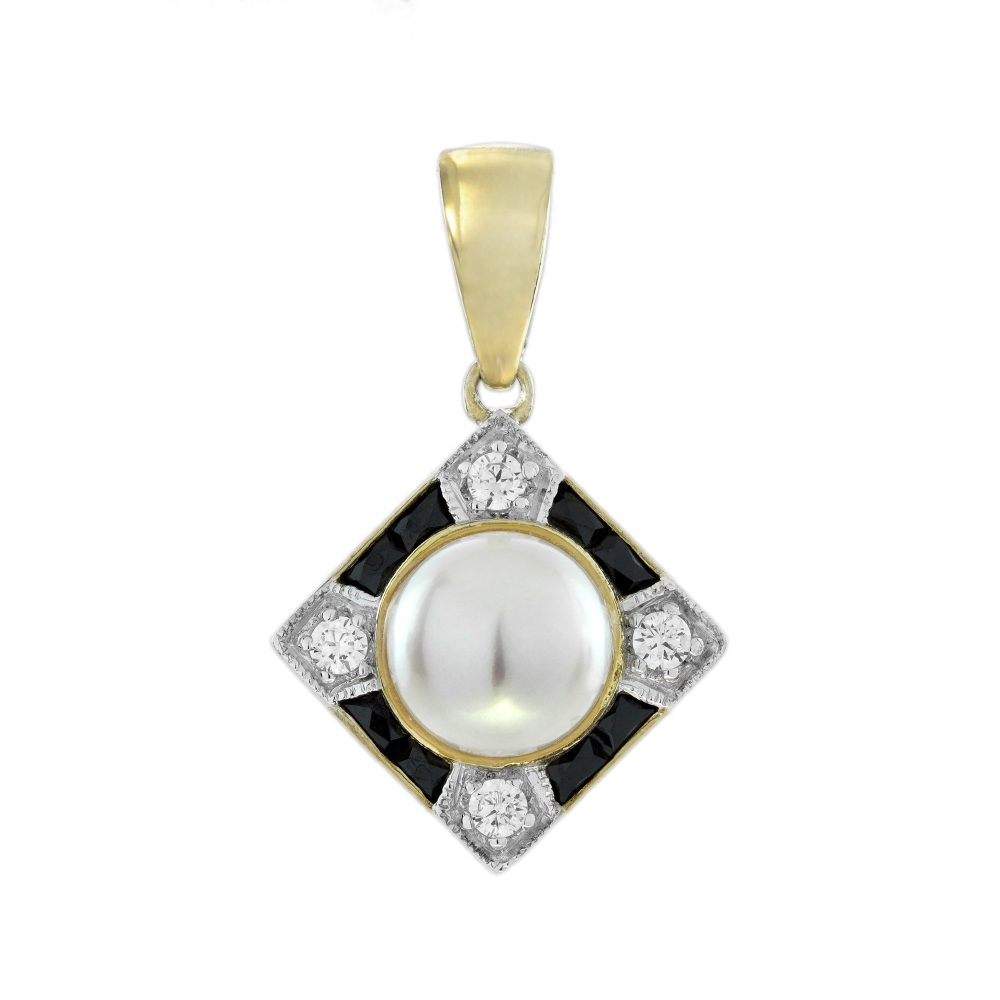
| Pendant or necklace | Low to moderate | Suitable for frequent wear with attention to cosmetics and friction | Keep clasps secure and prevent repeated rubbing against harder jewelry |
| Brooch | Low to moderate | A useful format for larger or baroque pearls | Support the pearl securely and avoid impact when garments or bags are handled |
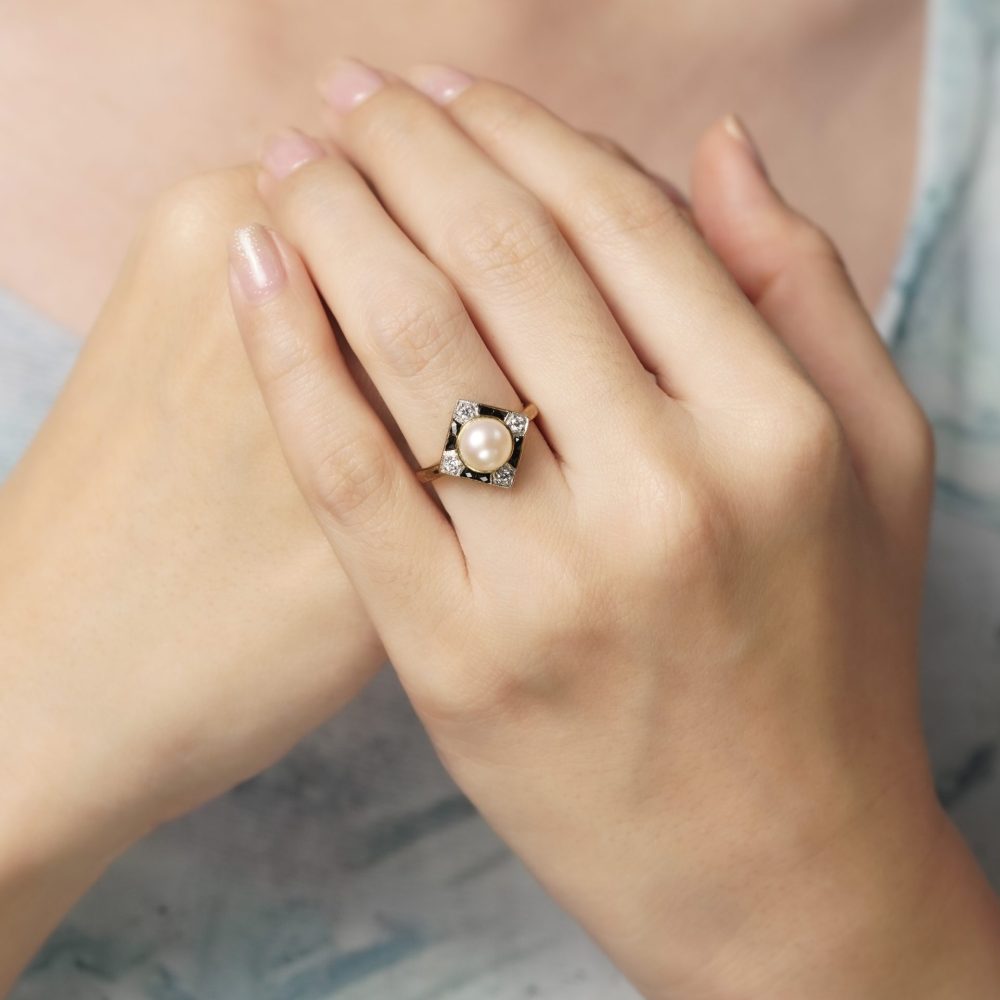
| Ring | High | Best for considered rather than impact-heavy wear | Recess or frame the pearl where possible; remove for manual work |
| Bracelet | High | Vulnerable to desk contact, impact and repeated abrasion | Use protected placement and reserve for attentive wear |
| Strung necklace | Moderate | Classic and wearable, but string and knots require maintenance | Knot between pearls where appropriate and inspect or restring periodically |
Pearl is appropriate for fine jewelry when the design accepts its material limits. Earrings and pendants offer broad flexibility because they avoid many impacts. Rings and bracelets can still be meaningful, but they need protective architecture and realistic wearing habits.
At the bench, we consider the entire risk path: where the pearl projects beyond the metal, whether its surface touches adjacent elements, how the drill or peg is supported and how the wearer will put on and remove the piece. Durability is not supplied by a single bezel or prong. It is built through the relationship between pearl, setting and routine.
Are Pearls Commonly Treated?
Pearls may be cleaned, bleached, polished, dyed, irradiated or otherwise processed to alter or improve appearance. Some routine post-harvest cleaning is widely accepted, while treatments that materially affect color or appearance should be disclosed.
White does not automatically mean untreated, and a dark pearl is not automatically a naturally colored Tahitian pearl. Dyed freshwater pearls can imitate colors associated with other categories. Accurate naming should separate pearl type, body color and treatment status.
"Cultured" is not a treatment disclosure. It describes human involvement in initiating pearl formation. A cultured pearl can have natural color, treated color or an assembled construction. Each fact answers a different question.
Lilly M. JEWELERS works with natural gemstones, but natural origin does not establish treatment status. Product-level disclosure should govern the final purchase decision. This article therefore does not claim that every pearl offered by the brand is untreated or naturally colored.
When the distinction materially affects value or identity, request a clear written description. Significant claims may require an independent gemological report. Meaning deserves the same precision as material: a sentimental jewel should not rely on ambiguous terminology.
How Should Pearl Jewelry Be Cared For?
Pearl jewelry should be put on after cosmetics, perfume, hair products and sunscreen have dried. It should be removed before bathing, swimming, exercise, housework, gardening and contact with household chemicals.
After wear, wipe pearls gently with a clean, soft, slightly damp cloth. This removes skin oils and residues before they accumulate. If deeper cleaning is necessary, use lukewarm water and a very small amount of mild soap, but first consider the construction. Prolonged soaking can weaken silk thread or affect some adhesive-set components.
Steam and ultrasonic cleaning are not appropriate default methods for pearls. Heat, vibration and cleaning solutions can damage the surface or construction. Abrasive cloths, toothpaste, baking soda and jewelry dips should also be avoided.
Store pearl jewelry separately in a soft pouch or fabric-lined compartment. Harder gemstones and exposed metal edges can scratch the surface. Avoid sealed long-term storage in an excessively dry or hot environment. Pearls benefit from normal wear, provided residues are removed and chemical exposure is controlled.
Strung pearls require additional maintenance. Knots help limit loss and reduce rubbing, but silk or cord can stretch, soil and weaken. Have the strand inspected and restrung when the knots loosen, the cord discolors or the spacing changes. Handle clasps rather than pulling on pearls when putting the necklace on or taking it off.
The GIA pearl care guidance supports a conservative cleaning and storage approach.
How Can Pearl Meaning Guide an Antique-Inspired Design?
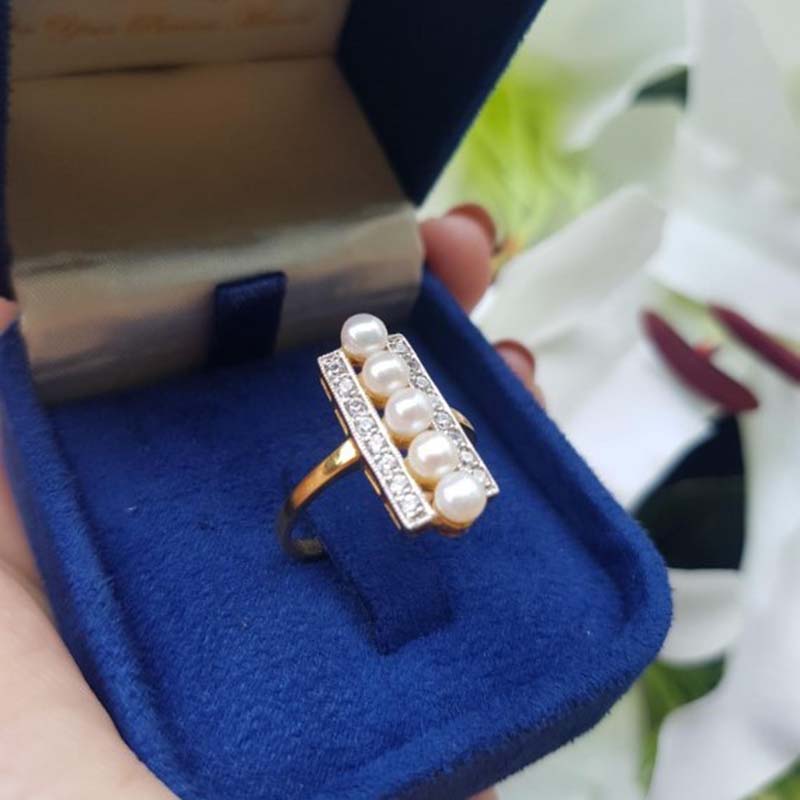
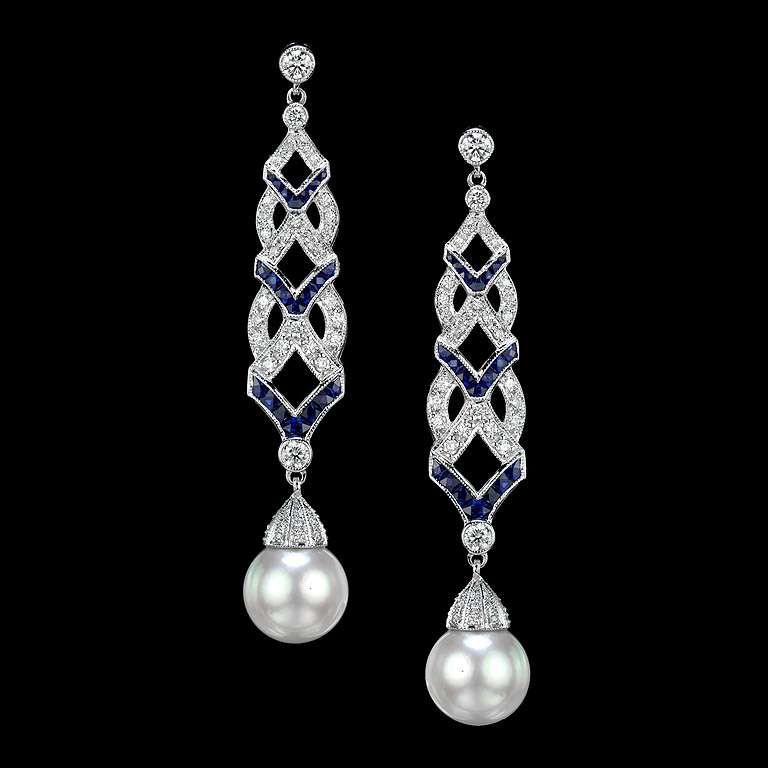
Pearls work naturally with Art Deco-inspired and Edwardian-inspired design because their quiet luster can balance geometry, openwork, milgrain and botanical detail. The finished jewel remains newly made. It should be described as antique-inspired, Art Deco-inspired, Edwardian-inspired or vintage-inspired, never as an antique, estate or period original.
How Can an Art Deco-Inspired Setting Use Pearls?
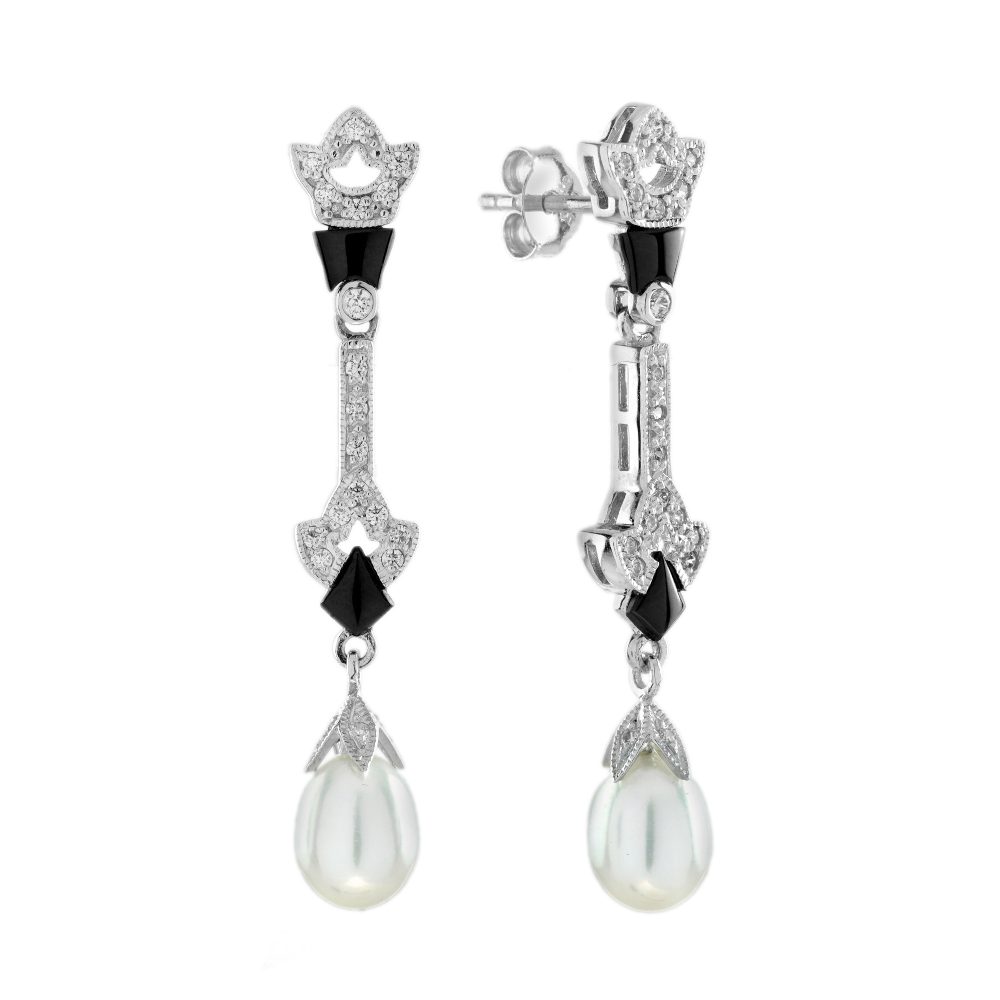
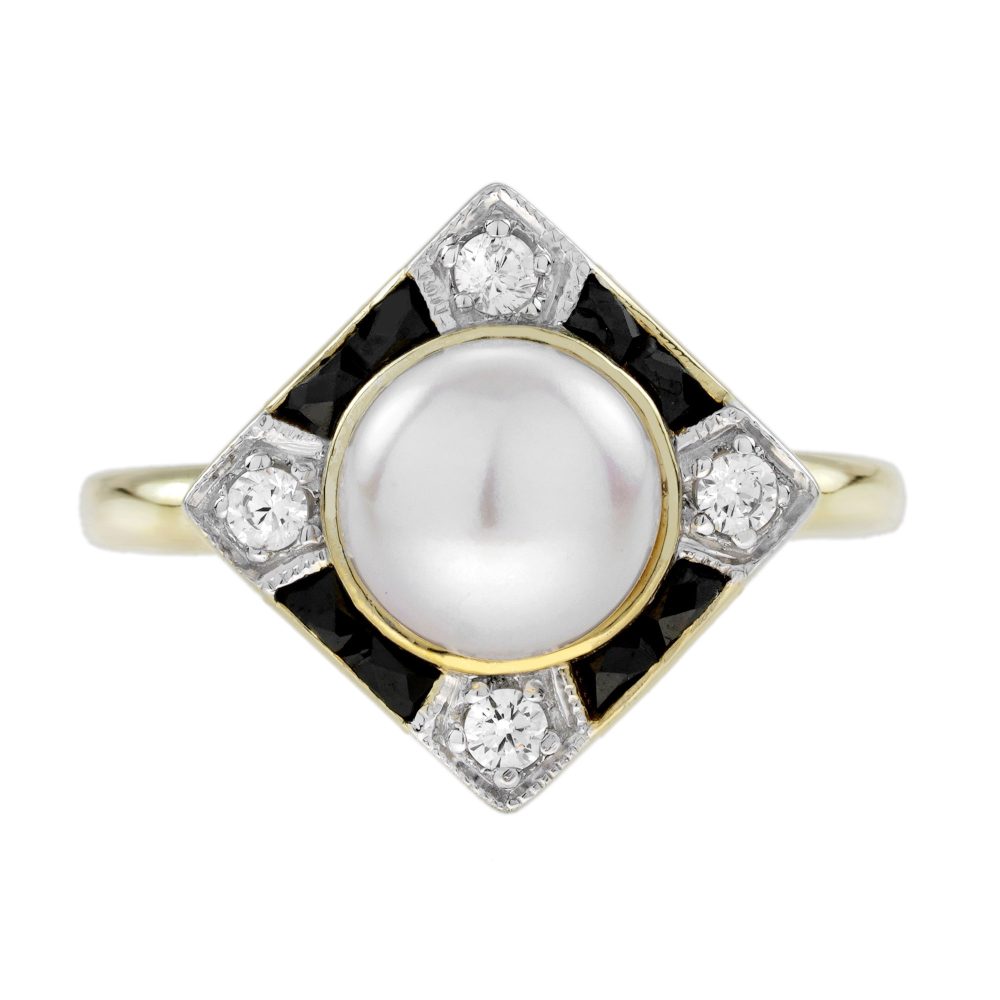
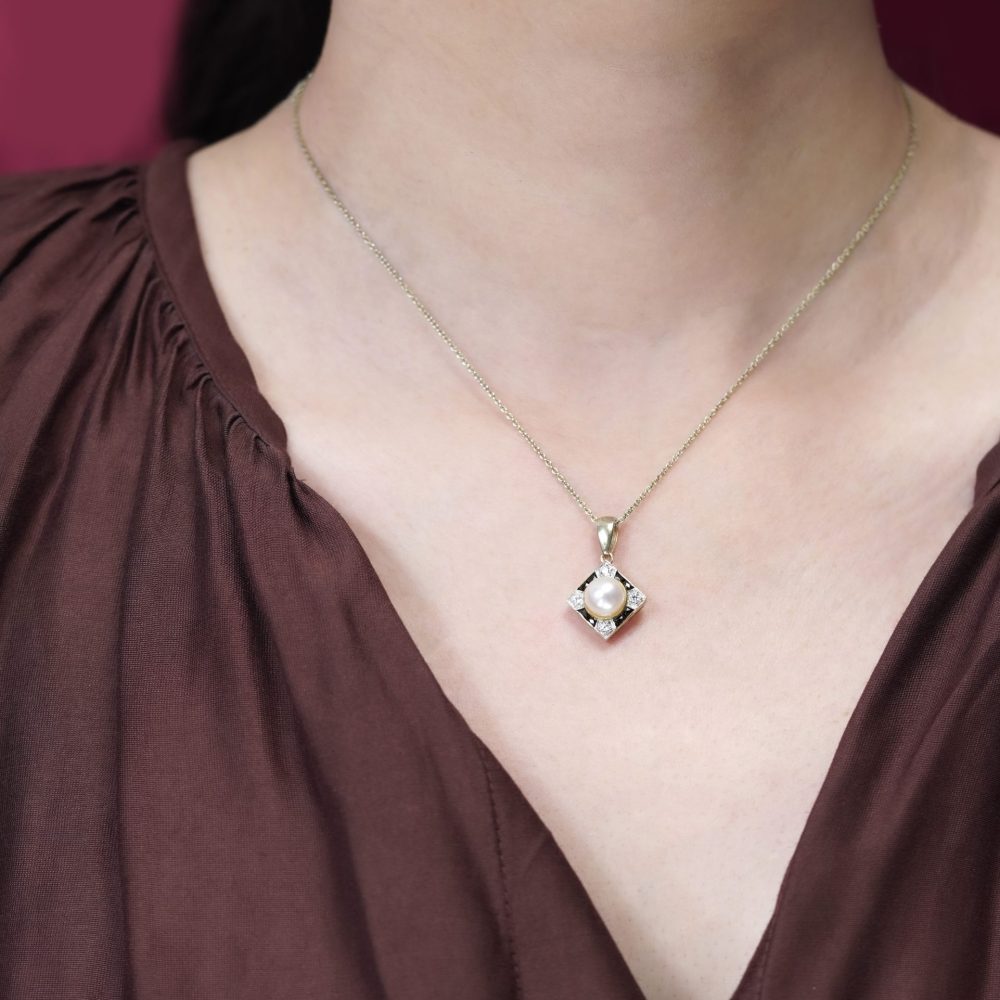
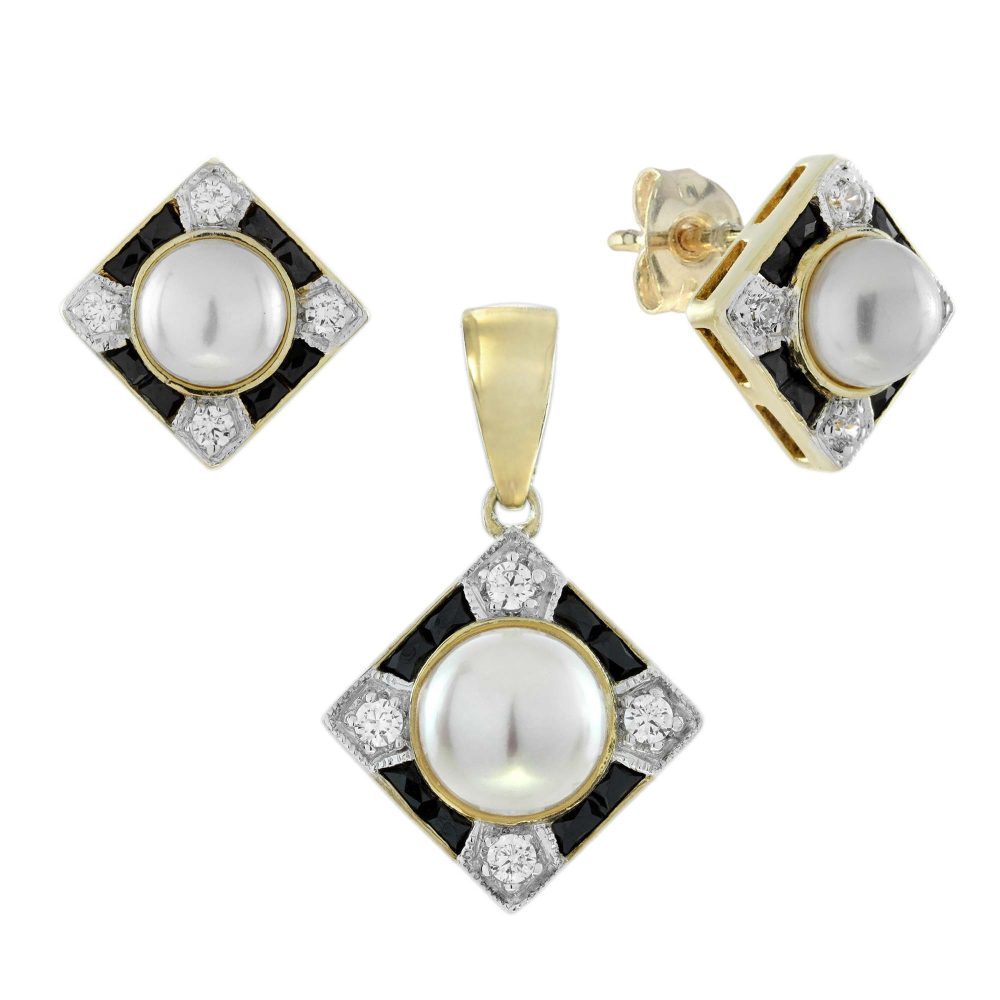
Art Deco-inspired design can place a round or drop pearl within crisp symmetry, fan motifs or a calibrated diamond frame. White gold creates a cool, graphic contrast, while yellow gold introduces warmth. The pearl should not be treated as a hard center stone: metal edges, moving parts and neighboring gems must be arranged to avoid abrasion.
How Can an Edwardian-Inspired Setting Use Pearls?
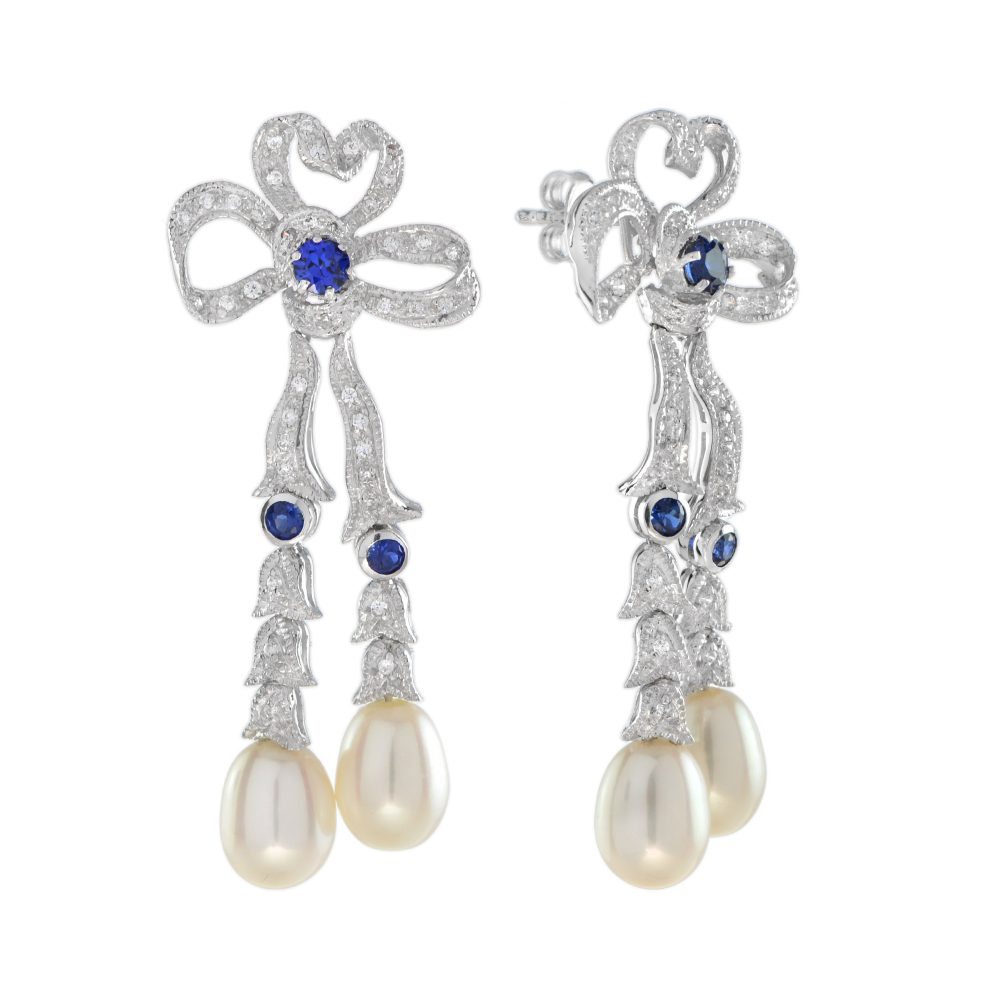
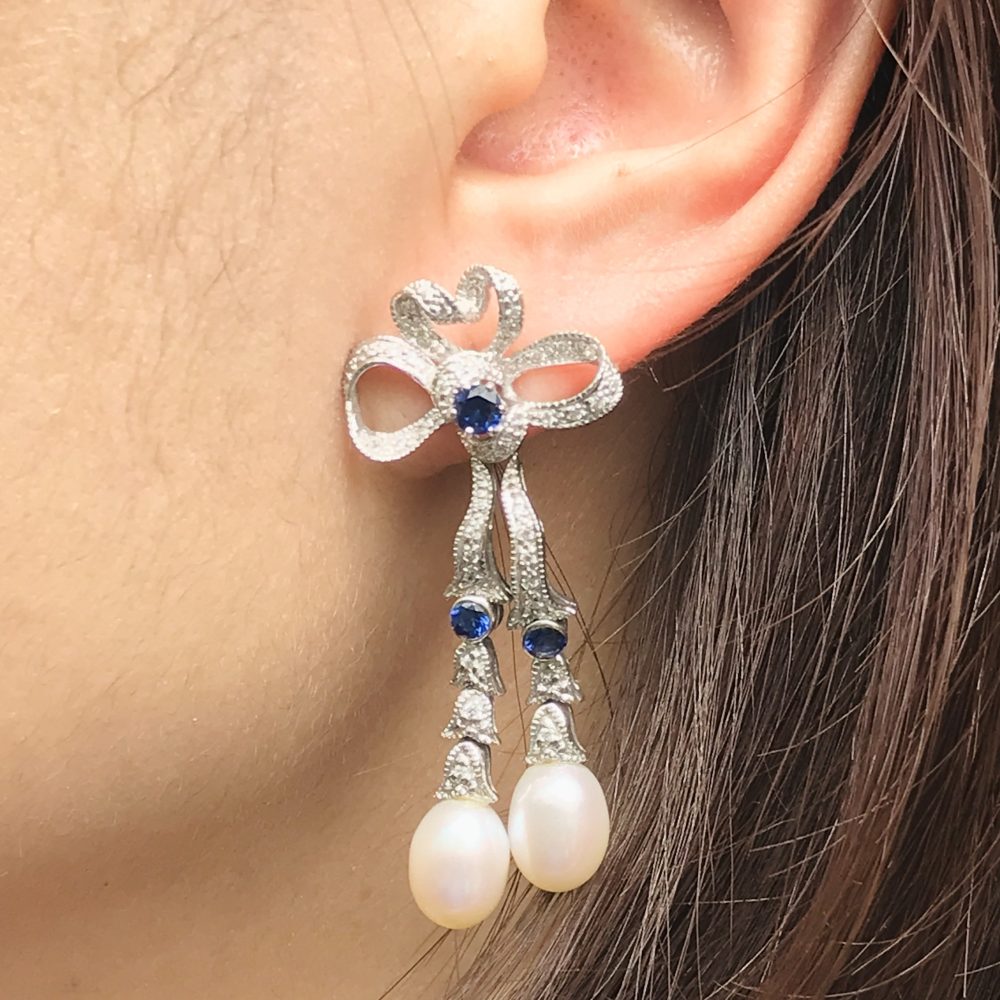
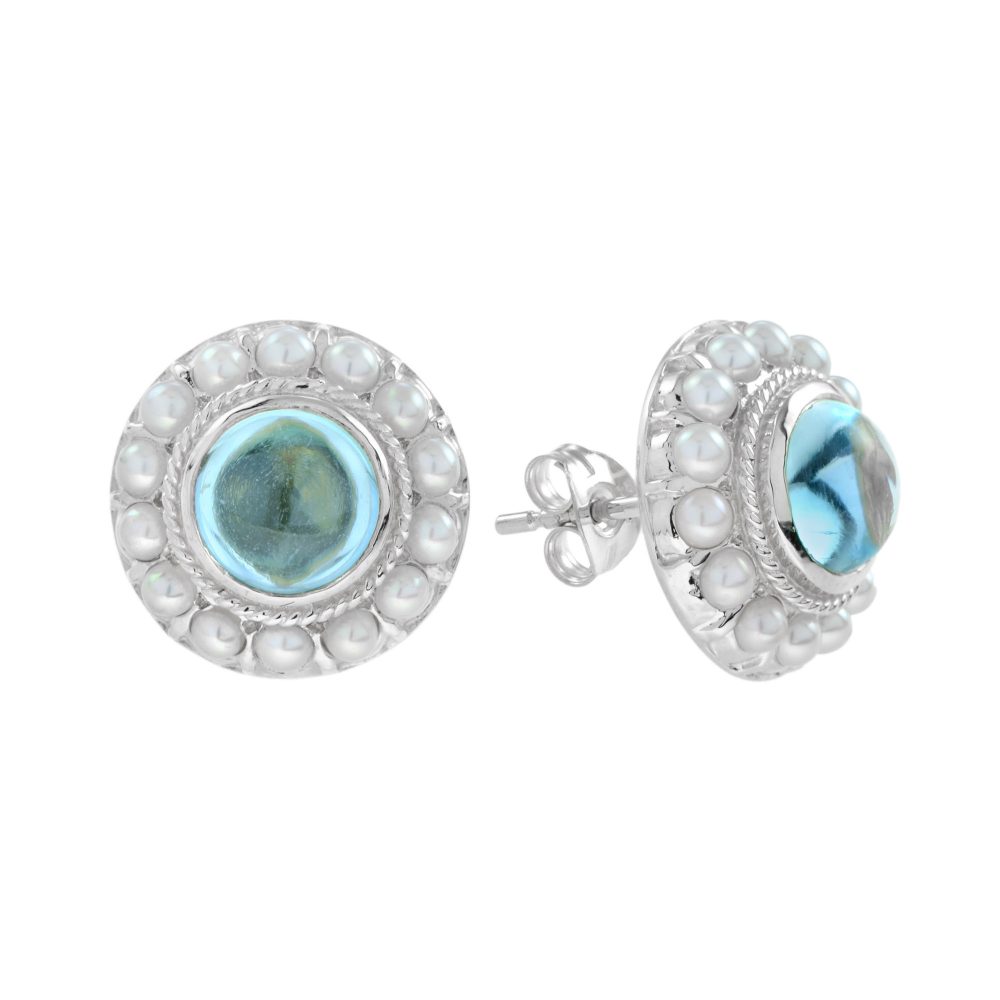
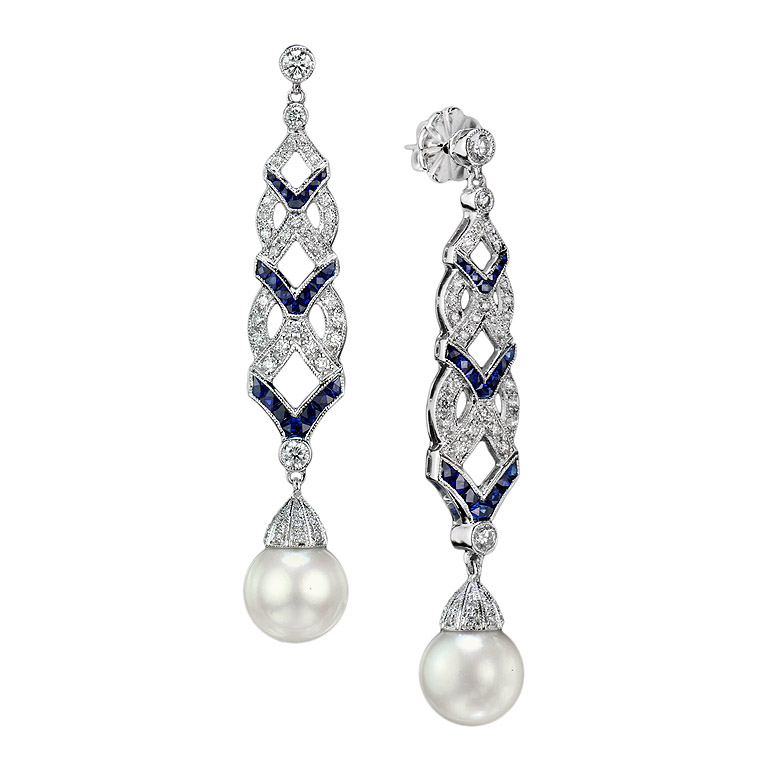
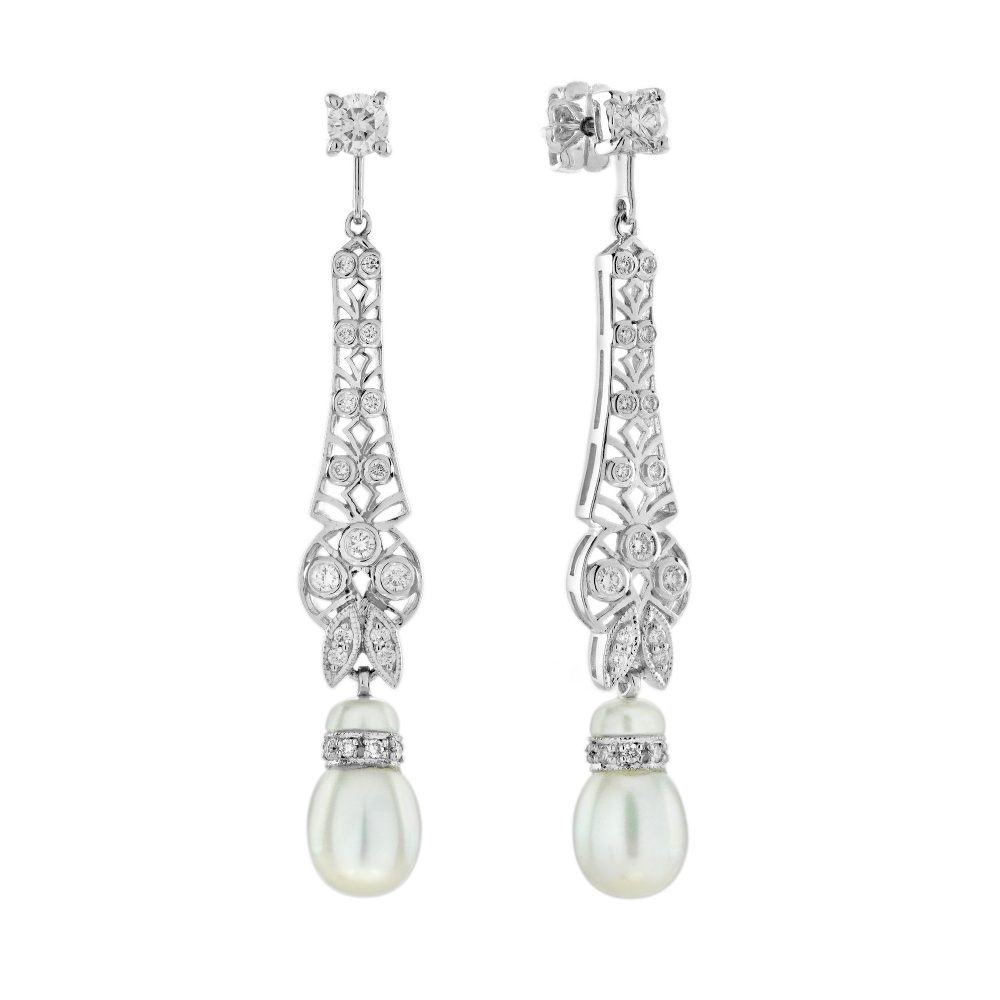
Edwardian-inspired design can use fine openwork, milgrain, garlands and articulated drops to emphasize lightness. A pearl can form the terminal point of a pendant or earring, allowing its shape to be visible without excessive metal contact. The apparent delicacy must still be supported by a secure peg, cup or other appropriate construction.
How Can a Bespoke Brief Keep the Meaning Personal?
Begin with the occasion and wearing pattern. A June birthstone may represent one person; three pearls may represent siblings; a pearl combined with another verified birthstone may represent a partnership. Shape can carry meaning too: a precise round pearl feels formal and ordered, while a baroque pearl can represent individuality and transformation.
At Lilly M. JEWELERS, our design language begins with natural gemstones set in solid gold. For pearl jewelry, the strongest brief aligns symbolism with surface protection. Meaning determines why the pearl belongs in the jewel; construction determines whether that meaning can remain wearable.
What Should You Remember About Pearl Meaning?
Pearls traditionally represent wisdom, purity, integrity and new beginnings. They are official June birthstones alongside alexandrite and moonstone, and their biological formation gives patience and transformation a particularly coherent symbolic foundation.
Freshwater, Akoya, Tahitian and South Sea are distinct cultured pearl categories, not ascending quality grades. Luster, surface, shape, color, size, nacre and matching must be evaluated together. Natural, cultured, imitation and treated are separate descriptions that should never be collapsed into one vague claim.
Pearls are also soft. At approximately Mohs 2.5–4.5, they need protection from abrasion, chemicals and heat. Gentle wiping, separate storage, controlled cleaning and periodic inspection preserve both the surface and the setting.
The most credible pearl jewel combines accurate disclosure, a form suited to the wearer and construction that respects the material. Symbolism gives the pearl purpose; careful design allows that purpose to accompany a lifetime of occasions.
Sources: GIA — Pearl Gem Overview · GIA — June Birthstones · GIA — Pearl History and Lore · GIA — Pearl Care and Cleaning · Jewelers of America — Official Birthstone List

White Gold
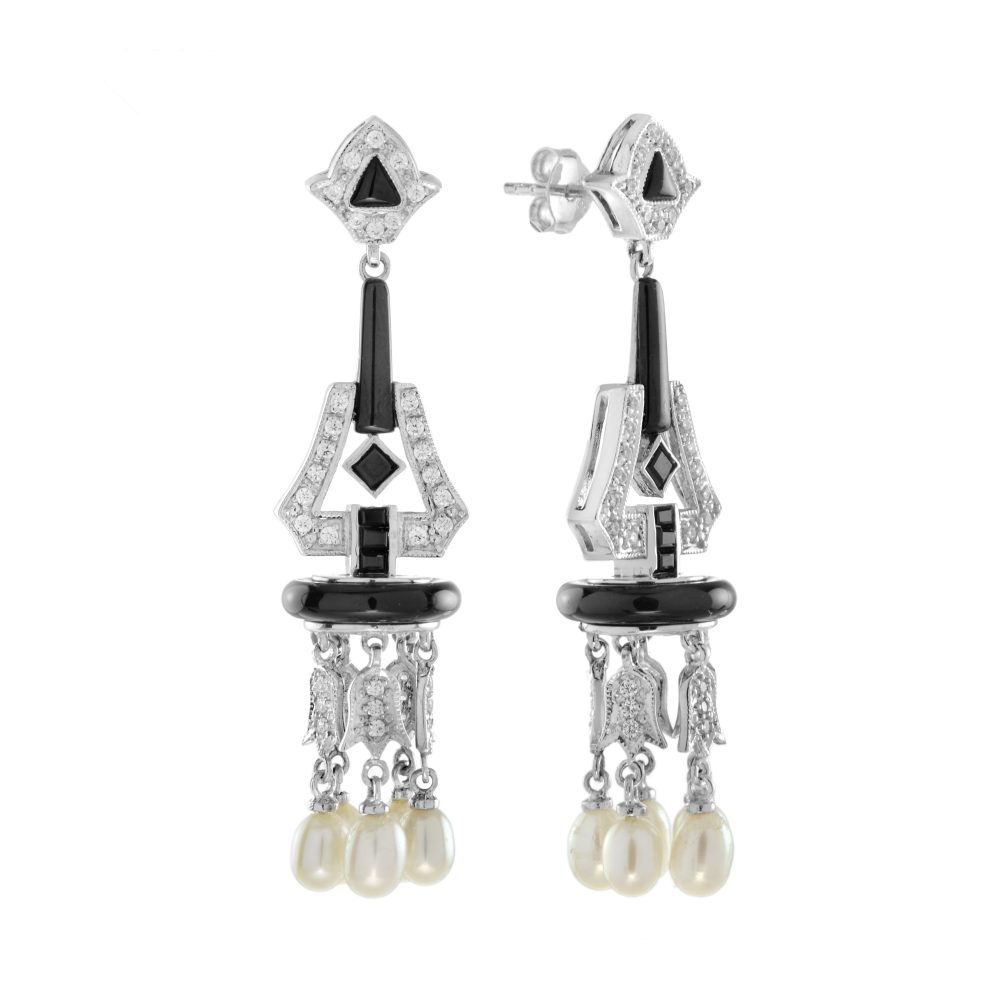

Chandelier Earrings
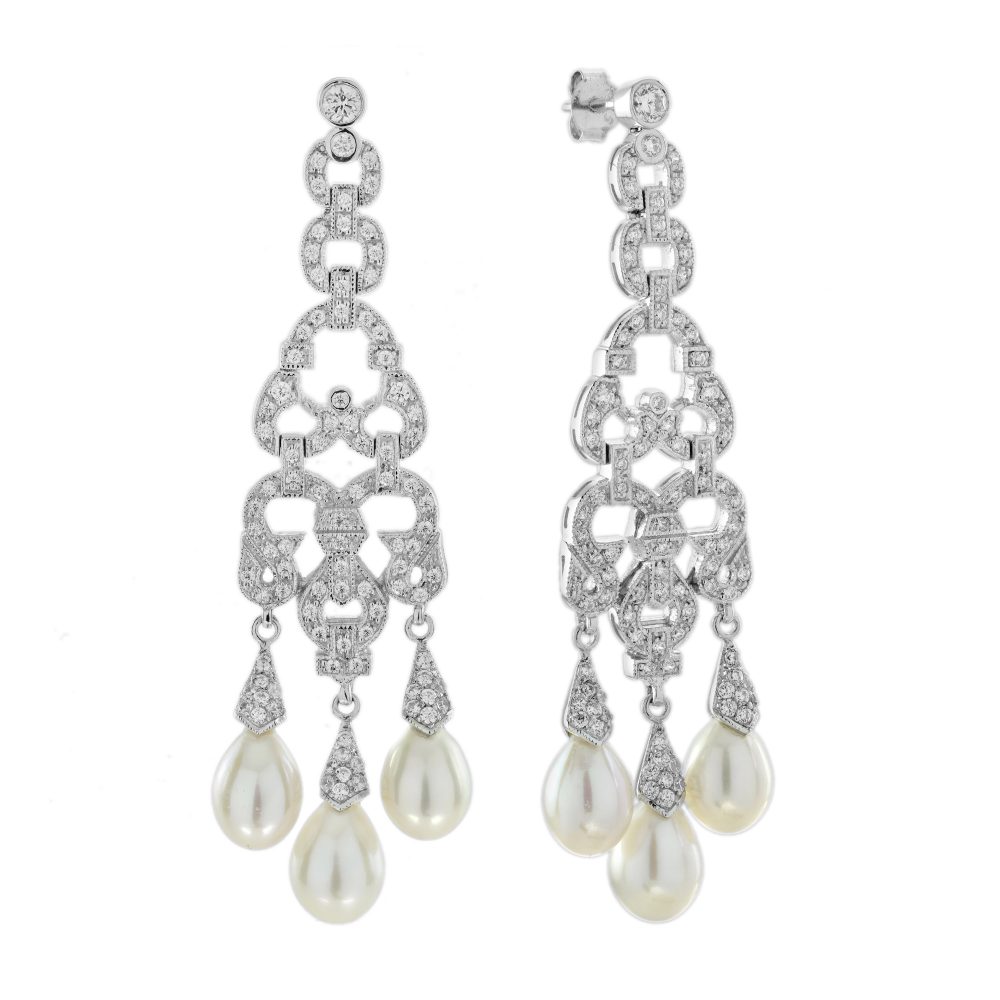
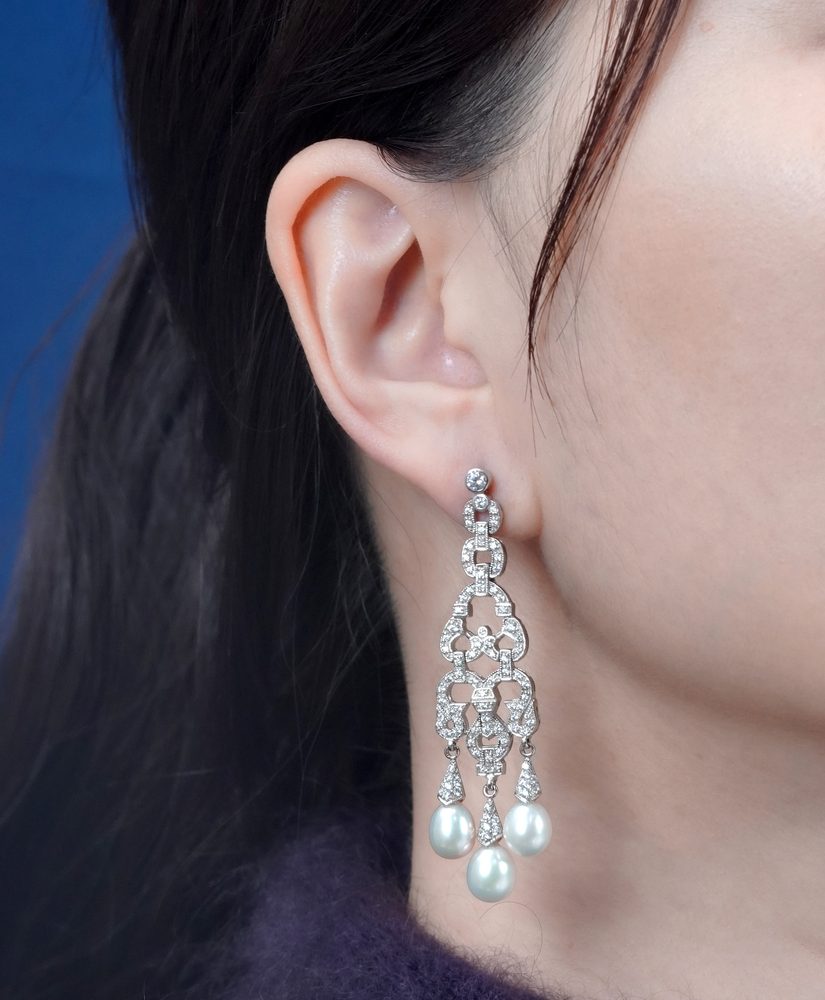
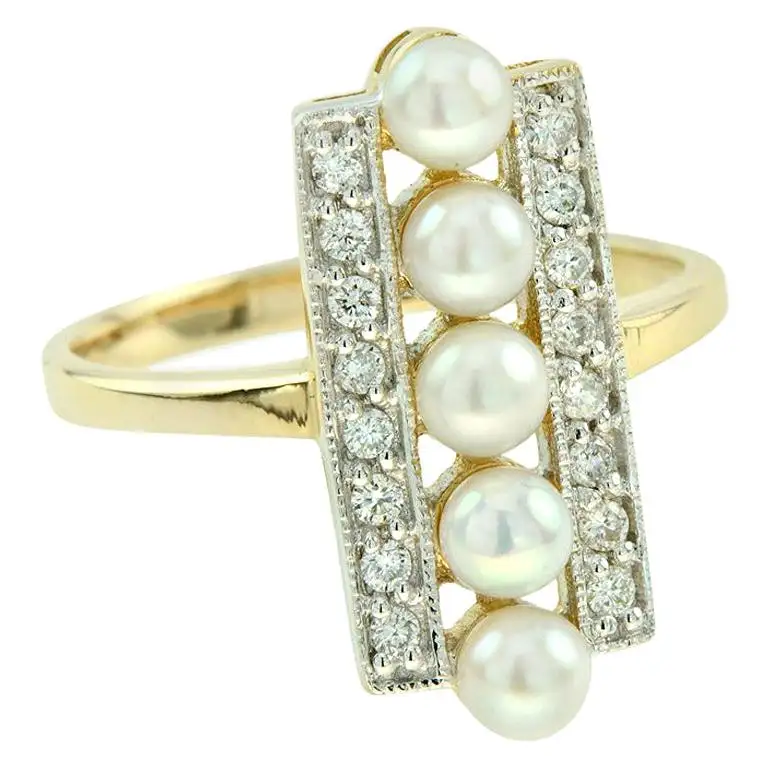
Drop Earrings
Frequently Asked Questions About Pearl Meaning
What does pearl mean?
Pearl traditionally symbolizes wisdom, purity, integrity, serenity and new beginnings. These are cultural associations rather than physical effects. The most personal meaning comes from the person, relationship or milestone connected with the jewel.
Is pearl the only June birthstone?
No. Pearl, alexandrite and moonstone are recognized June birthstones on the modern US list maintained by Jewelers of America.
Are cultured pearls real pearls?
Yes. Cultured pearls are genuine pearls formed by mollusks after human intervention begins the process. They are different from imitation pearls made from materials such as coated glass, shell or plastic.
What are the main types of cultured pearls?
The principal cultured pearl categories are Freshwater, Akoya, Tahitian and South Sea. They differ in mollusk, growing environment, typical size, color and visual character, but type alone does not determine quality.
Can pearls be worn every day?
Pearls can be worn regularly with attentive care, especially as earrings or pendants. Because they measure about Mohs 2.5–4.5, protect them from abrasion, impact, heat and chemicals, and store them separately from harder jewelry.