
Blog, Gemstone Guides
Morganite Meaning & Why It’s Loved for Engagement Rings

Key Takeaways: Morganite Meaning
- Morganite is a pink-to-peach variety of beryl, the same mineral family as emerald and aquamarine, colored by traces of manganese.
- It is not on the official birthstone list at all — not even as an alternate. The Jewelers of America calendar assigns no month to morganite, a point most competitor articles get wrong or leave vague.
- Its meaning is a modern one: named in 1910 for financier J. P. Morgan, not inherited from ancient tradition, and its “stone of divine love” symbolism is a twentieth-century crystal-lore association rather than folklore with deep roots.
- At 7.5–8 on the Mohs scale with good toughness, it wears well daily — the practical reason it has become a leading alternative to pink diamond in engagement rings.
What Is the Meaning of Morganite?
Morganite is popularly known as the stone of “divine love and compassion,” a meaning assigned by modern crystal lore, not ancient tradition. Its pink and peach tones are traditionally linked to romance, tenderness, and femininity. Unlike ruby or sapphire, morganite carries no historical or religious symbolism predating the twentieth century, and holds no official birthstone status for any month.
Morganite at a Glance
| Property | Detail |
|---|---|
| Mineral species | Beryl — the same species as emerald and aquamarine |
| Cause of color | Trace manganese, producing pink, rose, peach, and salmon tones |
| Mohs hardness | 7.5–8 — comparable to aquamarine, harder than emerald’s typical wearing surface |
| Toughness | Good — free of the cleavage and heavy inclusion pattern that make emerald comparatively fragile |
| Birthstone | None. Not listed for any month, official or alternate, by Jewelers of America |
| Routinely treated? | Yes — nearly all faceted morganite is heat-treated to remove a yellow or orange undertone and stabilize the pink |
| Best settings | Prong, halo, or bezel — durable enough for daily wear with ordinary care |
| Cleaning | Warm, soapy water always. Ultrasonic and steam cleaning only if the stone has no visible fractures or liquid inclusions |
What Does Morganite Symbolize?
Morganite’s symbolism is a modern construction, and this is worth stating plainly rather than dressing it in borrowed antiquity. The gem was identified in Madagascar in 1910 and named the same year by gemologist George Kunz, in honor of the financier and collector J. P. Morgan. Because morganite entered the trade in the twentieth century, it inherited none of the centuries of scriptural, astrological, or folk association that surround stones such as garnet or amethyst.
- Divine love and compassion. This is the phrase most consistently attached to morganite in modern gem and crystal literature. It reflects the stone’s soft pink color rather than any documented historical practice.
- Romance and tenderness. As with most pink gemstones, morganite has absorbed the general cultural association of pink with affection, gentleness, and femininity — a color symbolism, not a gem-specific one.
- A collector’s namesake. Its very name is a tribute to a person, not a place, a virtue, or a myth — a point of genuine historical interest that most articles about morganite omit entirely.
These are traditional beliefs and cultural associations, carried by modern gem literature rather than antiquity. They are part of why people choose the stone. They are not claims about what a gemstone can do for your health, your relationships, or your finances, and we will not present them as such.
The naming itself is a small piece of gemological history worth preserving accurately. Kunz noted at the time that morganite displayed an intense red fluorescence under X-ray exposure, a scientific curiosity rather than a trade characteristic. A later, unrelated find underscores how large morganite crystals can grow: in 1989, miners at a quarry in Buckfield, Maine, uncovered a single crystal roughly 23 centimeters long and weighing just over 50 pounds, since nicknamed “The Rose of Maine.” Specimens of that scale are geological rarities, not something a buyer will encounter in a jewelry showcase, but they explain why well-proportioned faceted morganite in the several-carat range is unusually attainable compared with equivalent sizes in most colored gemstones.
Is Morganite a Birthstone?
No. Morganite does not appear anywhere on the Jewelers of America birthstone list — not as an official stone for any month, and not among the alternates added in 1912, 1952, 2002, or 2016. This distinguishes it from its beryl relatives: aquamarine is the official March stone and emerald the official May stone, but morganite has never been assigned a month by any of the bodies that maintain the modern list.
This point is frequently blurred online, where morganite is sometimes grouped loosely alongside “birthstone-adjacent” beryls or described with vague seasonal language. It is neither official nor a recognized alternate. Its appeal rests entirely on color, durability, and modern fashion, which is, on its own terms, a sufficient reason to choose it.
How Durable Is Morganite for Everyday Wear?
Two properties decide whether a gem survives daily life, and they are not the same:
- Hardness (the Mohs scale) is resistance to scratching.
- Toughness is resistance to chipping, cracking, and breaking.
Morganite rates 7.5 to 8 on the Mohs scale and carries good toughness, placing it in the same practical tier as aquamarine and well ahead of its beryl cousin emerald, whose internal inclusions (trade name jardin, French for “garden”) make it comparatively brittle. Morganite has neither emerald’s characteristic inclusion pattern nor a perfect cleavage plane, so it does not share emerald’s reputation for chipping under a sharp knock.
| Tier | Stones | Mohs | Practical guidance |
|---|---|---|---|
| Daily wear, worry-free | Diamond, ruby, sapphire | 9–10 | Any setting, including open prong |
| Daily wear, sensible care | Morganite, aquamarine | 7.5–8 | Prong, halo, or bezel are all suitable; avoid deliberate impact |
| Occasional wear | Emerald, garnet, peridot | 6.5–7.5 | Better suited to earrings, pendants, and evening rings |
| Protective settings only | Opal, pearl, coral | Below 6.5, or soft/brittle | Bezel or halo; prefer pendants and earrings over rings |
Workshop insight: Because morganite crystallizes in exceptionally large, clean pieces, we routinely see finished center stones of six carats and larger at a price point that would be unreachable in aquamarine of comparable clarity, let alone in a fancy pink diamond. This is what allows a bold, Art Deco–scaled centerpiece — the kind of proportion the period’s own jewelers favored — without the piece becoming a compromise on stone size to control cost.
Why Has Morganite Become Popular for Engagement Rings?
Morganite’s rise as an engagement stone is a twenty-first-century development with three identifiable causes, and it is worth naming them plainly rather than attributing the trend to timeless romance.
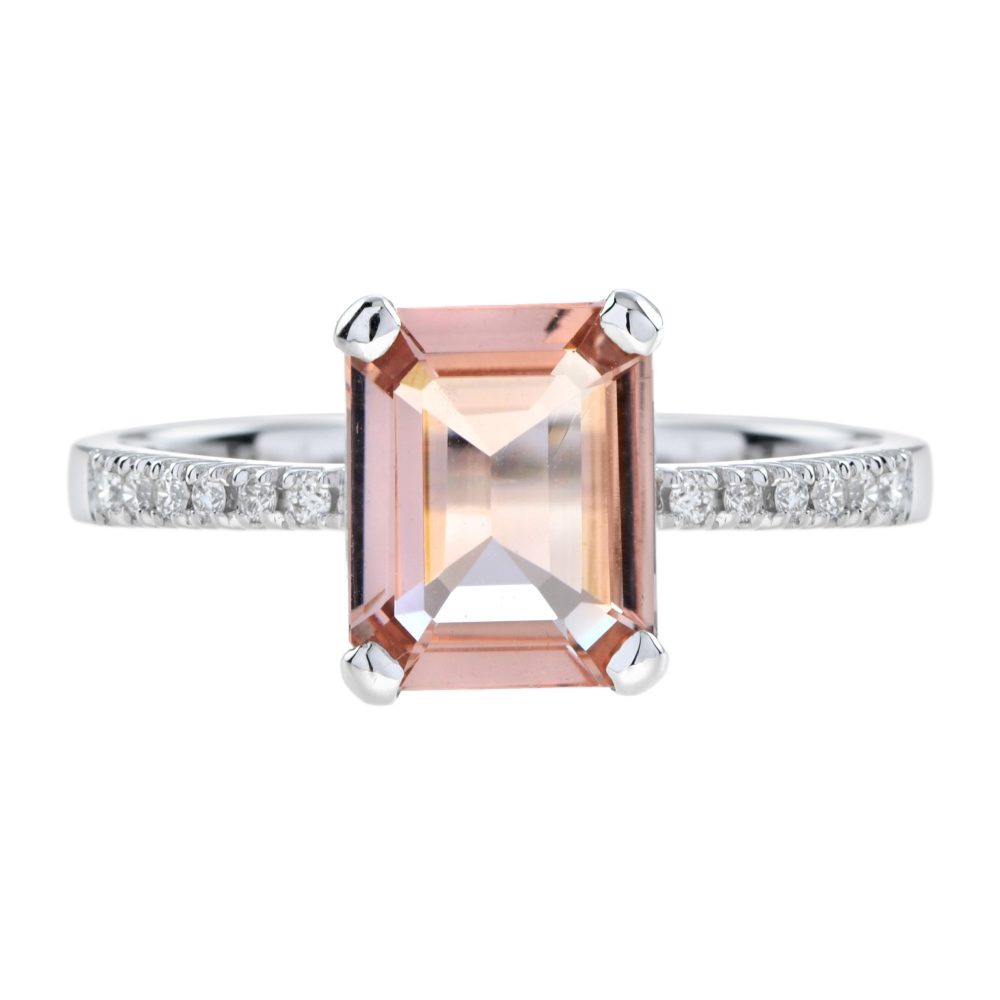
First, celebrity pink-diamond engagements — most visibly the 2002 proposal that paired a well-known pink diamond with a high-profile couple — drew public attention to pink center stones generally. Morganite, sharing the hue at a fraction of the cost, was the direct beneficiary. Second, the mid-2010s rise of rose gold as a metal of choice, reinforced by a widely reported “color of the year” designation in a complementary earthy pink tone, gave morganite a metal pairing that flattered it precisely. Third, and most durably, morganite offers the visual territory of a fancy pink diamond — a stone whose meaning and pricing we cover separately — at a cost structure that makes a larger, cleaner center stone realistic for a much wider range of budgets.
Morganite is not the only pink alternative in the market. Pink sapphire, corundum’s pink variety, sits at Mohs 9 and is markedly harder and tougher, at a correspondingly higher price for comparable size and clarity. The honest comparison is not “which is better” but “which trade-off suits the wearer”: morganite offers scale and softness of color at moderate cost; pink sapphire offers superior hardness and a more saturated, harder-edged pink at a premium.
How Is Morganite Used in Art Deco-Inspired Jewelry?
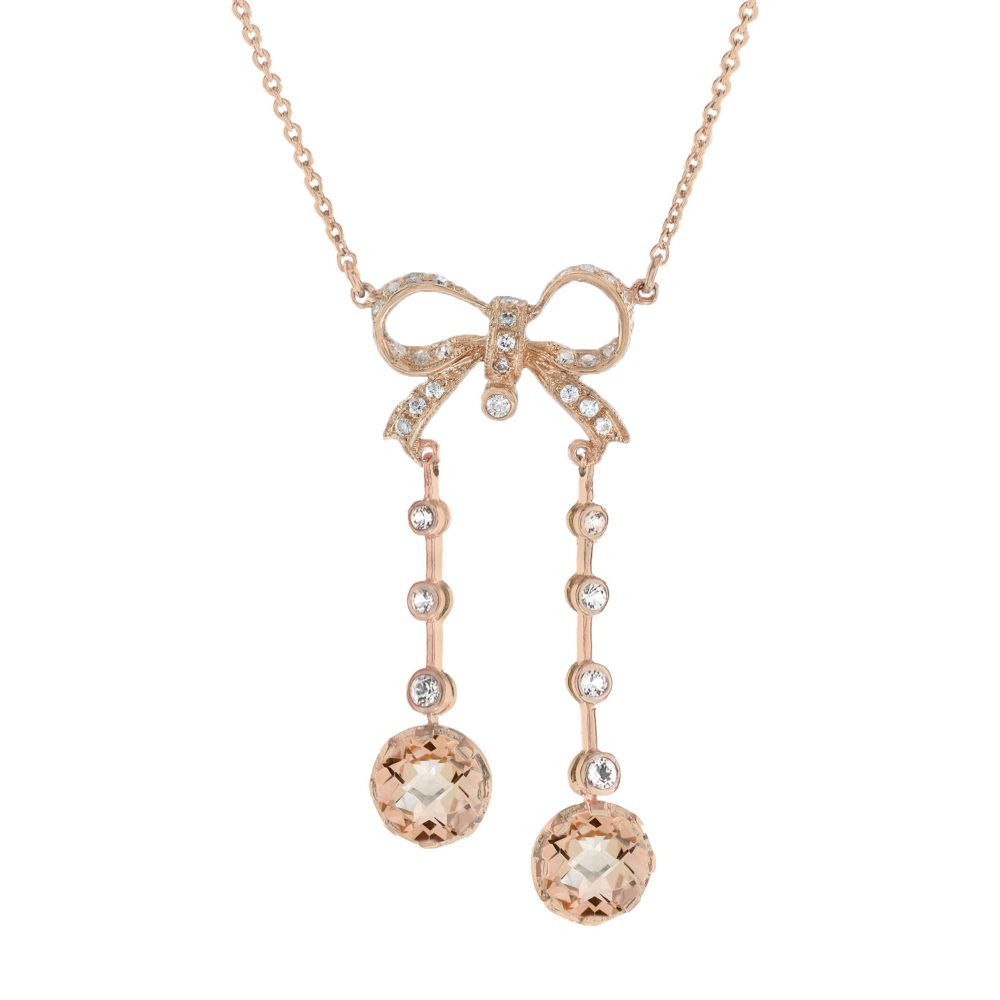
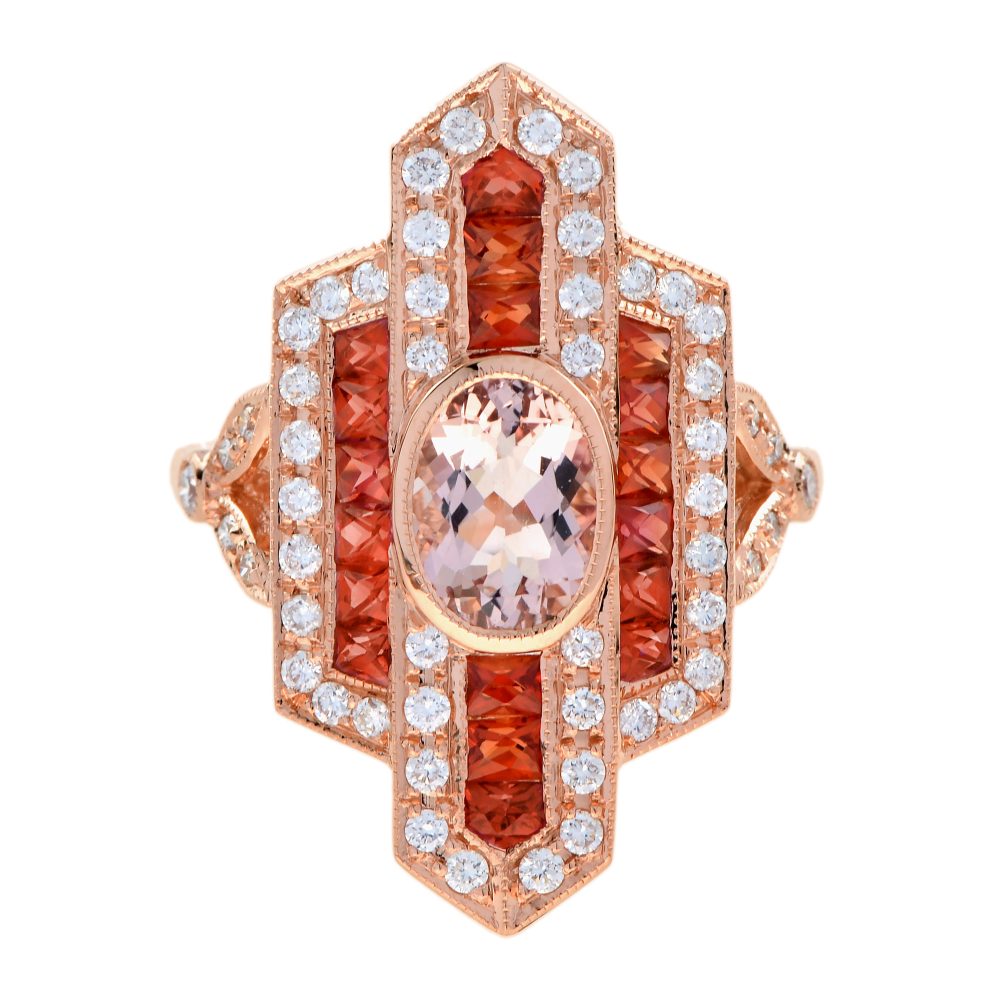
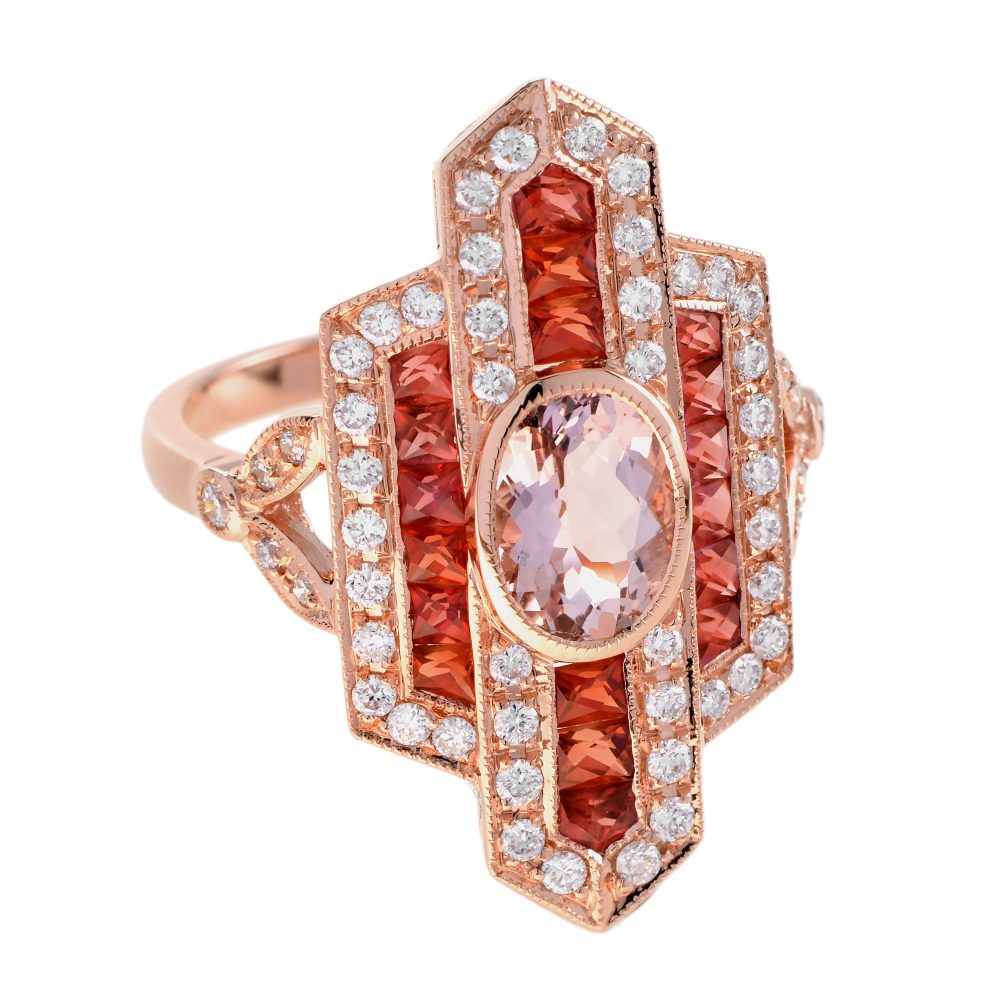
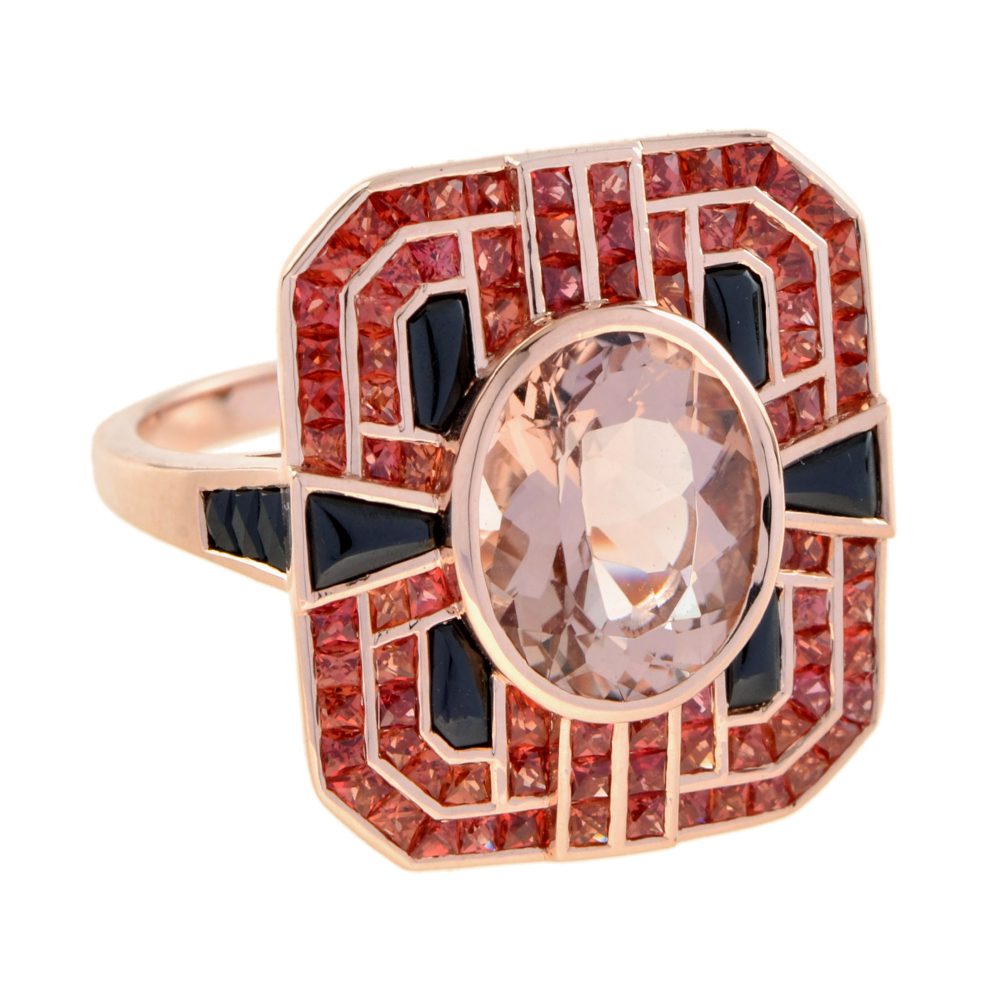
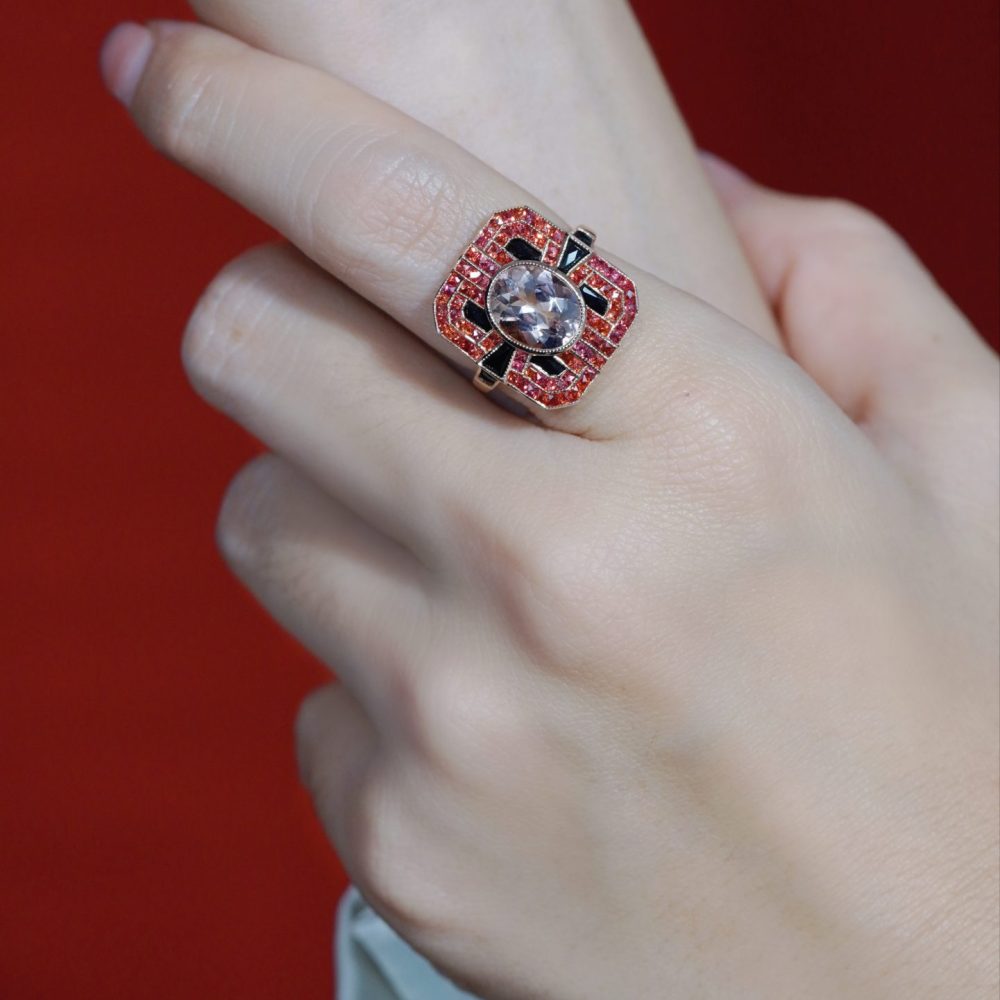
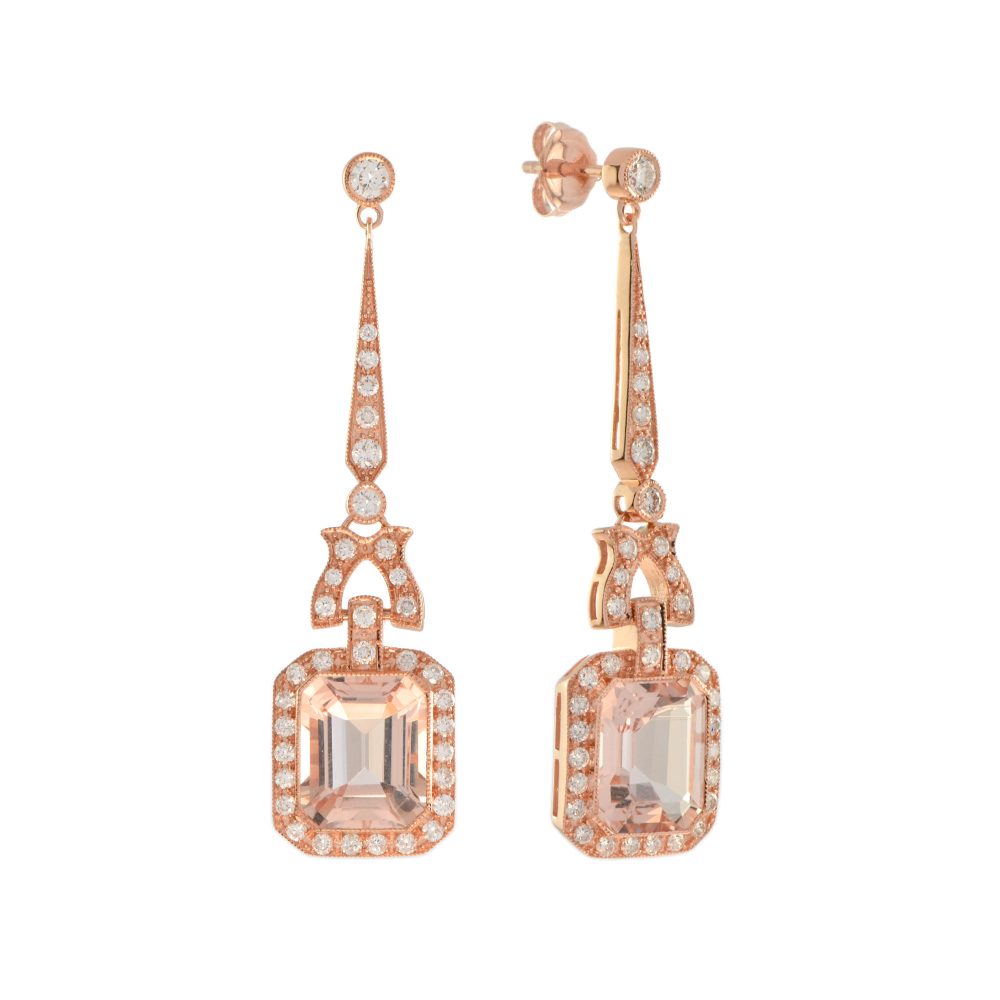
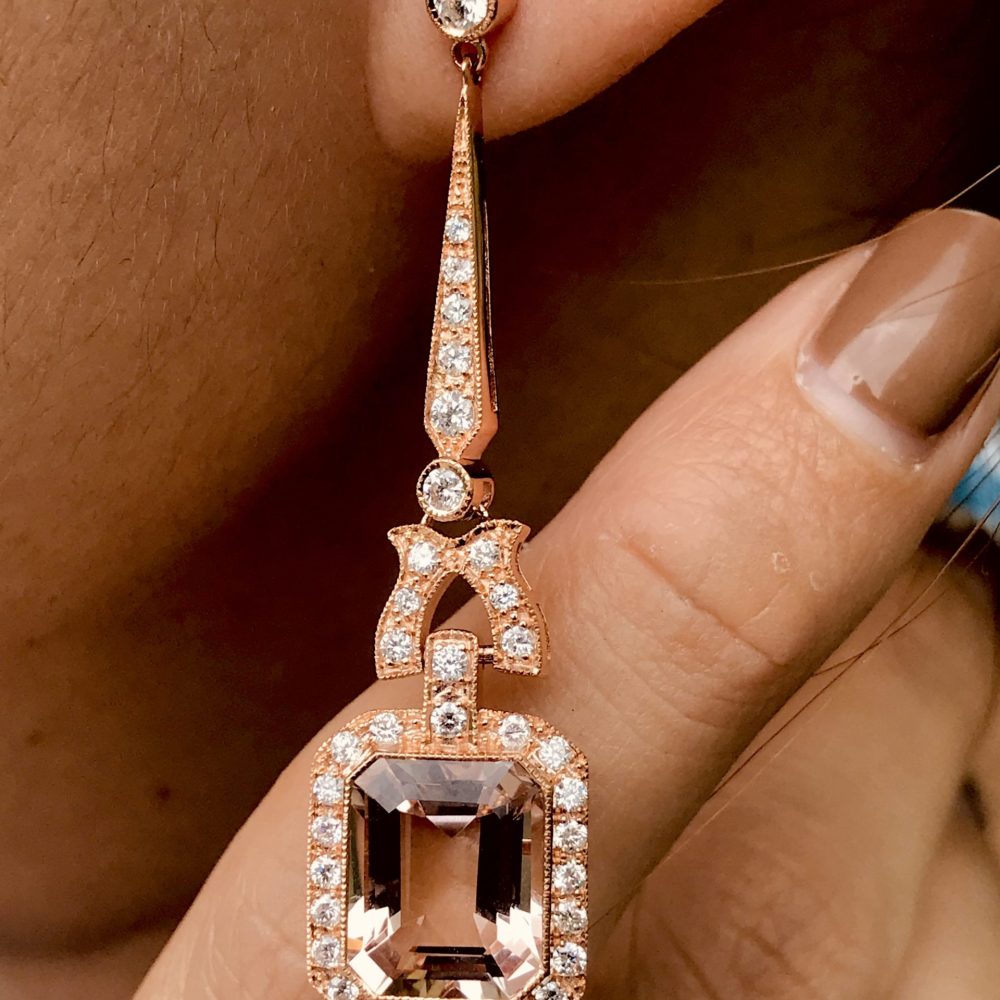
Morganite’s pale, cool-toned pink sits comfortably within the restrained, geometric palette that defines Art Deco design, and its tendency to grow in large, clean crystals suits the period’s characteristic scale: bold central stones framed by precise, architectural metalwork rather than clusters of small accents.
Common Design Pairings
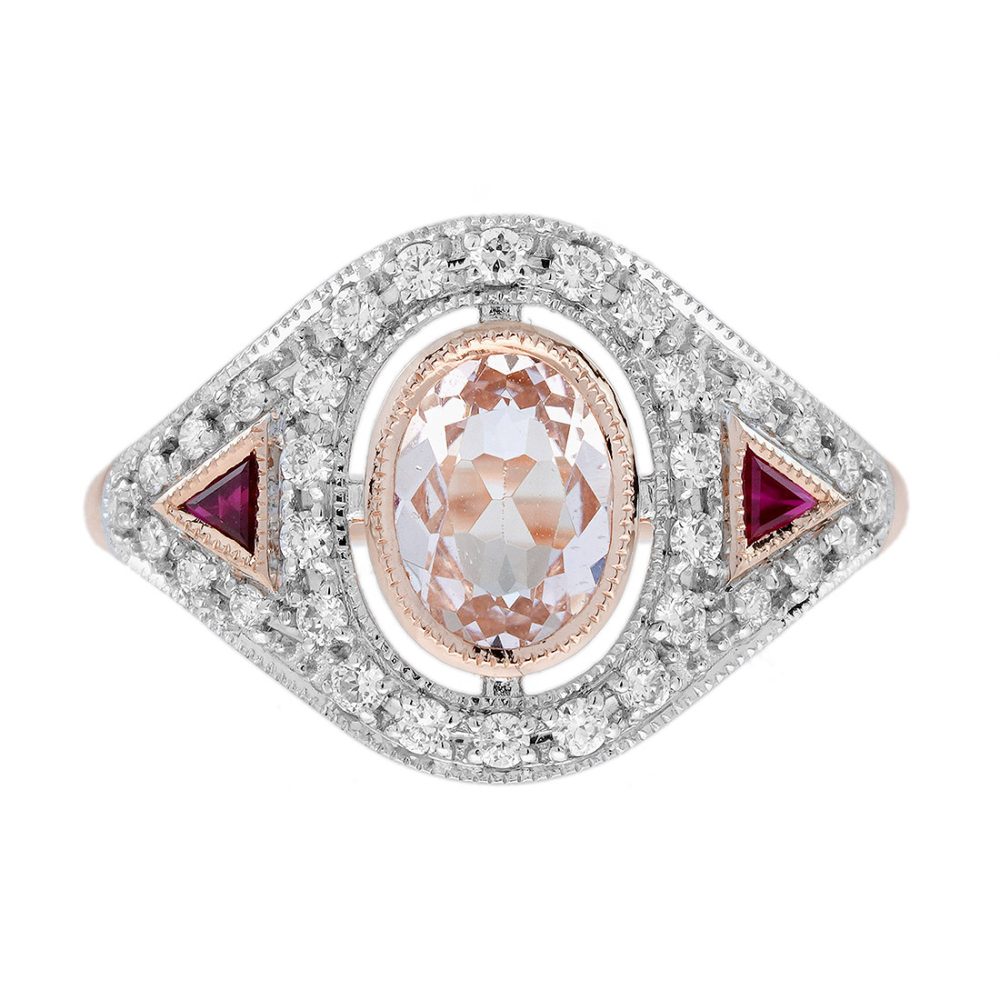
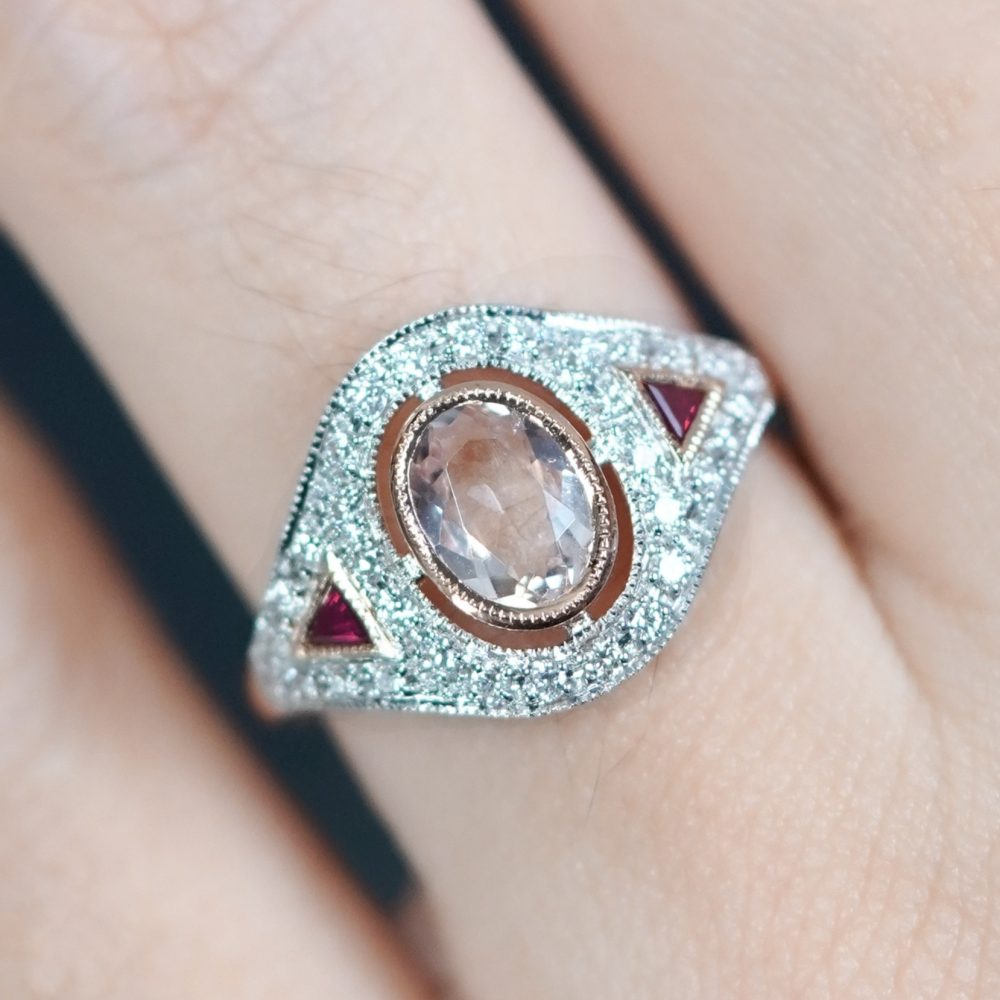
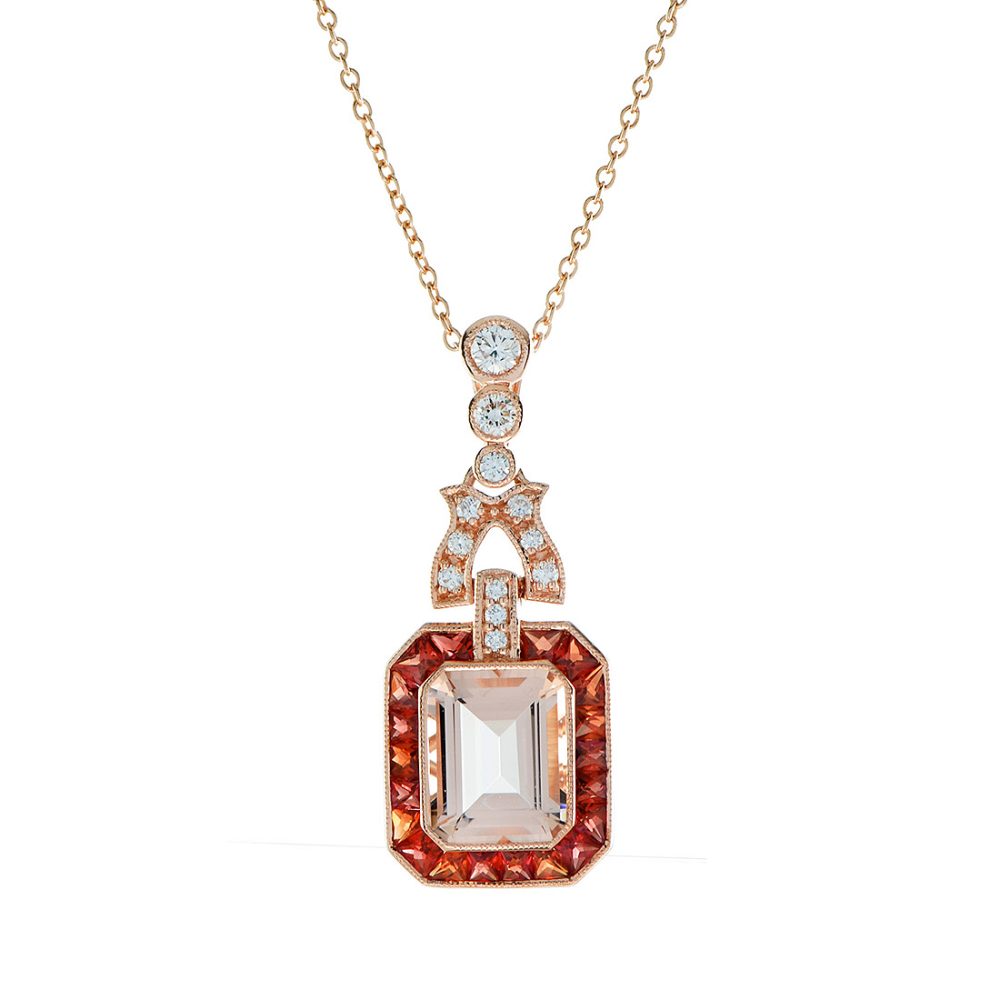
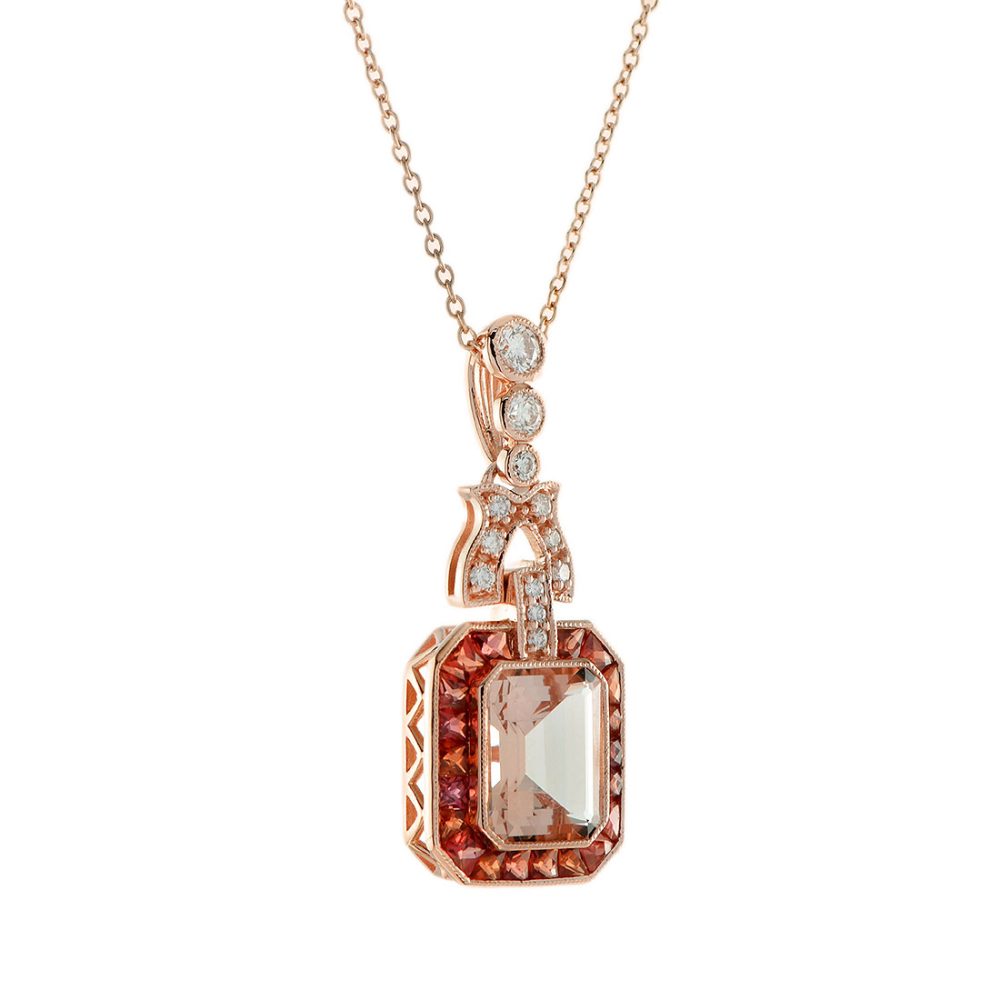
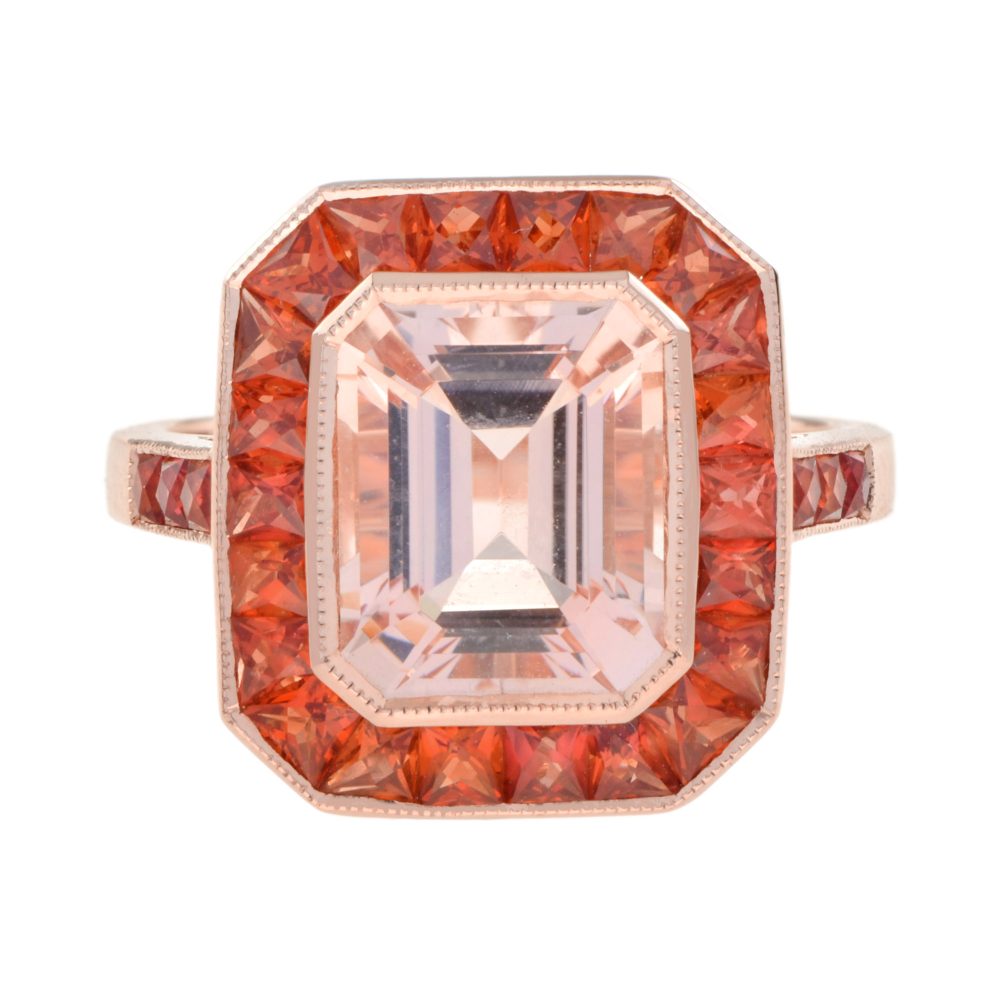
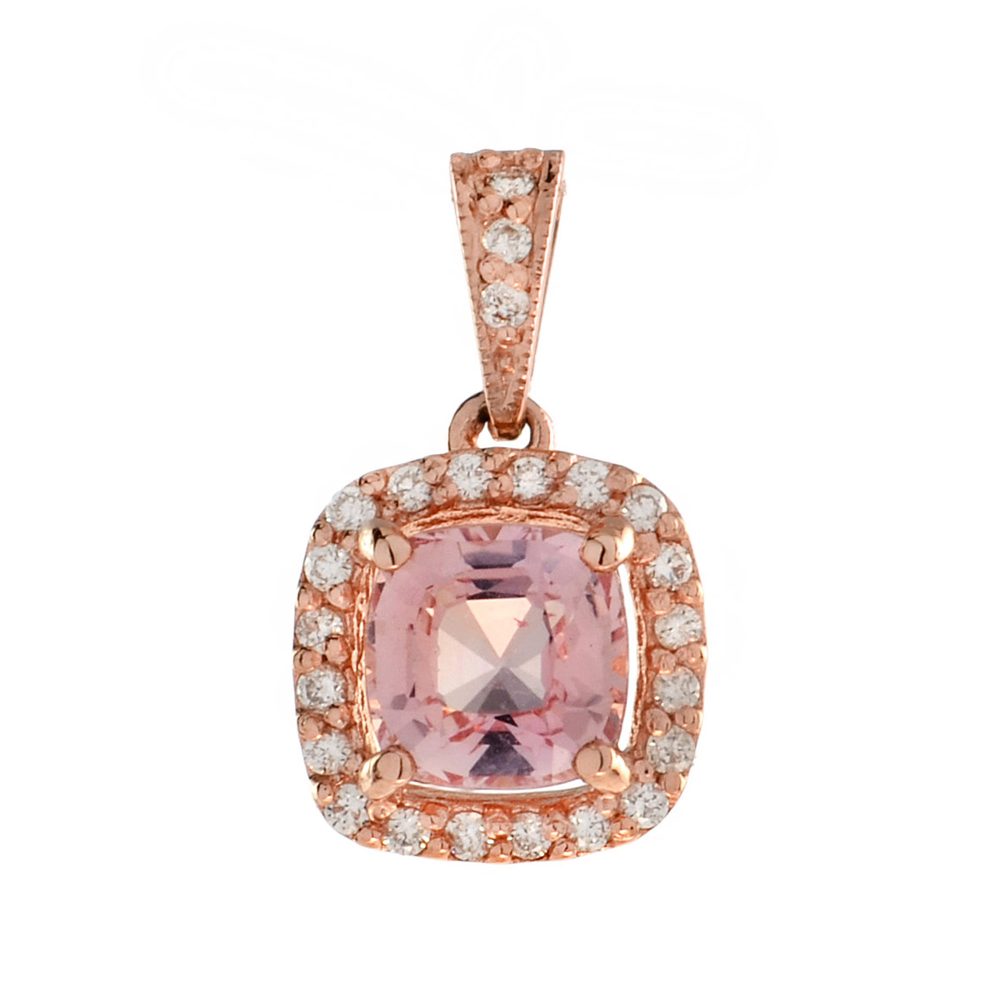
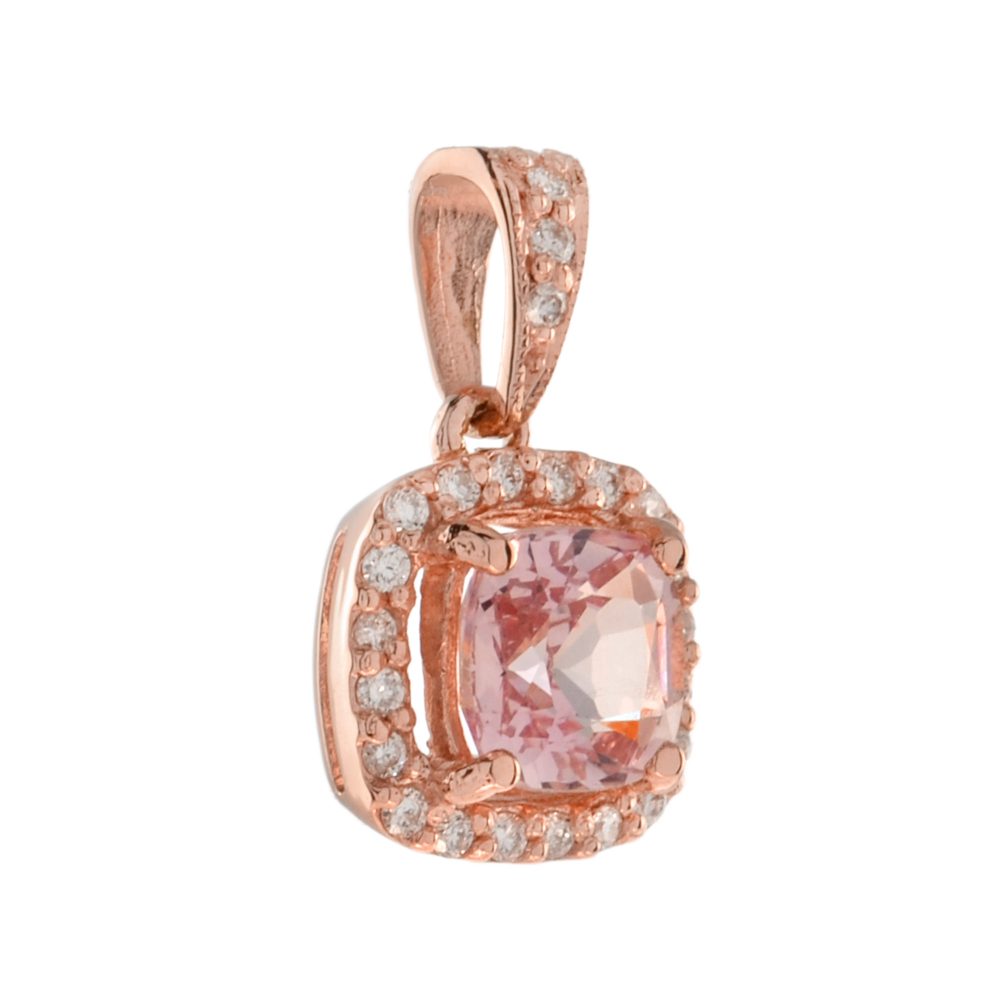
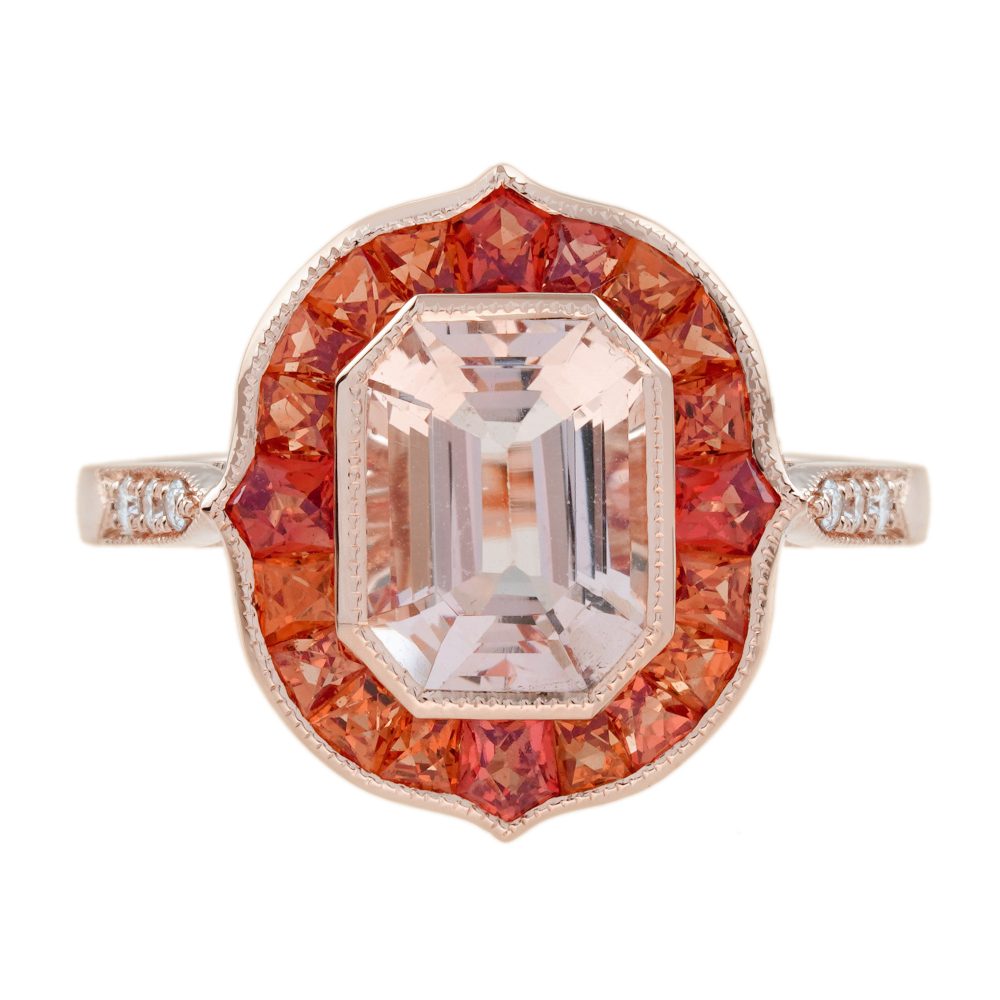
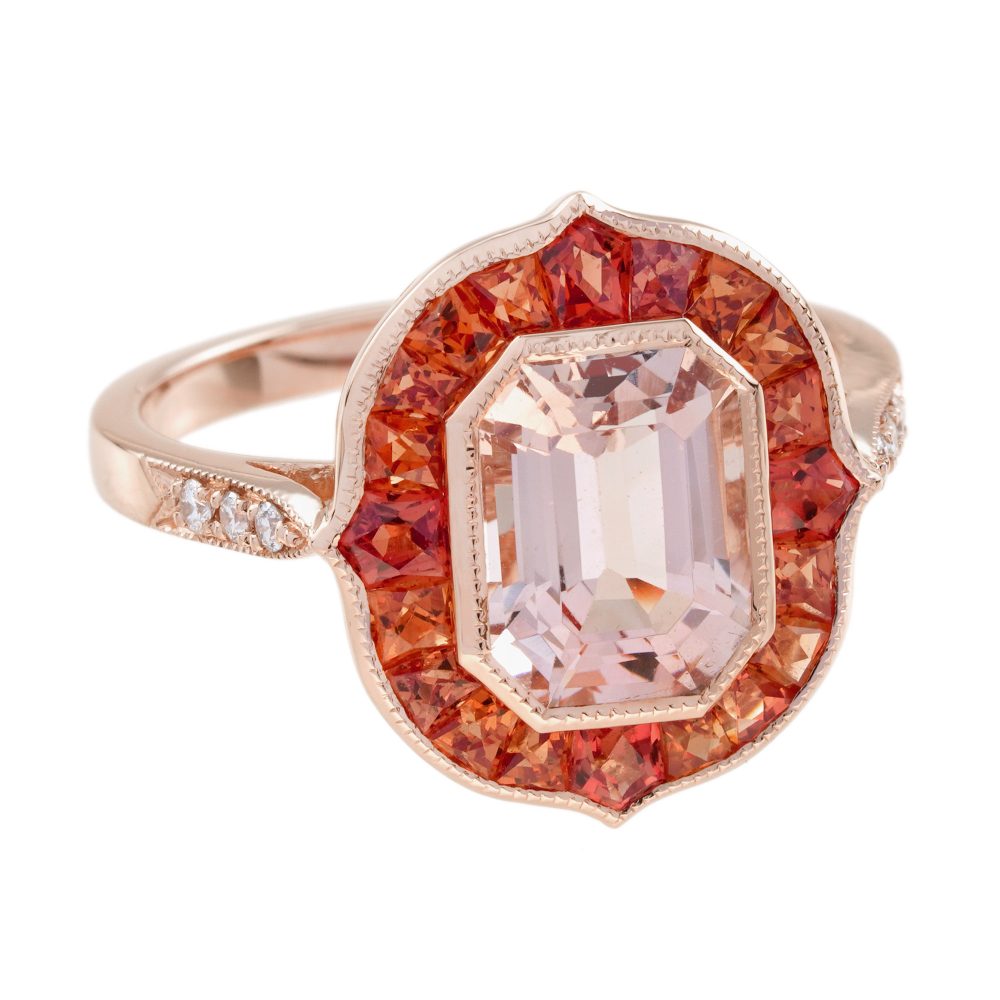
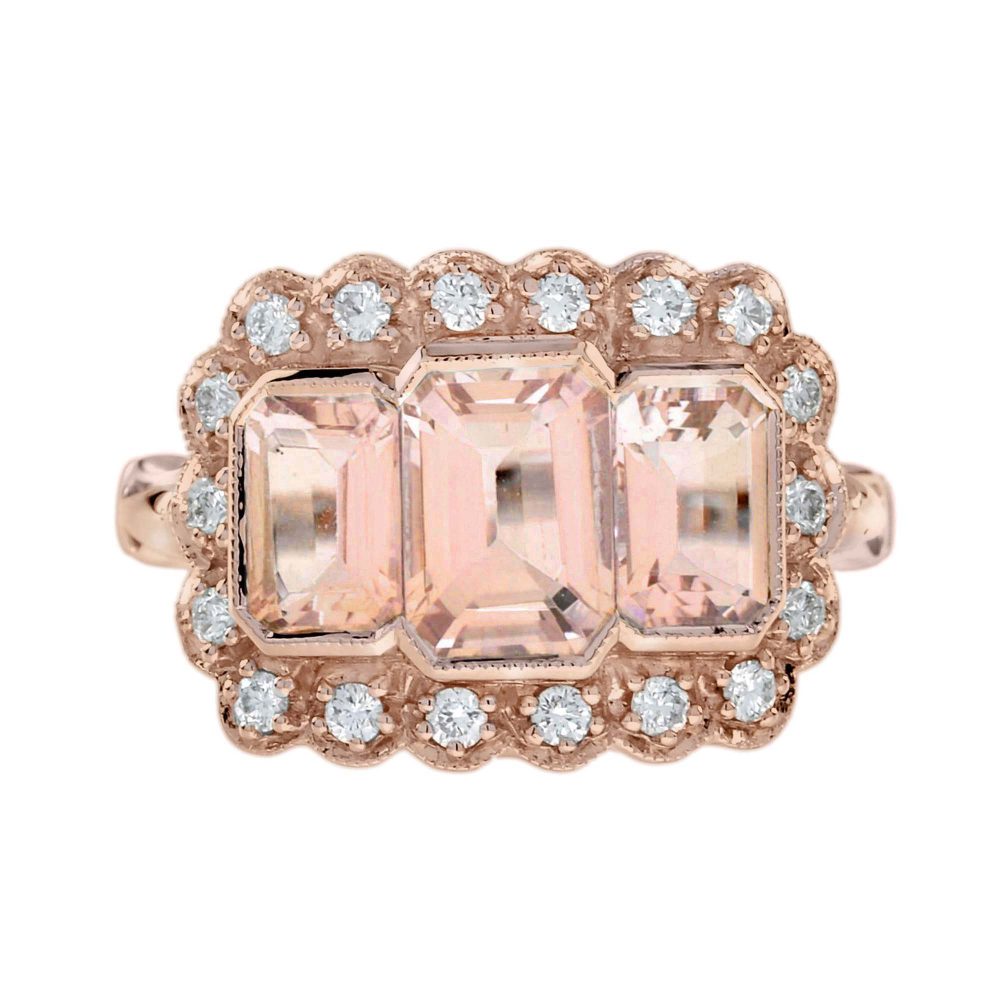
In our own workshop, morganite center stones are frequently set within milgrain-edged halos, sometimes accented with ruby or diamond melee, in rose gold, white gold, or platinum. Filigree side galleries and stepped, geometric outlines — hallmarks of the Art Deco vocabulary — read especially well against morganite’s pale color, since they do not compete with it for visual weight.
Our own work is made with natural gemstones set in solid gold. Every piece is newly made and antique-inspired; it is not an antique, an estate piece, or a period original.
How Do You Choose a Fine Morganite?
- Color depth first. Pale, watery morganite is common and inexpensive; a richer rose or pink tone, especially in a larger stone, is the primary driver of value. Peach and salmon tones exist but are less sought after in the current market than pink and rose.
- Clarity, almost as a given. Like its beryl relative aquamarine, morganite is typically cut from clean rough. A faceted stone with visible inclusions to the naked eye should be priced accordingly, or reconsidered.
- Cut orientation. Morganite is pleochroic — it can show a paler pink from one crystal direction and a more saturated, slightly bluish pink from another (pleochroism is the property of showing different colors depending on viewing angle). A well-cut stone is oriented to face up in its strongest color; a poorly oriented one looks washed out despite good rough material.
- Treatment, disclosed. Nearly all morganite on the market has been heat-treated to remove a yellow or orange undertone and stabilize the pink. This is standard, stable, and undetectable — but it should be disclosed, not implied away.
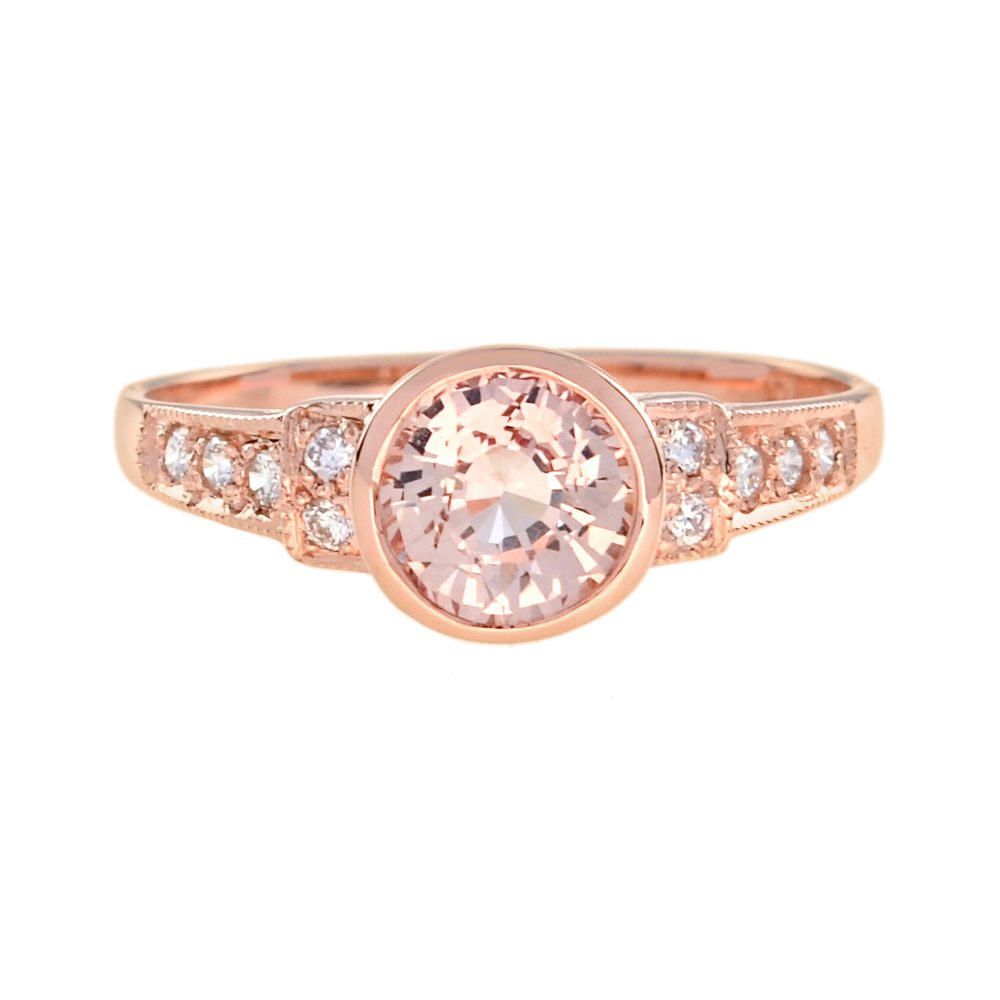
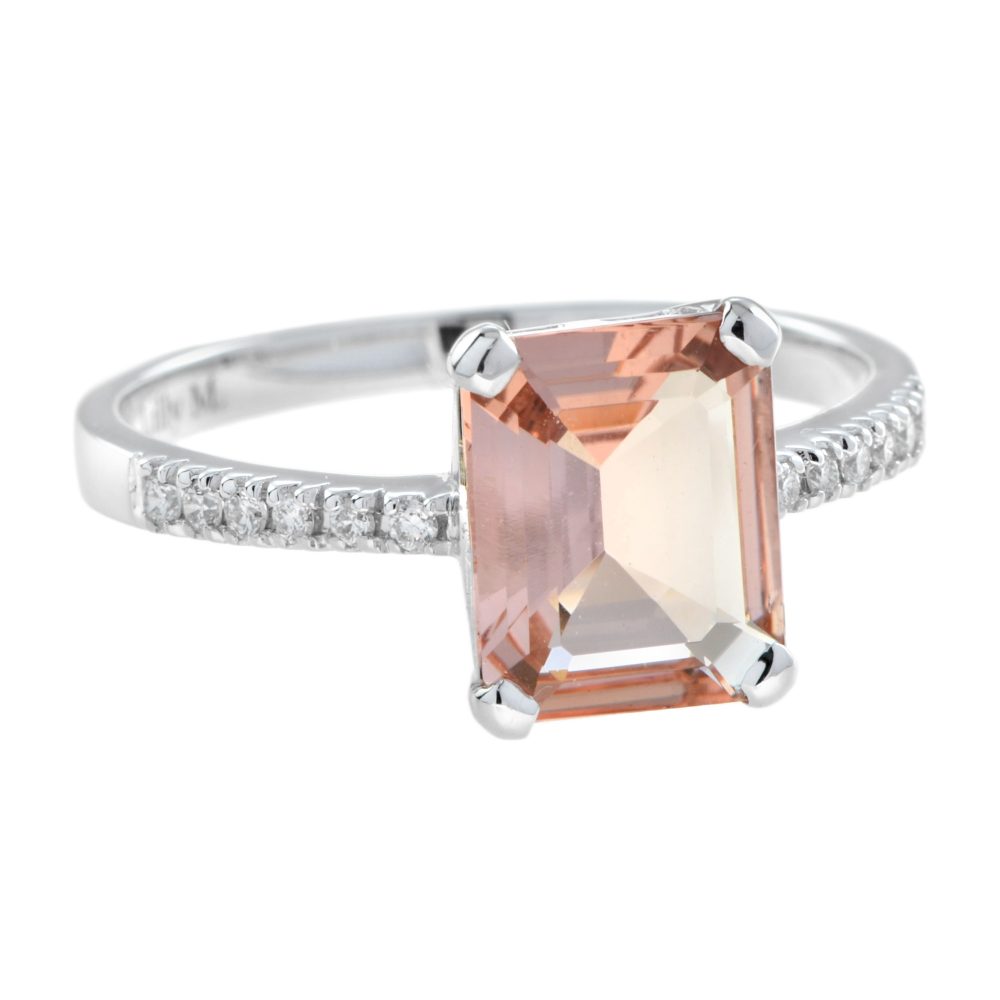
- Setting to match the wear. A ring worn daily benefits from a protective halo or bezel around the girdle edge, even though morganite’s Mohs 7.5–8 rating and good toughness make an open prong setting a legitimate option as well.
How Do You Care for Morganite?
Warm, soapy water and a soft brush are always a safe way to clean morganite. Ultrasonic and steam cleaners are generally acceptable for untreated or simply heat-treated stones, but should be avoided if the piece has visible fractures or liquid inclusions, since heat and vibration can extend an existing flaw. Fracture-filled morganite, an uncommon treatment, should be cleaned with warm soapy water only.
Morganite’s color is stable under normal light exposure and will not fade with wear. It should, however, be kept away from prolonged heat and from hydrofluoric acid and other harsh chemical cleaners, both of which can damage the stone. As with any fine ring, it is sensible to remove it before manual work, sport, or household chemical use, and to have the setting checked periodically by a jeweler to confirm the prongs or bezel still hold the stone securely.
Morganite meaning is best understood plainly: a pink-to-peach beryl, colored by manganese…
Morganite is best understood plainly: a pink-to-peach beryl, colored by manganese, named in 1910 for a financier rather than inherited from ancient symbolism, and carrying no birthstone status for any month. Its “divine love” association is a modern one, offered here as tradition, not as established fact.
What makes it a genuinely useful choice, rather than simply a fashionable one, is practical: a Mohs rating of 7.5 to 8 with good toughness supports daily wear, and its tendency to grow in large, clean crystals means a substantial center stone is realistic at a cost that a comparable pink diamond or pink sapphire rarely matches.
Chosen with an honest understanding of what it is — and, if daily wear matters most, set with a protective halo or bezel — morganite earns its place in a fine jewelry collection on its own merits, not on a symbolism it never actually inherited.
Sources: GIA — Morganite History and Lore · GIA — Morganite Quality Factors · GIA — Morganite Care and Cleaning · Jewelers of America — Official Birthstone List
Frequently Asked Questions About Morganite
What does morganite mean?
Morganite is commonly described in modern gem literature as the stone of divine love and compassion, a meaning tied to its soft pink color rather than to ancient tradition. It was named in 1910 for the financier and gem collector J. P. Morgan, so its symbolism is a twentieth-century association, not an inherited one.
Is morganite a birthstone?
No. Morganite does not appear anywhere on the Jewelers of America birthstone list, as either an official stone or a recognized alternate for any month. This is true even though its beryl relatives, aquamarine and emerald, are the official March and May birthstones.
Is morganite a natural gemstone, or is it treated?
Morganite is a natural gemstone, and nearly all faceted morganite on the market is also heat-treated, a standard process that removes a yellow or orange undertone to produce a purer, stable pink. The color from this treatment does not fade with normal wear.
Is morganite durable enough for an engagement ring worn every day?
Yes. Morganite rates 7.5 to 8 on the Mohs hardness scale and has good toughness, placing it in the same daily-wear tier as aquamarine. A protective halo or bezel setting is a sensible choice for a ring, though an open prong setting is also acceptable with ordinary care.
Morganite, pink sapphire, or pink diamond — which should you choose?
The choice comes down to a trade-off, not a clear winner. Morganite offers a large, softly colored center stone at a moderate cost; pink sapphire offers superior hardness and a more saturated pink at a higher price; pink diamond commands the highest price of the three for a comparable stone size.