
Blog, Gemstone Guides
Black Onyx Meaning & Symbolism Guide

Key Takeaways: Onyx Meaning, Properties, and Care
- Onyx meaning runs across three distinct eras — ancient seal-carving and the biblical ephod, Victorian mourning jewelry, and modern crystal lore — and only the first two are documented history.
- Onyx is a banded variety of chalcedony, a cryptocrystalline (finely crystalline) form of quartz, and genuinely black chalcedony occurring in nature is exceptionally rare.
- Nearly all black onyx sold today is treated — typically by a sugar-and-sulfuric-acid carbonization process practiced commercially in Idar-Oberstein, Germany, since at least the nineteenth century, or by dyeing. Both are stable, industry-accepted enhancements, and we disclose them plainly rather than let the name “onyx” imply an untreated stone.
- Onyx is not on the official birthstone list for any month — not even as an alternate — according to Jewelers of America.
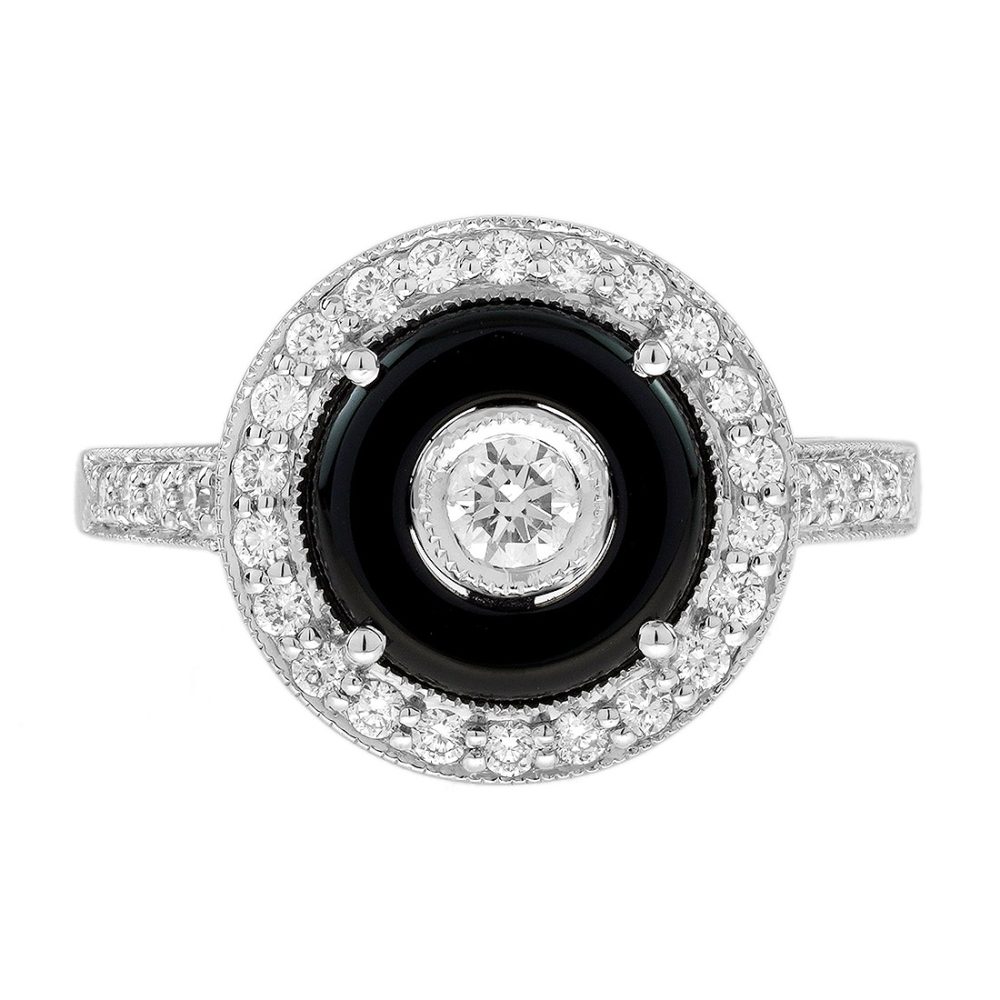
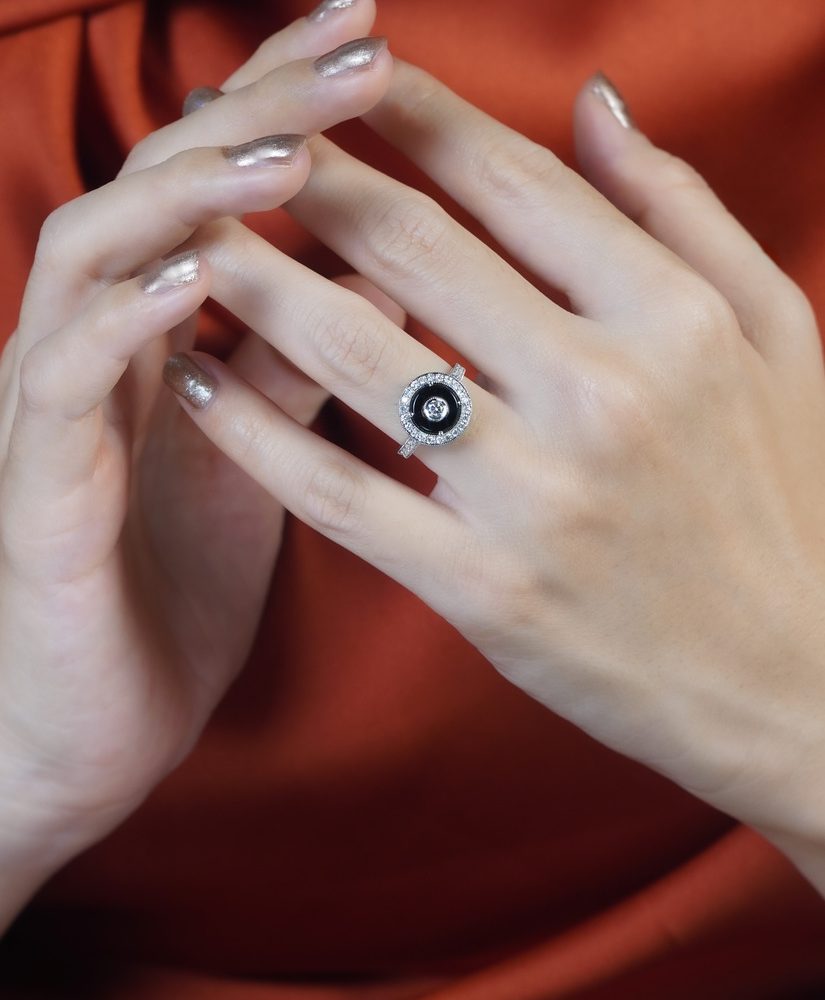
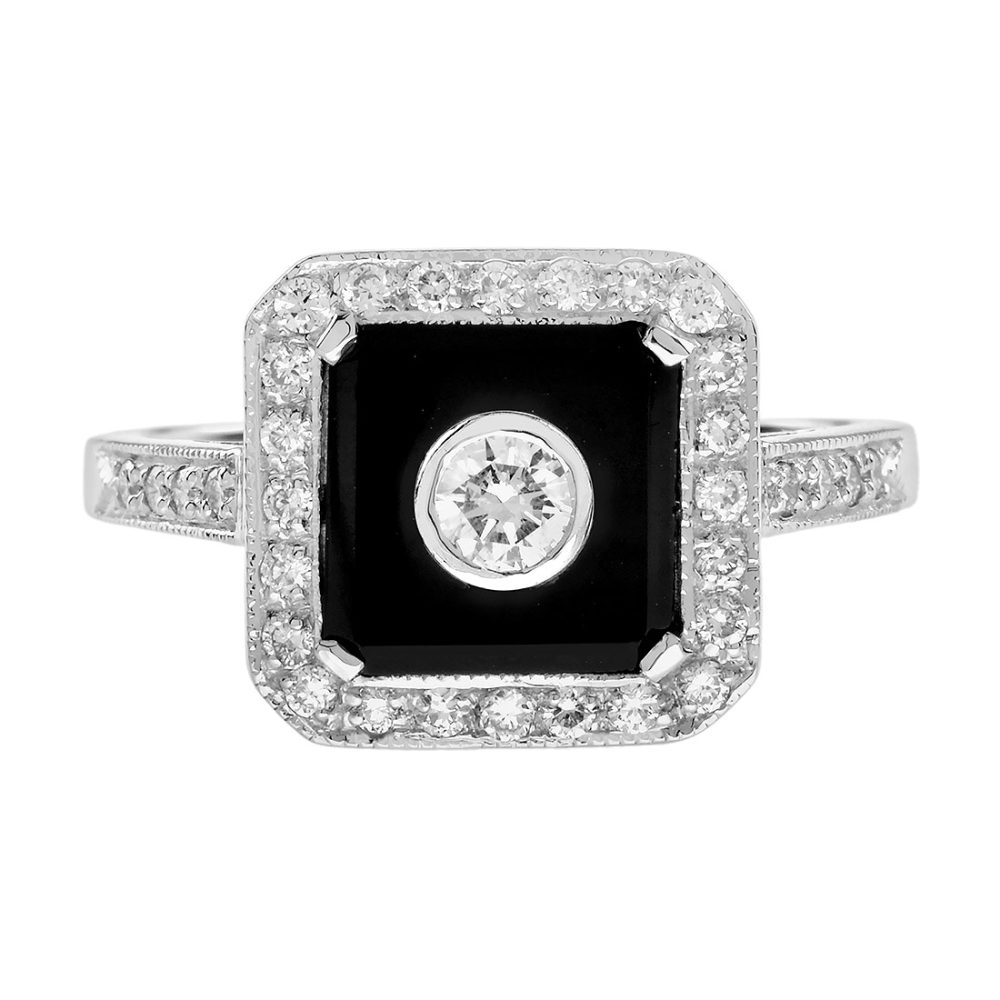
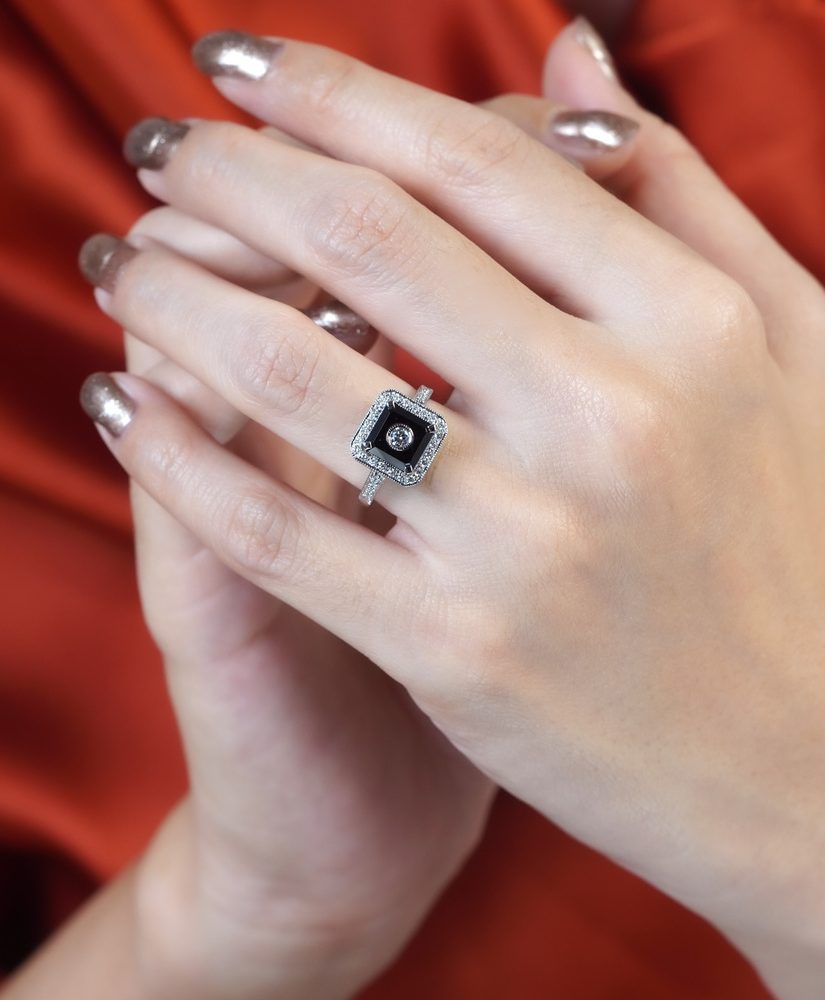
- At Mohs 6.5–7 with good toughness, onyx wears well in earrings, pendants, and bezel-set rings, and its bold black-and-white contrast made it one of the defining gemstones of Art Deco jewelry in the 1920s and 1930s.
What Is the Meaning of Onyx?
Onyx meaning is layered rather than singular: in antiquity the stone was carved into seals and protective amulets, in the Victorian era it became a stone of mourning and remembrance, and in modern crystal lore it is associated with strength, self-mastery, and grounding. These are traditional and cultural associations, not scientific or medical claims, and onyx holds no official birthstone status.
Onyx at a Glance
| Property | Detail |
|---|---|
| Mineral species | Chalcedony — a cryptocrystalline variety of quartz, in the same broad family as agate and carnelian |
| Cause of color | Natural gray-to-black banded chalcedony exists but is rare; nearly all fully black material is dyed or carbonized to an even, opaque black |
| Mohs hardness | 6.5–7 — scratch-resistant enough for regular wear, though softer than corundum or diamond |
| Toughness | Good — no cleavage plane, so it resists chipping better than its hardness number alone suggests |
| Birthstone | None. Not listed for any month, official or alternate, by Jewelers of America |
| Routinely treated? | Yes — dyeing or sugar-acid carbonization is standard practice and considered a stable, accepted enhancement |
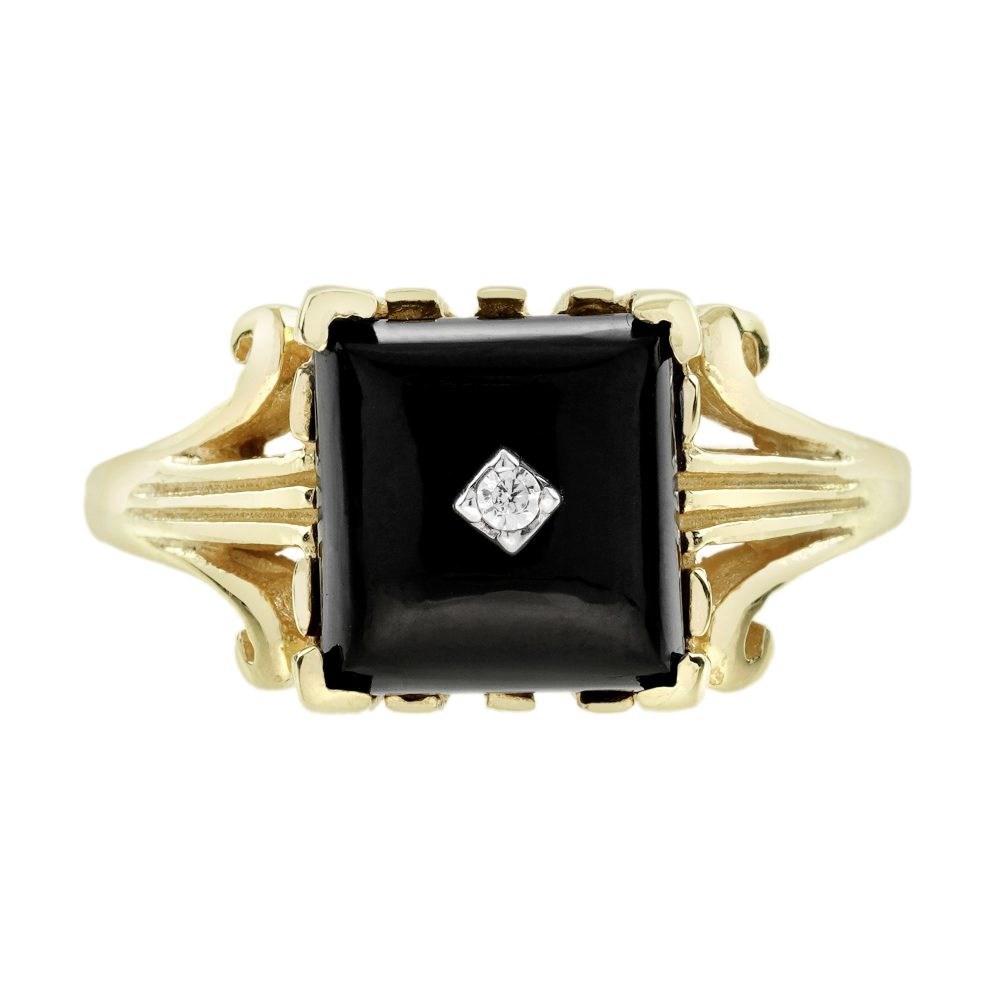
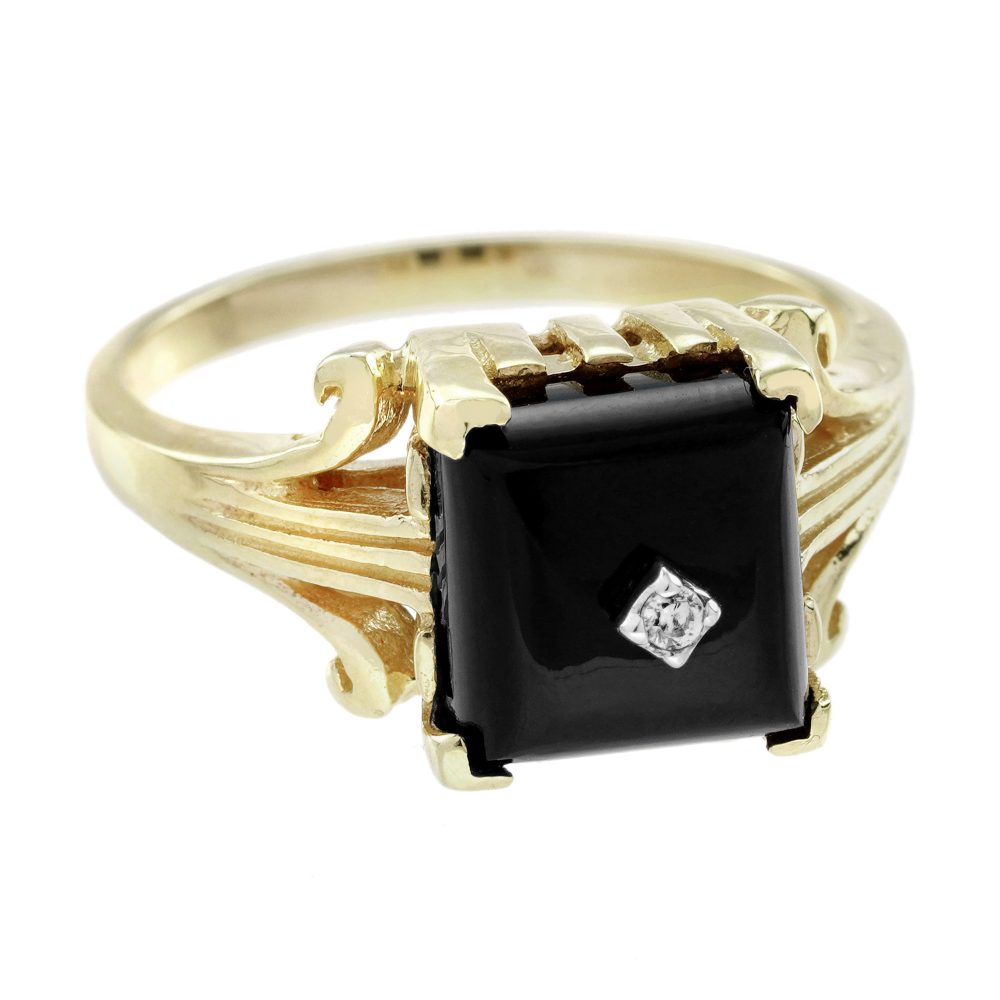
| Best settings | Bezel for rings worn daily; prong settings suit earrings, pendants, and occasional-wear rings |
| Cleaning | Warm, soapy water and a soft cloth; avoid ultrasonic and steam cleaners |
What Does Onyx Symbolize?
Where Onyx Meaning Comes From
The name onyx comes from the Greek onyx, meaning “fingernail” or “claw,” a reference to the pale, translucent bands within the stone that recall the color of a fingernail, according to Encyclopaedia Britannica. Ancient Greek and Roman lapidaries carved onyx into seals, cameos, and intaglios, prizing the stone’s banded structure for its ability to be cut so that a raised design in one layer stands out sharply against a contrasting layer beneath it — the same technique still used in cameo carving today.
Onyx meaning also has a specific, verifiable place in biblical history that is worth stating precisely, because it is frequently misreported. In the Book of Exodus, two onyx stones — distinct from the twelve stones of the priestly breastplate itself — were set into the shoulder pieces of the high priest’s ephod, each engraved with six of the names of the twelve tribes of Israel, “as memorial stones for the sons of Israel” (Exodus 28:9–12). The distinction between the ephod’s two onyx shoulder stones and the breastplate’s separate twelve stones is a detail many gemstone guides blur or omit.
- Mourning and remembrance. Onyx’s opaque black surface made it a defining material of Victorian mourning jewelry. Following the 1861 death of Prince Albert, Queen Victoria’s decades of formal mourning set a fashion for somber jewelry across Britain and its wider social circles, and onyx — alongside jet, dark tortoiseshell, and black enamel — became a standard material for the memorial brooches, lockets, and rings of the period, according to GIA.
- Protection, strength, and self-mastery. In present-day crystal lore, onyx is traditionally associated with grounding, personal strength, and self-discipline. This is a modern, popularly held association rather than a documented ancient belief, and — like every metaphysical claim in our guides — it is offered as tradition, not as a medical, psychological, or financial fact.
Taken together, onyx meaning rests on historical uses and traditional associations, ranging from genuinely ancient (seal-carving, the ephod stones) to nineteenth-century (mourning jewelry) to contemporary (crystal-lore symbolism). They explain why the stone has been chosen across very different eras. They are not claims about what onyx can do for your health, your relationships, or your finances, and we will not present them as such.
Is Onyx a Birthstone?
No. Onyx does not appear anywhere on the Jewelers of America birthstone list — not as an official stone for any month, and not among the alternates added in 1912, 1952, 2002, or 2016. This puts it in the same position as morganite and rose quartz: a gemstone with genuine market presence and jewelry history, but no assigned month on the modern list.
Onyx meaning is also sometimes linked to the astrological sign Leo in Western zodiac traditions, a separate and much looser system from the calendar-month birthstone list, and one with no single authoritative source. This zodiac association should not be confused with an official or alternate birthstone designation.
How Durable Is Onyx for Everyday Wear?
Durability is the part of onyx meaning that symbolism tends to leave out. Two properties decide whether a gem survives daily life, and they are not the same:
- Hardness (the Mohs scale) is resistance to scratching.
- Toughness is resistance to chipping, cracking, and breaking.
Onyx rates 6.5 to 7 on the Mohs scale — lower than diamond, sapphire, or ruby, but with good toughness, since chalcedony’s tightly interlocked microcrystalline structure has no cleavage plane to fail along. This combination places onyx below the worry-free durability tier occupied by the hardest gems, but well above brittle or cleavage-prone stones such as emerald or topaz.
| Tier | Stones | Mohs | Practical guidance |
|---|---|---|---|
| Daily wear, worry-free | Diamond, ruby, sapphire | 9–10 | Any setting, including open prong |
| Daily wear, sensible care | Aquamarine, morganite | 7.5–8 | Prong, halo, or bezel are all suitable; avoid deliberate impact |
| Occasional to regular wear | Onyx, garnet, peridot | 6.5–7.5 | Bezel settings recommended for rings worn daily; prong is fine for earrings and pendants |
| Protective settings only | Opal, pearl, coral | Below 6.5, or soft/brittle | Bezel or halo; prefer pendants and earrings over rings |
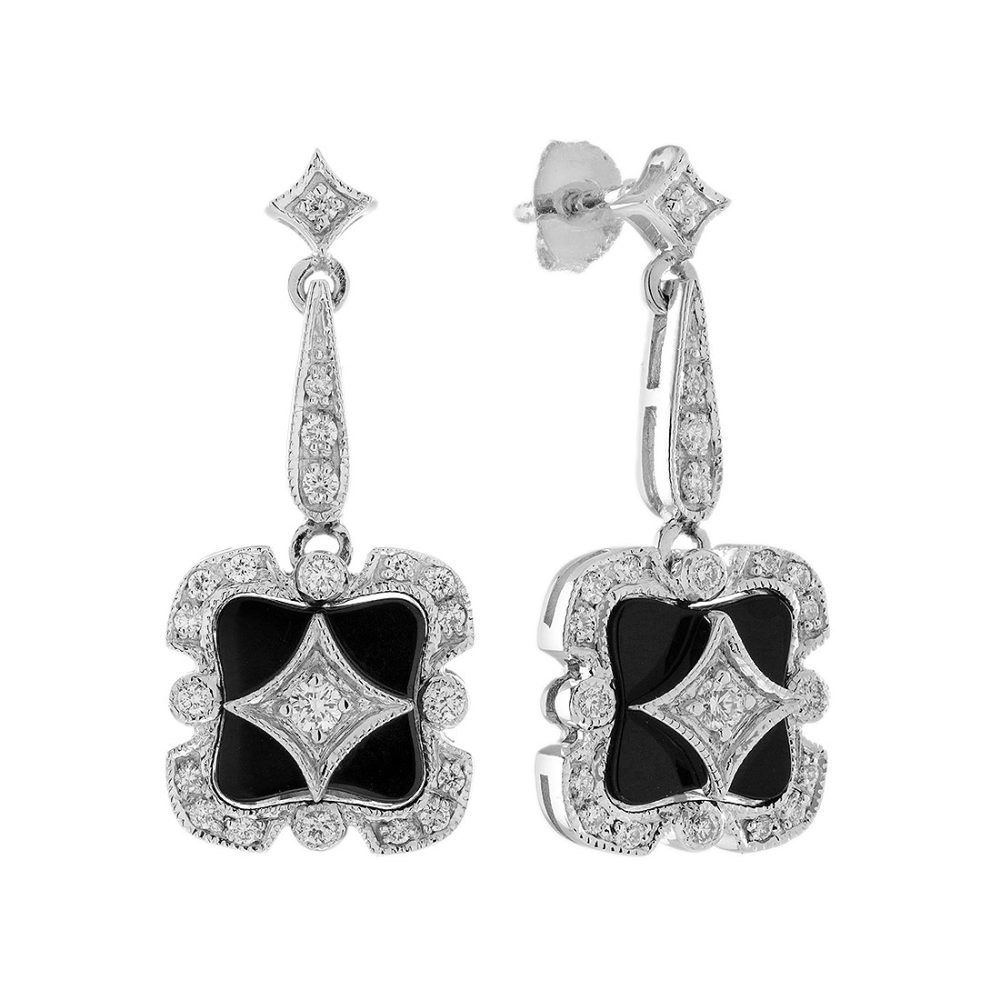
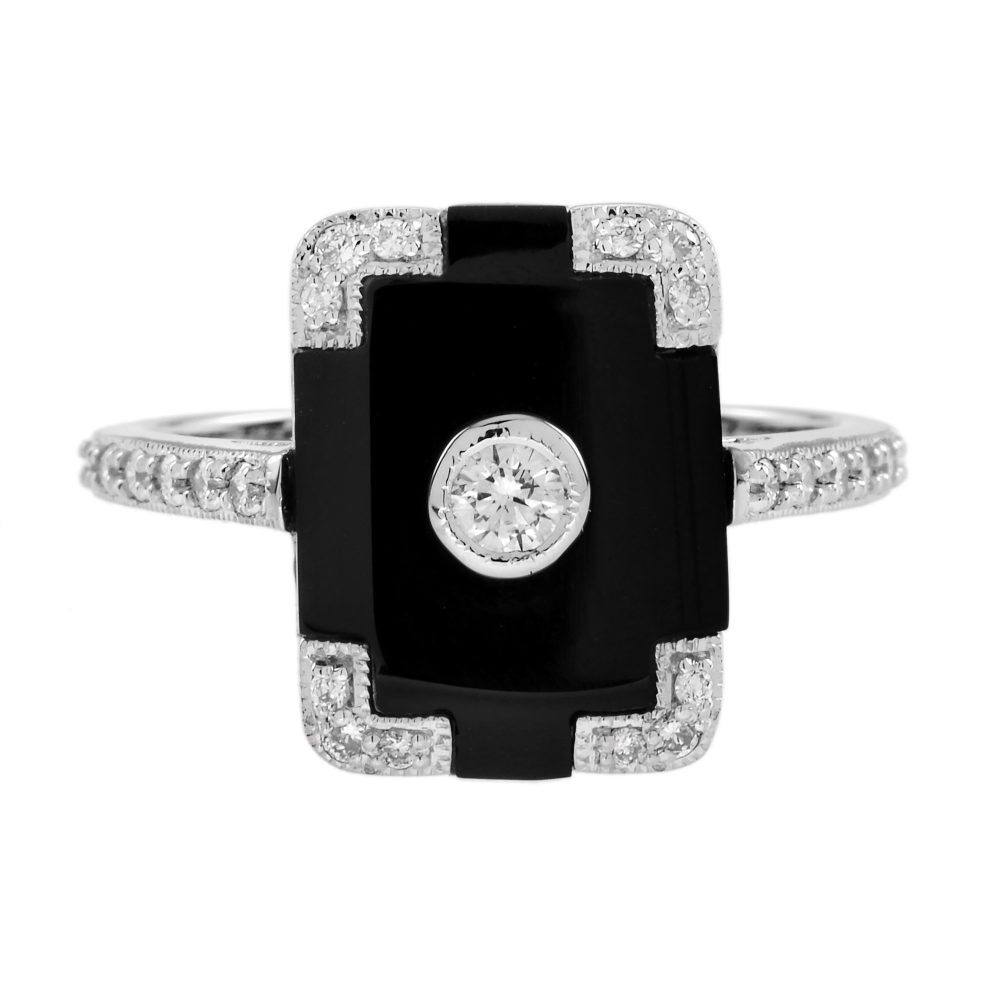
Workshop insight: In our own workshop, we bezel-set onyx cabochons and calibré-cut onyx accents alike, rather than relying on an open prong. A metal collar around the stone’s edge does double duty: it protects the girdle from everyday knocks, and it gives the black surface a crisp, unbroken outline against the metal — a finish that reads as more deliberately Art Deco than an exposed edge ever does.
Is Black Onyx Natural or Dyed?
In most cases, no — the black you see is not the stone’s original color, and this is the single most important qualification to place beside any discussion of onyx meaning. Genuinely black chalcedony occurring in nature is exceptionally rare, with authentic material historically sourced from only a handful of localities in India and Brazil. The overwhelming majority of black onyx in the jewelry trade is chalcedony or agate that has been treated to a uniform, opaque black.
Two treatment methods account for nearly all black onyx on the market:
- Sugar-acid carbonization. Porous chalcedony is soaked in a concentrated sugar solution, then immersed in sulfuric acid. The acid carbonizes the absorbed sugar, depositing fine carbon particles throughout the stone’s pores and producing a permanent black color. This process has been practiced commercially in Idar-Oberstein, Germany — historically the world’s center for agate cutting and treatment — since at least the nineteenth century, according to GIA’s history of gemstone treatments.
- Dyeing. Organic or synthetic dye is introduced into the stone’s microscopic pores, typically with heat or vacuum impregnation. Modern dyes are formulated to resist fading under normal wear.
Both methods are considered stable and are standard, accepted practice across the gem trade; GIA classifies carbonization as a long-established, permanent enhancement. What is inconsistent, industry-wide, is disclosure — a stone described simply as “onyx” at retail often gives no indication that its color is the result of treatment rather than nature.
Workshop insight: We treat “black onyx” as a description of an enhanced-color chalcedony, not an implicit claim of untreated material, and we say so plainly rather than let the name alone do the talking. The treatment itself is not a flaw — it has been standard practice for well over a century, and a well-treated stone is stable for a lifetime of wear — but a buyer should never have to guess.
How Is Onyx Used in Art Deco-Inspired Jewelry?
Onyx meaning acquired a distinctly modern layer during the Art Deco period of the 1920s and 1930s, when its glossy, opaque black became one of the era’s defining color notes. The style’s formal debut at the 1925 Paris Exposition Internationale des Arts Décoratifs et Industriels Modernes — the exhibition that gave Art Deco its name — showcased exactly the kind of bold, geometric contrast that onyx made possible against brilliant-cut diamonds and white metal.
Common Design Pairings
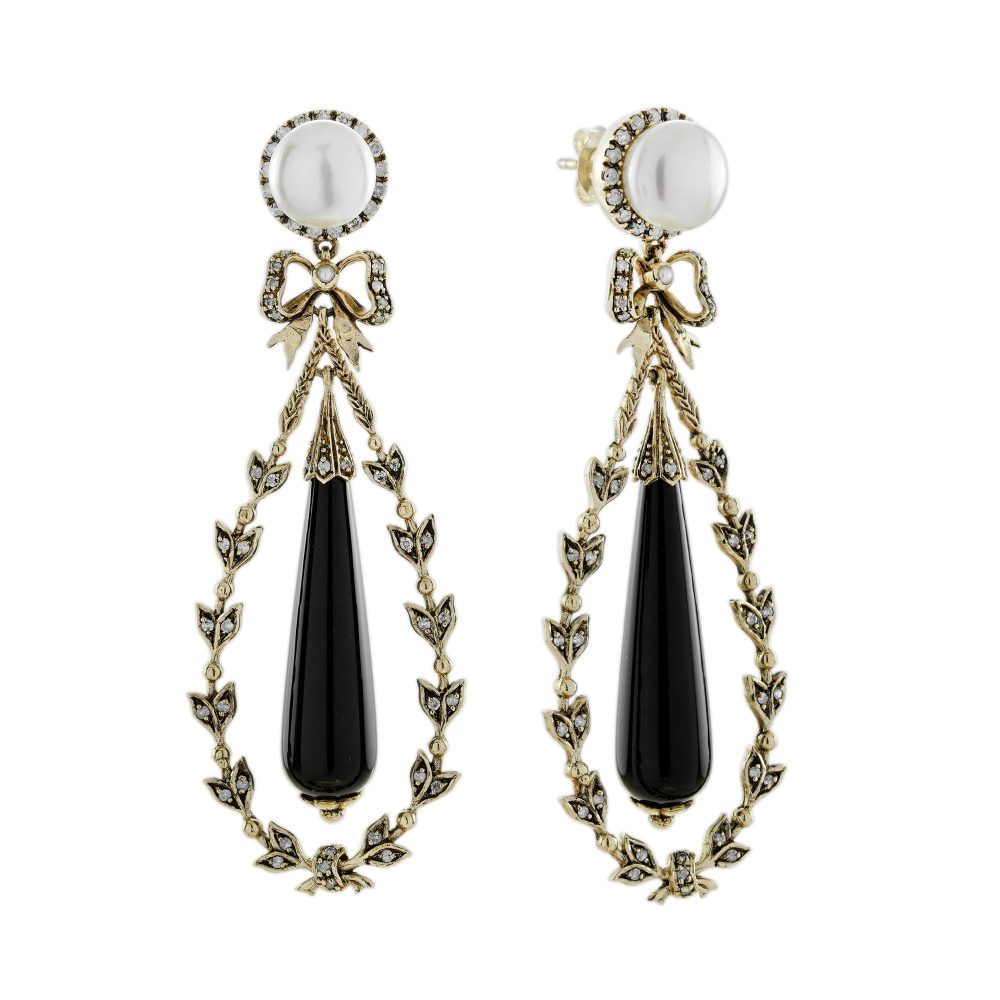
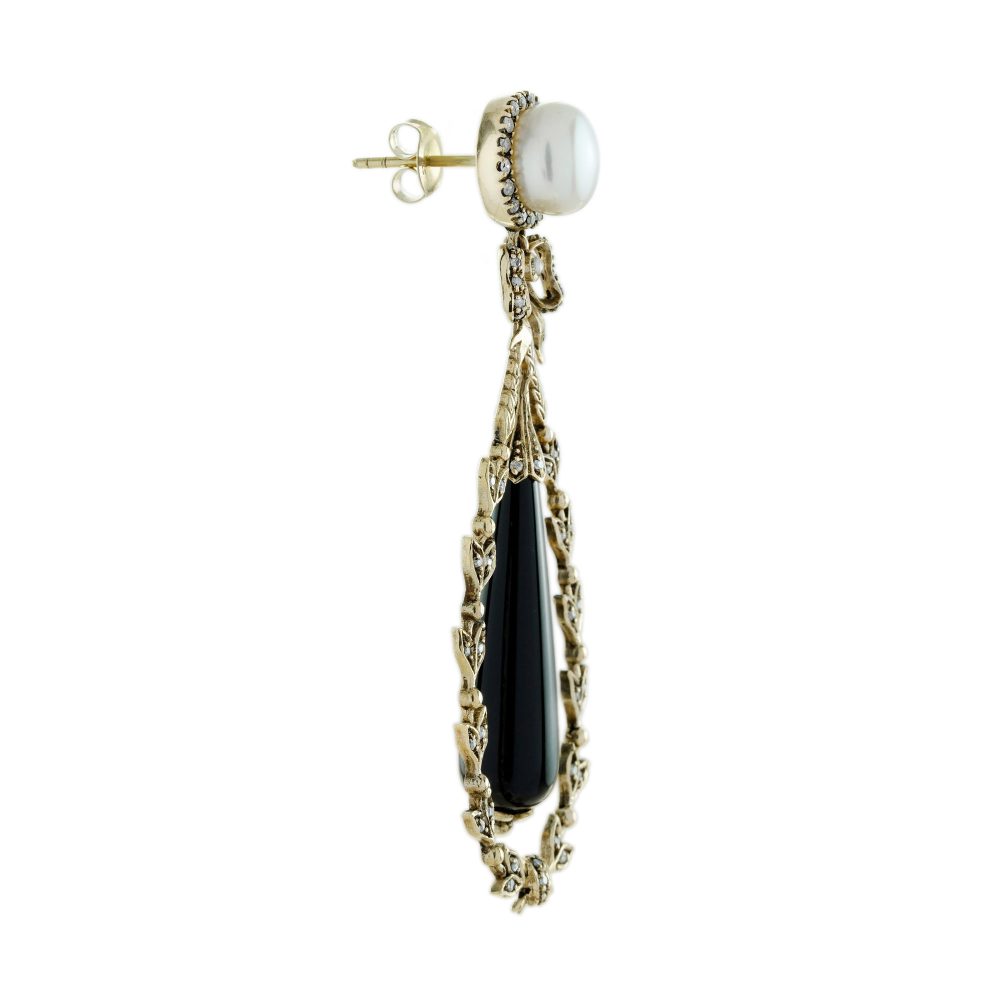
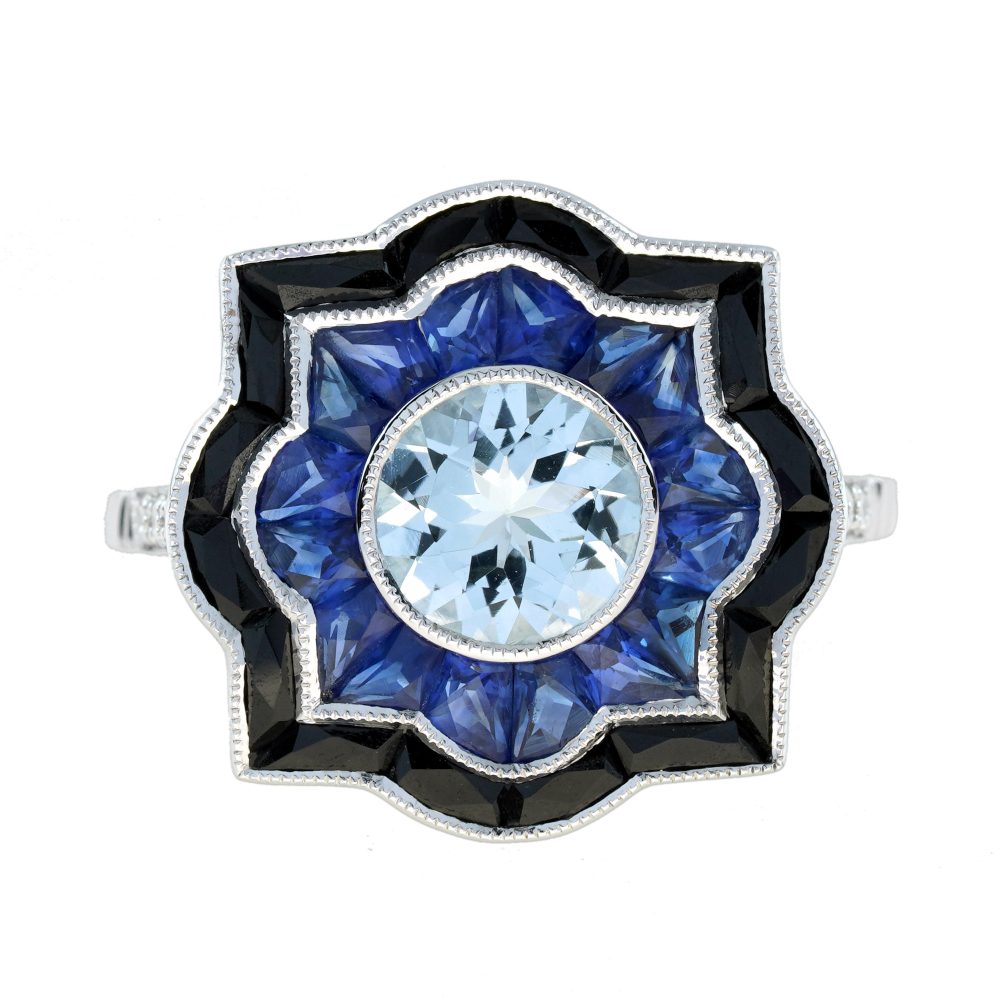
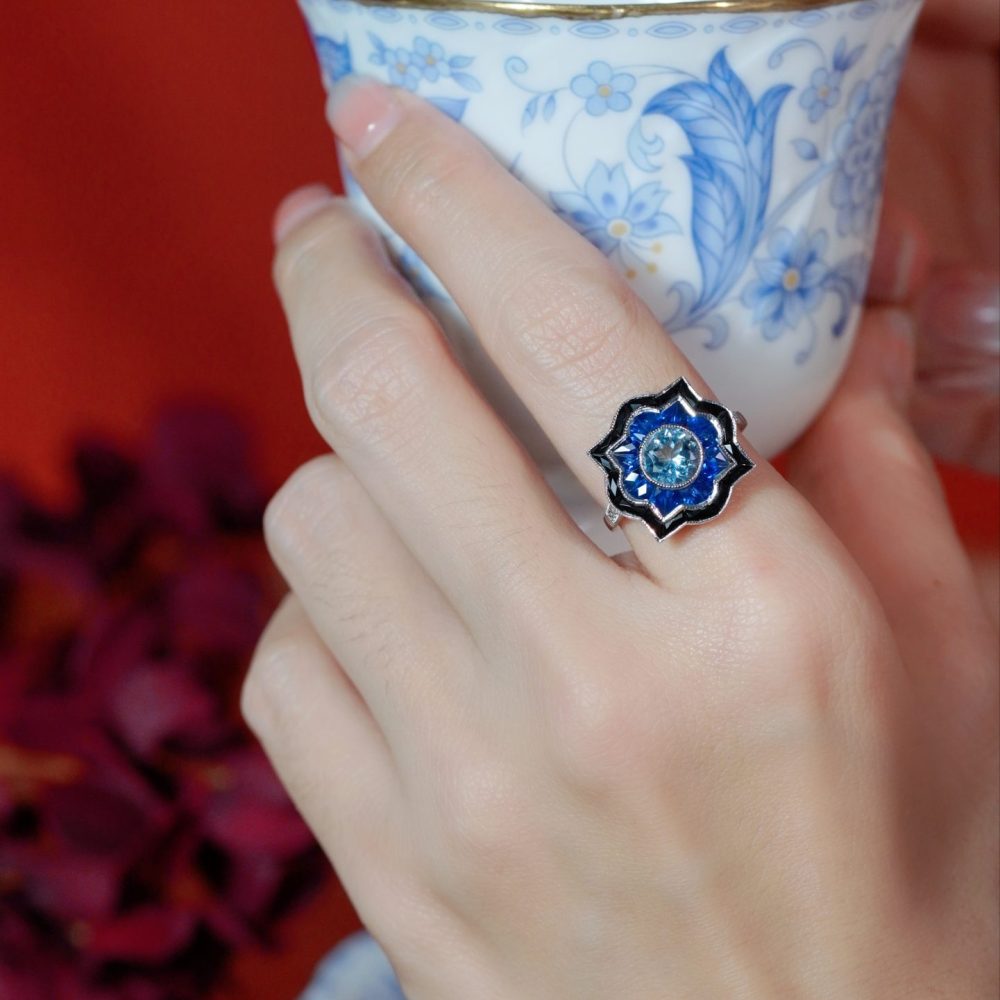
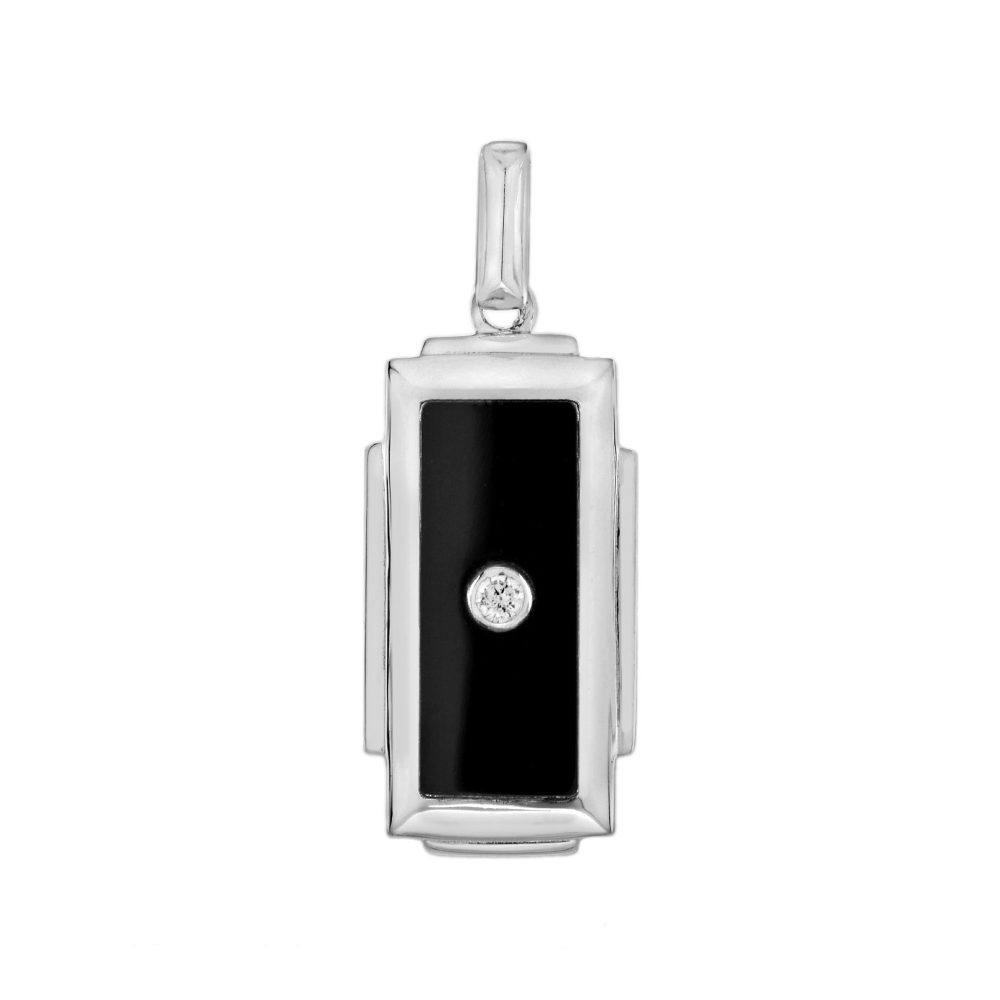
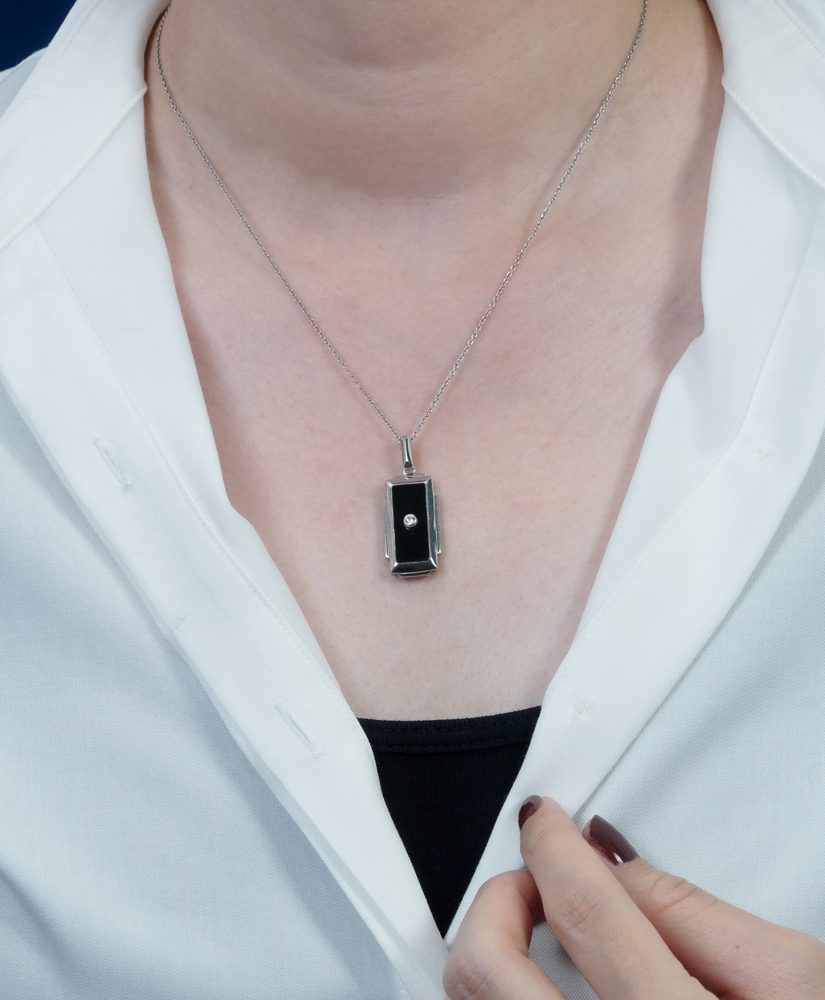
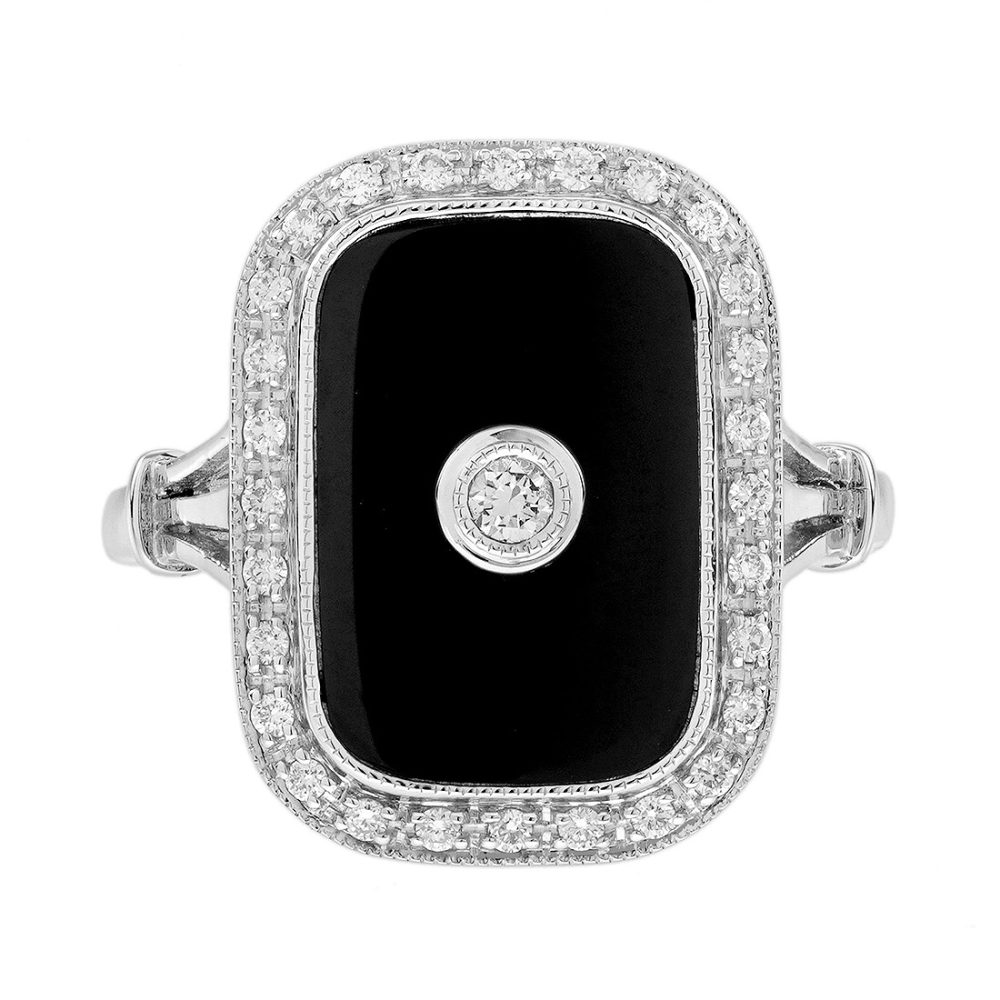
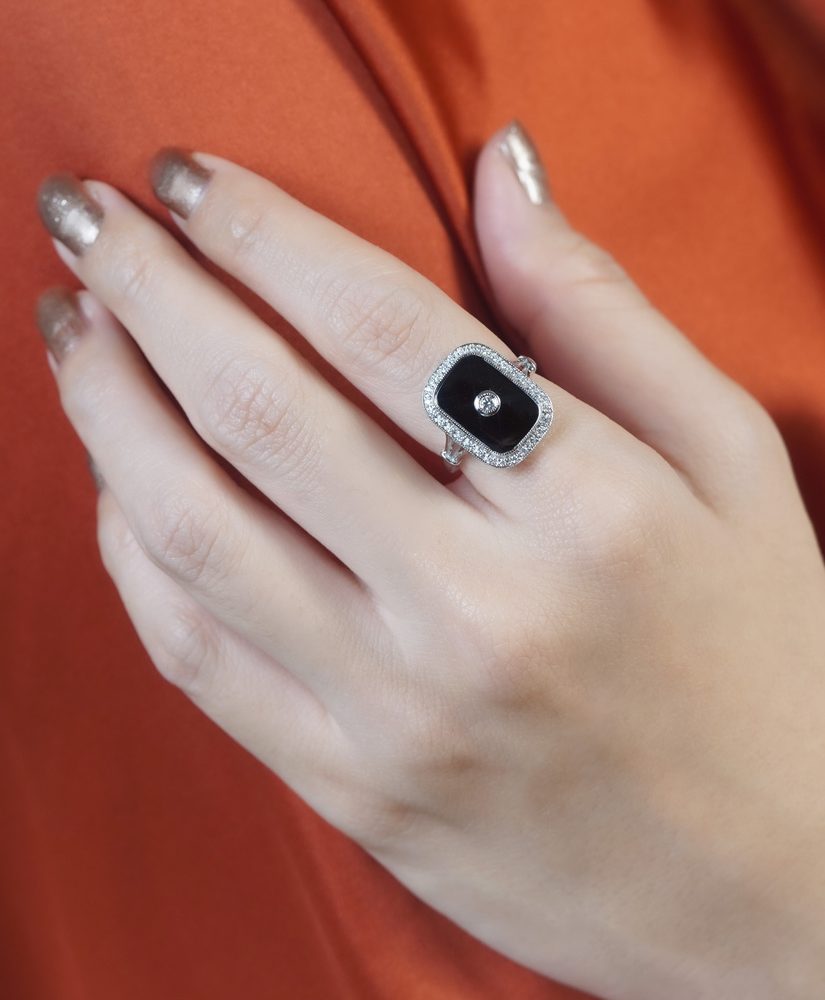
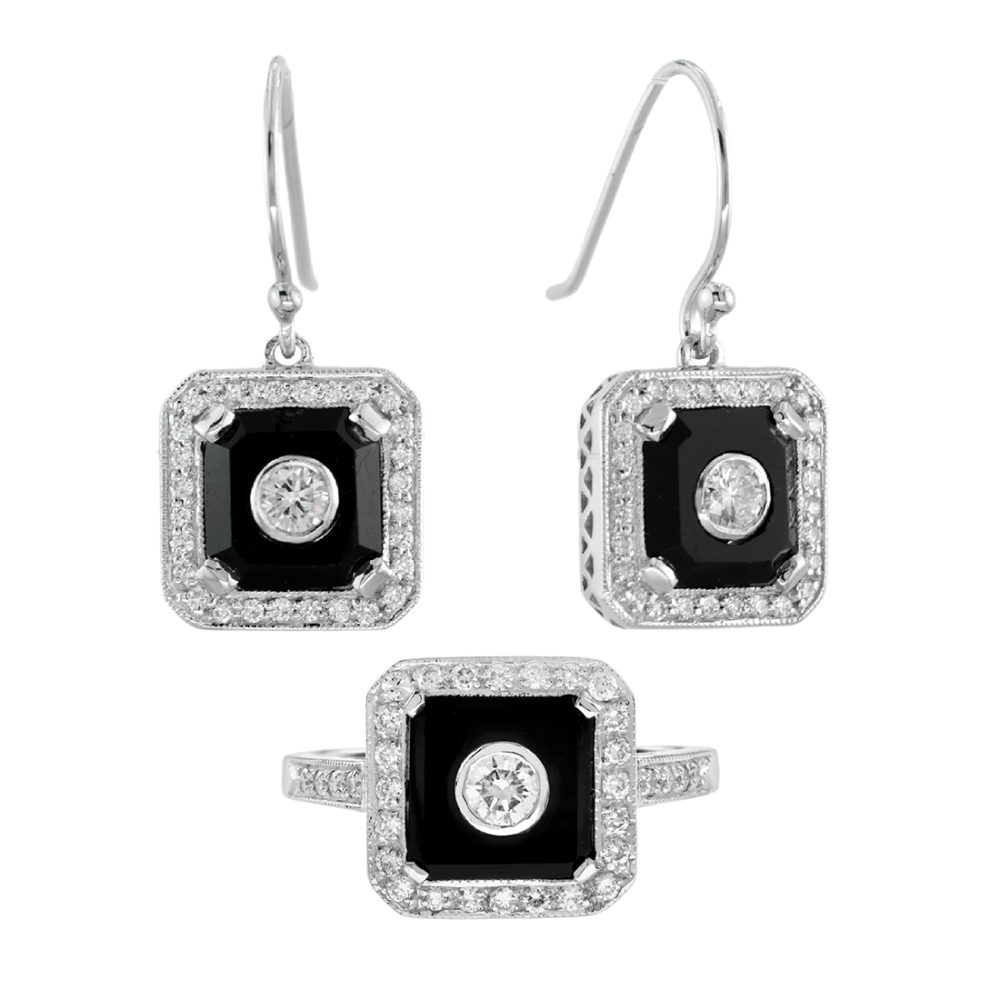
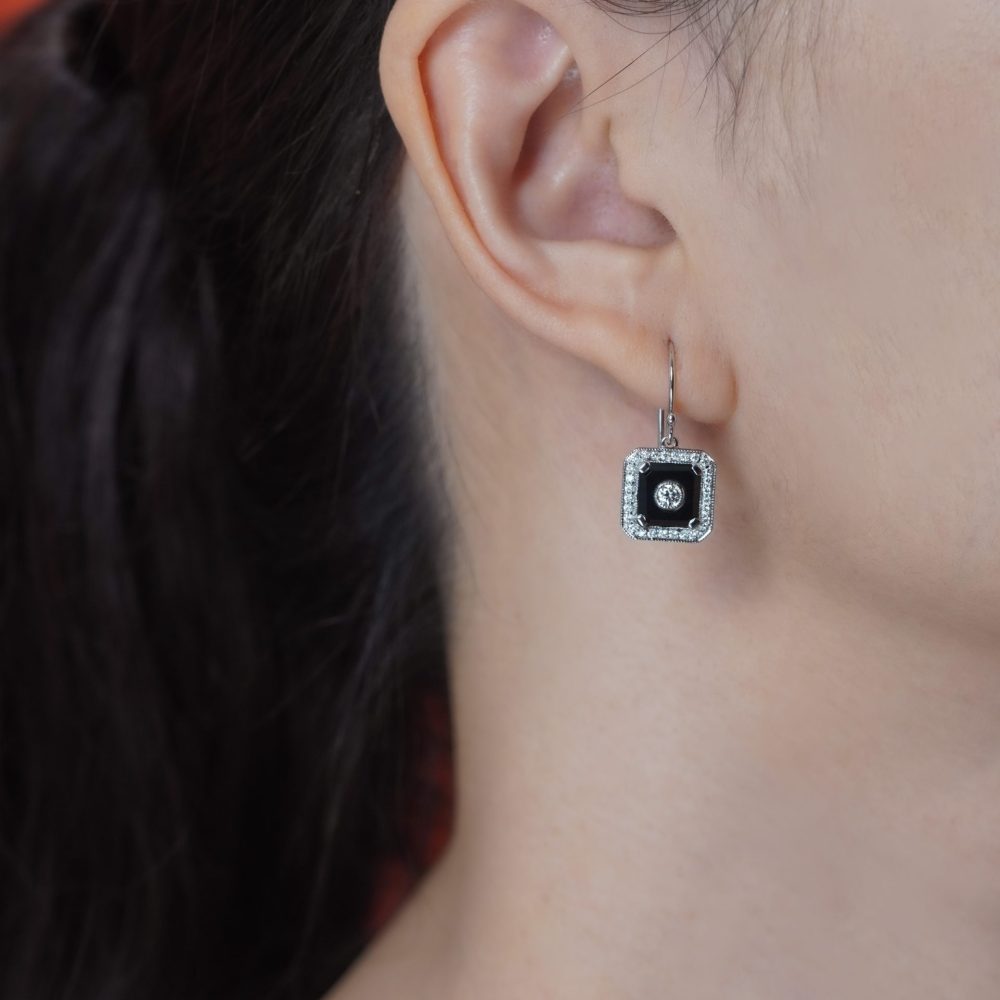
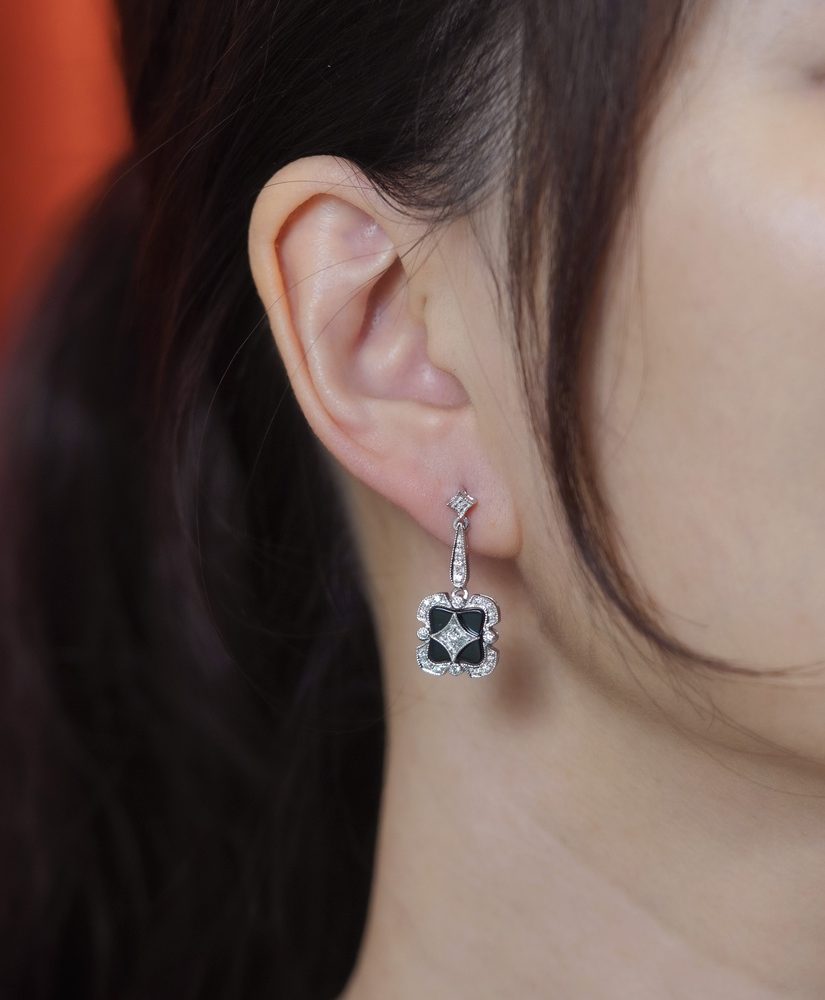
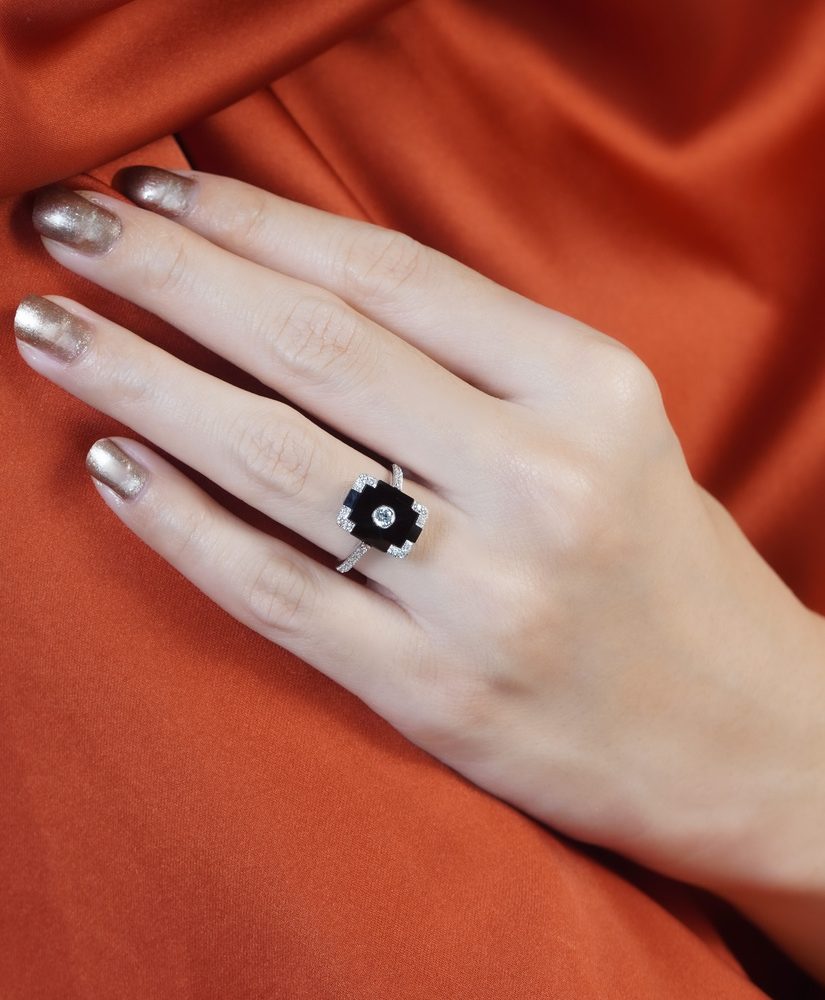
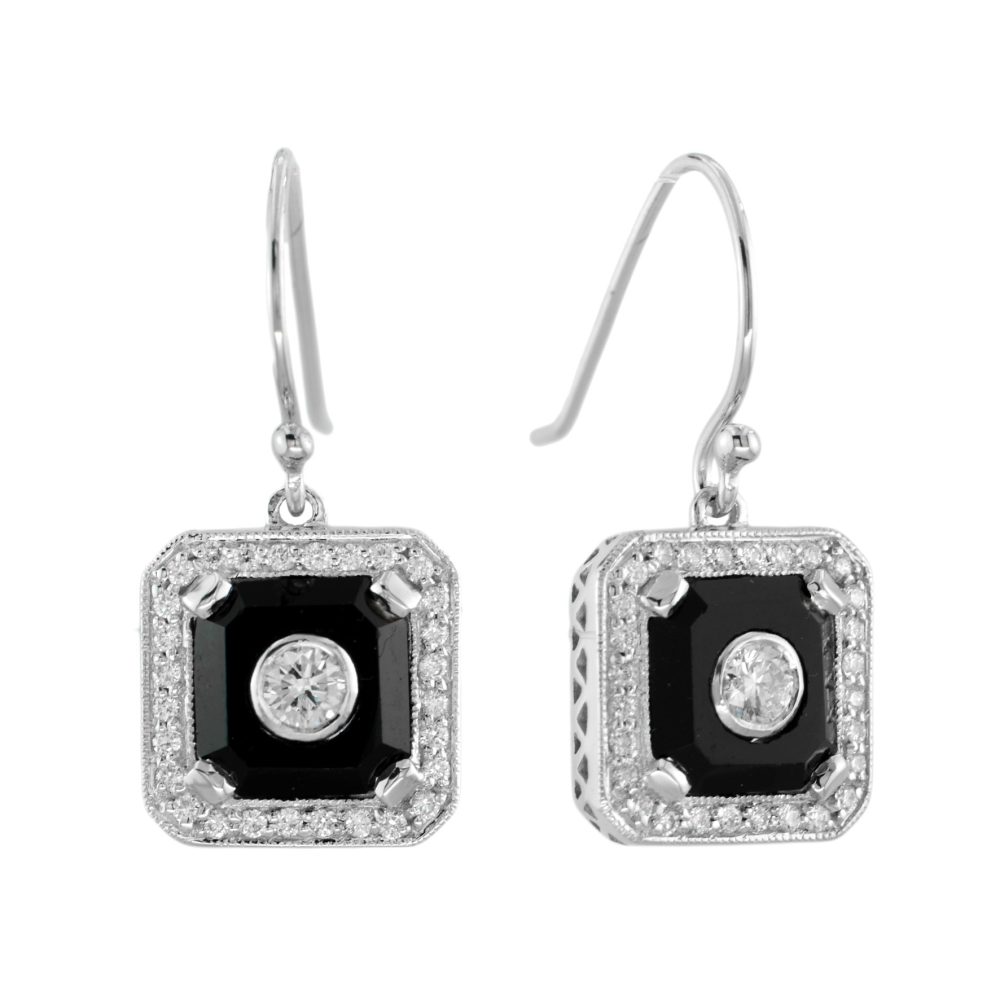
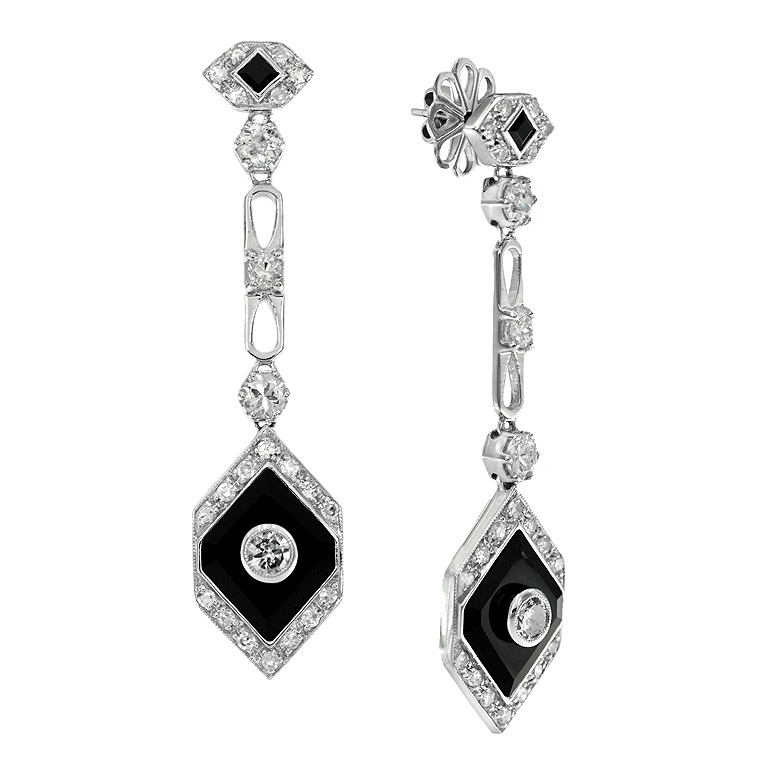
Onyx and diamond became one of the signature combinations of the period: calibré-cut onyx set into precise channels alongside diamond lines, geometric cocktail rings, and long, architectural pendant necklaces. Beyond jewelry for women, onyx was — and remains — a defining stone for men’s signet rings, cufflinks, and watch dials, where its flat, uniform black surface suits engraving and a restrained, tailored aesthetic. In our own workshop, onyx is frequently bezel-set or channel-set alongside diamond melee in yellow gold, white gold, or platinum, with the crisp geometry of filigree and stepped outlines giving the black-and-white contrast the architectural structure the period is known for.
Our own work is made with natural gemstones set in solid gold. Every piece is newly made and antique-inspired; it is not an antique, an estate piece, or a period original.
How Do You Choose a Fine Black Onyx?
- Color evenness first. Onyx meaning matters little if the stone carrying it is poorly graded. A fine black onyx shows a uniform, opaque black with no visible mottling, brown undertone, or translucent patches. Uneven color usually signals a lower grade of rough or an incomplete treatment.
- Polish and finish. Onyx is almost always cut as cabochons, beads, or flat calibré shapes rather than faceted. Look for a glassy, even polish — pitting or a dull, waxy surface both point to careless finishing.
- Precision of cut. Calibré-cut onyx, sized to fit a channel or line setting exactly, is a hallmark of Art Deco-style work. Visible gaps between the stone and its metal channel are a sign of imprecise cutting.
- Treatment, disclosed. As explained above, nearly all black onyx is carbonized or dyed. This is standard and stable, but it should be disclosed, not implied away by the name alone.
- Setting to match the wear. A ring worn daily benefits from a bezel that fully protects the stone’s edge; earrings and pendants have more freedom, since they see less contact wear.
How Do You Care for Onyx?
Care is where onyx meaning becomes a practical matter rather than a historical one. Clean onyx with warm, soapy water and a soft cloth or brush, then rinse and dry thoroughly. Because most black onyx owes its color to a carbonization or dye treatment concentrated in the stone’s surface-connected pores, we do not recommend ultrasonic or steam cleaners: the heat, vibration, and chemical exposure of these methods can, over time, affect a treated stone’s color in ways they will not affect an untreated gem.
Avoid prolonged contact with perfume, lotion, and harsh household chemicals, all of which can dull the polish or, in rare cases, interact with the treatment. Store onyx pieces separately from harder gemstones such as diamond or sapphire, since a Mohs 6.5–7 surface can be scratched by them in a crowded jewelry box. As with any fine piece, have the setting checked periodically by a jeweler to confirm the bezel or prongs still hold the stone securely.
What Should You Remember About Onyx?
Onyx meaning is best understood plainly: this is a banded chalcedony, prized since antiquity for seal-carving and documented in the Book of Exodus as the two onyx shoulder stones of the priestly ephod, adopted for mourning jewelry in the Victorian era, and reimagined as one of the defining materials of Art Deco design. Its present-day meanings of protection, strength, and self-mastery are a modern, popularly held tradition, offered here as such rather than as established fact.
What makes it a genuinely practical choice, and not simply a striking one, is equally plain: a Mohs rating of 6.5 to 7 with good toughness supports regular wear in a protective setting, and the black color itself is, in nearly every case, the result of a well-established, stable treatment that should be disclosed rather than assumed.
Chosen with an honest understanding of what onyx meaning rests on — and set, if it will be worn daily, in a bezel that protects its edge — onyx earns its place in a fine jewelry collection through millennia of documented use, not through a symbolism invented to sell it.
Sources: Encyclopaedia Britannica — Onyx · GIA — The Early History of Gemstone Treatments · GIA — Victorian Era Mourning Jewelry · Exodus 28:9–12 · Jewelers of America — Official Birthstone List
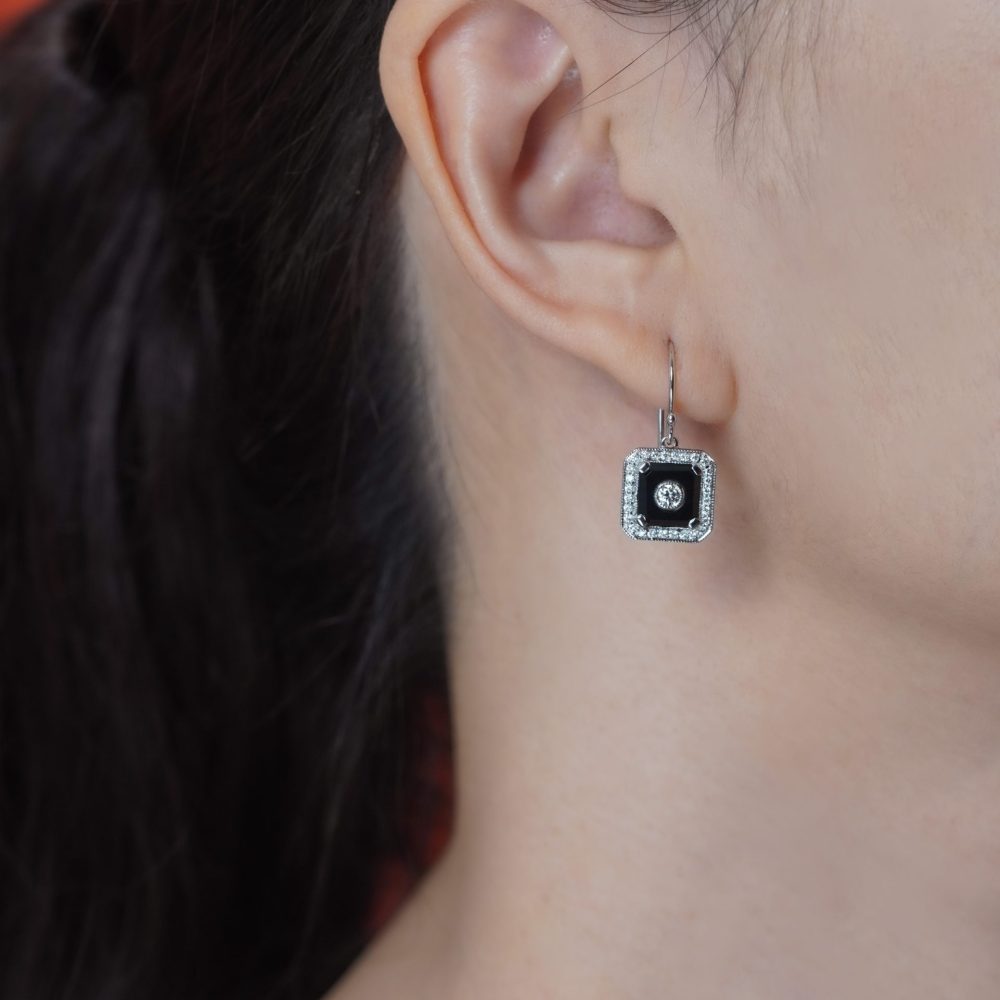
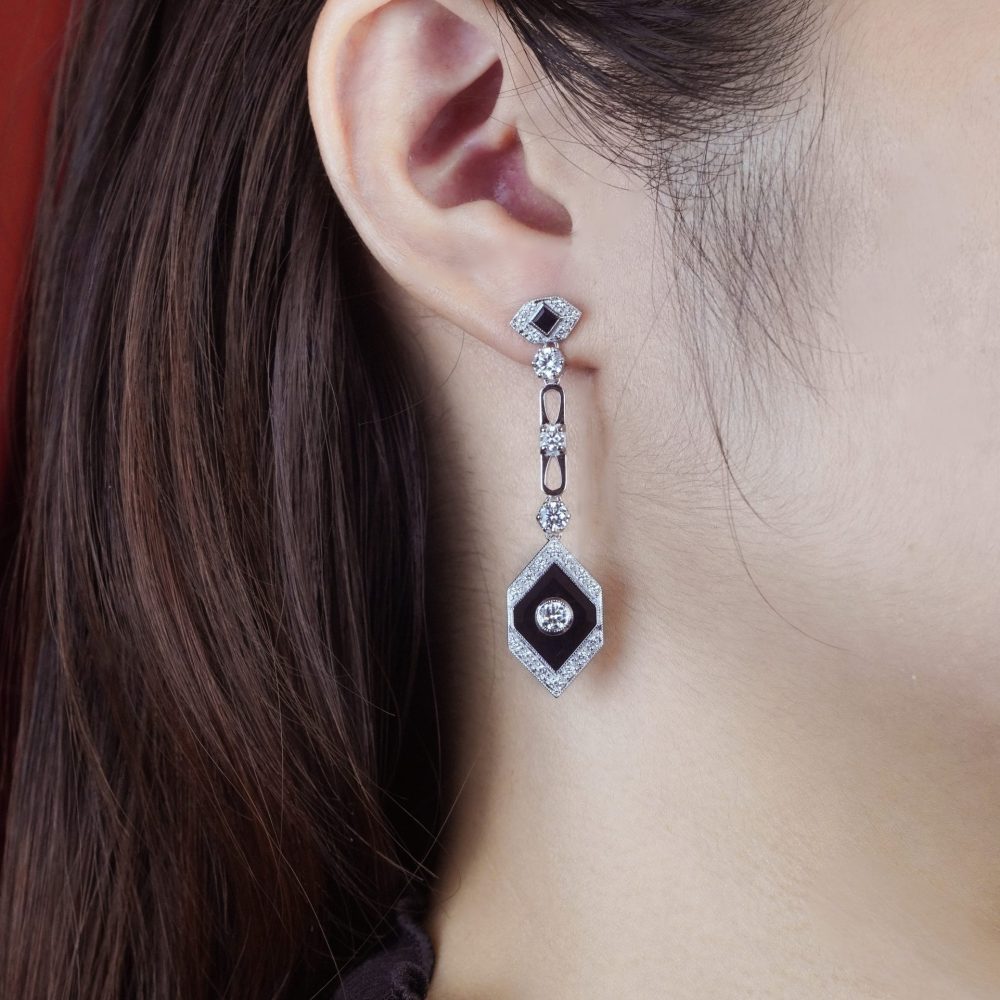
Dangle Earrings
White Gold
Frequently Asked Questions About Onyx Meaning
Is onyx a birthstone?
No. Onyx is not listed as an official or alternate birthstone for any month by Jewelers of America. It is sometimes associated with the zodiac sign Leo in Western astrology, a separate tradition with no single authoritative source, but this is not the same as an official birthstone designation.
Is black onyx natural or dyed?
Most black onyx sold today is treated. Genuinely black chalcedony occurring in nature is rare, so the color usually comes from sugar-acid carbonization or dyeing, both long-established, stable, and industry-accepted enhancements. We describe onyx as a color-treated stone rather than let the name alone imply an untreated gem.
What does onyx symbolize?
Onyx has been carved into seals and cameos since antiquity, named in the Book of Exodus as the two onyx shoulder stones of the priestly ephod, and adopted for Victorian mourning jewelry after Prince Albert’s death in 1861. Its present-day associations with protection and strength are a modern tradition, not a documented ancient belief.
Is onyx durable enough for daily wear?
Yes, with the right setting. Onyx rates 6.5 to 7 on the Mohs scale with good toughness, since it has no cleavage plane. A bezel setting protects the stone’s edge for a ring worn daily, while prong settings are practical for earrings and pendants, which see less contact wear.
How do you clean onyx jewelry?
Clean onyx with warm, soapy water and a soft cloth, then dry thoroughly. Avoid ultrasonic and steam cleaners, since the heat and chemical exposure can affect a treated stone’s color over time. Keep onyx away from perfume, lotion, and harsh chemicals, and store it separately from harder gemstones.