
Blog, Gemstone Guides
Opal Meaning, Play-of-Color & October Birthstone

Key Takeaways: Opal Meaning
- Opal traditionally symbolizes hope, creativity and individuality; these are cultural associations, not physical or medical effects.
- Play-of-color is the shifting spectral color produced by an ordered internal structure in precious opal; common opal does not display it.
- Opal is an official October birthstone alongside tourmaline and measures approximately Mohs 5–6.5.
- Its low toughness and water-bearing structure call for protective settings, controlled cleaning and care around impact, heat and sudden temperature change.
What Is the Meaning of Opal?
Opal traditionally symbolizes hope, creativity, individuality and the possibility of change. Its shifting play-of-color makes those associations visually persuasive rather than scientifically proven. Opal is also an official October birthstone, shared with tourmaline, and its delicate structure requires protective design and attentive care.
What Does Opal Symbolize?
Opal meaning has accumulated through observation, literature and personal tradition. Because a single stone can reveal red, green, blue, orange and violet as it moves, opal has often been treated as a gem of possibility: one material carrying many appearances. Hope, creativity, imagination, individuality and change are therefore coherent symbolic themes.
These themes are cultural associations rather than measurable effects. An opal does not create confidence, protect health or alter fortune. A jewel can still carry substantial meaning when the wearer connects its colors with an October birthday, a relationship, a new beginning or a creative life.
Opal has also attracted contradictory folklore. At different times it has been praised as fortunate, feared as unlucky and associated with qualities borrowed from the colors visible inside it. That disagreement is useful. It shows that symbolism is not a fixed property contained in hydrated silica; it is a language that communities and individuals place around the material.
For a personal jewel, the strongest interpretation is usually specific rather than universal. A vivid red flash might recall courage, a cool blue field might represent composure, or an irregular pattern might stand for an identity that resists repetition. The story should be presented as the wearer's meaning, not as a promise made by the stone.
At Lilly M. JEWELERS, our workshop treats symbolism as a design brief. We translate the intended idea into color orientation, proportion, metal and protective architecture. Meaning establishes why an opal belongs in a piece. Construction determines whether that meaning can be worn responsibly.
Why Is Opal an October Birthstone?
Opal is an official October birthstone on the modern US list maintained by Jewelers of America. Tourmaline is the other recognized stone for October. The two options are materially different: opal is hydrated silica known for play-of-color, while tourmaline is a crystalline mineral group valued for a broad range of body colors.
The shared month is not a contradiction. Modern birthstone lists include several months with more than one recognized stone, giving the wearer a choice based on color, durability, personal history and design. The Lilly M. JEWELERS birthstones-by-month guide places October within that wider calendar.
Opal makes an especially direct birthday symbol because its appearance can be singular. No two patterns are precisely alike, and the stone may reveal different colors under different viewing angles. Tourmaline offers greater scratch resistance and can be more practical for frequent-wear rings; opal offers an optical event that is difficult to reproduce in another gem.
An October birthstone jewel can therefore be chosen on two levels. The first is calendar identity: it records a birth month, anniversary or person. The second is material suitability: it considers where the jewel will be worn, how often and under what conditions. A birthstone should not be selected by date alone when the intended format exposes it to daily impact.
The official list establishes the association. It does not establish value, quality or suitability for every setting. Those decisions still depend on the individual opal and the proposed piece.
What Creates Opal Play-of-Color?
Play-of-color is the shifting display of spectral colors seen in precious opal as the stone, light source or viewer moves. The effect is not dye suspended inside the gem. It arises when light interacts with a sufficiently ordered arrangement of microscopic silica spheres and the spaces between them.
That internal structure separates light into visible colors through diffraction and interference. The size and arrangement of the spheres influence which colors can appear. Larger structural spacing can produce longer-wavelength colors such as orange and red, while smaller spacing may favor blue and green. Order matters as much as size: irregular arrangements scatter light without producing the same directional spectral display.
This distinction separates precious opal from common opal. Precious opal displays play-of-color. Common opal can have attractive body color, translucency or pattern, but it does not show the spectral flashes that define play-of-color.
Play-of-color must also be distinguished from body color. Body color is the underlying appearance of the opal when the moving flashes are considered separately. It may be light, dark, colorless, orange, brown or another hue. A dark body tone can create stronger visual contrast, but the term "black opal" refers to body tone rather than a stone that is uniformly black.
Workshop insight: Opal should be judged in motion, not from one face-up photograph. At the bench, we rotate the stone through ordinary viewing angles and light directions. A spectacular flash that appears only at an impractical angle may contribute less to a wearable jewel than a slightly softer pattern that remains visible across the hand's natural movement.
Photography can emphasize or suppress the phenomenon. Evaluation should therefore include neutral diffused light, directional light and several angles, without assuming that one saturated image represents every viewing condition.
How Do the Main Opal Descriptions Differ?
Opal vocabulary combines structure, body tone, transparency, color and assembly. The terms are not interchangeable, and one stone can legitimately carry more than one description.
| Description | What It Identifies | Play-of-Color | Important Distinction |
|---|---|---|---|
| Precious opal | Optical behavior | Present | Includes opals with many body tones and transparency levels |
| Common opal | Optical behavior | Absent | May still have attractive body color or translucency |
| White or light opal | Light body tone | May be present | Body tone does not state origin or treatment |
| Black or dark opal | Dark body tone | May be present | "Black" describes the background, not a uniformly black gem |
| Crystal opal | Transparent to semitransparent appearance | Usually present in trade usage | "Crystal" here does not mean opal has a crystalline mineral structure |
| Fire opal | Yellow, orange or red body color | May be present or absent | Body color and play-of-color are separate observations |
| Boulder opal | Opal naturally attached to host rock | Often present | Matrix is part of the natural material |
| Doublet or triplet | Assembled construction | Usually selected to display it | Must not be represented as a single solid opal |
Geographic names add another layer. Australian, Ethiopian and Mexican opals can have recognizable market associations, but origin should be stated only when supported. Appearance alone is not a reliable origin report. Some Ethiopian opal is hydrophane, meaning that it can absorb water and temporarily change transparency or color; the precise behavior belongs to the individual stone and should not be generalized to every opal from a region.
Names should help a buyer understand what is present. They should not be used as shortcuts for quality. A light opal may have exceptionally bright and well-distributed color, while a dark body tone cannot compensate for weak play-of-color. Fire opal can be valued for saturated body color even when spectral play is absent.
The most useful product description separates four questions: Is play-of-color present? What is the body tone and transparency? Is the material solid or assembled? Is an origin or treatment claim documented? Precision at this stage prevents the poetic language of opal from obscuring its physical identity.
What Determines an Opal’s Quality and Visual Character?
There is no single grade that explains every opal. Evaluation is a relationship among play-of-color, pattern, brightness, body tone, transparency, cut, condition, size, assembly, treatment and documentation.
Brightness asks how strongly the colors appear under reasonable lighting. Color range considers which spectral colors are visible. Red can be less common within the phenomenon, but rarity of one hue does not automatically make a poorly composed stone more desirable than a vivid green-and-blue opal.
Pattern describes the arrangement and scale of the color areas. Broad flashes, pinfire, rolling flash and mosaic-like fields create different visual rhythms. Trade names can be useful, but they should follow the visible structure rather than replace it. Pattern is strongest when it supports the stone's outline and remains legible as the jewel moves.
Body tone and transparency affect contrast. A dark background can make color appear intense; a transparent or semitransparent stone can create depth. Neither characteristic guarantees quality by itself. The whole stone must be observed, including areas where the play-of-color weakens.
Cut and orientation are critical because opal's optical structure is directional. Most precious opal is shaped as a cabochon to preserve material and display color. The cutter decides which plane becomes the face, how high the dome should be and whether inclusions, potch or host rock remain. A good outline gives the setting a coherent border without sacrificing the strongest color layer.
Condition must be examined carefully. Crazing is a network of cracks related to internal stress and moisture instability. Surface scratches, chips and existing fractures also affect wearability. A photograph taken from one angle can conceal these issues.
Assembly, treatment and origin influence identity and disclosure. A doublet can offer an attractive display and practical use, but it is not equivalent to solid opal. A stated geographic origin may affect market perception, yet it requires support. No quality factor should be converted into a promise of future financial return.
At our workshop, we begin with the viewing experience and then work backward into setting design. The most suitable opal is not merely the brightest loose stone. It is the stone whose color direction, outline, thickness and vulnerable edges can be integrated into a secure piece.
How Durable Is Opal for Jewelry?
Opal measures approximately Mohs 5–6.5. The Mohs scale describes resistance to scratching; it does not measure resistance to breaking. Opal also has poor toughness and can chip, crack or craze. Its composition as hydrated silica, with approximately 3–21 percent water and commonly about 6–10 percent, contributes to its sensitivity to severe heat and rapid environmental change.
| Jewelry Format | Relative Exposure | Workshop Guidance |
|---|---|---|
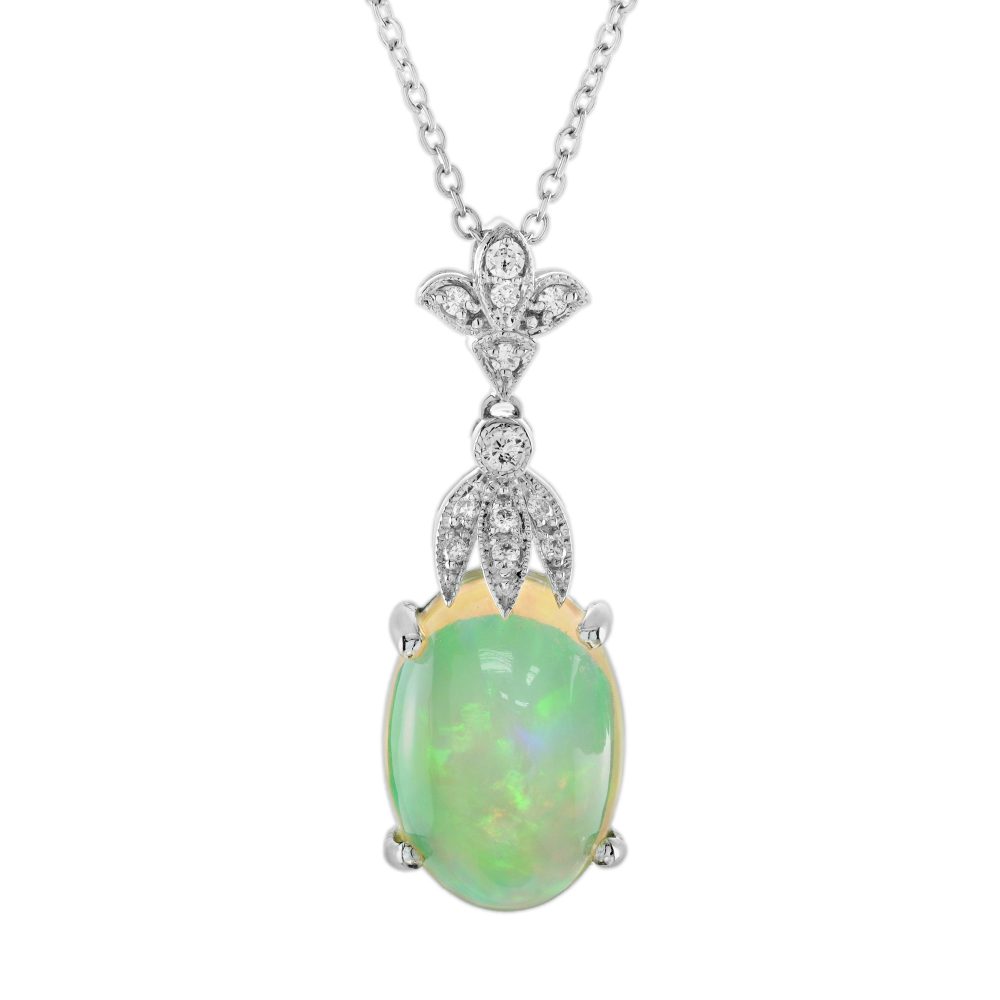
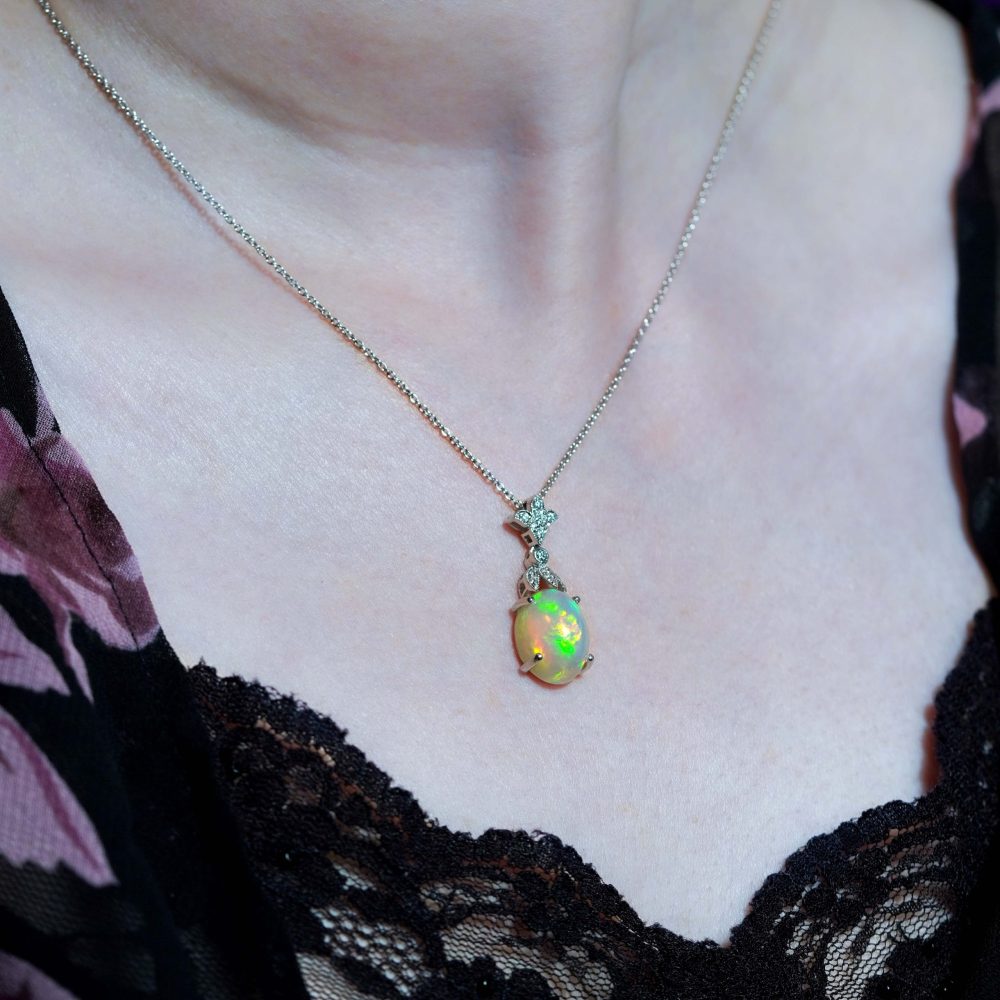
| Pendant | Low to moderate | A strong choice when the stone is protected from hard edges and swinging impact |
| Earrings | Low | Often suitable because they encounter less abrasion and impact than rings |
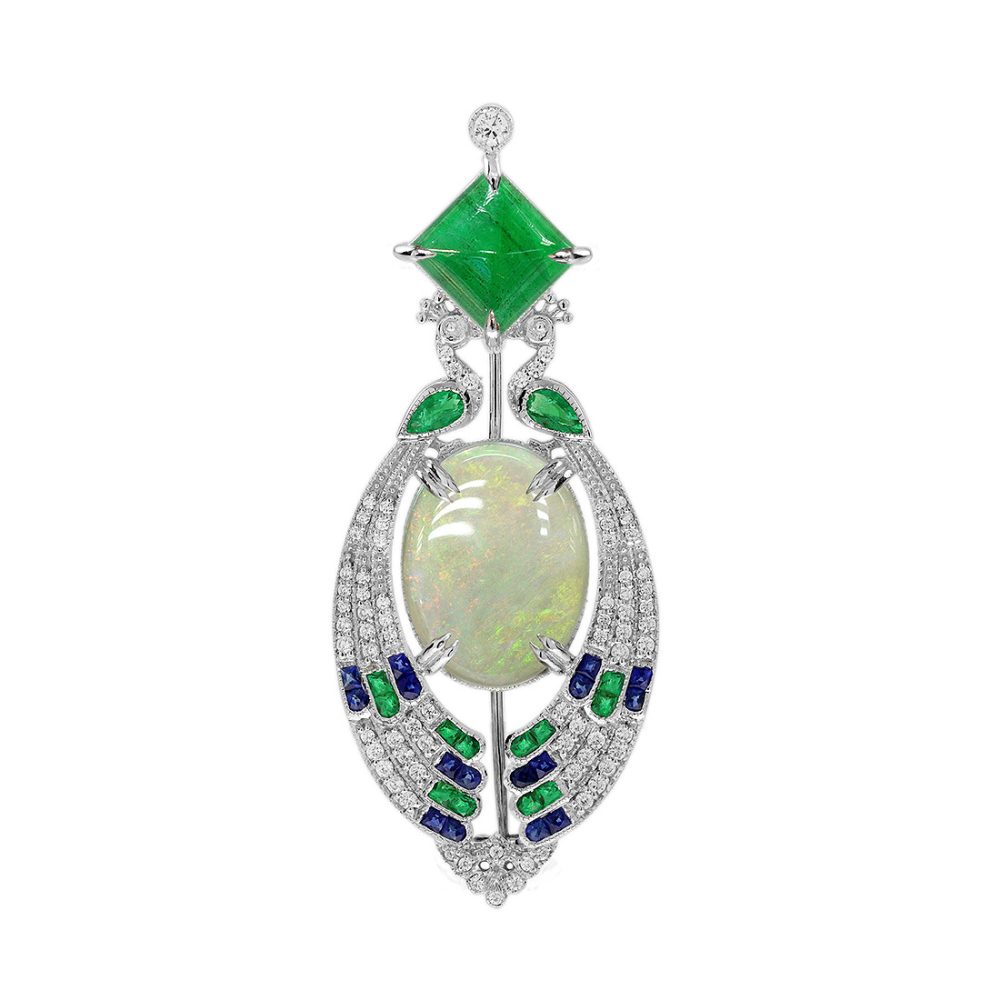
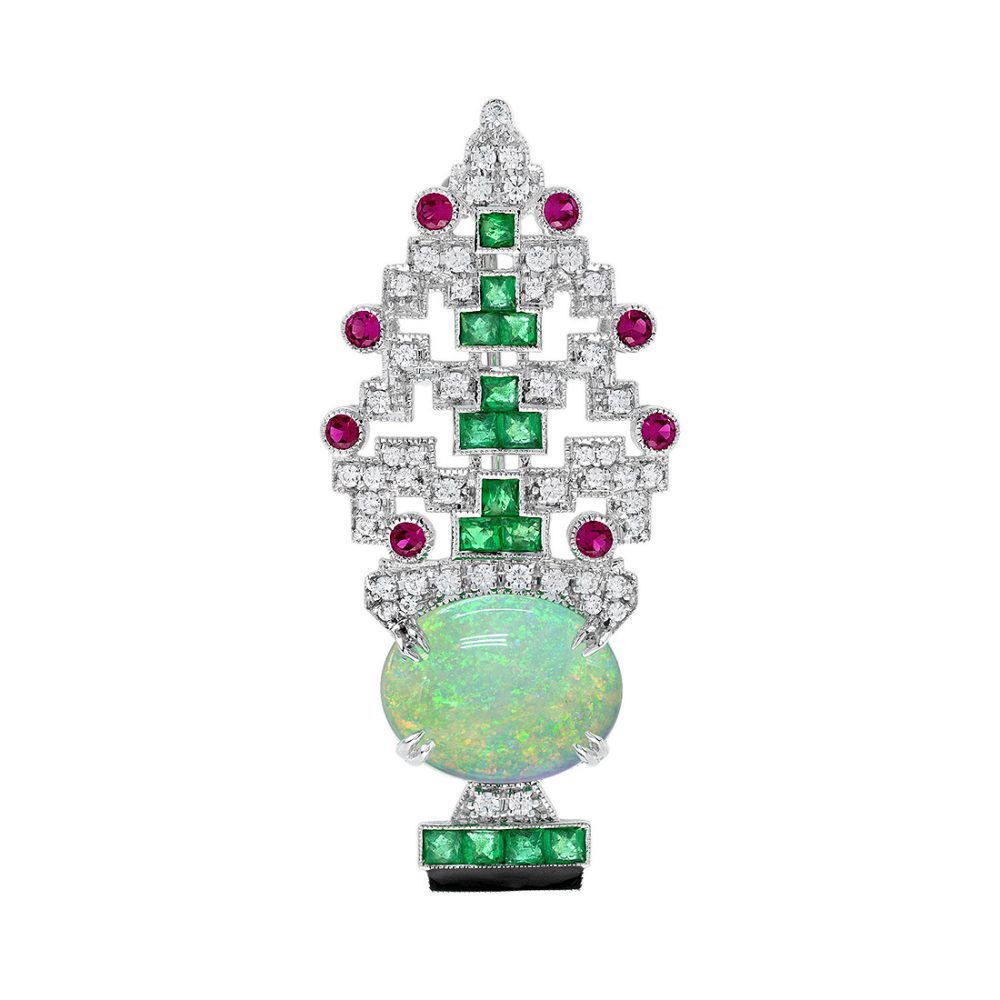
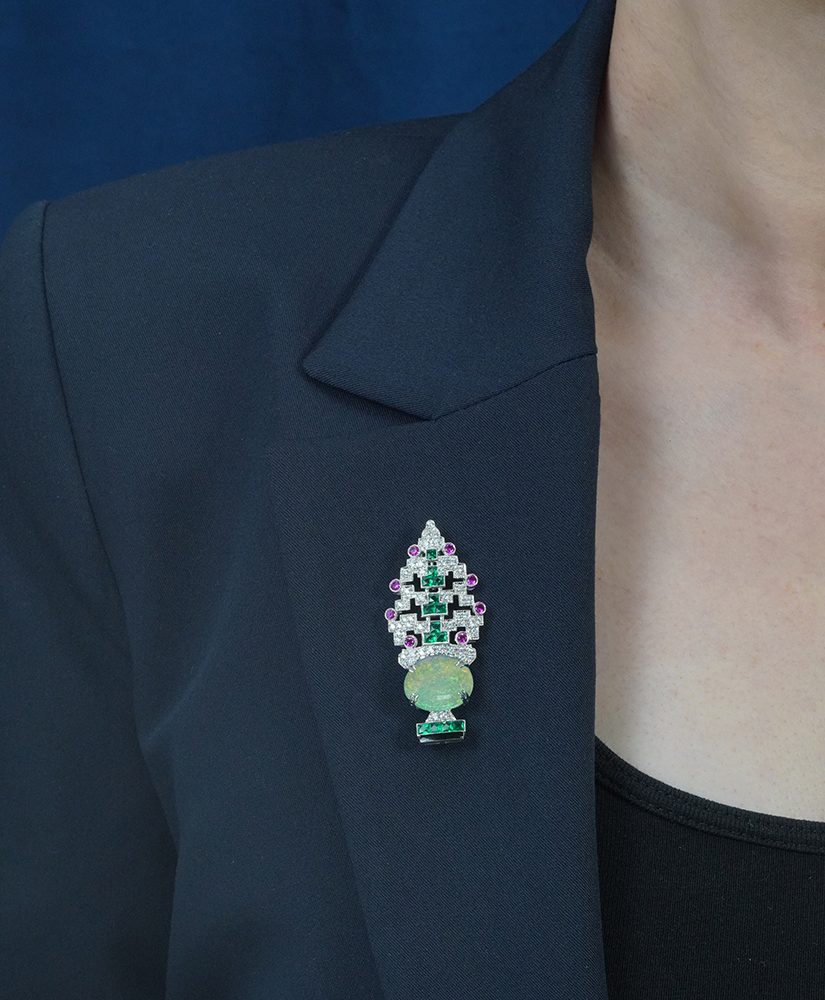
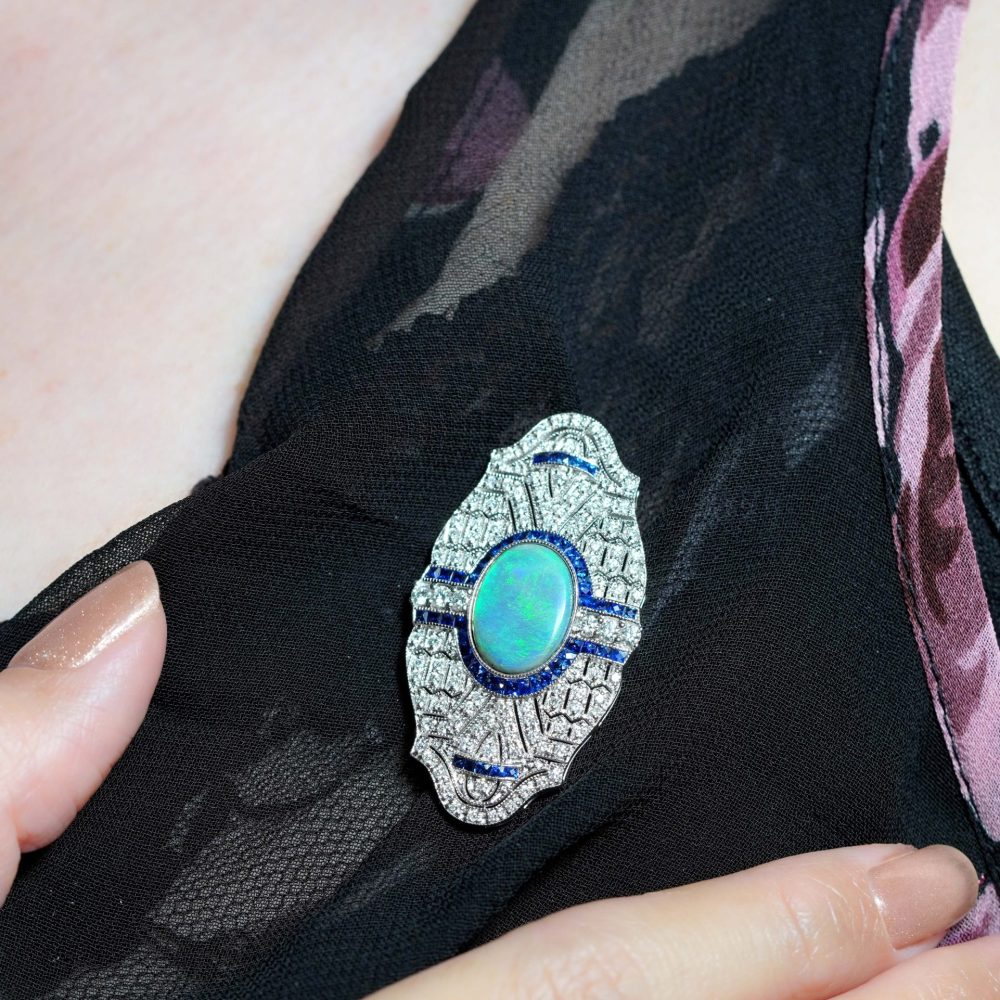
| Brooch | Low to moderate | Suitable when the clasp is secure and the stone does not strike hard surfaces |
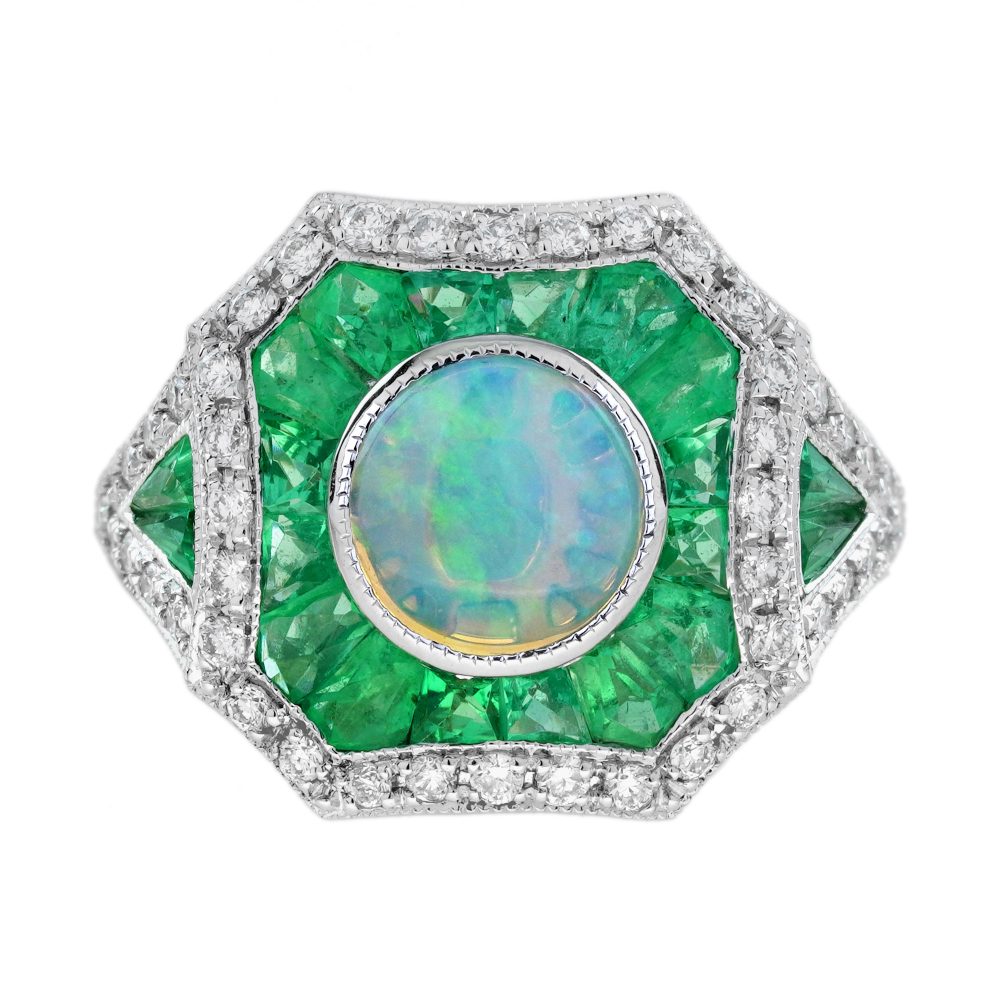
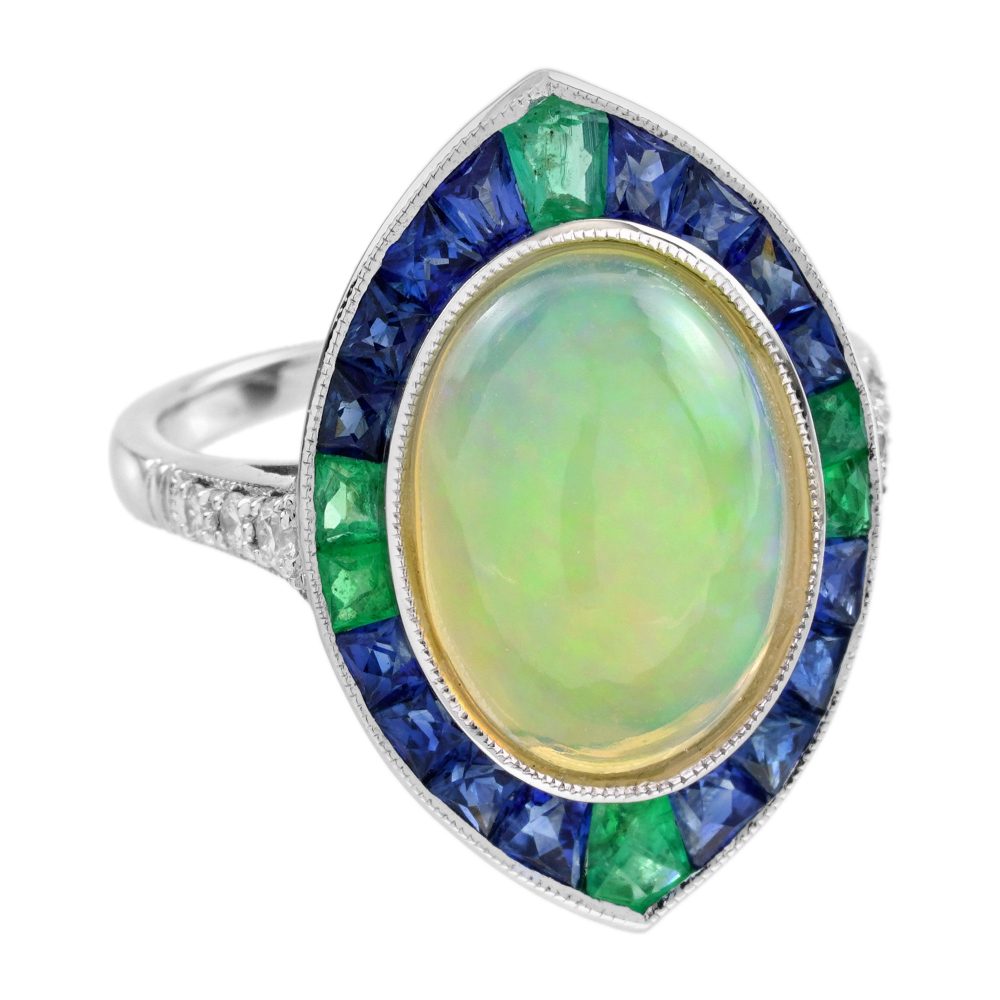
| Occasional-wear ring | High | Use a bezel, halo or other protective perimeter; remove for manual tasks |
| Daily-wear ring | Very high | Generally not our preferred use unless the wearer accepts restrictions and regular inspection |
| Bracelet | Very high | Requires substantial protection because wrists frequently contact desks, doors and other surfaces |
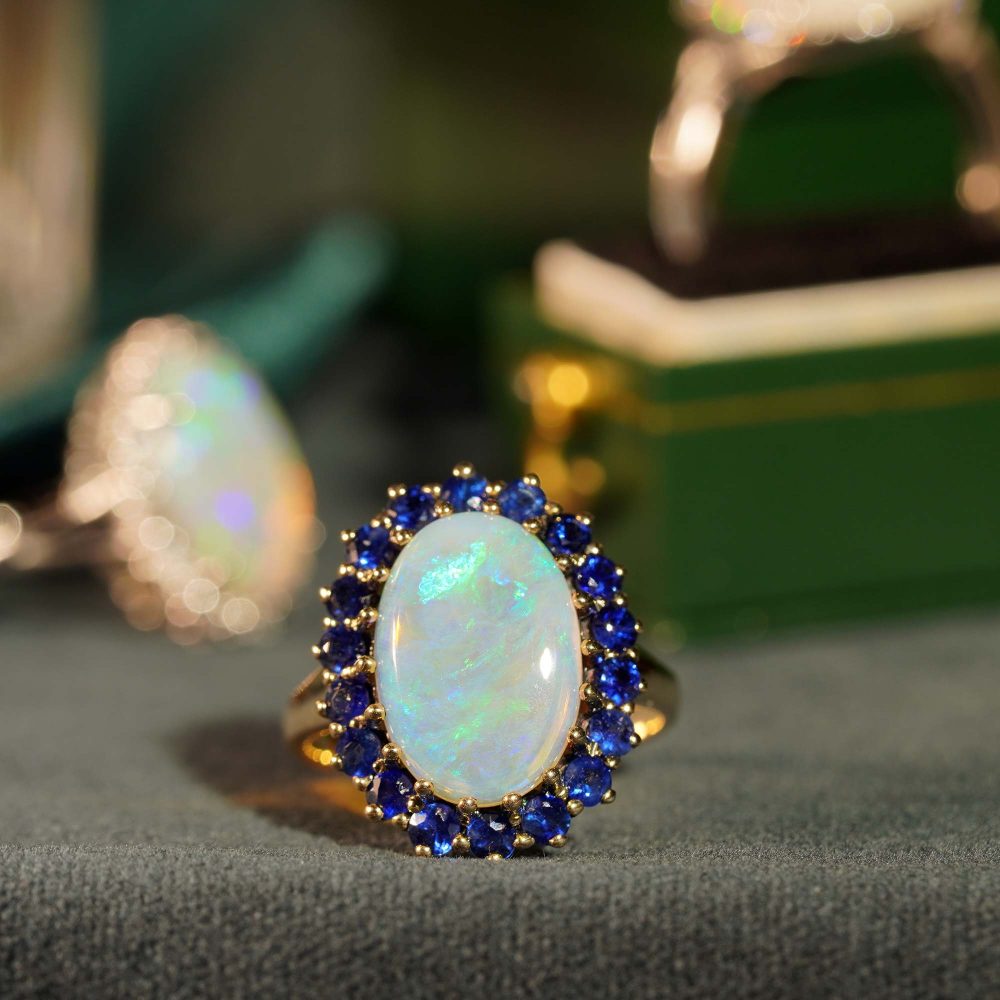
A bezel can shield the girdle, but no setting makes opal indestructible. A high dome still projects above the metal. A halo can create a buffer, yet neighboring gems or metal edges must not rub the opal. The entire construction, including gallery height and how the jewel meets the hand, matters.
Thermal shock is another concern. Moving an opal abruptly between very cold and hot conditions can create stress. Prolonged high heat and excessively dry storage should be avoided. Some opals absorb water more readily than others, and visible changes after wetting may take time to reverse.
The practical conclusion is not that opal cannot be worn. It is that format and habit carry more responsibility than with harder, tougher gemstones. Earrings and pendants reduce exposure. Rings demand more protective architecture, more attentive wear and realistic expectations about maintenance.
What Is the Difference Between Solid Opal, Doublets and Triplets?
A solid opal is a single piece of opal material, although natural host rock may remain in categories such as boulder opal. A doublet is an assembled stone, usually made by bonding a thin opal layer to a dark backing. A triplet adds a transparent top layer above the opal, creating three components.
The dark backing in a doublet can increase contrast and allow a thin color layer to be used. The cap of a triplet can protect the thin opal layer and magnify its appearance. These constructions can produce attractive, accessible jewelry when accurately described. They must not be sold or discussed as though they were single solid opals.
Assembly is distinct from treatment. Opal can also be dyed, smoked, impregnated or subjected to other processes that change color, stability or appearance. Oil or wax may affect the surface presentation. The relevant disclosure is not simply "natural opal"; it should identify whether the stone is solid or assembled and whether a material treatment is known.
Water exposure deserves special caution with assembled opals because prolonged soaking can affect adhesive layers. A triplet's top may resist surface scratching differently from exposed opal, but the junctions and backing introduce other care considerations. Repair work involving heat can also threaten adhesive or moisture-sensitive material.
Lilly M. JEWELERS uses natural gemstones, but natural origin does not mean untreated, and this guide does not establish the construction or treatment of every opal in the brand's inventory. Product-level disclosure should govern the final decision. Where identity, origin or treatment materially affects the purchase, an independent gemological report may be appropriate.
How Should an Opal Be Chosen for Jewelry?
Begin by defining the wearing pattern. A pendant intended for dinners and events can accommodate a more delicate profile than a ring expected to accompany daily work. This decision should precede color preference because it determines how much protection the design must provide.
Next, view the opal in motion and under more than one ordinary light source. Observe:
- whether play-of-color remains visible across useful angles;
- which colors appear and how strongly;
- whether the pattern feels balanced within the outline;
- how body tone and transparency support the display;
- whether the face has dull zones, scratches, pits, chips or fractures;
- whether the stone shows crazing or other stability concerns;
- whether it is solid, a doublet or a triplet; and
- what origin and treatment statements are documented.
The cut should be considered with the intended setting. A very high dome may increase visual depth but project above a protective rim. A thin edge may constrain setting pressure. An irregular freeform can be compelling, yet it requires a setting built for that individual contour rather than a generic mount.
Color preference should remain personal. A broad red flash is not inherently the right choice for every jewel. Some designs benefit from a quieter blue-green field, a pale crystal body or a warm fire-opal color. The best combination is the one in which stone, metal and intended meaning support one another.
Finally, ask how the piece will be serviced. Opal jewelry may need inspection, careful cleaning and repair methods that avoid heat or aggressive equipment. A considered purchase includes the future maintenance path, not only the initial face-up appearance.
How Should Opal Jewelry Be Cared For?
Opal jewelry should be removed before exercise, housework, gardening, bathing, swimming and any activity that may involve impact, chemicals or rapid temperature change. Put it on after perfume, cosmetics, sunscreen and hair products have dried.
For routine cleaning, wipe the jewel gently with a soft, clean, slightly damp cloth. When deeper cleaning is appropriate for a solid opal, use lukewarm water, mild soap and a very soft cloth or brush, then rinse briefly and dry carefully. The setting and any accompanying gemstones must also be considered.
Do not use steam or ultrasonic cleaning as default methods. Heat, vibration and aggressive solutions can damage the opal or its setting. Avoid boiling water, strong detergents, bleach, acids, jewelry dips, toothpaste, baking soda and abrasive polishing cloths.
Doublets and triplets should not be soaked. Water can reach adhesive layers and alter the assembly. Hydrophane opal may absorb water and temporarily change appearance; if this occurs, allow it to dry gradually rather than applying heat.
Store opal separately in a soft pouch or fabric-lined compartment so that diamonds, sapphires, metal edges and other harder materials cannot scratch it. Avoid a hot windowsill, a heater, a safe exposed to severe dryness or any storage environment with abrupt temperature change. Normal stable household conditions are preferable to improvised moisture treatments.
Have the setting inspected if the stone moves, a bezel lifts, a prong catches, the surface becomes newly cloudy or a line appears within the opal. Repair requires a jeweler who understands that conventional heat and cleaning methods may be unsuitable. The GIA opal care guidance supports a conservative approach; its exact page should receive a live check before publication of this draft.
How Can Opal Meaning Guide an Antique-Inspired Design?
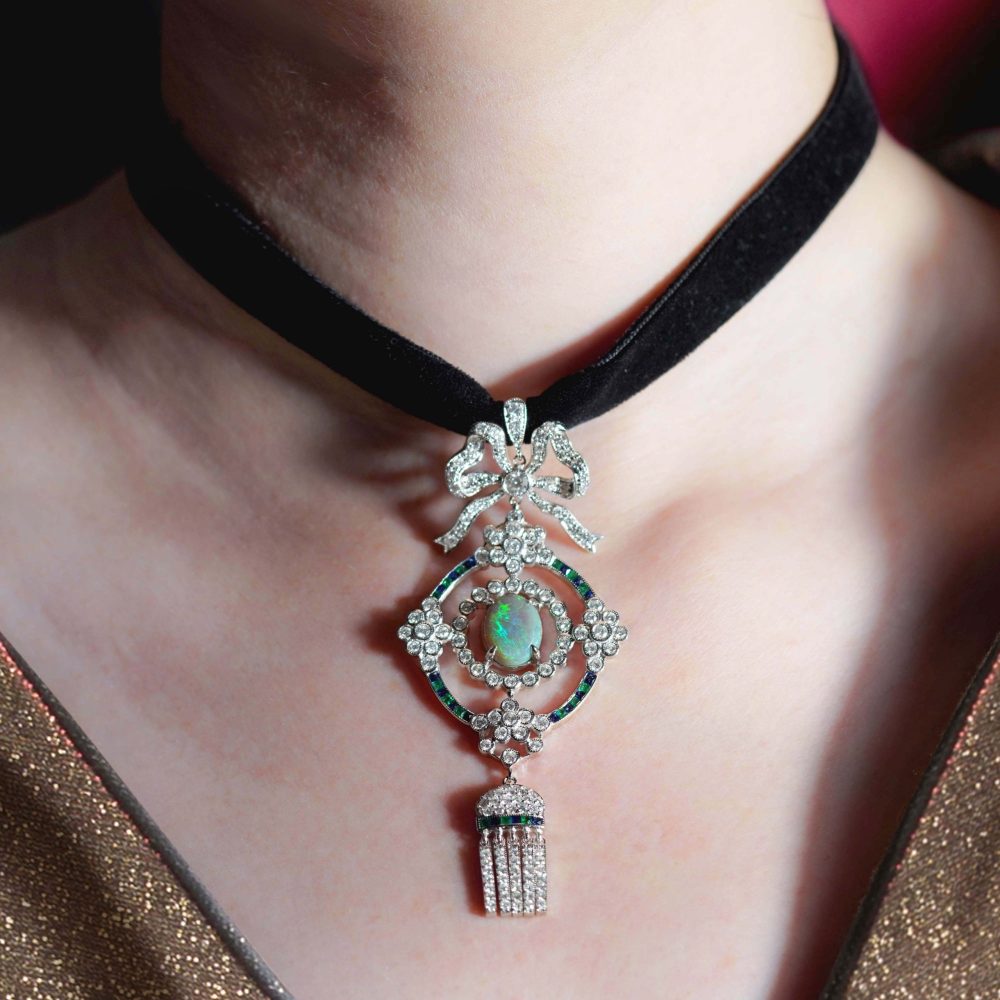
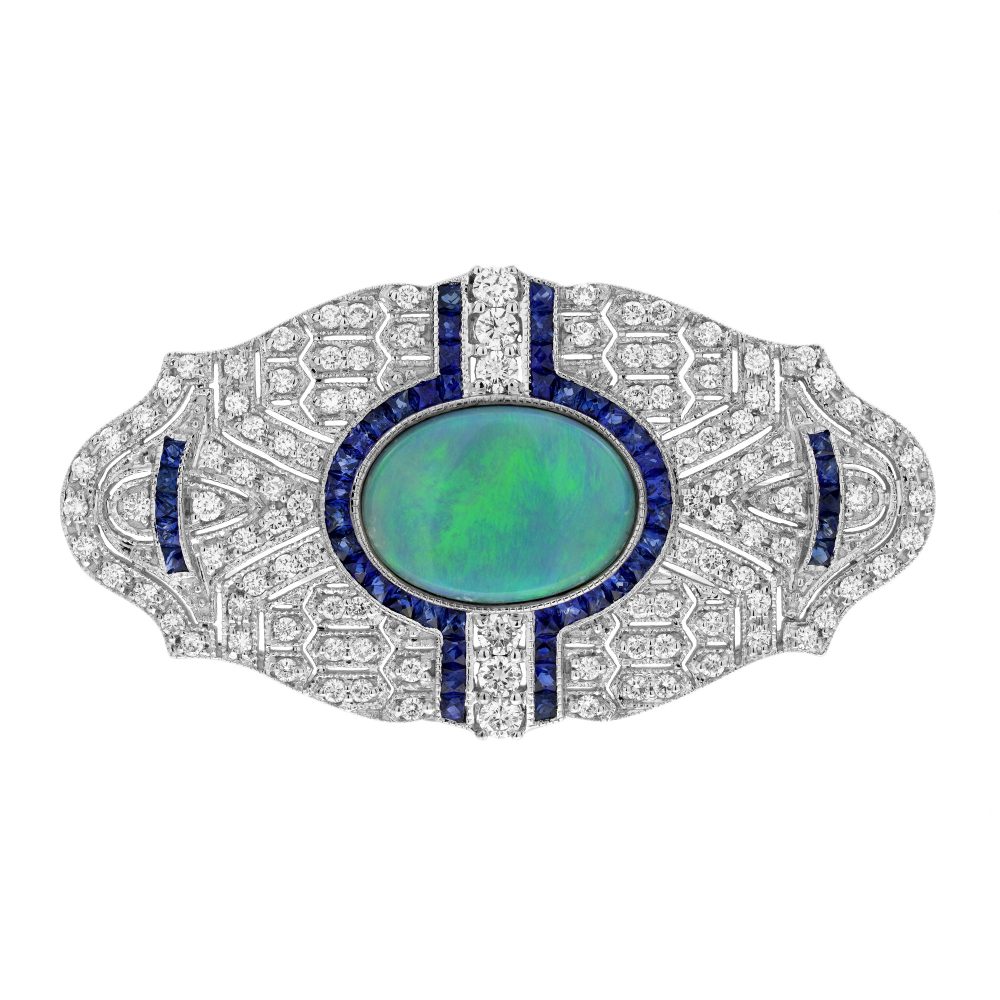
Opal suits Art Deco-inspired and Edwardian-inspired jewelry because play-of-color changes in response to geometry, open space and movement. The finished jewel remains newly made. It should be described as antique-inspired, Art Deco-inspired, Edwardian-inspired or vintage-inspired, never as an antique, estate piece or period original.
How Can an Art Deco-Inspired Setting Frame Opal?
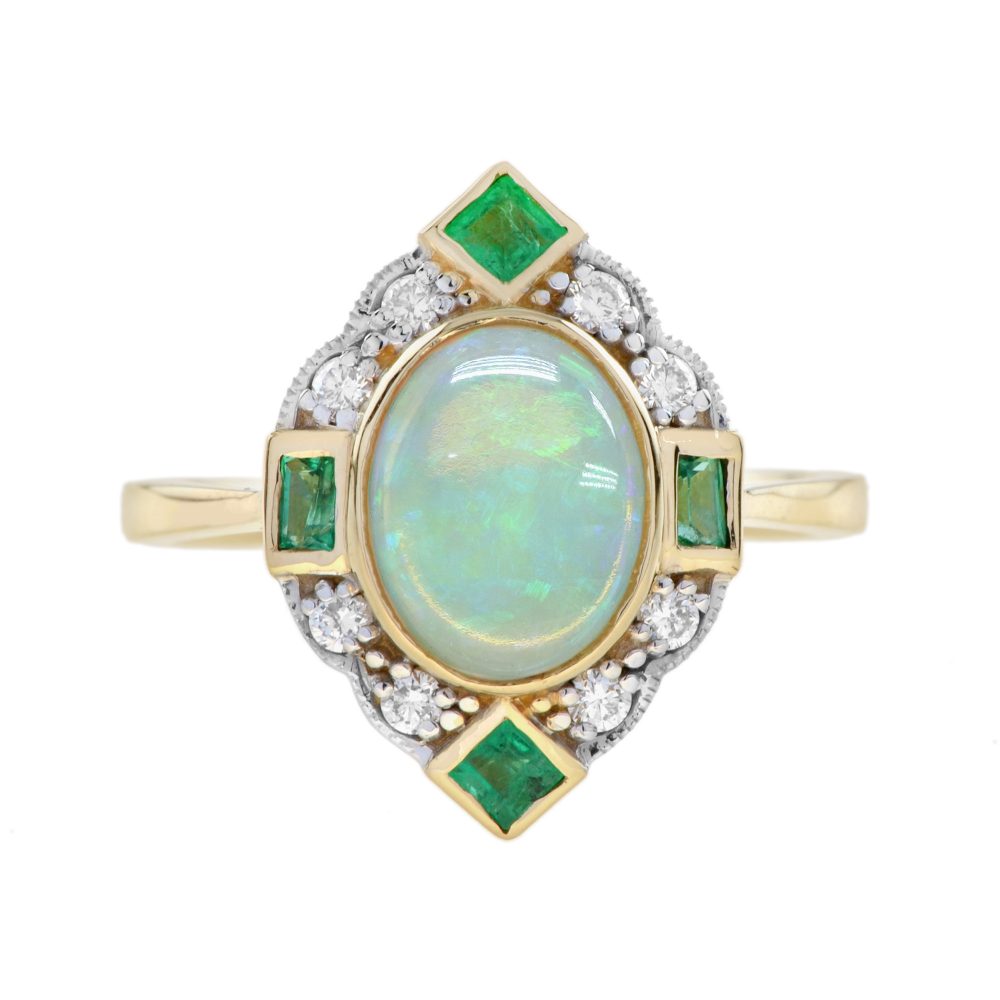
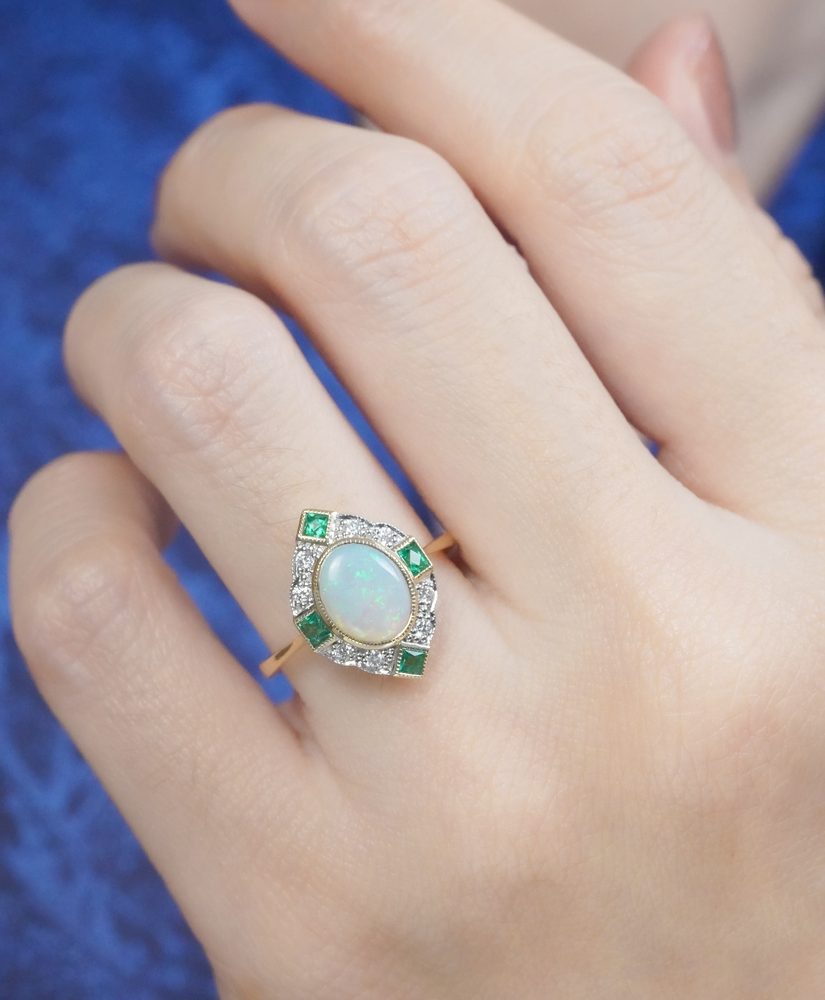
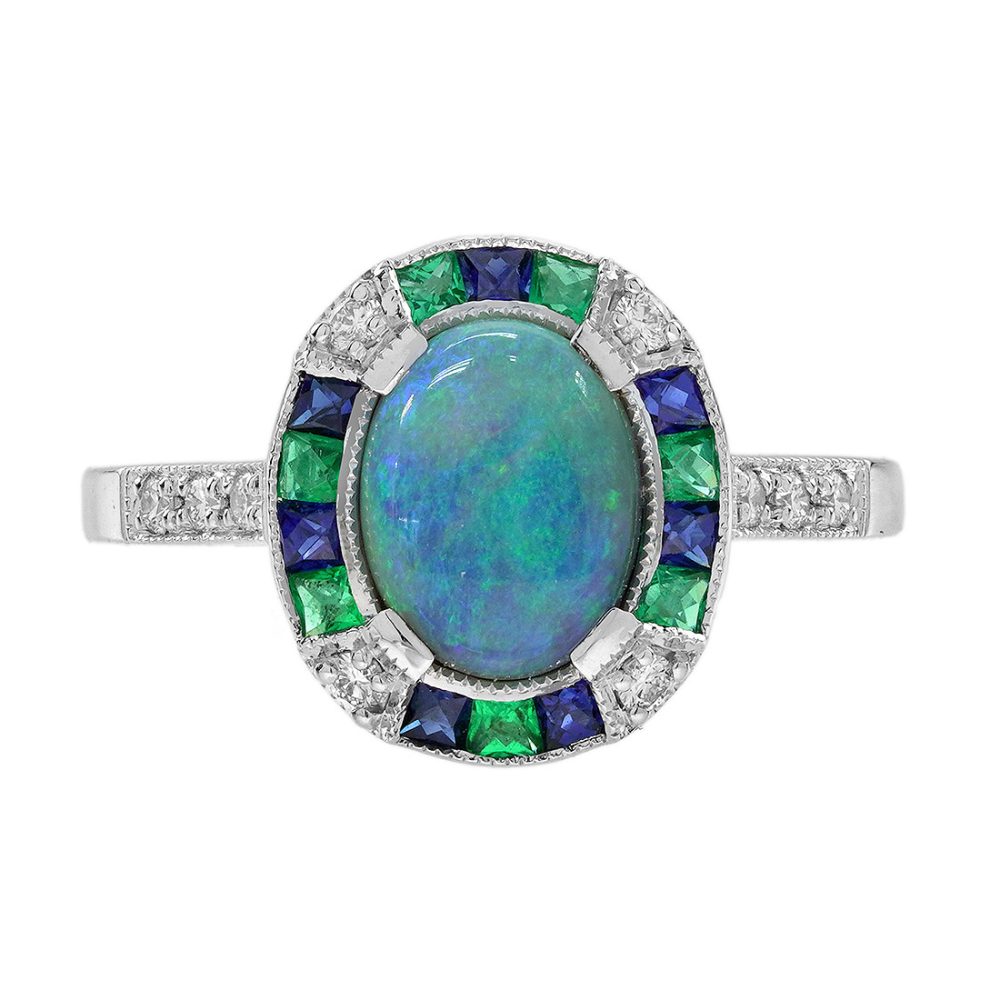
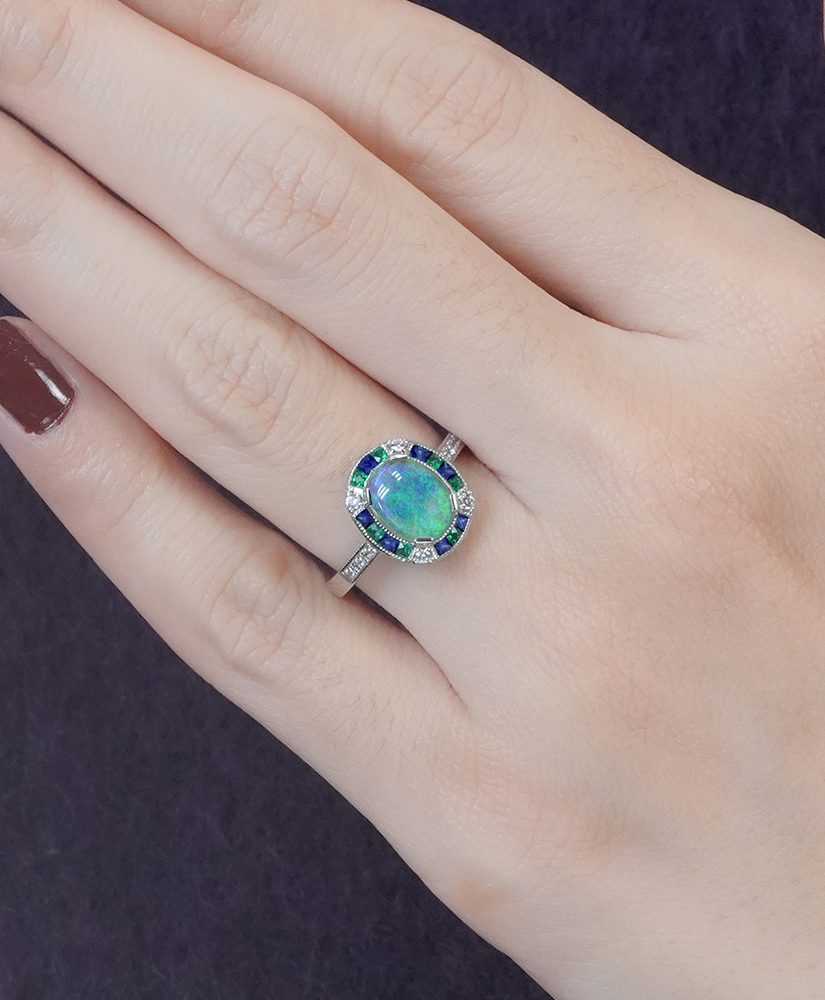
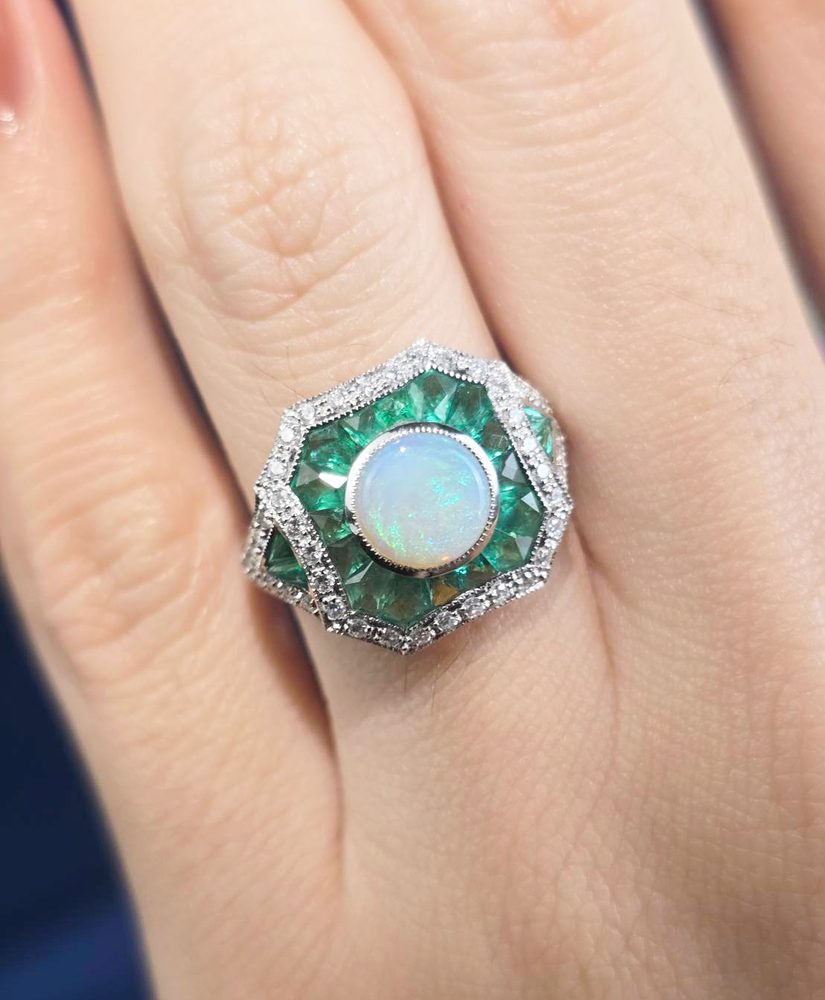
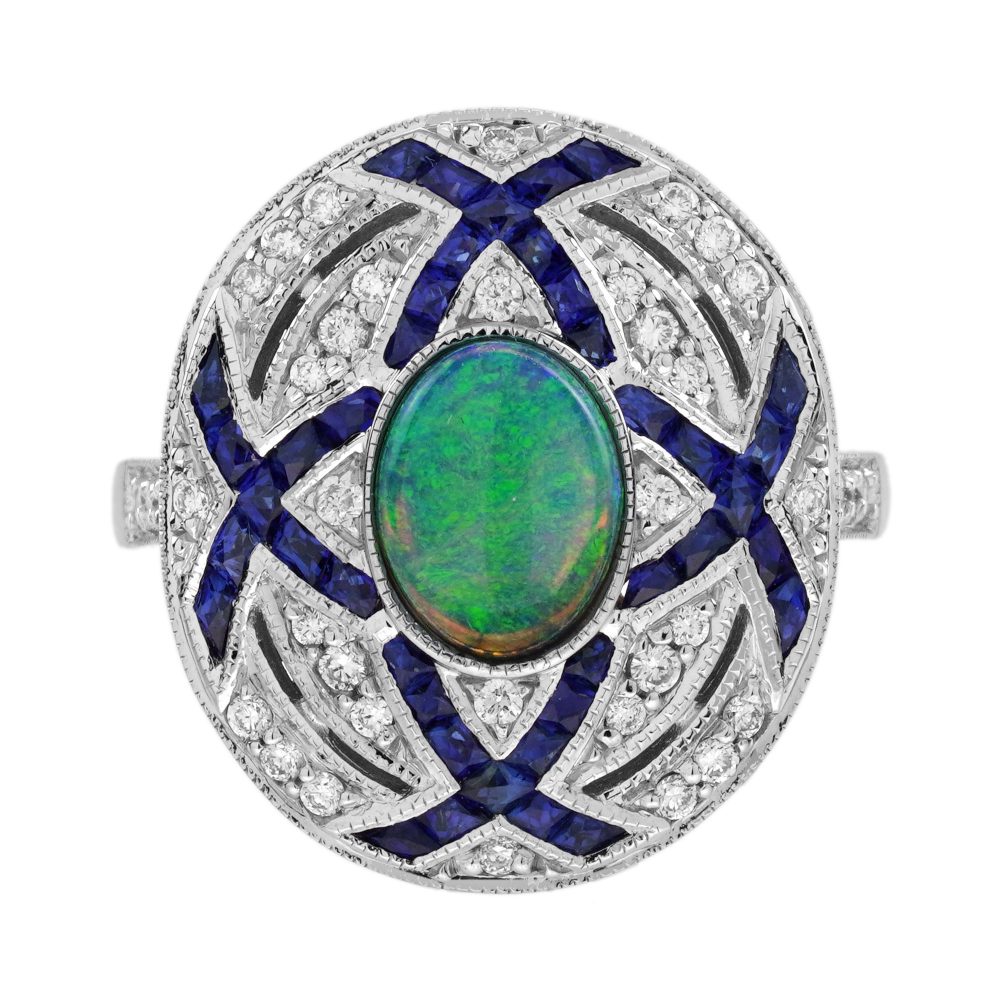
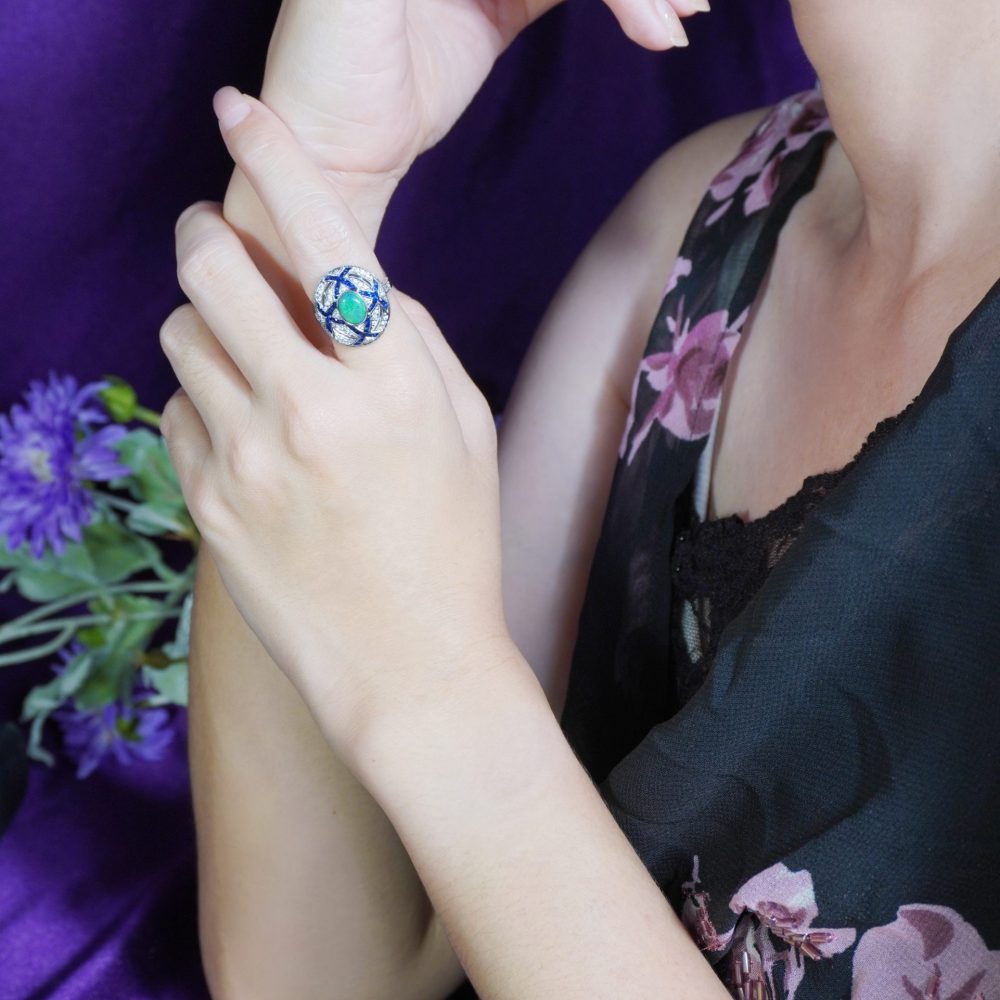
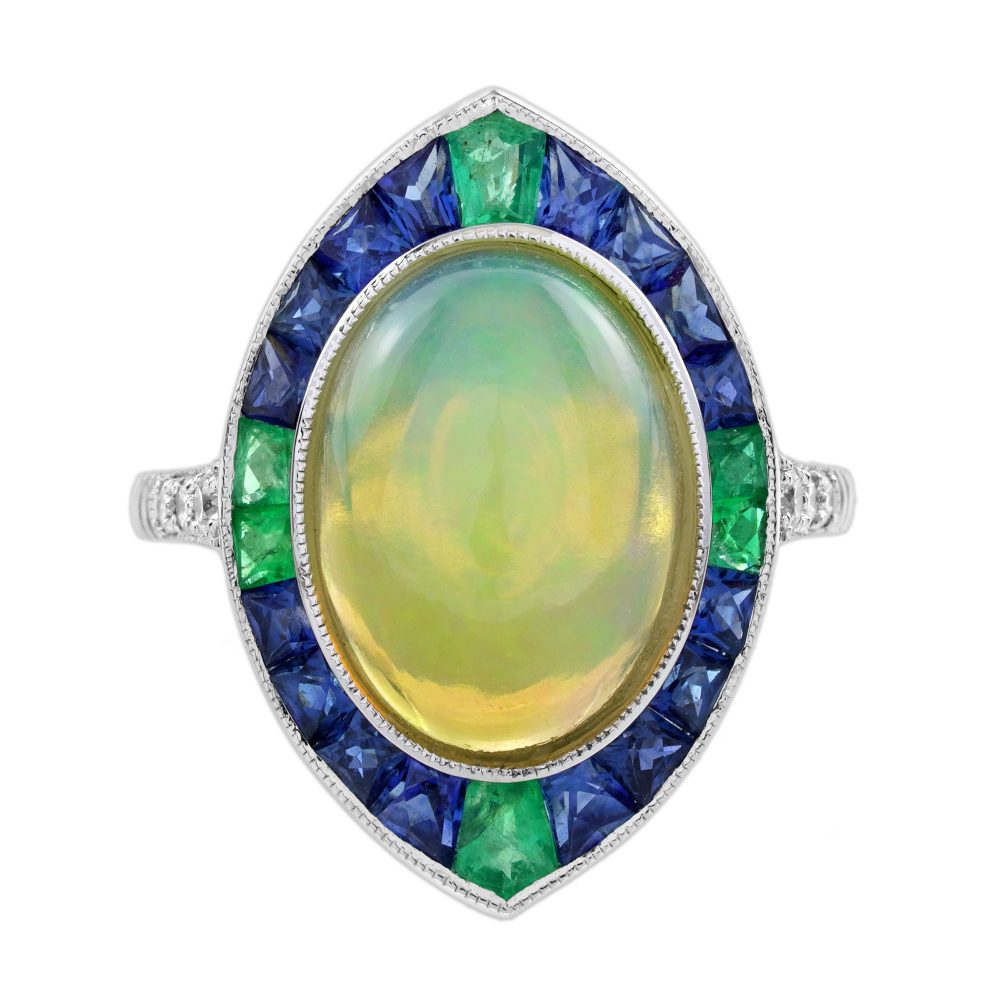
An Art Deco-inspired design can give the opal a clear geometric perimeter: an octagonal halo, stepped shoulders, a fan motif or calibrated accents. White gold can sharpen blue and green flashes, while yellow or rose gold may reinforce orange and red. The structure should protect the opal rather than force it into a hard-edged mount designed for a tougher faceted stone.
How Can an Edwardian-Inspired Setting Use Opal?
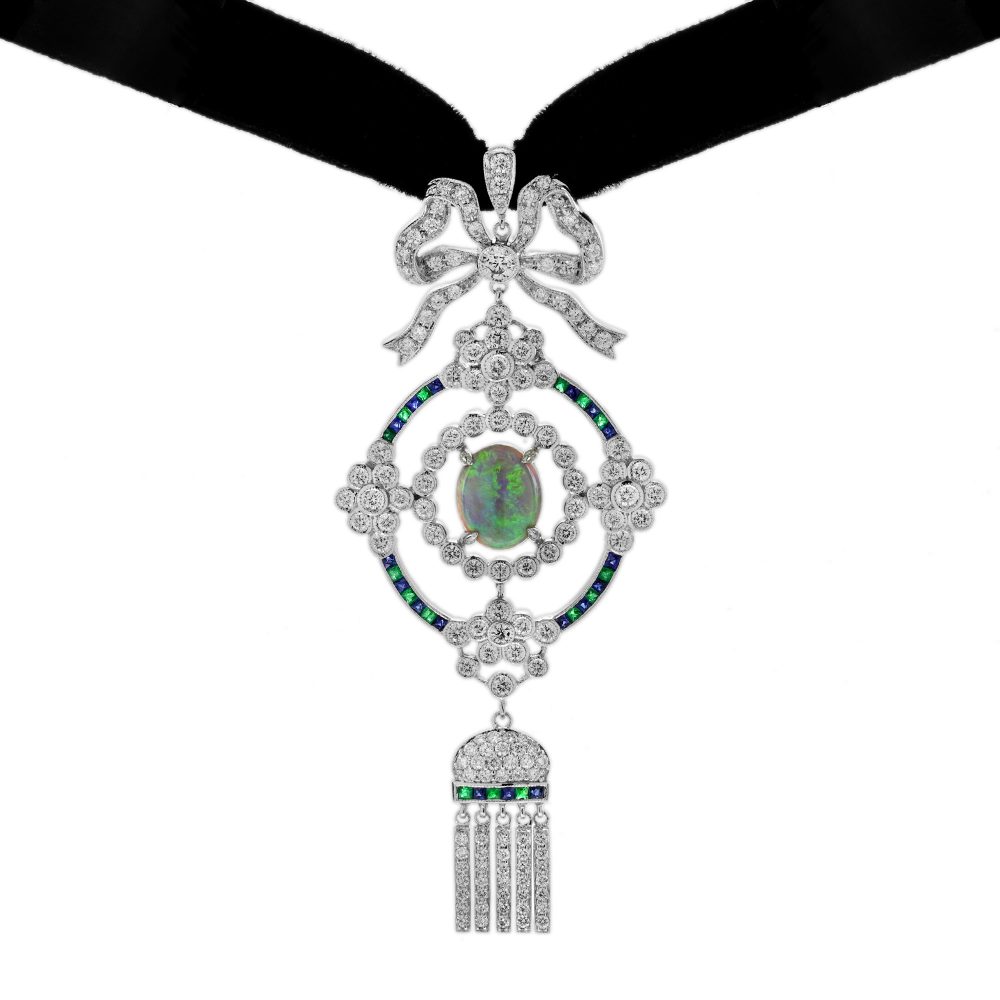
An Edwardian-inspired pendant or earring can place opal within fine openwork, milgrain and botanical detail. These formats reduce the impact exposure associated with rings. The apparent delicacy should be supported by sufficient metal beneath the stone, a smooth protected edge and secure articulation.
How Can a Bespoke Brief Preserve the Stone's Individuality?
Begin with the opal itself. Its strongest color direction and pattern should determine orientation. A standard symmetrical mount may suppress a freeform stone, while a bespoke border can follow the outline and protect vulnerable areas. Small diamond accents can provide contrast, but they must not touch the softer opal.
At Lilly M. JEWELERS, our design language uses natural gemstones set in solid gold. For opal, we consider color movement and risk together. The strongest composition does not merely display the brightest face. It allows the play-of-color to appear through ordinary movement while the setting absorbs as much daily contact as practical.
What Should You Remember About Opal Meaning?
Opal traditionally represents hope, creativity, individuality and change. Those ideas are cultural and personal, not medical or physical effects. The gem's shifting appearance gives the symbolism an unusually direct visual basis: the stone changes without ceasing to be itself.
Precious opal displays play-of-color because light interacts with an ordered internal arrangement of silica spheres. Common opal does not show this phenomenon. Body tone, transparency, color range, brightness, pattern, cut and viewing angle must be considered together.
Opal is an official October birthstone alongside tourmaline. The calendar association provides a reason to choose it, but durability should determine how it is worn. At Mohs 5–6.5 with poor toughness, opal is better suited to protected pendants, earrings, brooches and thoughtfully constructed occasional-wear rings than to exposed daily-wear settings.
Accurate description is essential. Solid opal, boulder opal, doublet and triplet identify different constructions. Natural does not mean untreated. Origin, assembly and treatment claims should be supported rather than inferred from appearance.
The most credible opal jewel aligns three things: a pattern that remains compelling in natural movement, a meaning specific to the wearer and a setting designed around the material's limitations. Symbolism gives the gem purpose. Disclosure and protective design allow that purpose to endure.
Sources: GIA — Opal Gem Overview · GIA — Opal Description · GIA — October Birthstones · GIA — Opal Care and Cleaning · Jewelers of America — Official Birthstone List
Engagement Ring

White Gold
Engagement Ring
Ready to ship
Frequently Asked Questions About Opal Meaning
What does opal mean?
Opal traditionally symbolizes hope, creativity, individuality and change. These are cultural associations rather than scientifically proven effects. Personal meaning may come from an October birthday, a relationship, a milestone or the colors visible in a particular stone.
What is play-of-color in opal?
Play-of-color is the shifting spectral color seen when precious opal, the light or the viewer moves. It results from light interacting with an ordered internal arrangement of microscopic silica spheres. Common opal does not display this phenomenon.
Is opal the only October birthstone?
No. Opal and tourmaline are both recognized October birthstones on the modern US list maintained by Jewelers of America.
Can opal be worn every day?
Opal can be worn with attentive care, but daily-wear rings carry substantial risk. At approximately Mohs 5–6.5 with poor toughness, opal is generally better protected in pendants, earrings, brooches or occasional-wear rings with a bezel or halo.
What is the difference between solid opal, a doublet and a triplet?
Solid opal is one piece of opal material. A doublet bonds a thin opal layer to a backing, while a triplet adds a transparent top layer. Doublets and triplets are legitimate assembled products when clearly disclosed, but they are not equivalent to solid opal.