
Blog, Gemstone Guides
Emerald Meaning & May Birthstone Guide

Key Takeaways
- Emerald is the traditional May birthstone and has long been associated with renewal, fidelity, truth, and enduring love. These are cultural meanings, not physical effects.
- Emerald is the green variety of beryl. It measures 7.5–8 on the Mohs scale, yet it is brittle because its characteristic inclusions and fractures reduce resistance to impact.
- Color is the leading quality factor, while transparency, cut, carat weight, treatment, and the position of inclusions also affect beauty and value.
- Protective design, gentle cleaning, and accurate treatment disclosure matter more than a hardness number alone.
What Does Emerald Mean?
Emerald is the traditional May birthstone and a green variety of beryl. Across different traditions, it has represented renewal, fidelity, truth, and enduring love. Its symbolism comes from history and culture, while its practical character comes from vivid color, natural inclusions, a Mohs hardness of 7.5–8, and comparatively brittle toughness.
Emerald meaning begins with color. Green is the color of new leaves, cultivated gardens, and the return of growth after winter. It is therefore understandable that generations have connected emerald with renewal, hope, fertility, and continuity. The stone has also acquired associations with fidelity, truth, eloquence, and enduring love through religious texts, court culture, folklore, and the modern birthstone tradition.
These meanings should be read as cultural history rather than as measurable properties of the mineral. An emerald does not create prosperity, heal illness, or guarantee a faithful relationship. It can, however, carry a chosen meaning because of the person, date, or promise attached to it. A May birthday, a twentieth or thirty-fifth anniversary, or a bespoke commission can make the green stone personally significant without turning tradition into a medical or supernatural claim.
The name itself reinforces the primacy of color. GIA traces it to smaragdus, an ancient Greek word for green. The word did not begin as a modern gemological definition, and historical references to emerald may not always describe the mineral species that laboratories identify as emerald today. That distinction matters whenever legend is presented as fact.
Why Is Emerald the Birthstone for May?
Emerald is the official birthstone for May in the American list maintained by Jewelers of America. That list was established in 1912 by the American National Retail Jewelers Association, the organization known today as Jewelers of America. The association between emerald and May draws particular force from the stone’s spring-green color, but the standardized list itself is modern.
This is an important separation. Emerald has been valued since antiquity, while its place in the standardized American birthstone calendar dates to the twentieth century. A meaningful May birthstone jewel can therefore unite an ancient material history with a relatively recent gifting convention.
Emerald is also associated with twentieth and thirty-fifth wedding anniversaries. As with birthstone symbolism, the value of the association lies in what the giver and wearer choose to commemorate. Green can suggest a relationship that continues to grow, but the stone should not be described as producing an emotional or physical effect.
What Is an Emerald?
Emerald is the green variety of the mineral beryl. Aquamarine and morganite belong to the same mineral family, although their colors and typical inclusion patterns differ. Pure beryl is colorless; trace elements within the crystal structure produce color. Chromium and vanadium are principally associated with emerald green, while iron can influence the final appearance.
Gem experts do not apply a universally identical boundary between pale emerald and green beryl. GIA notes that the degree of green required for the emerald name remains a subject of professional judgment. A stone that is too pale may be described as green beryl rather than emerald, even when it belongs to the same mineral species.
The most sought-after emerald colors generally fall between bluish green and pure green, with strong saturation and a tone that is neither so light that it loses richness nor so dark that it loses life. Hue, tone, and saturation must be considered together. A dark stone is not automatically a fine stone, and a bright stone is not automatically well saturated.
Which Emerald Facts Matter Most?
| Attribute | Emerald | Why It Matters in Jewelry |
|---|---|---|
| Mineral family | Beryl | It is related to aquamarine and morganite, but identified by its green color range. |
| Color | Green to bluish green | Color is normally the leading quality factor. |
| Mohs hardness | 7.5–8 | It resists many everyday scratches but is not protected from chips or fractures. |
| Toughness | Poor; brittle | Existing inclusions and fractures make impact protection important. |
| Characteristic inclusions | Often called jardin | Their type, position, and effect on transparency matter more than their mere presence. |
| Routine treatments | Oils or resins may fill surface-reaching fractures | Treatment type and degree can affect appearance, care, and value. |
| Birthstone | May | The official American list was standardized in 1912. |
| Anniversary | Twentieth and thirty-fifth | A conventional association for milestone gifts. |
What Does Emerald Color Mean?
In symbolic language, emerald green has been linked with spring, renewal, growth, truth, and constancy. In gemological language, color is evaluated more precisely through hue, tone, and saturation. The two systems answer different questions. Symbolism asks what green has represented; gemology asks what the eye sees and how the market evaluates it.
The distinction prevents vague language from replacing observation. A vivid bluish green emerald may feel lush or contemplative, but a responsible buying description should identify its color, transparency, treatment information, and setting. Personal response belongs to the wearer. Material facts belong to the seller and the laboratory report.
Color also changes with lighting. Daylight, warm interior light, and mixed retail lighting can reveal different balances of blue, yellow, brightness, and darkness. We recommend viewing a significant emerald in more than one ordinary lighting environment. A stone should remain convincing where it will actually be worn, not only beneath a jewelry counter lamp.
Why Do Emeralds Have Inclusions?
Emeralds commonly contain inclusions and surface-reaching fractures. The trade often calls the internal scene jardin, the French word for garden, because crystals, veils, fissures, and growth features can resemble foliage or a landscape under magnification.
The term should not be used to romanticize every clarity feature. Inclusions are expected in emerald, and an eye-visible inclusion does not automatically make a stone undesirable. However, location and structure matter. A fracture that reaches a vulnerable corner, lies close to the girdle, or interrupts transparency can have a greater effect on durability and appearance than a more sheltered inclusion of similar size.
This is where emerald differs from a simple clarity checklist. The relevant question is not merely, “Does the stone have inclusions?” It is, “What are the inclusions, where are they, how do they affect transparency, and how will the proposed setting protect them?”
GIA explains that the market generally accepts eye-visible inclusions in higher-quality emeralds, but inclusions that materially reduce transparency and clarity also reduce value. A fine emerald is not expected to resemble an internally flawless diamond. It is expected to balance color, life, transparency, and structural condition.
Is Emerald Durable Enough for Everyday Jewelry?
Emerald measures 7.5–8 on the Mohs scale, which sounds reassuring until hardness is mistaken for toughness. Mohs hardness measures resistance to scratching. Toughness measures resistance to breaking, chipping, or fracturing. Emerald is relatively hard but brittle, and those two facts must be held together.
An emerald ring can be worn regularly when the stone, cut, setting, and wearer’s habits are suitable. It is not a worry-free alternative to ruby or sapphire. Rings encounter door frames, countertops, bag hardware, exercise equipment, and accidental drops. Earrings and pendants generally experience fewer direct blows and can therefore be sensible choices for a particularly included or delicate emerald.
How Does Emerald Durability Compare with Other Familiar Gems?
| Gemstone | Mohs Hardness | Toughness | Practical Setting View |
|---|---|---|---|
| Diamond | 10 | Good, but cleavage can permit chipping | Broad setting choice; protect exposed points and corners. |
| Ruby | 9 | Excellent | Suitable for frequent wear in many setting styles. |
| Sapphire | 9 | Excellent | Suitable for frequent wear in many setting styles. |
| Emerald | 7.5–8 | Poor; brittle | Protective prongs, a halo, or a bezel should be considered according to the stone. |
| Aquamarine | 7.5–8 | Good | Similar scratch resistance to emerald, generally better resistance to breaking. |
| Opal | 5–6.5 | Poor | Protective settings and more limited wear are prudent. |
The comparison reveals why hardness alone is not a wearability score. Emerald and aquamarine share the beryl family and similar Mohs values, yet their typical toughness is not identical. The internal structure of the individual stone must inform the finished jewel.
Which Settings Protect an Emerald Best?
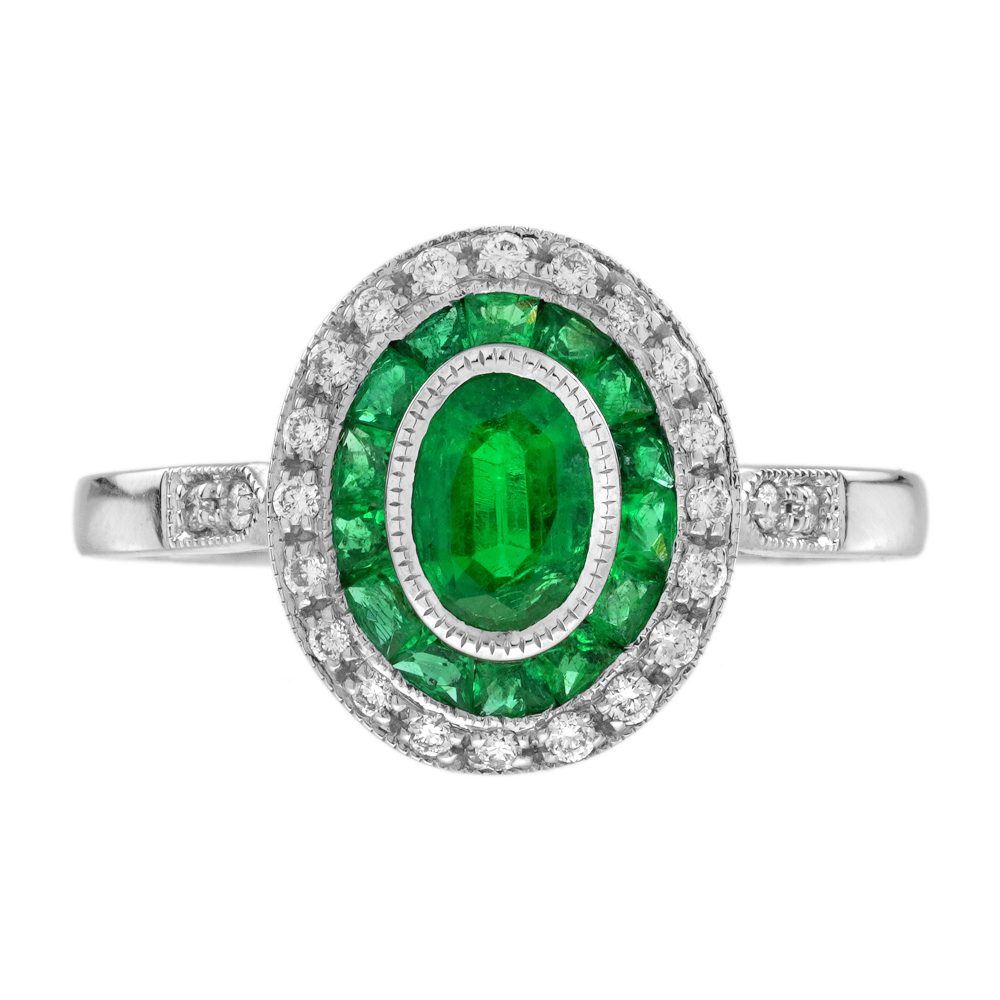
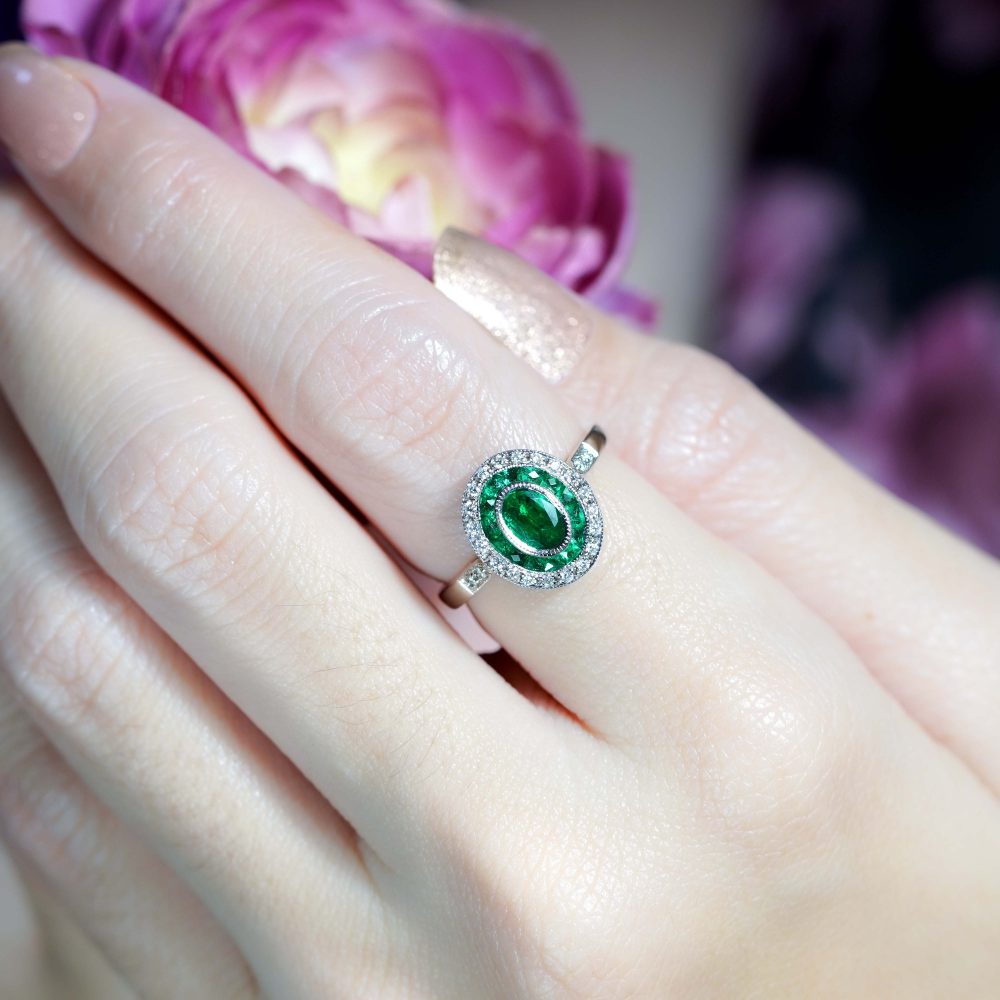
The best setting depends on the stone’s shape, girdle, inclusion pattern, size, and intended wear. A bezel can surround the edge with metal. A halo can create visual scale while adding a buffer around the center stone. Carefully placed prongs can protect corners without obscuring too much color. An emerald-cut stone often benefits from prongs designed specifically for its trimmed corners.
In our workshop, we treat setting design as a fifth quality factor for emerald. The traditional quality discussion covers color, clarity, cut, and carat weight. Those factors describe the loose stone, but they do not fully predict the life of the jewel. For emerald, the setting mediates between beauty and use.
How Should the Setting Match the Intended Wear?
| Intended Wear | Preferred Design Direction | Reason |
|---|---|---|
| Daily ring | Protective prongs, halo, partial or full bezel | Reduces exposure at the girdle and corners. |
| Occasional statement ring | Prongs may be appropriate after stone-by-stone assessment | Less frequent wear lowers, but does not remove, impact risk. |
| Earrings | Prong, halo, or bezel according to the stone | Earrings usually receive fewer direct knocks than rings. |
| Pendant | Prong, halo, or bezel with a stable bail | The stone is less exposed than on the hand. |
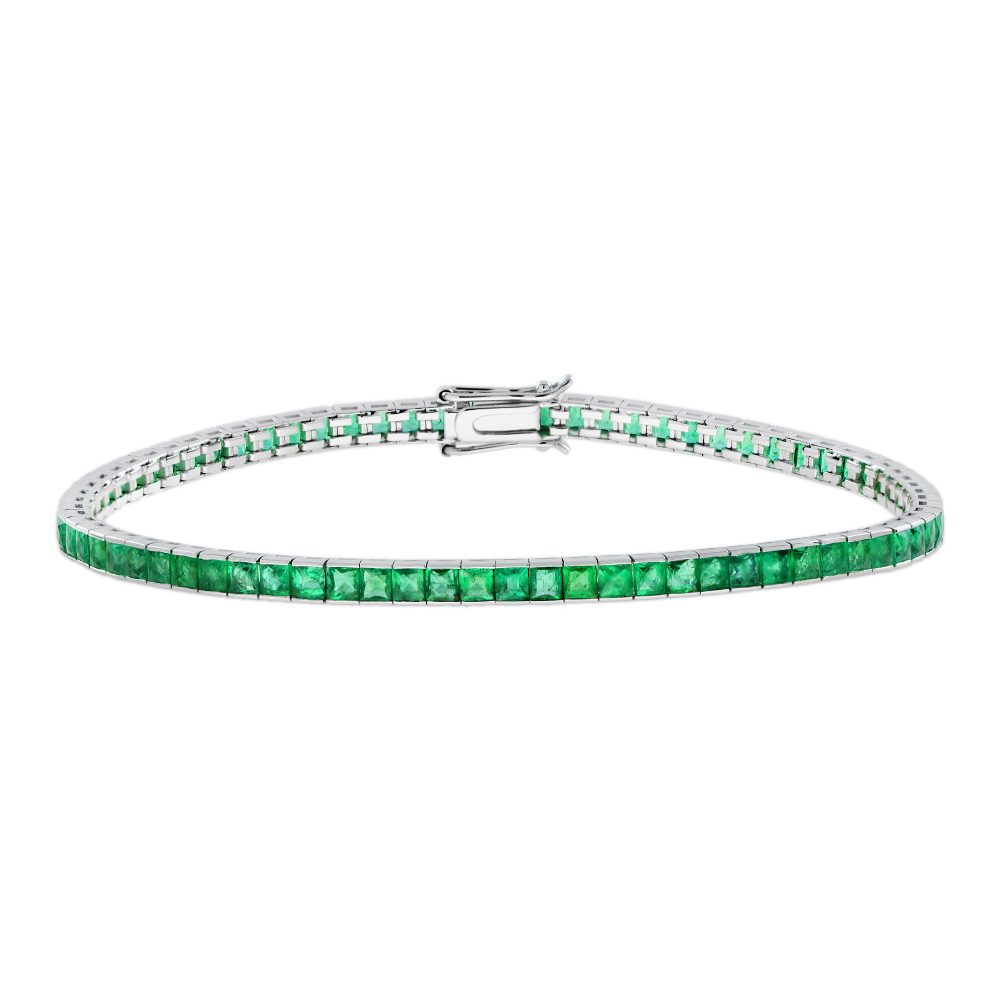
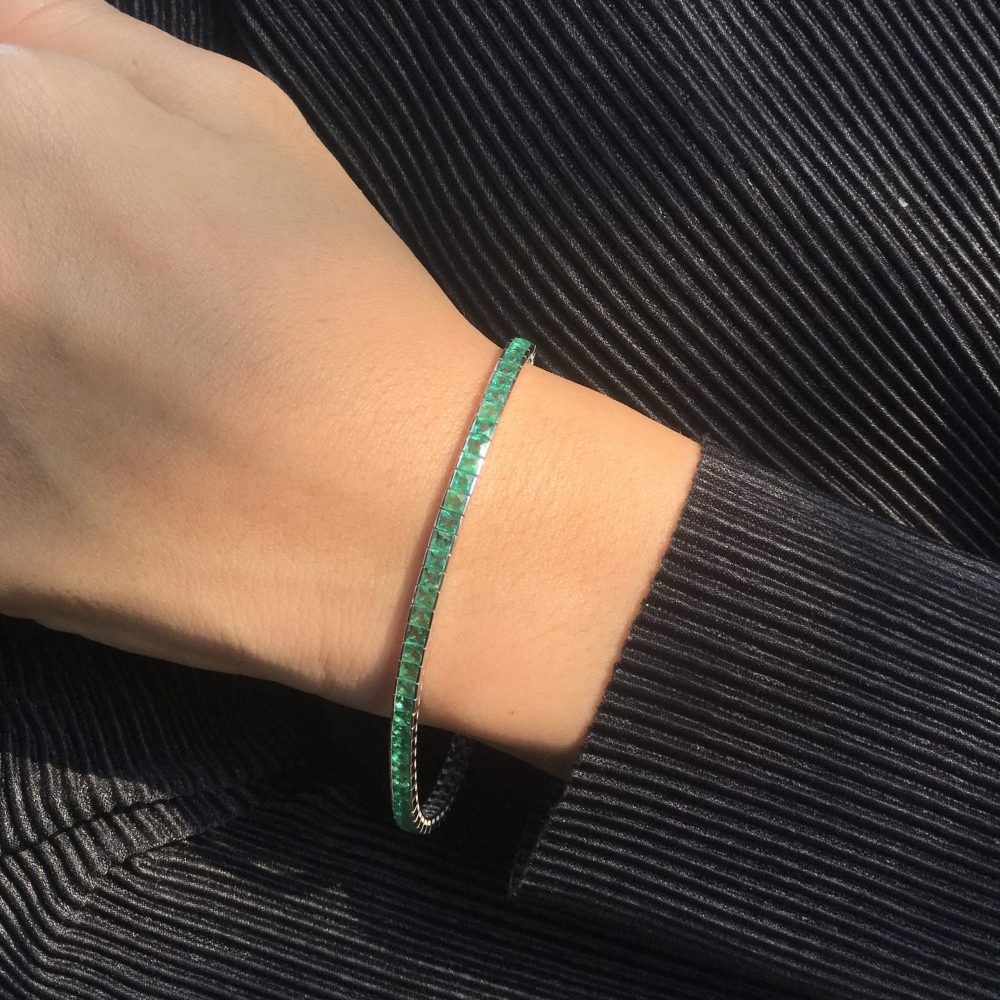
| Bracelet | Protective architecture strongly preferred | Wrist movement brings repeated contact with hard surfaces. |
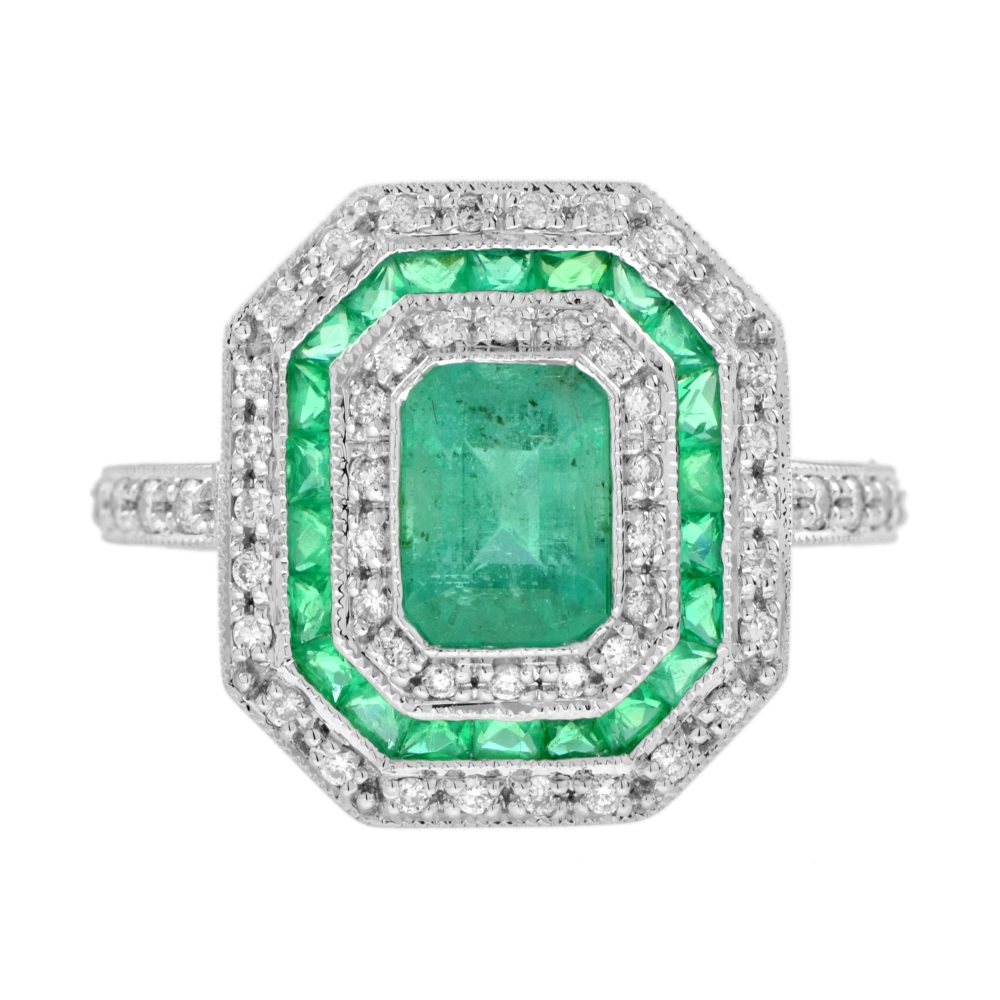
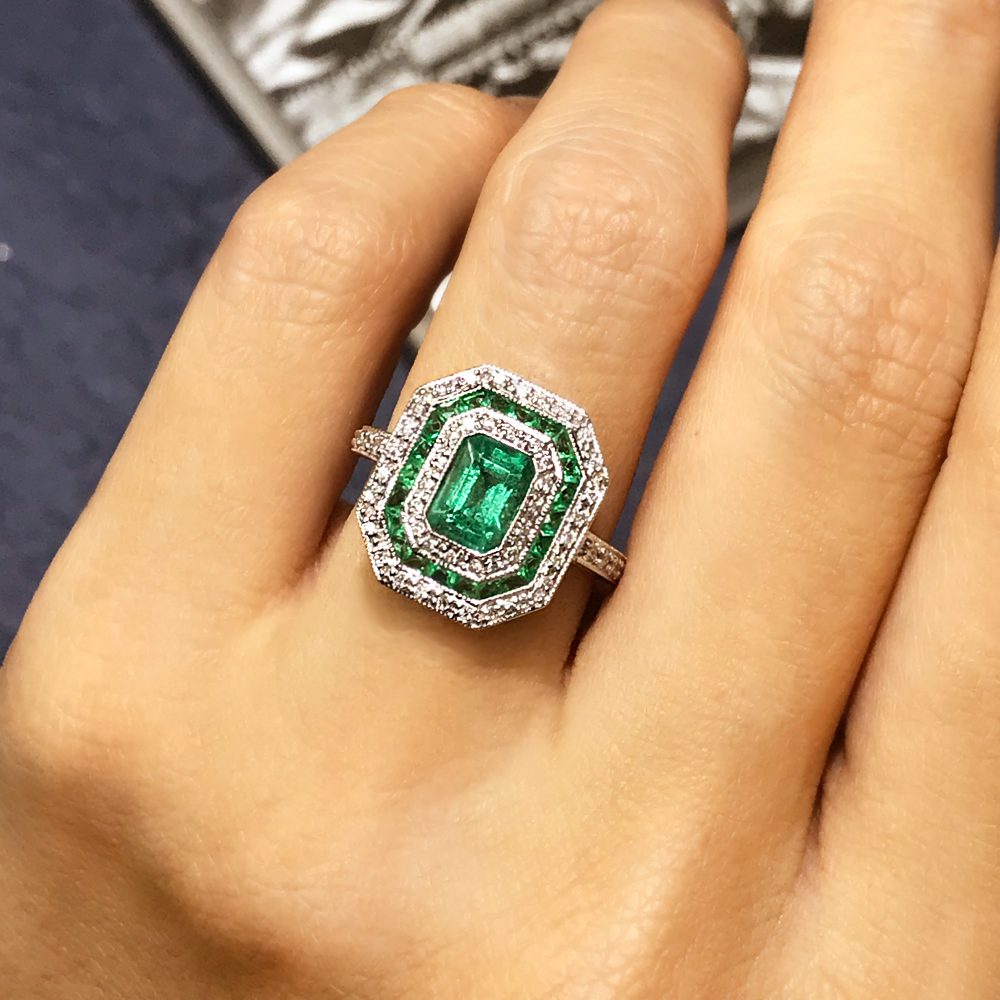
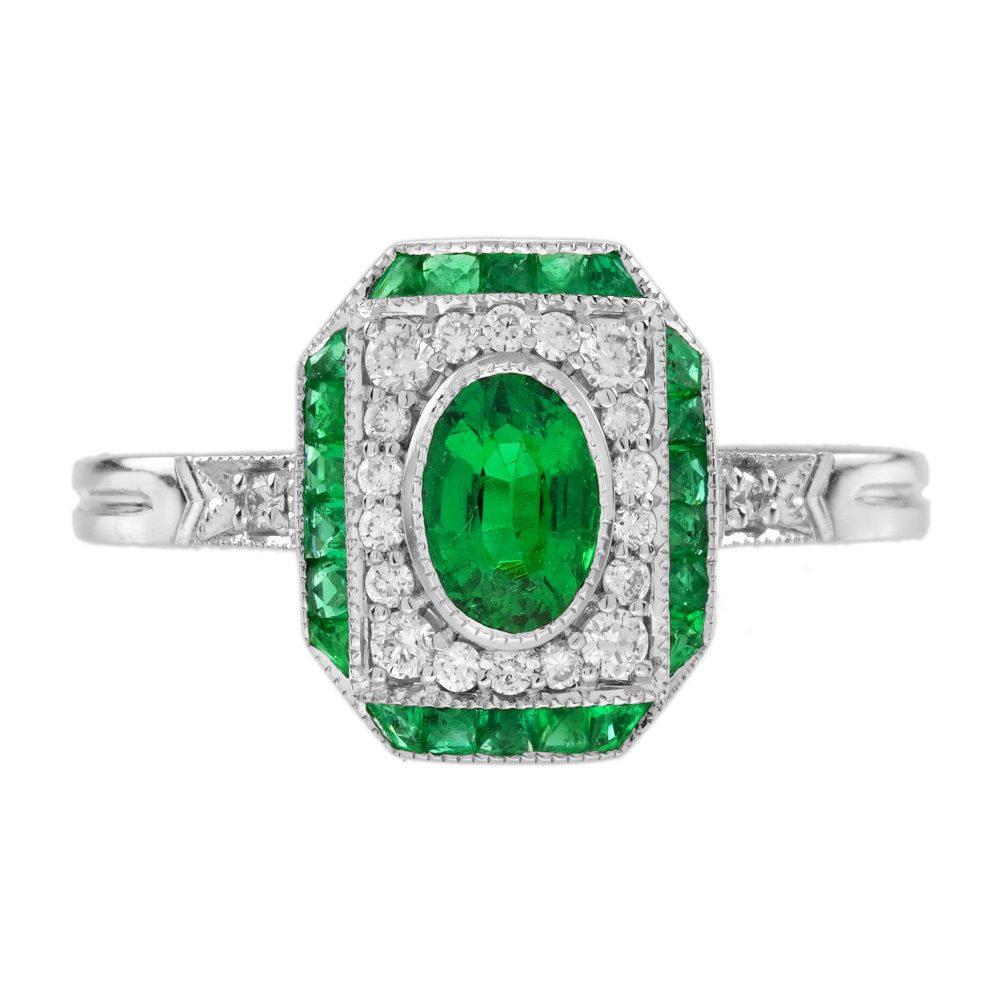
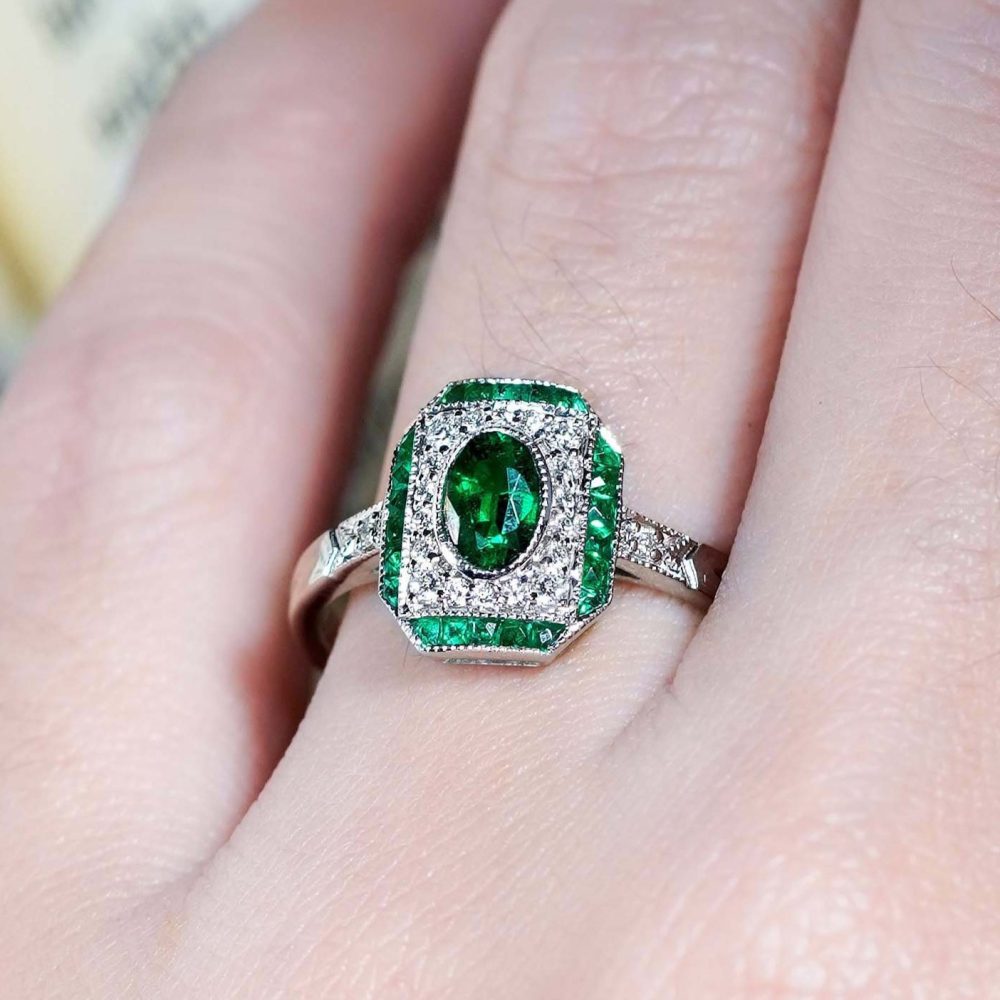
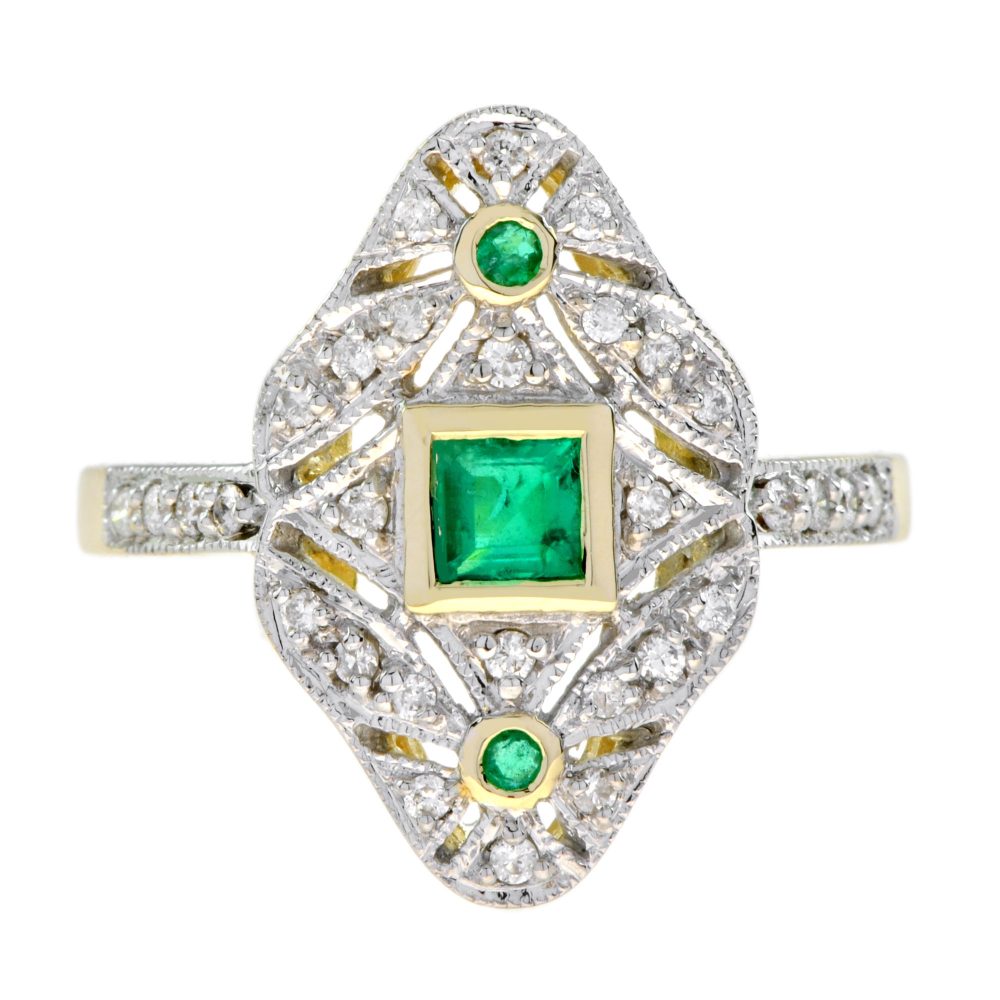
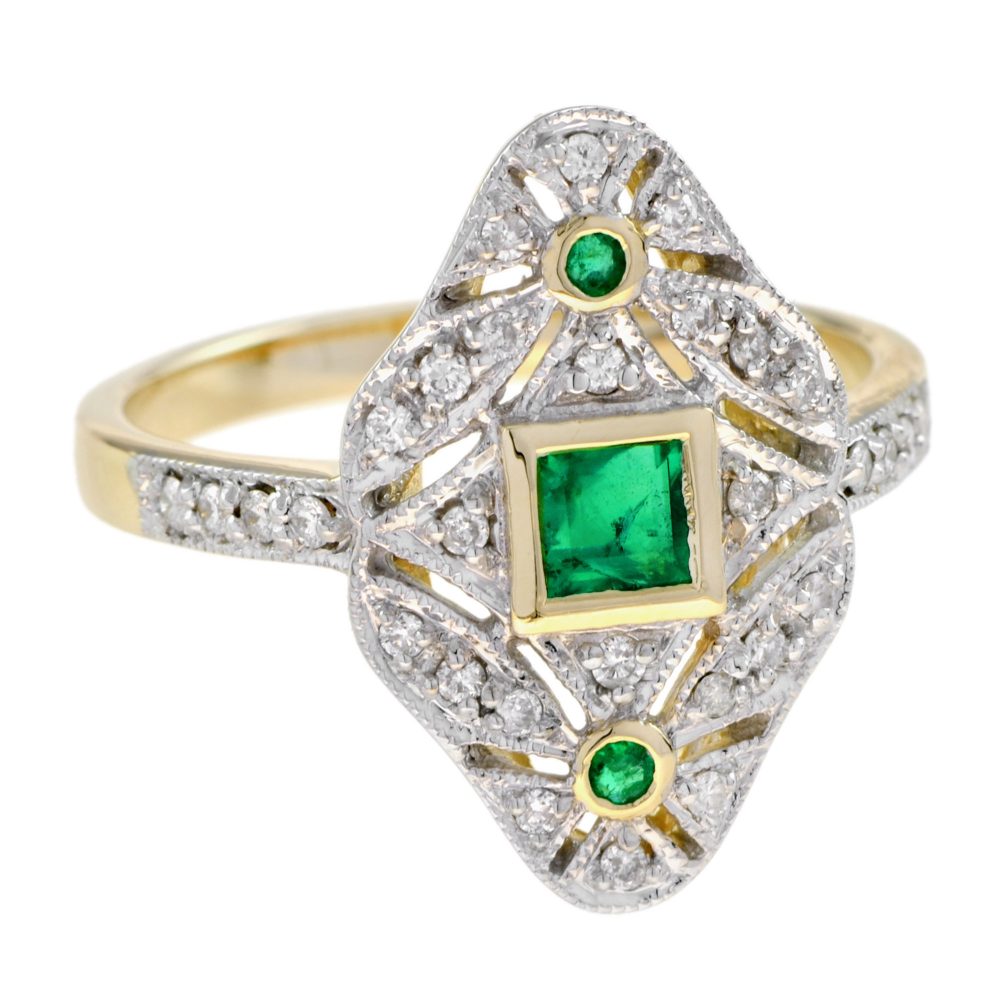
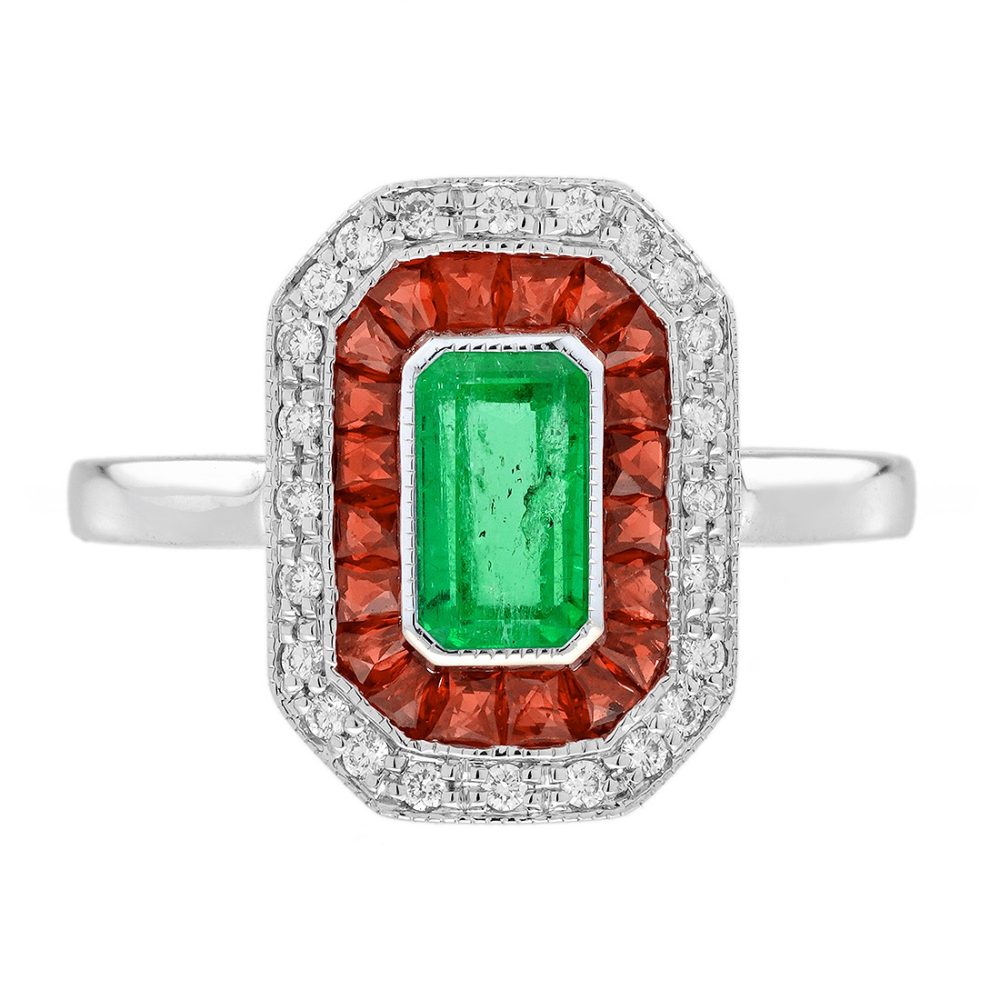
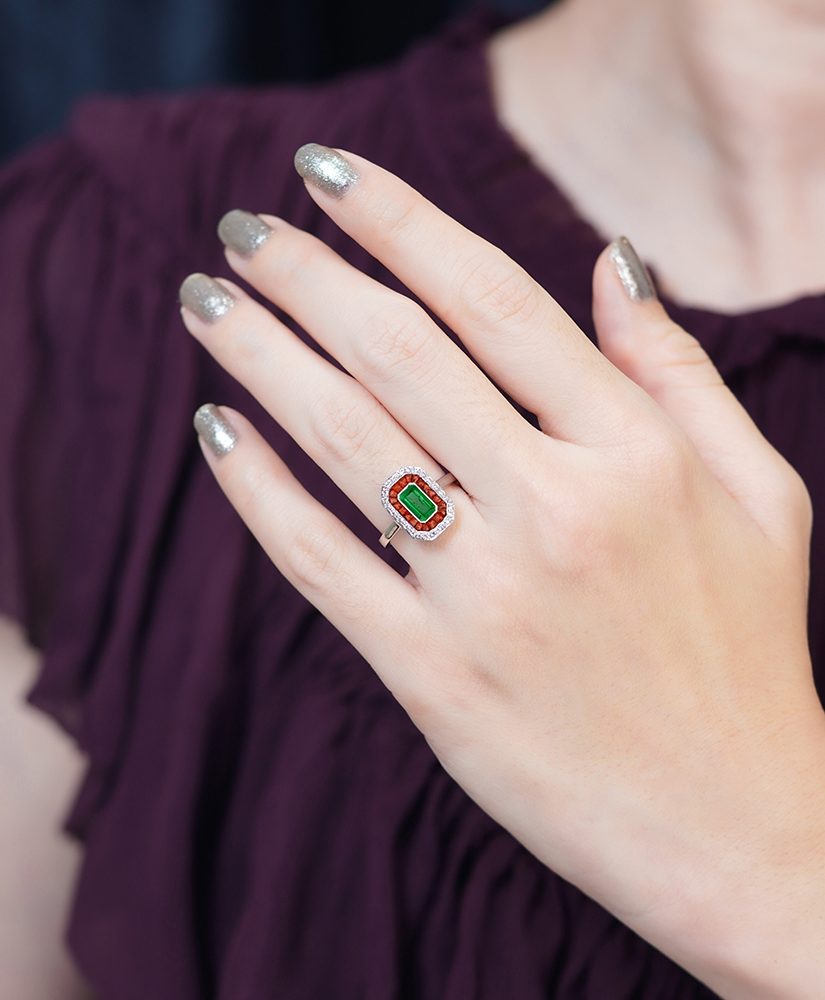
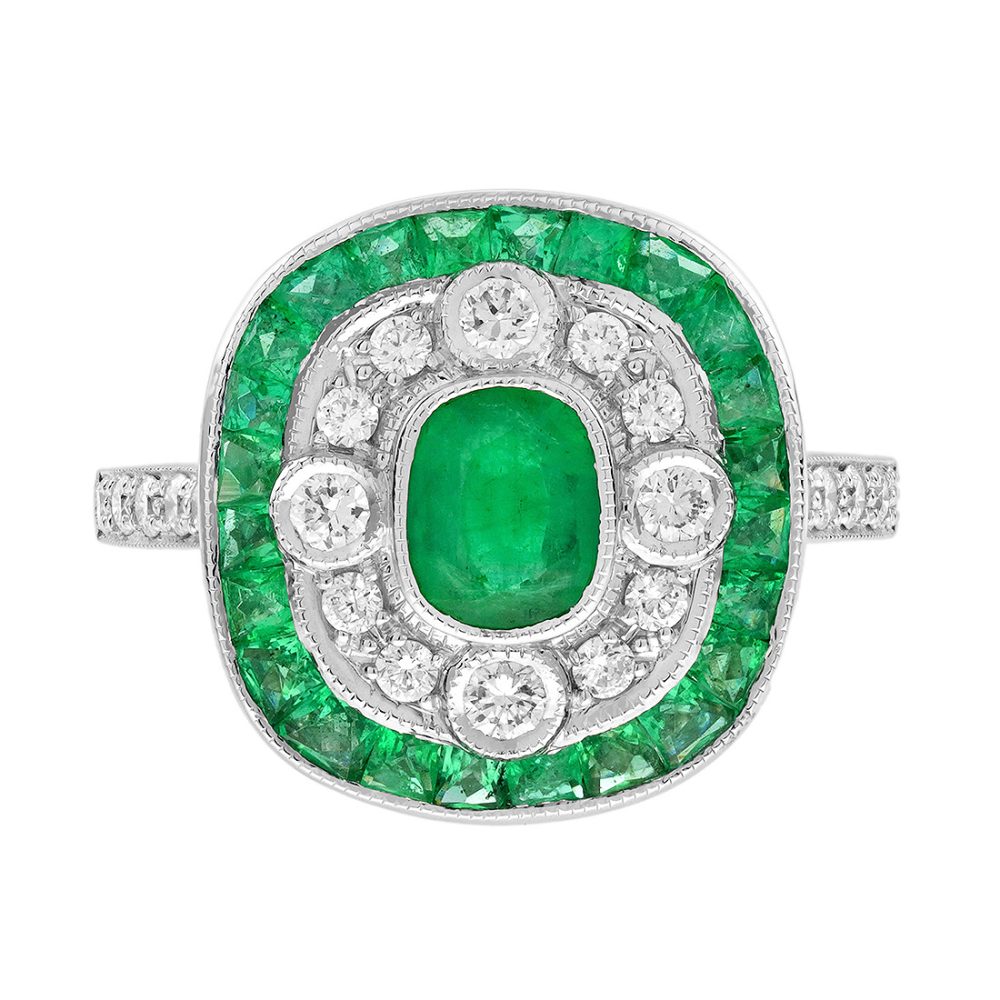
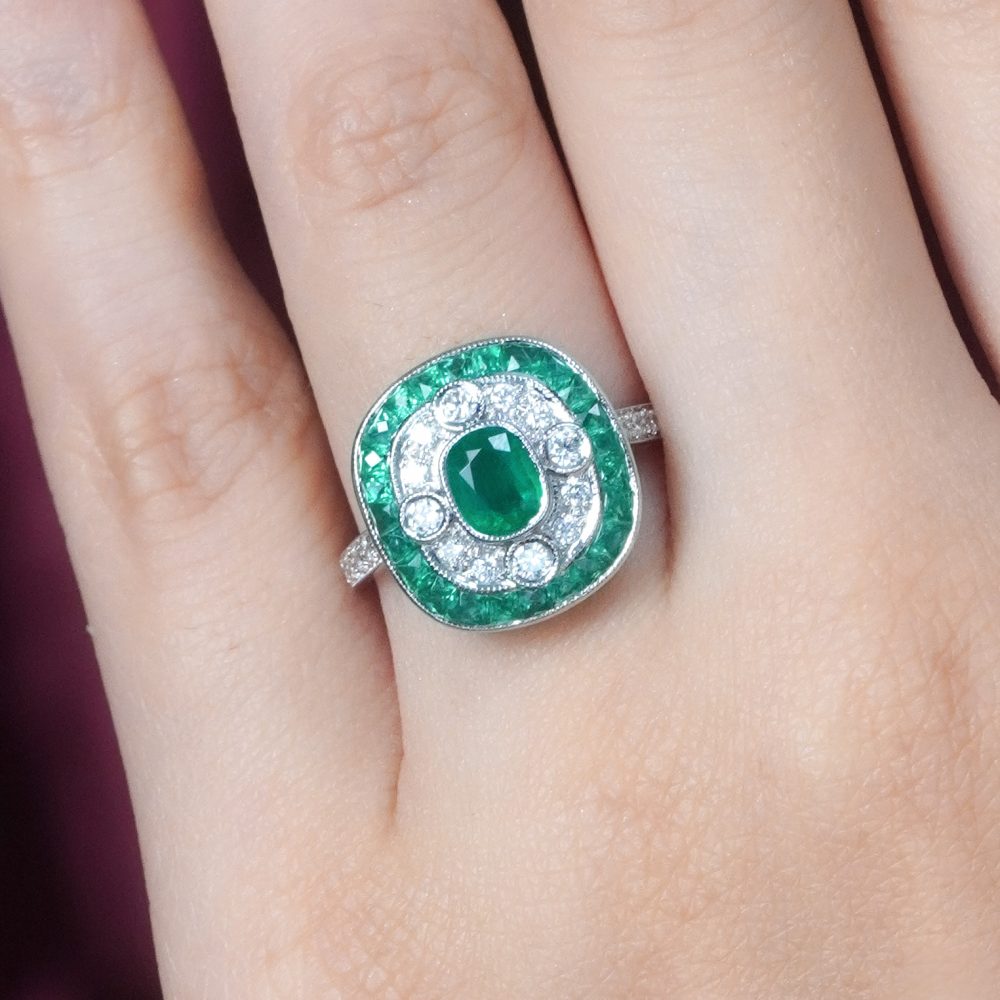
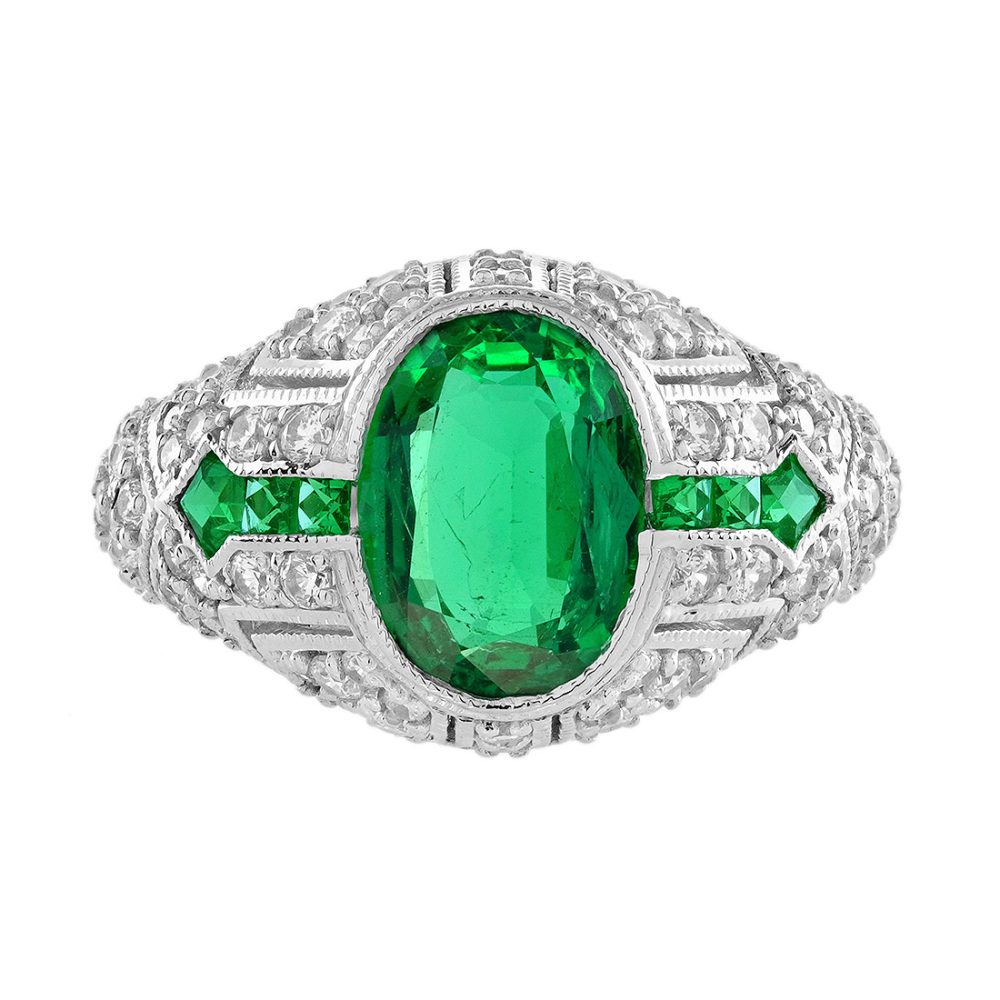
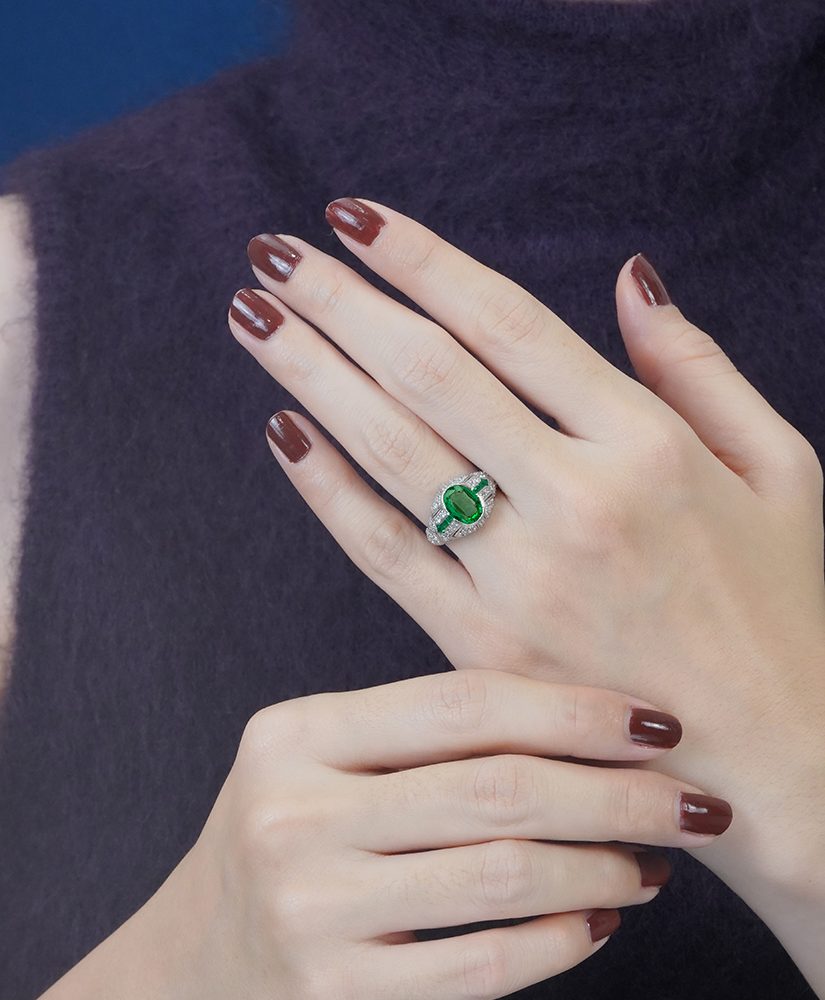
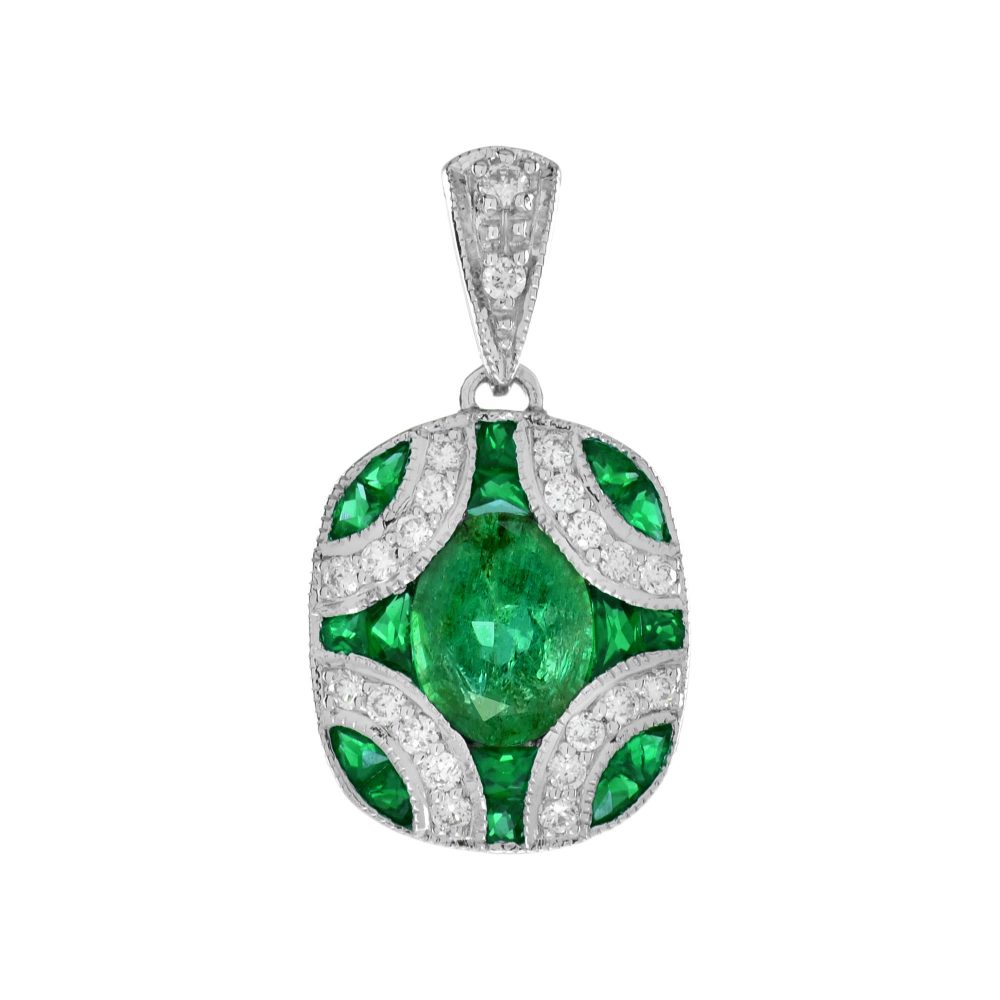
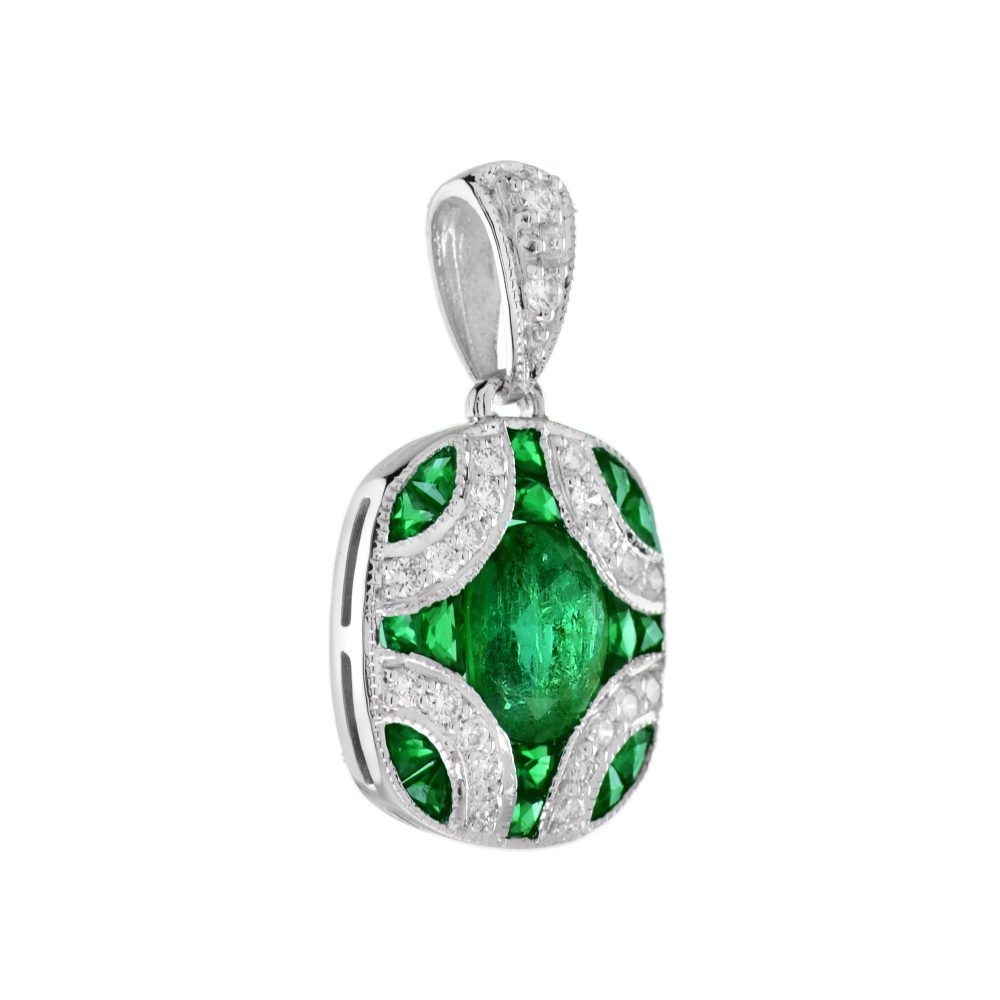
Art Deco-inspired geometry suits emerald particularly well. White diamond accents can sharpen the contrast of green, while calibrated borders and symmetrical halos can protect the center visually and physically. The period language is not only decorative: disciplined geometry can organize protective metal and surrounding stones around a vulnerable center.
Why Is the Emerald Cut Associated with Emeralds?
The rectangular step cut with trimmed corners became closely associated with emerald because it can respect the shape of the original crystal, display broad planes of color, and reduce the vulnerability of sharp corners. Its long, parallel facets create a measured hall-of-mirrors effect rather than the splintered brilliance associated with many brilliant cuts.
An emerald cut is not limited to emeralds. Diamonds, aquamarines, sapphires, and other gems can be cut in the same outline and facet arrangement. Nor is every emerald best presented in an emerald cut. Ovals, cushions, rounds, pears, and cabochons may suit the rough, the inclusions, or the intended design more effectively.
Cut quality should be judged by more than symmetry on paper. A cutter must manage color distribution, transparency, weight retention, and existing fissures. A stone that retains excessive weight in a deep pavilion may face up smaller or darker than expected. A shallow stone may show an open window through its center. The most successful cut makes the color appear even and lively while respecting the material.
How Are Emerald Quality and Value Assessed?
Color normally leads. GIA identifies color as the most important quality factor for emerald, while clarity and transparency are closely linked. Cut determines how successfully the stone presents its color and manages the rough. Carat weight influences rarity and price, but value does not rise by weight alone.
Treatment also belongs in the evaluation. Surface-reaching fractures are commonly filled with oils, resins, or polymers to reduce their visibility. The type and degree of filling can affect appearance, durability, care, and market value. Natural origin does not mean untreated.
For a significant purchase, a report from a respected independent gemological laboratory can identify the material as natural emerald and may describe detectable clarity enhancement. Origin opinions, when requested and available, are separate from identity and do not replace an assessment of the individual stone’s beauty or condition.
| Quality Factor | What to Observe | What to Ask |
|---|---|---|
| Color | Hue, tone, saturation, evenness, behavior in ordinary light | Does the color remain lively outside display lighting? |
| Transparency and inclusions | Overall life, visible fissures, inclusion position | Do any fractures reach a corner, girdle, or prong location? |
| Cut | Symmetry, windowing, extinction, depth, protected corners | Does the cut serve the color and the intended setting? |
| Carat weight | Face-up dimensions as well as weight | Does the stone carry hidden depth that adds weight without visible size? |
| Treatment | Type and degree of clarity enhancement | Is there a laboratory report or written disclosure? |
| Setting | Metal support, prong placement, edge protection | Is the mounting appropriate for how the jewel will be worn? |
Are Emeralds Usually Treated?
Yes. Filling surface-reaching fractures with oil or resin is standard practice in the emerald trade. The purpose is usually to make fissures less visible and improve apparent clarity. The treatment does not turn another mineral into emerald, but its presence and extent can affect evaluation and care.
GIA notes that heat can extend existing fractures, while chemicals can alter or deteriorate oils, resins, and polymers used in fracture filling. Treatment is therefore not a footnote. It connects disclosure, durability, cleaning, repair, and long-term appearance.
The treatment policy for Lilly M. JEWELERS stones has not yet been confirmed for publication. This guide does not claim that the house’s emeralds are untreated, treated in a particular way, or accompanied by a universal treatment disclosure. Buyers should rely on the written description and any report supplied for the specific stone.
How Should Emerald Jewelry Be Cleaned?
Warm water, mild soap, and a soft brush are the conservative home-care method. Rinse gently and dry with a soft, lint-free cloth. Avoid sudden temperature changes, harsh chemicals, alcohol or solvents, steam cleaners, and ultrasonic cleaners. GIA advises against ultrasonic and steam cleaning for emerald because vibrations, heat, and existing fractures or fillers can create risk.
Remove emerald rings before exercise, gardening, heavy cleaning, or work involving tools and hard surfaces. Store the jewel separately so harder gems, particularly diamonds, cannot scratch the stone or metal. Have prongs and the setting inspected periodically, especially after an impact.
Repairs require additional care. A jeweler should know that the piece contains emerald before applying heat or placing it in cleaning equipment. Existing filling materials and surface-reaching fractures can react poorly to ordinary workshop procedures that might be safe for a more stable gemstone.
What Is the History Behind Emerald Symbolism?
Over time, legends credited emerald with foresight, truth, eloquence, protection, and cures for disease. These statements belong to the history of belief. They should not be repeated as health advice or as evidence of a physical power.
The more defensible modern meaning is relational. An emerald can mark May, spring, a milestone anniversary, a personal attachment to green, or a commitment represented by a bespoke object. Its significance comes from documented history and chosen association, not from a promise that the mineral will change the wearer’s health, fortune, or emotions.
How Should You Choose an Emerald Jewel?
Begin with the intended use. A pendant for occasional evening wear and an engagement ring worn every day impose different demands. Then consider the stone in this order:
- Look at color in ordinary lighting and decide whether it remains lively.
- Examine transparency and the position of inclusions, not simply their number.
- Evaluate whether the cut distributes color and avoids an obvious window or excessive darkness.
- Ask for treatment information and an independent report when appropriate to the purchase.
- Choose a setting that protects the actual stone and matches the wearer’s habits.
This sequence is deliberately practical. It prevents a symbolic preference or a carat figure from obscuring condition and construction. In an emerald jewel, a slightly smaller stone with convincing color and a well-designed setting may be a wiser choice than a larger stone whose depth, fractures, or exposed corners work against regular wear.
Lilly M. JEWELERS creates newly made, Art Deco and Edwardian-inspired jewelry with natural gemstones set in solid gold. The emerald category includes rings, earrings, bracelets, pendants, brooches, and multi-gemstone designs. Each piece should still be assessed according to the individual stone, intended wear, and available disclosure.
In Short
Emerald carries a rare combination of cultural depth and material complexity. It is May’s green birthstone, a historic symbol of renewal and fidelity, and a beryl whose color can be extraordinary. It is also a brittle, commonly included gemstone for which treatment, setting, cleaning, and wear must be considered from the beginning. The most enduring choice unites meaning with informed design.
Sources: GIA, Emerald overview; GIA, Emerald History and Lore; GIA, Emerald Quality Factors; GIA, Emerald Care and Cleaning Guide; GIA, Emerald Buyer’s Guide; Jewelers of America, Official Birthstone Jewelry List; Jewelers of America, Emerald Gemstone Guide
Yellow Gold
Halo Ring
Cocktail Ring
White Gold
Black Friday 2026
Frequently Asked Questions About Emeralds
What is the meaning of emerald?
Emerald has traditionally represented renewal, growth, fidelity, truth, and enduring love. These associations arise from its green color, historical use, and folklore. They are cultural meanings rather than medical or supernatural effects.
Is emerald the birthstone for May?
Yes. Emerald is the official May birthstone in the American list standardized in 1912 by the organization now known as Jewelers of America. It is also conventionally associated with twentieth and thirty-fifth wedding anniversaries.
Can an emerald ring be worn every day?
An emerald ring can be worn regularly with appropriate care and a protective setting. Emerald is 7.5–8 on the Mohs scale but comparatively brittle, so the stone should be protected from impacts, harsh chemicals, ultrasonic cleaning, steam, and sudden temperature changes.
Are inclusions normal in emeralds?
Yes. Eye-visible inclusions are common and accepted in emeralds. They are often called jardin. Their location, type, and effect on transparency and durability matter more than their mere presence, especially when a fracture reaches a corner, girdle, or setting point.
Are natural emeralds treated?
Many natural emeralds are clarity enhanced with oils or resins that make surface-reaching fractures less visible. Natural does not mean untreated. Treatment type and degree can affect appearance, care, and value, so buyers should review the specific disclosure and any independent laboratory report.