
Blog, Buying Guides
How to Tell if a Gemstone Is Real: A Practical Guide

Key Takeaways: How to Tell if a Gemstone Is Real
- “Real” is three questions, not one. It can mean natural rather than laboratory-grown, genuine rather than an imitation, or untreated rather than enhanced. Knowing which you are asking is the first step in how to tell if a gemstone is real.
- Most at-home tests only raise suspicion; they do not confirm. Magnification and a few observations can flag an obvious fake, but the popular “fog,” “scratch,” and “float” tests are unreliable — and the scratch test damages the stone.
- A laboratory-grown gem is still a real gem. The stone that is genuinely not real is an imitation — glass, cubic zirconia, or plastic standing in for the named stone.
- Professional identification is instrument work. Gem laboratories separate natural, synthetic, and imitation stones with refractometers, spectroscopy, and magnification that no home test replaces.
- The only definitive answer is a report. For any stone that matters, an independent grading report and a qualified gemologist settle the question that observation cannot.
How Do You Tell if a Gemstone Is Real?
First decide what “real” means to you — natural, genuine, or untreated — because each is a different test. A few at-home observations under magnification can expose an obvious imitation, but they cannot confirm a genuine stone. The only definitive way to tell if a gemstone is real is an independent laboratory report and a qualified gemologist.
At-Home Checks at a Glance
| Check | What it can suggest | Reliability |
|---|---|---|
| Magnification (10× loupe) | Gas bubbles or mold seams point to glass or plastic; natural inclusions point to a genuine stone | Useful for spotting obvious fakes; not proof of authenticity |
| Facet doubling | Doubled, fuzzy facet edges reveal a doubly refractive imitation (e.g. moissanite, zircon) where a diamond looks crisp | Helpful with a loupe and some skill |
| Weight and warmth | Plastic feels light and warms fast; glass and many gems feel cool and heavier | A rough hint only |
| Newspaper / dot test | A loose diamond obscures text; if you can read through it, it is not a diamond | Fair for loose stones only |
| Fog / breath test | Claims a diamond clears instantly | Unreliable — no fixed timing, and moissanite passes it |
| Water / float test | Claims fakes float | Unreliable — cubic zirconia sinks like a diamond |
| Scratch / hardness test | Claims a real stone will not scratch | Do not use — it damages the stone and proves little |
What Does “Real” Actually Mean for a Gemstone?
The word does more work than most buyers realize, and pulling it apart is the first step in how to tell if a gemstone is real. “Real” can mean three quite different things, and a stone can be real by one measure and not another.
| Category | Is it a “real” gemstone? | What it is |
|---|---|---|
| Natural | Yes | Formed in the earth and mined; the reference point |
| Laboratory-grown | Yes — a genuine gem, but must be disclosed | The same material, grown in a factory rather than mined |
| Treated natural | Yes — natural, but not untreated | A mined stone improved by heat, oil, irradiation, or dye |
| Imitation / simulant | No — not the named stone | Glass, cubic zirconia, plastic, or another material made to look like it |
Only the last row is fake in the honest sense of the word. A laboratory-grown sapphire is a real sapphire; a piece of blue glass is not. “Natural” does not mean “untreated,” either — most sapphires and rubies are heat-treated, which is standard and must be disclosed. So before testing anything, settle the question you are actually asking: is this the named stone at all, was it grown or mined, and has it been treated? Each has a different answer and a different test.
How to Tell if a Gemstone Is Real at Home
At-home checks have real value, but only within their limits: they are good at exposing an obvious imitation and useless at confirming a genuine, valuable stone. Used honestly, here is what they tell you.
- Look under magnification first. A 10× loupe is the single most useful tool. Gas bubbles, swirl marks, or a visible mold seam point to glass or plastic. Natural stones usually carry inclusions — tiny crystals, feathers, or growth lines — that an imitation lacks. Suspiciously flawless, perfectly uniform “gems” at a low price are a warning, not a reassurance.
- Check for facet doubling. Through the crown of a doubly refractive stone, the back facet edges look doubled and slightly fuzzy. A diamond is singly refractive and looks crisp, so visible doubling in a “diamond” points to a simulant such as moissanite or zircon.
- Weigh it in the hand. Plastic feels noticeably light and warms quickly; glass and most gems feel cooler and denser. This is a hint, not a verdict.
- For a loose diamond, try the dot test. Place it flat over printed text: a real diamond bends light so strongly you cannot read through it. If the letters show, it is not a diamond. This works only for unmounted stones.
What none of these can do is prove that a genuine-looking stone is what it claims. A well-made synthetic or a high-quality simulant will pass casual inspection, which is exactly why the honest limit of home testing is “probably not fake,” never “definitely real.” Put plainly, spotting fake gems at home is realistic; confirming genuine gemstones is not — that second job belongs to a laboratory.
Which At-Home Tests Are Myths?
Several widely shared “tests” range from unreliable to actively harmful. The International Gem Society is blunt about most of them.
- The fog test. The claim is that a real diamond clears instantly while a fake stays fogged. In practice there is “no set amount of time that a diamond will fog up,” results depend on the room, and moissanite passes it too. Unreliable.
- The water / float test. The claim is that fakes float. They do not — cubic zirconia sinks as readily as a diamond, so the test tells you almost nothing.
- The sparkle test. Judging authenticity by sparkle alone requires an expert eye; without one, the differences between a fine simulant and the real stone are difficult to read.
- The scratch test. This one is worse than useless — it is destructive. Dragging a stone across glass, or a file across a stone, can damage a genuine gem and still gives inconclusive results. Never do it. Hardness is real, but it is measured by professionals without wrecking the stone.
Workshop insight: The scratch test earns a special warning at the bench, because we have seen genuine stones chipped by owners “testing” them. Hardness resists scratching but says nothing about identity — a hard imitation exists, and a real stone can still be damaged by a careless test. If you would not take a knife to a painting to check it is real, do not take a file to a gemstone.
How Do Professionals Identify Gemstones?
This is the reassuring part: the question you cannot answer at home is one a gemologist answers routinely, because gem identification is instrument work built on measurable physical properties. According to the GIA, standard testing measures a stone’s refractive index with a refractometer, its specific gravity, its behavior under a polariscope and dichroscope, its absorption through a spectroscope, and its response to long- and short-wave ultraviolet light.
Where those are not enough, GIA notes it “uses more advanced instrumentation that extends far beyond the boundaries of standard gemological testing” — spectroscopy such as UV-Vis-NIR, FTIR, Raman, and photoluminescence, and elemental analysis that reads a stone’s exact chemistry. For diamonds, specialized instruments separate natural from laboratory-grown by revealing growth structure invisible to the eye. Under a microscope at up to 50× magnification, a trained gemologist reads the inclusions and growth features that distinguish natural, synthetic, and imitation stones.
The instruments matter, but so does the person: GIA emphasizes that a microscope’s value “depends on the user’s knowledge,” built through “years of studying reference gemstones of known origin and treatment status.” This is why “take it to a professional” is not a brush-off. It is the one method that actually answers the question — and it is not a test you can reproduce with a glass of water and your breath.
Between the loupe and the laboratory sits one affordable consumer tool worth understanding: the handheld thermal “diamond tester.” It measures how a stone conducts heat and is a reasonable first screen, but it has a well-known blind spot — moissanite conducts heat much like diamond and reads as positive, so a pass does not rule out that simulant. Better testers add electrical conductivity to separate the two. Even then, a tester confirms a category, not a grade or an origin; it cannot tell a natural diamond from a laboratory-grown one. It is a screening aid, not a substitute for a report.
Real vs Fake Gemstones: Common Examples
The specifics of real vs fake gemstones differ by stone, because each has its own typical imitations.
- Diamond. The usual simulants are cubic zirconia and moissanite. CZ is heavier and less bright; moissanite is doubly refractive and can be intensely fiery, and it fools the common thermal tester, so a “diamond tester” that reads positive is not conclusive on its own.
- Sapphire and ruby (corundum). Imitations include glass and, historically, red or blue garnet-topped doublets. Laboratory-grown corundum has existed since the Verneuil process of 1902 and is a real gem, not a fake — but it must be disclosed as laboratory-grown, and separating it from natural is laboratory work.
- Emerald. Green glass and doublets are common imitations, and natural emeralds are very often oiled or resin-filled, which is a treatment to disclose rather than a fake.
- Opal and turquoise. Both are widely imitated by dyed or reconstituted material and by plastic; both are also commonly stabilized when genuine.
Two patterns run through all of these. First, an imitation is a different material pretending to be the stone; a synthetic is the real material grown in a laboratory. Second, the more valuable the genuine stone, the more worthwhile the imitation, so a large, flawless, inexpensive “sapphire” or “emerald” is exactly the case that most deserves a report.
Related: Emerald Meaning & May Birthstone Guide · Sapphire Meaning, Colors & September Birthstone
When Should You Get a Gemstone Tested?
Not every stone needs a laboratory, but some clearly do. Get a gemstone professionally identified when:
- The value is significant. For anything you are paying real money for, or insuring, an independent report is not optional — it is the document that proves what you own.
- You are buying, and the seller cannot verify it. A reputable seller provides a report from a recognized laboratory and can answer plainly what treatments a stone has had. No report, or an unverifiable one, is the moment to insist on testing before you pay.
- A piece is inherited or of unknown origin. An appraisal identifies the stones and documents them for insurance and for the record.
- Something feels wrong. A price too good to be true, a flawless stone at a modest cost, or a description that shifts under questioning all justify a report before purchase.
Two documents do two jobs. A grading report from a laboratory such as GIA identifies the stone and its characteristics; an appraisal assigns a value for insurance. For a significant purchase you may want both, and a qualified independent appraiser — one who is not selling you the stone — is worth the fee.
Related: Our Guarantee
What Should You Remember About How to Tell if a Gemstone Is Real?
Start by deciding what “real” means in your case, because natural-versus-grown, genuine-versus-imitation, and untreated-versus-enhanced are three separate questions with three separate answers. A laboratory-grown stone is a real gem; only an imitation — glass, cubic zirconia, plastic — is fake in the true sense.
At home, a loupe and a few honest observations will expose an obvious imitation: bubbles and mold seams, facet doubling, the dot test for a loose diamond. Treat the fog, float, and sparkle tests as unreliable, and never use the scratch test, which damages the stone and proves nothing. The most a home check can honestly tell you is “probably not an obvious fake,” never “definitely genuine.”
For the definitive answer, there is no substitute for the laboratory. Professional identification rests on refractive index, specific gravity, spectroscopy, and magnification in the hands of a trained gemologist — and, for anything of real value, on an independent report. Knowing how to tell if a gemstone is real, in the end, is mostly knowing when to stop guessing and ask someone who can measure. Our own pieces are natural gemstones in solid gold with treatments disclosed, which is the same standard we would tell any buyer to demand.
Sources: GIA — Analysis of Gemstones at GIA Laboratories · International Gem Society — How to Spot a Fake Diamond: What These Tests Really Mean
The Art of the Wild
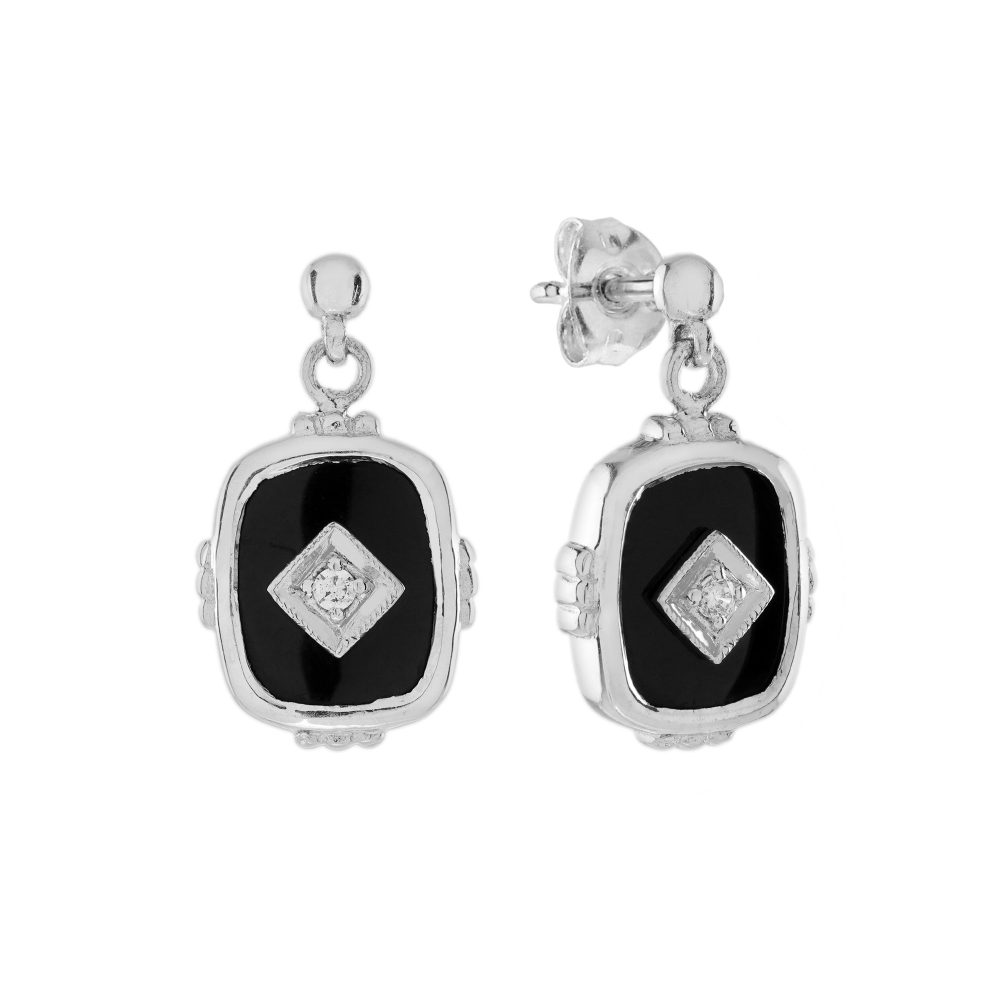
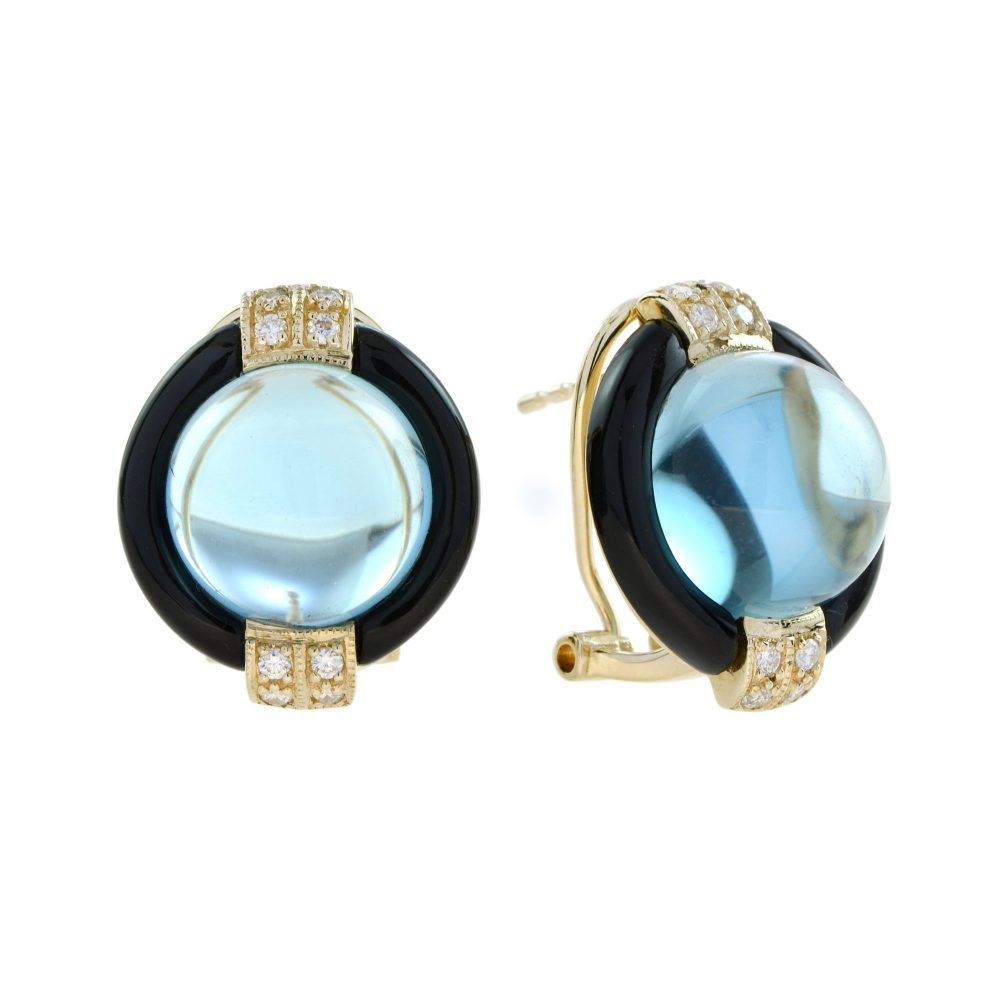
Stud Earrings
Frequently Asked Questions About How to Tell if a Gemstone Is Real
How can you tell if a gemstone is real?
Start by deciding what “real” means — natural, genuine rather than an imitation, or untreated. At home, a 10× loupe can expose an obvious fake through gas bubbles, mold seams, or facet doubling, but it cannot confirm a genuine stone. The only definitive answer is an independent laboratory report and a qualified gemologist, who identify a stone by its measurable physical properties.
What is the difference between real vs fake gemstones?
A real gemstone is the named material, whether mined (natural) or grown in a laboratory — both are genuine gemstones. A fake, properly speaking, is an imitation or simulant: a different material such as glass, cubic zirconia, or plastic made to look like the stone. A treated natural stone is still real but not untreated. So “fake” applies only to imitations, not to laboratory-grown or treated genuine stones.
Does the scratch test tell if a gemstone is real?
No — and you should not do it. The scratch test is destructive and can damage a genuine stone, while giving inconclusive results, since hardness resists scratching but says nothing about a stone’s identity. The fog, float, and sparkle tests are also unreliable, and moissanite passes several of them. Hardness is real, but professionals assess it without risking the stone.
Are lab-grown gemstones real?
Yes. A laboratory-grown gem is the same material as its mined counterpart, with the same chemical and physical properties, so it is a genuine gemstone rather than an imitation — it simply must be disclosed as laboratory-grown. Separating a natural stone from a laboratory-grown one is not an at-home task; it requires laboratory instruments such as spectroscopy and specialized diamond equipment.
When should you get a gemstone tested?
Whenever the value is significant, when you are buying and the seller cannot provide a verifiable report, when a piece is inherited or of unknown origin, or when something feels wrong — a flawless stone at a low price, or a description that shifts under questioning. A grading report from a laboratory such as GIA identifies the stone; an independent appraisal assigns a value for insurance. For a major purchase, both are worthwhile.