
Blog, Buying Guides
How to Choose an Engagement Ring: A Complete Guide
Key Takeaways: How to Choose an Engagement Ring
- The “months’ salary” budget rule is a marketing invention, not a financial guideline. Sotheby’s traces it to De Beers’ 1947 “A Diamond Is Forever” campaign, which first suggested one month’s salary and escalated the figure over decades. It answers a marketing goal, not a household budget.
- GIA’s cut grade — Excellent through Poor — applies only to round brilliant diamonds. As GIA states plainly, “diamond cut grades are only given to round brilliant cut diamonds because they are the only cut that have standardized facets.” A princess, cushion, oval, or pear-shaped stone never receives a GIA cut grade at all.
- Finger size genuinely changes with temperature and time of day. GIA notes that fingers “shrink in the cold and swell in the heat,” and that a morning measurement can differ from an afternoon one. A ring sized once, in one season, is a guess dressed as a measurement.
- Standard home insurance covers a small fraction of a ring’s value. The Insurance Information Institute puts the typical theft sublimit for jewelry under a standard homeowners policy at roughly $1,500 per item — far below most engagement rings — and a floater requires a professional appraisal first.
- How to choose an engagement ring comes down to five decisions, taken in this order: budget, stone, cut and shape, metal and setting, and size — verified, not guessed.
What Is the Right Way to Choose an Engagement Ring?
How to choose an engagement ring comes down to five decisions, taken in order: set a budget independent of income formulas, choose the stone, choose its cut and shape, choose the metal and setting, and confirm the size with a professional measurement rather than a guess. Each step has an objective check, and skipping the order tends to produce a ring chosen backward from a shape or size that never fit the budget in the first place.
How to Choose an Engagement Ring: The Checklist at a Glance
| Step | The decision | What to verify before buying |
|---|---|---|
| 1. Set the budget | A figure based on your own finances, not a rule of thumb | Whether the “months’ salary” figure you have heard is advice or a decades-old ad slogan |
| 2. Choose the stone | Diamond or colored gemstone; natural or laboratory-grown | Species, origin, and any treatment, disclosed in writing |
| 3. Choose the cut and shape | Round brilliant or a fancy shape | Whether a cited “cut grade” actually exists for that shape |
| 4. Choose the metal and setting | Karat and color of gold, or platinum; protective level of the setting | Karat fineness stated plainly; the setting style matched to how the ring will be worn |
| 5. Confirm the size and protect the purchase | A measured size, plus a plan for insurance and care | A measurement taken by a professional; the return and guarantee terms in writing |
How Should You Set an Engagement Ring Budget?
Most people who ask how to choose an engagement ring have already heard a number attached to income — two months’ salary, or three. It is worth knowing where that figure came from, because it did not come from personal finance. According to Sotheby’s, the diamond producer De Beers launched its “A Diamond Is Forever” campaign in 1947 through the agency N.W. Ayer & Son, with the line written by copywriter Frances Gerety. The campaign’s spending suggestion started at a minimum of one month’s salary and was raised over subsequent decades to roughly two to three months, a figure that tracked the industry’s marketing goals rather than any household’s balance sheet.
None of this makes an engagement ring a poor purchase. It means the budget belongs to the two people it affects, set from actual finances — savings, debt, and other near-term plans — rather than from a percentage of income invented to sell more diamonds. We do not present jewelry as a financial instrument, and no honest seller should promise that a ring appreciates in value; buy it as an object to be worn and kept, and let the budget follow from what that requires rather than from an old advertising line.
Once a figure is set, the money divides three ways in a typical gem-set ring: the stone is usually the largest cost, followed by the weight of precious metal, followed by workmanship, though hand-finished designs can shift labor closer to the stone’s share. Knowing that order is useful for a second reason — it tells you where a price far below market is probably economizing, which is nearly always the stone’s treatment disclosure, its certification, or the metal’s actual fineness.
Which Diamond Qualities Matter Most?
The standard vocabulary for diamond quality is the 4Cs — color, clarity, cut, and carat weight — a framework introduced by GIA so that buyers and sellers could describe a stone in the same terms. Applied practically: carat weight and color are facts you pay for directly; clarity affects the eye only below a certain grade, and many inclusions are invisible without magnification; and cut — the one C a craftsman controls rather than geology — is what makes a stone bright or dull at the same carat weight and price.
How Does Cut Grade Work for Fancy Shapes?
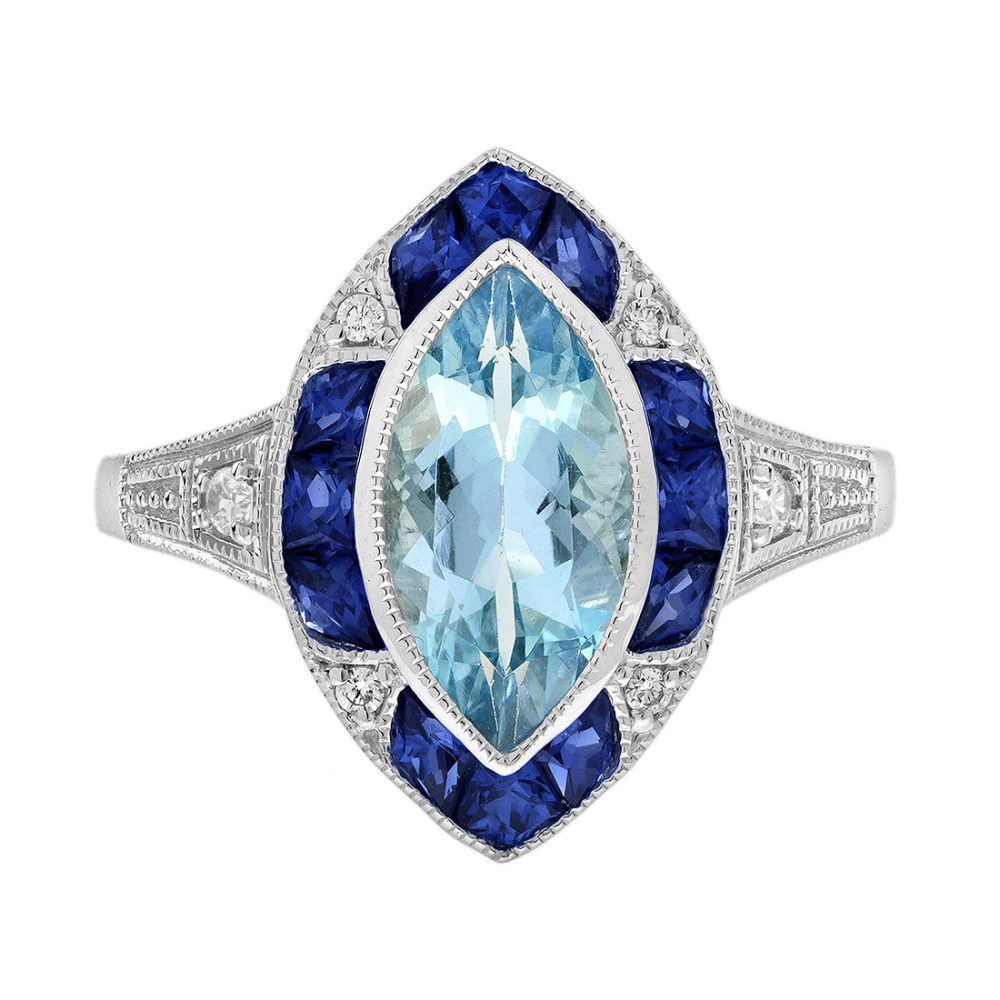
Here is the detail most buyers never hear, and it changes how a fancy-shaped stone should be evaluated. GIA issues a cut grade — Excellent through Poor — only for the round brilliant, “because they are the only cut that have standardized facets,” in GIA’s own words. A princess, cushion, oval, pear, marquise, or emerald cut never receives that grade on a GIA report, no matter how well it is proportioned. A seller who quotes a fancy shape’s “cut grade” is quoting something GIA does not issue.
That does not leave a fancy shape ungraded on paper — GIA still reports its polish and symmetry — but the overall proportion judgment shifts from the certificate to the eye and to a jeweler’s experience with that specific cut. For a fancy shape, ask to see the stone in person or in a well-lit video before committing, and weight the seller’s reputation and return policy more heavily than a single number, because the number that reassures buyers of round brilliants does not exist here.
Should You Choose a Diamond or a Colored Gemstone?
Either is a legitimate, traditional choice, and the decision has more to do with color, durability, and origin than with correctness. Sapphire and ruby, both corundum, reach Mohs 9 with excellent toughness and no cleavage plane, which makes them arguably better suited than diamond to the daily impact a ring absorbs, since diamond’s own hardness comes with cleavage in four directions. Emerald sits lower on toughness and calls for a protective setting regardless of budget. The full reasoning behind those figures — hardness, toughness, and the setting each stone calls for — is a subject in its own right in our broader gemstone guide, and we cover it in depth in a dedicated durability guide as well.
Origin is the second question, and it is a regulated one, not a matter of preference alone. A natural gemstone formed in the earth; a laboratory-grown stone shares its chemistry but not that origin, and under the FTC Jewelry Guides (16 CFR Part 23) laboratory-grown material must be clearly qualified as such, while the words “real,” “genuine,” and “natural” may not describe a stone produced artificially. Our own position is straightforward: we set natural gemstones, and we regard traceable natural material as central to what makes an engagement ring the kind of object worth keeping for a lifetime.
Related: Sapphire Meaning, Colors & September Birthstone · Ruby Meaning, Symbolism & July Birthstone Guide · Emerald Meaning & May Birthstone Guide
Which Metal and Setting Style Should You Choose?
Gold for an engagement ring is nearly always alloyed rather than pure, because pure gold is too soft to hold a stone through daily wear. Eighteen-karat gold is the fine-jewelry standard for its saturated color and its ability to take crisp detail; fourteen-karat trades a slightly paler color for a harder-wearing alloy better suited to a ring that never comes off. White gold is finished with a thin rhodium layer that wears with time and is routinely re-applied. Platinum needs no plating and develops a soft patina some wearers prefer to prevent.
The setting decides how much protection the center stone actually has, independent of the stone’s own hardness, and for a ring worn every day this matters as much as the stone itself.
| Setting | How it protects the stone | Best suited to |
|---|---|---|
| Solitaire prong | Maximum light and visibility; minimum metal coverage | Diamond, ruby, and sapphire — stones hard enough to need little shielding |
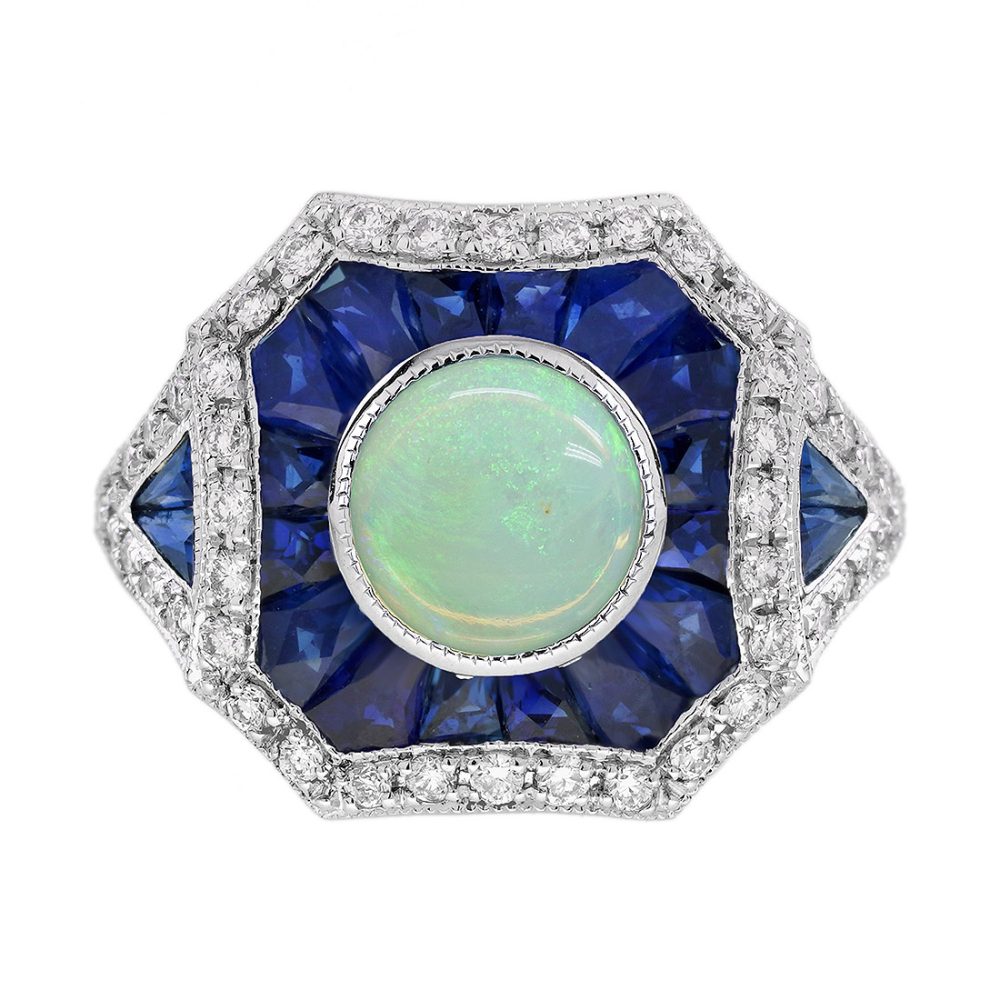
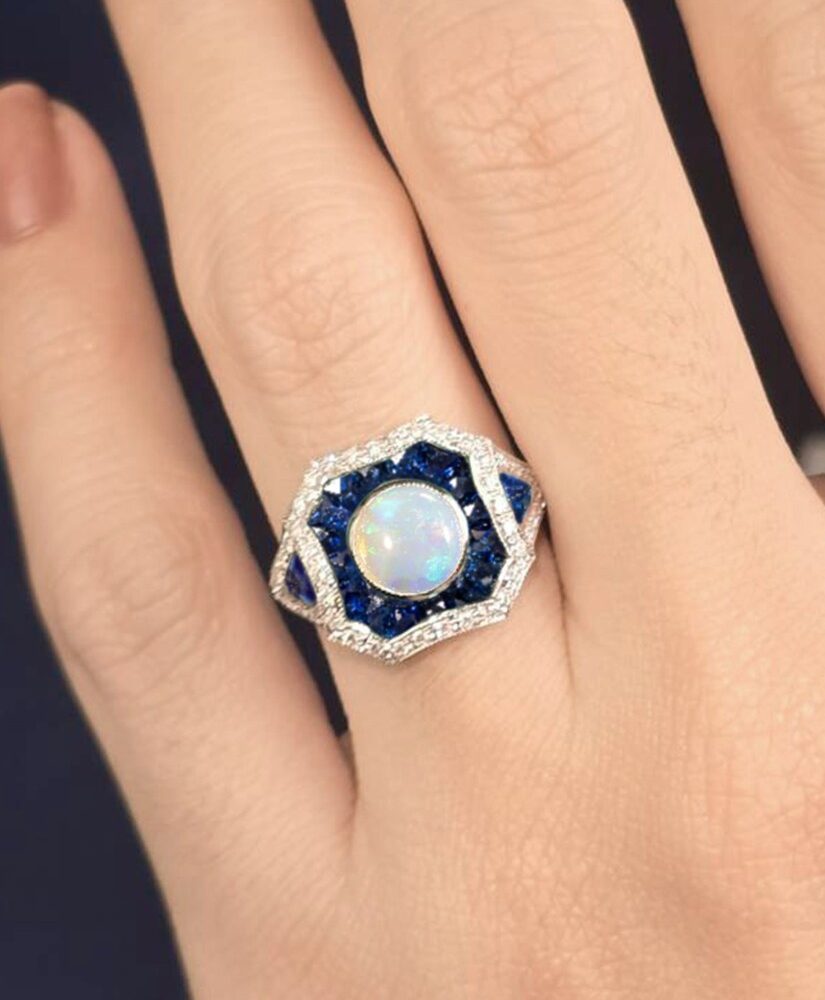
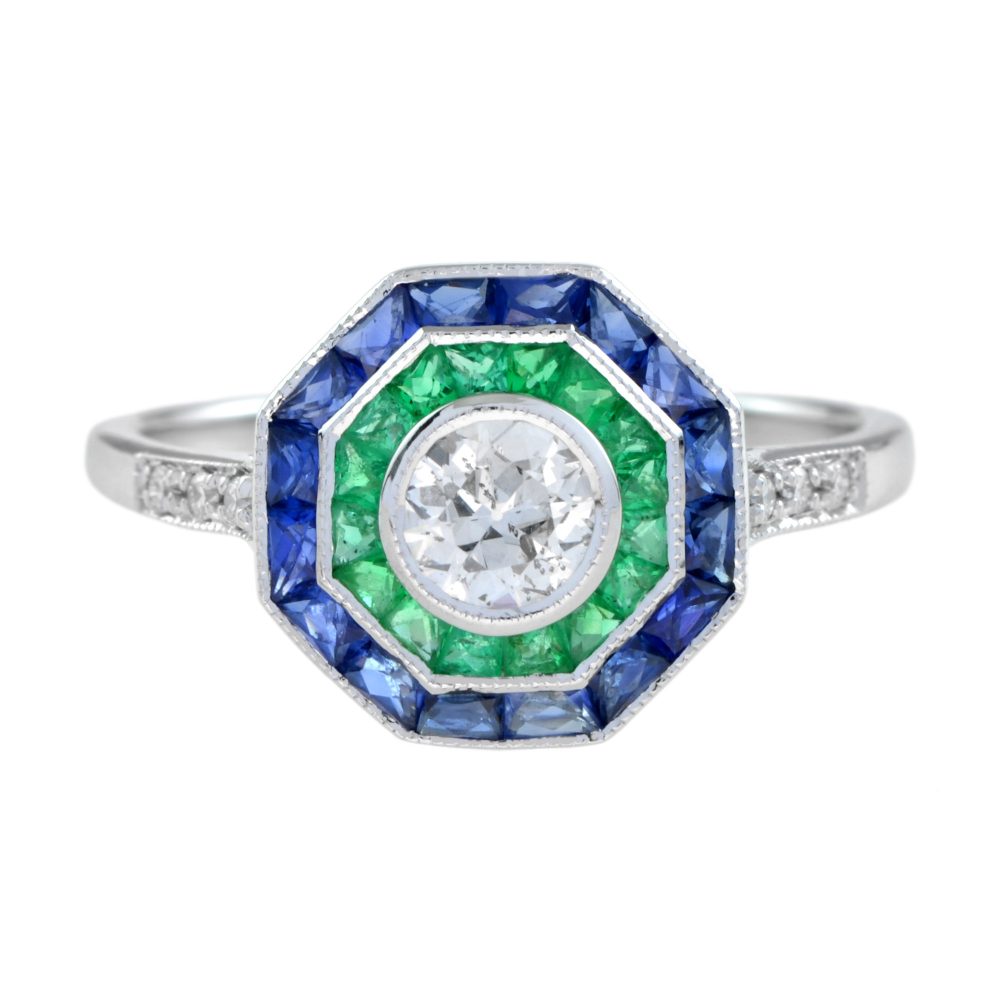
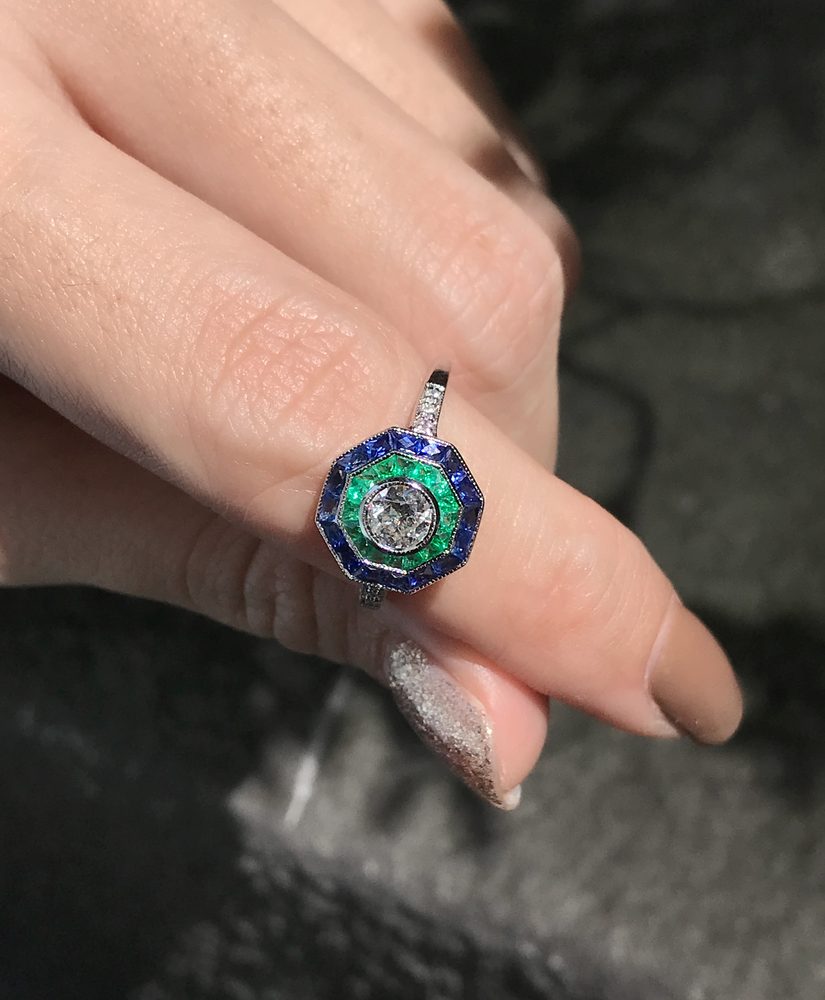
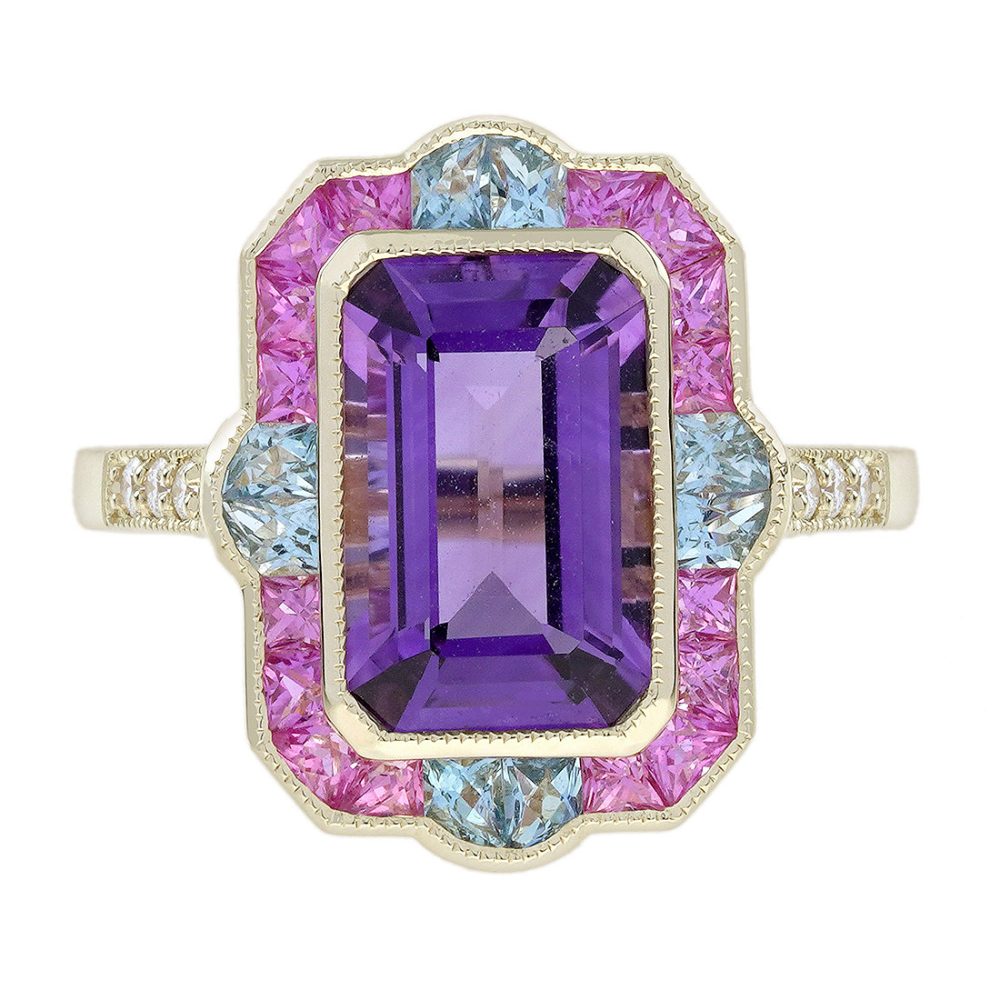
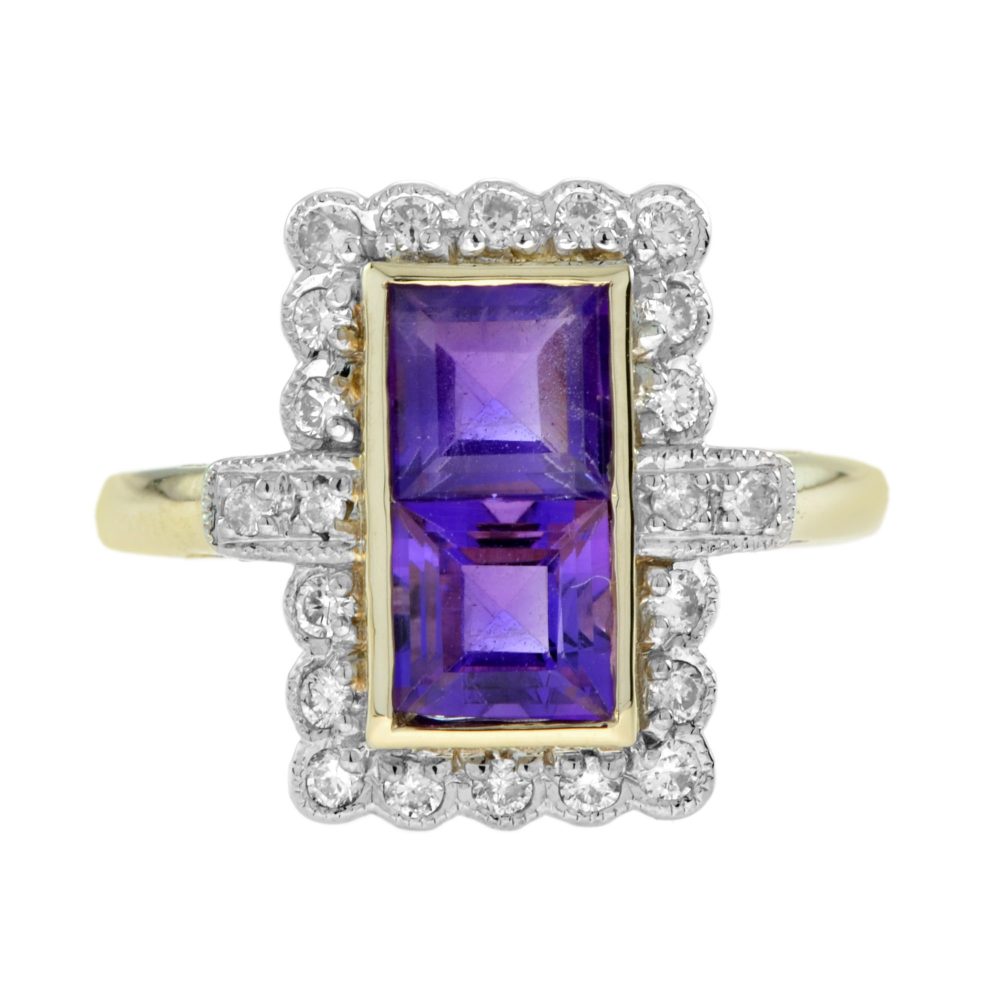
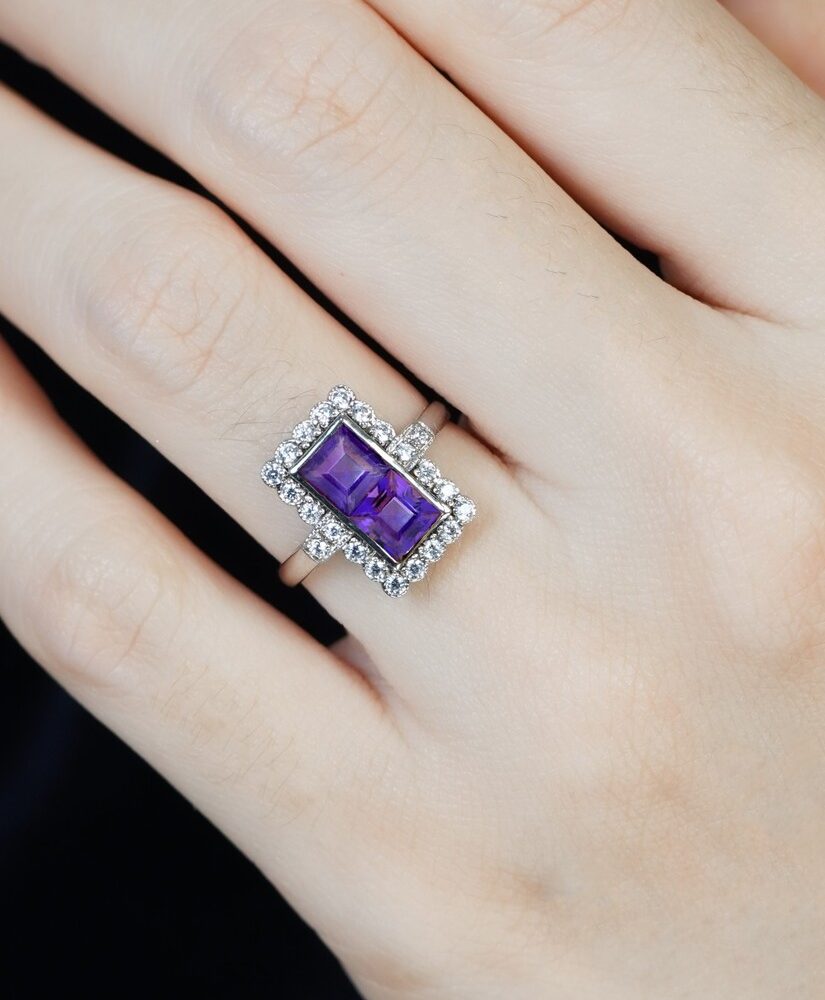
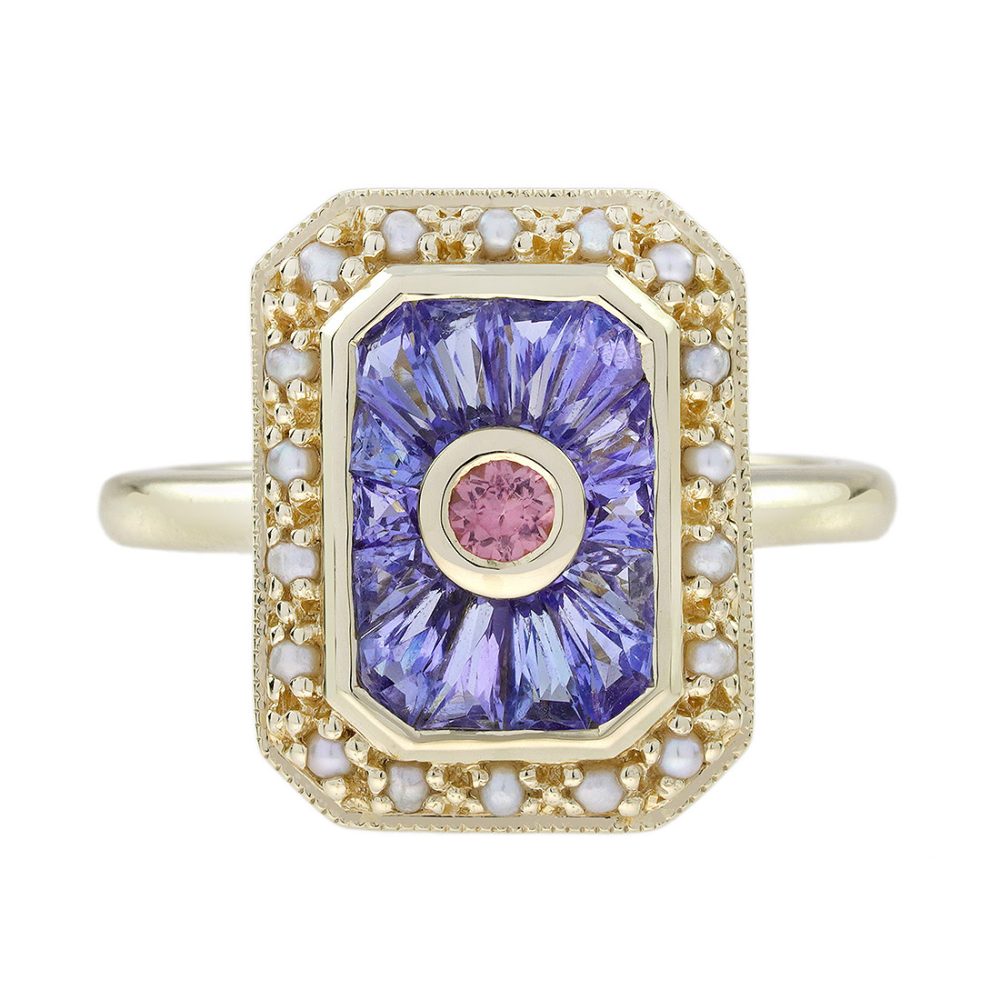
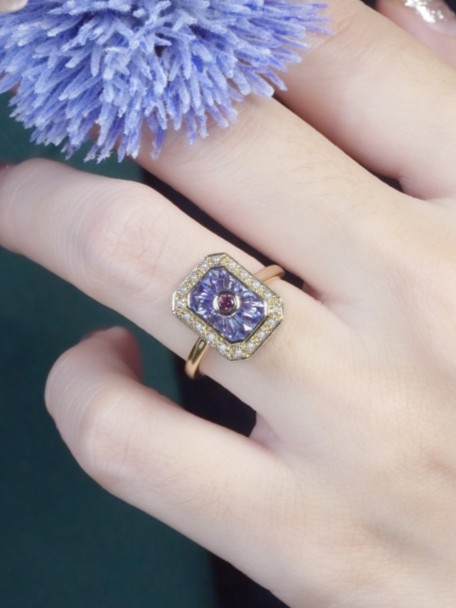
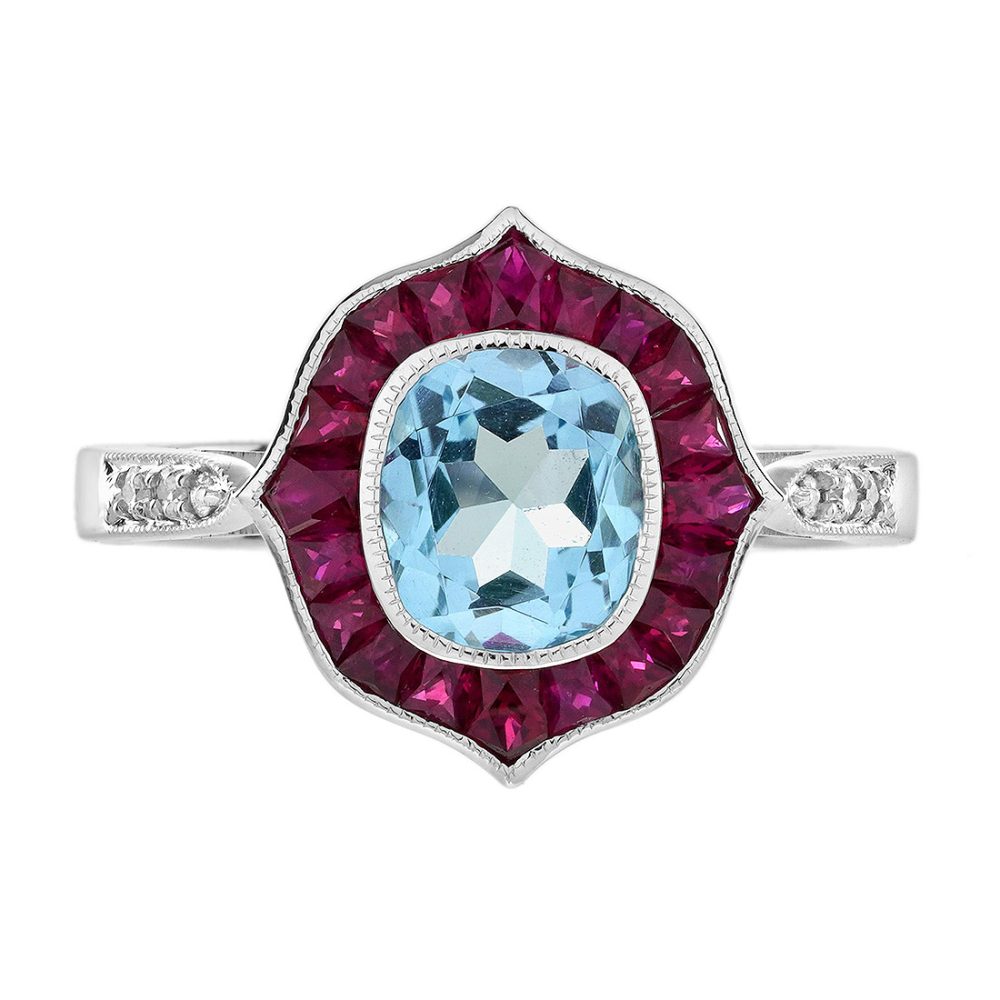
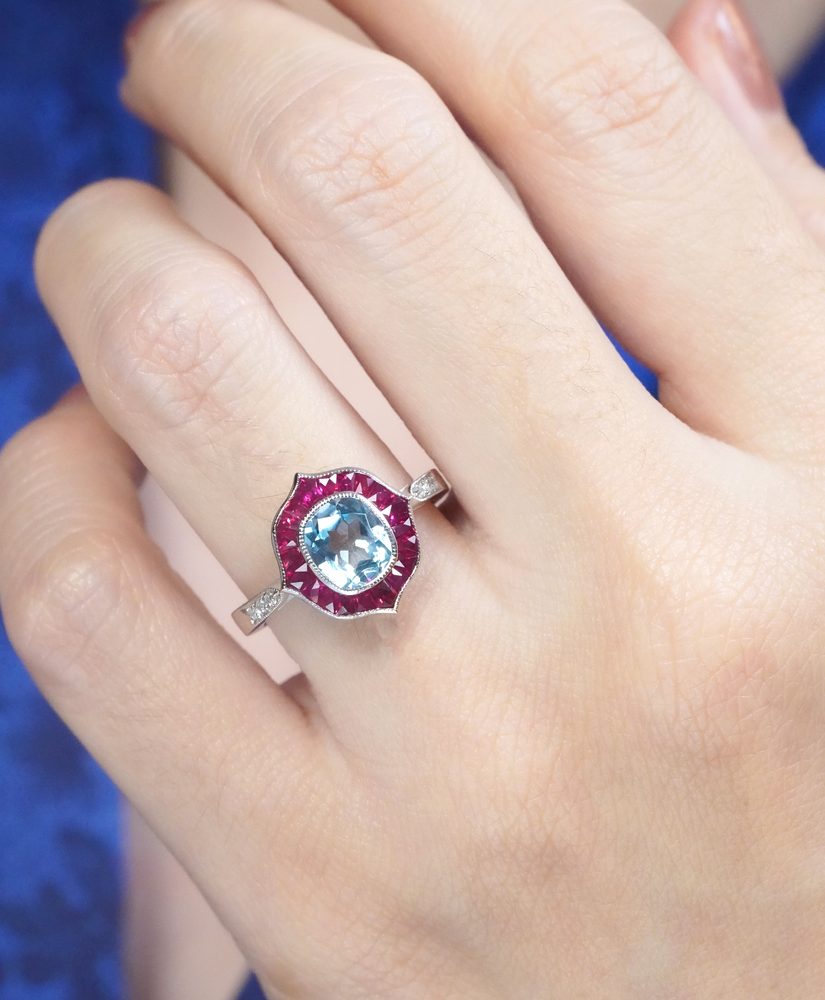
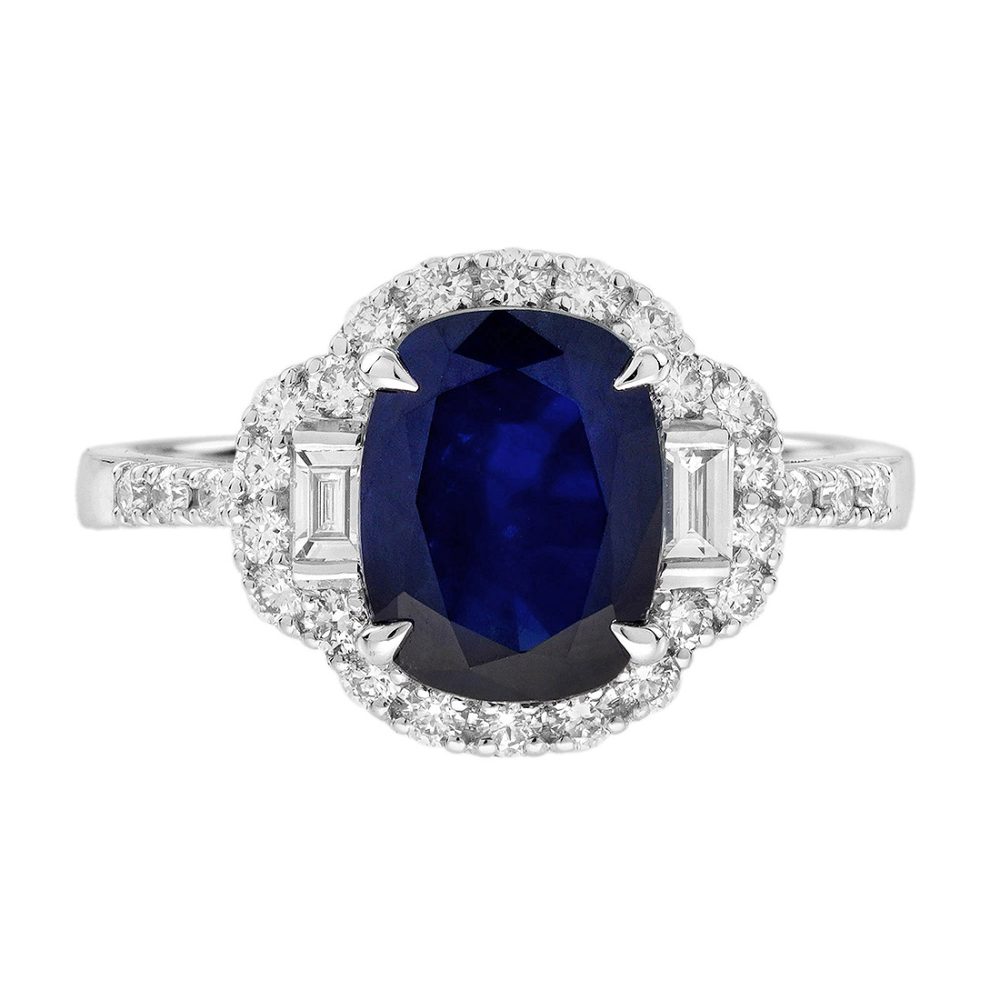
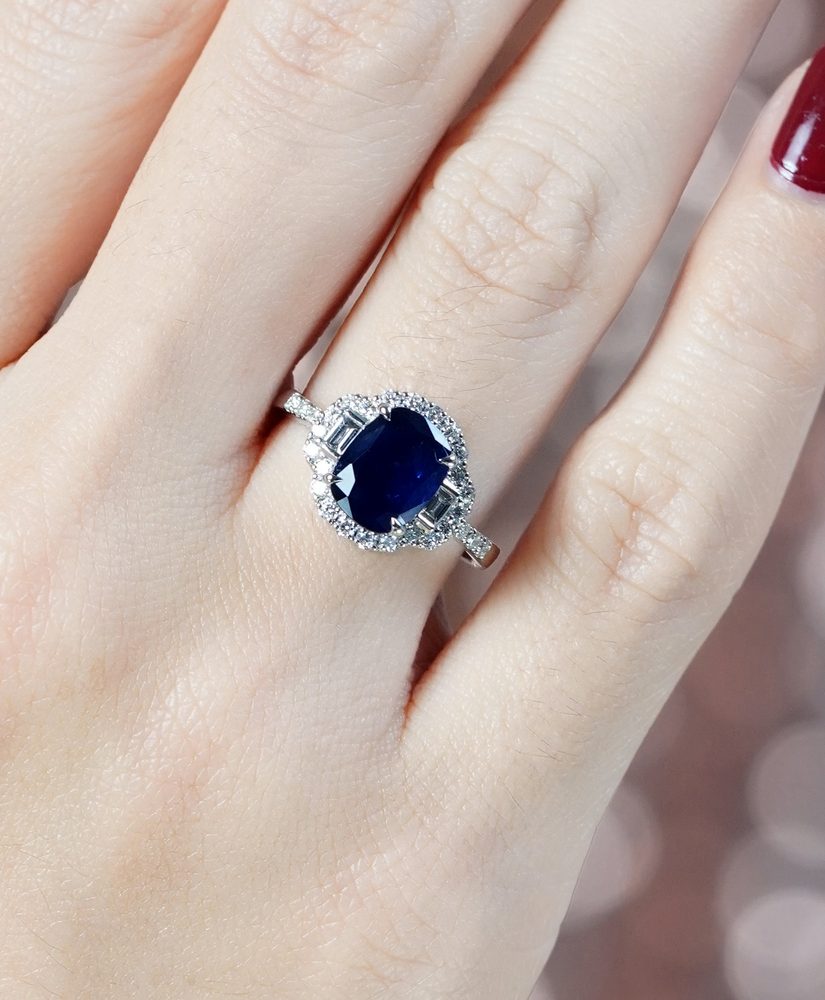
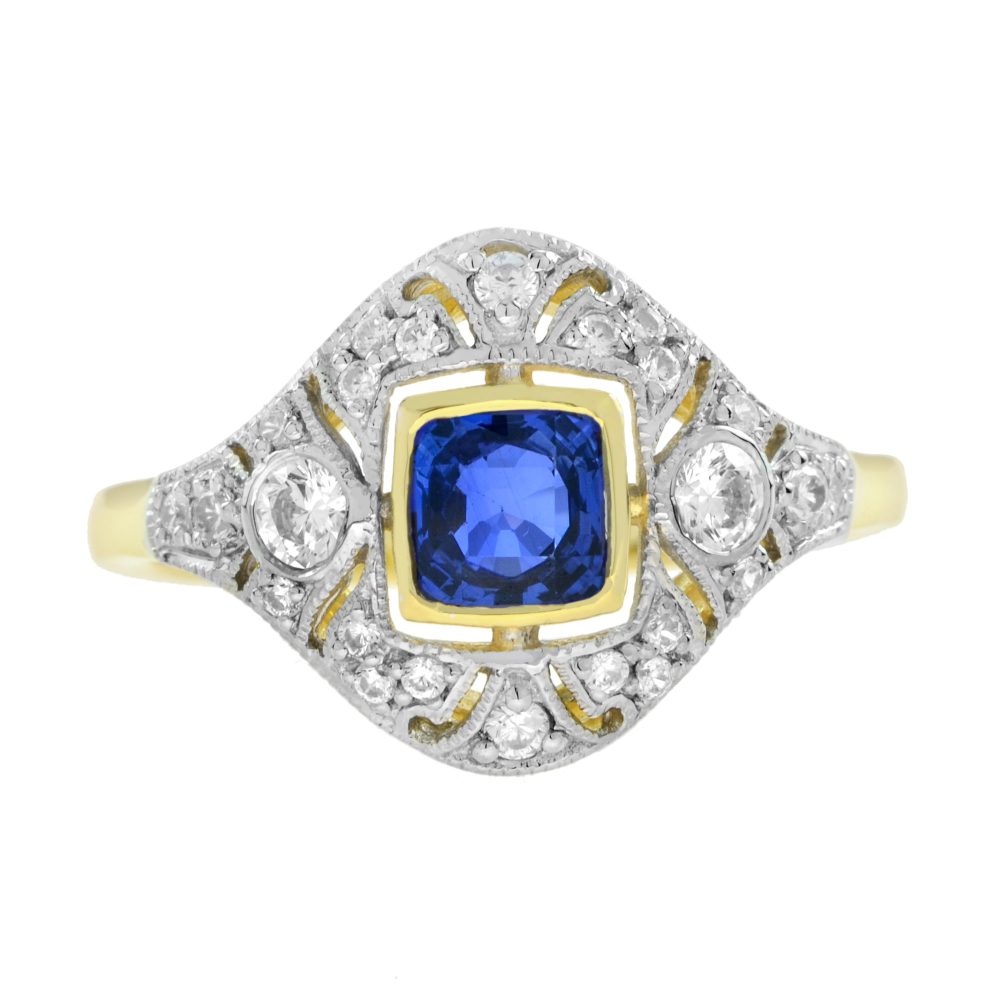
| Halo | A ring of smaller stones raises the surrounding metal, absorbing glancing knocks before the center stone does | Any center stone; especially useful for a smaller or softer stone that benefits from extra visual weight |
| Bezel | A continuous metal collar around the girdle — the most protective standard setting | Softer or brittle stones, cabochons, and any design meant for hard daily use |
| Three-stone | Side stones share visual and structural weight with the center stone | Buyers who want a design with symbolic weight beyond a single stone |
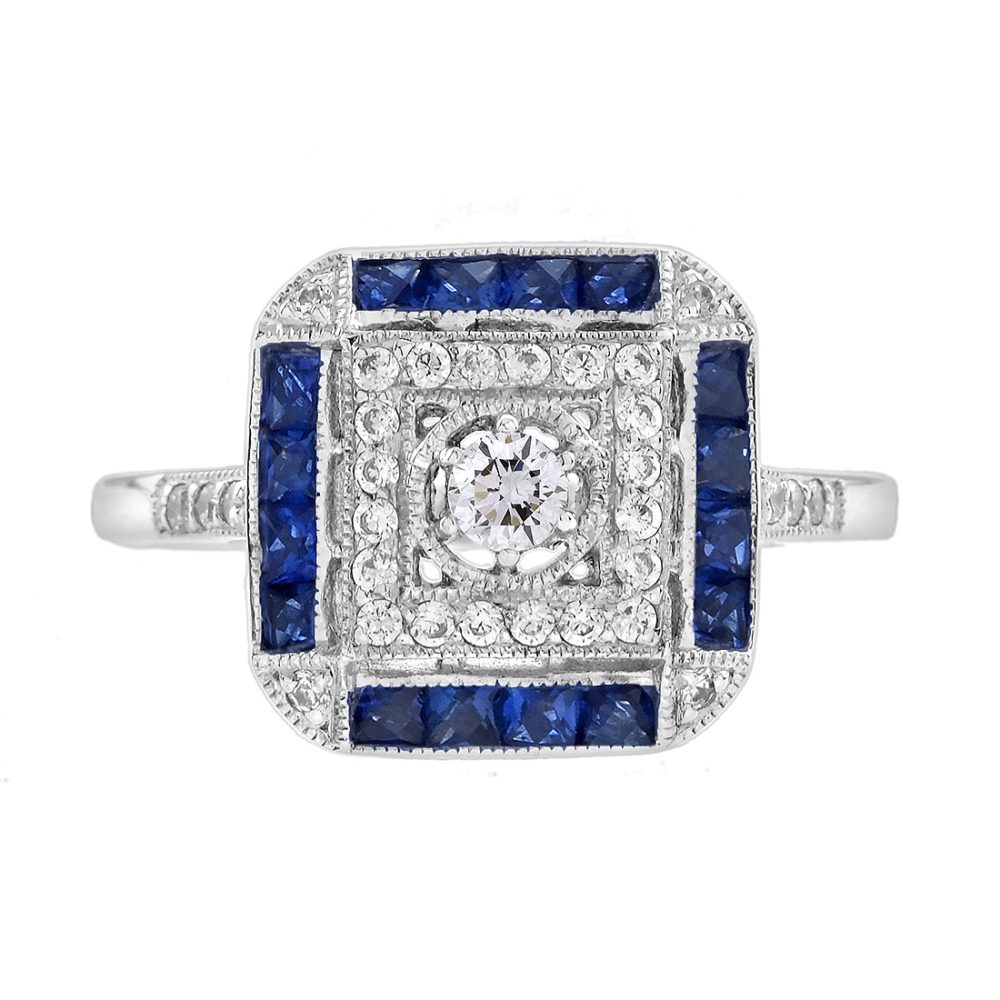
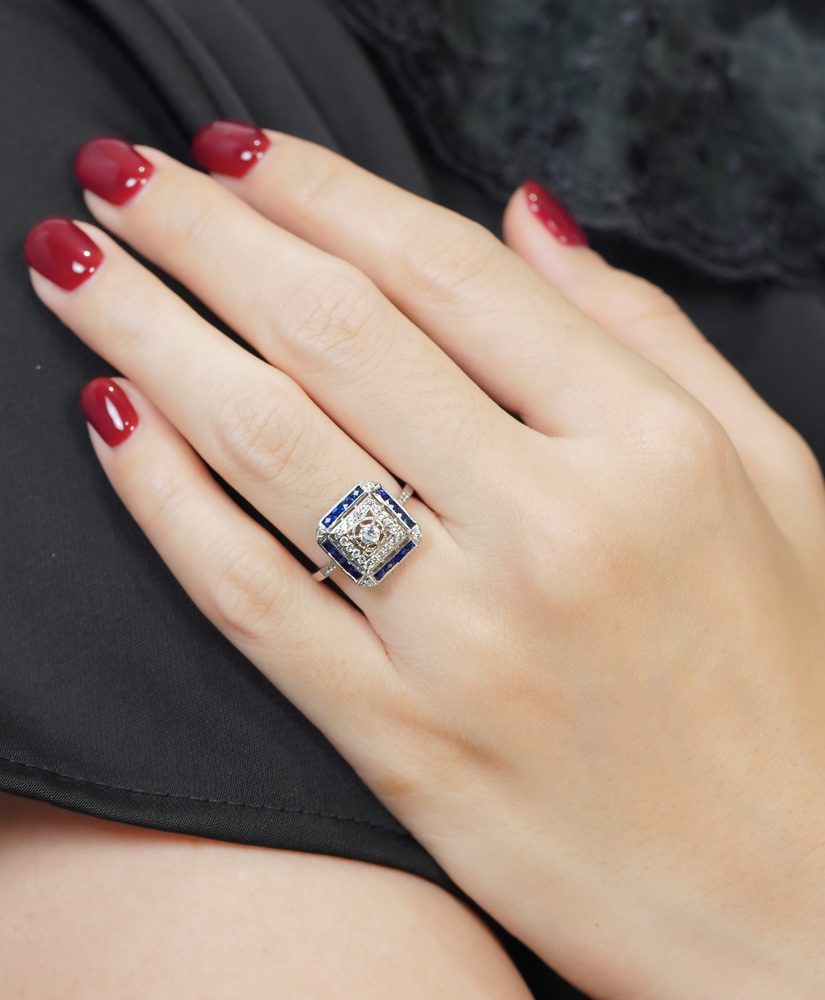
| Channel or pavé | Small stones set under pressure between metal walls or beads | Hard, cleavage-free accent stones only — the pressure involved is a poor match for a cleavage-prone stone |
Workshop insight: When a client brings us a stone softer or more brittle than the design first called for, the setting is where we solve it, not the stone. Raising a halo’s profile by a fraction of a millimeter, or moving from a claw prong to a bezel, changes almost nothing about how the ring looks across a room and changes everything about how it survives a decade of wear.
Related: Shop Engagement Rings
How Do You Get the Ring Size Right?
A ring bought in the wrong size begins its life at the repair bench, and the size itself is less fixed than it feels. GIA notes that fingers “shrink in the cold and swell in the heat,” and that “a measurement taken on a cool morning can also differ from one taken in the afternoon, as the temperature rises.” A single measurement, taken once, in one season, is closer to an estimate than a fact, and a professional using finger gauges will factor in temperature, humidity, and time of day in a way a string measured at home cannot.
Direction matters once a resizing is needed. GIA’s own guidance is a useful rule of thumb: removing metal from a ring that is too big is a simpler repair than adding metal to a ring that is too small. A ring bought slightly loose is therefore a simpler repair than one bought slightly tight, and pavé or eternity settings resize far less easily than a plain shank because the stones run to the edge of the metal.
Workshop insight: For a surprise proposal, where the recipient cannot be measured directly, we ask for a ring borrowed from the correct finger rather than a guessed number, and we build the commission with room to size in either direction once. Where a size is confirmed directly, we still ask for it twice — once earlier in the day, once later — and work from the larger of the two, on the reasoning that a ring can always be taken in and should never have to be forced.
Our own size guide covers the at-home measurement method for cases where a professional fitting is not practical before a proposal.
How Should You Protect the Ring After You Buy It?
An engagement ring is usually the most valuable object either partner owns outright, and standard home insurance was not built with that in mind. The Insurance Information Institute puts the typical homeowners or renters policy theft sublimit for jewelry at roughly $1,500 per item — a figure most engagement rings exceed on the stone alone. Real protection requires a separate floater or scheduled personal property endorsement, and the Institute is direct about the prerequisite: “before purchasing a floater, the items covered must be professionally appraised.”
Two practical steps follow. Get an independent written appraisal soon after purchase — not the sales receipt, which states a price rather than an insurable value — and take it to an insurance professional before assuming a homeowners policy already covers the ring. Photograph the piece and keep the appraisal somewhere other than the same jewelry box, since both tend to be needed at the same unfortunate moment.
Beyond insurance, protection is also a matter of ordinary care: clean by the stone’s stability rather than by habit, store pieces separately so a harder gem does not mark a softer one, and read a seller’s guarantee and return policy before the purchase rather than after a problem appears.
How Does Working with a Jeweler Differ from Buying Off the Shelf?
A ready-to-ship ring can be examined and delivered immediately, which suits a proposal on a fixed date. A made-to-order or bespoke commission is built for the two people it is for — stone, cut, metal, and setting chosen to order rather than selected from what already exists — and typically takes four to eight weeks in our own workshop, because the stone is sourced and the piece is built rather than pulled from stock.
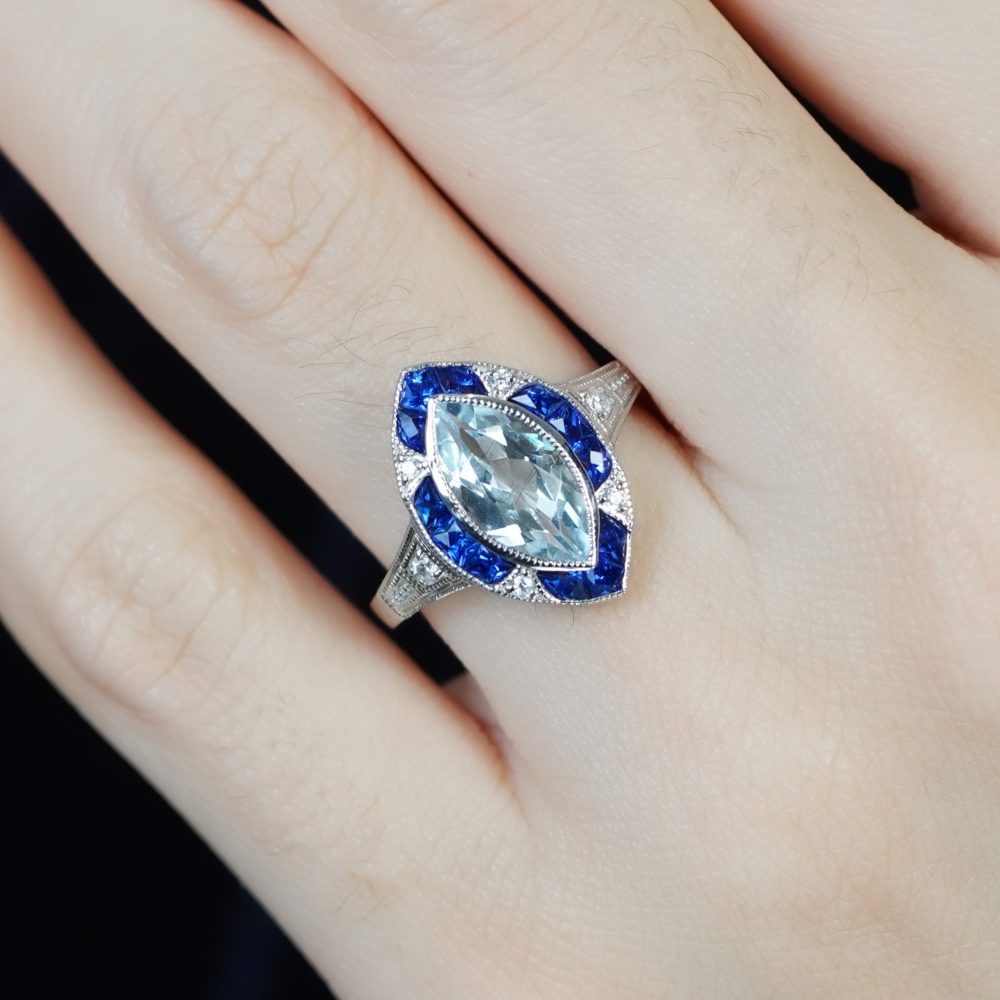
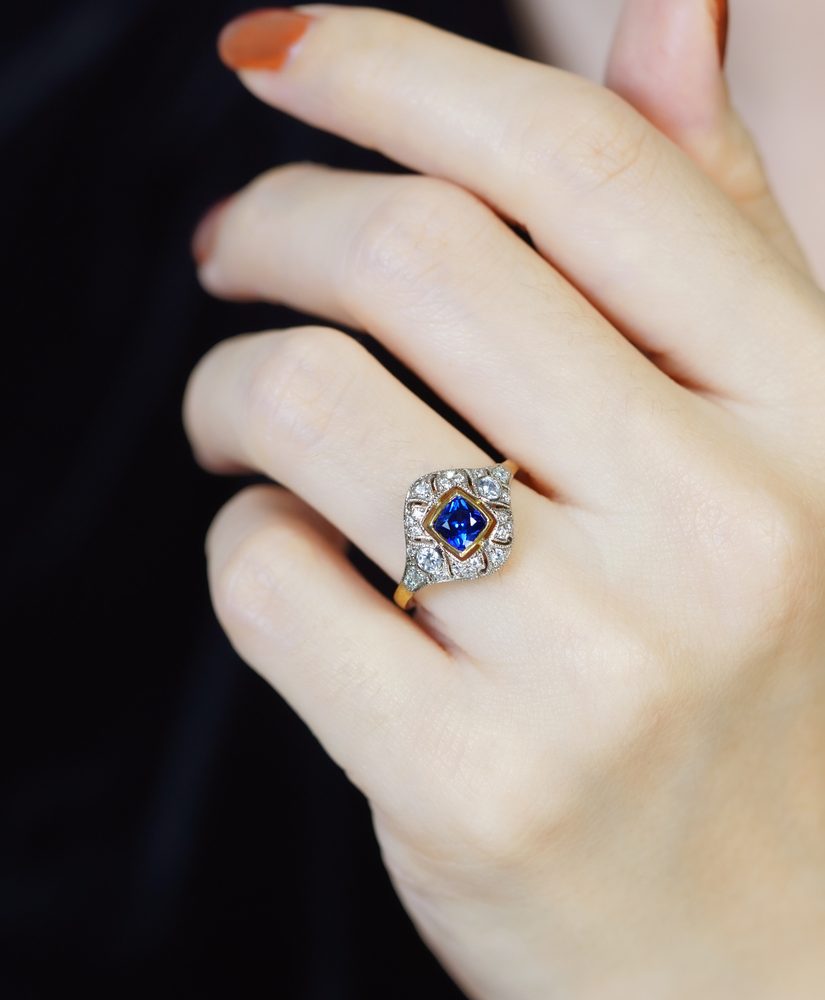
The quiet advantage of working directly with the maker is that every decision in this guide becomes a conversation rather than a guess made from a product photo: which setting actually protects a particular stone, which fancy shape suits a particular hand, what the size should be given how the ring will be worn. That conversation is difficult to have with an intermediary who did not set the stone.
What Should You Remember When Choosing an Engagement Ring?
How to choose an engagement ring, reduced to its essentials: set the budget from your own finances rather than an inherited number, understand that a cut grade only exists for a round brilliant, choose the stone for durability as much as color, match the setting to how the ring will actually be worn, and treat the size as something to be measured properly rather than guessed once. Protect the purchase afterward with a real appraisal and the seller’s guarantee in writing.
None of these steps requires expertise, and none of the figures behind them — 1947, $1,500, a cut grade that only round brilliants receive — are hidden. They simply are not the figures most buying advice repeats. A ring chosen this way is one built to be worn for the life it is meant to represent, not one chosen from a slogan.
Sources: Sotheby’s — How De Beers Changed the Diamond Market with One Simple Tagline · GIA — The 4Cs of Diamond Quality · GIA — Diamond Cut · GIA — How to Determine Ring Size · Insurance Information Institute — Special Coverage for Jewelry and Other Valuables · FTC — Guides for the Jewelry, Precious Metals, and Pewter Industries (16 CFR Part 23)
The Art of the Wild
Frequently Asked Questions About Choosing an Engagement Ring
How much should I spend on an engagement ring?
There is no correct percentage of income. The familiar “two to three months’ salary” figure traces to De Beers’ 1947 “A Diamond Is Forever” advertising campaign, which began by suggesting one month’s salary and raised the figure over subsequent decades. Set a budget from your own finances — savings, debt, and near-term plans — rather than from a decades-old advertising line.
Do all diamonds get a GIA cut grade?
No. GIA issues a cut grade of Excellent through Poor only for round brilliant diamonds, because it is the only shape with standardized facets. Fancy shapes such as princess, cushion, oval, pear, and emerald cut never receive that grade, regardless of how well they are proportioned, so a seller quoting a “cut grade” for a fancy shape is citing something GIA does not issue.
Should I choose a diamond or a colored gemstone for an engagement ring?
Both are legitimate, traditional choices. Sapphire and ruby reach Mohs 9 with excellent toughness and no cleavage plane, which makes them well suited to daily wear; diamond is harder still but has cleavage in four directions. The better question is usually durability and color preference rather than one stone being objectively correct for an engagement ring.
How do I make sure I get the right ring size?
Have a professional measure with finger gauges rather than relying on a single at-home measurement, since finger size changes with temperature and time of day. If a direct measurement is not possible, such as for a surprise proposal, a borrowed ring from the correct finger is more reliable than a guessed number, and it is easier to size a ring down than to enlarge one.
Do I need to insure an engagement ring?
Most standard homeowners or renters policies cap jewelry theft coverage at roughly $1,500 per item, well below most engagement rings. A separate floater or scheduled personal property endorsement gives real protection, and insurers typically require a professional appraisal before issuing one.