
Buying Guides, Blog
Art Deco-Inspired Engagement Rings: A Buyer’s Guide
Key Takeaways: Art Deco Engagement Rings
- The name “Art Deco” is younger than the jewelry it describes. The style takes its name from the 1925 Paris Exposition Internationale des Arts Décoratifs et Industriels Modernes, but the term “Art Deco” itself was not coined until 1968, when historian Bevis Hillier’s book popularized it — more than four decades after the movement peaked.
- “Antique” has a legal age threshold, and it is arriving now. Under the US Harmonized Tariff Schedule, heading 9706 covers “antiques of an age exceeding 100 years.” A piece made in 1926 crosses that line in 2026; most Art Deco jewelry, made through 1935, will not qualify for another decade.
- Genuine Art Deco rings and Art Deco-inspired rings are two different purchases, not two names for the same thing — one is a 90-to-105-year-old object with a condition history, the other is newly made to the same design language. Neither is more “correct”; they carry different risks and different guarantees.
- Platinum became the era’s signature metal for a practical reason. Its strength and malleability suited the fine filigree and millegrain detailing the style demanded, in a way softer white-gold alloys of the time could not match.
- Old European and Old Mine cut diamonds are not cutting mistakes — they are a different optical choice. GIA describes them as trading brilliance for fire: fewer, larger facets that throw bold flashes of color rather than the crisp white sparkle of a modern round brilliant.
What Makes a Ring Art Deco-Inspired?
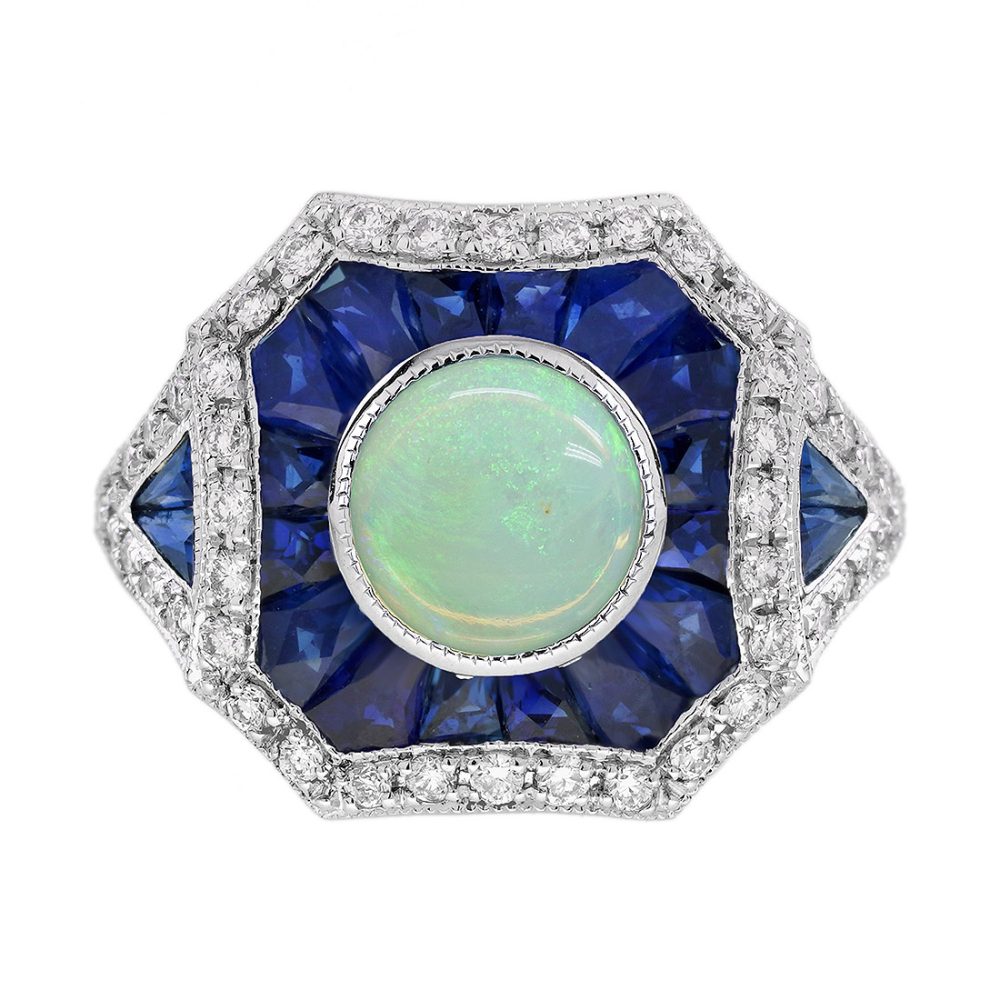
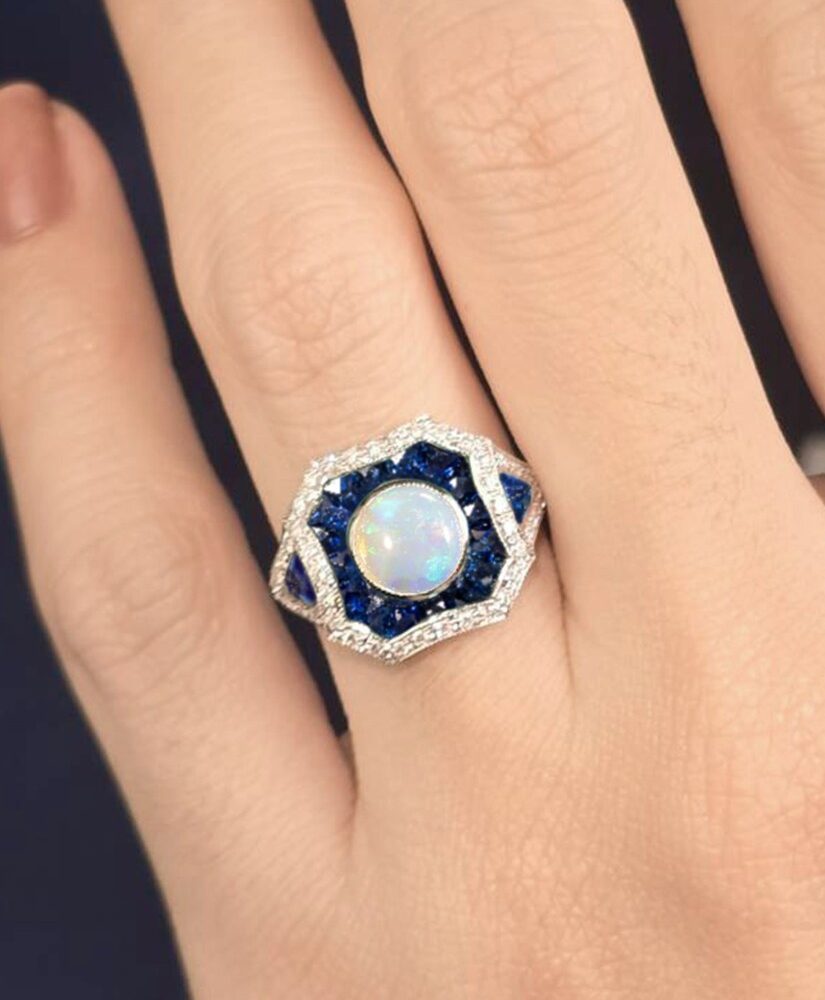
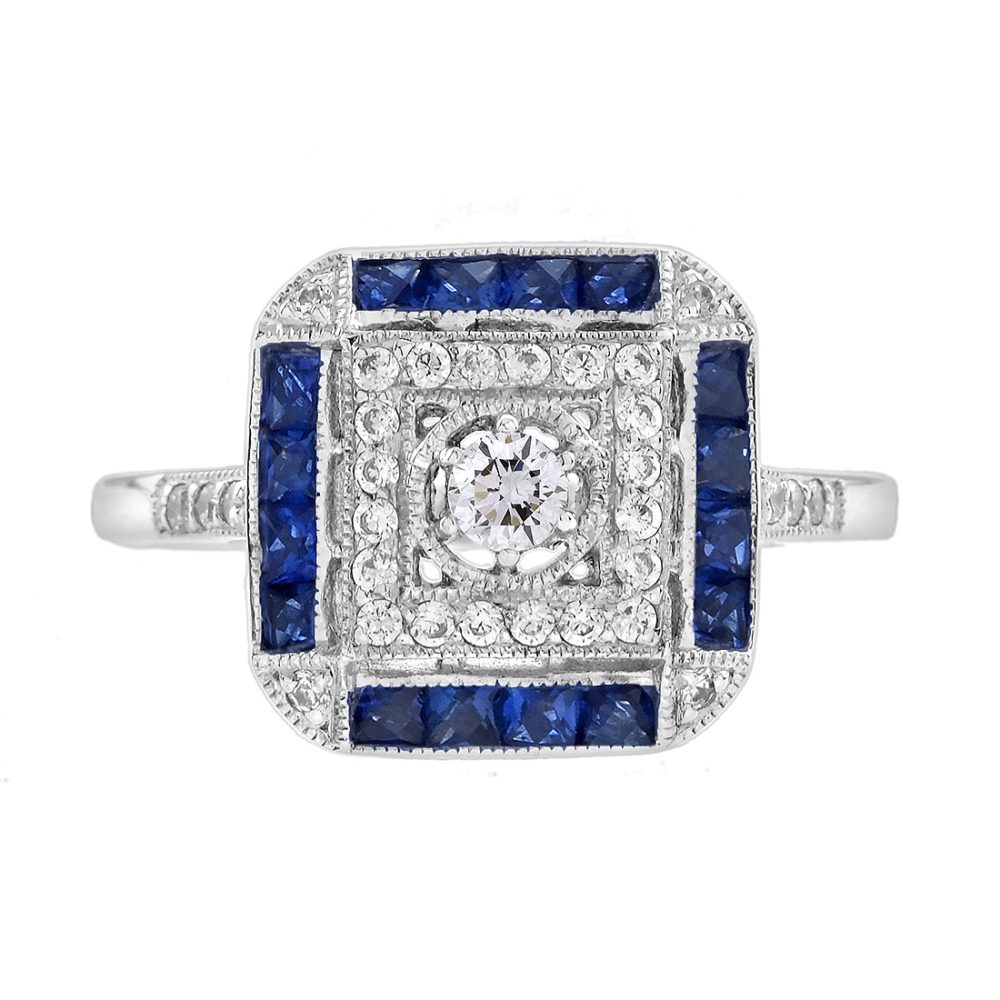
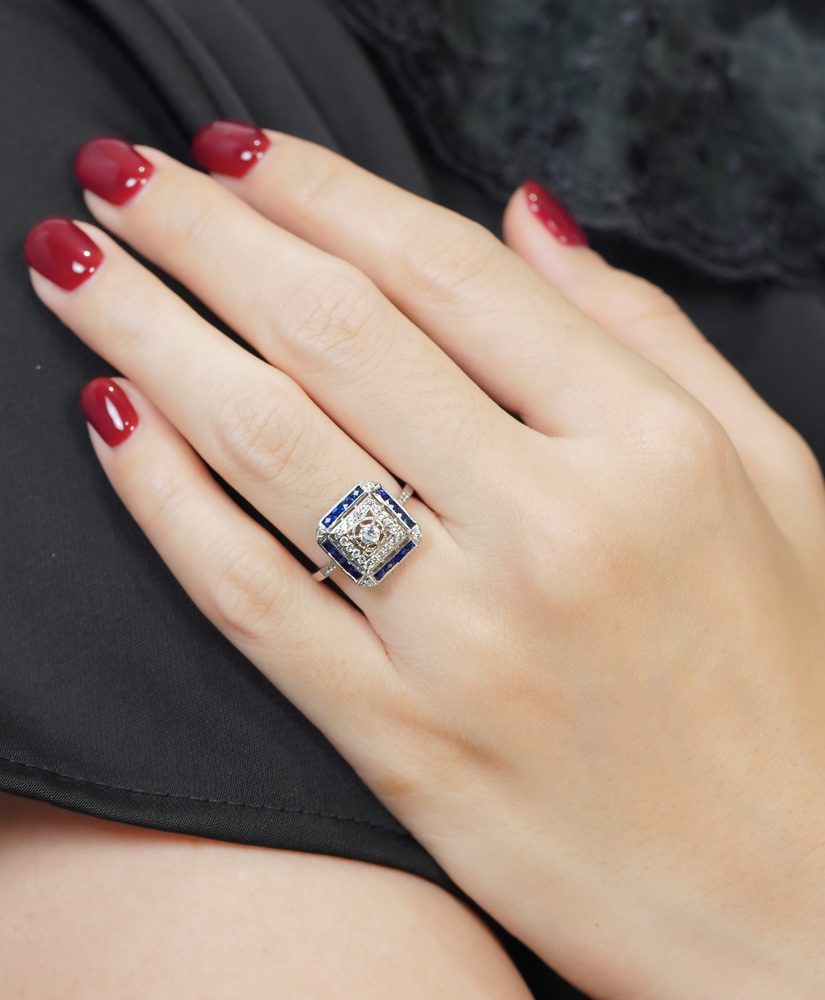
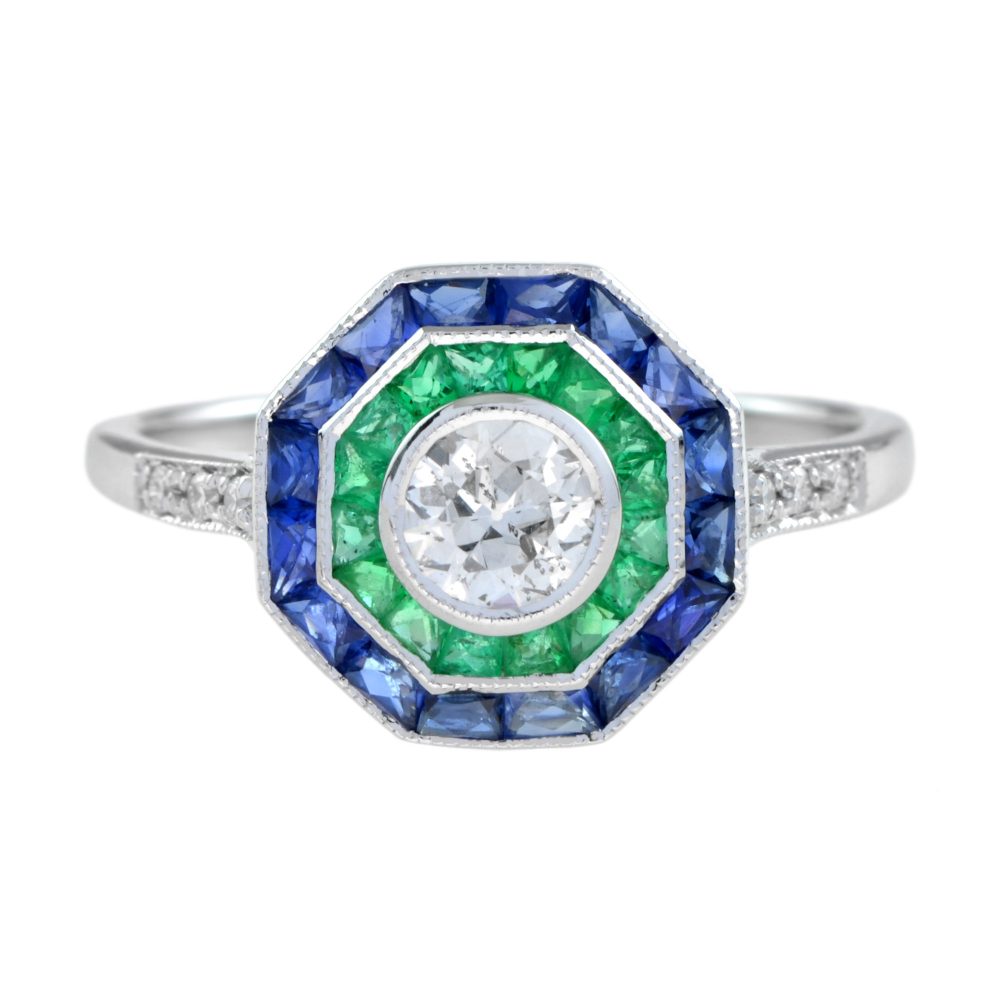
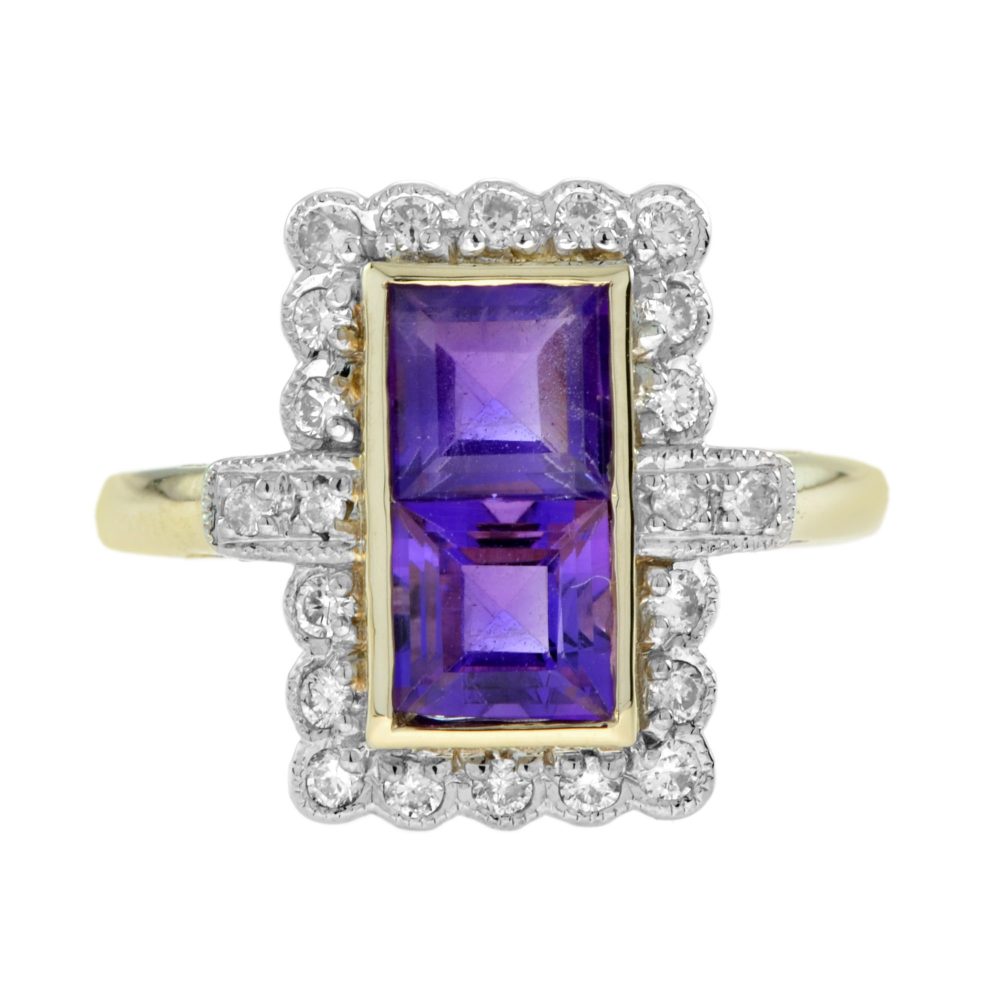
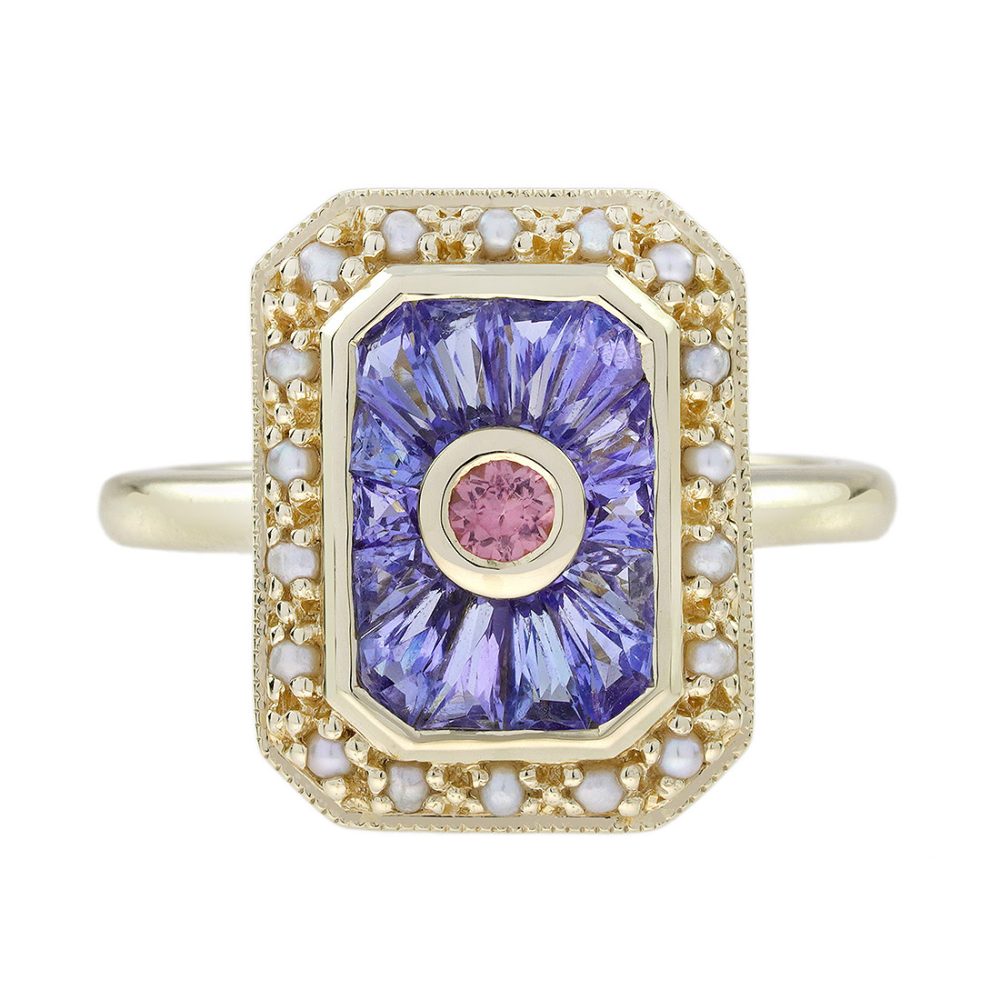
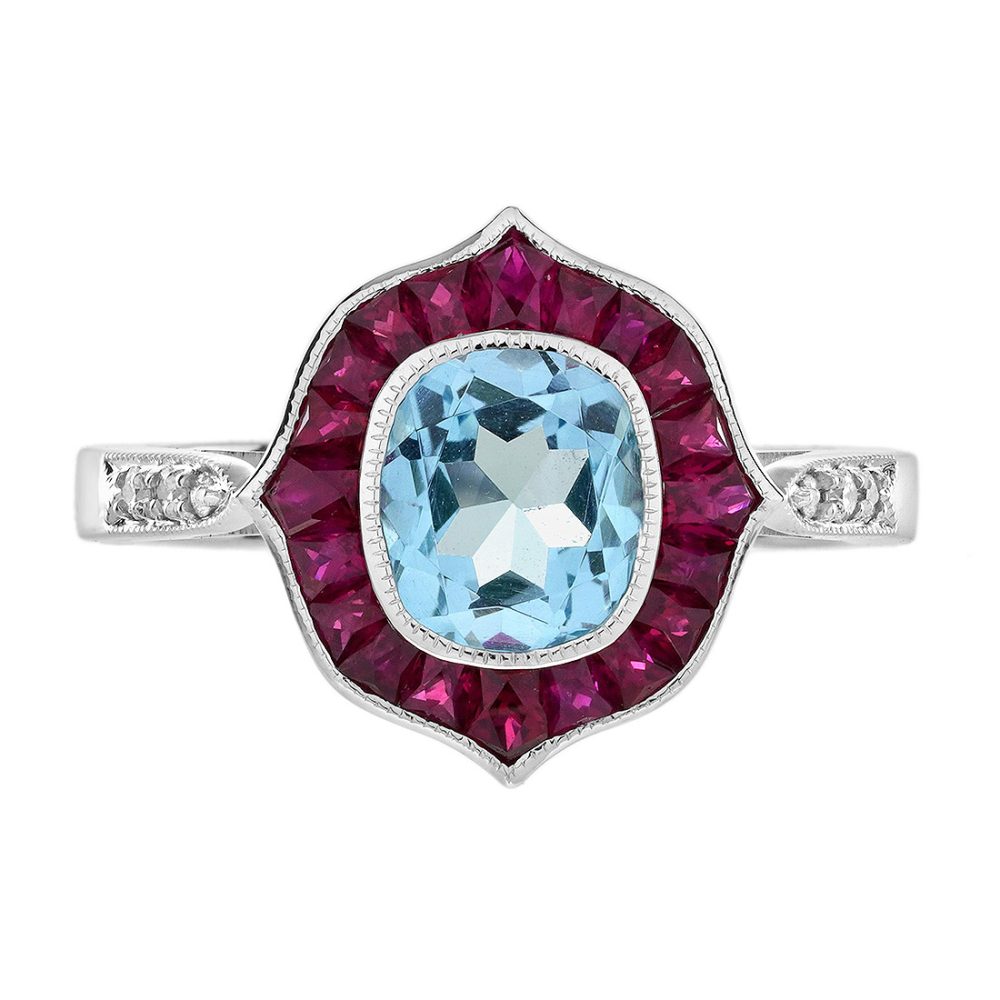
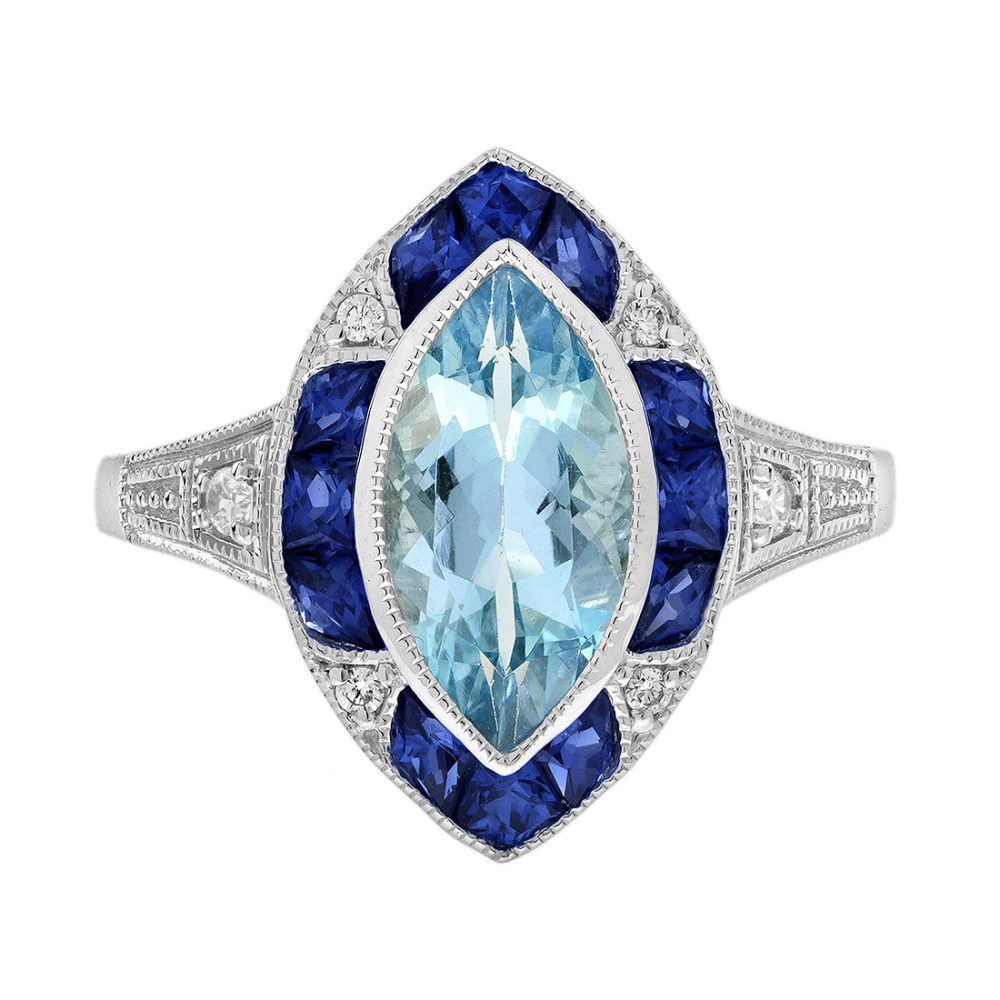
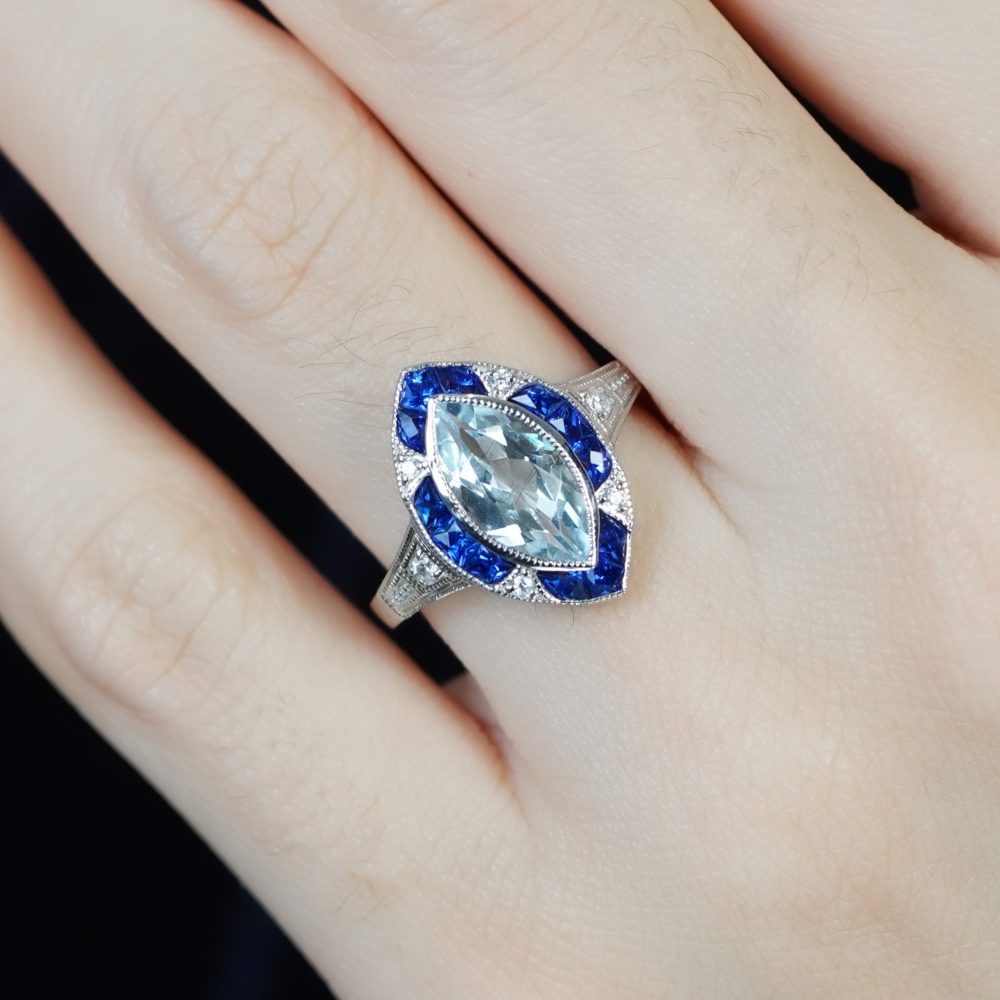
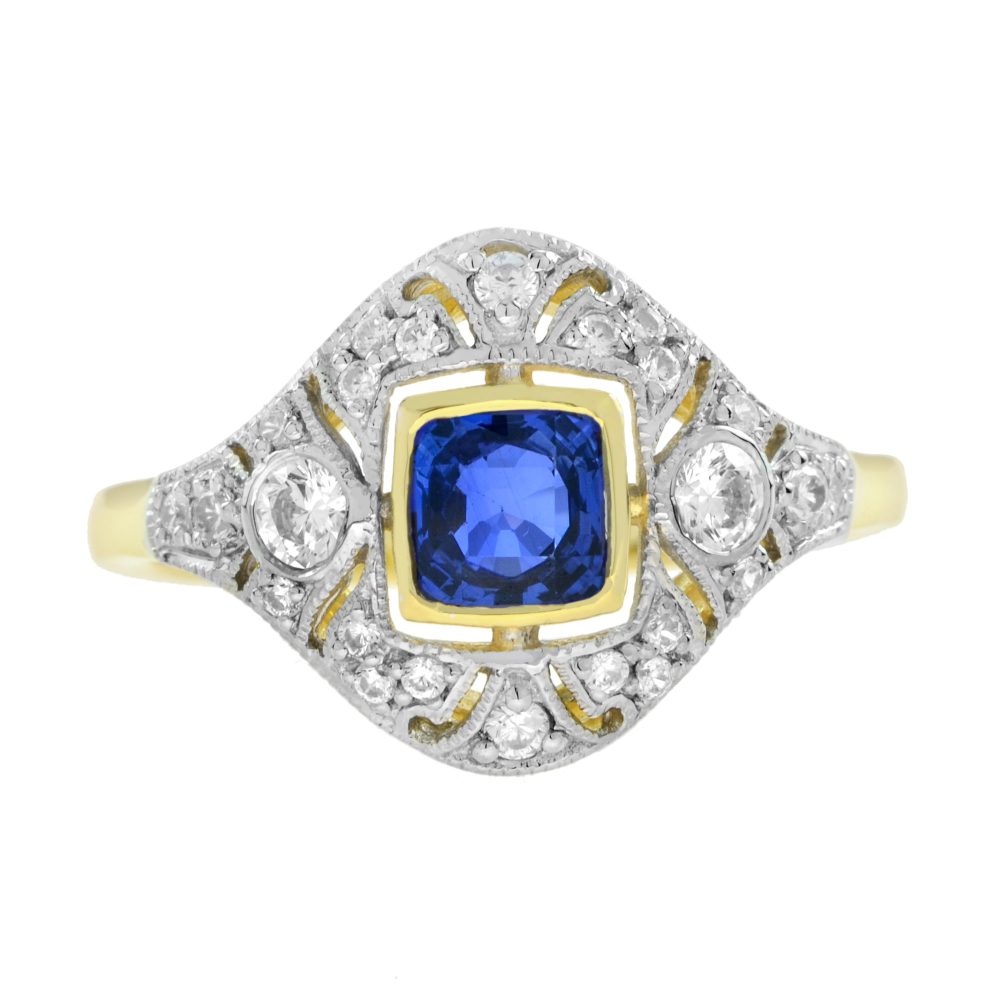
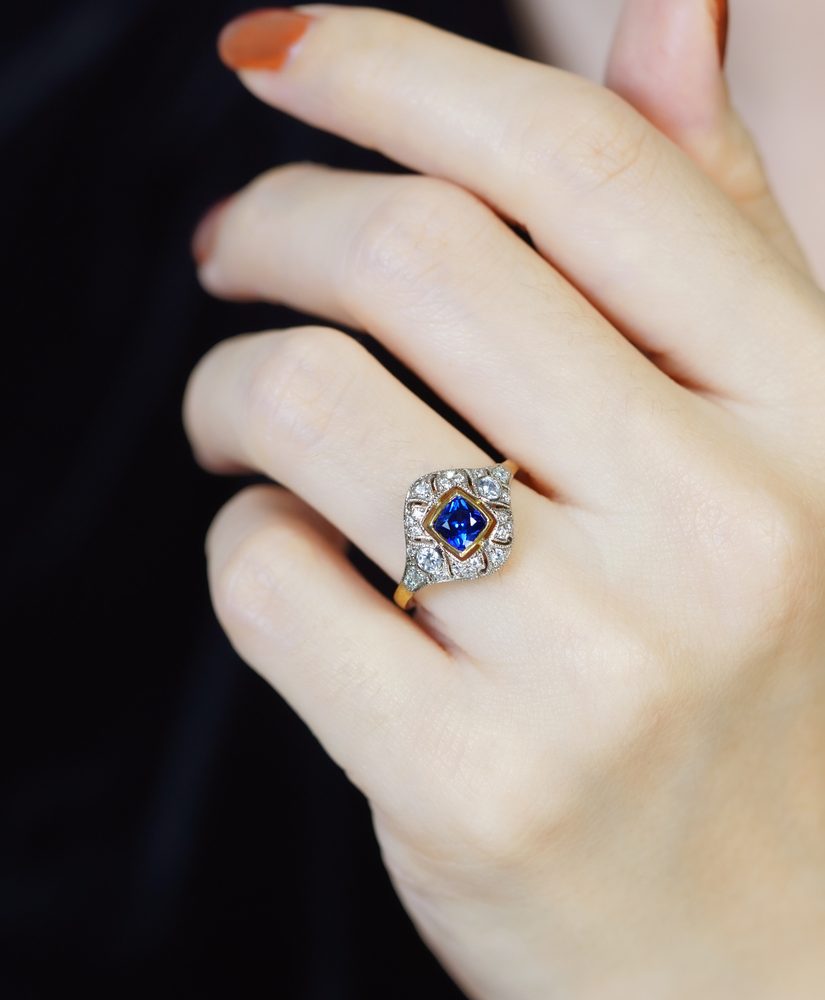
Art deco engagement rings are defined by a specific design vocabulary from the 1920s and early 1930s: crisp geometric forms, symmetrical layouts, fine filigree and millegrain metalwork, calibré-cut accent stones fitted precisely into the design, and strong color contrast, most often diamond set against onyx or a saturated colored stone. A ring can carry that vocabulary either as a genuine period piece made during the era, or as a newly made design built in the same tradition — and the difference between those two purchases matters more than most buying guides explain.
Art Deco Engagement Rings: The Style Checklist at a Glance
| Feature | What to look for | Why it matters |
|---|---|---|
| Geometric form | Hexagons, octagons, stepped rectangles, symmetrical bilateral layouts | The break from the flowing, organic lines of the preceding Edwardian era |
| Filigree | Fine, lace-like open metalwork, usually in platinum or white gold | Signature technique of the era; also the most fragile element to evaluate for wear |
| Millegrain | A beaded line of tiny metal grains along an edge | Softens a sharp geometric edge and catches light along the ring’s profile |
| Calibré-cut accents | Small stones, often baguette or French cut, shaped to fit a specific space exactly | A hallmark of precision that distinguishes fine period work from mass production |
| Contrast | Diamond paired with onyx, sapphire, or another saturated color | A deliberate graphic effect rather than a color chosen for its own sake |
| Antique-style cuts | Old European, Old Mine, transitional, or Asscher cut center stones | Optimized for candlelight-era fire rather than modern brilliance; a deliberate look, not a lesser one |
Where Does the Art Deco Style Come From?
The style takes its name from a single event: the 1925 Exposition Internationale des Arts Décoratifs et Industriels Modernes, held in Paris and intended to showcase a modern design language distinct from the ornate revival styles that preceded it. What is rarely mentioned in buying guides is that nobody at the exposition called the style “Art Deco.” The term itself was coined more than forty years later, in 1968, when the historian Bevis Hillier published Art Deco of the 20s and 30s and the name stuck. Before that, the style was more often described as “Art Moderne.”
The visual vocabulary drew from several sources converging at once: the excavation of Tutankhamun’s tomb in 1922 introduced Egyptian motifs into fashionable design; Cubism and the wider Machine Age aesthetic pushed toward geometric abstraction; and the postwar mood favored precision and symmetry over the softer, naturalistic curves of the Edwardian period that preceded it. In jewelry specifically, the shift showed up as a move from lace-like, romantic platinum work toward bolder, architectural forms, sharp color contrast, and a new confidence in pure geometry.
What Design Features Define an Art Deco-Inspired Ring?
Four techniques recur across the era’s work, and they remain the vocabulary a design draws on today when it is described as Art Deco-inspired. Filigree is fine, pierced metalwork built up from wire and small sheet elements, structurally different from a solid band because much of the surface is open space rather than metal. Millegrain is a decorative line of tiny beaded grains rolled along a metal edge, a finishing technique rather than a structural one, used to soften the transition between a stone’s bezel and the surrounding gold or platinum. Calibré-cutting refers to shaping a small accent stone, typically a baguette or French cut, to fit a specific irregular space in a design exactly, rather than setting a standard pre-cut stone and working around it. And color contrast — diamond against onyx, or diamond against a saturated sapphire or emerald — is used as a graphic device, in a way earlier, more monochromatic jewelry rarely attempted.
How Does Symmetry Define the Style?
Nearly every genuine Art Deco design reads as bilaterally symmetrical: a center stone flanked by matched elements on either side, a stepped outline that mirrors itself around a vertical axis. That symmetry is what distinguishes the style at a glance from both the flowing asymmetry of Art Nouveau and the softer garland motifs of the Edwardian era it directly followed.
Should You Choose a Genuine Antique or a New Art Deco-Inspired Ring?
This is the question a buying guide for this category has to answer honestly, because the two purchases are not interchangeable, and the terminology is regulated rather than a matter of style. A ring actually made during the 1920s or early 1930s is a genuine period piece. Under the US Harmonized Tariff Schedule, heading 9706 covers “antiques of an age exceeding 100 years” — which means, as of 2026, a piece made in 1926 or earlier has just crossed that threshold, while a piece from the height of the era, 1927 through 1935, will not reach it for several more years. Age alone, however, says nothing about condition: a genuine period ring has usually been resized at least once, may carry replaced or re-tipped prongs, and its platinum or gold may show a century of ordinary metal fatigue that a newly made piece does not.
A ring built today in the same design language is a different, equally legitimate purchase, described accurately as Art Deco-inspired, vintage-inspired, or made in the Art Deco tradition — never as antique, vintage, estate, or authentic Art Deco, since none of those terms accurately describes a newly made object regardless of how faithfully it follows the era’s design. This is not a matter of marketing preference; the Federal Trade Commission’s Jewelry Guides treat a misrepresented age or origin claim as a deceptive trade practice. Our own pieces are built new, in our workshop, drawing on the Art Deco and Edwardian traditions — we do not sell genuine antiques, and we do not describe our work as though we did.
Workshop insight: The honest case for a new Art Deco-inspired piece has nothing to do with price. It is that a stone, size, and specification can be chosen to order, a new setting has no century of hidden metal fatigue, and the piece can be resized and repaired without the condition risk that comes with reworking a hundred-year-old original. A genuine antique carries history a reproduction cannot claim; a new piece carries a guarantee an antique cannot offer. Buyers should choose knowing which trade-off they are making, not assume one option is simply a cheaper version of the other.
Which Diamond Cuts Suit the Style?
Genuine period rings were set almost exclusively with cuts that predate the modern round brilliant, and a faithful Art Deco-inspired design usually references one of them rather than defaulting to a contemporary cut. GIA describes the Old Mine cut as having 58 facets, the same count as a modern round brilliant, but arranged around a larger culet, a smaller table, and a higher crown, producing “less brilliance, more fire” — bold, colorful flashes rather than the crisp white sparkle a modern cut is engineered for. The Old European cut refines that shape further, distinctly round rather than squarish, with a smaller culet but still a higher crown and greater total depth than a modern round brilliant.
Neither cut is a lesser version of a modern diamond; both were cut deliberately for candlelight and gas-lit interiors, where fire read better than pure brilliance. A transitional cut sits between the two eras, closer to a modern round in outline but still deeper-cut. Baguette and French cut stones, meanwhile, supply the calibré-set accents around a center stone, sized to the design rather than to a standard chart. Choosing a period-style cut for a new Art Deco-inspired ring is a genuine aesthetic decision, not a downgrade from a modern round brilliant.
Which Metal Suits an Art Deco-Inspired Ring?
Platinum was the era’s defining metal, chosen for a practical reason rather than fashion alone: its strength and malleability suited the fine filigree and millegrain detailing the style demanded, holding a pierced, lace-like structure that a softer alloy could not support as reliably. White gold entered the market during the same period as a more accessible alternative, offering a similar pale color at a lower cost, and it remains a legitimate choice for a new Art Deco-inspired piece today, provided any rhodium plating on the surface is disclosed.
Yellow and rose gold appear less often in genuine period pieces but are not historically inaccurate — some Art Deco jewelry, particularly outside fine engagement rings, used warmer metals deliberately for contrast. For a piece built to be worn daily, the practical guidance from any fine jewelry purchase still applies: eighteen-karat gold or platinum for detailed filigree work that needs to hold its shape under repeated handling, fourteen-karat where a harder-wearing everyday alloy matters more than absolute color fidelity to the era.
How Durable Is Filigree and Openwork Metalwork?
Less durable than a solid band, by design, and that trade-off deserves a direct answer rather than a footnote. Filigree removes metal to create its pattern, which means less material is carrying the same daily stresses a plain shank would absorb across its full width. A genuine century-old filigree piece is more vulnerable still, since a hundred years of metal fatigue compounds the structural loss from the open pattern itself. A newly made Art Deco-inspired filigree ring starts from full-strength metal, which meaningfully changes the calculation, though the open structure itself still calls for more care than a plain band.
The center stone’s own durability follows the same rules as any engagement ring: a stone below roughly Mohs 7 dulls through ordinary handling, and cleavage-prone stones such as topaz need a protective setting regardless of how the surrounding metalwork looks. A full treatment of hardness, toughness, and setting choice by stone is outside the scope of a style guide, but the short version is that filigree’s fragility is a metalwork question, independent of which gemstone sits in the center.
Workshop insight: When we build filigree into a ring meant for daily wear, we thicken the load-bearing points the pattern would otherwise leave thin — the shank at the base of the finger, the shoulders flanking the center stone — while keeping the pierced, lace-like look everywhere else. The eye reads the whole piece as delicate; the parts that actually take the impact are not.
How Should You Buy an Art Deco-Inspired Engagement Ring?
Start with the terminology in the listing itself, because it tells you which of the two purchases described above you are actually being offered. “Antique,” “vintage,” “estate,” and “original Art Deco” should describe a genuine period object with an age claim behind it; “Art Deco-inspired,” “vintage-inspired,” and “in the Art Deco tradition” describe a newly made piece. A listing that blurs the two, or that calls a newly made ring “antique” without qualification, is a listing worth questioning before anything else.
From there, the same checks that apply to any fine jewelry purchase apply here without modification: a quality stamp should carry a maker’s registered trademark beside it, any gemstone treatment should be disclosed under the conditions that make disclosure mandatory, and the ring’s actual size should be confirmed by a professional measurement rather than assumed. A made-to-order or bespoke commission lets every one of these choices — cut, metal, filigree pattern, contrast stone — be made deliberately rather than selected from whatever a single seller happens to have on hand, and our own workshop builds Art Deco and Edwardian-inspired pieces on that basis, typically over four to eight weeks.
Our size guide, guarantee, and return policy cover the practical mechanics of a purchase once the design decisions above are settled.
What Should You Remember When Choosing an Art Deco Engagement Ring?
Art deco engagement rings are defined by a specific, learnable vocabulary — geometric symmetry, filigree, millegrain, calibré-cut accents, deliberate contrast, and period-style diamond cuts chosen for fire rather than brilliance. None of that vocabulary belongs exclusively to objects that are actually a century old; it belongs to a design tradition that a new piece can honor accurately, provided the language around it stays honest about which one is being sold.
Decide first whether the object itself needs to be genuinely old, with the condition history and legal age threshold that implies, or whether the design language is what matters — in which case a newly made piece, built to order and backed by a guarantee, is very often the more practical choice. Either way, the same standard applies: the metal should be exactly what the stamp claims, the stone’s treatment disclosed, and the piece described in terms that match what it actually is.
Sources: Art Deco of the 20s and 30s — Bevis Hillier, 1968 · Antique Jewelry University (Lang Antiques) — Art Deco Jewelry: An Overview · American Gem Society — Complete Guide to Art Deco Engagement Rings · GIA — Guide to Old Mine Cut Diamonds · Harmonized Tariff Schedule — Heading 9706, Antiques of an Age Exceeding 100 Years · FTC — Guides for the Jewelry, Precious Metals, and Pewter Industries (16 CFR Part 23)
The Art of the Wild
Sapphire
Frequently Asked Questions About Art Deco Engagement Rings
Is an Art Deco-inspired ring the same as an antique Art Deco ring?
No. A genuine antique is a period piece actually made during the 1920s or early 1930s, with a condition history and, under the US Harmonized Tariff Schedule, a legal age threshold of over 100 years. An Art Deco-inspired ring is newly made in the same design tradition — geometric form, filigree, millegrain, calibré-cut accents — without the age claim. The two are different purchases with different risks and different guarantees, and honest terminology keeps that distinction clear.
When was the term “Art Deco” first used?
Not during the era itself. The style takes its name from the 1925 Paris Exposition Internationale des Arts Décoratifs et Industriels Modernes, but the term “Art Deco” was not coined until 1968, when historian Bevis Hillier published Art Deco of the 20s and 30s. Before that, the style was more often called “Art Moderne.”
Is Art Deco jewelry always made in platinum?
Platinum was the era’s signature metal because its strength and malleability suited fine filigree and millegrain work, but it was not the only metal used. White gold offered a similar pale color at lower cost and appeared during the same period, and yellow or rose gold turns up in some period pieces outside fine engagement rings. A new Art Deco-inspired ring can reasonably be built in any of these, provided any rhodium plating is disclosed.
Are Old Mine and Old European cut diamonds lower quality than a modern round brilliant?
No, they are a different optical choice. GIA describes the Old Mine cut as trading brilliance for fire — fewer, larger facets, a larger culet, and a higher crown that throw bold flashes of color rather than the crisp white sparkle a modern round brilliant is engineered for. Both cuts were made deliberately for candlelight and gas-lit interiors, where fire read better than pure brilliance, and choosing one for a new ring is an aesthetic decision, not a downgrade.
Is filigree durable enough for an engagement ring worn daily?
Filigree removes metal to create its pattern, so it carries daily stresses across less material than a plain shank, and a genuine antique piece has a century of metal fatigue working against it as well. A newly made filigree ring starts from full-strength metal, and reinforcing the load-bearing points — the shank base and the shoulders beside the center stone — lets the design keep its lace-like look while standing up to regular wear.