
Blog, Buying Guides
Engagement Ring Settings Guide: Halo, Solitaire, Three-Stone & Filigree
Key Takeaways: Engagement Ring Settings
- “Setting” and “style” are not the same thing. The GIA draws the line precisely: engagement ring settings describe how the stone is held (prong, bezel, pavé, channel), while a style describes the arrangement (solitaire, halo, three-stone). Most guides blur the two.
- The solitaire is younger than it looks. The six-prong solitaire that defines the modern engagement ring was introduced by Tiffany in 1886, lifting the diamond above the band to let in light.
- Protection and light pull in opposite directions. A bezel wraps and guards the stone; open prongs maximize brilliance but expose it. The right choice depends on the stone’s hardness and how the ring will be worn.
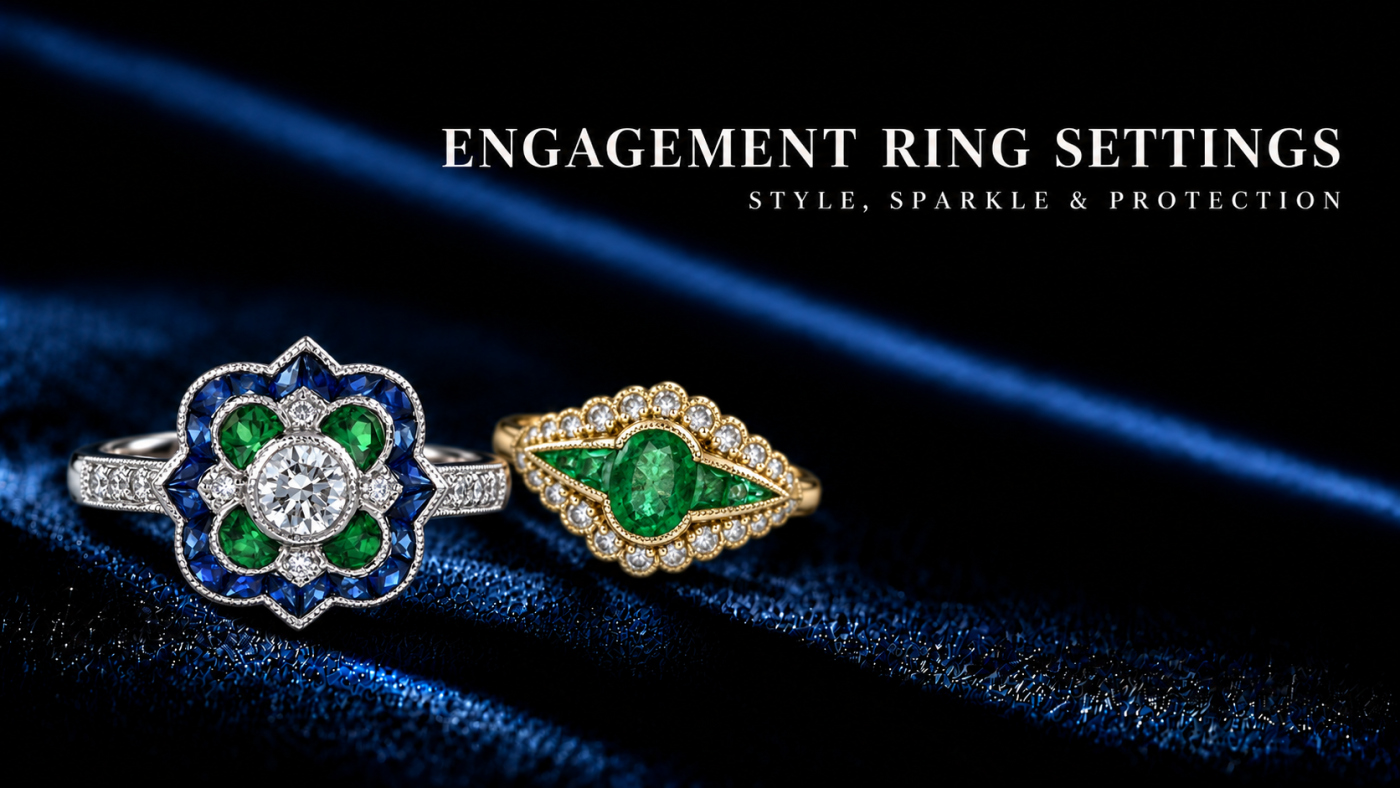
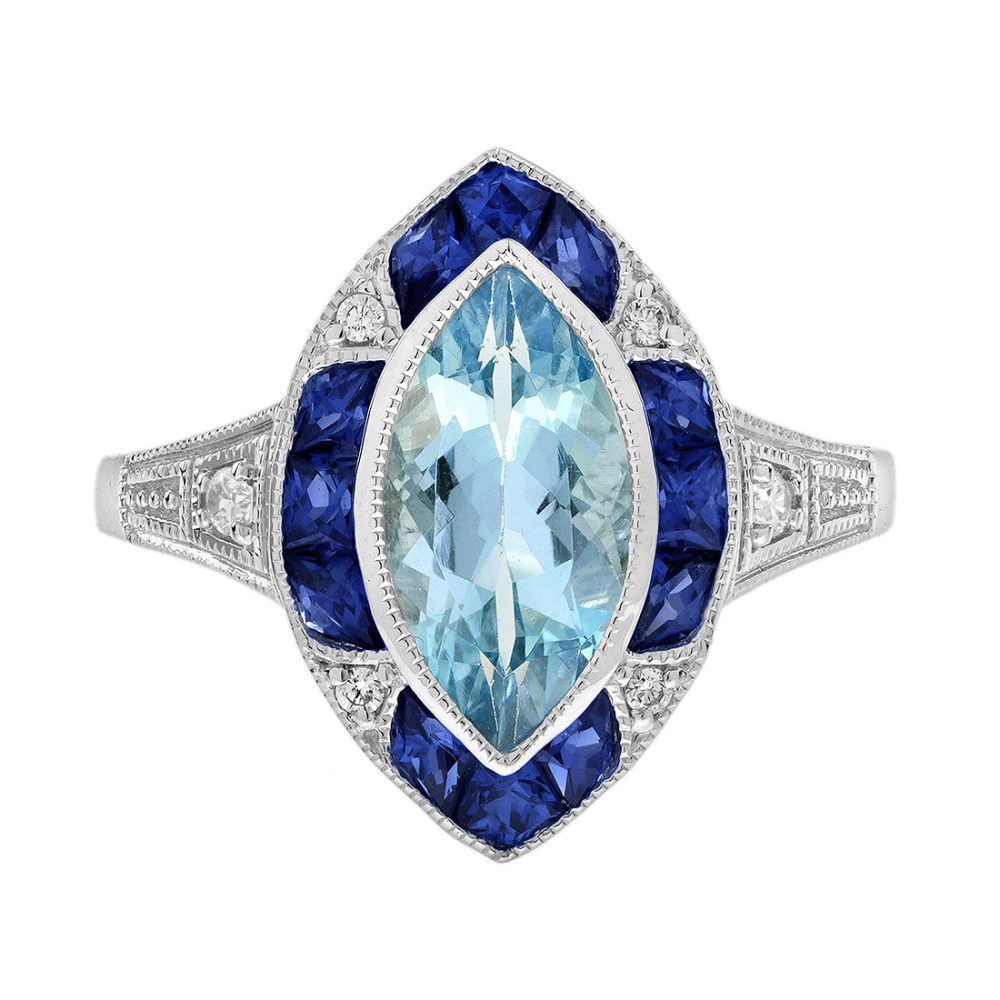
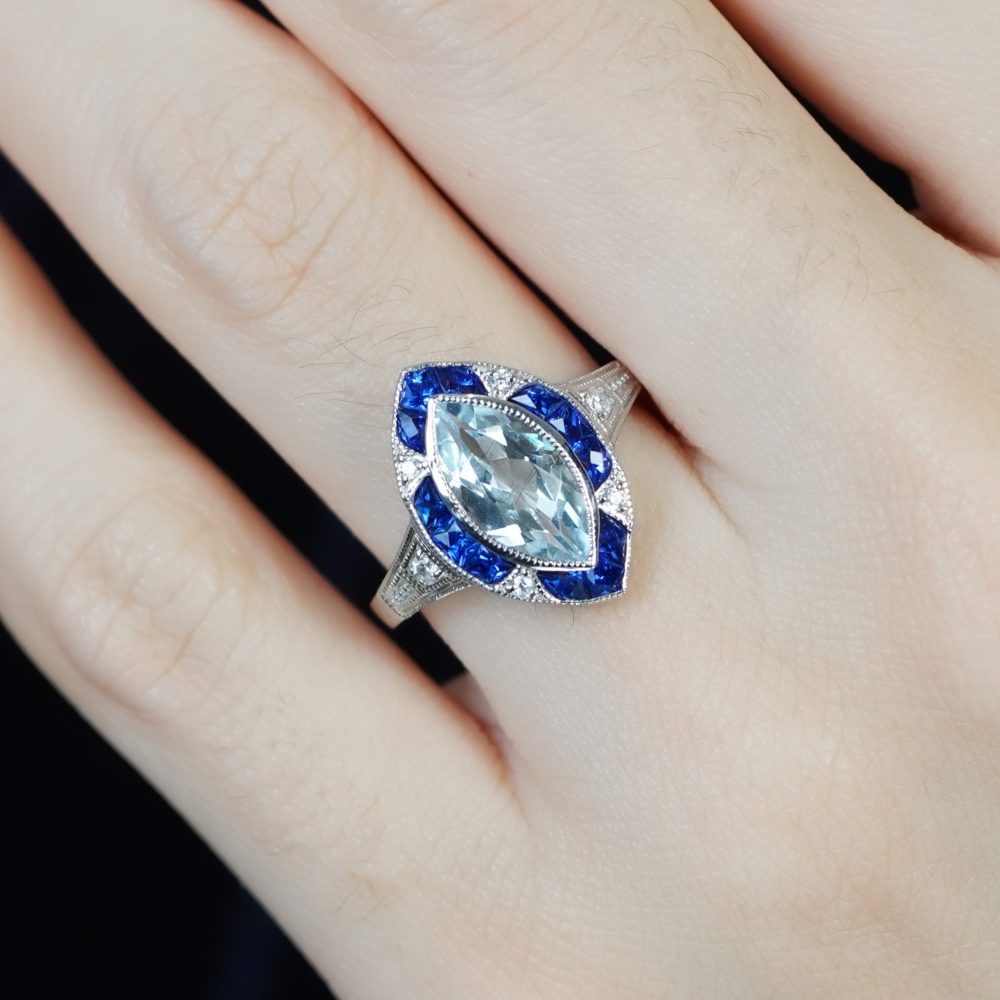
- Filigree and milgrain are our signature. The openwork metal lace and beaded edges of Edwardian and Art Deco jewelry are what set our work apart from the plain modern solitaire, and they are settings in their own right.
- The setting is a durability decision as much as an aesthetic one. A softer or more brittle stone belongs in a protective setting; the choice made at the bench is often what decides whether a ring survives a decade.
What Are the Main Engagement Ring Settings?
The main engagement ring settings fall into two groups: how the stone is held — prong, bezel, pavé, channel, tension — and how the stones are arranged, which gives the familiar styles of solitaire, halo, three-stone, and the decorative filigree tradition. The best choice balances brilliance, protection, and the character you want the ring to carry.
Engagement Ring Settings at a Glance
| Setting or style | What it is | Best for | Protection |
|---|---|---|---|
| Solitaire | A single center stone, little or no other decoration; classically a six-prong mount | A hard stone shown at its brightest; a timeless look | Low–moderate — open prongs expose the stone |
| Halo | A ring of small stones encircling the center | Making a center look larger; added presence on a budget | Moderate — the halo raises the metal around the girdle |
| Three-stone | A center stone flanked by two side stones | Symbolic designs; adding width and sparkle | Moderate — side stones shield the center’s edges |
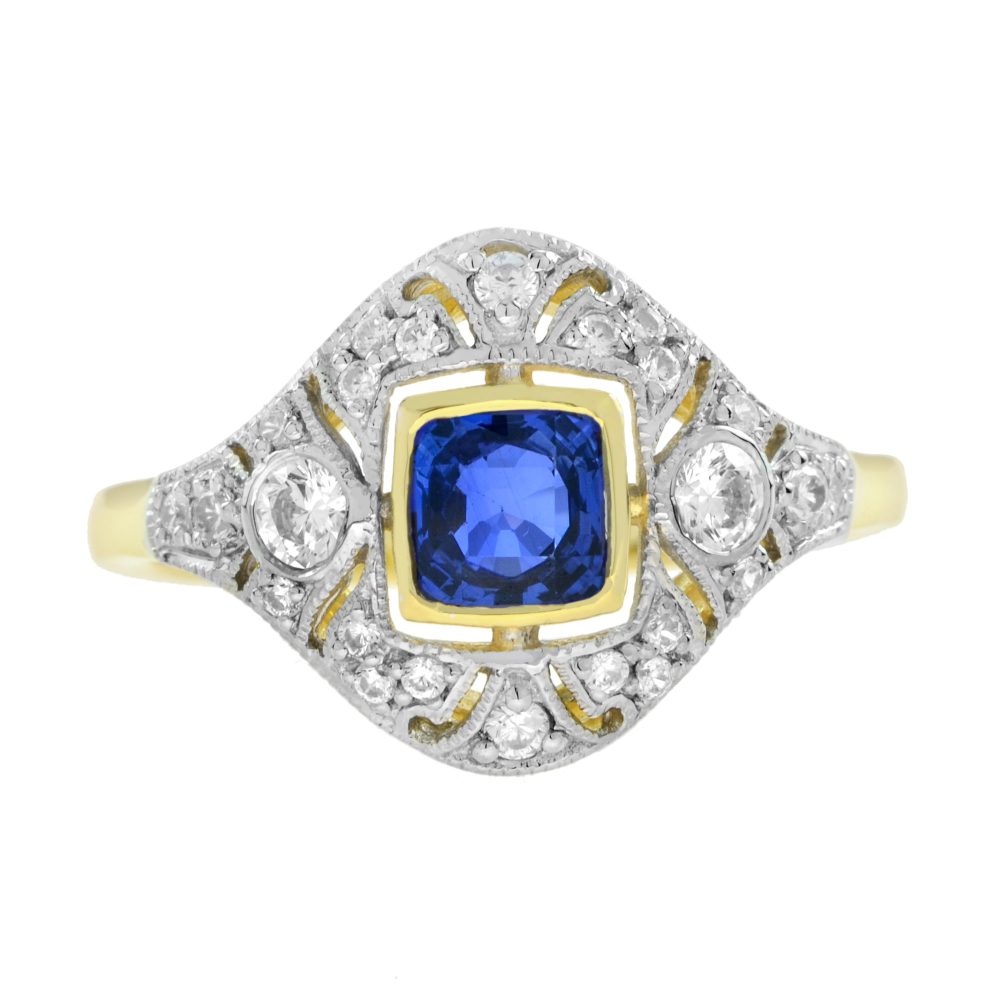
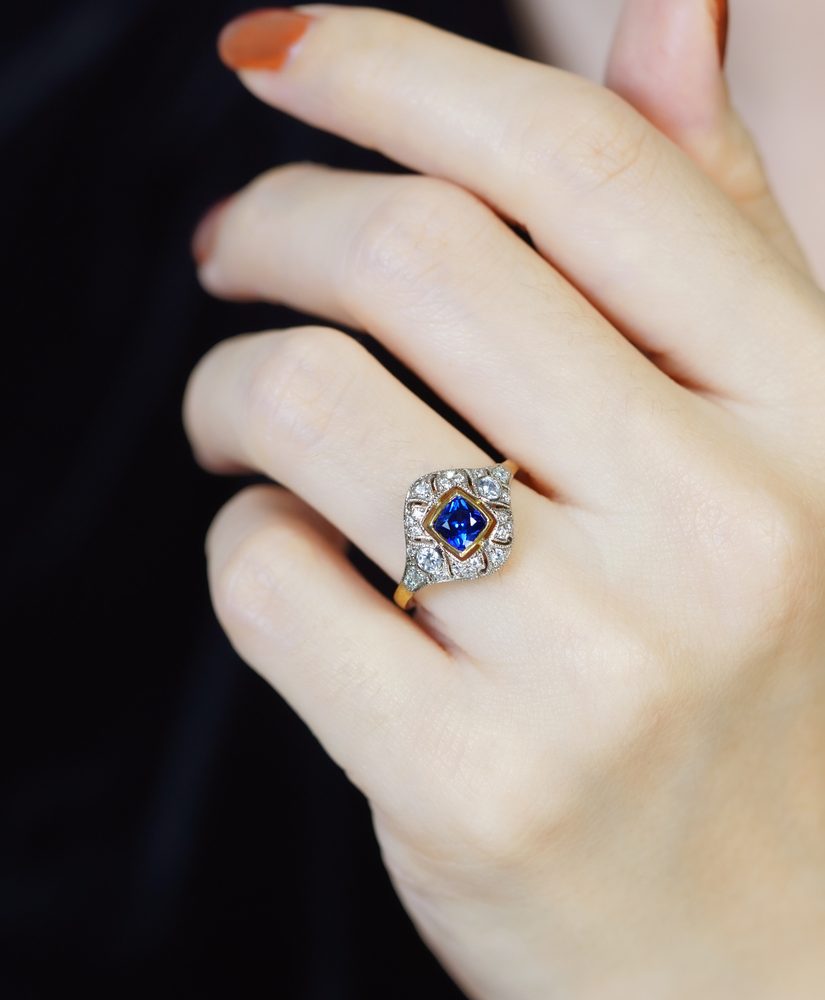
| Filigree / milgrain | Openwork metal lace and beaded edges, the Edwardian and Art Deco tradition | Antique-inspired character; detail competitors rarely offer | Varies — often paired with a protective bezel or halo |
| Prong (claw) | Metal claws grip the stone; four or six is typical | Maximum light into a durable stone | Low — the most exposed setting |
| Bezel | A metal rim wraps fully around the girdle | Softer stones, active wear, a clean modern line | High — guards the girdle, will not catch on clothing |
| Pavé | Small stones set close along the band, held by tiny beads of metal | Extra sparkle across the shank | Moderate for the melee; center depends on its own setting |
| Channel | Stones sit between two parallel metal walls | Wedding bands and accent lines in daily wear | High for the channel stones; avoid for cleavage-prone gems |
Setting vs. Style: What Is the Difference?
This is the distinction almost every guide gets wrong, and getting it right is the first step to choosing well. As the GIA puts it, “ring settings describe how a gemstone is secured,” while “setting styles refer to the overall arrangement of the stones in a ring.” They are two separate decisions that happen to be made at the same time.
A setting is the mechanism: prongs that grip the stone, a bezel that wraps it, beads of metal that hold pavé, walls that form a channel. A style is the composition: a single stone (solitaire), a stone ringed by smaller ones (halo), three stones in a row (three-stone). A halo is a style; the small stones within it are held by a pavé or prong setting. A solitaire is a style; it is usually built on a prong or bezel setting.
Why does the distinction matter to a buyer? Because the style is chosen with the eye and the setting is chosen with the stone. The arrangement decides how the ring looks; the mechanism decides how well it protects, how much light reaches the stone, and how it will wear over years. Confusing the two is how people end up with a beautiful arrangement that does not suit the stone it holds.
The Solitaire Setting
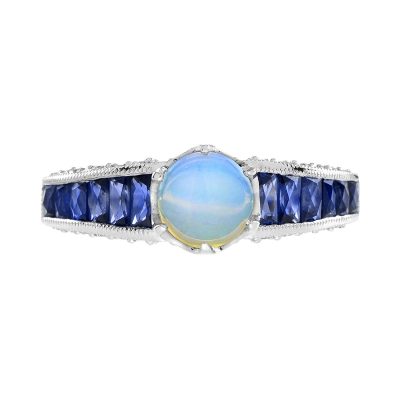
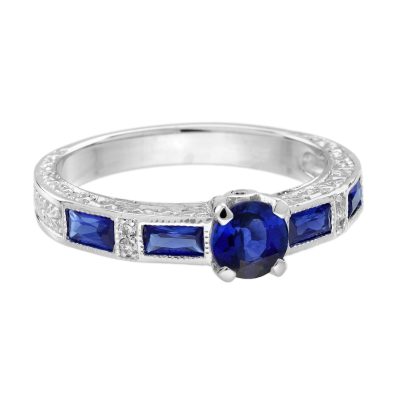
The solitaire is the style people picture first, and it is younger than most assume. GIA describes it as “a single center gemstone with little or no additional decoration” — a clean, timeless arrangement whose whole purpose is to present one stone without competition.
Its defining form arrived in 1886, when Tiffany introduced the six-prong solitaire that elevated the diamond above the band to maximize light. Before it, engagement rings were ornate and metal-heavy, with stones set low and close to the finger. Lifting the stone into the light on slender claws was a genuine shift toward a diamond-centric design, and the six-prong solitaire remains in wide use nearly a century and a half later.
The solitaire’s strength is also its limitation. Open prongs let light flood the stone, which is why the style suits a hard, bright gem such as a diamond, ruby, or sapphire. Those same open claws leave the stone exposed to knocks and can catch on fabric, and prong tips wear down over years and occasionally need re-tipping. A solitaire is a setting to check periodically, not to forget.
The Halo Setting
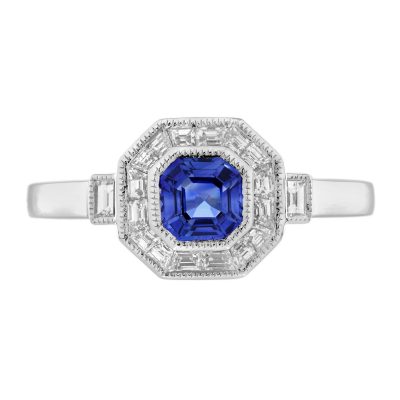
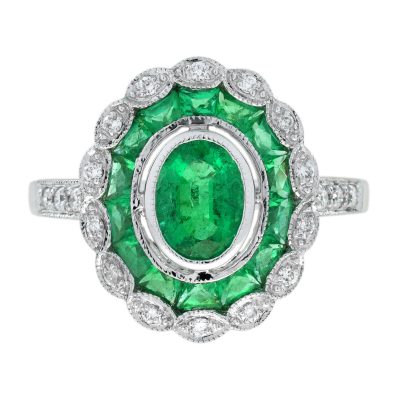
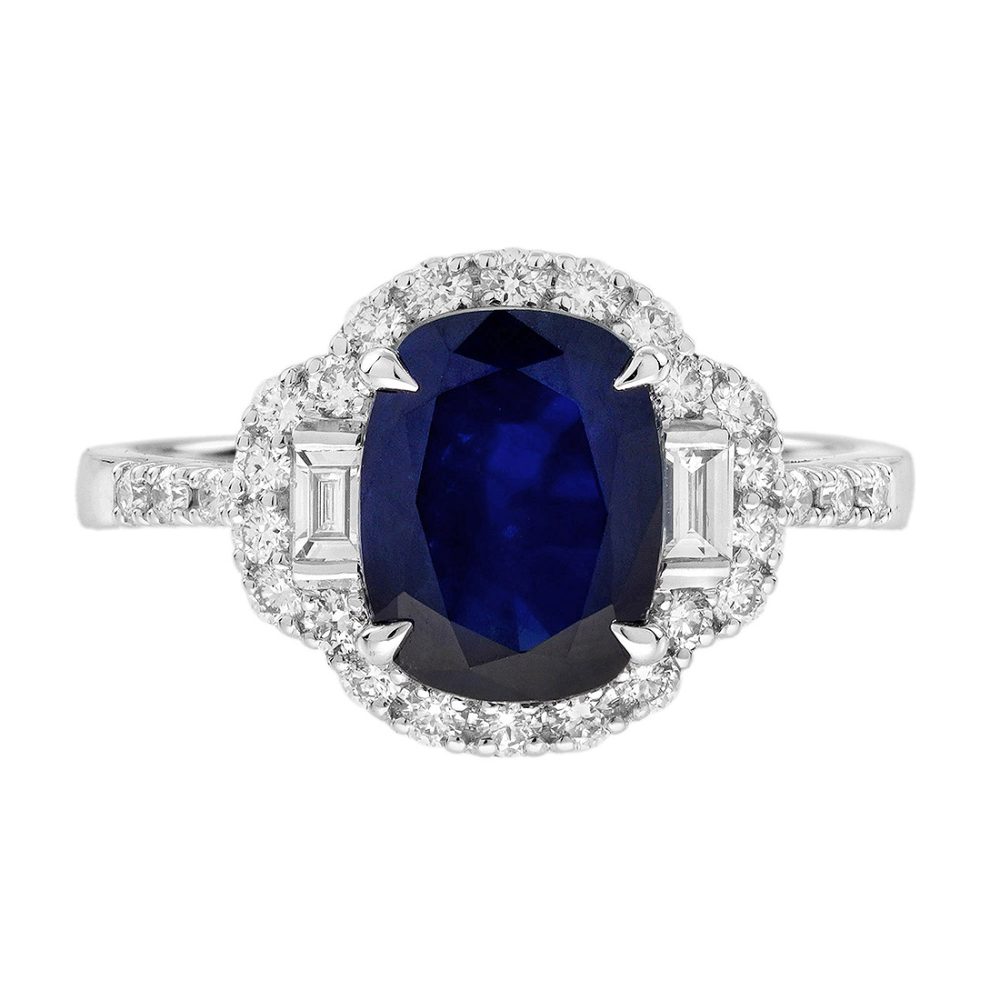
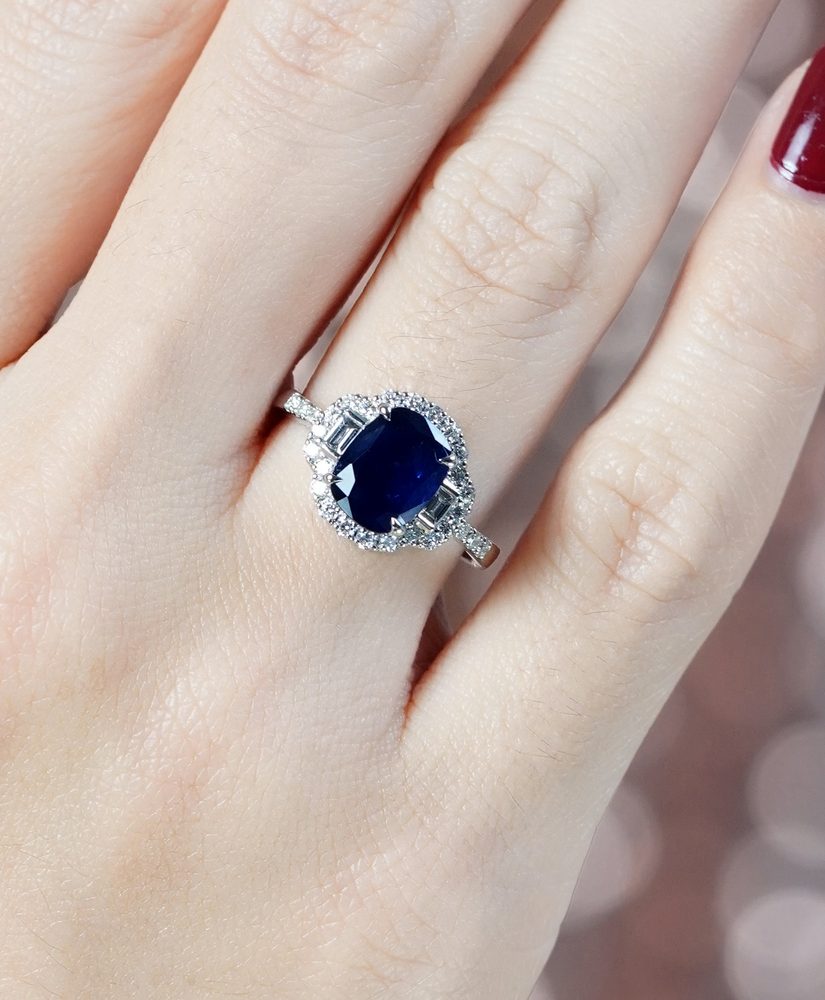
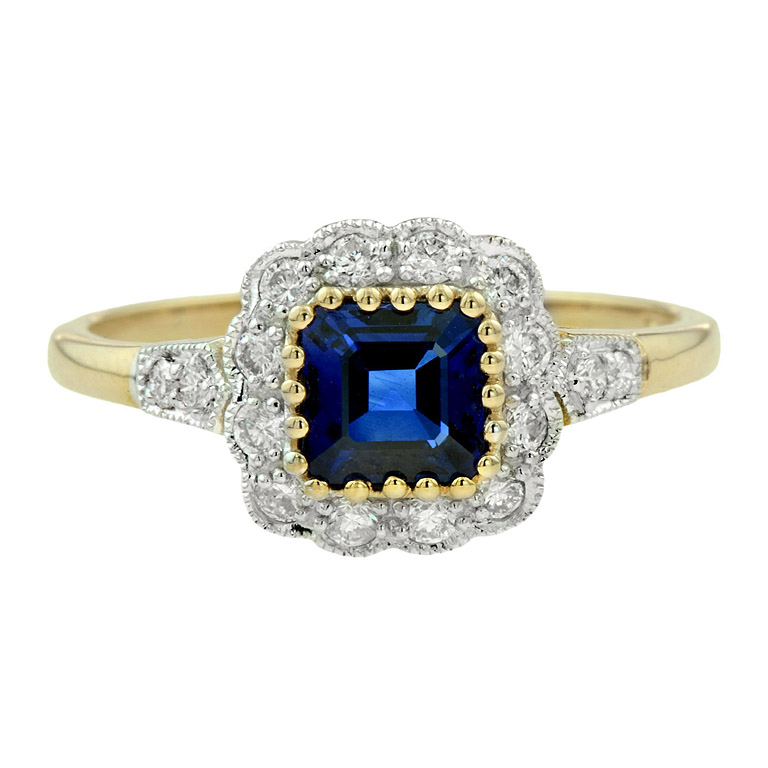
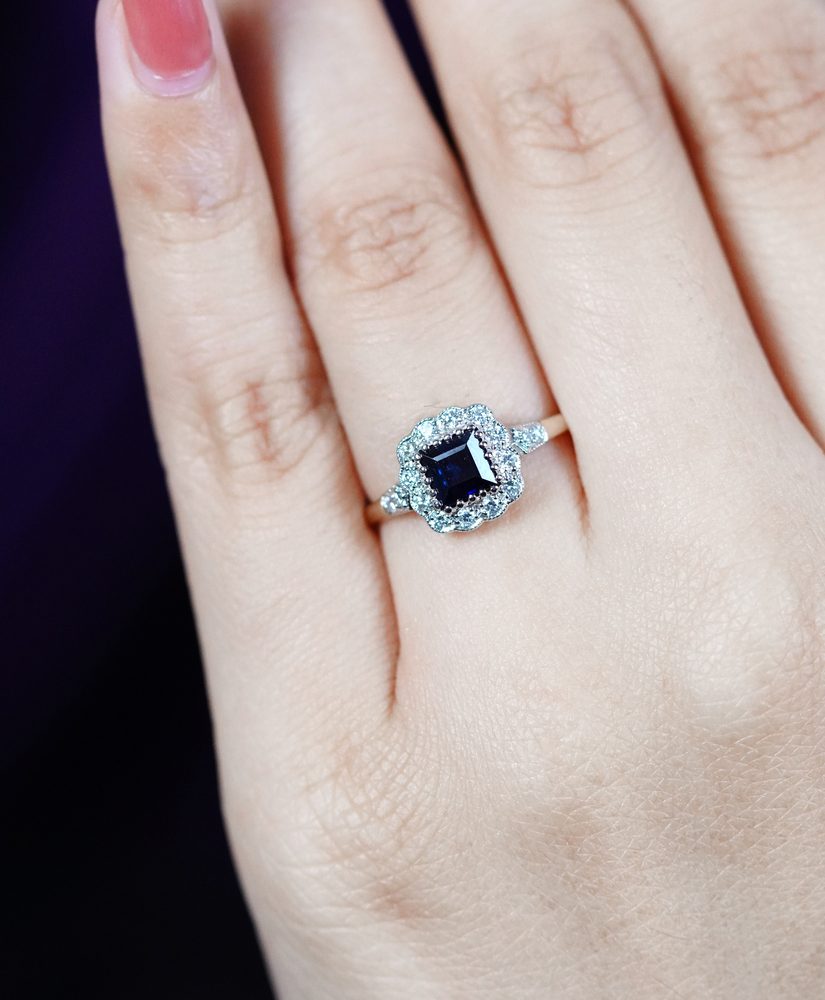
A halo surrounds the center stone with a ring of small diamonds, and it does two useful things at once. Visually, it makes the center look considerably larger than its carat weight alone would suggest — a halo around a modest center reads as a much bigger ring, which is why it is one of the most effective ways to add presence to a budget. Structurally, the encircling metal and melee raise the height around the girdle, giving the center more protection than an open solitaire offers.
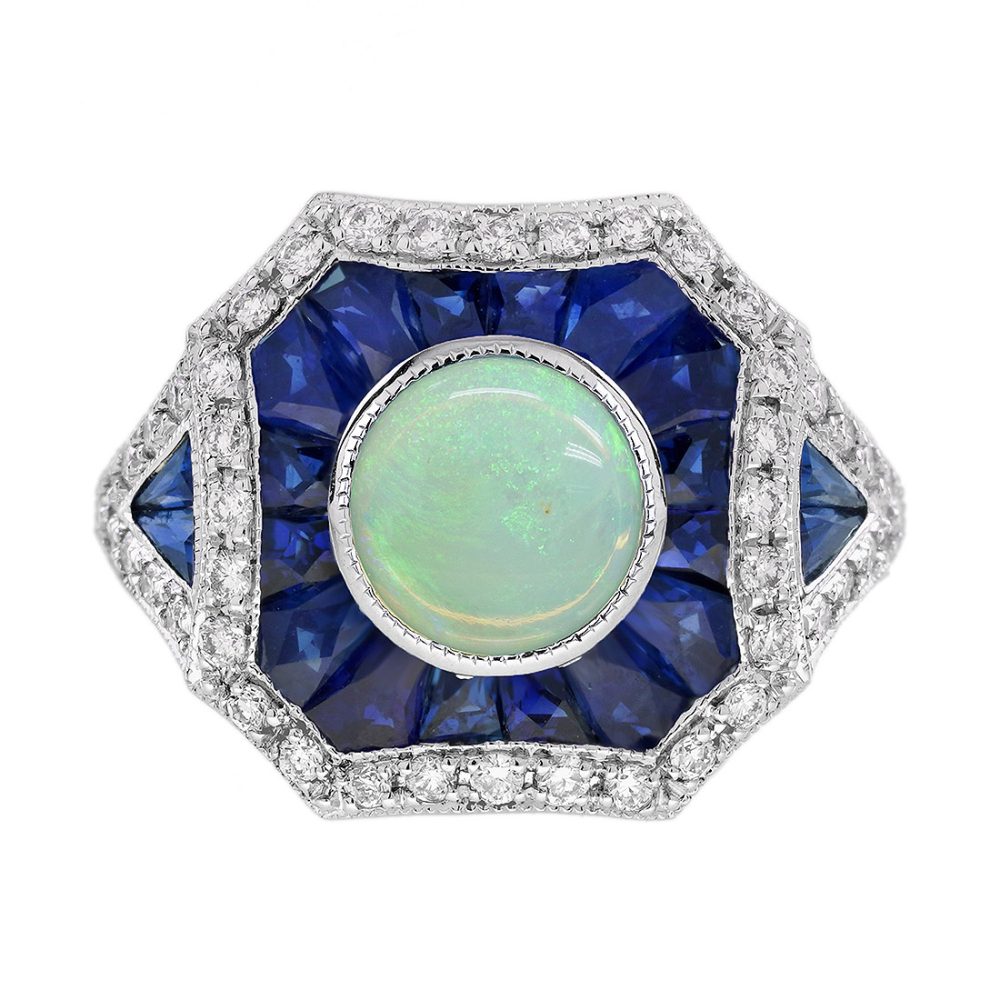
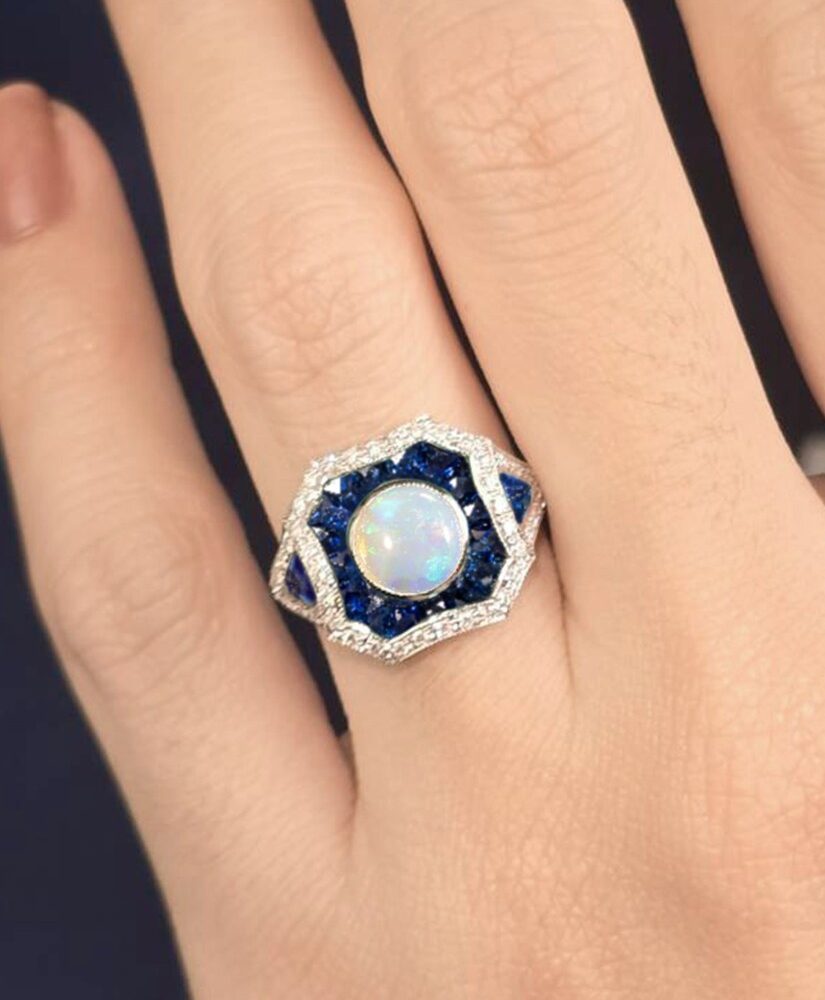
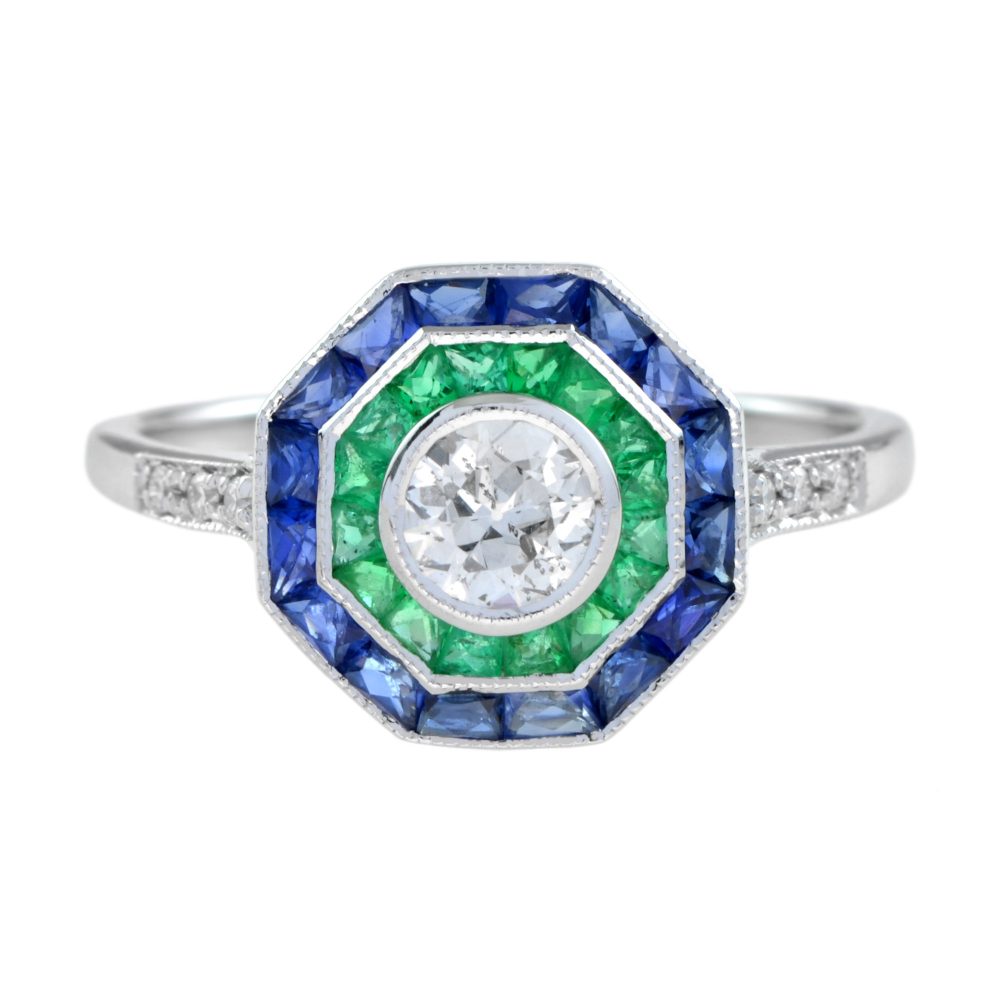
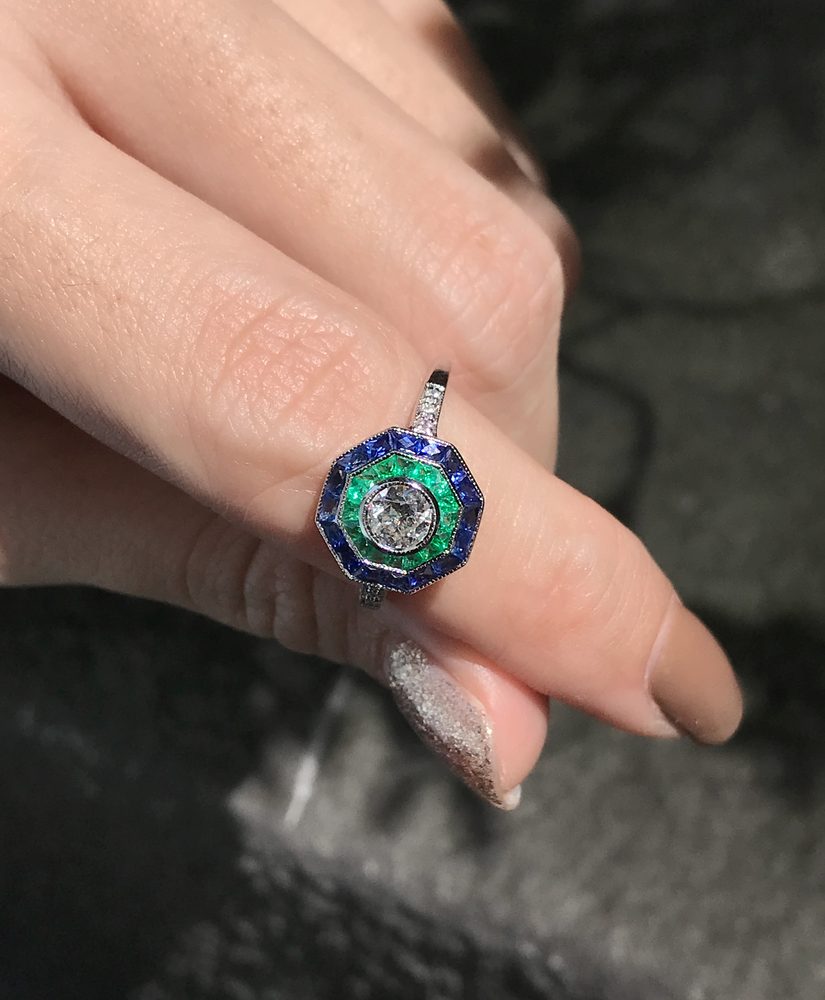
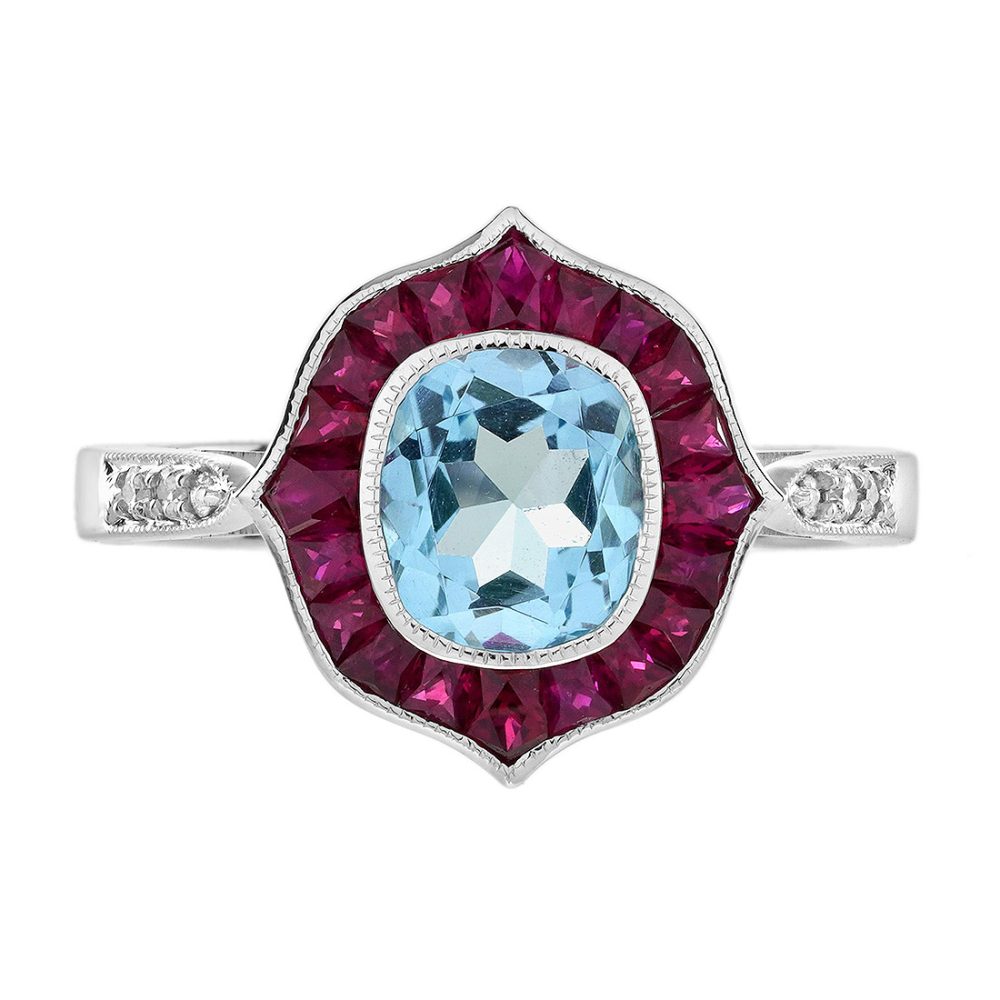
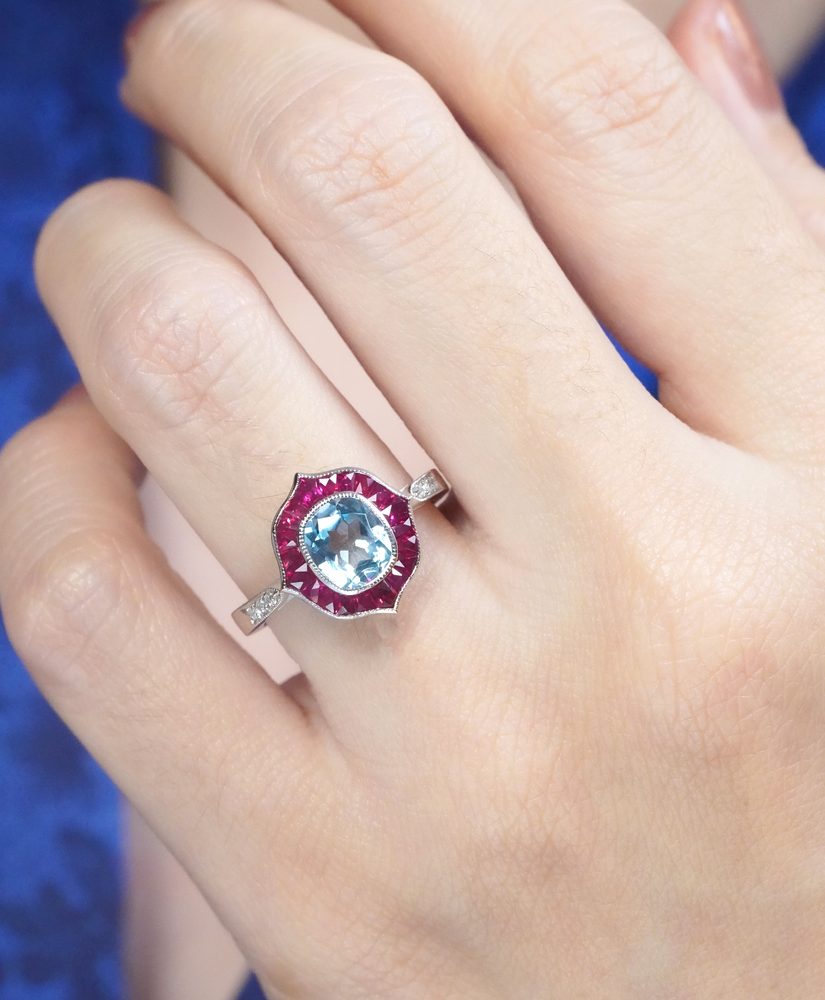
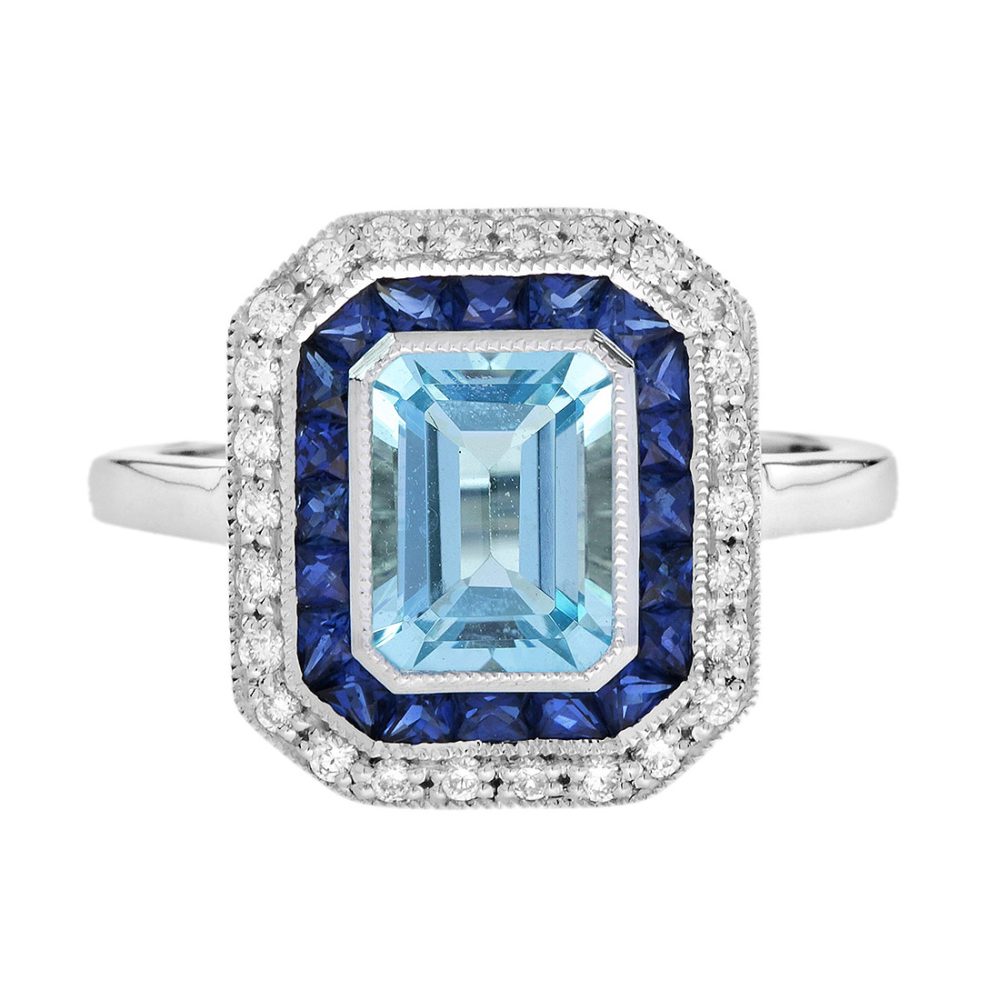
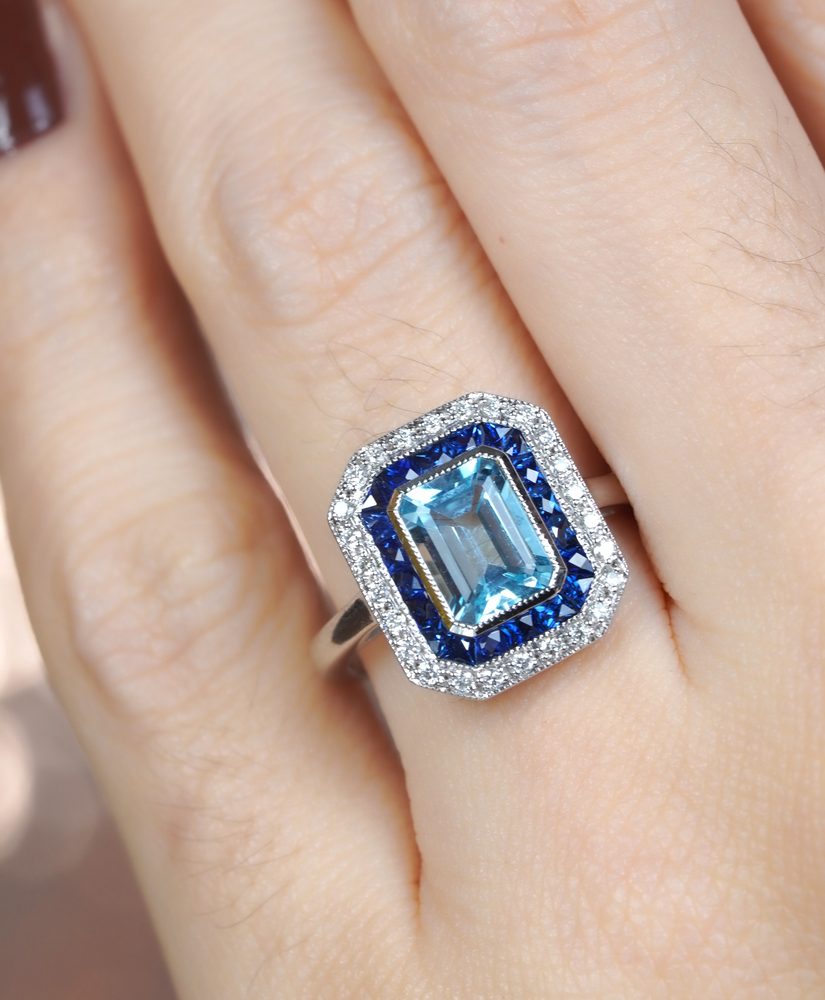
The halo is a natural fit for antique-inspired work, because the technique is period-correct: rings of small stones around a center are a hallmark of Edwardian and Art Deco design, often combined with milgrain edges and filigree detail. A halo can be a single row or a double, and it can be set in a plain or a scalloped, milgrained frame.
Workshop insight: When a client wants the largest possible look for the budget, we will often recommend a halo over a larger solitaire. A modest center in a well-made halo can present as a full size larger than the same money spent on a bare stone, and the melee protects the center’s edges into the bargain. The one caution is upkeep — a halo has many small stones and many tiny beads of metal holding them, so it rewards periodic checking.
Related: Bespoke & Personalization
The Three-Stone Setting
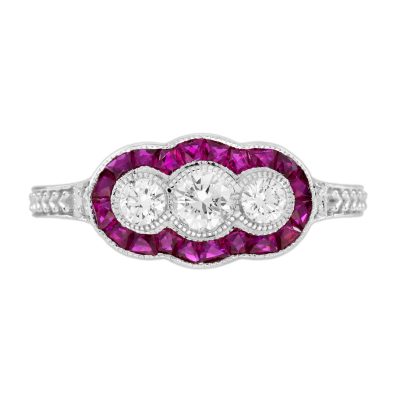
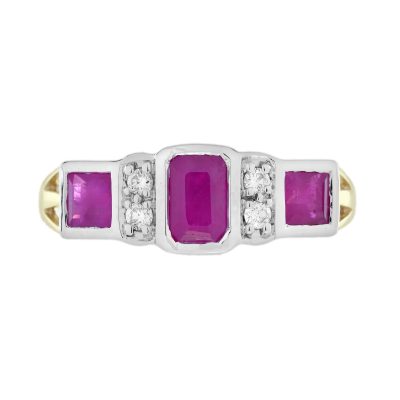
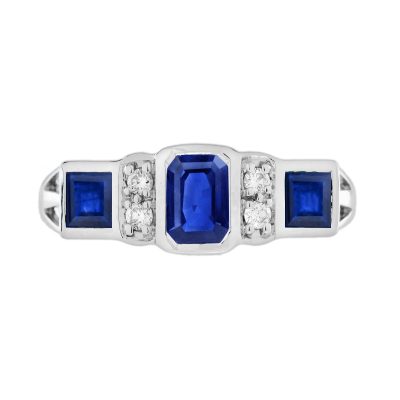
The three-stone style sets a center stone between two side stones. Commercially it is often sold with the “past, present, and future” symbolism, and that is worth naming for what it is — a marketing convention rather than an old tradition, offered here as a charming story and not as history. The style itself is genuinely useful for reasons that have nothing to do with the slogan.
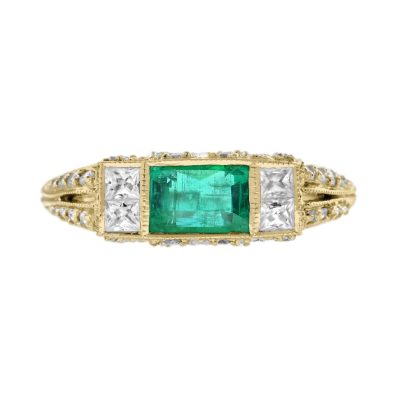
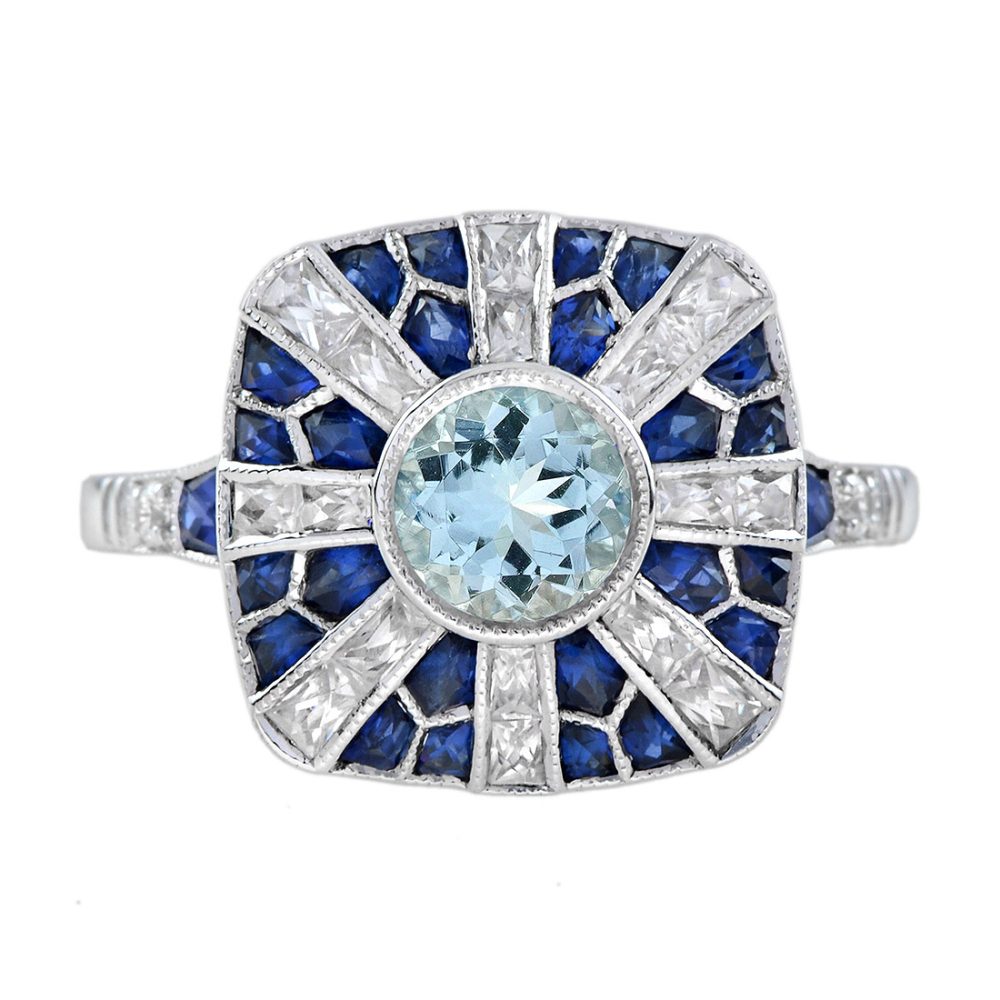
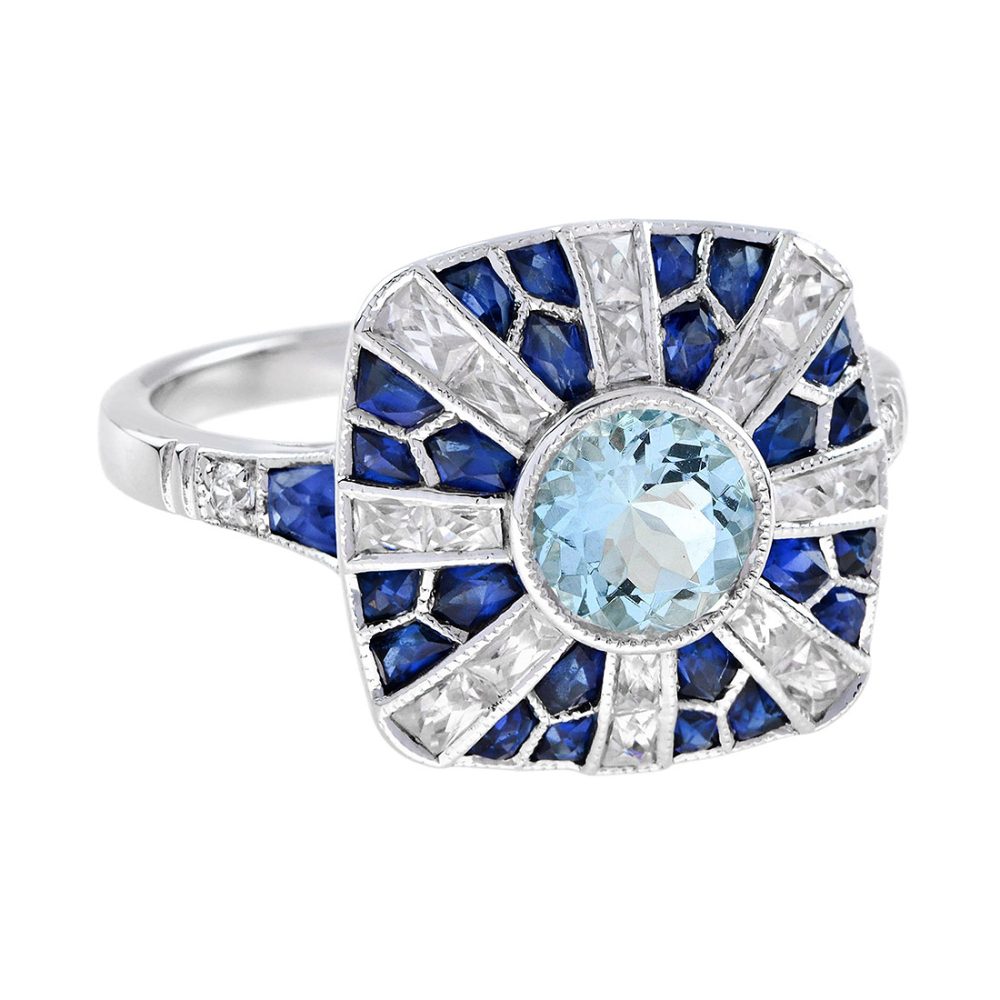
Three stones add width and light across the finger, and the side stones shield the center’s most vulnerable edges, giving a little more protection than a lone solitaire. The side stones can echo the center — three diamonds — or contrast with it: a diamond center with colored side stones, or a colored center flanked by diamonds, which is a distinctly Art Deco combination. Tapered baguettes, half-moons, and trilliant side stones each give a different line.
The design decisions that matter are proportion and matching. Side stones that are too large fight the center; side stones poorly matched in color or cut cheapen the whole. Because the eye reads the three together, the setting rewards careful selection more than most.
Filigree and Milgrain Settings
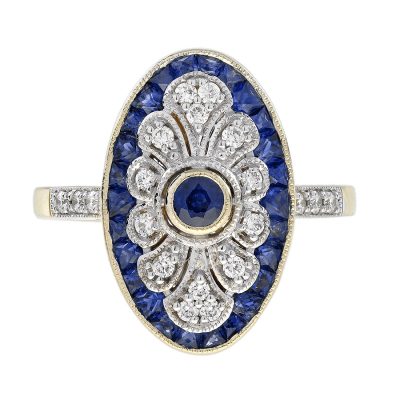
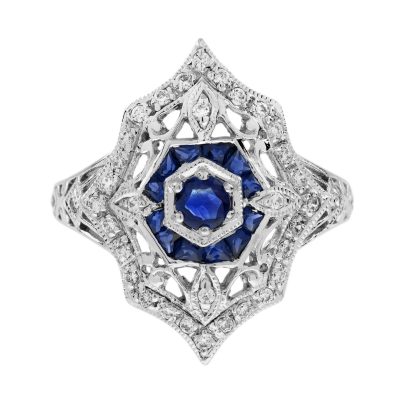
This is the tradition our workshop is built on, and it is the one a plain modern solitaire cannot offer. Filigree is openwork metal worked into fine lace — scrolls, curls, and pierced patterns that fill the space around and beneath the stone with detail rather than solid metal. Milgrain is the row of tiny beads worked along an edge, a soft, granular line that catches light where a plain edge would sit flat. Both are hallmarks of Edwardian and Art Deco jewelry, and both are settings in the true sense — they are how the metal holds and frames the stone.
Filigree does something the modern eye has half-forgotten: it makes the metal itself part of the ornament. Where a contemporary setting tries to disappear so the stone stands alone, a filigree setting is meant to be looked into, its shadows and pierced work giving the piece depth from every angle. Milgrain softens every edge it touches, which is why an Edwardian ring reads as gentler and more intricate than its modern equivalent.
Workshop insight: Filigree is labor, not material, and that is the honest trade-off. The cost is in the hours at the bench piercing and finishing the metal, not in extra gold or a larger stone, so a filigree setting puts the budget into craftsmanship a buyer can see rather than into carat weight they may not. It is also more delicate than a plain band and benefits from a jeweler who can maintain it — which, since we make these pieces, is exactly the point. Every piece is newly made and antique-inspired, not an antique original.
Prong, Bezel, Pavé and Channel: How the Stone Is Held
Beneath every style is a setting mechanism, and each strikes a different balance between light and protection. This is where the durability of the finished ring is actually decided.
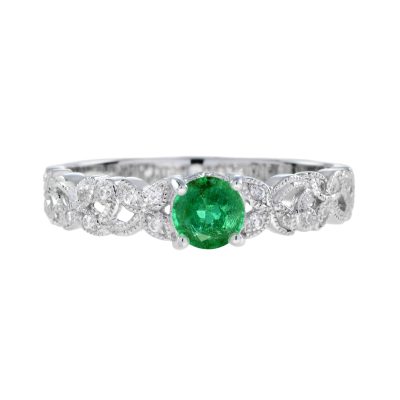
- Prong (claw). Metal claws grip the stone, and GIA notes the setting “holds a gemstone securely while allowing maximum light to enter.” Four or six prongs are typical. It is the brightest option and the least protective, best reserved for hard stones.
- Bezel. A metal rim rises from the base and “wraps around the gemstone’s girdle, creating a smooth, protective border,” in GIA’s words, with “excellent resistance to chips” and smooth edges that “are less likely to catch on clothing or gloves.” It is the most protective standard setting, and our default for softer stones and for rings worn hard.
- Pavé. Small stones set close along the band, held by tiny beads of metal, for sparkle across the shank. It surrounds a center of any style with light, but its many small stones reward periodic checking.
- Channel. Stones sit between two parallel metal walls, protected on both sides — durable and well suited to daily wear and to wedding bands. It should be avoided for cleavage-prone stones, which do not tolerate the set pressure.
Workshop insight: When we set a stone below the hardest tier into a ring, we bezel it and hold the girdle slightly below the plane of the surrounding gold, so the metal takes the knock instead of the stone. It costs a fraction of a millimeter of visible stone and it is frequently the difference between a ring that survives a decade and one that comes back chipped. The setting is not decoration around the durability decision — it is the durability decision.
How Do You Choose an Engagement Ring Setting?
Among the engagement ring settings above, the right one is decided by three questions in order — the stone, the wearer, and the look — not by the look alone.
- Start with the stone’s durability. A hard, tough stone such as a diamond, ruby, or sapphire can take an open prong or solitaire. A softer or more brittle stone — an emerald, an opal, a pearl, or coral — belongs in a bezel or a protective mount, and cleavage-prone stones should stay out of channel and flush settings that apply pressure.
- Match the setting to the life. A ring worn every day, through work and cooking and handbag straps, is better served by a bezel, a halo, or a lower profile than by tall, exposed claws. A ring worn occasionally has more freedom.
- Then choose the style for character. Solitaire for restraint, halo for presence and size, three-stone for width and symbolism, filigree and milgrain for antique-inspired detail. This is the decision made with the eye, and it comes last because it should sit on top of a sound setting, not replace one.
- Leave room to maintain it. Every setting needs periodic checking — prong tips wear, pavé beads loosen, filigree is delicate. Choosing a setting you can have looked after is part of choosing well.
What Should You Remember About Engagement Ring Settings?
Engagement ring settings are two decisions wearing one name. The style — solitaire, halo, three-stone, filigree — is the arrangement you choose with your eye. The setting — prong, bezel, pavé, channel — is the mechanism that decides how much light reaches the stone and how well it is protected. Keeping the two apart, as the GIA does, is what lets you choose an arrangement you love on a mechanism that suits the stone.
The history is worth carrying too. The plain six-prong solitaire that feels timeless is in fact a specific 1886 Tiffany innovation, and the filigree and milgrain work that predates it by little is the older, richer tradition our own pieces belong to. Neither is more correct; they are different answers to the same question of how to hold a stone beautifully.
Above all, remember that the setting is a durability decision. Match it to the stone’s hardness and to the life the ring will lead, protect the girdle where the material calls for it, and choose something you can maintain. Done that way — the mechanism chosen for the stone, the style chosen for the wearer — an engagement ring setting holds its stone, and its beauty, for a lifetime of wear.
Sources: GIA — Complete Guide to Engagement Ring Settings: Types vs. Styles · Sotheby’s — The History of Tiffany & Co. (the 1886 Tiffany Setting) · GIA — Gemstone Durability: Design to Display
Engagement Ring


Engagement Ring


Frequently Asked Questions About Engagement Ring Settings
What is the difference between a ring setting and a style?
A setting is how the stone is held — prong, bezel, pavé, or channel — while a style is how the stones are arranged, such as solitaire, halo, or three-stone. GIA draws the line this way: settings describe how a gemstone is secured, and styles describe the overall arrangement. A halo is a style; the small stones within it are held by a pavé or prong setting.
Which engagement ring setting is the most secure?
The bezel. A metal rim wraps fully around the stone’s girdle, which GIA describes as a smooth, protective border with excellent resistance to chips and edges that will not catch on clothing. It is the most protective standard setting and the best choice for softer stones or a ring worn hard every day. Open prong settings are the least protective, though they let in the most light.
Does a halo setting make the diamond look bigger?
Yes. A halo setting rings the center stone with small diamonds, so the whole cluster reads as a much larger stone than the center’s carat weight alone. A modest center in a well-made halo can present as a full size larger than the same money spent on a bare solitaire, and the encircling metal also protects the center’s girdle. The trade-off is upkeep, since a halo has many small stones to check.
What is a filigree setting?
A filigree setting uses openwork metal worked into fine lace — scrolls, curls, and pierced patterns — to frame the stone with detail rather than solid metal. It is a hallmark of Edwardian and Art Deco jewelry, usually paired with milgrain, the row of tiny beads along an edge. Its cost is in bench labor rather than extra material, and it is more delicate than a plain band, so it benefits from a jeweler who can maintain it.
What is the best engagement ring setting for everyday wear?
For daily wear, a lower-profile protective setting is best — a bezel, a halo, or a solitaire with sturdy prongs kept low. Start from the stone’s durability: a hard diamond, ruby, or sapphire tolerates an open setting, while a softer or brittle stone belongs in a bezel. Match the setting to your life and leave room to have it checked periodically, since prongs, pavé beads, and filigree all need maintenance.