
Blog
What Is Art Deco Jewelry? History & Key Characteristics

Key Takeaways: What Is Art Deco Jewelry?
- What is Art Deco jewelry, in short: jewelry made roughly between 1920 and 1935, defined by geometric symmetry, bold contrast, and precision-cut stones set in platinum or white gold, in reaction against the flowing, asymmetrical lines of the earlier Art Nouveau style.
- Geometry and symmetry are the defining idea. Straight lines, repeated shapes, and mirrored patterns replaced the curving, nature-inspired forms of the style that came before it.
- Platinum made the look possible. Its strength let jewelers use thinner, more intricate metalwork and more open negative space than gold alone allowed at the time.
- Calibré-cut colored stones, cut to fit a pattern exactly, are a signature Art Deco technique — precision-fitted gemstones, often contrasting colors like sapphire against diamond, set edge to edge.
- We make new pieces inspired by Art Deco design — we never represent our jewelry as antique or period-original. A Lilly M. piece draws on this history; it is not a vintage find.
What Is Art Deco Jewelry?
What is Art Deco jewelry? It is jewelry made roughly between 1920 and 1935, named for the 1925 Paris “Exposition Internationale des Arts Décoratifs,” and defined by bold geometric design, symmetry, strong contrast, and precision-cut stones set predominantly in platinum. It followed and directly reacted against Art Nouveau’s flowing, organic lines, trading curves for straight edges, repetition, and a modern, machine-age look that matched the era’s fascination with speed, travel, and new technology.
Art Deco Jewelry Characteristics at a Glance
Before going deeper into the history, here is the short version of what is Art Deco jewelry in seven traits — use the table below as a quick reference while reading the rest of this guide.
| Characteristic | What to look for |
|---|---|
| Geometry | Straight lines, symmetry, repeated shapes (squares, triangles, chevrons) |
| Metal | Predominantly platinum, sometimes white gold; rarely yellow gold |
| Stone cutting | Calibré-cut (shape-cut) colored stones fitted precisely into patterns |
| Color | Bold contrast — sapphire/diamond, emerald/diamond, onyx/diamond |
| Motifs | Egyptian, East Asian, and streamlined machine-age influences |
| Construction | Open, lattice-like metalwork using less metal than earlier styles |
| Common pieces | Cocktail rings, long pendant necklaces, bar brooches, bracelet lines |
When and Why Did Art Deco Jewelry Emerge?
Art Deco jewelry rose alongside the broader Art Deco design movement that took its name from the 1925 Paris Exposition Internationale des Arts Décoratifs. The style flourished through the late 1920s and into the mid-1930s, overlapping with the Jazz Age’s fascination with speed, skyscrapers, ocean liners, and new machinery — all of which show up in jewelry as streamlined, geometric forms rather than the romantic, nature-inspired curves of the preceding Art Nouveau period.
The style’s decline tracked the era around it: the Great Depression reduced demand for elaborate jewelry, and by the late 1930s and into World War II, both materials (platinum was restricted for military use) and taste had shifted toward different forms. What is Art Deco jewelry, historically, is really the jewelry of a specific window — roughly 1920 to 1935 — rather than a loosely defined geometric look that continued indefinitely.
It is worth noting that style movements rarely start or stop on an exact date. Transitional pieces made in the late 1910s already show early geometric influences, and some jewelers continued working in a recognizably Art Deco idiom into the early 1940s. The 1920–1935 window is a useful, widely used anchor rather than a strict boundary, and most jewelry historians treat it the same way. Understanding what is Art Deco jewelry historically, rather than just visually, is part of what separates a well-informed buyer from someone going on looks alone.
What Makes the Geometry and Symmetry So Central?
Art Deco’s geometry was a direct reaction against Art Nouveau, the style that dominated just before it. Art Nouveau favored flowing, asymmetrical lines drawn from flowers, insects, and the female form; Art Deco replaced that with straight edges, repeated shapes, and mirrored symmetry, reflecting a broader cultural shift toward modernism, industry, and machine-made precision rather than nature.
This is one of the clearest art deco jewelry characteristics to spot: look for a piece built from repeating geometric units — chevrons, stepped forms, concentric squares or circles — arranged symmetrically around a central stone, rather than an organic, free-flowing outline.
The contrast is easiest to see side by side. An Art Nouveau brooch might take the form of a dragonfly with asymmetrical, enamel-shaded wings; an Art Deco brooch covering similar ground would more likely be a stylized, symmetrical fan or sunburst built from straight-edged geometric segments. Neither approach is “better” — they simply reflect very different design priorities, one rooted in nature and movement, the other in order and precision. Spotting that shift is often the fastest way to answer what is Art Deco jewelry versus what came just before it, without needing to check a date at all.
Why Is Platinum So Closely Tied to This Period?
Platinum became widely usable in jewelry only in the early 20th century, once jewelers had the tools to work its very high melting point. Its strength, relative to gold, let setters create much thinner prongs, more delicate filigree, and more open, lattice-like metalwork without sacrificing durability — a construction style that simply was not possible with softer gold alloys at comparable thinness.
That structural strength is a large part of why platinum, not gold, became the defining metal of the period: the era’s geometric, open designs needed a metal that could hold a fine, precise line under tension, and platinum delivered that in a way gold at the time could not match.
Platinum’s naturally white color also mattered for a style built around bold contrast. A white metal let a setter put a dark stone, such as onyx or sapphire, directly against bright diamond without a warmer gold tone competing with the color scheme — a small but important reason the metal and the aesthetic developed together rather than separately.
Related: Our Guarantee
What Are Calibré-Cut Stones, and Why Do They Matter?
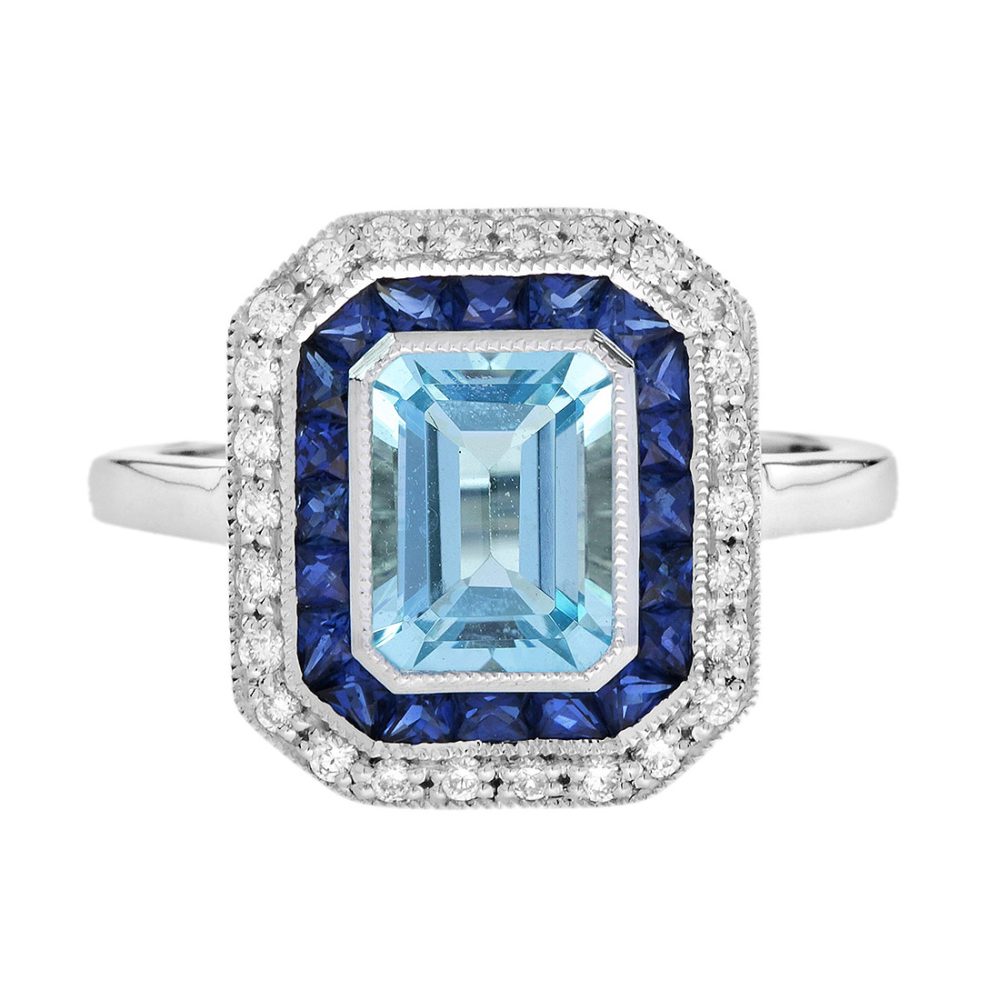
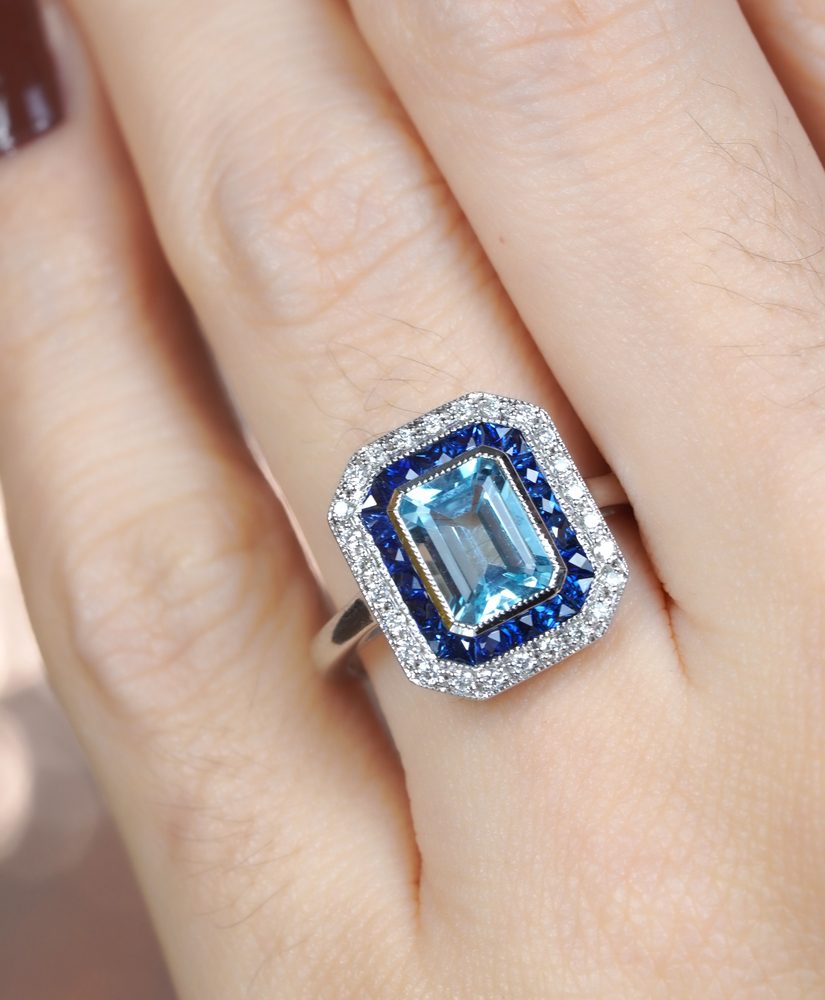
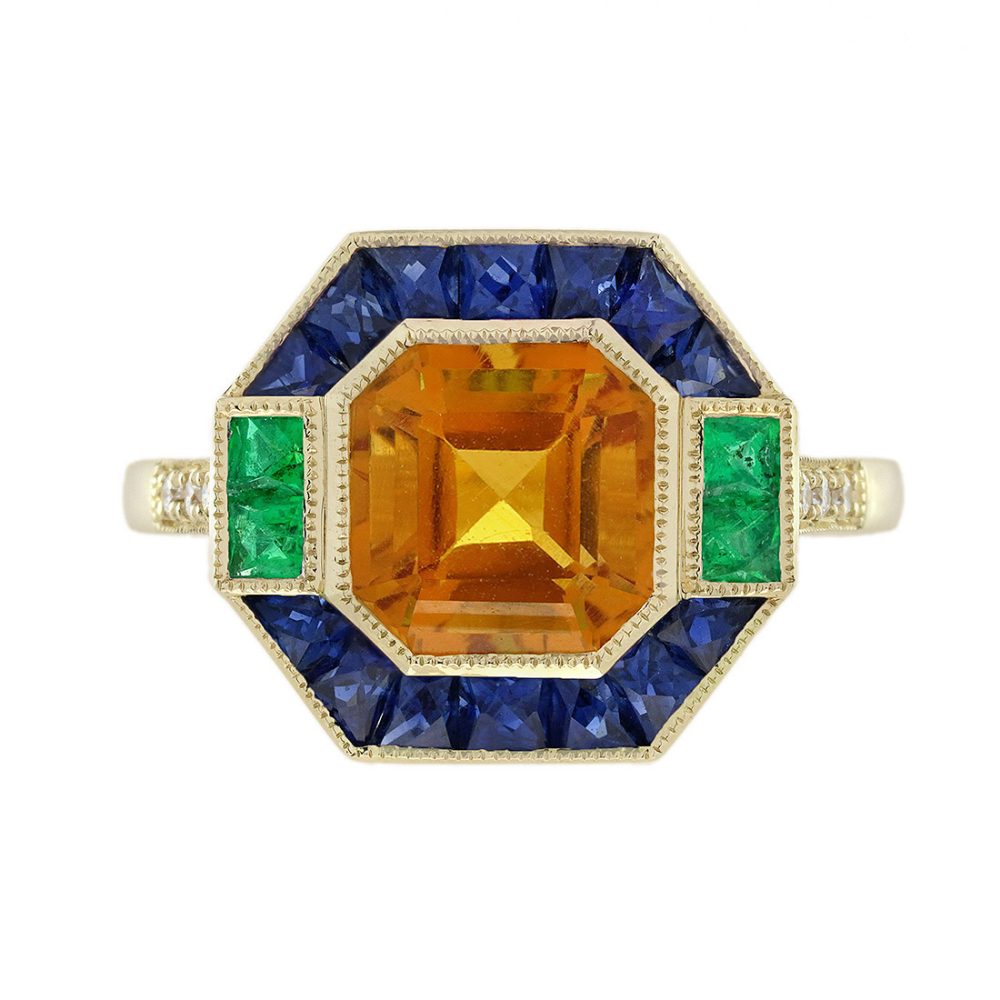
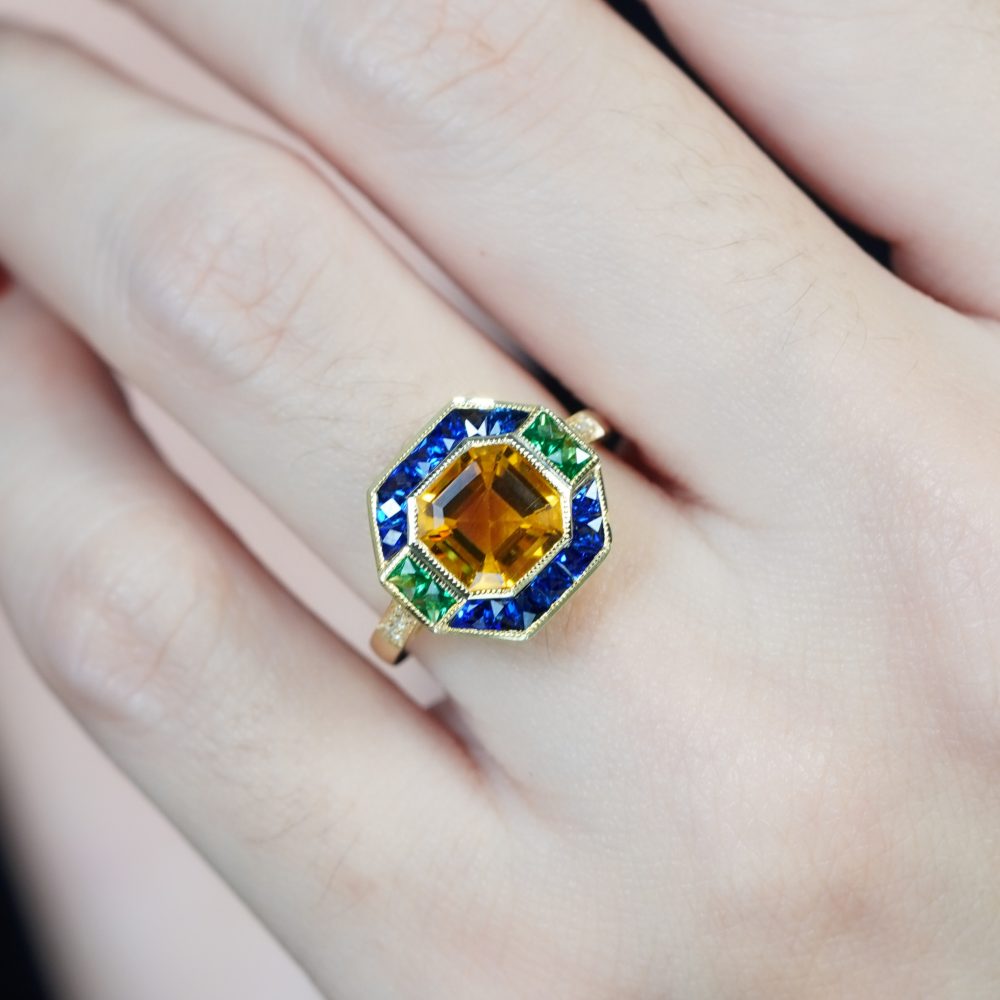
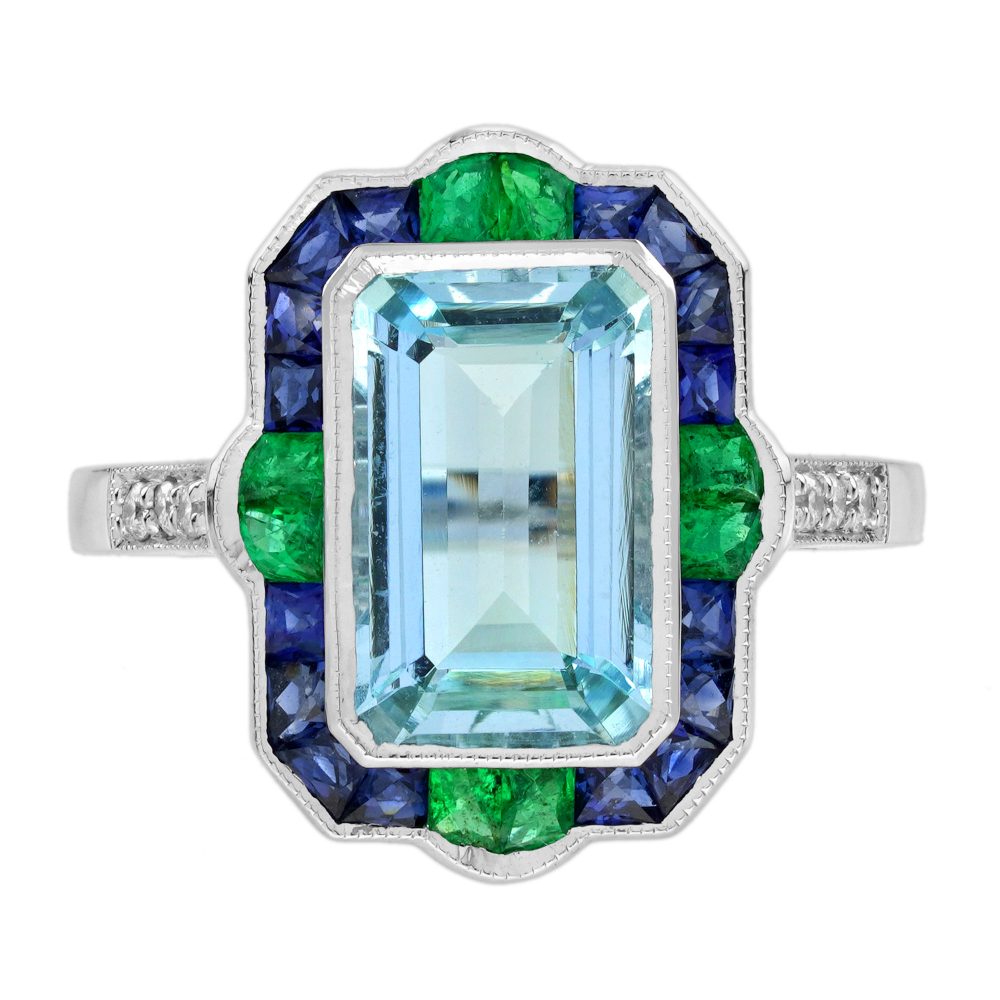
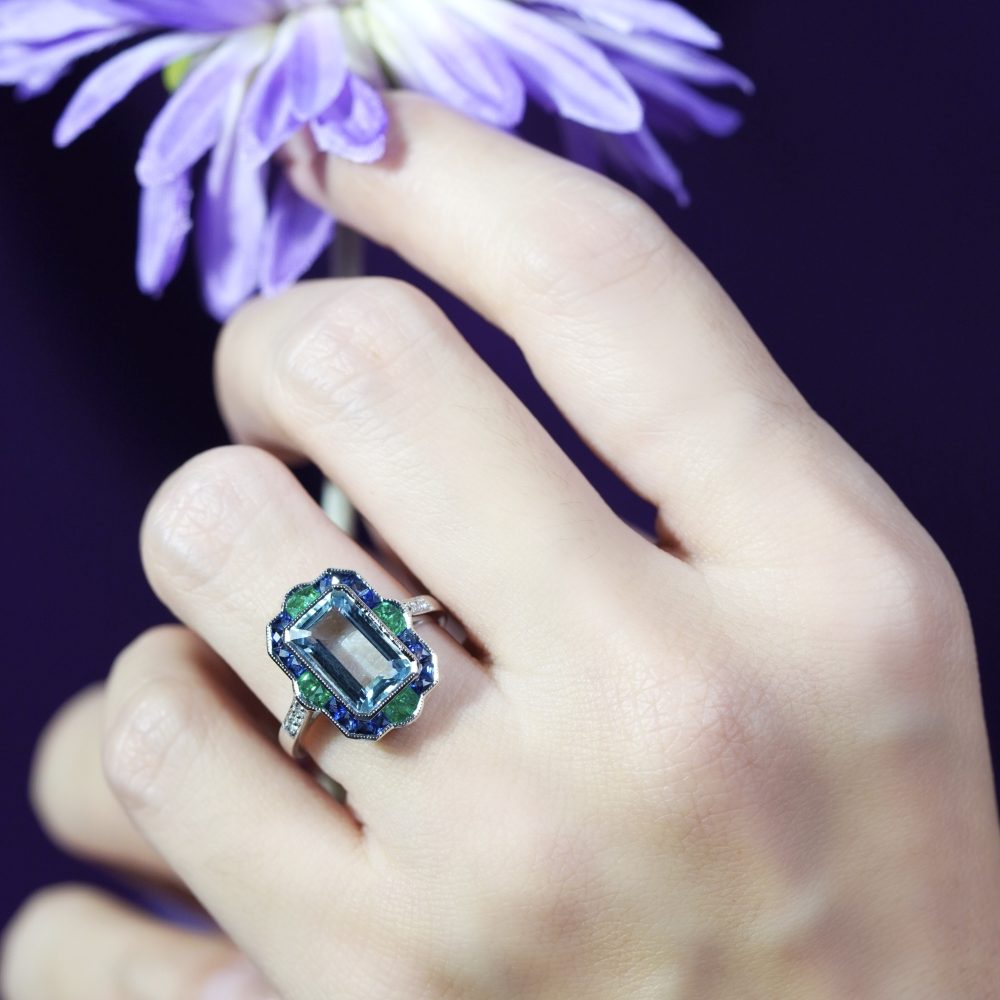
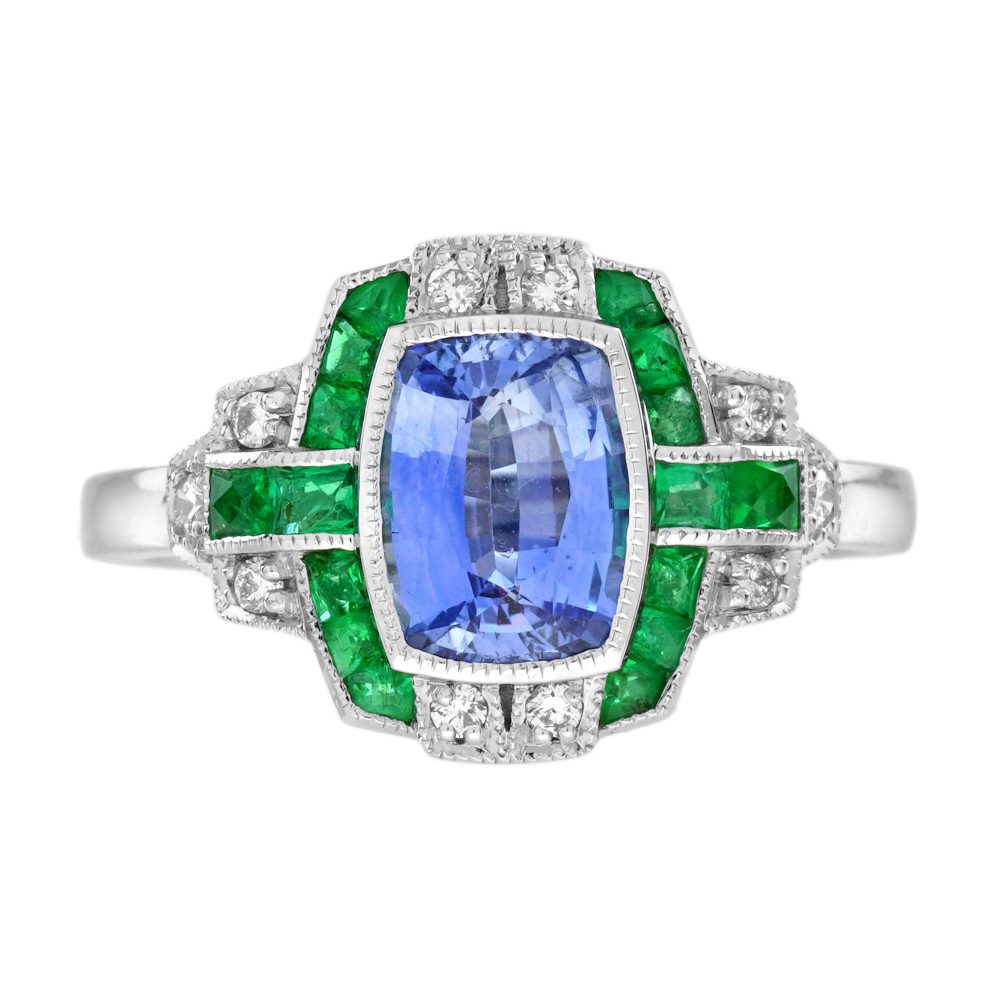
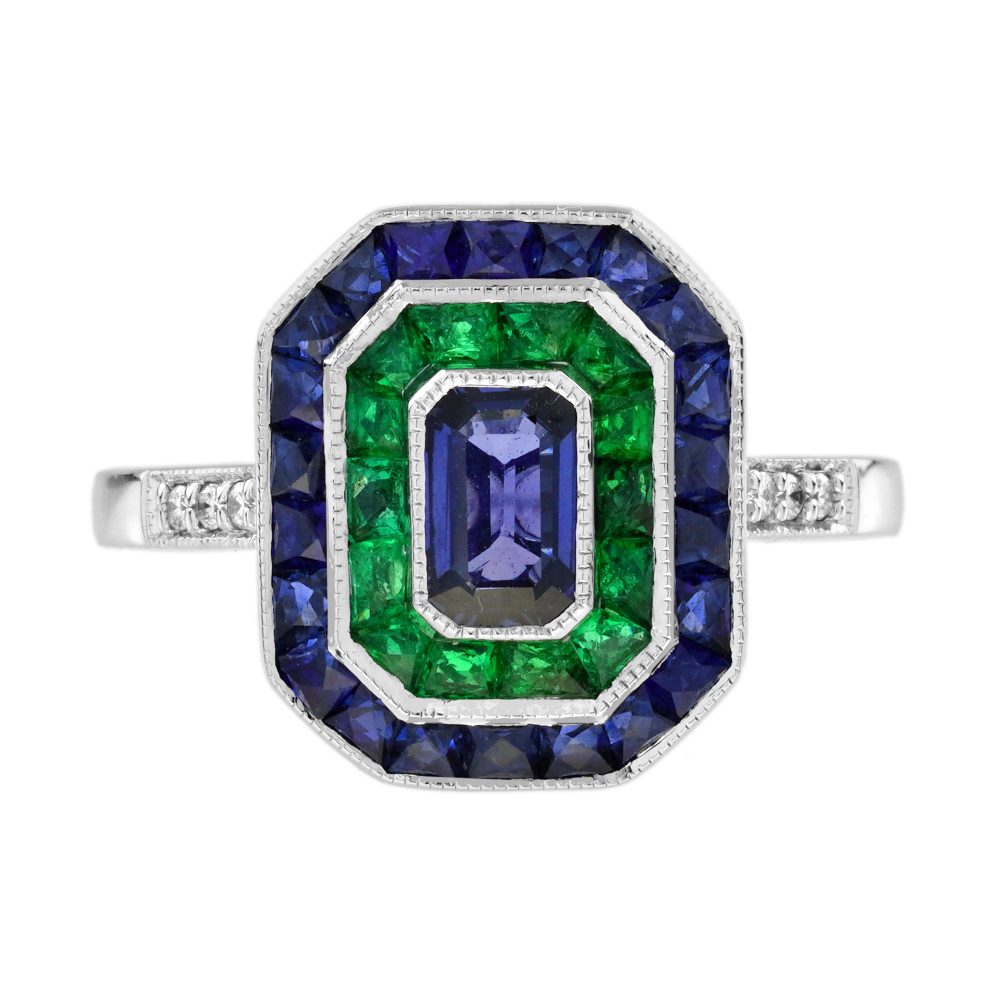
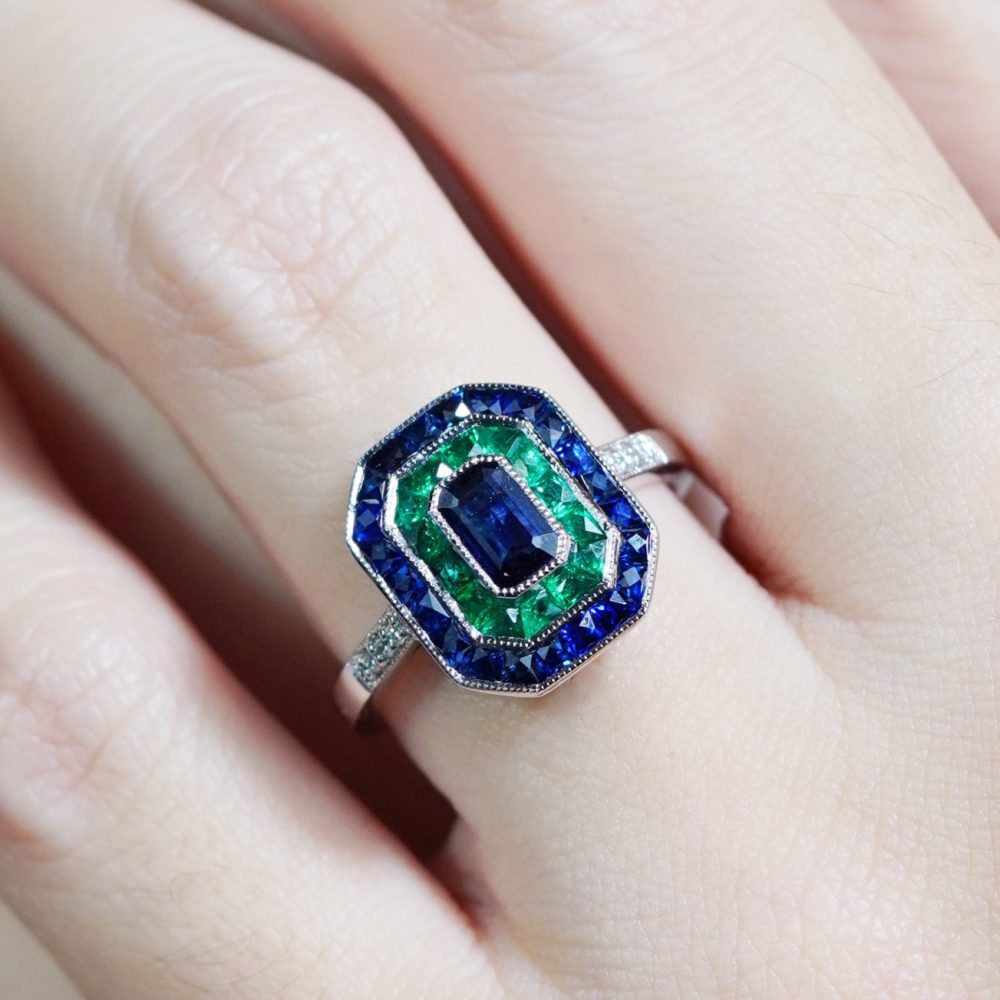
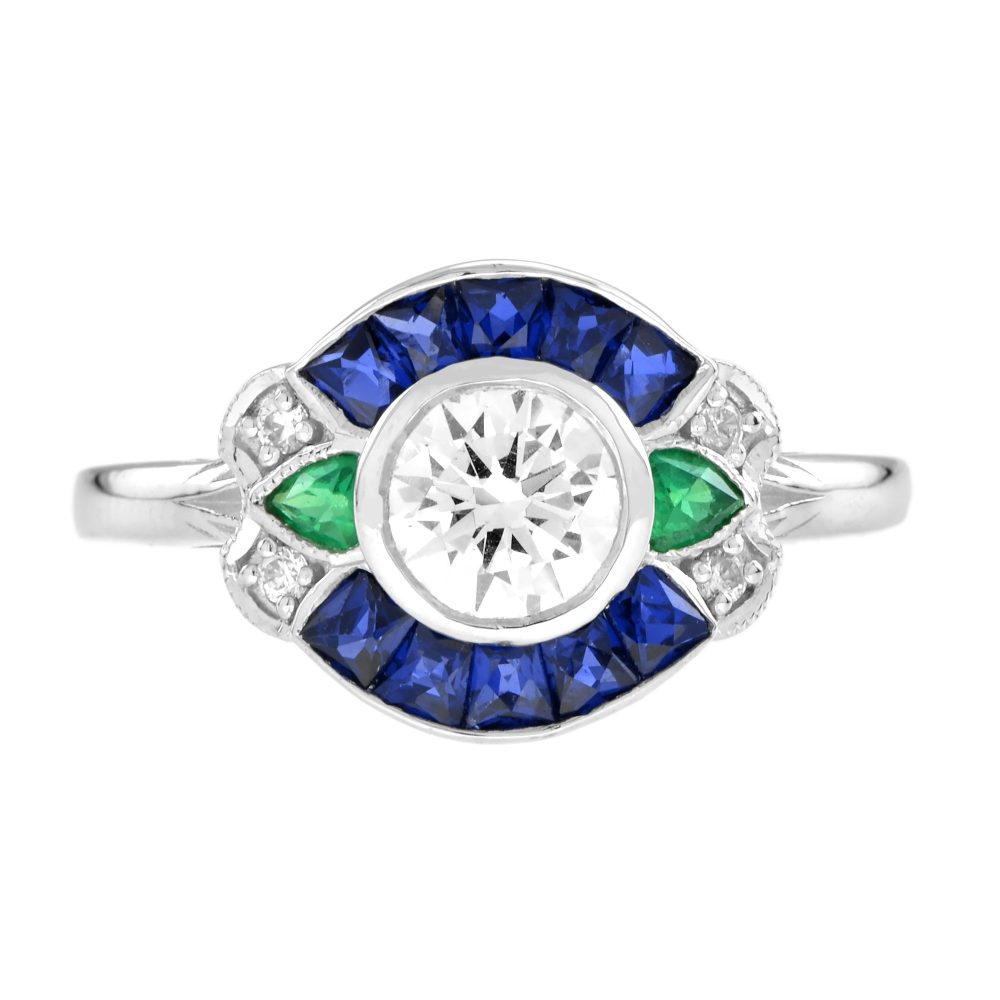
Calibré-cutting means cutting a colored gemstone — commonly sapphire, ruby, emerald, or onyx — to an exact custom shape so it fits precisely into a specific spot in a pattern, edge to edge with its neighbors, rather than using a standard round or oval cut. This technique let Art Deco jewelers build the bold color-blocking the period is known for: a row of calibré-cut sapphires outlining a diamond shape, for instance, reads as a clean, continuous band of color rather than a series of separate stones.
Calibré-cutting is labor-intensive and remains one of the more technically demanding cutting styles in fine jewelry today, which is part of why true Art Deco pieces using it are prized, and why the technique is still associated closely with Art Deco style jewelry specifically.
Unlike a standard round or oval stone, a calibré-cut stone has almost no margin for error: each facet has to be ground to match a specific, pre-planned outline, and a cutter typically works from a template supplied by the jeweler designing the piece. That tight collaboration between the stone cutter and the metalworker is part of what made the style’s most elaborate pieces as labor-intensive as they were beautiful.
If there is one technical answer to what is Art Deco jewelry at its most ambitious, calibré-cutting is it — a single detail that explains why the best period pieces still impress jewelers trained on modern equipment.
What Motifs and Themes Appear in Art Deco Jewelry?
Beyond pure geometry, Art Deco jewelry frequently borrowed motifs from Egyptian art (following the 1922 discovery of Tutankhamun’s tomb), East Asian design, and the streamlined imagery of modern travel and industry — sunburst patterns, stepped “skyscraper” silhouettes, and stylized fans and fountains all appear regularly. These borrowed motifs were reinterpreted through the era’s geometric lens rather than copied directly, which is part of what gives Art Deco jewelry history its distinctive, cohesive look despite drawing from such different sources.
Travel and speed show up constantly as themes, too — the era’s new fascination with ocean liners, automobiles, and early aviation translated into streamlined, aerodynamic-looking forms even in small, static objects like a brooch or a ring. A piece does not need to depict a car or a ship directly to carry that influence; the clean, forward-leaning lines borrowed from that imagery are often enough on their own.
Taken together, these motifs are a large part of why what is Art Deco jewelry rarely gets a one-sentence answer — the style absorbed influences from several very different sources and still produced a recognizably unified look.
How Can You Tell Real Art Deco from a Reproduction?
How can you tell real Art Deco from a reproduction? A genuine period piece will typically show hallmarks consistent with the 1920s–1930s, hand-fabrication details under magnification (slightly irregular prong work, period-appropriate findings), and often an old mine or old European cut diamond rather than a modern brilliant cut, since modern cutting standards were still developing. Wear patterns consistent with decades of use are another signal, though not a guarantee on their own.
A reproduction or Art Deco–inspired piece, by contrast, uses the era’s geometric language and often its construction techniques, but is made with modern tools, modern-cut stones, and current hallmarking. Neither is “fake” — a reproduction is simply a new piece in an old style, and that distinction should always be clear at the point of sale.
A trained gemologist or an experienced estate jeweler can usually confirm a period piece with reasonable confidence by combining several of these signals rather than relying on any single one. For anyone buying what is represented as a genuine period piece, asking for that kind of assessment, or at minimum a clear, written description of the piece’s age and originality, is a reasonable and normal request. Knowing what is Art Deco jewelry versus a well-made reproduction protects both the buyer’s budget and their expectations.
Related: Our Guarantee
Is Lilly M. Jewelry Real Art Deco?
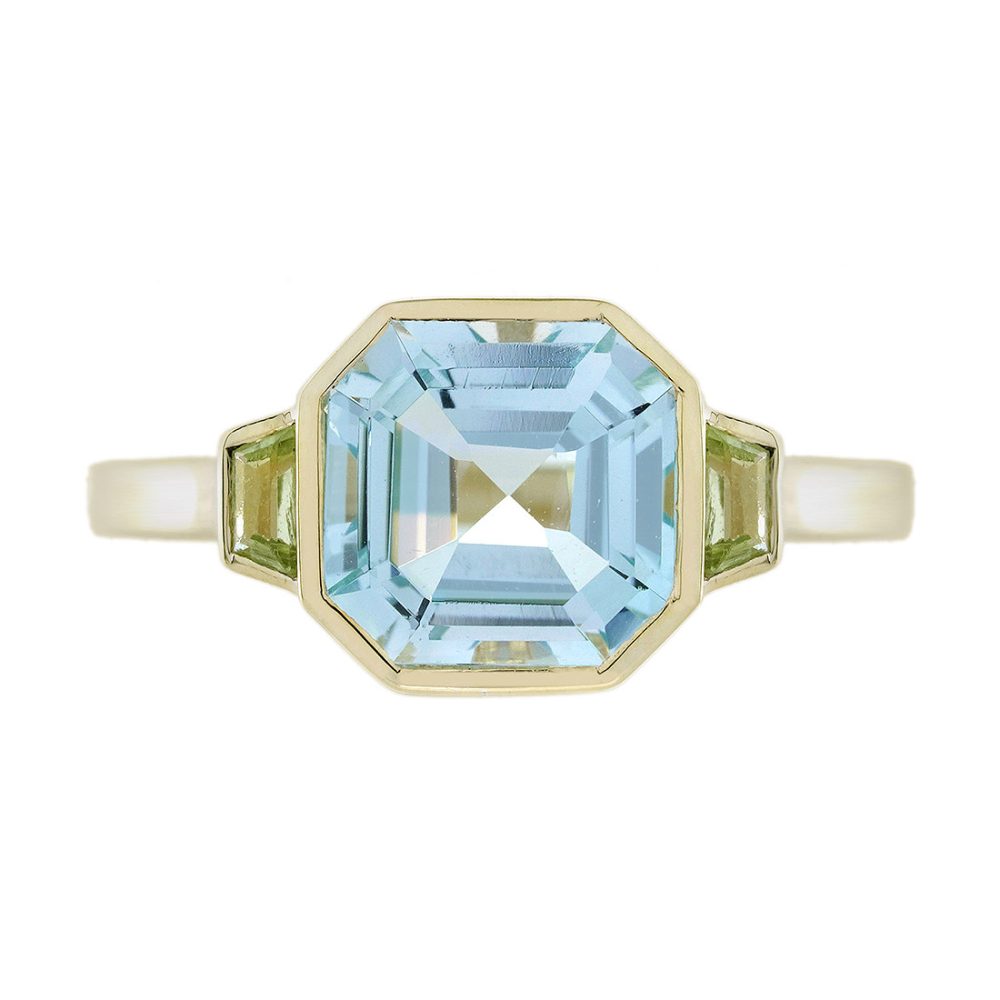
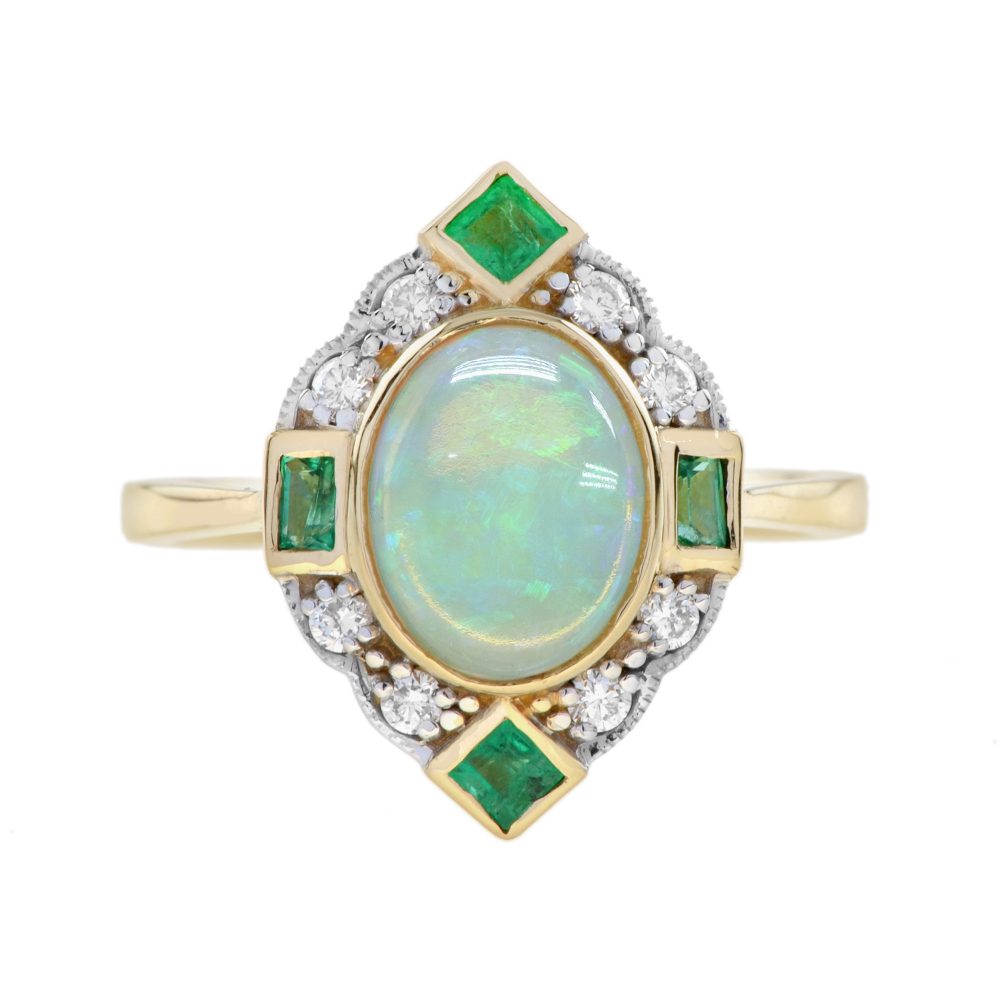
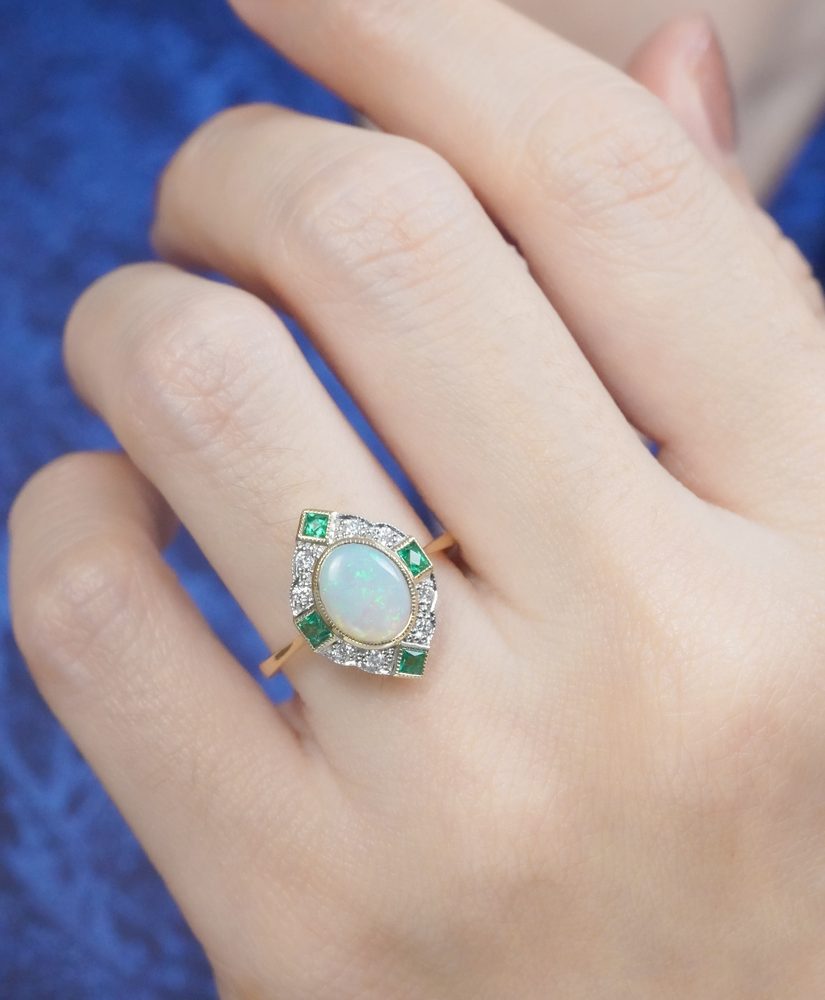
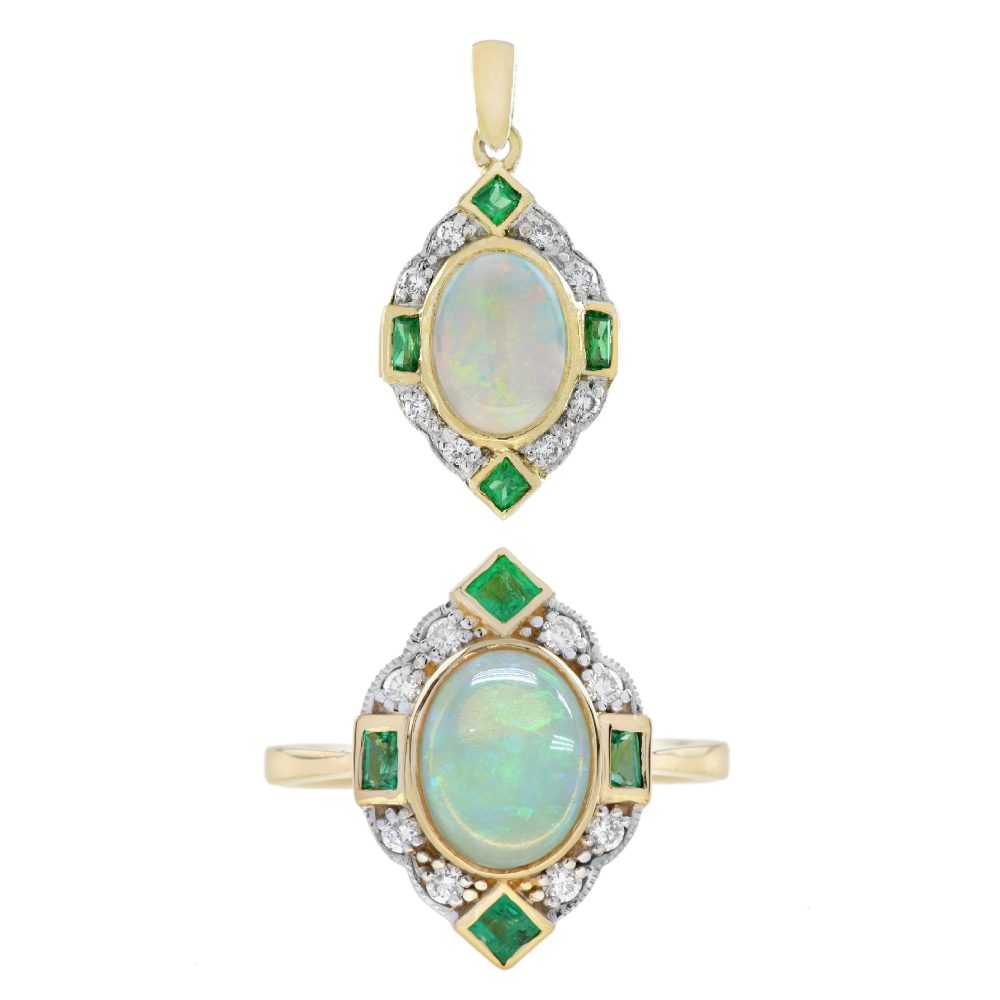
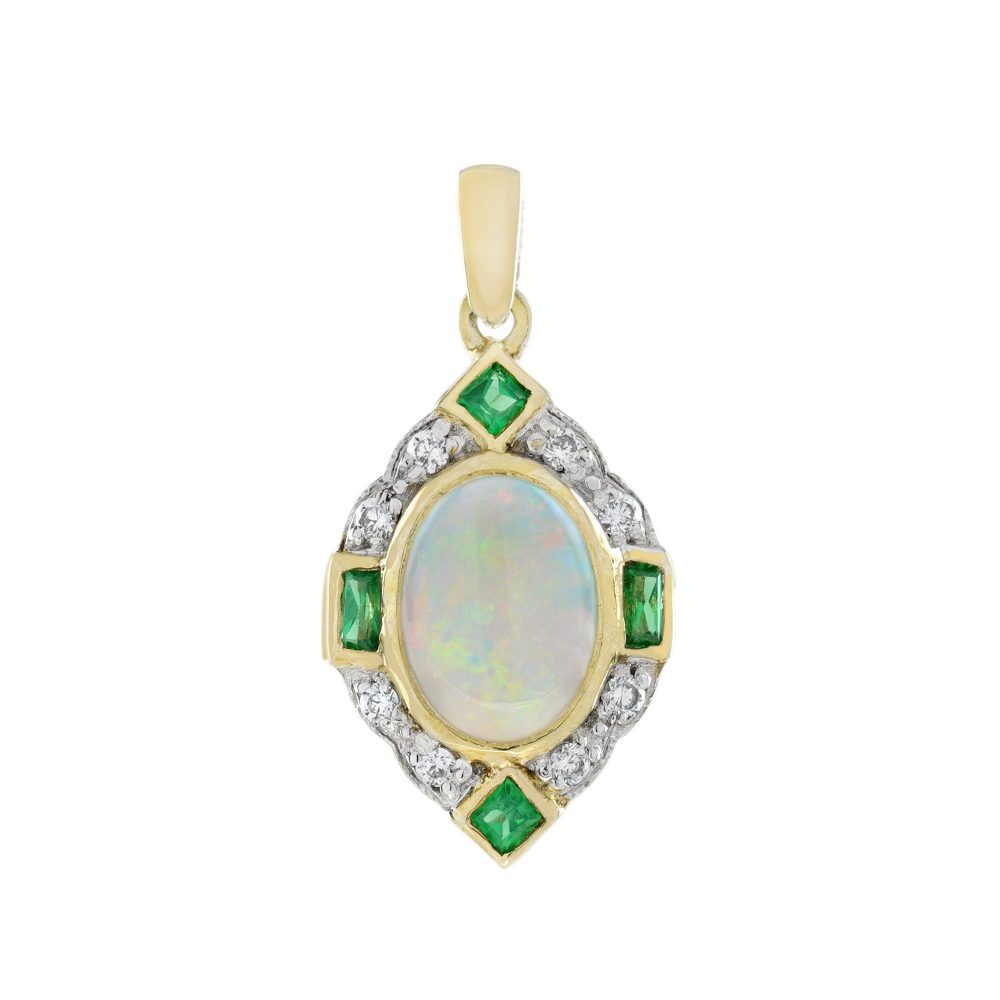
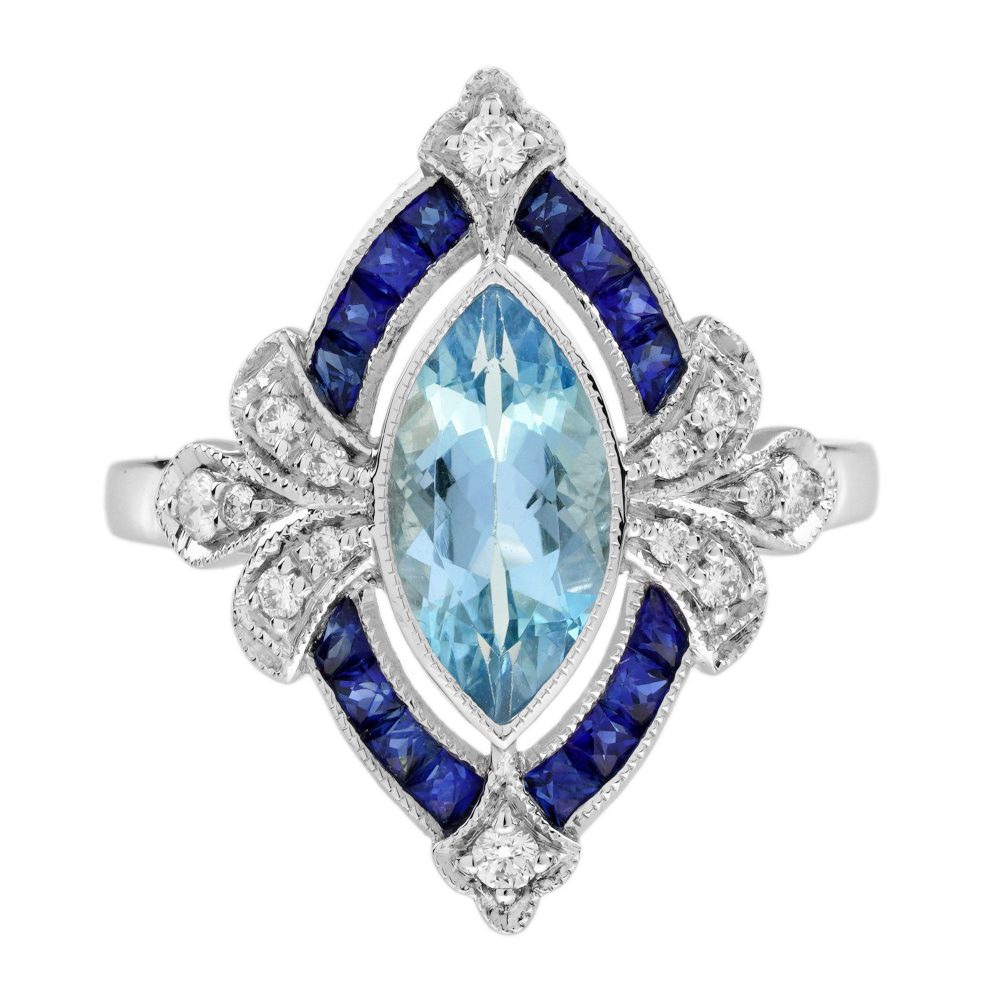
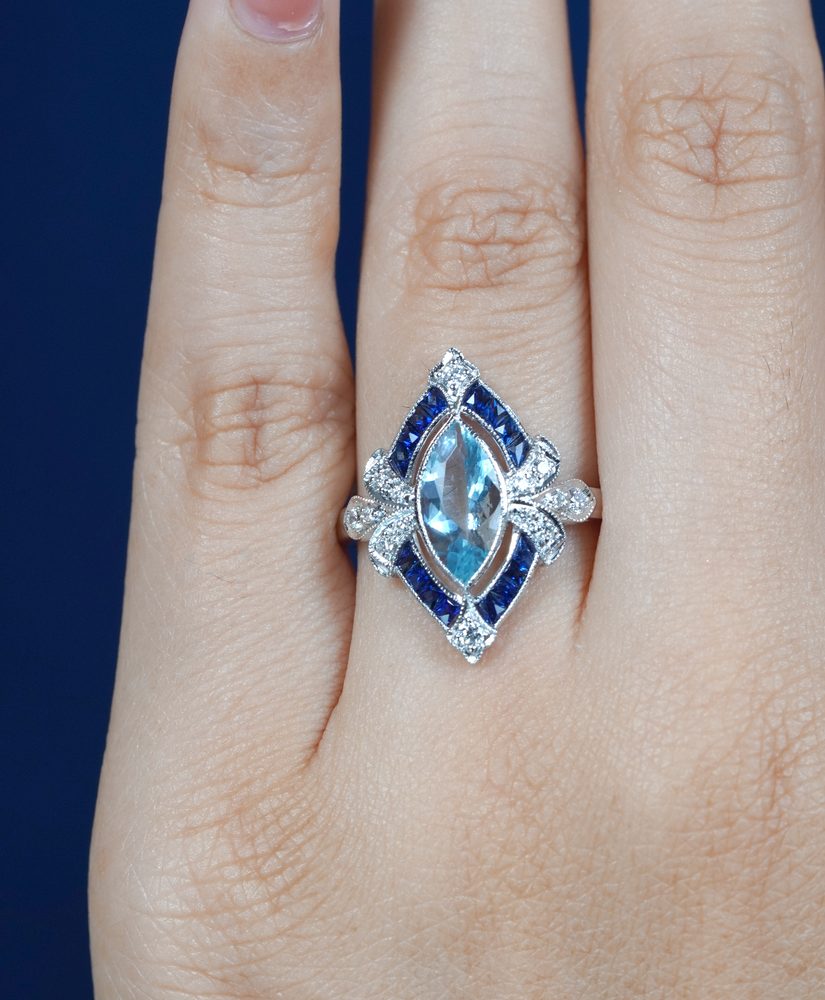
Is Lilly M. jewelry real Art Deco? No, and we say so plainly: our pieces are newly made, by hand, drawing on Art Deco and Edwardian design language — geometry, platinum and solid gold construction, calibré-cut stones where the design calls for them — but they are not period-original jewelry and are never represented as antique. We describe our work as Art Deco–inspired, which is an honest description of what it is: a new piece that honors a historical style, not a find from an estate sale.
This distinction matters to us because what is Art Deco jewelry, in the collecting sense, specifically means a piece actually made in that era — and conflating a new piece with that would misrepresent both the piece and the history it draws from.
Choosing a new piece in this style has its own advantages that a period original cannot offer: it can be made to order in a specific size or metal, built with a modern durability standard, and set with a stone chosen to your taste rather than whatever happened to survive a century intact. The trade-off is simply that it carries a design history rather than a personal provenance of its own — and we think that trade-off is worth being honest about upfront.
Related: Bespoke & Personalization
What Should You Remember About Art Deco Jewelry?
What is Art Deco jewelry, in summary: jewelry made roughly 1920–1935, defined by geometric symmetry, platinum construction, calibré-cut colored stones, and bold contrast, born as a reaction against Art Nouveau’s flowing lines and shaped by the era’s fascination with modernism and machine-age design. The art deco jewelry characteristics covered here — geometry, platinum, precision-cut stones, borrowed motifs — give a reliable way to recognize the style whether looking at a period piece or a new one inspired by it.
We make new pieces inspired by this history, in solid gold and platinum, and are always upfront that they are new work rather than period originals — the design language is historical, but the piece in your hand was made recently, by us.
If one question sticks with you after reading this, let it be this: what is Art Deco jewelry worth to you as a style, separately from the question of whether a specific piece is a period original. Both are legitimate reasons to love the look, and knowing the difference just makes sure you are choosing the one you actually want.
Sources: GIA — Art Deco Jewelry History · The Metropolitan Museum of Art — Art Deco Reference


Rose Gold

Aquamarine
Frequently Asked Questions: Art Deco Jewelry
What years count as the Art Deco period?
Roughly 1920 to 1935, named for the 1925 Paris Exposition Internationale des Arts Décoratifs. The style began fading as the Great Depression and World War II changed both materials availability and taste. This window is the most reliable answer to what is Art Deco jewelry when the question is about dating a piece.
What is the difference between Art Deco and Art Nouveau jewelry?
Art Nouveau, which came first, favored flowing, asymmetrical lines drawn from nature. Art Deco directly reacted against that with straight-edged geometry, symmetry, and bold contrast, reflecting the era’s fascination with modernism and machine-age design.
Why was platinum used so often in Art Deco jewelry?
Platinum’s strength allowed thinner, more intricate metalwork than gold could support at comparable thinness, and its white color suited the style’s bold contrast between dark and light stones. Both qualities made it the preferred metal of the period.
What does calibré-cut mean?
A calibré-cut stone is cut to a custom shape so it fits precisely into a specific spot in a pattern, edge to edge with its neighbors, rather than using a standard round or oval cut. It is a labor-intensive, signature Art Deco cutting technique.
Does Lilly M. sell antique Art Deco jewelry?
No. Lilly M. makes new pieces inspired by Art Deco and Edwardian design, in solid gold and platinum. Our jewelry is never represented as a period original or antique — it is new work that draws on a historical style.