
Blog, Buying Guides
Types of Earrings: Studs, Drops, Chandeliers & More

Key Takeaways: Types of Earrings
- The types of earrings fall into a handful of core shapes — studs, drops, hoops, chandeliers, huggies, climbers, threaders, and clip-ons — each defined by how it sits on the ear and how it moves.
- The backing matters as much as the style. Posts with butterfly backs suit studs and small drops; lever-backs and hinged hoops suit heavier, more active pieces; clip-ons and screw-backs work for non-pierced ears.
- Weight and movement decide comfort more than size alone. A long chandelier earring with a lightweight open design can sit more comfortably than a small, dense stud of the same visual size.
- Face shape and hair length both affect which style reads best, though personal preference matters more than any rigid rule.
- We hand-make earrings across these styles in solid gold and platinum, set with natural gemstones.
Types of Earrings: The Short Answer
The main types of earrings are stud earrings (a single gem or shape sitting flat against the earlobe), drop and dangle earrings (hanging below the lobe), hoops (circular or oval shapes that pass through the ear), huggie earrings (small, close-fitting hoops), chandelier earrings (multi-tiered drops with several hanging elements), ear climbers (which travel up the curve of the ear), threaders (a thin chain that pulls through the piercing), and clip-on or screw-back earrings (for non-pierced ears). Each style suits a different balance of everyday wear versus statement impact.
Types of Earrings at a Glance
| Style | Typical look | Best for |
|---|---|---|
| Stud | Sits flat on the lobe, no movement | Everyday wear, work, layering |
| Drop / Dangle | Hangs below the lobe, some movement | Dinners, dressier daywear |
| Hoop | Circular or oval, passes through the ear | Casual to dressy, wide size range |
| Huggie | Small hoop that hugs the lobe closely | Everyday wear, stacking with studs |
| Chandelier | Multi-tiered, several hanging elements | Evening wear, formal occasions |
| Ear climber | Follows the curve of the upper ear | Modern, minimal-lobe-piercing looks |
| Threader | Thin chain pulled through the piercing | Delicate, adjustable-length looks |
| Clip-on / Screw-back | Varies; secures without a piercing | Non-pierced ears, vintage-style pieces |
What Are Stud Earrings?
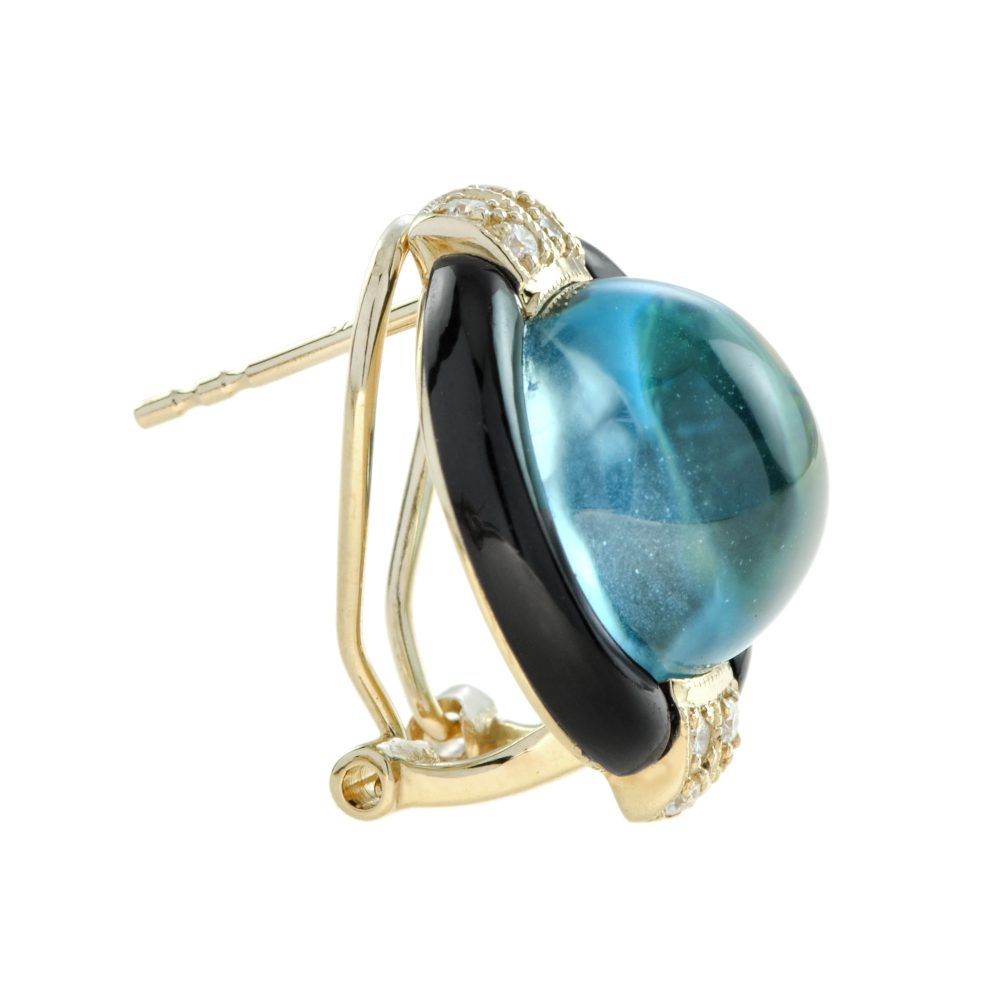
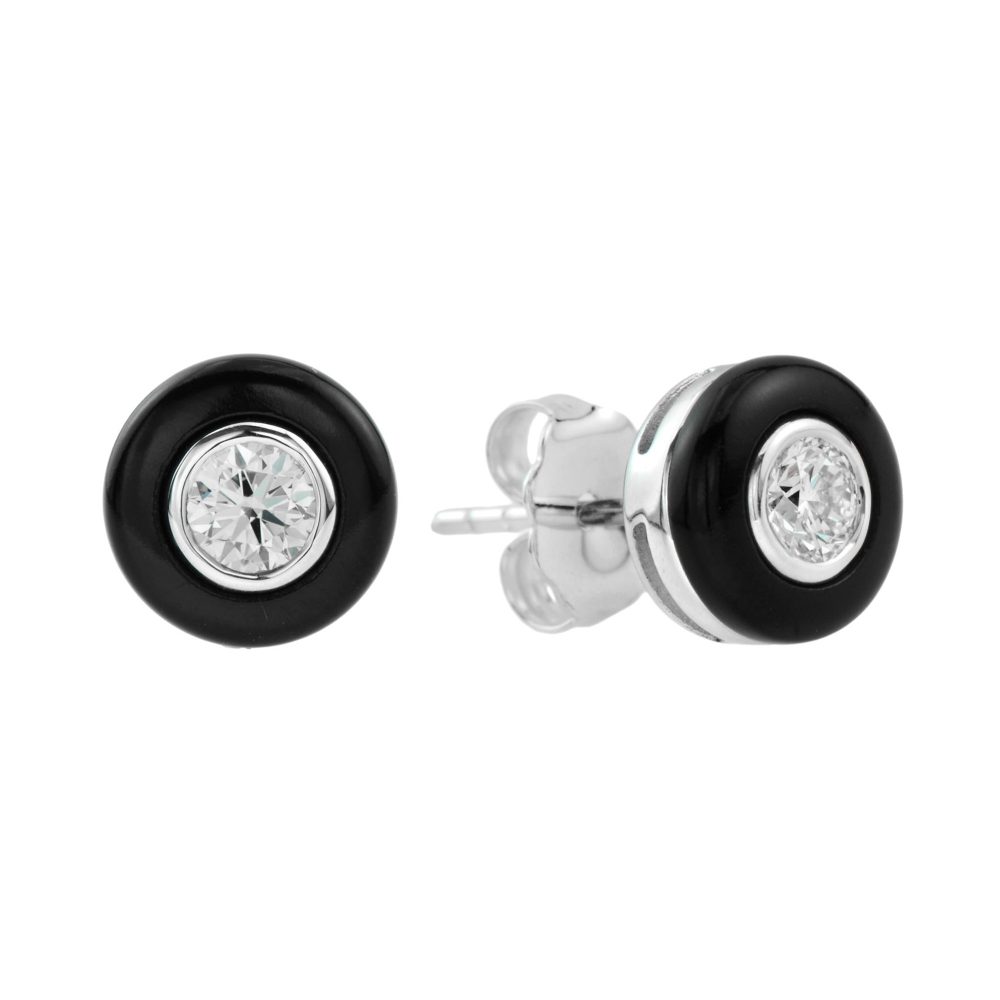 Round Diamond Onyx Art Deco Style Stud Earrings
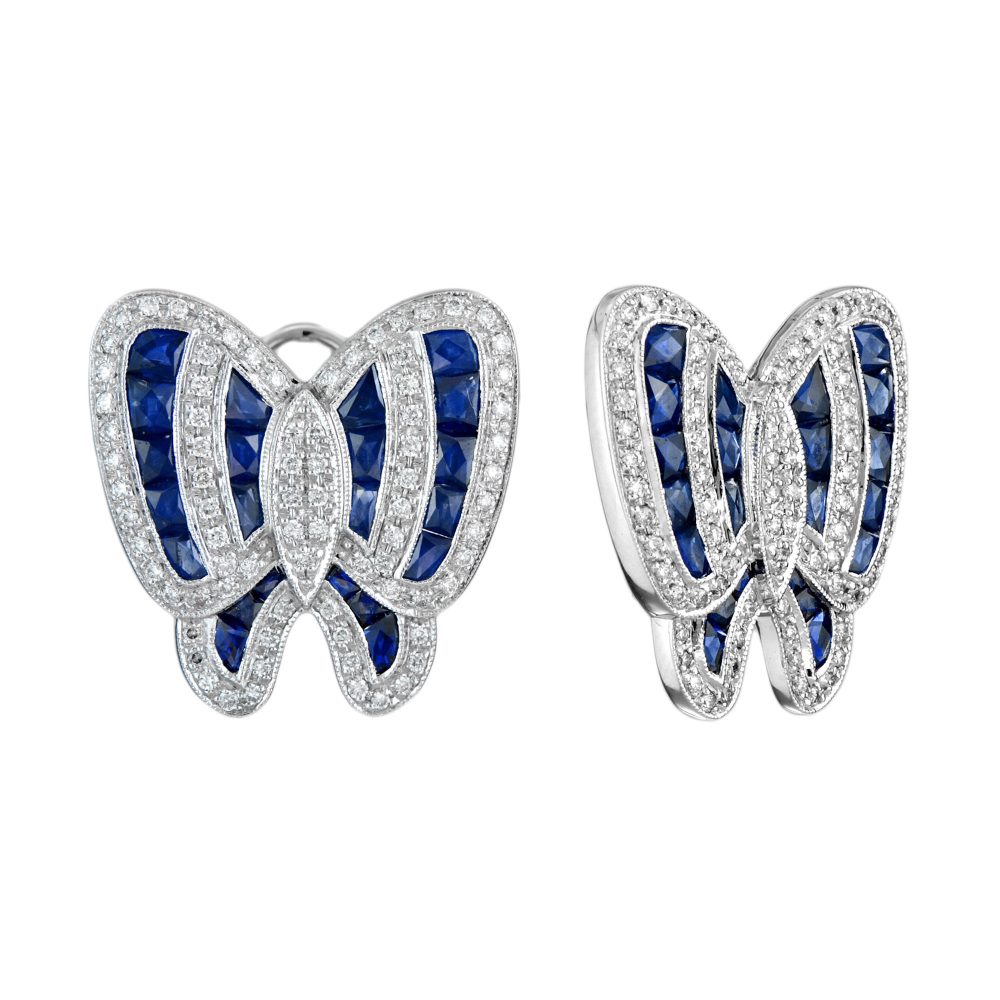
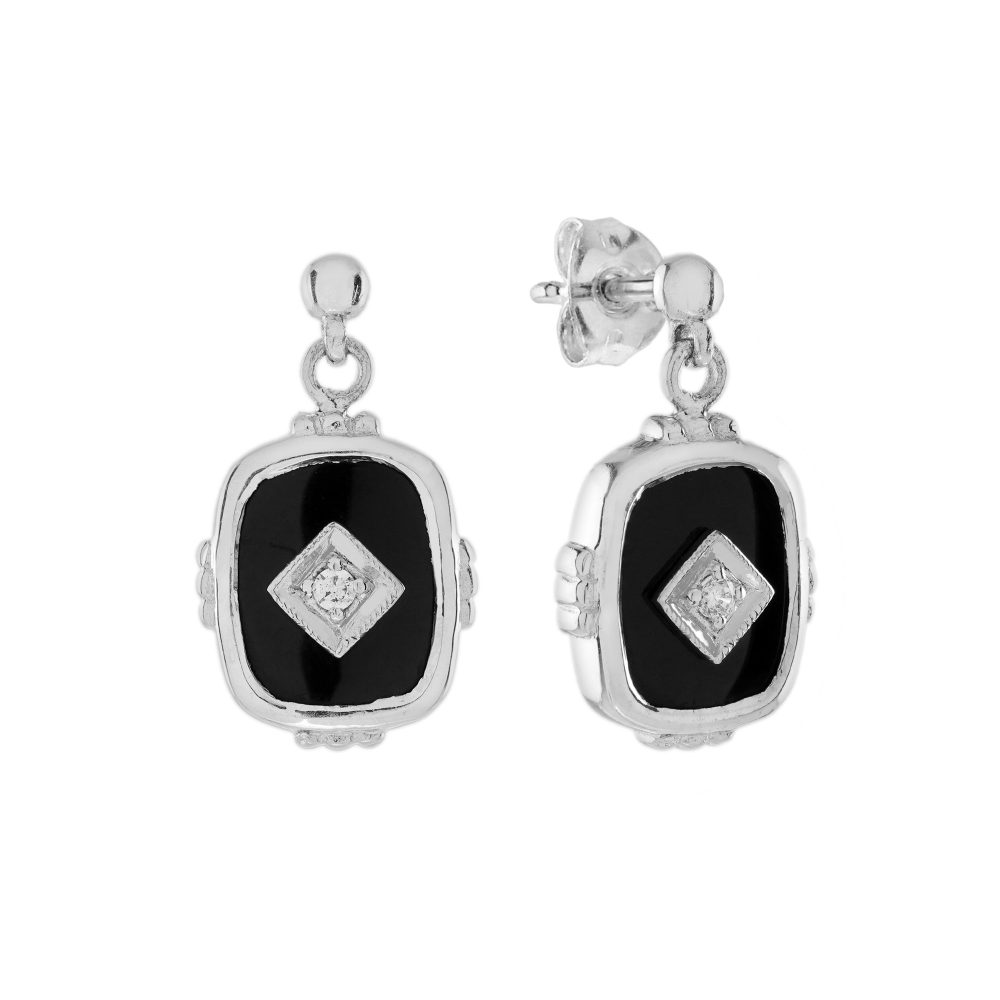
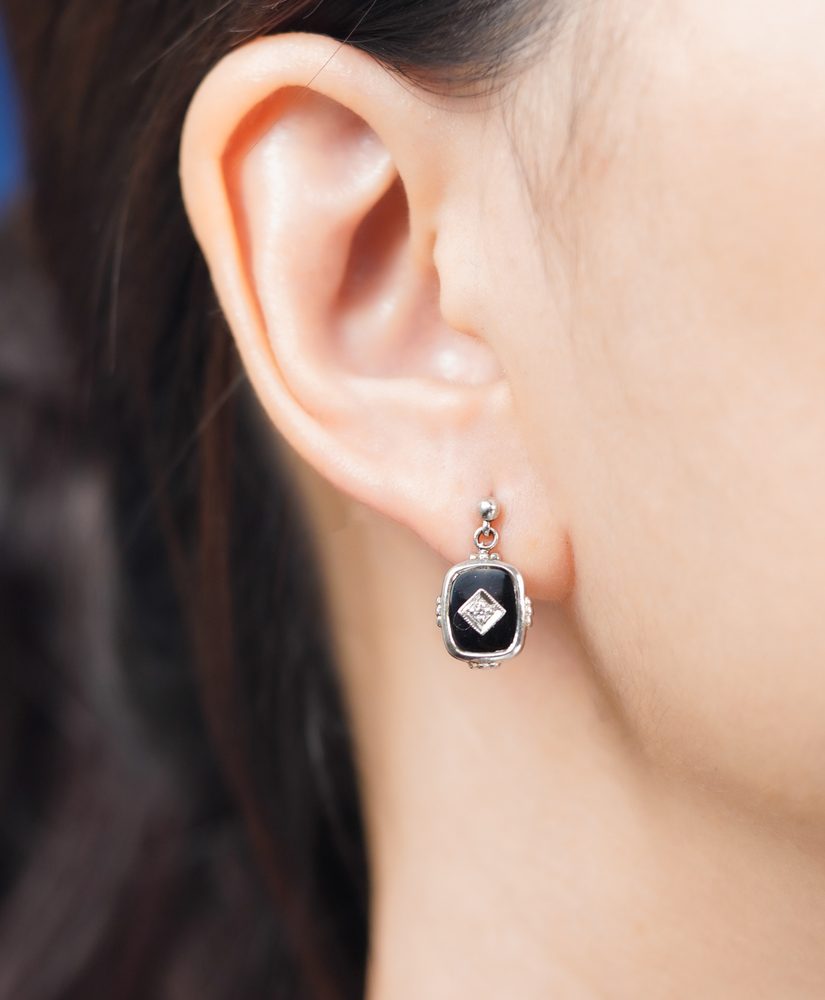
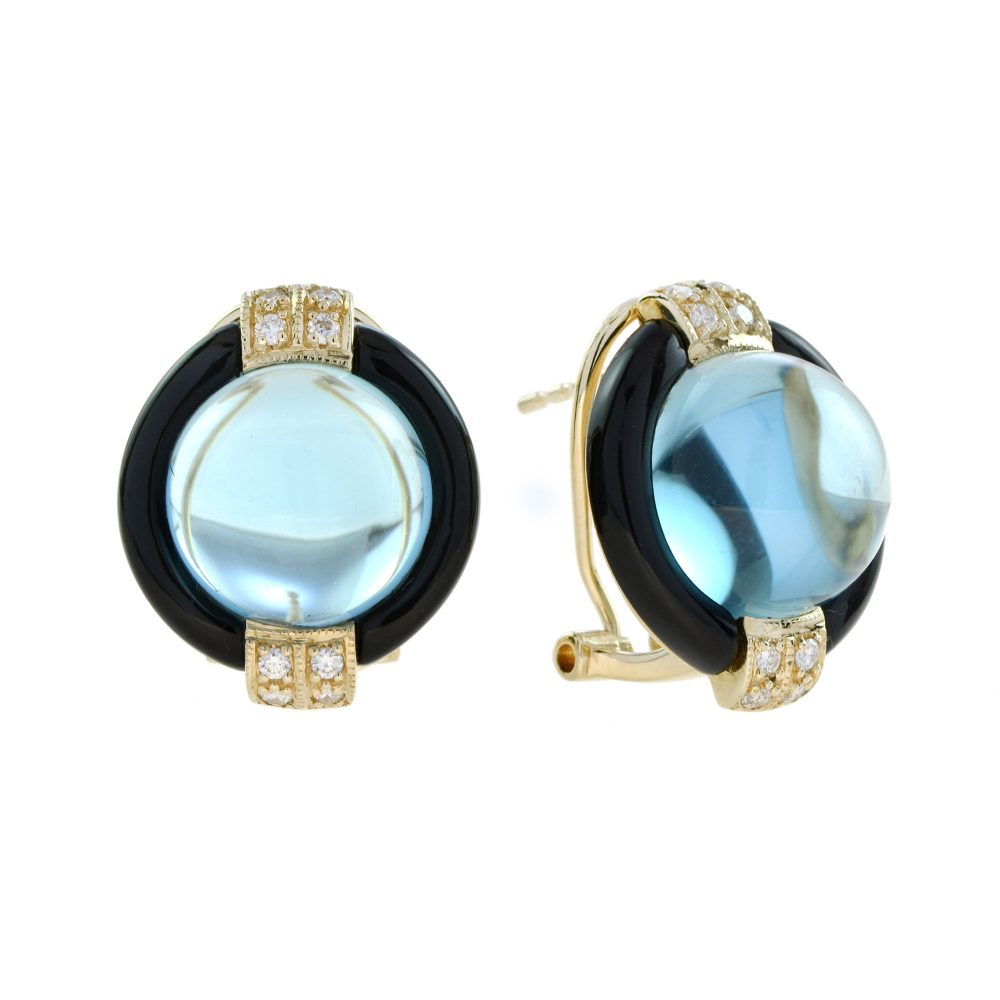
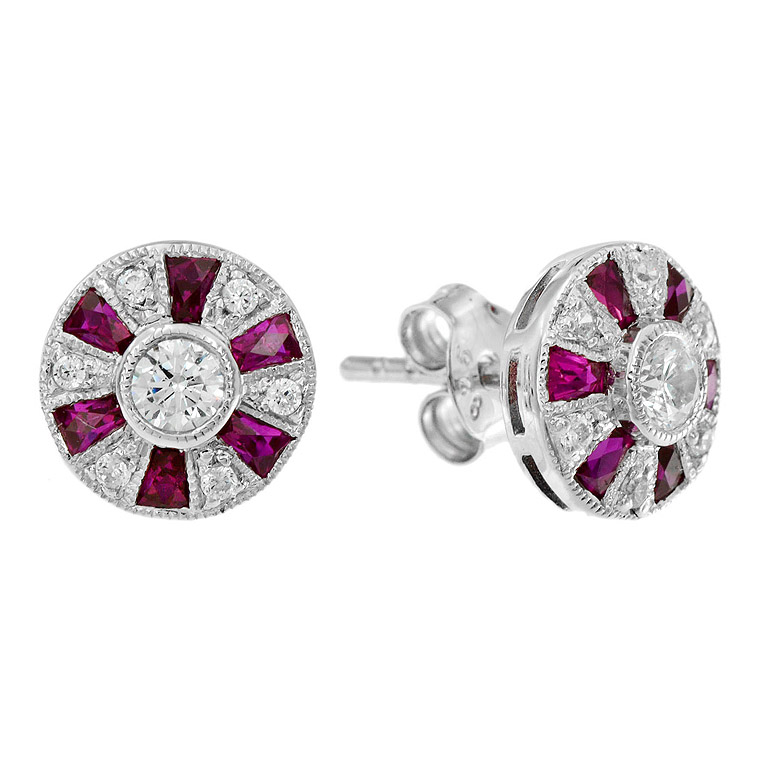
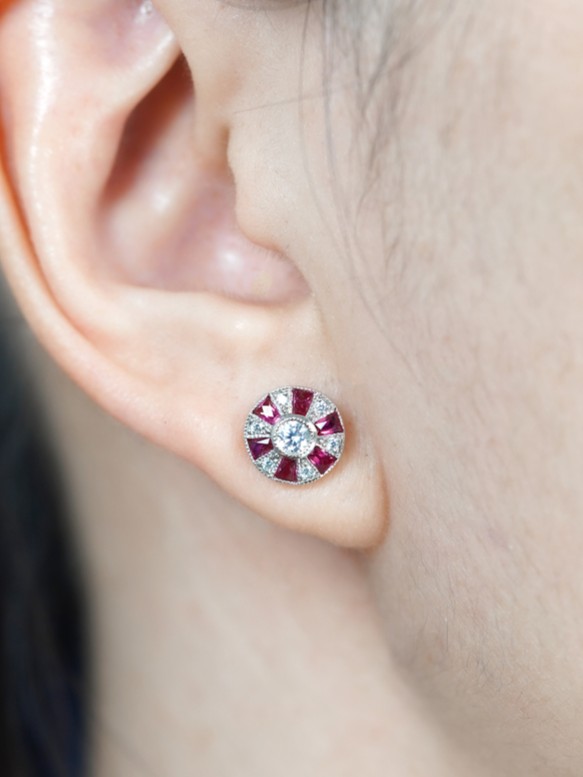
Stud earrings are the simplest and most versatile of all the types of earrings: a single gemstone, pearl, or small shape mounted on a post, sitting flat against the earlobe with no hanging movement. Because they sit close to the ear, stud earrings read as understated even when the stone itself is substantial, which is part of why they work for both daily wear and formal occasions alike.
Most stud earrings use a butterfly or push back, though a screw back offers extra security for heavier studs or for anyone who moves around a lot during the day. Stud earrings are also the easiest style to stack or layer with a second piercing, since their flat profile does not compete visually with a hoop or huggie worn alongside them.
Size matters more than most people expect with this style: a stud that sits noticeably too large or too small for the earlobe can look slightly off, even when the metalwork and stone quality are excellent, so it is worth checking the stated diameter against a ruler or a similar piece already owned before buying online.
What Are Drop and Dangle Earrings?
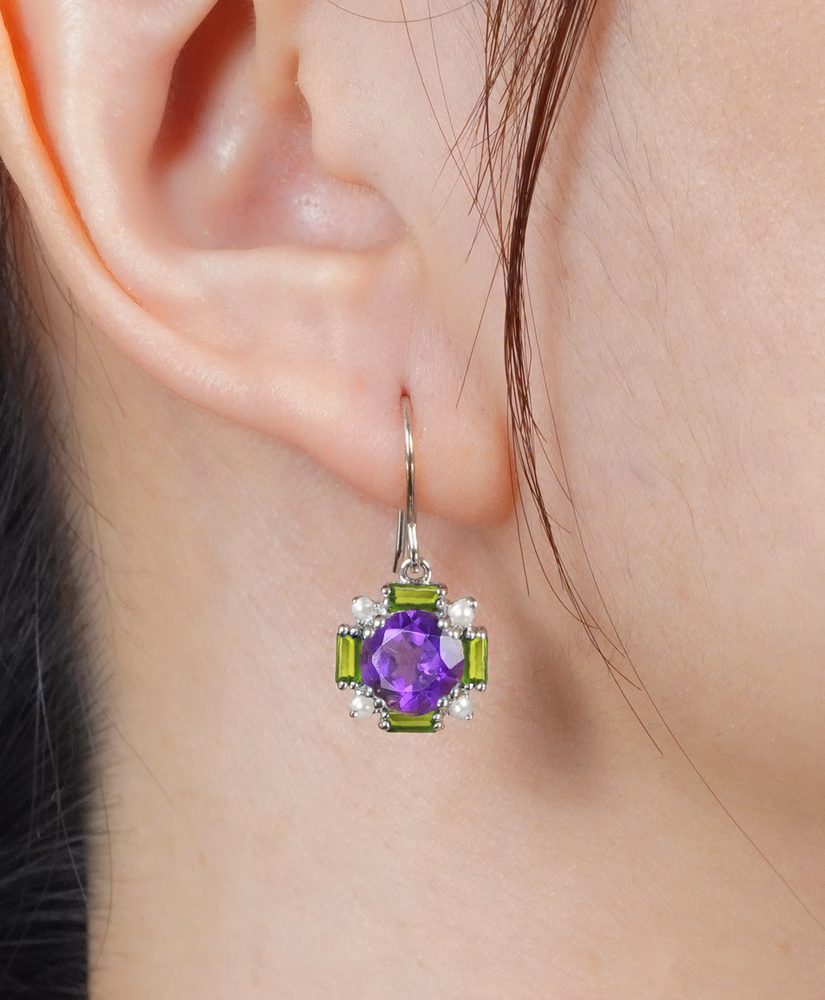
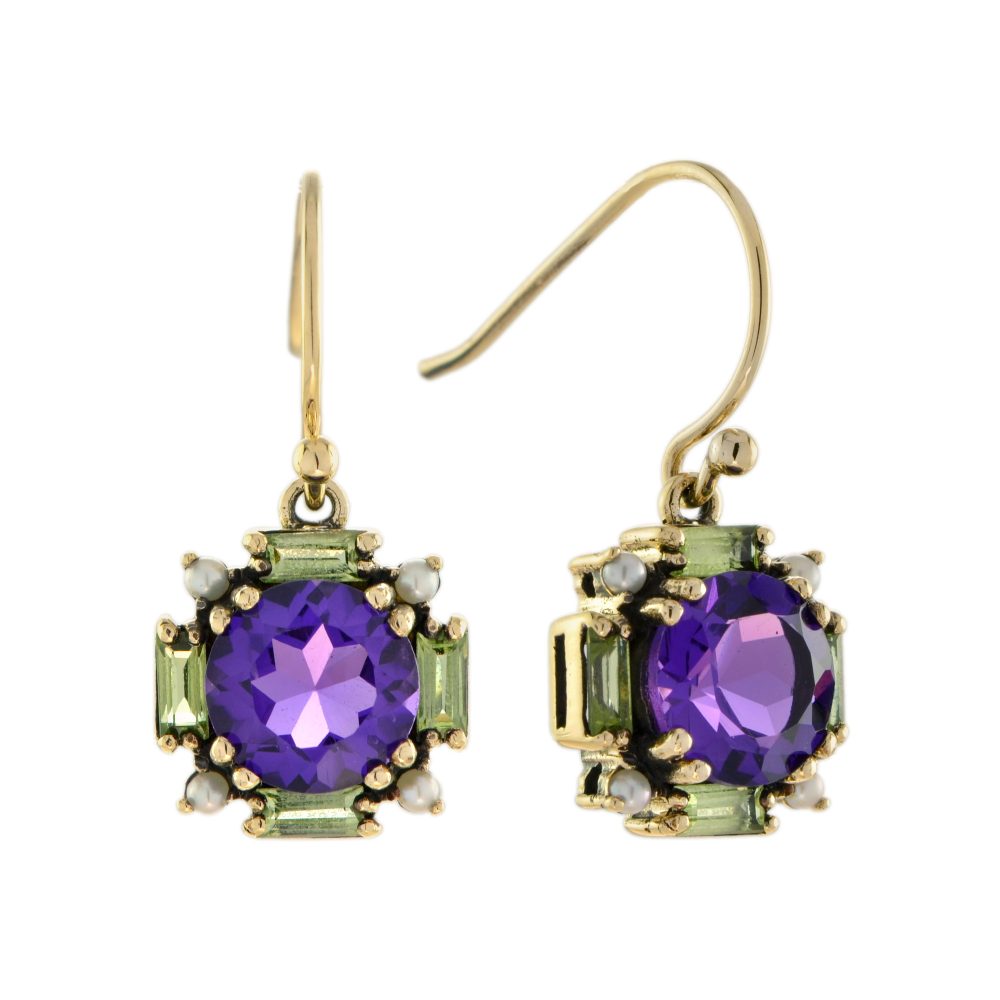 Amethyst Peridot and Pearl Art Deco Style Drop Earrings
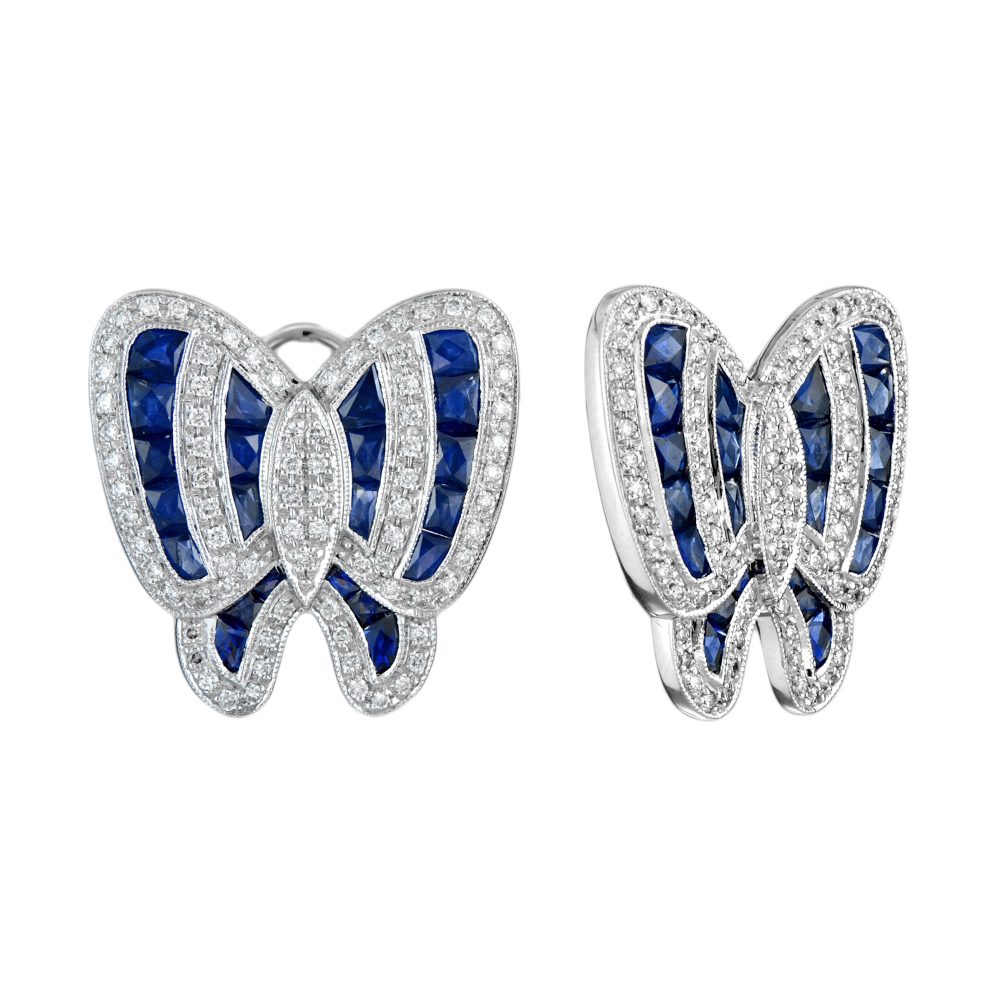
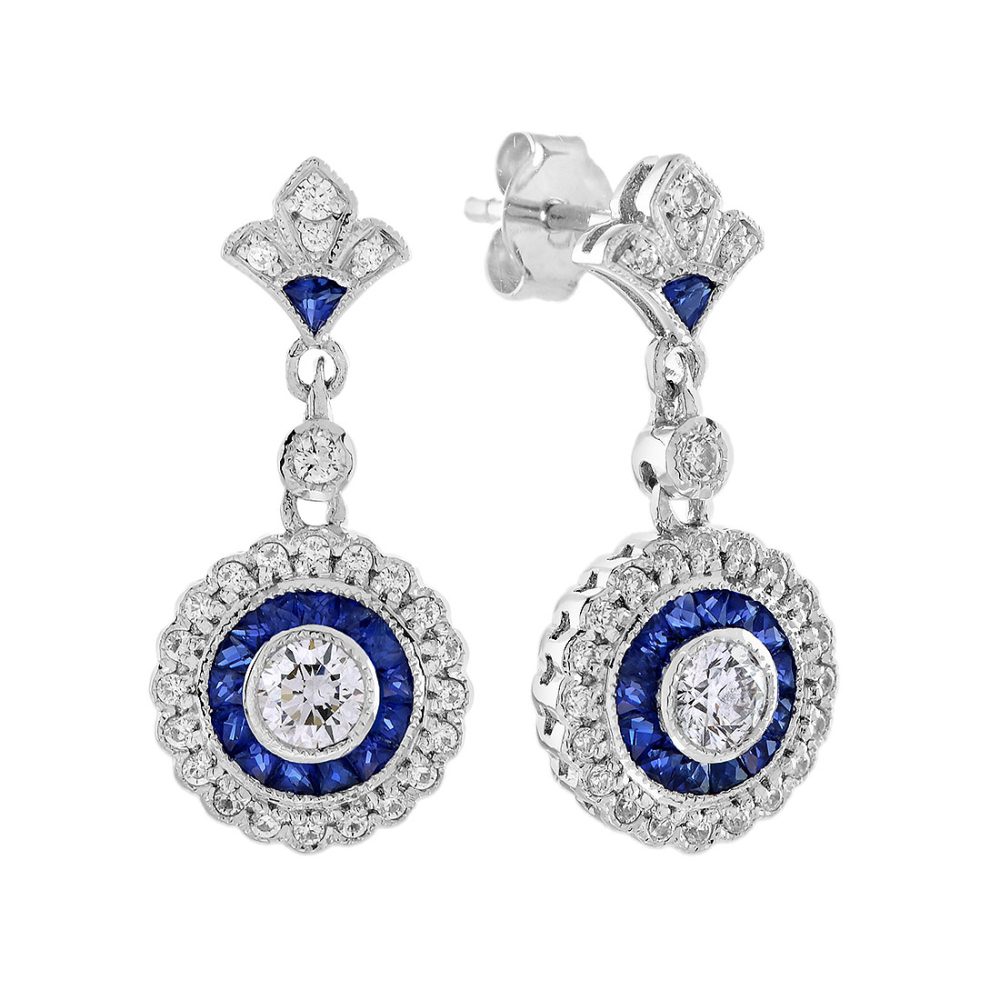
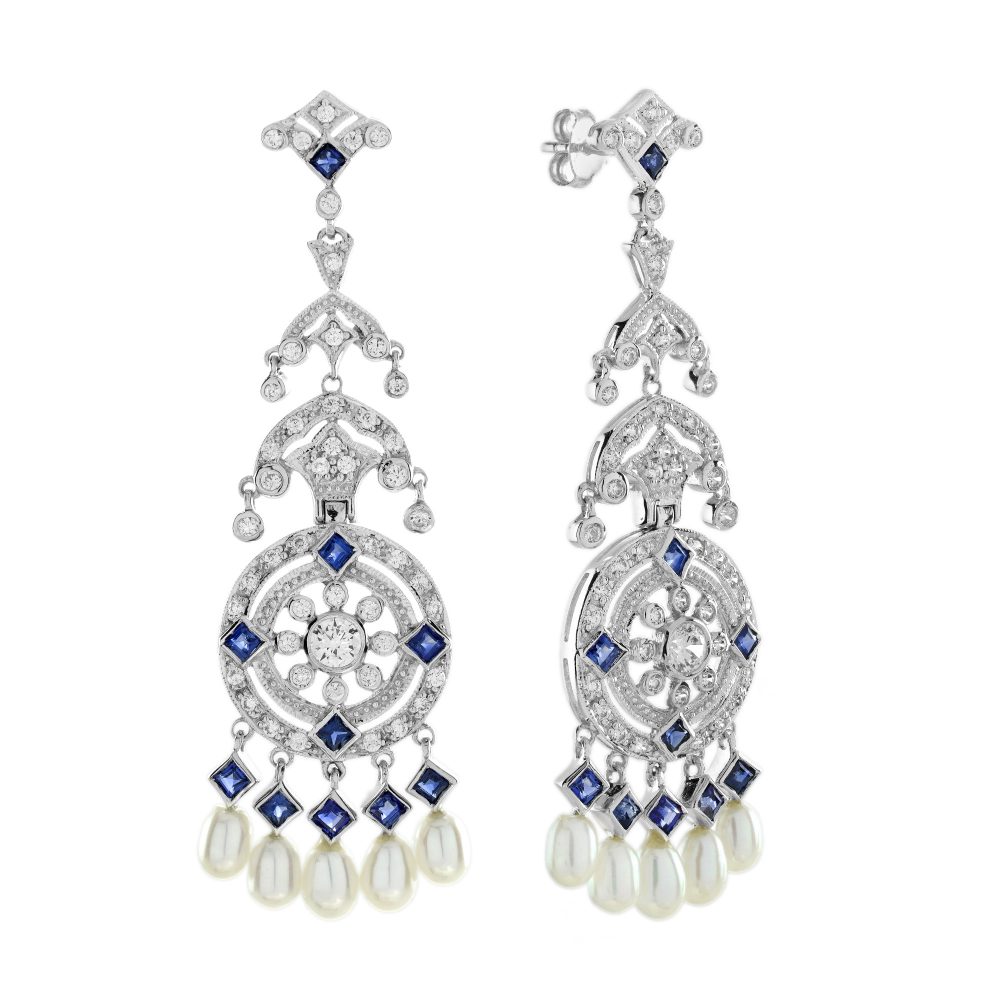 Blue Sapphire Pearl and Diamond Art Deco Style Floral Dangle Earrings
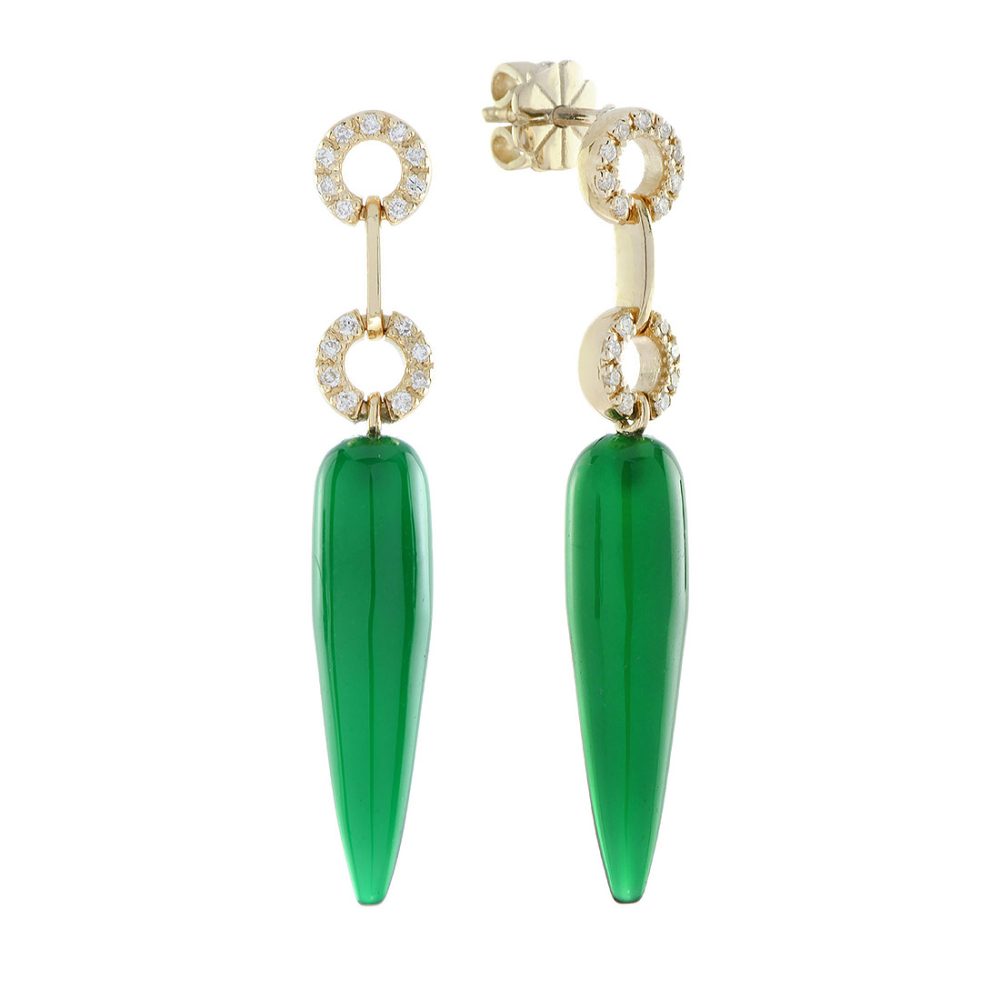
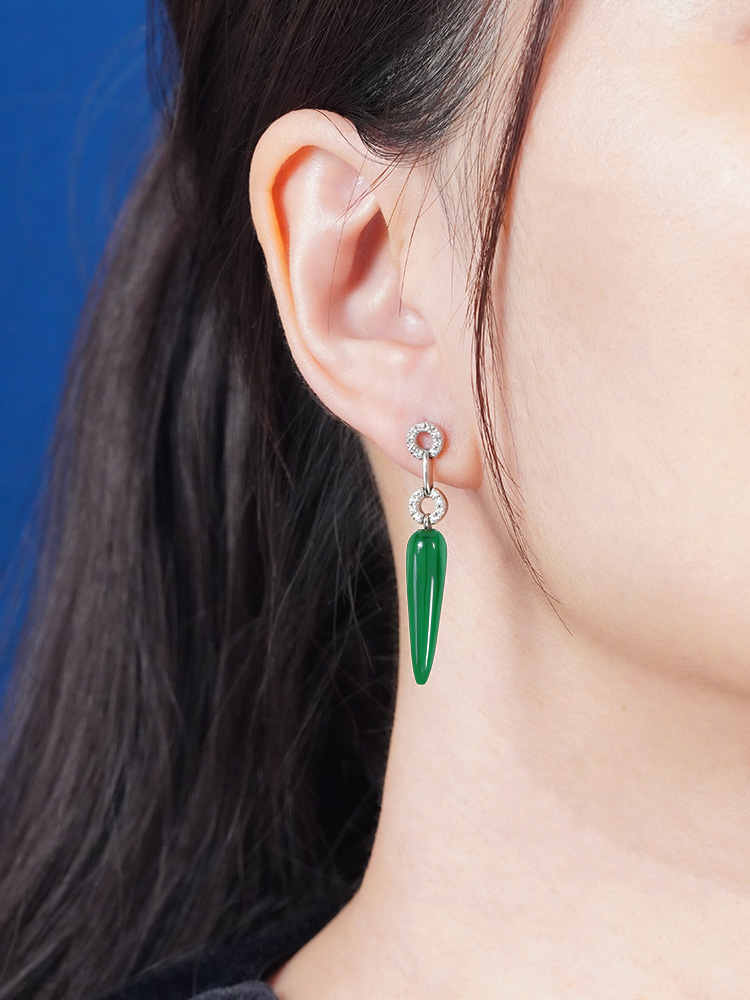
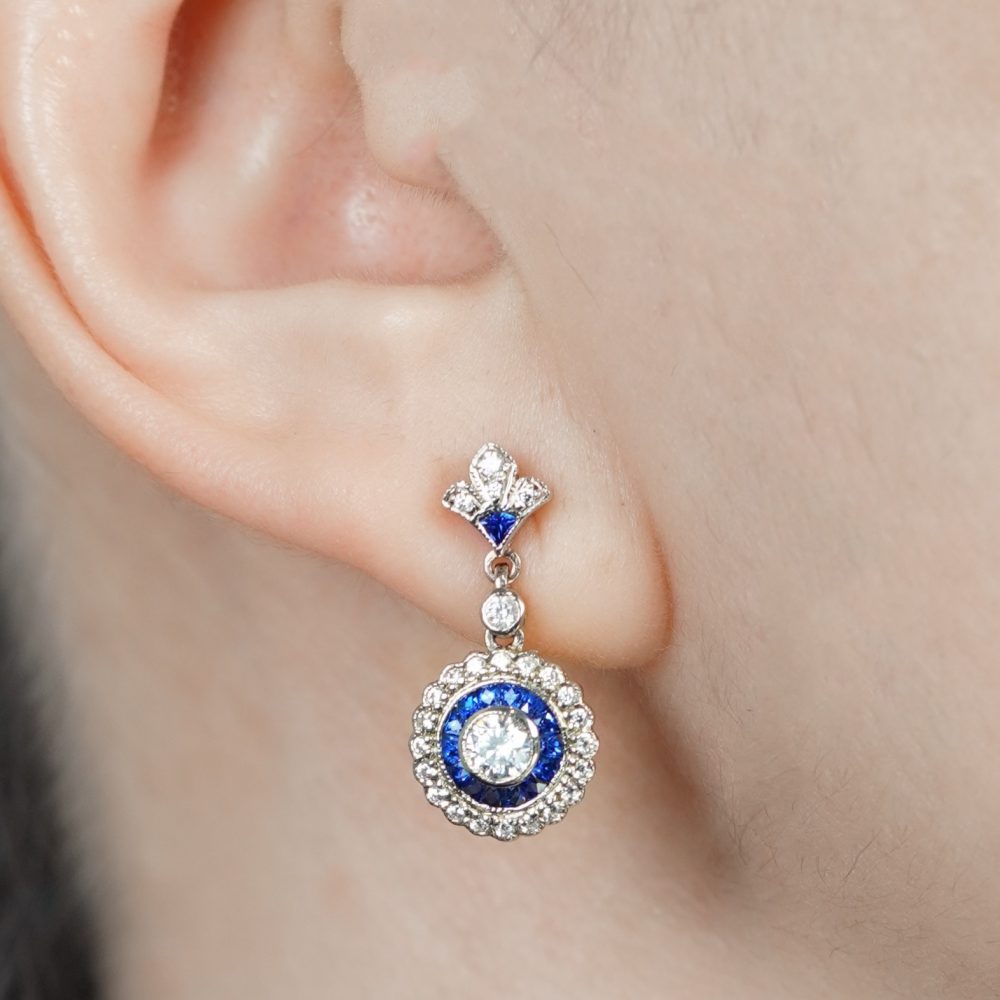
Drop earrings hang below the earlobe on a fixed or lightly moving element, typically a single gemstone, pearl, or metal shape suspended from a post or hook. “Dangle” is often used interchangeably with “drop,” though dangle earrings usually imply more visible movement, with multiple small elements linked together so the piece swings slightly as the wearer moves.
Drop earrings are a middle ground: more visual presence than a stud, but generally lighter and less elaborate than a full chandelier earring, which makes them a popular choice for dinners, events, and dressier daywear without tipping into full evening-wear territory. The hinge or hook that connects the hanging element to the post affects how freely it swings, which is worth noticing in person if movement matters to the look being chosen.
Related: Our Guarantee
What Are Hoop and Huggie Earrings?
Ask about a bespoke hoop or huggie design
Hoop earrings are circular or oval metal rings that pass through the ear piercing, ranging from small and close-fitting to large statement sizes. Huggie earrings are a specific type of small hoop, designed to sit close against the earlobe rather than hanging freely, giving a cleaner, more compact silhouette than a standard hoop of similar size.
Among the types of earrings, hoops cover the widest size range of any single style, from a delicate huggie barely larger than a stud to a large, dramatic circle that brushes the shoulder. Hinged designs make larger hoops easier to put on and take off than a continuous closed ring.
Thickness, not just diameter, affects how a hoop feels: a wide, thick hoop carries more visible presence and weight than a thin wire hoop of the same diameter, and that weight is distributed differently across the earlobe depending on where the hinge or closure sits.
What Are Chandelier Earrings?
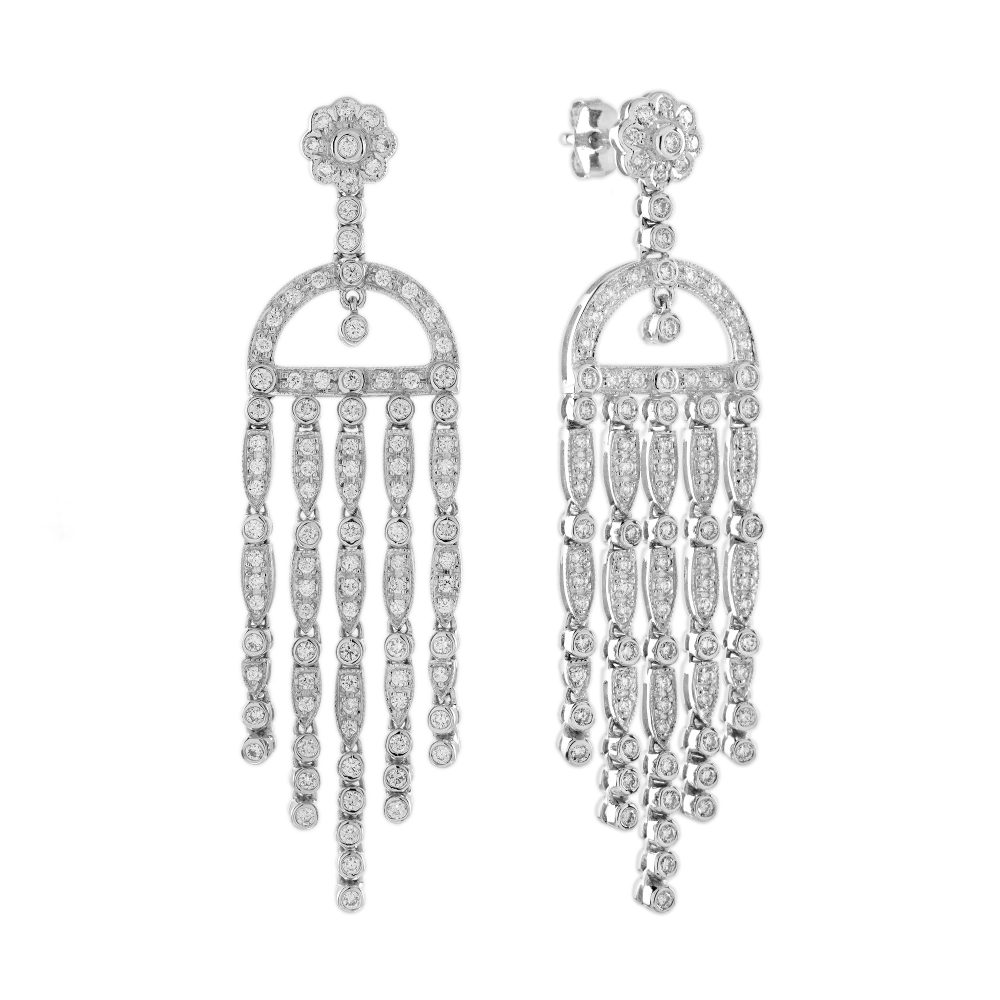 Diamond Pave Tiered Fringe Art Deco Chandelier Earrings
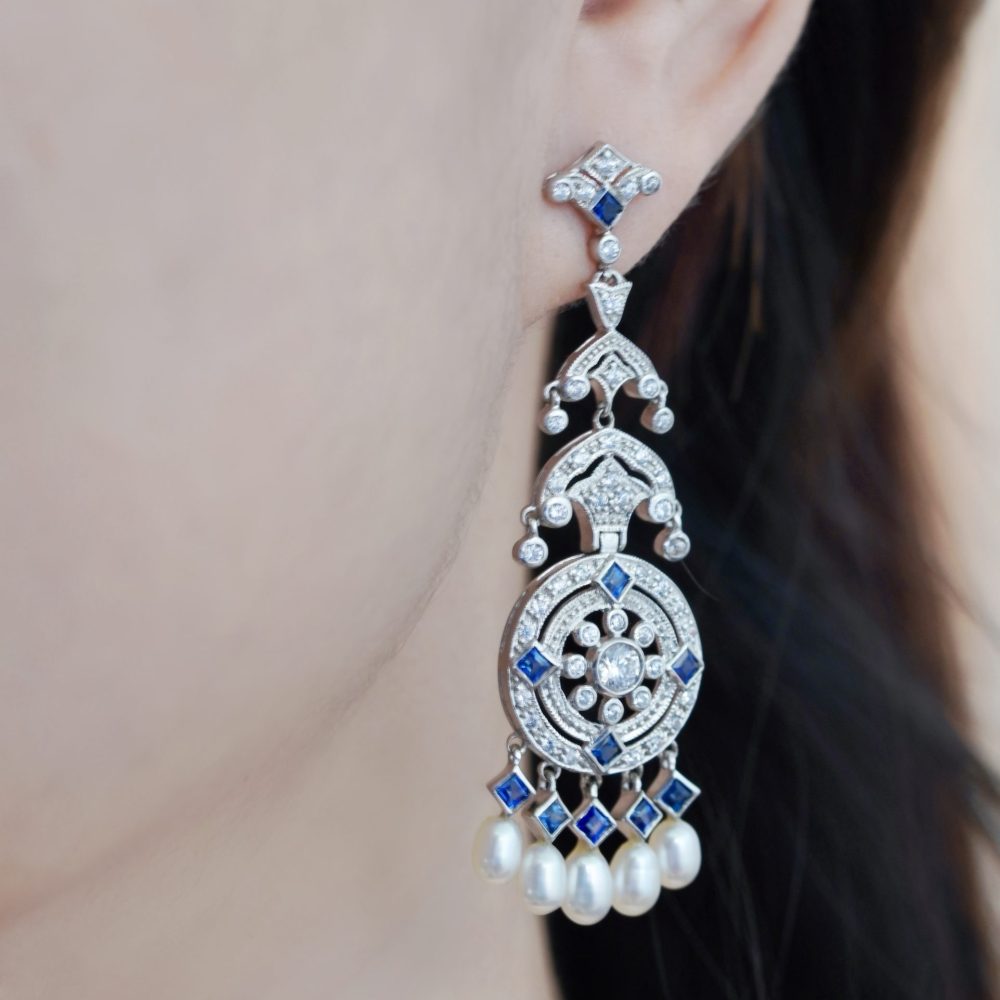
Chandelier earrings are a multi-tiered style, built from several hanging elements connected to a central frame, resembling the branching, layered shape of a hanging light fixture. They are typically the most elaborate and eye-catching of the types of earrings covered here, built to catch light and move visibly with the wearer.
Because of their length and number of moving parts, chandelier earrings tend to be worn for evening and formal occasions rather than daily wear, and they usually pair best with an updo or hair pulled back, so the tiers can be seen clearly rather than getting lost against loose hair. Weight distribution across the design also matters for comfort over a long evening — an open, airy tier structure can carry real visual size without feeling heavy on the ear.
Related: Bespoke & Personalization
What Are Ear Climbers and Threaders?
Ask about a bespoke ear climber or threader design
Ear climbers are designed to follow the curve of the upper ear, starting at the lobe and appearing to climb upward along the ear’s edge, often set with a line of small gemstones. They offer a modern, sculptural look without needing multiple piercings, since a single lobe piercing is enough to support the climbing design.
Threader earrings use a thin chain or wire that is pulled through the piercing from the front, letting the length hang asymmetrically or loop back up, depending on how it is worn. Threaders are especially lightweight and adjustable in how they drape, which makes them a flexible choice for someone who wants a changeable look from one simple piece.
Both styles work especially well with a double or triple lobe piercing, where a climber or a threader can be worn alongside a stud without crowding the ear, something a bulkier drop or hoop generally cannot do in the same space.
What Are Clip-On and Screw-Back Earrings?
Ask about fittings for non-pierced ears
Clip-on and screw-back earrings secure to the ear without needing a piercing, using a spring clip or a small screw mechanism that tightens against the lobe. These mechanisms can attach to almost any of the other types of earrings described here — a stud, a drop, even a small chandelier design can be adapted to a clip-on or screw-back fitting.
Vintage and vintage-inspired jewelry uses screw-backs especially often, since piercing was far less universal in earlier decades; recognizing a screw-back fitting is one of the quicker ways to judge whether an earring is likely to be a genuine older piece or a newer reproduction.
Comfort varies more between wearers with clip-ons than with pierced styles, since tension that feels secure to one person can feel pinching to another after a few hours. Trying a piece on for a realistic stretch of time, rather than just a quick moment in a mirror, is the best way to judge whether a given clip mechanism will actually be comfortable for a full event.
How Do You Choose Among the Different Types of Earrings?
Start with how the earring will actually be worn: a stud or small huggie suits daily wear and work, where comfort and low movement matter most; a drop or hoop suits most dressier daytime and evening occasions; a chandelier is best saved for formal events where there is time and space for the piece to be the visual focus.
Weight is worth checking in person or in the product description, not just size, since a large but open, lightweight design can be more comfortable over a long day than a smaller, denser piece. Hair length and face shape can guide style too, but comfort and the occasion usually matter more than any strict styling rule.
What Should You Remember About the Types of Earrings?
The main types of earrings are studs, drops and dangles, hoops and huggies, chandeliers, ear climbers, threaders, and clip-on or screw-back styles, each suited to a different balance of comfort, movement, and occasion. Weight and backing matter as much as overall size when judging how a piece will actually feel to wear.
If you remember one shortcut: match the style to the occasion first, then to personal taste, since a stud and a chandelier are both correct choices, just for very different moments. We hand-make earrings across these types of earrings in solid gold and platinum, set with natural gemstones.
Sources: GIA — Jewelry Styles and Terminology Reference · The Metropolitan Museum of Art — Decorative Arts Reference
Stud Earrings
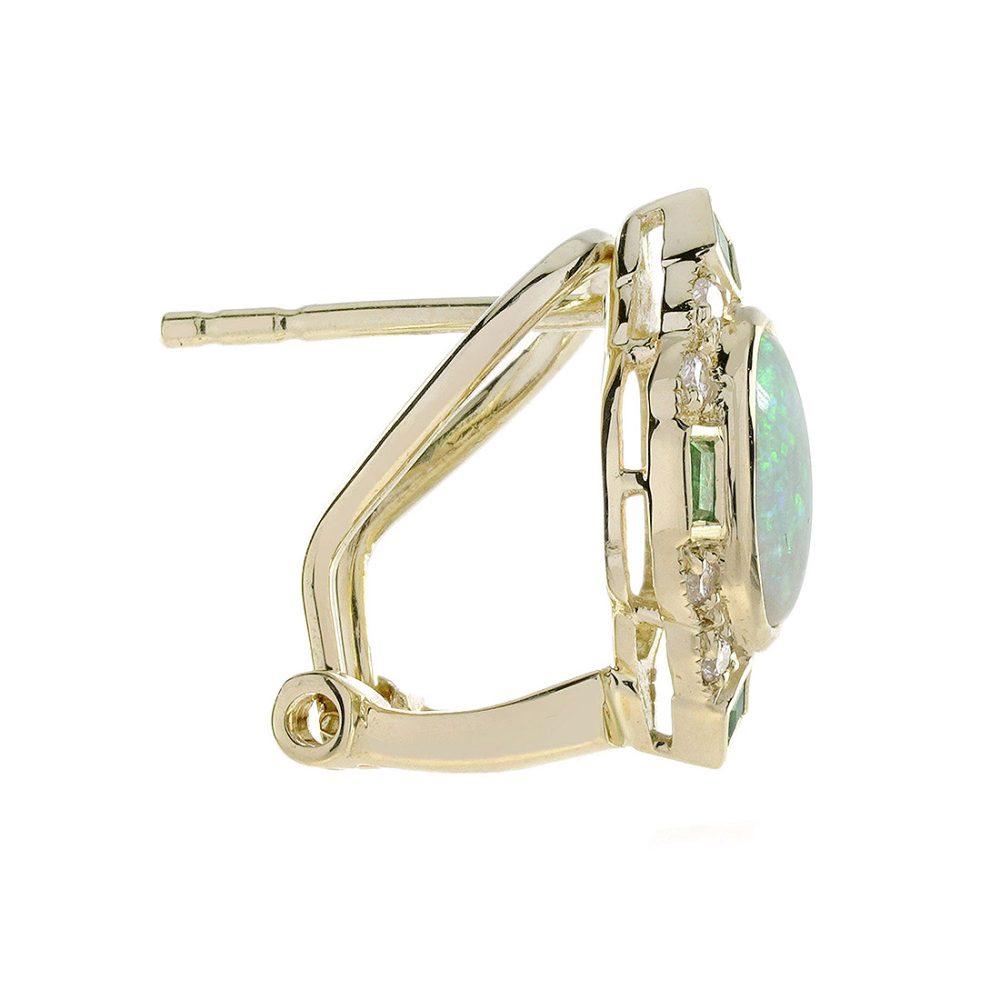
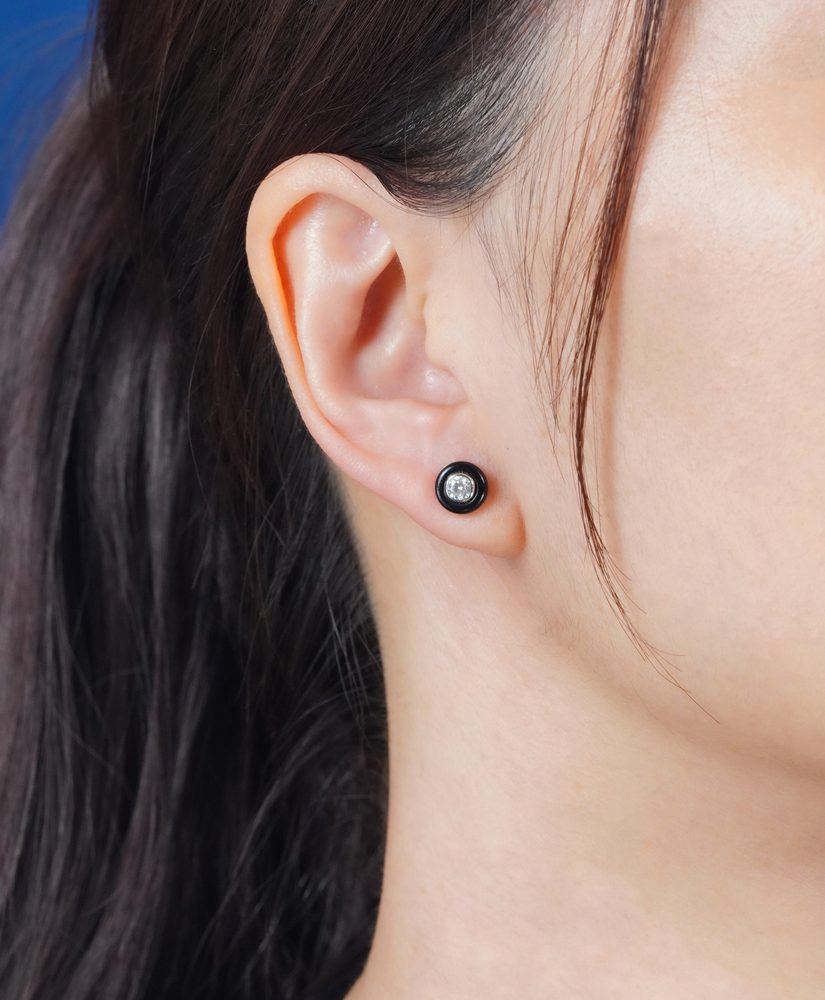
Stud Earrings
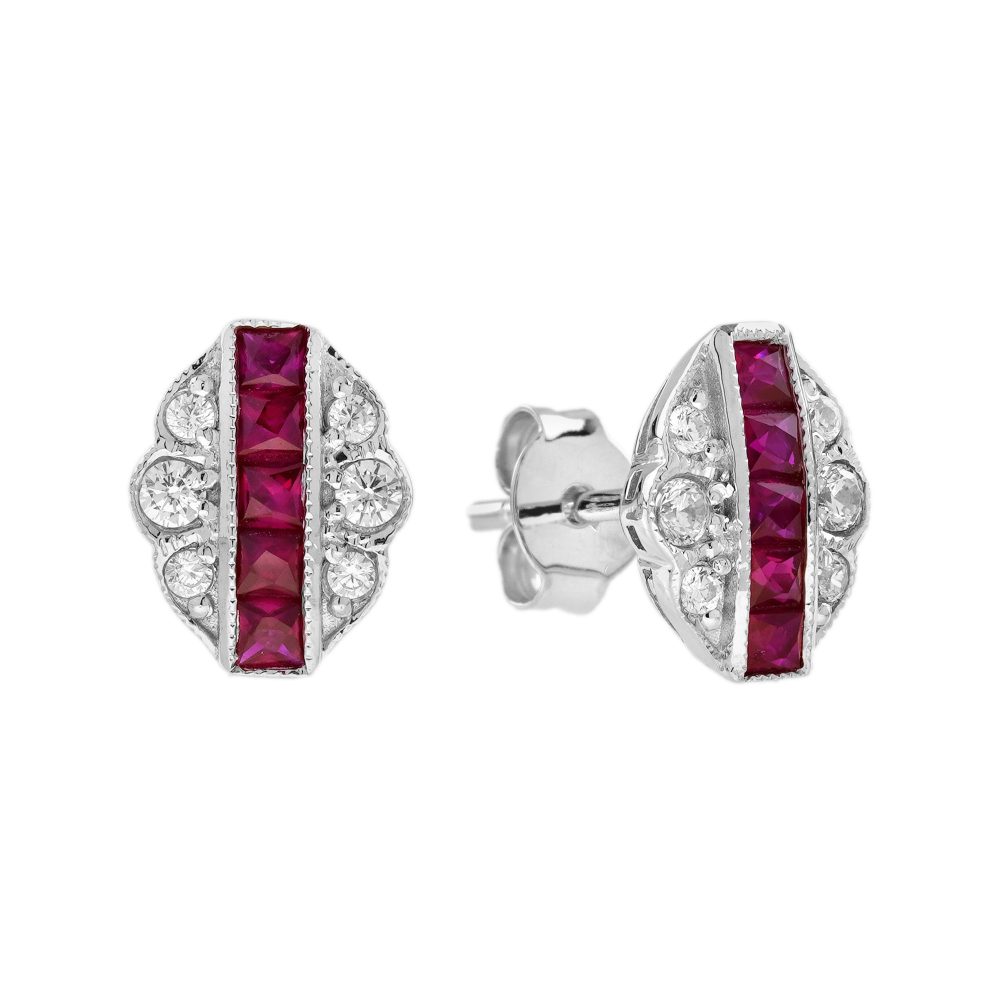
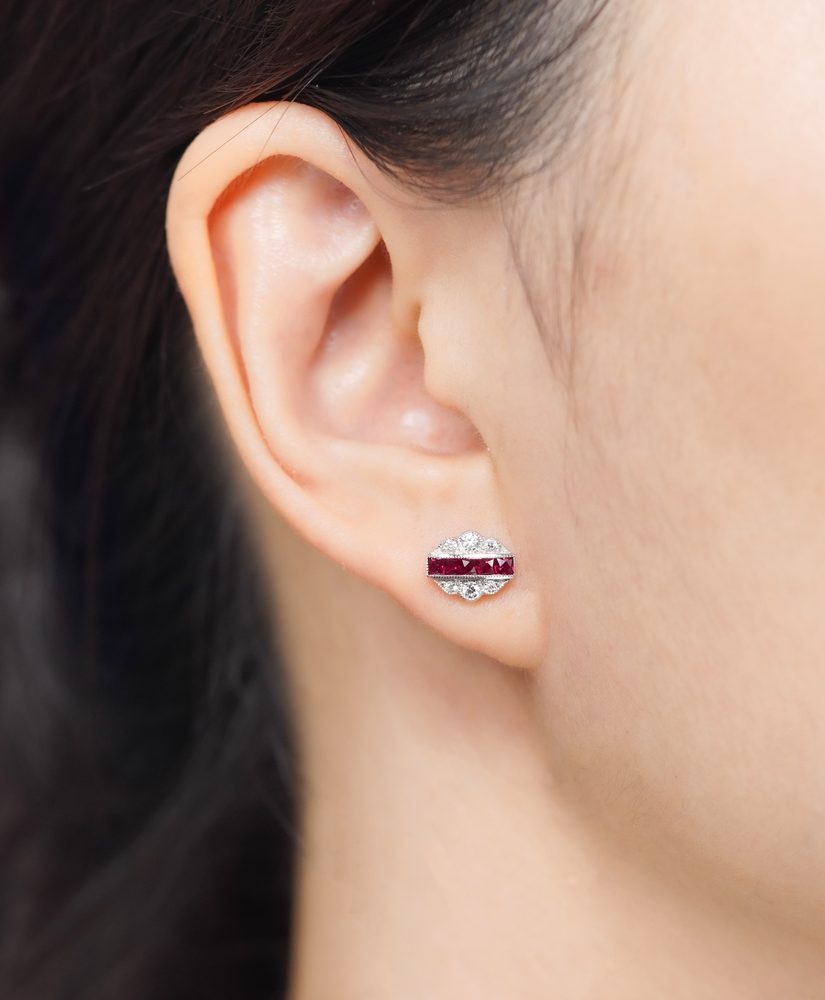
Stud Earrings
Drop Earrings
Drop Earrings
Stud Earrings
Stud Earrings
Drop Earrings
Frequently Asked Questions: Types of Earrings
What are the main types of earrings?
The main types of earrings are studs, drops and dangles, hoops and huggies, chandeliers, ear climbers, threaders, and clip-on or screw-back styles. Each one suits a different balance of comfort, movement, and occasion.
What is the difference between a stud and a huggie earring?
A stud sits flat on the earlobe with no hoop shape. A huggie is a small hoop that closely hugs the lobe, passing through the piercing rather than sitting flat against it.
Are chandelier earrings suitable for everyday wear?
Not usually. Chandelier earrings are typically longer, heavier, and more elaborate than other styles, which makes them better suited to evening and formal occasions than daily wear.
What types of earrings work for non-pierced ears?
Clip-on and screw-back earrings are designed for non-pierced ears. These mechanisms can be adapted to almost any style, including studs, drops, and even smaller chandelier designs.
Does Lilly M. make earrings in these styles?
Yes. We hand-make earrings across studs, drops, hoops, huggies, and chandelier styles, in solid gold and platinum, set with natural gemstones.