
Blog, Style & History
French Cut vs Baguette: Understanding Gemstone Cuts

Key Takeaways: French Cut vs Baguette
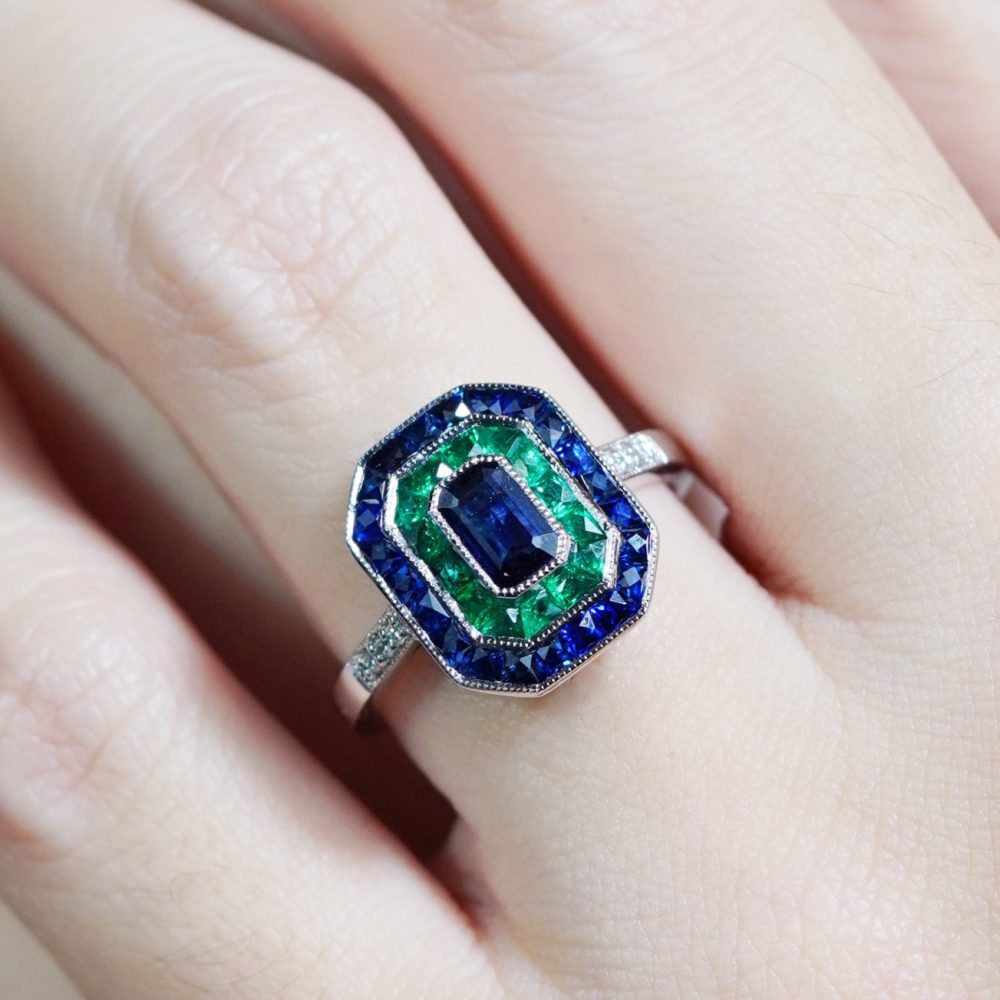
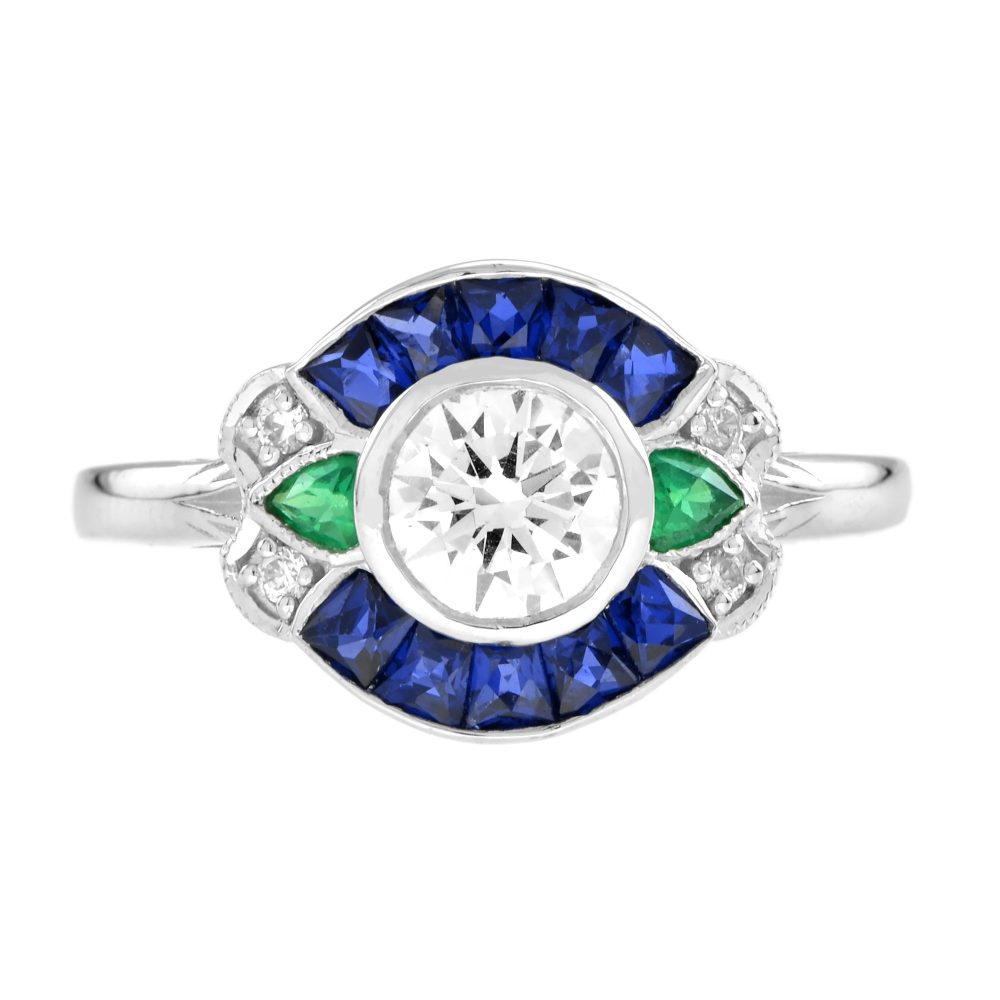
- French cut vs baguette comes down to shape and facet count. A baguette is a narrow rectangular step cut with few facets; a French cut is a small square or rectangular stone with a kite-shaped facet pattern, more like a miniature brilliant than a step cut.
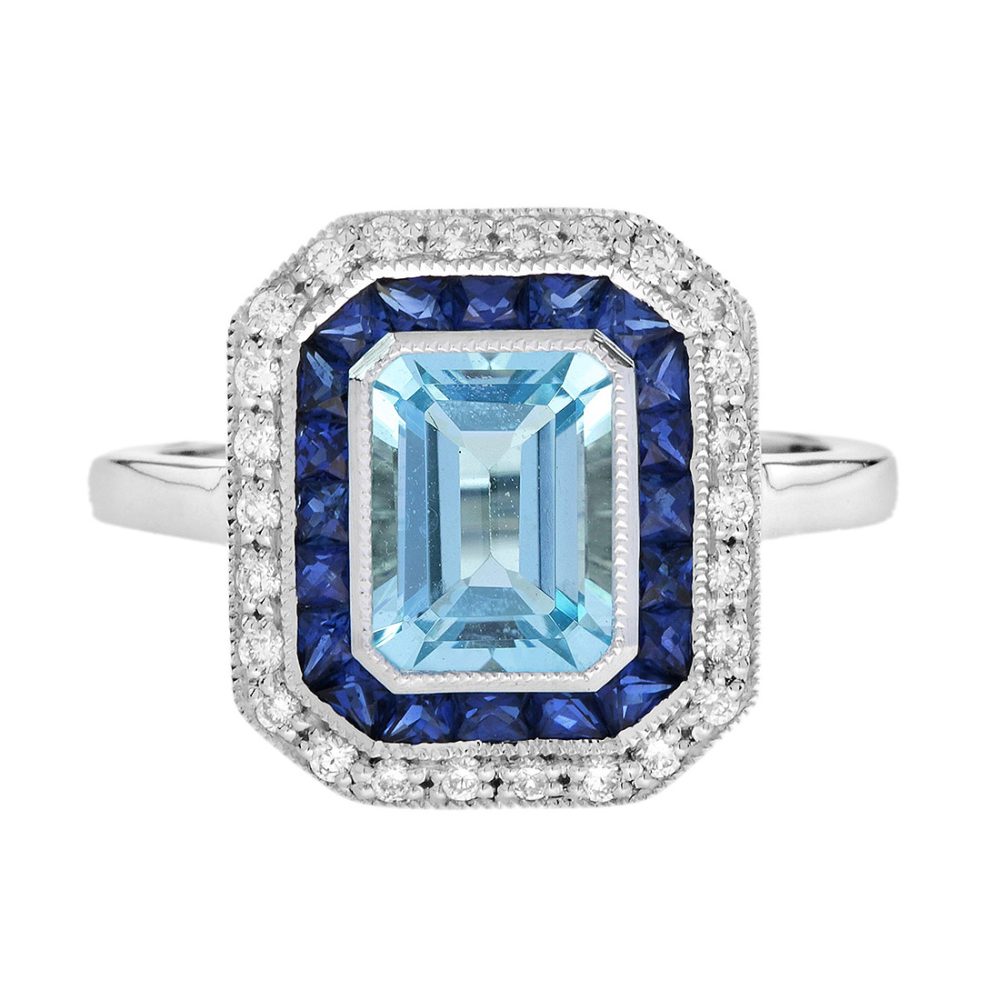
- Both are accent-stone cuts, almost never used for a center stone, chosen instead to flank or frame a larger diamond or colored gemstone.
- Baguette cuts favor clarity over sparkle; the open, mirror-like facets of a step cut show every inclusion clearly, while French cuts hide small flaws better thanks to their more broken-up facet pattern.
- Both have strong Art Deco associations, since the era’s geometric settings used straight-edged accent stones heavily, though French cuts actually predate Art Deco by centuries.
- We set both cuts in new, hand-made pieces in solid gold and platinum — inspired by their long history, never sold as antique unless genuinely so.
French Cut vs Baguette: The Short Answer
French cut vs baguette is a contrast between two small accent-stone cuts that are easy to confuse because both have straight edges and both show up constantly in vintage and vintage-inspired jewelry. A baguette is a narrow rectangular step cut, usually with four main facets per side arranged in parallel rows, built for clean, mirror-like flashes of light. A French cut is typically square or slightly rectangular, with a kite-shaped facet pattern radiating from the center, closer in spirit to a small brilliant cut than to a step cut, giving it more sparkle and more hiding power for small inclusions.
French Cut vs Baguette at a Glance
| Feature | French Cut | Baguette |
|---|---|---|
| Typical shape | Square or slightly rectangular | Narrow rectangle |
| Facet pattern | Kite-shaped facets, brilliant-style | Parallel step-cut facets |
| Facet count (typical) | About 25 facets | As few as 14 facets |
| Sparkle | More brilliance and fire | Calm, clean flashes of light |
| Clarity visibility | Hides small inclusions fairly well | Shows inclusions clearly |
| Historical era | 17th century origin, revived in Art Deco | Popularized in the 1920s–30s |
| Common placement | Pavé clusters, accent corners | Side stones, channel settings |
How Is a Baguette Cut Actually Made?
A baguette is a step cut, meaning its facets are cut as parallel rows rising from the edge toward a flat table, like shallow stairs rather than the triangular facets of a brilliant cut. Most baguettes have around 14 facets total: a flat table, a flat bottom, and a small number of long rectangular facets along each side.
This simple facet structure is exactly what gives a baguette its calm, mirror-like light return rather than the fiery sparkle of a brilliant cut, and it is also why a baguette shows inclusions and small color variations more readily than a more faceted stone would — there are fewer facet junctions to break up and scatter light away from a flaw.
A baguette cut diamond is also typically cut to a fairly shallow depth compared to a brilliant, since the step-cut facets need enough surface area to read as clean parallel lines; cutting a baguette too deep tends to make the steps look cramped rather than crisp. Tapered baguettes, which narrow slightly toward one end, are a common variation used to follow the curve of a ring shoulder or the outline of a larger center stone.
How Is a French Cut Different from a Baguette?
A French cut uses a kite-shaped facet arrangement, radiating out from a small table in a pattern closer to a miniature brilliant cut than to the parallel rows of a step cut. This gives French cut stones noticeably more sparkle than baguettes of a similar size, at the cost of slightly less of the clean, geometric look that a step cut provides.
French cut vs baguette, from a cutting standpoint, is really a question of which family a small accent stone belongs to: brilliant-style faceting (French cut) or step-cut faceting (baguette). Both shapes can appear square or rectangular, which is part of why they get confused, but the facet pattern underneath is what actually defines each one.
A french cut diamond is also generally cut with more care given to its small table and crown angles, since those proportions control how much brilliance a stone this size can actually produce; a poorly proportioned French cut can end up looking flat despite its brilliant-style facet pattern, while a well-cut one punches well above its size for sparkle.
Related: Our Guarantee
Which Cut Hides Inclusions Better?
French cuts generally hide small inclusions better than baguettes, because their more numerous, more broken-up facets scatter light in more directions, which visually breaks up small flaws the way a brilliant cut hides inclusions better than an emerald cut. A baguette’s wide, flat step-cut facets act more like small windows into the stone, so a visible inclusion tends to stand out clearly rather than blend into the sparkle.
This matters most for accent stones set close to the eye, such as a ring’s side stones, where a buyer may want slightly lower clarity to stay within budget — a French cut tolerates that trade-off more gracefully than a baguette does.
Why Are Both Cuts So Associated with Art Deco Jewelry?
Baguettes became especially popular in the 1920s and 1930s, when Art Deco’s geometric design language called for clean, straight-edged accent stones that could line up precisely in a channel setting or frame a larger center stone with crisp, architectural lines. The baguette’s simple step-cut shape suited that aesthetic perfectly.
French cuts actually predate Art Deco by centuries, tracing back to 17th-century European cutting, but the style saw a revival during the same Art Deco period for the same reason as the baguette: small, geometric accent stones were exactly what the era’s settings called for. Understanding french cut vs baguette history helps explain why both terms show up constantly in vintage and vintage-inspired jewelry descriptions from that era specifically.
Are French Cut or Baguette Stones Ever Used as a Center Stone?
Rarely. Both cuts are almost always used as accent stones, flanking or framing a larger center diamond or colored gemstone rather than standing alone as the main feature of a piece. Their small size and, in the case of baguettes, more limited sparkle, make them better suited to a supporting role than a solo spotlight.
Occasionally a larger French cut or an elongated baguette-style stone is used as a center stone in a deliberately minimalist, geometric design, but this remains uncommon — most pieces that feature these cuts use multiples of them to border, channel, or frame a different stone as the true focal point. A step cut gemstone in general, baguette included, tends to work better as a supporting shape than a solo centerpiece, simply because its calmer light return draws less attention on its own than a brilliant or French cut of comparable size.
Related: Bespoke & Personalization
How Do You Tell Them Apart at a Glance?
Look at the sparkle pattern first: calm, mirror-like flashes mean a baguette’s step-cut facets; brighter, more scattered sparkle in a small square or rectangular stone usually means a French cut. If a loupe is available, count the facets or look at their shape directly — parallel rectangular facets confirm a baguette, while a kite-shaped radiating pattern confirms a French cut.
Shape alone is not a reliable test, since both cuts can appear square or rectangular; the facet pattern inside the stone is the detail that actually settles french cut vs baguette identification with confidence.
A jeweler’s loupe or even a strong phone-camera macro shot can usually resolve the question in seconds once you know what to look for, which makes this one of the easier gemstone-cut comparisons to confirm yourself, compared with subtler distinctions like old mine versus old European cut diamonds.
Does Lilly M. Use French Cut and Baguette Stones?
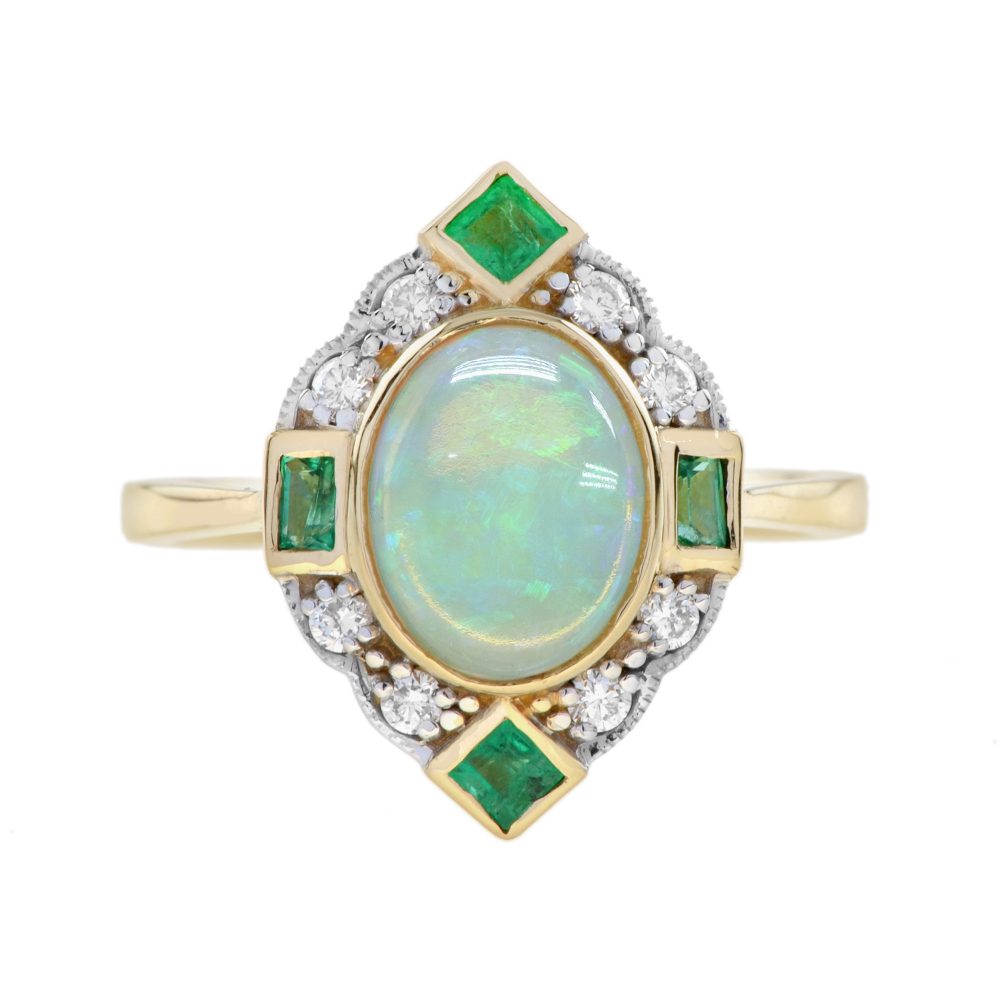
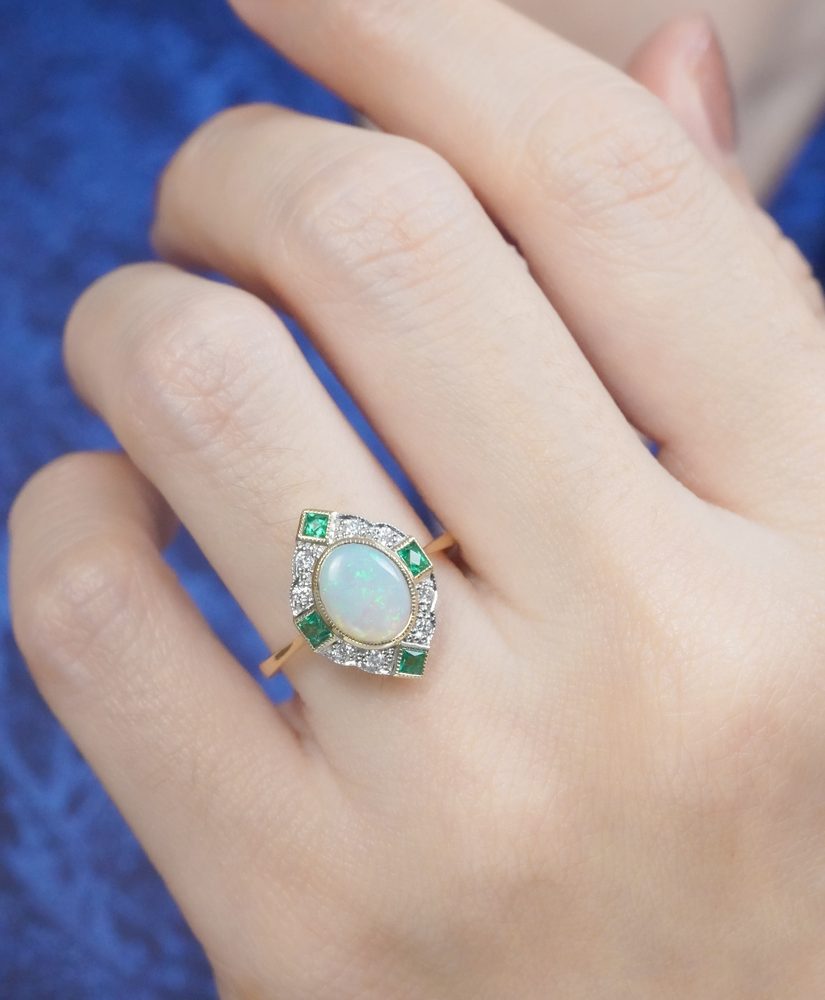
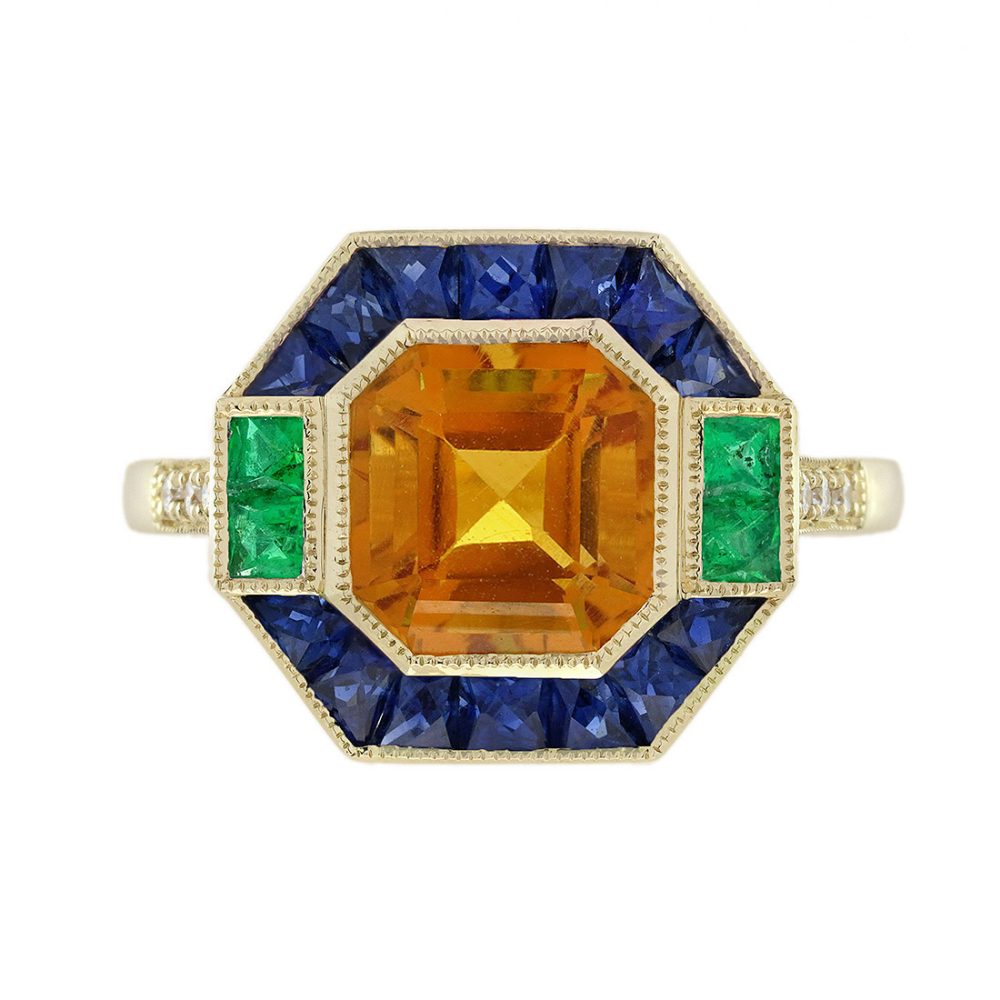
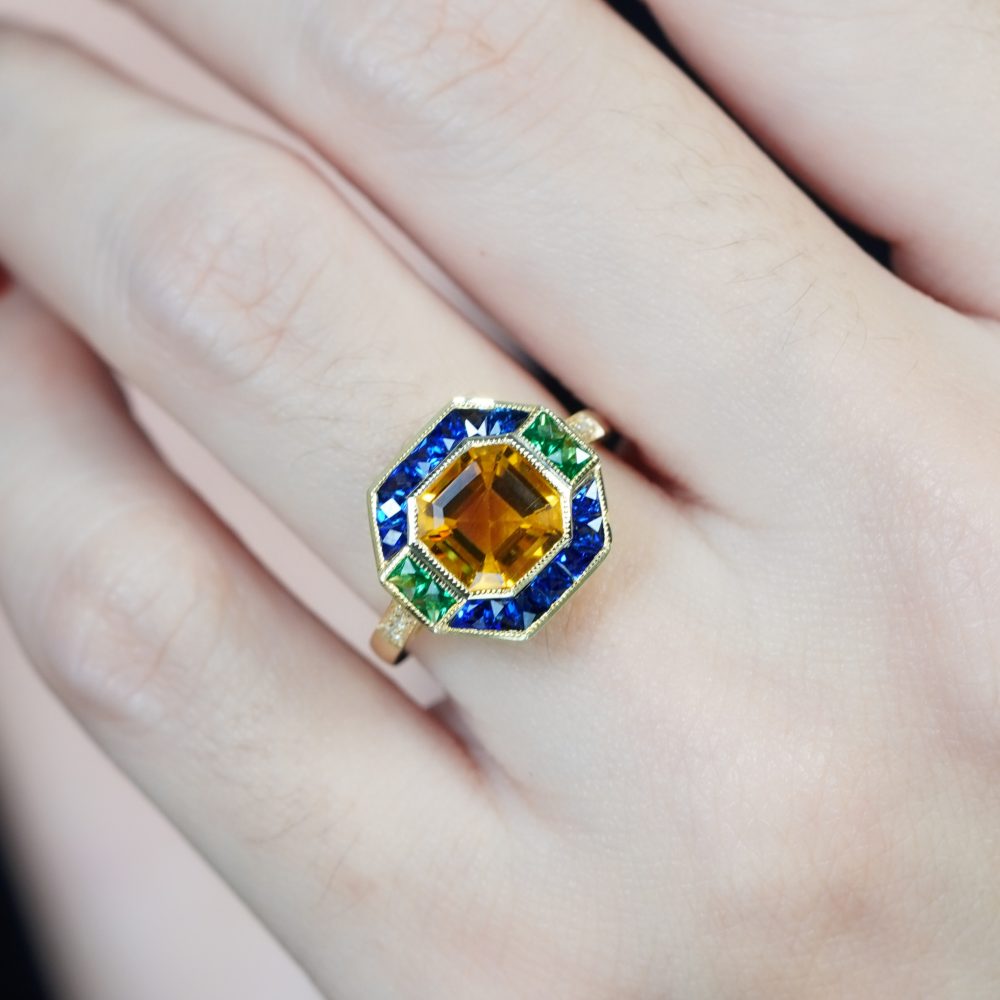
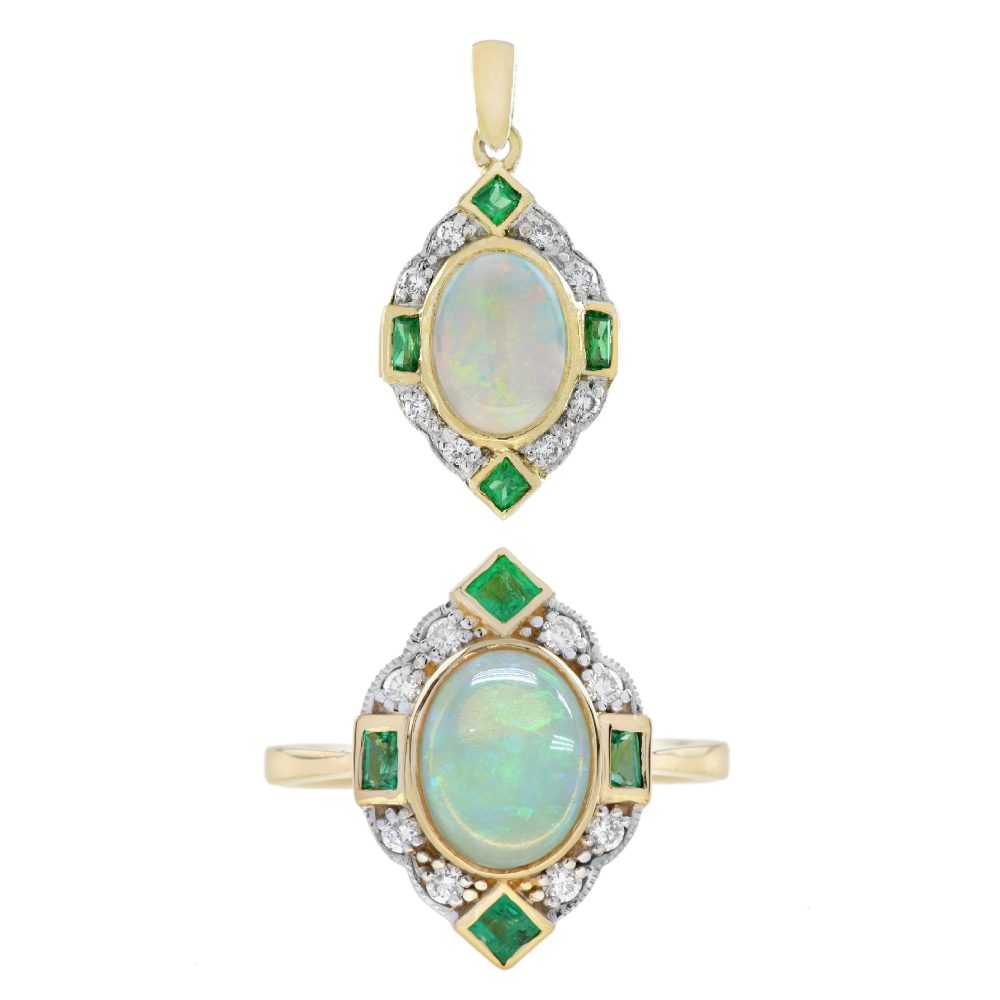
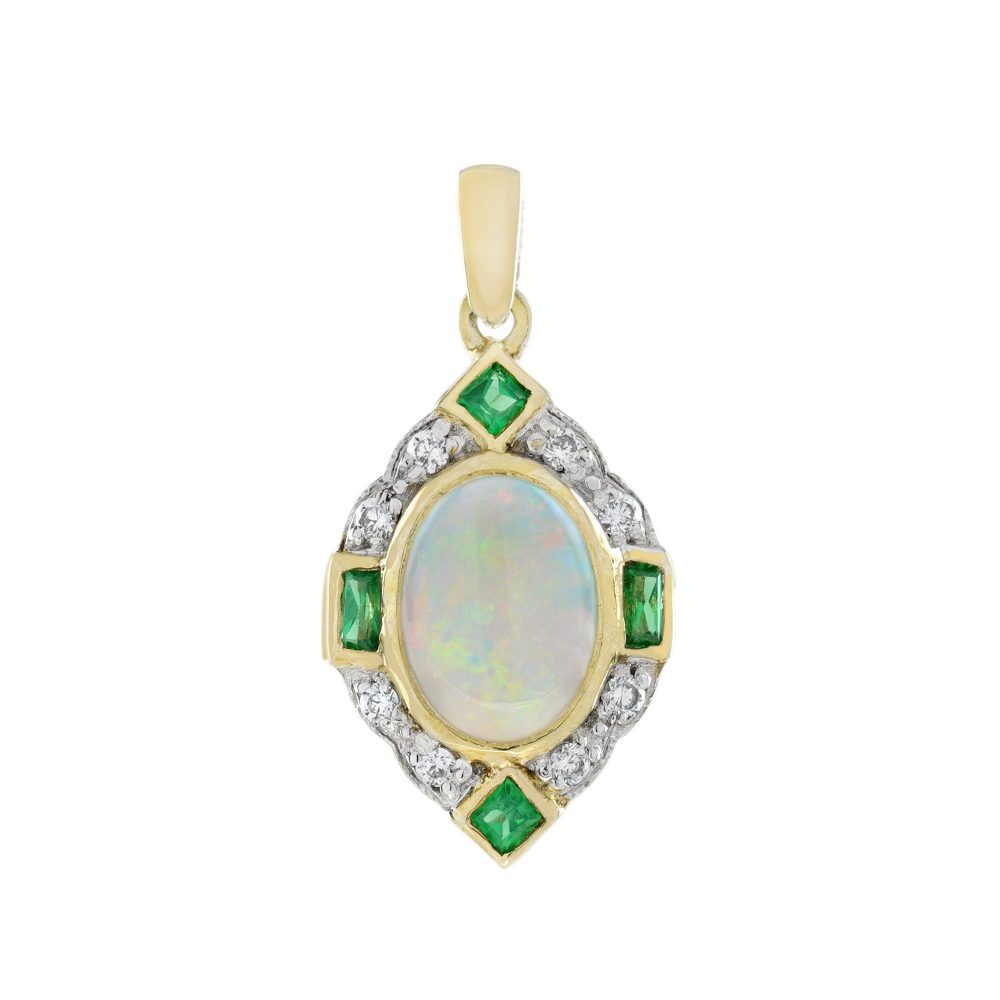
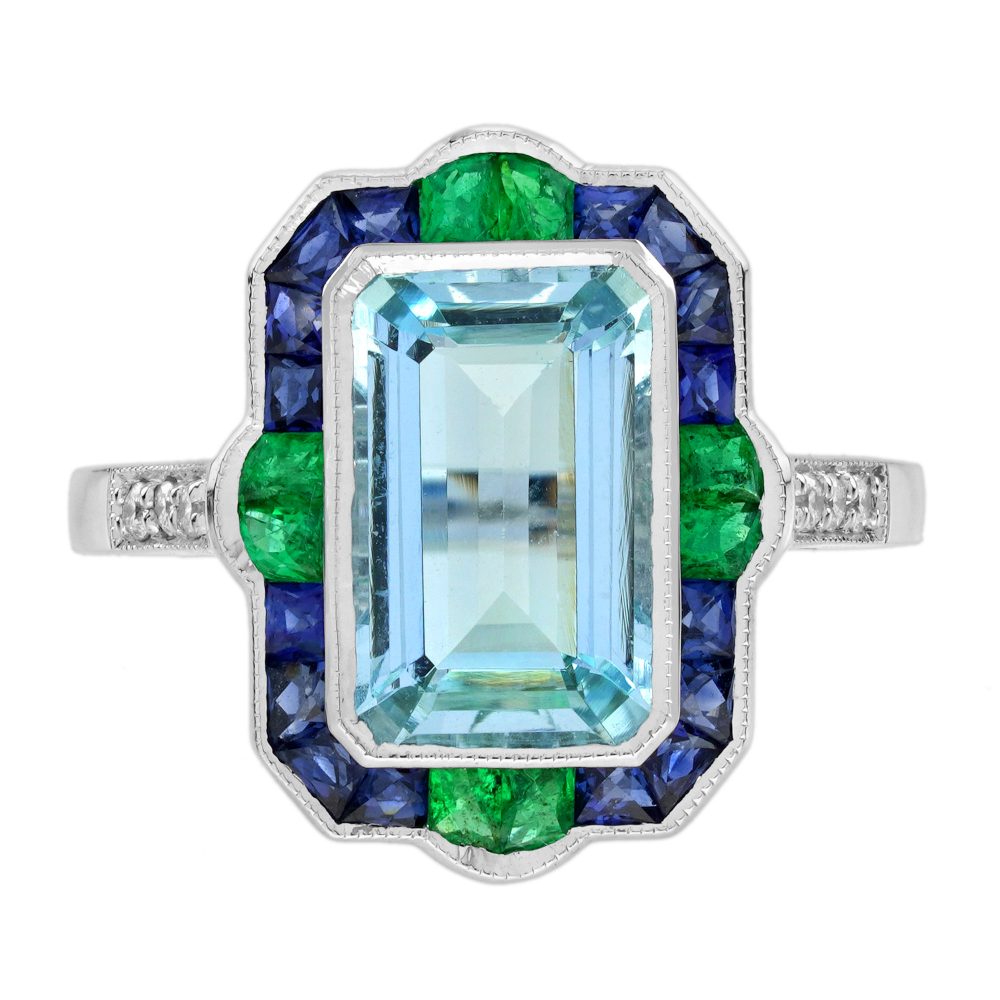
Yes. We set both French cut and baguette diamonds, along with other step-cut and brilliant-style accent stones, in new, hand-made pieces in solid gold and platinum. Every stone we set is natural, and every piece is newly made at our bench — never represented as a period original or antique.
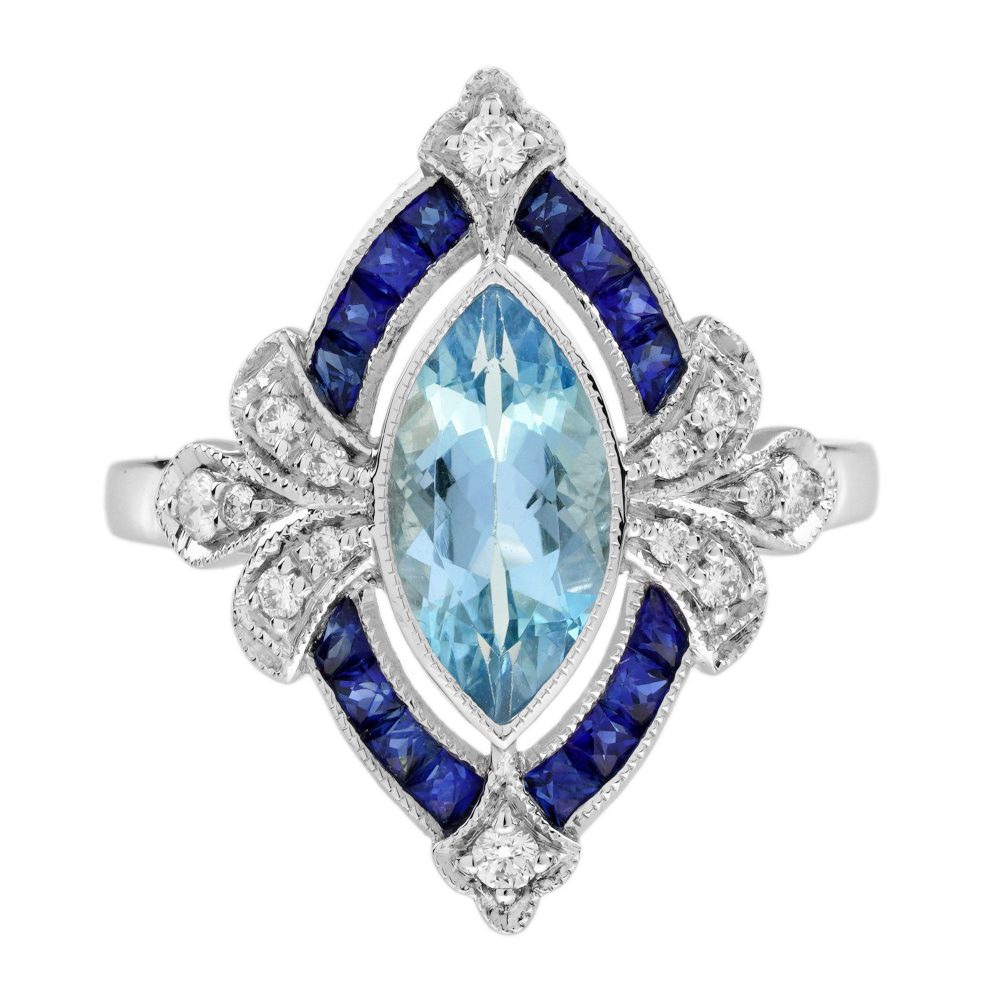
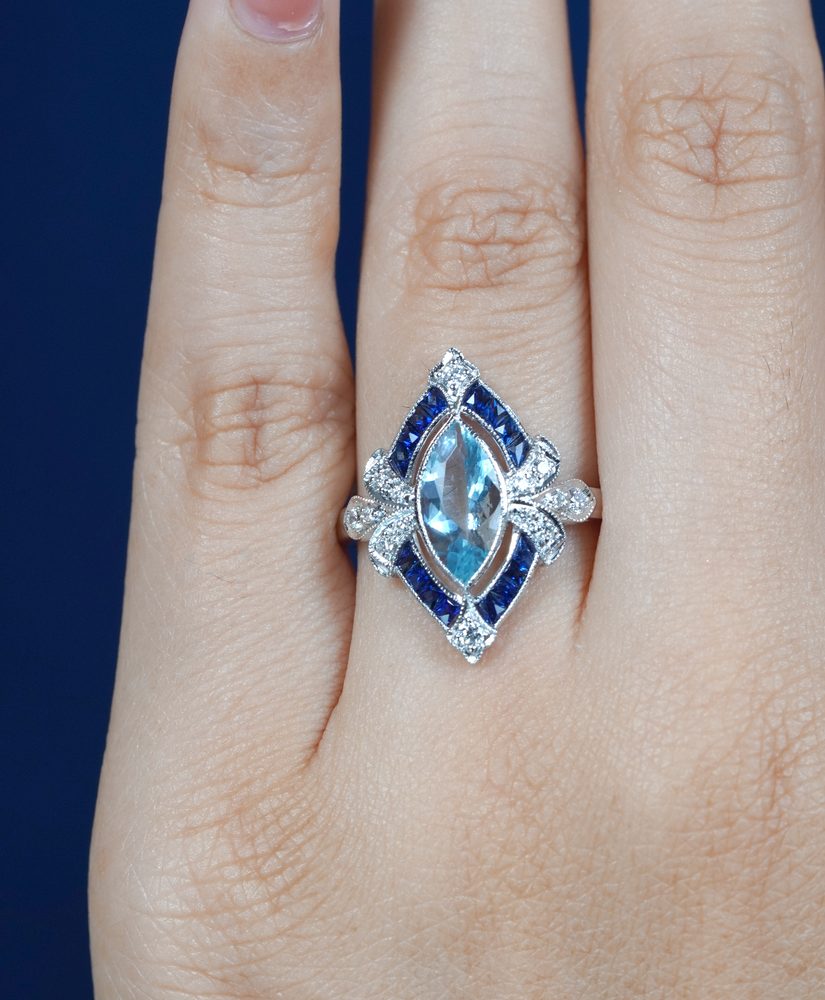
Understanding french cut vs baguette helps when choosing accent stones for a bespoke piece: a baguette suits a clean, geometric, Art Deco-inspired line, while a French cut adds a touch more sparkle to a similarly vintage-leaning design.
What Should You Remember About French Cut vs Baguette?
French cut vs baguette comes down to facet pattern: a baguette is a step cut with parallel facets and calm, clean sparkle; a French cut uses a brilliant-style, kite-shaped facet pattern with more fire, and hides small inclusions better as a result. Both are small accent-stone cuts, strongly associated with Art Deco settings, almost never used alone as a center stone.
If you remember one shortcut: check the sparkle. Calm, mirror-flash light points to a baguette; brighter, more scattered sparkle in a similarly shaped small stone points to a French cut. We set both cuts in new pieces by hand, in solid gold and platinum, and are always upfront that the design draws on history even though the piece itself was made recently, by us.
Sources: GIA — Diamond Cuts and Shapes Reference · The Metropolitan Museum of Art — Decorative Arts Reference


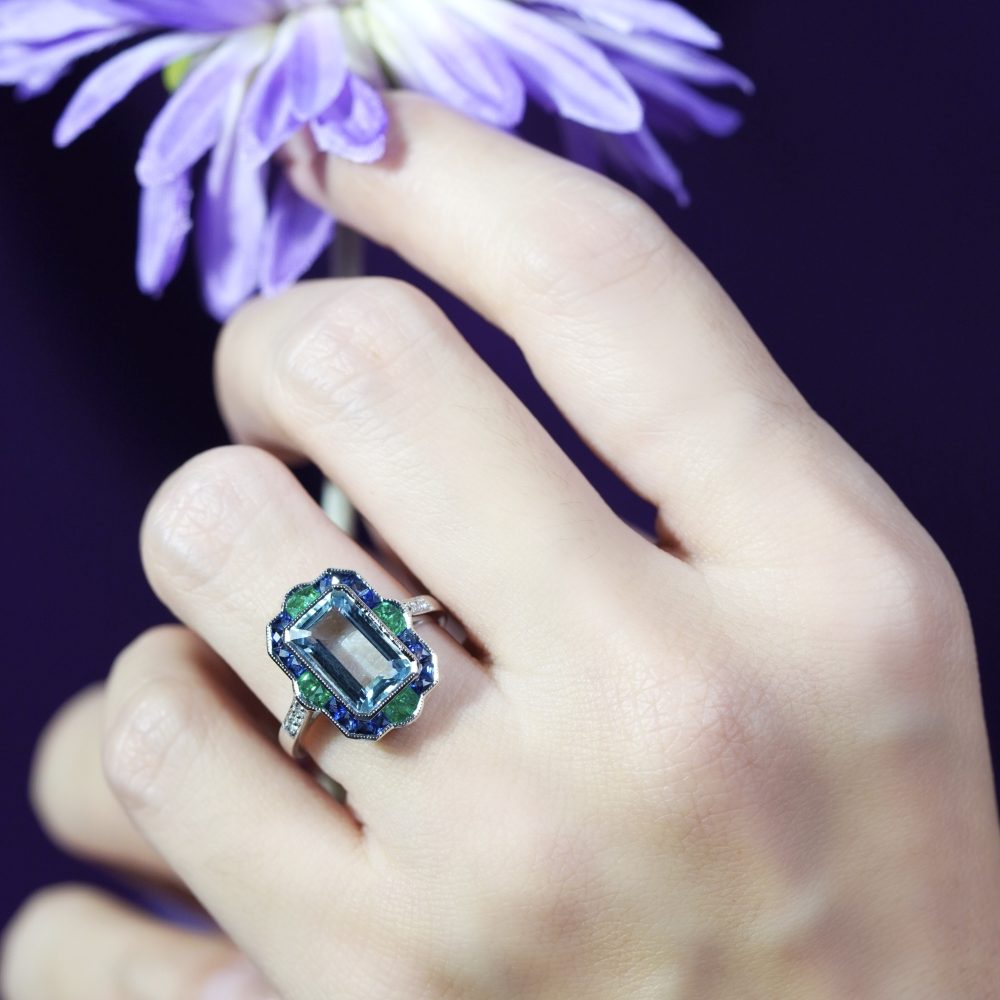
Rose Gold
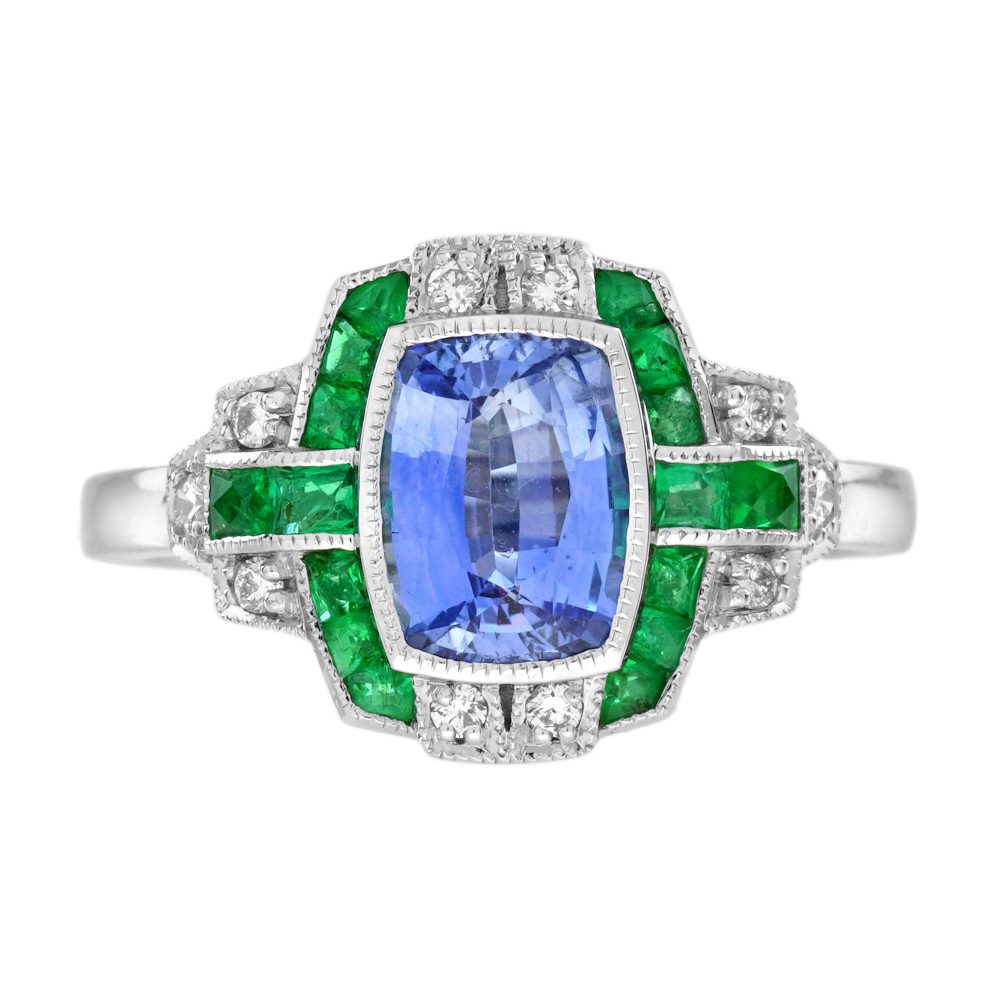
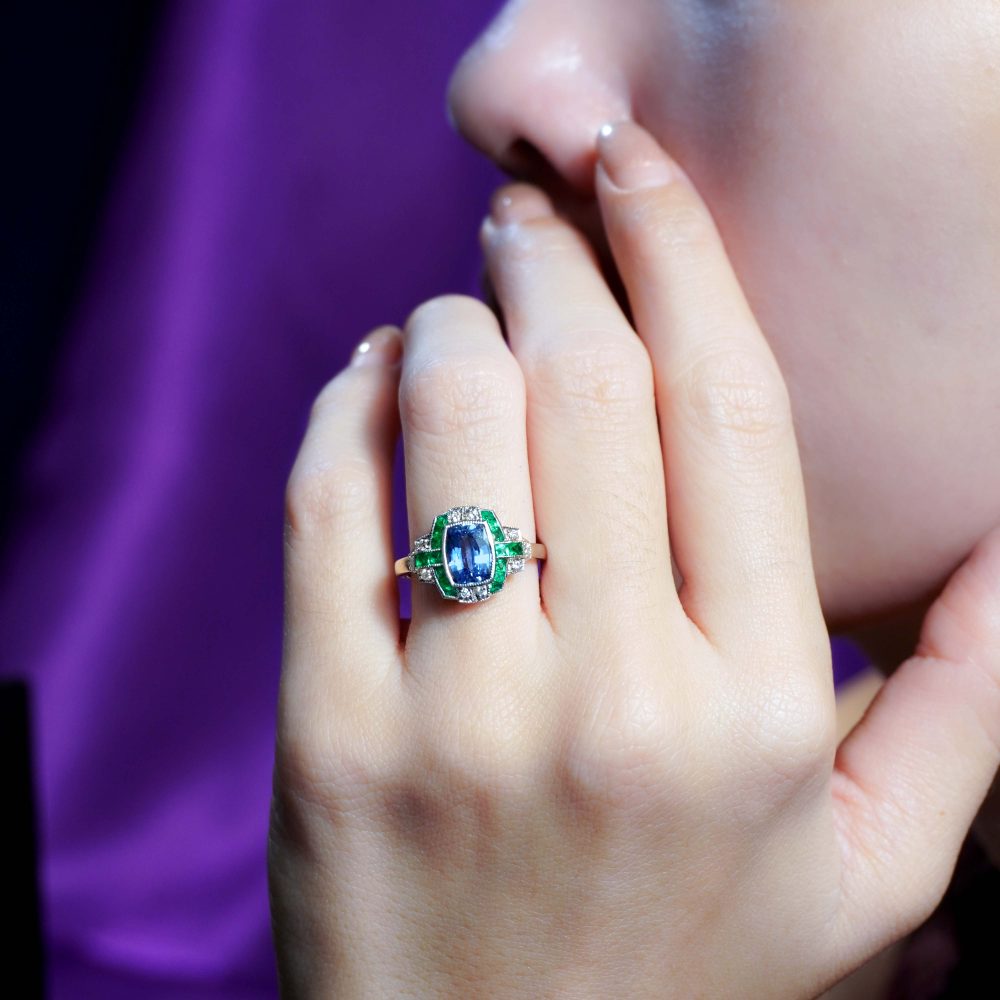
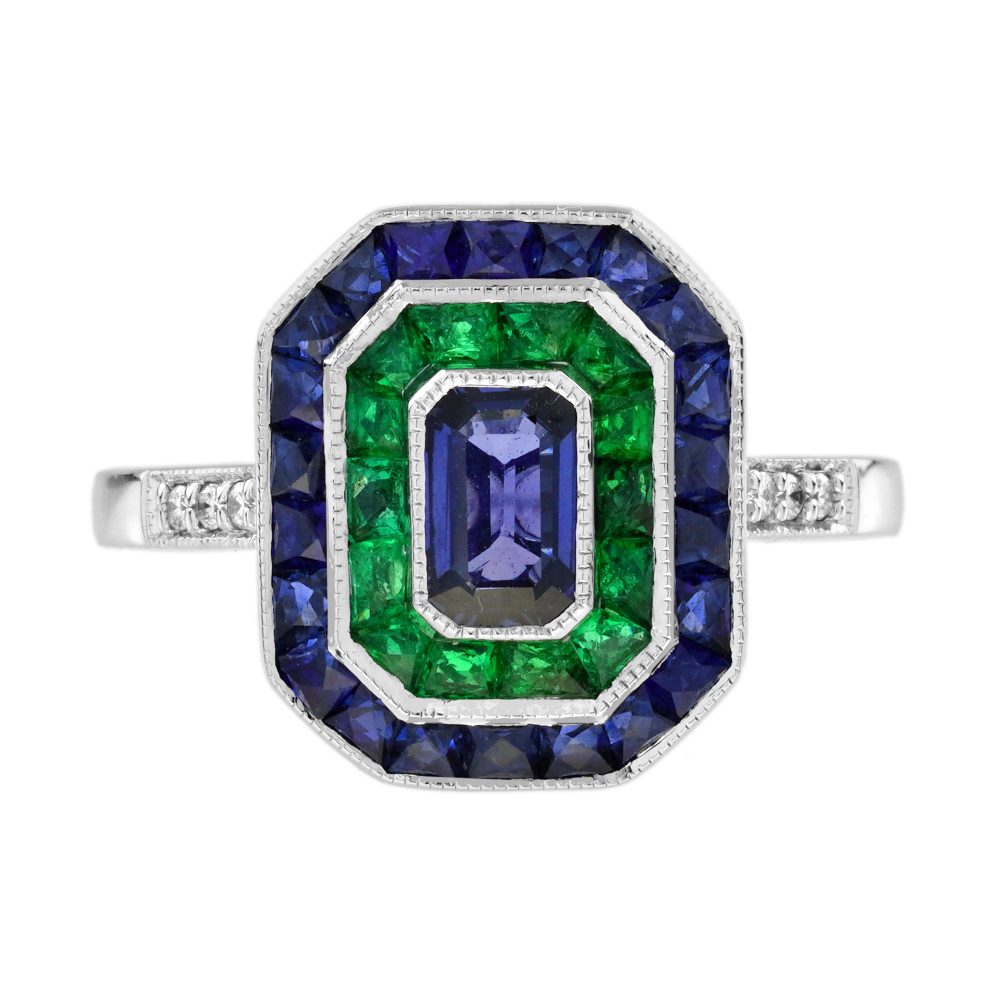

Aquamarine
Frequently Asked Questions: French Cut vs Baguette
What is the main difference between a French cut and a baguette?
A baguette is a step cut with parallel rectangular facets and calm, clean sparkle. A French cut uses a kite-shaped, brilliant-style facet pattern, giving it more fire and better ability to hide small inclusions.
How many facets does a baguette typically have?
A baguette typically has around 14 facets: a flat table, a flat bottom, and a small number of long rectangular facets along its sides, built as parallel rows rather than triangular brilliant-style facets.
Does a French cut hide inclusions better than a baguette?
Generally yes. A French cut’s more numerous, broken-up facets scatter light in more directions, visually breaking up small flaws, while a baguette’s wide, flat step-cut facets tend to show an inclusion clearly.
Can a French cut or baguette be used as a center stone?
Rarely. Both cuts are almost always used as accent stones, flanking or framing a larger center stone, though an elongated baguette or a larger French cut occasionally appears in a deliberately minimalist, geometric design.
Does Lilly M. use French cut and baguette stones?
Yes. We set both French cut and baguette diamonds in new, hand-made pieces in solid gold and platinum. Every stone we set is natural, and every piece is newly made — never represented as a period original or antique.