
Blog, Care & How-to
Necklace Length Guide (with Chart)

Key Takeaways: Necklace Length Guide
- This necklace length guide anchors every size to where it falls on the body — from a choker sitting at the base of the throat to an opera length reaching the breastbone or below — rather than leaving you to picture bare inches.
- Neckline matters as much as personal taste. A crew neck pairs best with a princess or matinee length that sits below the collar; a V-neck or scoop can carry a shorter choker because the neckline is already open.
- Layering needs separation, not just different lengths. Roughly 2 inches between each chain keeps a stack readable instead of merging into one cluttered line.
- A larger pendant needs a longer chain than a plain chain of the same intended drop, or the pendant sits too high and crowds the collarbone.
- We make to order, so a necklace can be set to a length between the standard sizes on this chart, not just the nearest round number.
What Are the Standard Necklace Lengths?
A necklace length guide groups chain lengths into a handful of standard names — collar, choker, princess, matinee, opera, and rope — each tied to where it typically falls: at the throat, at the base of the neck, at or just below the collarbone, at the bust line, below the bust, or at the waist and beyond. The right length depends on neckline, layering plans, and whether a pendant is involved, not on one “correct” size for everyone. The chart below gives exact inch and centimeter ranges for each name, and the sections after it walk through how to pick between them.
Necklace Length Chart: Inches and Centimeters
| Length name | Inches | Centimeters | Falls at |
|---|---|---|---|
| Collar | 12–13 in | 30–33 cm | Sits snugly at the base of the throat |
| Choker | 14–16 in | 35–41 cm | At the base of the neck |
| Princess | 17–19 in | 43–48 cm | At or just below the collarbone |
| Matinee | 20–24 in | 51–61 cm | At the top of the bust line |
| Opera | 28–34 in | 71–86 cm | At or below the bust |
| Rope | 36 in+ | 91 cm+ | At the waist or below; often doubled |
How Do You Choose a Necklace Length?
Start with the neckline of what you wear most. A crew neck or turtleneck covers the base of the throat, so a choker tends to look crowded against it; a princess or matinee length, sitting below the collar, has room to be seen. A V-neck or scoop neck already opens the neckline, so a shorter choker or collar can sit inside that open space without competing with the fabric line.
Body proportion matters too, though less than most charts suggest. A longer length — matinee or opera — tends to elongate the torso visually, which is why it reads as flattering on most body types; a very short choker draws the eye to the neck and collarbone specifically. Neither is more “correct”; this necklace length guide is about matching the effect you want, not a rule to follow.
Outfit neckline aside, think about what the necklace is meant to do. A piece meant to be the focal point of a simple outfit usually works best resting in open view — princess to matinee, depending on neckline — while a piece meant to be subtle, like a everyday pendant worn under a collar, can sit shorter or be tucked in. There is no single right answer across necklace sizes; the goal is matching the length to the role the piece is playing in that particular outfit.
Related: Support & FAQ
How Does a Pendant Change the Length You Need?
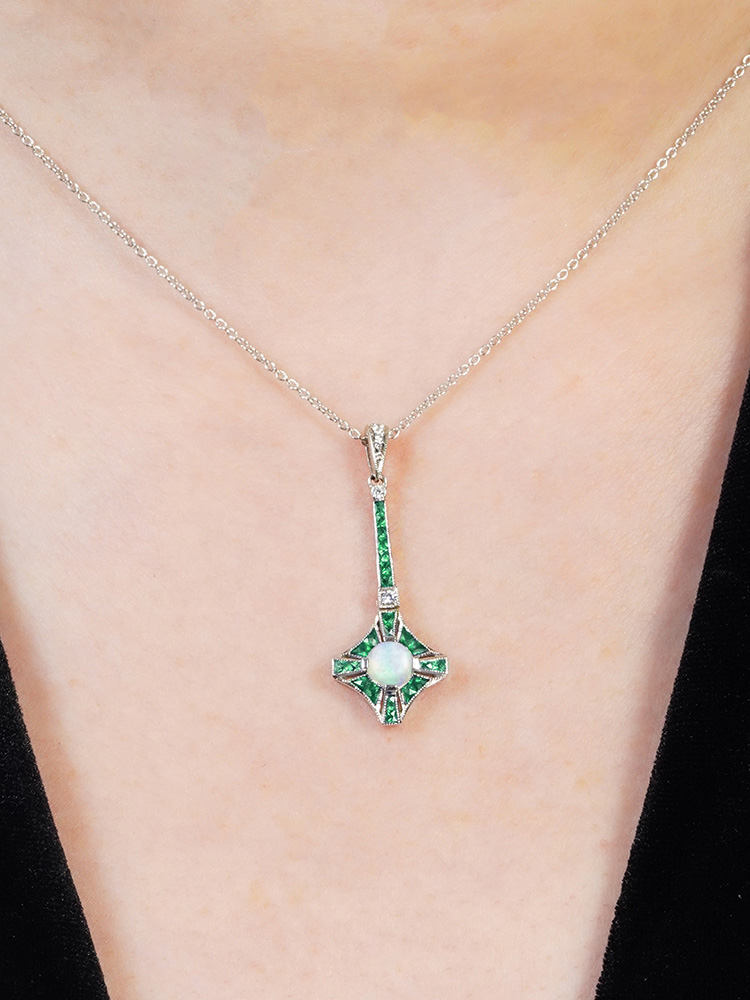
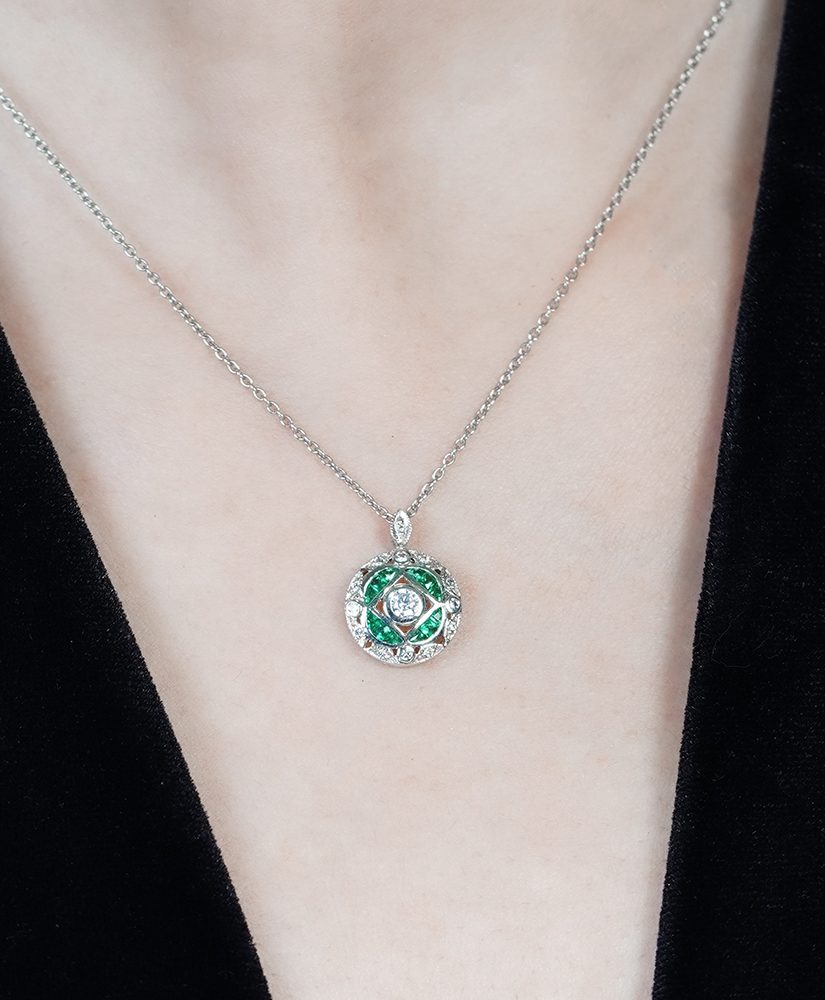
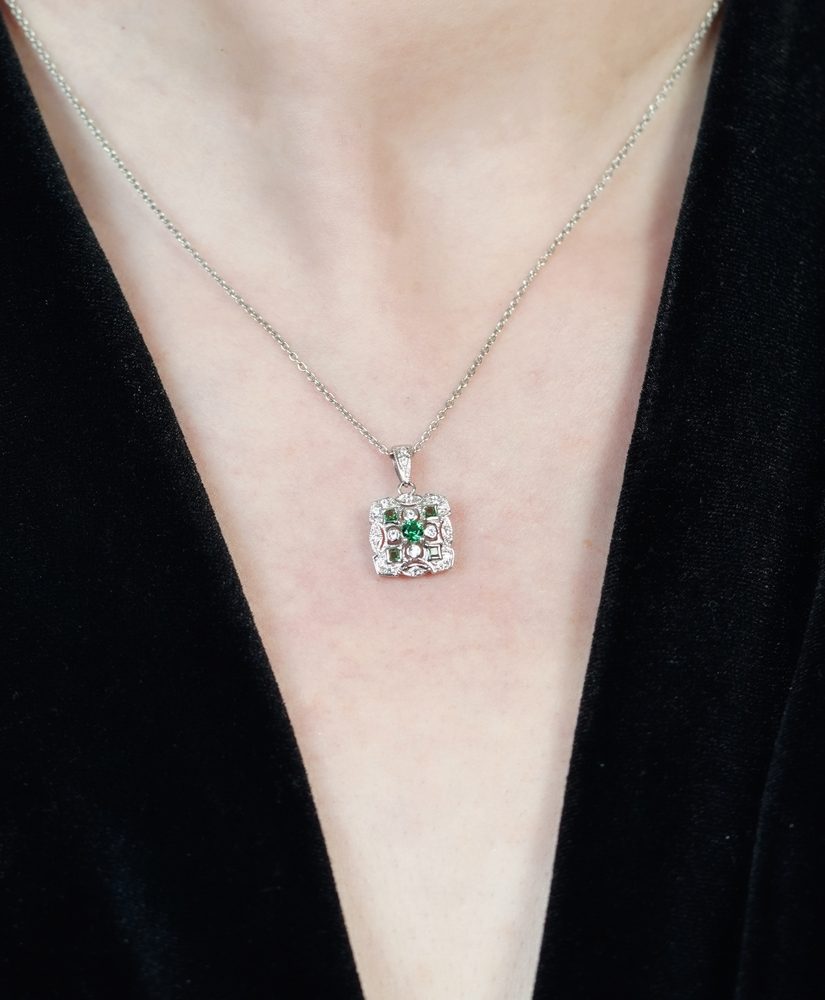
A pendant adds visual weight below the chain’s resting point, so the chain needs to be slightly longer than it would be on its own to let the pendant sit where it is meant to be seen. A small pendant on a choker-length chain can end up crowding the collarbone rather than resting below it; moving to a princess length usually gives it the room it needs.
As a rough guide, a larger statement pendant benefits from at least a princess-length chain (17–19 in) or longer, while a small, delicate pendant can work on a choker if the intent is for it to sit high and close to the throat. This is one of the places a plain necklace length chart falls short, since the pendant’s own size changes the math, not just personal preference.
A useful check: hold the pendant where you want it to rest, then measure from the back of the neck over the shoulders to that point and double it. That number, not the chain’s listed length alone, tells you whether a given chain will actually let the pendant sit where you pictured it.
Chain style also plays a small part here. A box or curb chain holds its shape and drapes fairly predictably, so the listed length is a reliable guide; a very fine cable chain or a chain with an adjustable extender can sit slightly differently depending on how it is worn, which is worth checking against this necklace length guide before assuming the number on the label tells the whole story.
How Do You Layer Necklaces Well?
Layering works by separation, not by owning more chains. A reliable starting stack pairs a collar or choker (12–16 in), a princess (17–19 in), and a matinee (20–24 in) — each roughly 2 to 4 inches longer than the one before it, so each chain is visible on its own rather than bunching into the one above it.
Mixing textures and pendant sizes across the stack helps too: a plain chain, a chain with a small charm, and a slightly thicker chain read as three distinct pieces even at similar lengths, while three identical thin chains close together tend to blur together regardless of the length difference.
Workshop insight: when in doubt, start with just two lengths with a clear gap between them — a choker and a matinee, for example — before adding a third. It is easier to add a middle length later than to fix a stack that feels cluttered.
Weight and chain style also affect how a stack sits. A heavier chain naturally falls slightly lower on the body than its measured length suggests, since it has more drape, while a fine, light chain sits closer to its exact measured length. Mixing a heavier piece with finer ones in the same stack can shift the visual spacing even when the measured necklace sizes look evenly spaced on paper.
A simple way to plan a stack before buying anything: lay candidate lengths flat on a table in the order you intend to wear them, and look at the gaps between their endpoints rather than just comparing the numbers. A necklace length guide gives a starting point, but seeing the actual gaps catches spacing issues a list of numbers alone can miss.
How Do You Measure for Necklace Length?
The most reliable way to measure necklace length at home uses a necklace you already own and like the fit of: lay it flat and measure end to end along the chain, including the clasp. That number is the length to look for on a necklace length chart when buying something new.
Without an existing necklace, use a soft measuring tape or a piece of string around the base of the neck where you want the necklace to sit, mark where the ends meet, then measure that string against a ruler. Add roughly 2 inches to that neck measurement to estimate a chain length that will hang rather than sit tight like a collar, since a necklace needs to drape slightly to look natural rather than fit like a choker that hugs the neck exactly.
Because we make to order, we can set a necklace to a specific length between the standard sizes above if none of the standard options is quite right for a particular neckline or layering plan.
Knowing how to measure necklace length correctly before buying online saves the most common frustration with necklace shopping: a piece that looks right in a photo but sits noticeably higher or lower than expected once it arrives, simply because the listed length was never checked against anything familiar.
Related: Our Size Guide
Is There a Different Length Guide for Men?
The same length names and ranges in this necklace length guide apply to men’s necklaces; the main difference is typical taste rather than a different sizing system. Men’s chains more often land in the 18–24 inch range (princess to matinee) for everyday wear, sitting below an open collar or under a shirt, while chokers are less commonly chosen. The measuring method above works the same way regardless of who is wearing it, and the same necklace length guide applies to any gender — the standard names describe where a chain falls, not who it is for.
Can a Necklace Be Made to a Custom Length?
Yes. Because pieces are made to order, a chain can be set to a specific length rather than only the standard sizes on a typical necklace length chart — useful when a pendant’s size calls for a length between two standard options, or when a particular neckline needs something a half-inch longer or shorter than the nearest standard length to sit exactly right.
This is where a made-to-order approach differs from shopping an existing collection: instead of choosing the closest standard length from a necklace length guide and accepting the small gap between that and what actually fits, the commission starts from the measurement itself, and the chain is set to match.
Related: Bespoke & Personalization
What Necklace Length Mistakes Should You Avoid?
A few avoidable mistakes come up again and again when people shop by a necklace length chart without checking it against something familiar:
- Buying a length by name alone without checking the inch or centimeter range against a necklace you already own and like.
- Pairing a choker with a high neckline, such as a crew neck or turtleneck, which crowds the chain against the fabric rather than letting it show.
- Choosing a plain chain’s length for a large pendant, which tends to leave the pendant sitting higher than intended.
- Layering chains with less than about 2 inches of separation, which causes them to visually merge into one cluttered line.
- Assuming necklace sizes run the same across every brand or style — a stated “18 inch” chain can sit slightly differently depending on clasp style and how the chain drapes.
Avoiding these is mostly a matter of checking a listed length against something familiar before buying, which is the whole point of pairing a necklace length guide with an actual measurement rather than a name alone.
What Should You Remember About Necklace Length?
A good necklace length guide comes down to matching the chain to three things: your neckline, whether a pendant is involved and how large it is, and whether the piece will be worn alone or layered. The standard names — collar, choker, princess, matinee, opera, rope — are a shared vocabulary for describing where a chain falls, not a ranking of better or worse options.
Measuring an existing necklace you already like is the fastest way to translate “this length works for me” into a number you can shop by, and because we make to order, that number does not have to match a standard size exactly. Keep that measurement on hand, and every future necklace length guide or chart becomes a quick lookup instead of a guessing game.
We make pieces in solid gold, platinum, and natural gemstones meant to be worn for decades, and getting the length right the first time is part of making sure a piece gets worn often rather than left in a drawer because it never quite sat the way it was pictured.
Sources: GIA — Jewelry Fit and Sizing Guidance · FTC — Jewelry Guides (general reference)
Pendant & Necklace
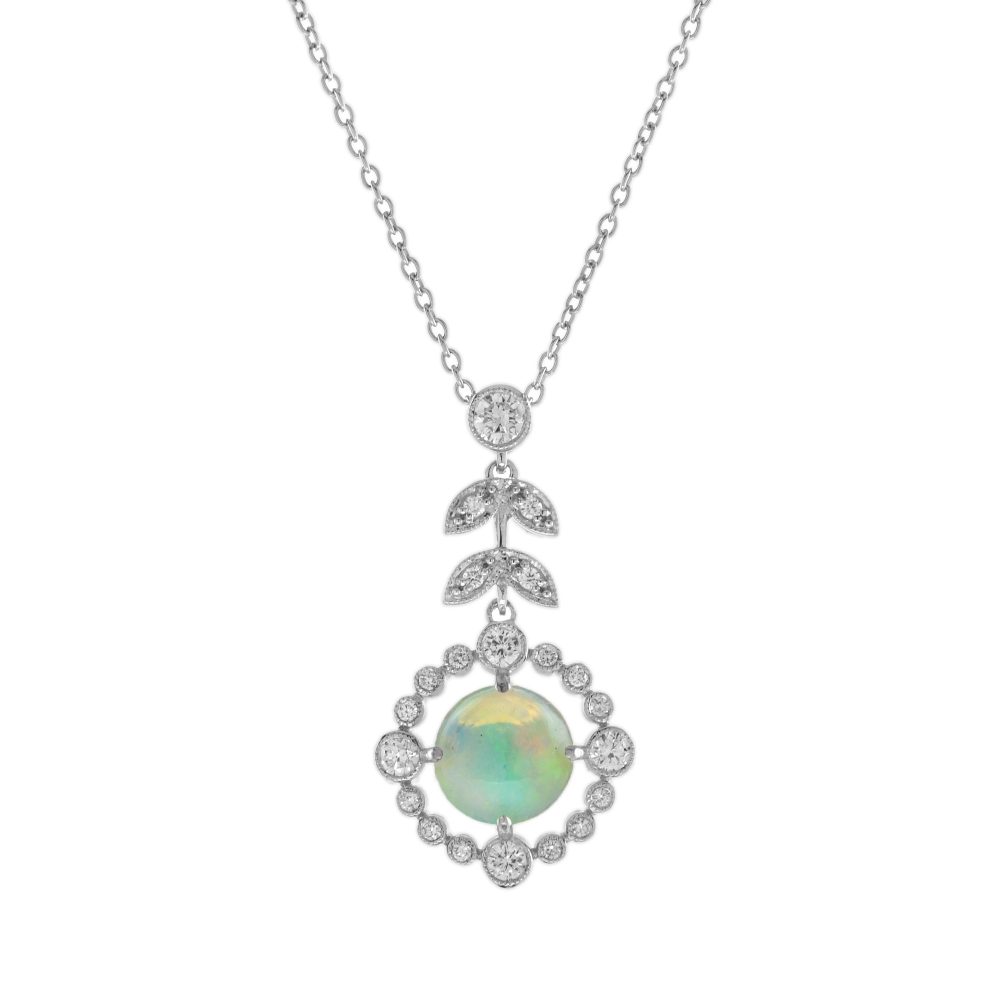
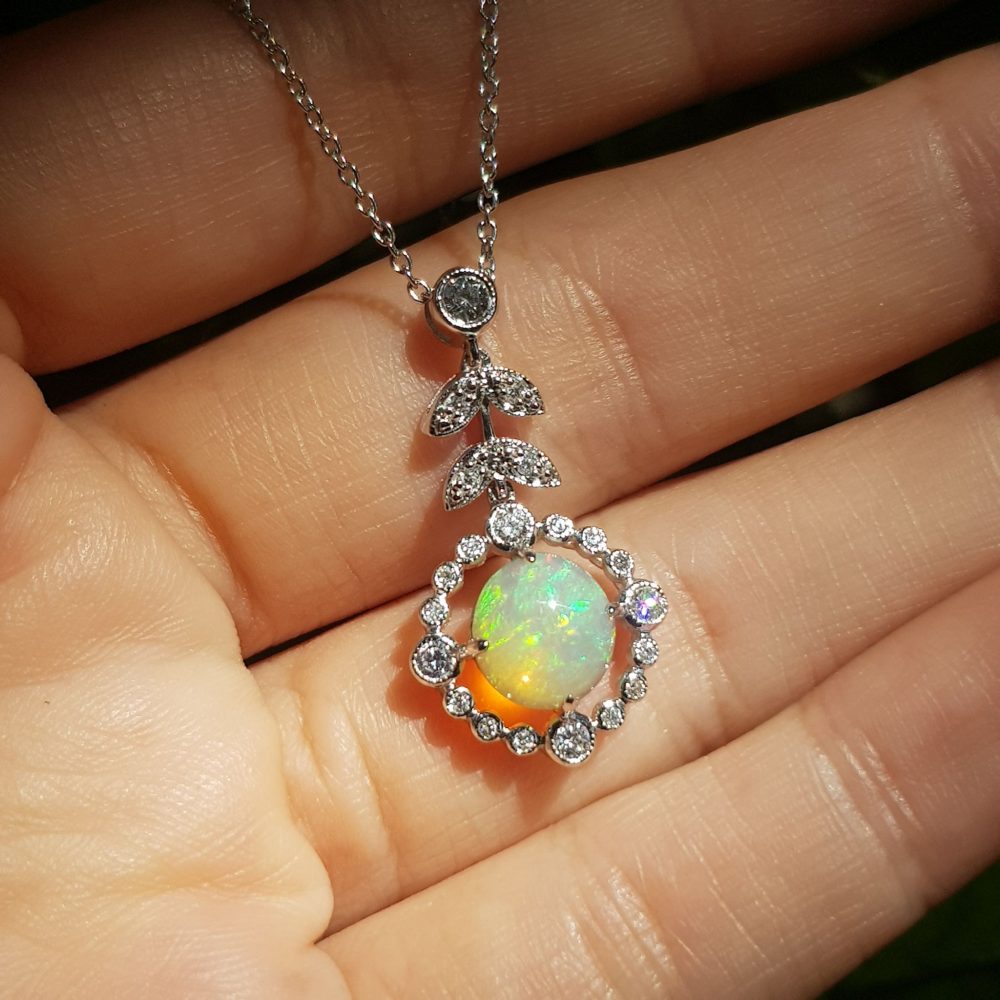
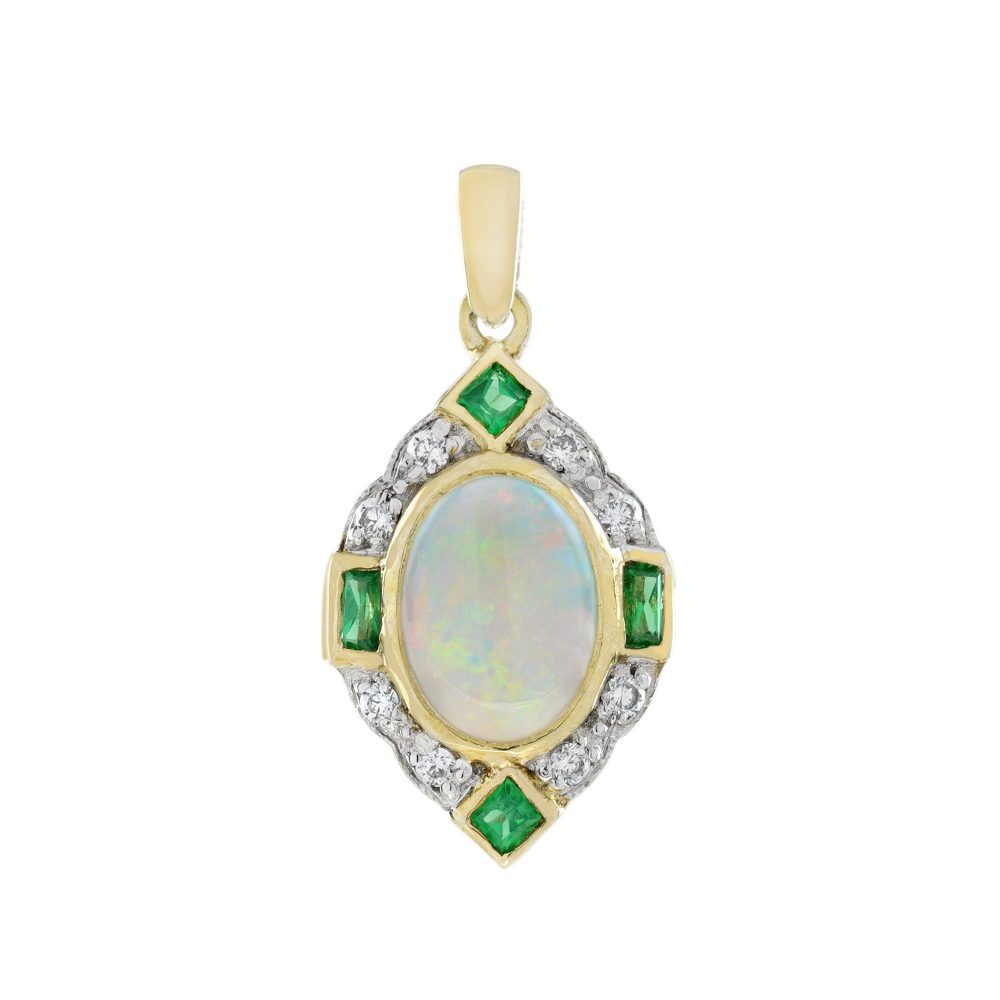
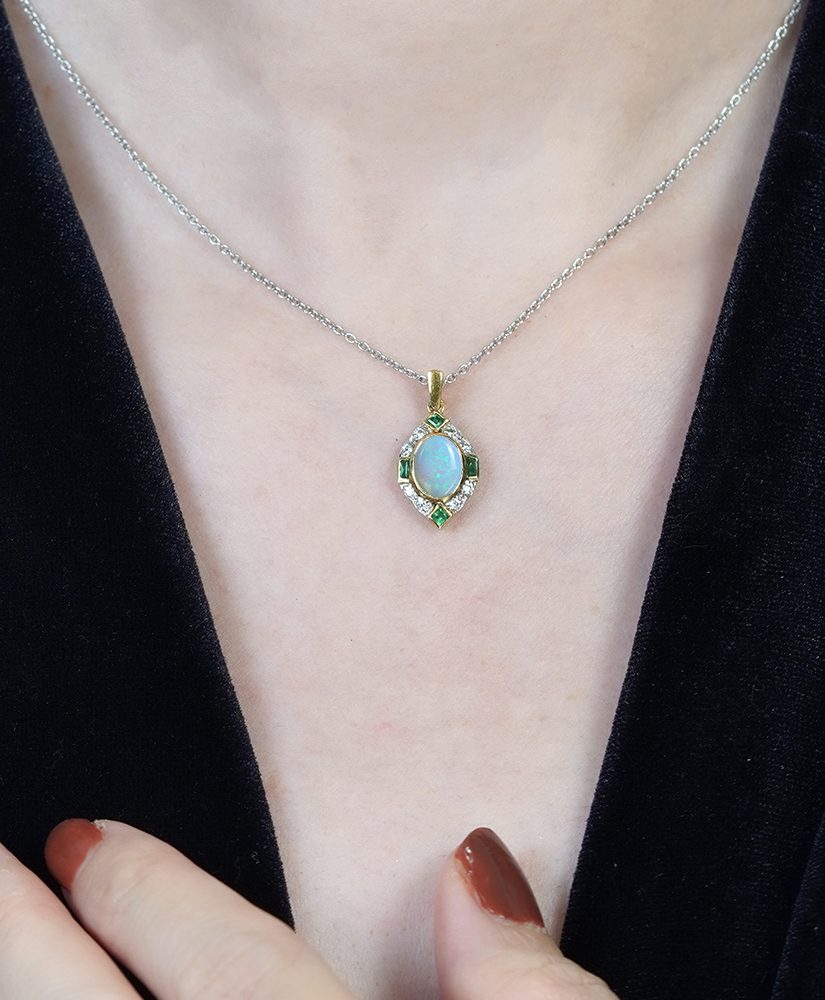
Pendants
Black Friday 2026
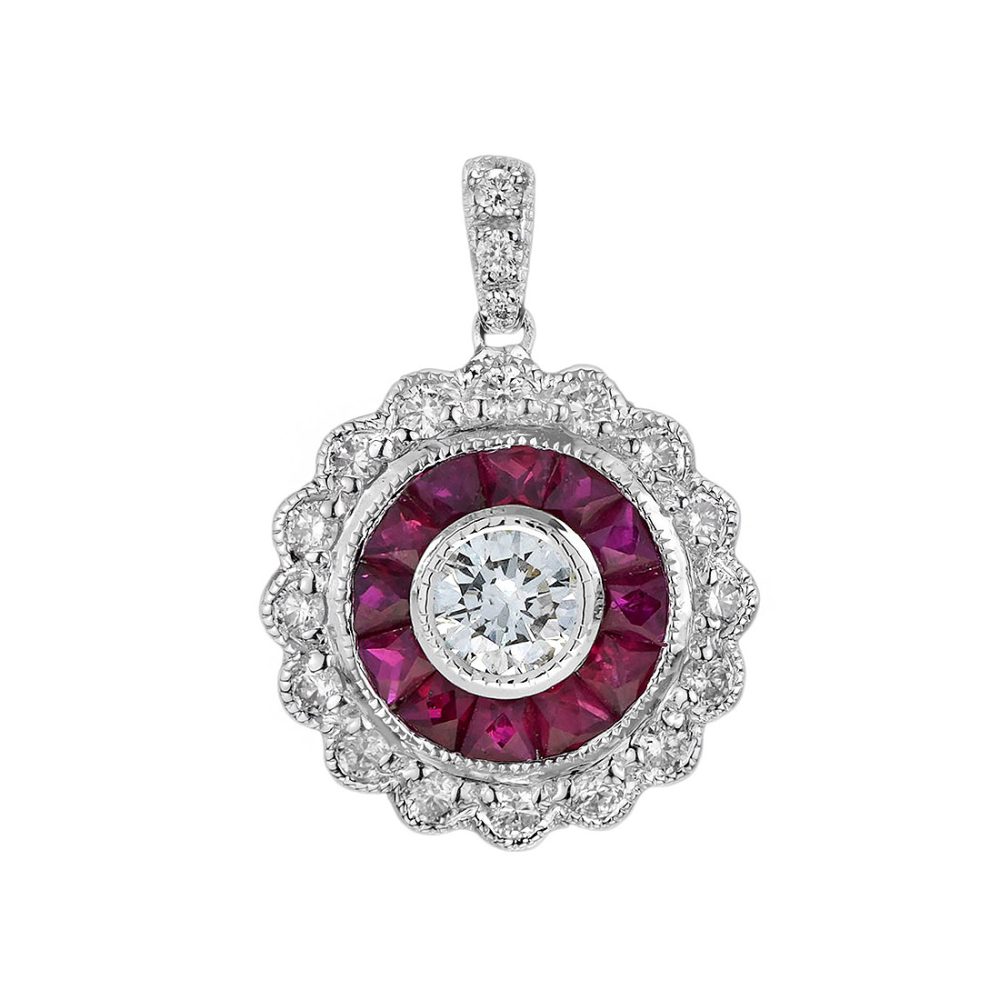
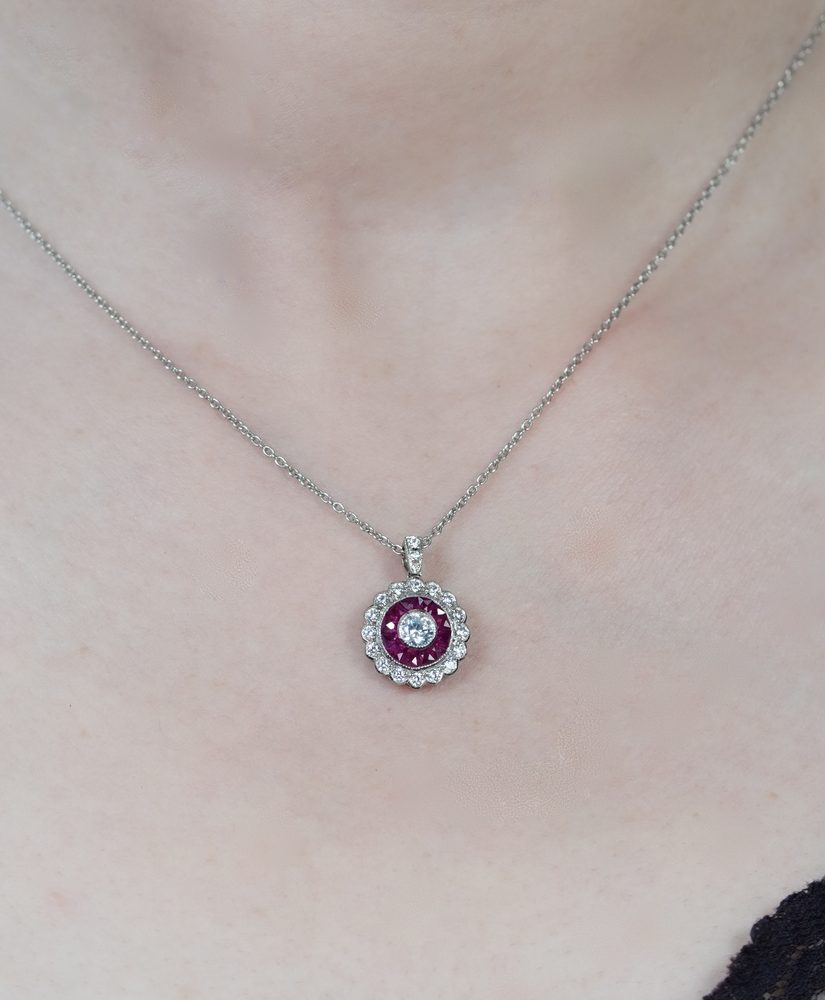
White Gold
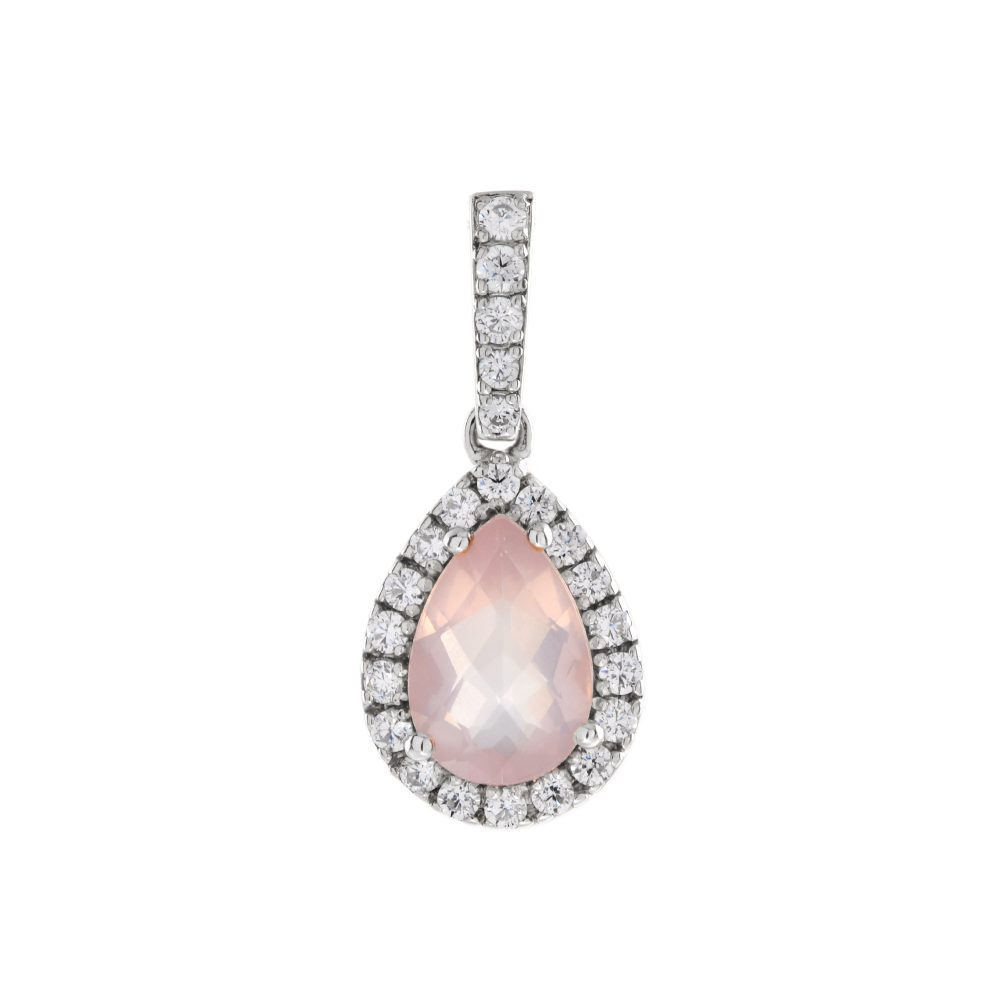
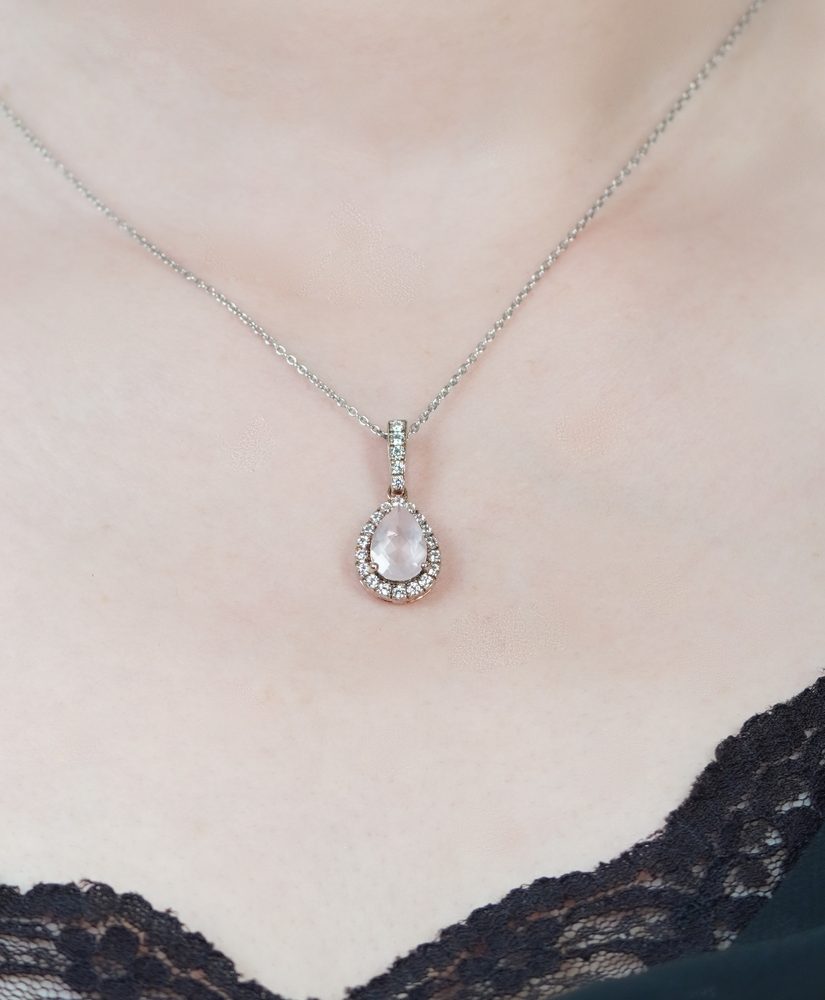
Yellow Gold
Frequently Asked Questions: Necklace Length Guide
What is the most popular necklace length?
Princess length (17–19 inches) is the most commonly chosen length, since it sits at or just below the collarbone, works with most necklines, and shows comfortably whether worn alone or as the base layer of a stack.
What length is best for a pendant necklace?
It depends on the pendant’s size: a small, delicate pendant can sit well on a choker (14–16 in), while a larger statement pendant generally needs at least a princess length (17–19 in) or longer so it has room to hang rather than crowding the collarbone.
How much space should be between layered necklaces?
Roughly 2 inches of separation between each chain keeps a layered stack looking intentional. Less than that, and the chains tend to visually merge into one cluttered line rather than reading as distinct pieces.
Can I measure necklace length without a measuring tape?
Yes. A piece of string works just as well: wrap it around the base of the neck where you want the necklace to sit, mark where the ends meet, then measure that string against a ruler. Add roughly 2 inches to estimate a chain length that will drape rather than sit tight.
Can you make a necklace in a custom length?
Yes. Because pieces are made to order, a necklace can be set to a specific length rather than only the standard sizes on a typical chart, which is useful when a pendant’s size or a particular neckline calls for something between two standard lengths.