
Blog, Buying Guides
Colored Gemstone Engagement Rings: Sapphire, Emerald & Ruby
Key Takeaways: Gemstone Engagement Rings
- Sapphire and ruby are the two colored stones built for daily wear without qualification. Per GIA, corundum — the mineral family behind both — is “relatively hard, 9 on the Mohs scale” and has “excellent toughness and no cleavage,” a combination GIA states “makes it a great choice for rings and other mountings subject to daily wear.”
- Emerald’s Mohs number is misleading on its own. At 7.5–8, emerald sits close to sapphire and ruby on the hardness scale, but GIA describes emerald as “more brittle than a gem like corundum,” vulnerable to damage “during careless daily wear” because of its characteristic internal inclusions.
- Heat treatment and oil treatment are not the same kind of treatment. Heat-treated corundum is, per GIA, “very durable” and permanent under normal handling; emerald’s oil or resin fracture-filling can range from “insignificant to major amounts,” and heavier filling means more careful long-term care, not less.
- Treatment disclosure is a legal requirement, not a courtesy — the FTC’s Jewelry Guides (16 CFR Part 23) require it regardless of how standard a treatment is in the trade, and gemstone engagement rings built with treated stones are the norm, not the exception, across the industry.
- The right setting depends on the stone, not the ring style. An open-prong setting suits sapphire and ruby’s daily-wear durability; emerald generally calls for a bezel or halo that shields its girdle and corners from everyday impact.
Which Colored Gemstone Suits an Engagement Ring?
Gemstone engagement rings built around sapphire or ruby are suited to daily wear with essentially no reservations, because corundum — the mineral species behind both stones — combines a 9 on the Mohs hardness scale with excellent toughness and no cleavage plane. Emerald is a different case: a respectable 7.5–8 on the same hardness scale, but structurally more brittle because of the inclusions that give emerald its characteristic garden-like appearance, which is why an emerald engagement ring generally benefits from a protective setting that a sapphire or ruby does not strictly need. None of this makes emerald a poor choice — it makes emerald a choice that calls for a different setting decision, made with the stone’s actual structure in mind rather than its hardness number alone.
Gemstone Engagement Rings at a Glance: Sapphire vs. Ruby vs. Emerald
| Gemstone | Mohs hardness | Toughness | Routinely treated? | Recommended setting |
|---|---|---|---|---|
| Sapphire | 9 | Excellent | Yes — heat, very common | Any, including open prong |
| Ruby | 9 | Excellent | Yes — heat, very common | Any, including open prong |
| Emerald | 7.5–8 | Poor — brittle (jardin inclusions) | Yes — oiling/resin, standard practice | Bezel or halo preferred |
Why Are Sapphire and Ruby the Most Durable Colored Engagement Stones?
Sapphire and ruby are both corundum, and corundum’s combination of properties is unusually well suited to a ring that is worn every day. GIA states plainly that “corundum (ruby and sapphire) is relatively hard — 9 on the Mohs scale” and that it “has excellent toughness and no cleavage, which is a tendency to break when struck,” concluding that this “makes it a great choice for rings and other mountings subject to daily wear.” Hardness resists scratching from everyday contact — countertops, other jewelry, tools — while toughness and the absence of cleavage resist chipping and cracking from a knock or a fall, which is a separate property that a hardness number alone does not capture.
That distinction matters because it is easy to assume any gemstone rated 9 or close to it on the Mohs scale is equally safe for a ring, and that assumption breaks down with other stones later in this guide. For sapphire and ruby specifically, the two properties reinforce each other: a stone that resists both scratching and chipping can reasonably be set in an open prong, a bezel, a halo, or nearly any other engagement-ring style without one setting choice mattering more than another for day-to-day durability.
Related: Sapphire Meaning, Colors & September Birthstone · Ruby Meaning: Symbolism, July Birthstone & Buying Guide
Which Metal Complements Sapphire, Ruby & Emerald?
Metal choice is partly aesthetic and partly practical, and the two considerations usually point the same direction. A sapphire engagement ring in blue traditionally pairs with platinum or white gold, because the cool metal tone does not compete with the stone’s own color the way yellow gold can; a fancy-color sapphire in pink, yellow, or green has more flexibility and can suit either warm or cool metal depending on the exact shade. Ruby and emerald both read well against yellow or rose gold, which echoes their warmth, but both also work in platinum or white gold for a buyer who wants a cooler, more contemporary look — there is no rule requiring a warm stone to sit in a warm metal.
The practical half of the decision follows the same durability logic used throughout this guide: platinum and eighteen-karat gold hold fine prong and filigree work best over decades of wear, while fourteen-karat gold trades a small amount of color saturation for a harder-wearing everyday alloy. Rhodium plating on white gold should always be disclosed, since it wears down gradually and needs periodic replating regardless of which colored stone sits at the center.
Why Does Emerald Need a Different Setting Than Its Hardness Suggests?
Emerald’s Mohs rating of 7.5–8 looks close enough to sapphire and ruby’s 9 that a buyer could reasonably assume the setting rules are the same. They are not, and the reason is structural rather than a matter of the hardness scale. Emeralds characteristically contain inclusions that gemologists call jardin — French for garden, describing their mossy, internal appearance — and GIA states directly that “emeralds are more brittle than a gem like corundum,” adding that this “makes them vulnerable to damage during cutting, polishing, and setting, or even during careless daily wear.”
Mohs hardness measures resistance to scratching; toughness measures resistance to breaking. Emerald’s inclusions do not change its hardness number meaningfully, but they do make the stone more prone to chipping or fracturing under an impact that a sapphire or ruby of similar hardness would shrug off. That is why an emerald engagement ring is generally set in a bezel or halo, which shields the stone’s girdle and corners, rather than a fully open prong setting that leaves those vulnerable points exposed to everyday knocks.
Workshop insight: We treat emerald as a setting decision, not a reason to discourage the stone. A well-built bezel or halo protects exactly the points an emerald is actually vulnerable at, without changing how the ring reads on the hand. The goal is matching the setting to the stone’s real structure, not defaulting to whatever setting looks most like a diamond solitaire.
Does Heat Treatment or Oil Treatment Affect a Stone’s Long-Term Wear?
Both treatments are standard trade practice, but they behave differently over the life of a ring, and that difference is worth understanding before buying a colored stone engagement ring. Heat treatment of corundum is, per GIA, considered “durable and permanent under normal handling conditions” — once a sapphire or ruby is heat-treated, that treatment does not wear off or require maintenance, and the stone can generally be cleaned and worn exactly as an untreated stone would be.
What About Emerald’s Oil and Resin Treatment?
Emerald fracture-filling works differently. GIA describes the practice directly: “surface-reaching fractures in emerald are sometimes filled with essential oils, other oils, waxes, and ‘artificial resins'” to reduce the visibility of the stone’s natural fractures, and notes that “the volume of filler material present can range from insignificant to major amounts.” A lightly filled emerald behaves close to an untreated one; a heavily filled stone carries more filler in its structure and calls for more conservative care over time — avoiding ultrasonic cleaners, harsh chemicals, and extreme temperature changes that could affect the filling. This is a genuine difference from sapphire and ruby’s heat treatment, and one almost no buying guide explains plainly.
Treatment disclosure itself is not optional either way. The FTC’s Jewelry Guides (16 CFR Part 23) require sellers to disclose gemstone treatments that are not permanent, that significantly affect value, or that require special care — a test that applies to essentially all colored stone treatment in this category, common or not.
How Do Sapphire, Ruby & Emerald Compare to Diamond for an Engagement Ring?
Diamond is graded primarily on the near-absence of color, while sapphire, ruby, and emerald are graded primarily on the presence and quality of it — hue, tone, and saturation replace the colorless grading scale entirely for these three stones. A non-diamond engagement ring built around a fine sapphire, ruby, or emerald is judged first on how rich and even that color reads in normal light, with clarity, cut, and carat weight all considered relative to that color quality rather than as independent factors.
Durability is where the real distinction sits for daily-wear purposes. Diamond, at 10 on the Mohs scale, is the hardest natural material, but it does have cleavage and can chip under a sharp, direct blow. Sapphire and ruby sit at 9 with excellent toughness and no cleavage, which in practical terms places them closer to diamond’s daily-wear resilience than most buyers assume. Emerald sits apart from both, not because of its Mohs number but because of the brittleness discussed above — a colored stone engagement ring built around emerald is a deliberate aesthetic choice that trades some of that daily-wear margin for a color and character diamond, sapphire, and ruby do not offer.
Which Setting Best Protects Each Stone?
Setting choice should follow the stone’s actual durability profile rather than a fixed idea of what an engagement ring “should” look like. Sapphire and ruby’s Mohs 9 hardness and excellent toughness place them in the top setting tier — an open prong, a low profile, or any other style is reasonable, because there is very little the setting needs to protect the stone from. Emerald’s brittleness places it in a different tier: a bezel that fully encircles the stone, or a halo that shields its perimeter, meaningfully reduces the chance of chipping a corner or edge during ordinary wear, in a way an open prong does not.
This is the same logic behind the general setting-durability guidance that applies across every gemstone Lilly M. works with, not a rule invented specifically for these three stones — the setting exists to compensate for whatever a stone’s own hardness and toughness do not already provide.
How Should You Buy a Sapphire, Ruby, or Emerald Engagement Ring?
Start with the same disclosure standard that applies to any fine jewelry purchase: any heat treatment, oiling, or other enhancement should be stated plainly, not buried in fine print or omitted because the practice is common. A seller who cannot say whether a sapphire has been heated, or how heavily an emerald has been oiled, is not able to tell a buyer how the stone should actually be cared for. A quality stamp should carry a maker’s registered trademark beside it, consistent with federal stamping requirements, and any documentation or laboratory report offered with the stone should be kept with the ring going forward.
From there, sizing and setting decisions matter as much as the stone itself. A bespoke commission lets the stone, cut, and setting be matched deliberately — a bezel for an emerald, an open prong for a sapphire or ruby — rather than selected from whatever a single retailer happens to have on hand. Our size guide, guarantee, and return policy cover the practical mechanics of the purchase once those design decisions are settled.
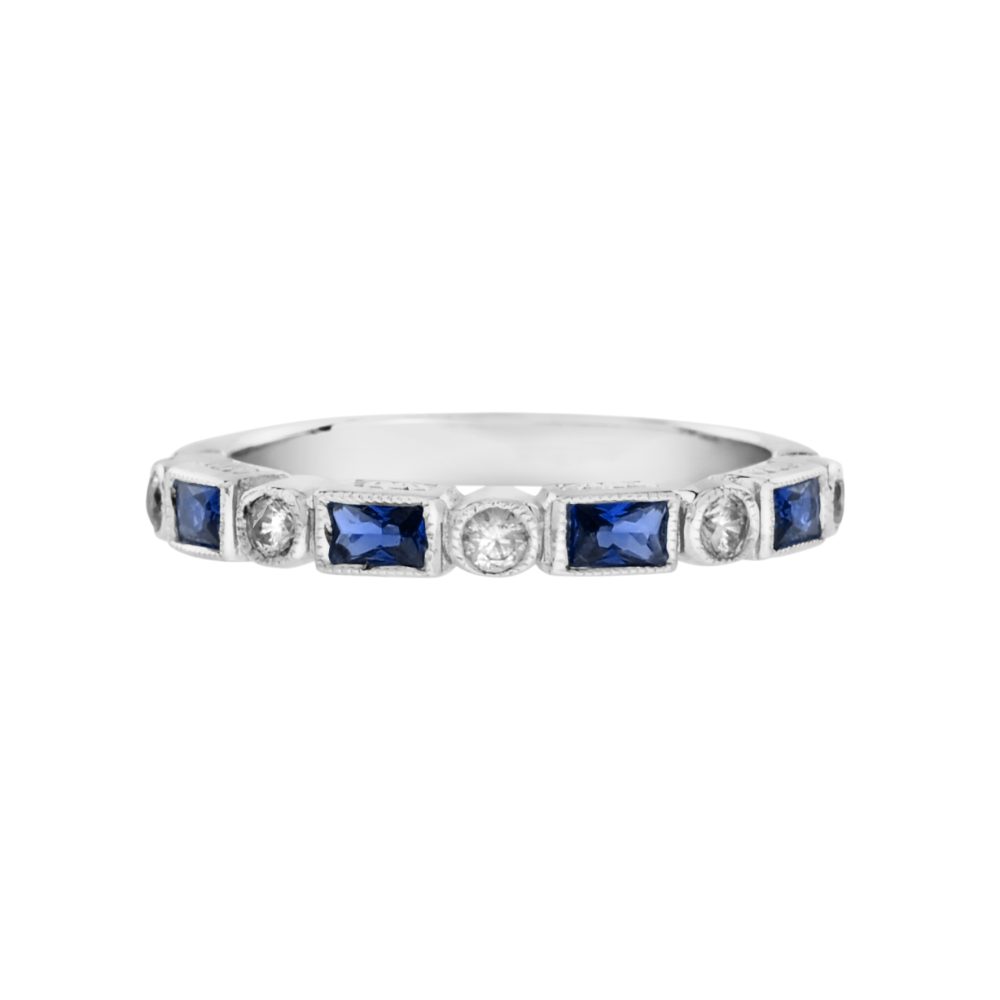
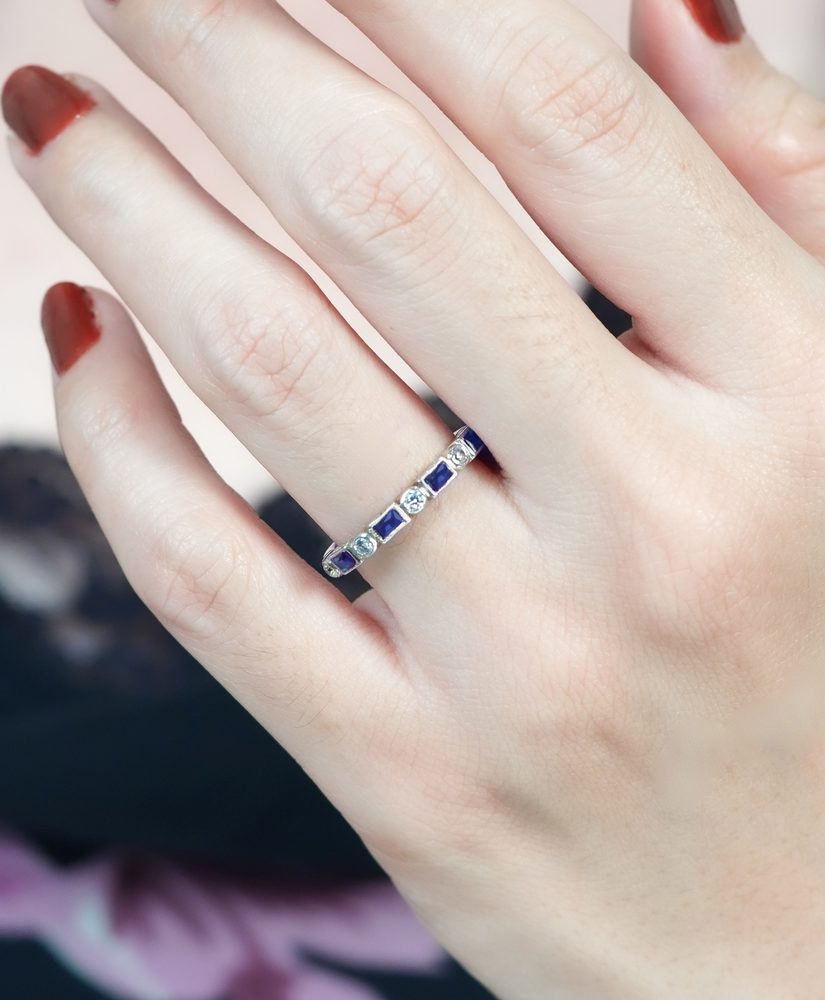
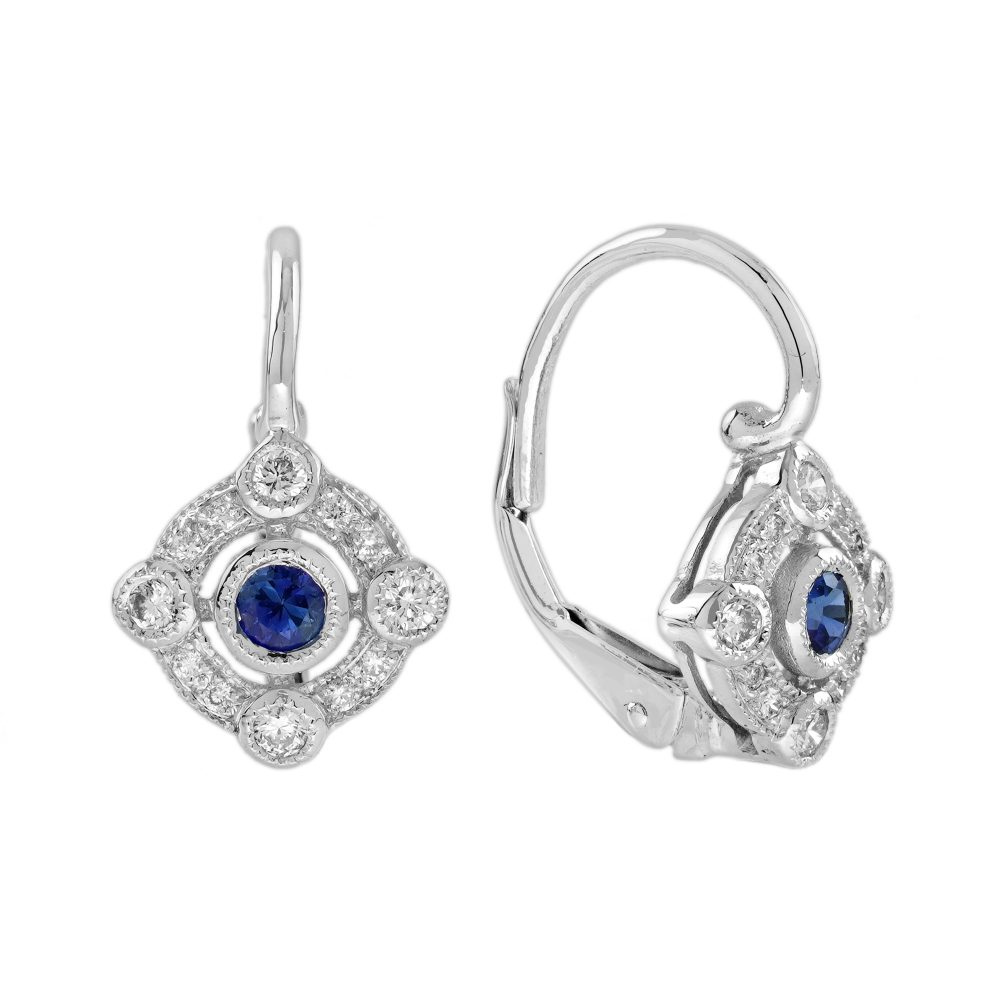
For readers exploring our own gemstone engagement rings, the sapphire, ruby, and emerald collections are the most direct starting points, alongside the Engagement Ring archive for browsing across all stone types.
What Should You Remember When Choosing Gemstone Engagement Rings?
Gemstone engagement rings built around sapphire or ruby carry very little durability trade-off compared with diamond — corundum’s combination of high hardness and excellent toughness makes either stone a safe daily-wear choice in nearly any setting. Emerald is the stone that rewards a more deliberate decision: its hardness number alone understates the case for a protective setting, and its treatment history — how heavily the stone has been oiled — is worth asking about specifically rather than assuming it does not matter.
None of the three stones is the objectively correct choice for an engagement ring; each carries a different balance of color, durability, and care that a buyer should weigh against how the ring will actually be worn day to day, and a setting chosen to match that stone’s real structure rather than a generic ring style.
Sources: GIA — Ruby Care and Cleaning Guide · GIA — Sapphire Care and Cleaning Guide · GIA — Emerald Quality Factor · GIA — An Introduction to Gem Treatments · FTC — Guides for the Jewelry, Precious Metals, and Pewter Industries (16 CFR Part 23)
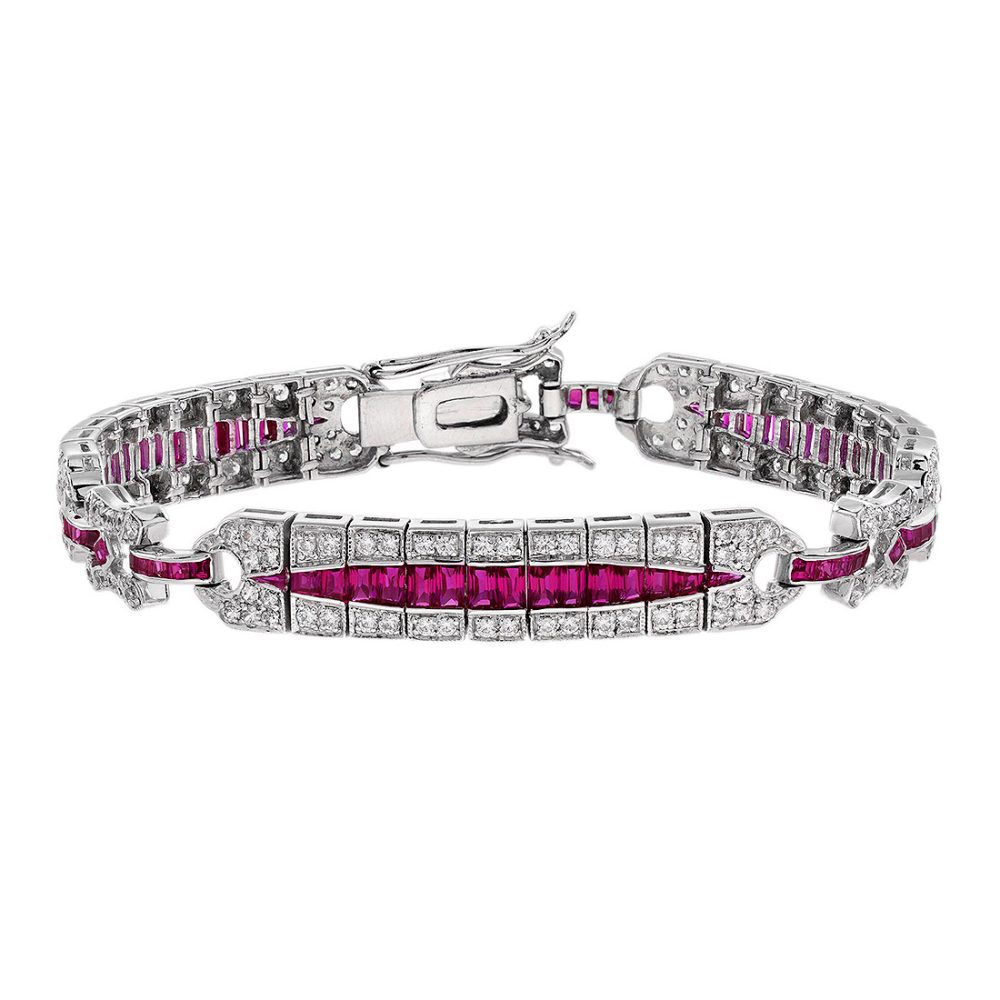
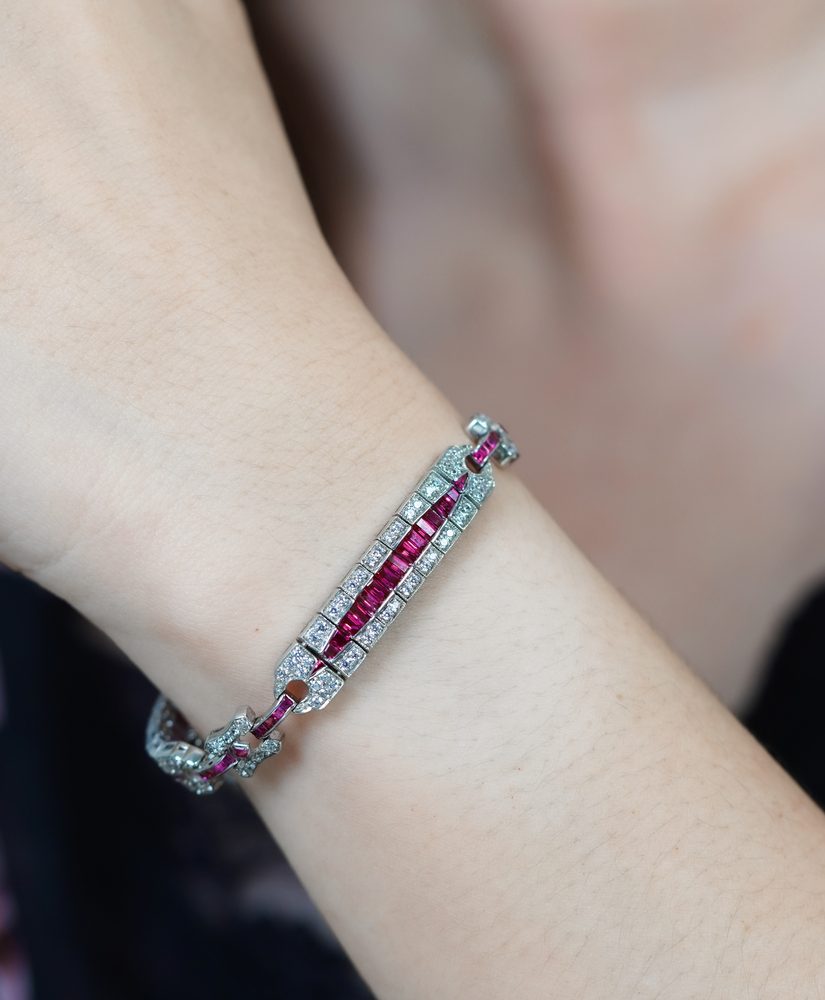
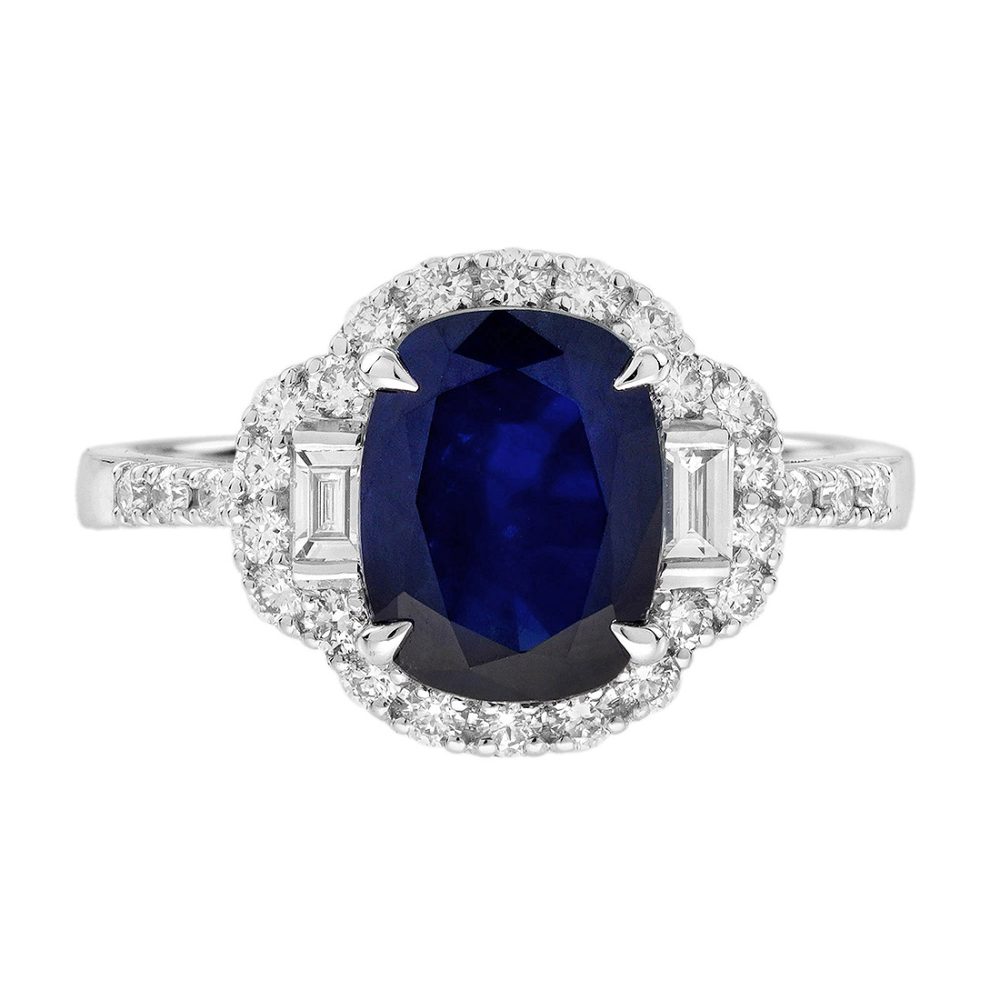
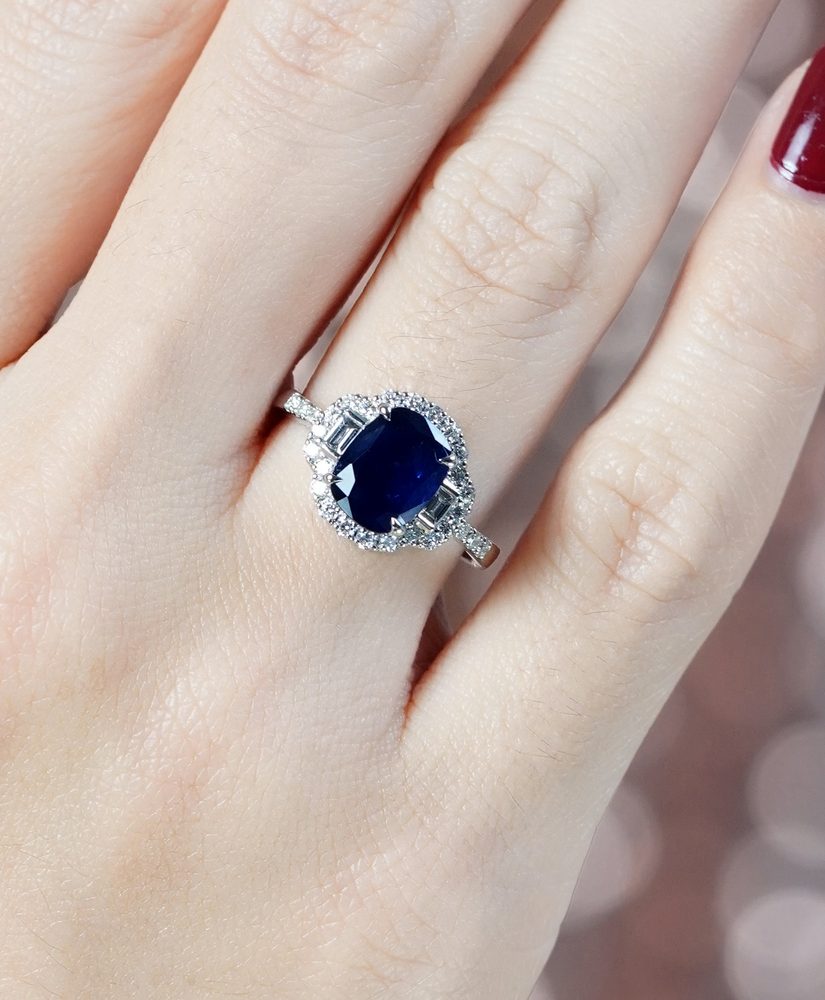
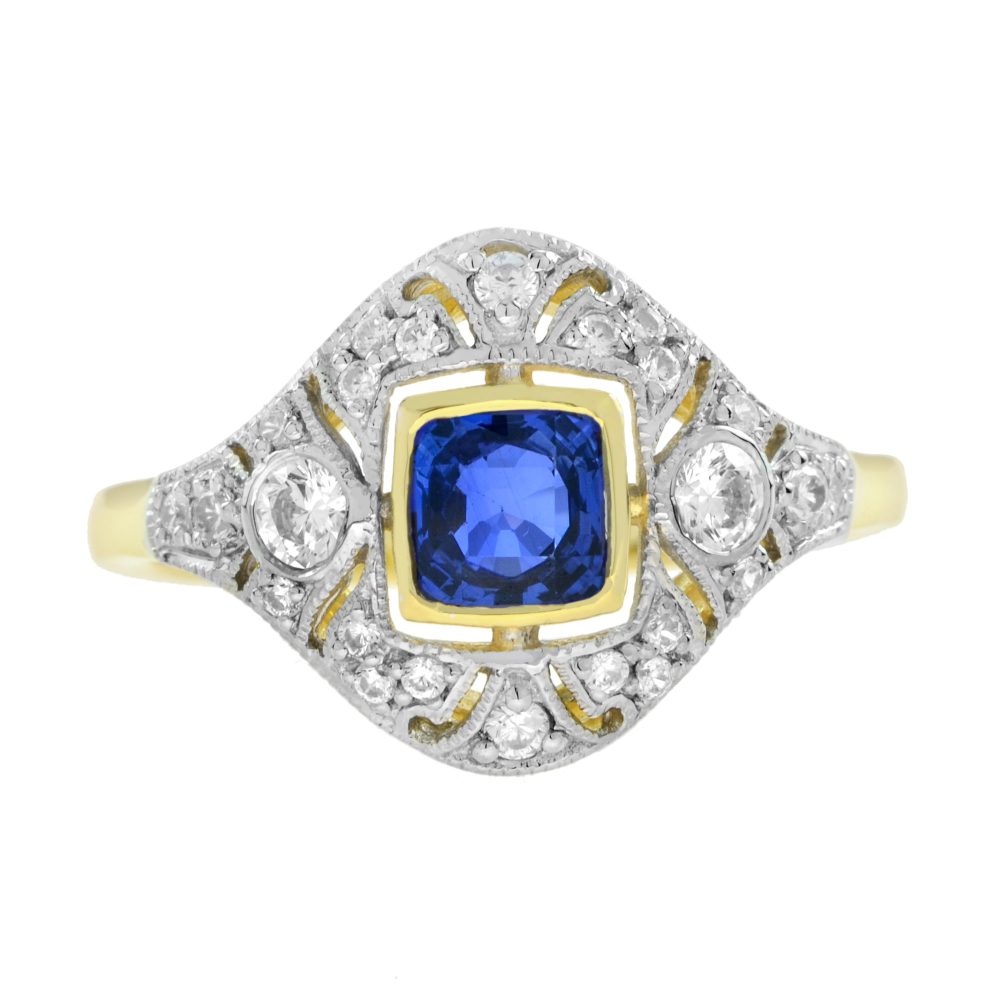
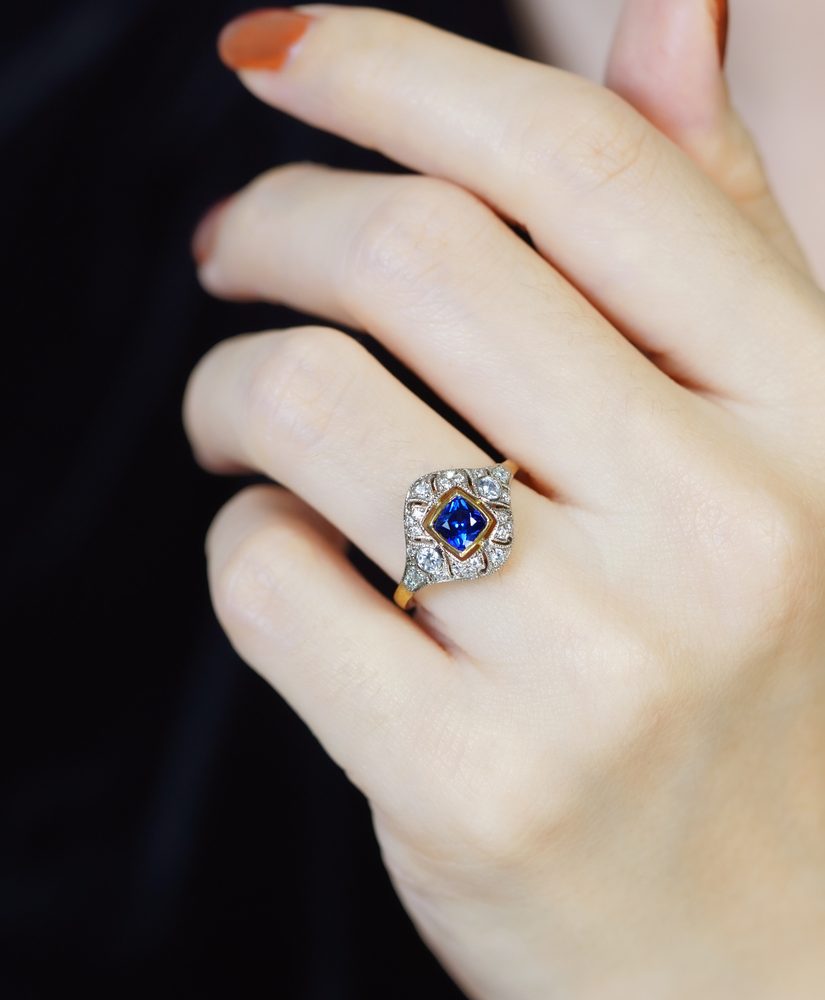
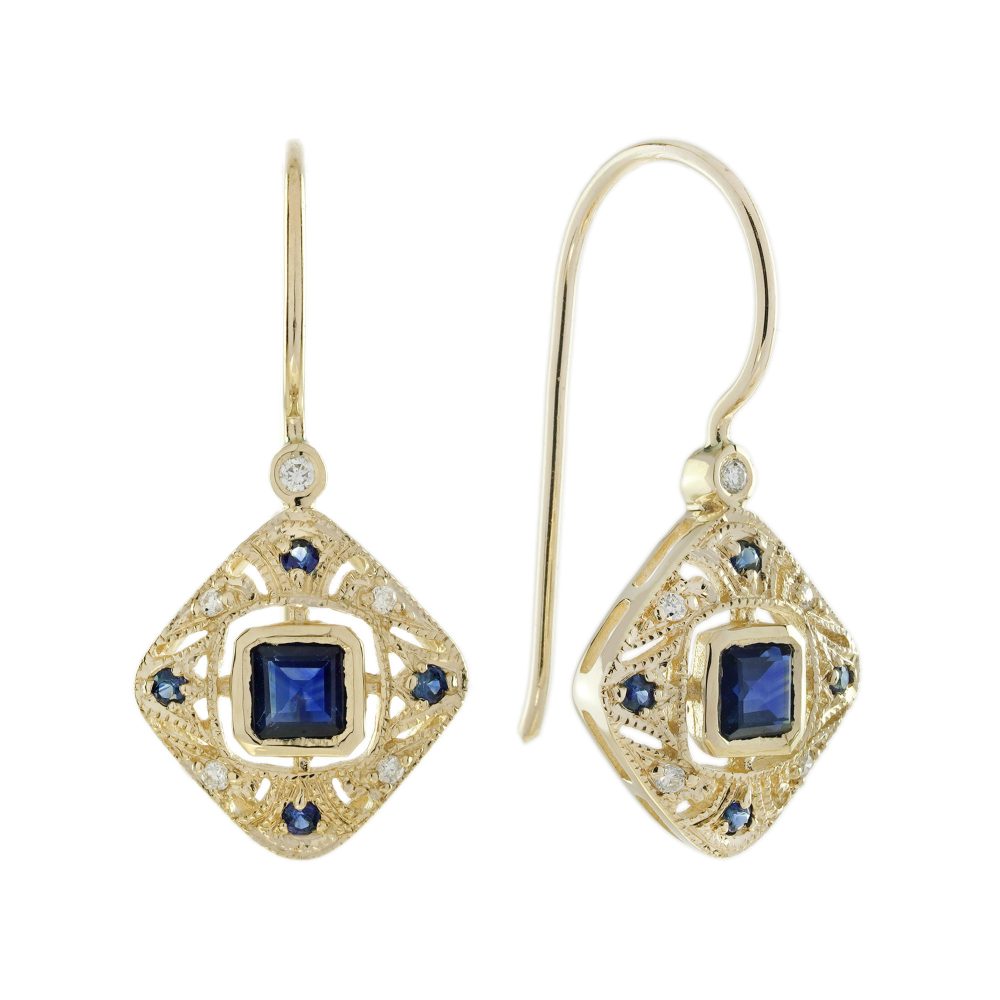
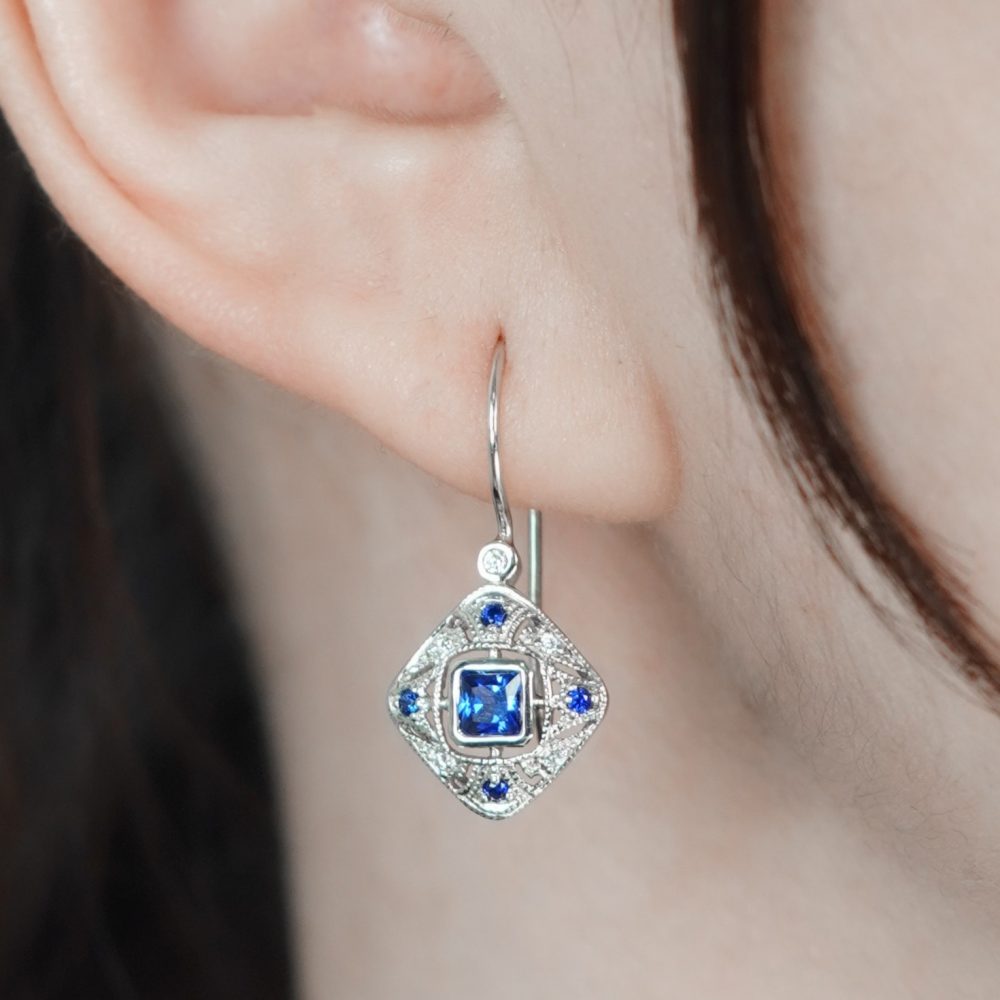


Ready to ship
Frequently Asked Questions About Gemstone Engagement Rings
Is sapphire durable enough for an engagement ring?
Yes. Sapphire is corundum, rated 9 on the Mohs hardness scale with excellent toughness and no cleavage. GIA describes this combination as making corundum “a great choice for rings and other mountings subject to daily wear,” placing sapphire among the most durable colored stones available for an engagement ring.
Why is emerald considered fragile if its Mohs rating is fairly high?
Mohs hardness measures resistance to scratching, not breaking. Emerald rates 7.5–8, respectable on that scale, but GIA states that emerald is “more brittle than a gem like corundum” because of its characteristic jardin inclusions, making it vulnerable to chipping even during careless daily wear. A protective setting, such as a bezel or halo, addresses this brittleness directly.
Do sapphire and ruby need to be heat treated?
Most sapphire and ruby on the market today is heat treated, and GIA describes heat treatment in corundum as durable and permanent under normal handling conditions. Untreated stones exist and typically command a premium, but a heat-treated sapphire or ruby, properly disclosed, wears exactly as durably as an untreated one.
Is an oiled emerald a lower-quality stone?
Not necessarily. Oiling and resin fracture-filling is standard trade practice for emerald, and GIA notes the amount of filler present can range from insignificant to major. A lightly filled emerald is close in character to an untreated stone; a heavily filled one calls for more conservative long-term care. The treatment itself is not a defect, but it should always be disclosed.
Which setting is best for a colored stone engagement ring?
It depends on the stone. Sapphire and ruby’s high hardness and toughness suit an open prong or any other setting style with little added risk. Emerald’s brittleness generally calls for a bezel or halo that shields the stone’s girdle and corners from everyday impact, rather than a fully open prong.