
Blog, Style & History
What Is Milgrain? The Detail That Defines Vintage-Inspired Jewelry

Key Takeaways: What Is Milgrain?
- What is milgrain, in one line: a fine beaded or dotted edge rolled or hand-worked along the border of a metal setting, most often along a band, bezel, or filigree panel.
- It is a finishing detail, not a structural one — milgrain does not hold a stone in place by itself, but it is the texture most people associate with vintage-inspired and antique-style jewelry.
- Milgrain spans multiple eras and styles, appearing in Edwardian filigree, Art Deco geometric settings, and today’s vintage-inspired designs alike.
- It can be hand-cut with a toothed wheel or rolled with a milling tool, and the two methods leave a slightly different, identifiable texture.
- We hand-finish new pieces with milgrain detailing in solid gold and platinum — inspired by the vintage look, never sold as antique.
What Is Milgrain? The Short Answer
What is milgrain? It is a decorative edge finish made of a continuous row of tiny beads or dots, worked into the edge of a metal setting with either a hand graver or a small toothed rolling wheel. The texture catches light along the edge of a ring, pendant, or earring, giving the metal a soft, slightly worn, handmade appearance that reads instantly as vintage-inspired, even on a brand-new piece. Milgrain is purely decorative — it does not secure a stone or add structural strength — but it is one of the single most recognizable details that defines the look of vintage-style jewelry.
Milgrain at a Glance
| Question | Short answer |
|---|---|
| What is it made of? | A row of tiny raised or impressed beads along a metal edge |
| Is it structural? | No, purely decorative, does not hold stones in place |
| How is it made? | Hand-cut with a graver, or rolled with a milling wheel |
| Where does it appear? | Band edges, bezels, filigree panels, halo settings |
| Which eras used it? | Edwardian, Art Deco, and today’s vintage-inspired pieces |
| Can it wear down? | Yes, over decades of wear, especially on softer gold alloys |
How Is Milgrain Actually Made?
Traditional hand-cut milgrain is made with a small graver that has a row of teeth along its edge. The jeweler rolls this tool steadily along the metal’s edge, and each tooth presses a tiny bead into the surface, one after another, forming a continuous beaded line. This is slow, careful work, since an uneven pass leaves a gap or a crushed, uneven bead in the row.
Modern production more often uses a milling wheel on a rotary tool, which rolls the beaded pattern into the metal faster and more uniformly than most hand work. What is milgrain made with, in either case, comes down to pressing a repeating bead pattern into soft, workable metal, usually before the piece is fully hardened by polishing and final shaping.
A trained eye can often tell hand-cut milgrain from rolled milgrain: hand work tends to show tiny natural variations in bead spacing and depth, while a rolled pattern is nearly perfectly even, since the wheel presses every bead with identical pressure.
Both methods require the metal to be in a workable state before the beading is added, which is why milgrain is usually cut early in a piece’s construction, before final polishing and stone-setting lock the design in place. Adding milgrain after a piece is fully finished is possible but considerably harder, since the surrounding detail and any set stones have to be protected while the edge is worked.
Where Does Milgrain Typically Appear on a Piece?
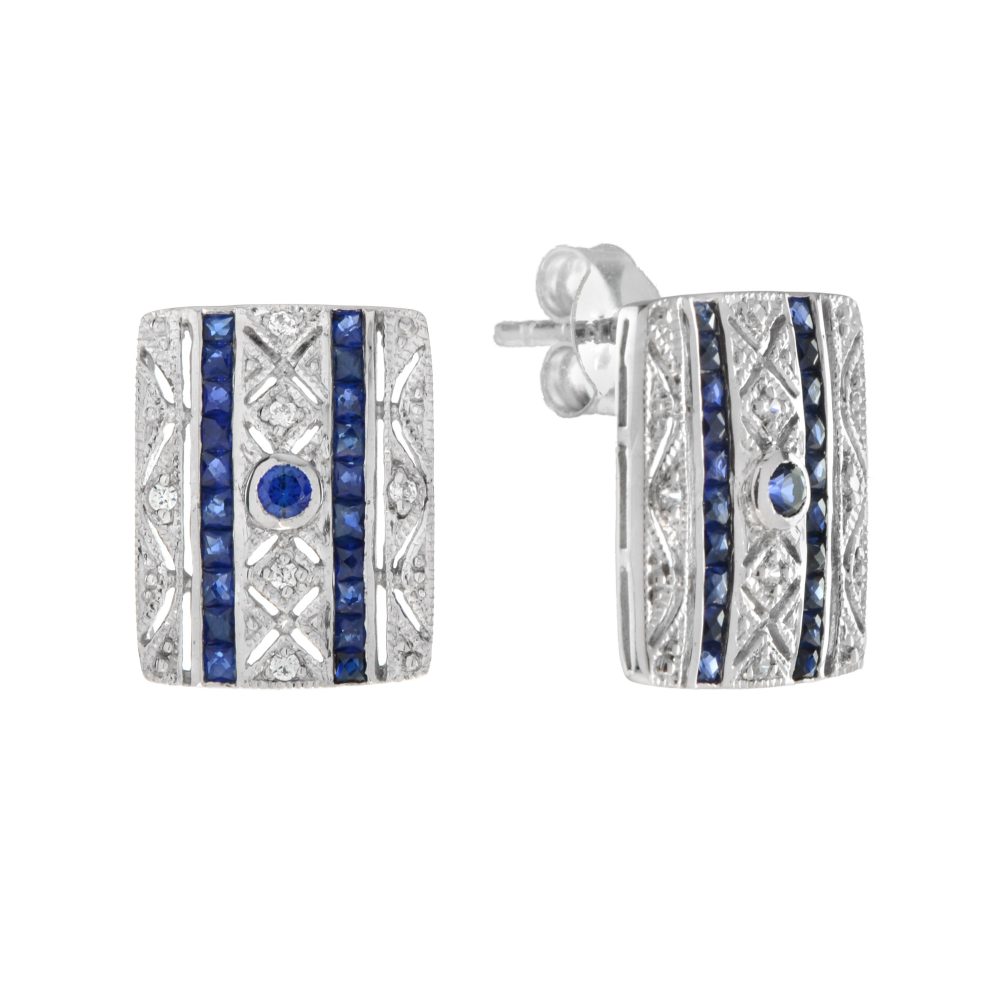
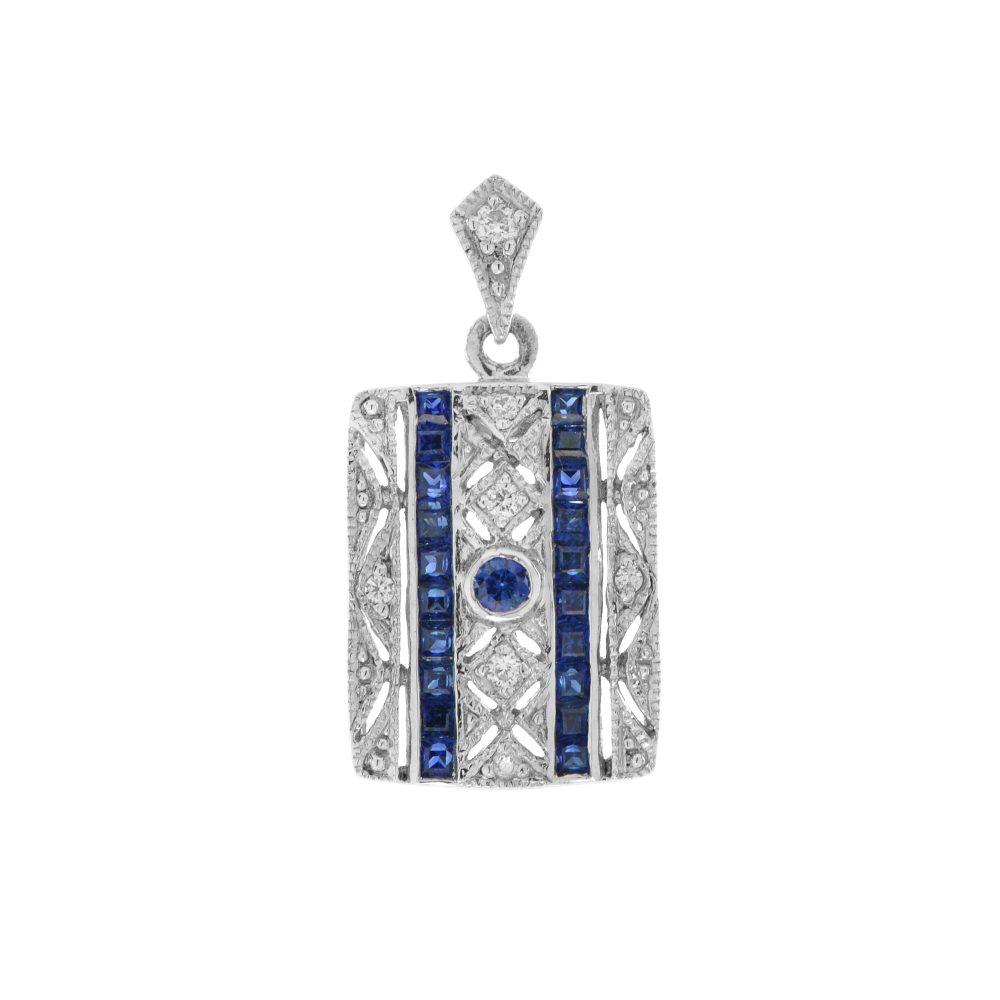
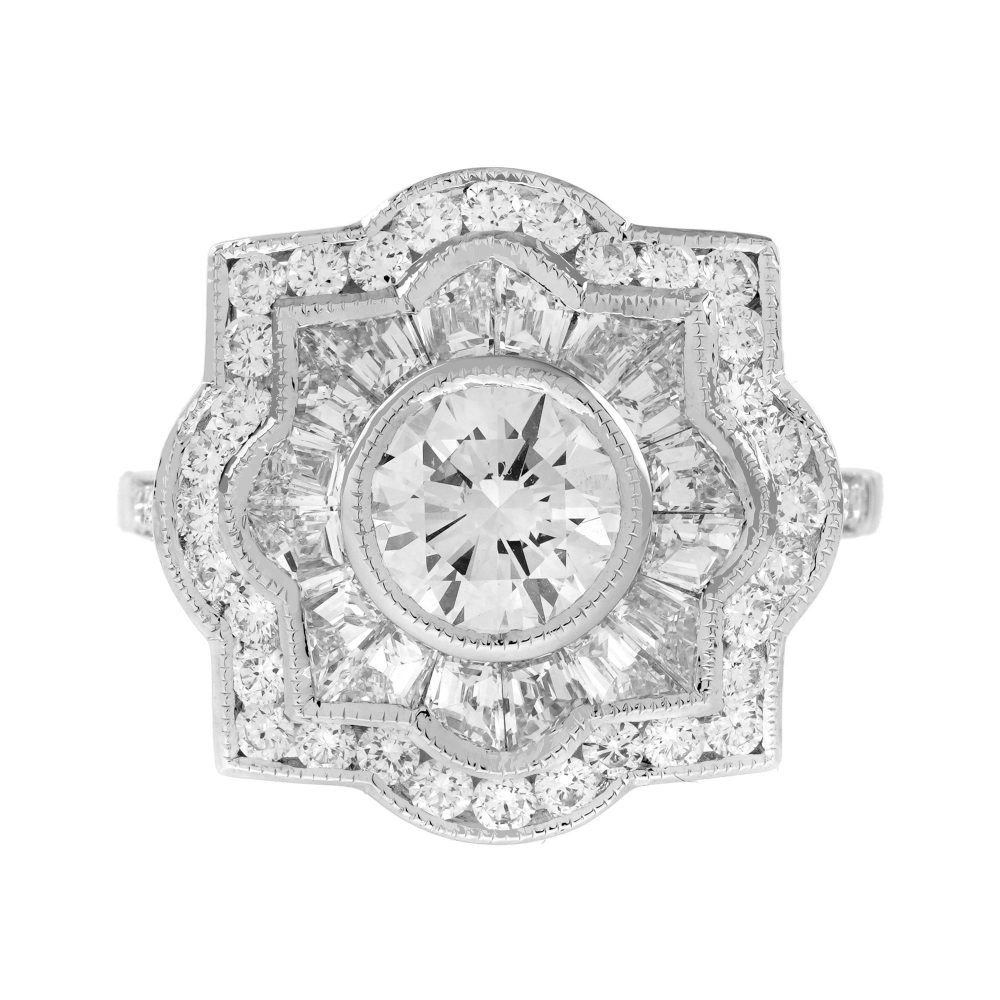
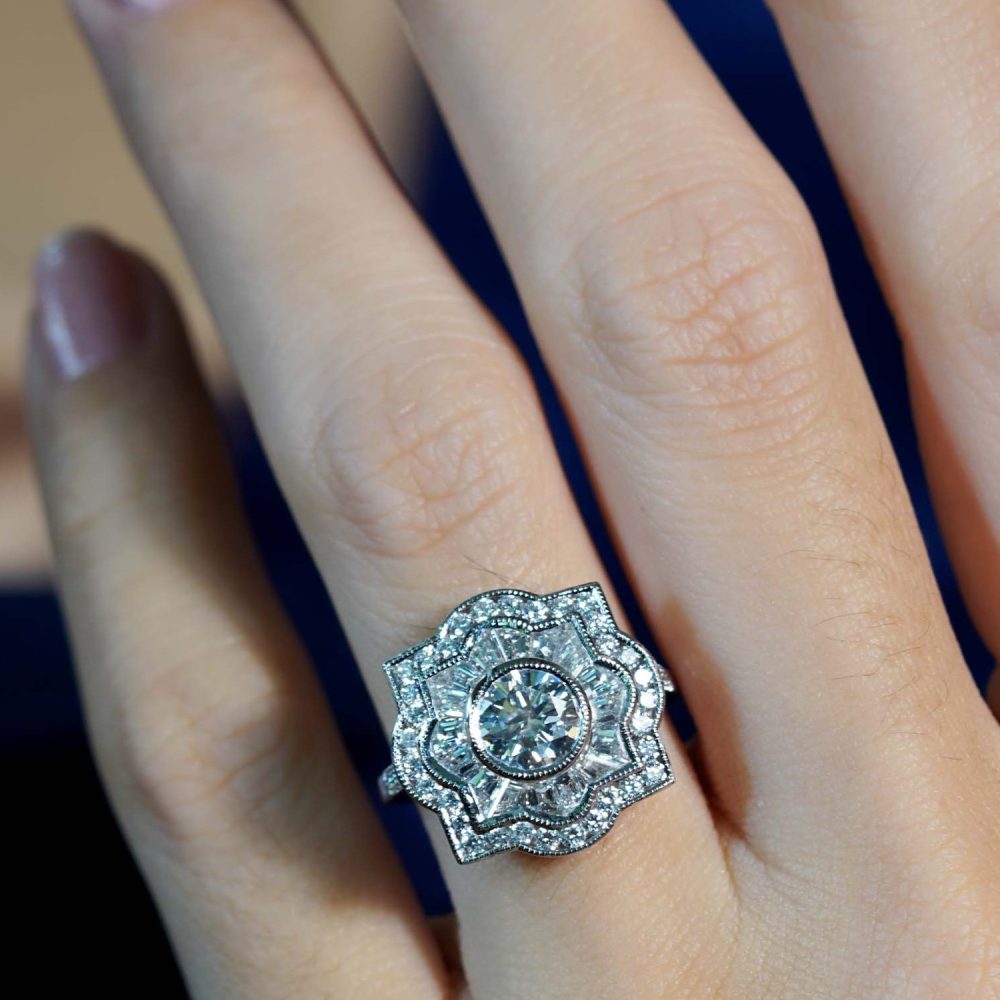
Milgrain most commonly borders a bezel setting, tracing the edge where the metal meets the stone, which both frames the stone and softens the transition between metal and gem. It also appears along the shoulders and shank of a ring, around a halo of small accent stones, and bordering the open sections of a filigree panel, where the beaded edge adds texture to what would otherwise be a plain cut line.
Because it sits right at a visible edge, milgrain is one of the first details a jeweler’s eye goes to when judging whether a ring is genuinely vintage, a faithful vintage-inspired reproduction, or a plainer modern design with no period detailing at all.
Milgrain also pairs naturally with other vintage-style details rather than standing alone: a halo of accent stones bordered in milgrain, or a filigree panel edged the same way, reads as more cohesively vintage-inspired than a single isolated milgrain line on an otherwise plain band, since the detail echoes across the whole design rather than appearing in just one spot.
Is Milgrain the Same as Filigree, or “Millegrain”?
No, though the three terms get mixed up often. Filigree is a wirework technique that builds an open, lace-like pattern from twisted wire; milgrain is a beaded edge finish applied to a solid metal border. A piece can have filigree without milgrain, milgrain without filigree, or both together — they are separate decorative choices, not two names for the same thing.
“Millegrain” (with two L’s, from the French for “thousand grains”) is simply the more formal spelling of the same technique described in this article; both spellings refer to the identical beaded-edge detail, and jewelers and retailers use them interchangeably.
Thinking about milgrain vs filigree side by side is a useful way to remember the difference: filigree is about the overall open structure of a piece, built from wire, while milgrain is a small surface texture applied to an edge that may sit on a solid setting, a filigree panel, or anything in between. Knowing which term describes which feature helps when reading a jeweler’s description or a listing, since the two words are sometimes used loosely as if they covered the same ground.
Related: Our Guarantee
Why Is Milgrain So Associated with Vintage-Style Jewelry?
Milgrain reached its widest popularity in Edwardian and Art Deco platinum jewelry in the early 20th century, when jewelers used it to add richness and texture to settings that otherwise relied on fine, delicate metalwork. The beaded edge caught light in a way a plain cut edge could not, which suited both eras’ taste for intricate, finely worked detail.
What is milgrain’s lasting appeal comes down to that same light-catching texture: even on a brand-new ring, milgrain signals “this detail was considered,” in a way a plain polished edge does not, which is why the technique remains the single most common shorthand for “vintage-inspired” in modern jewelry design, decades after its original heyday.
Does Milgrain Wear Down or Need Maintenance?
Yes, gradually. Milgrain sits right at the surface of the metal, so decades of everyday contact, especially against another ring, a watch, or rough fabric, can slowly soften or flatten the beaded texture. This happens faster in softer gold alloys than in harder platinum, which holds its detail longer under the same wear.
Worn milgrain can usually be re-cut or re-rolled by a jeweler experienced with the technique, restoring the texture without needing to rebuild the whole setting. It is worth mentioning milgrain specifically when having an older vintage-inspired piece cleaned or resized, since a less careful polish can unintentionally smooth away the beaded detail along with the intended surface shine.
A gentler at-home approach — a soft brush and mild soap rather than an abrasive cloth — helps preserve the texture between professional cleanings, since repeated hard rubbing is one of the more common everyday causes of milgrain flattening faster than it otherwise would.
How Can You Tell Quality Milgrain from a Weak Imitation?
Quality milgrain shows crisp, well-defined beads with consistent spacing and enough depth to catch light clearly from a normal viewing distance. A weak or rushed imitation often looks shallow, almost printed onto the surface rather than pressed into it, with beads that blur together instead of standing apart as distinct, rounded shapes.
Depth matters because it determines how the detail ages: deep, well-formed milgrain has more material to wear down before it disappears, while shallow milgrain can flatten and lose its texture within just a few years of regular wear, even with reasonable care.
Does Lilly M. Use Milgrain Detailing?
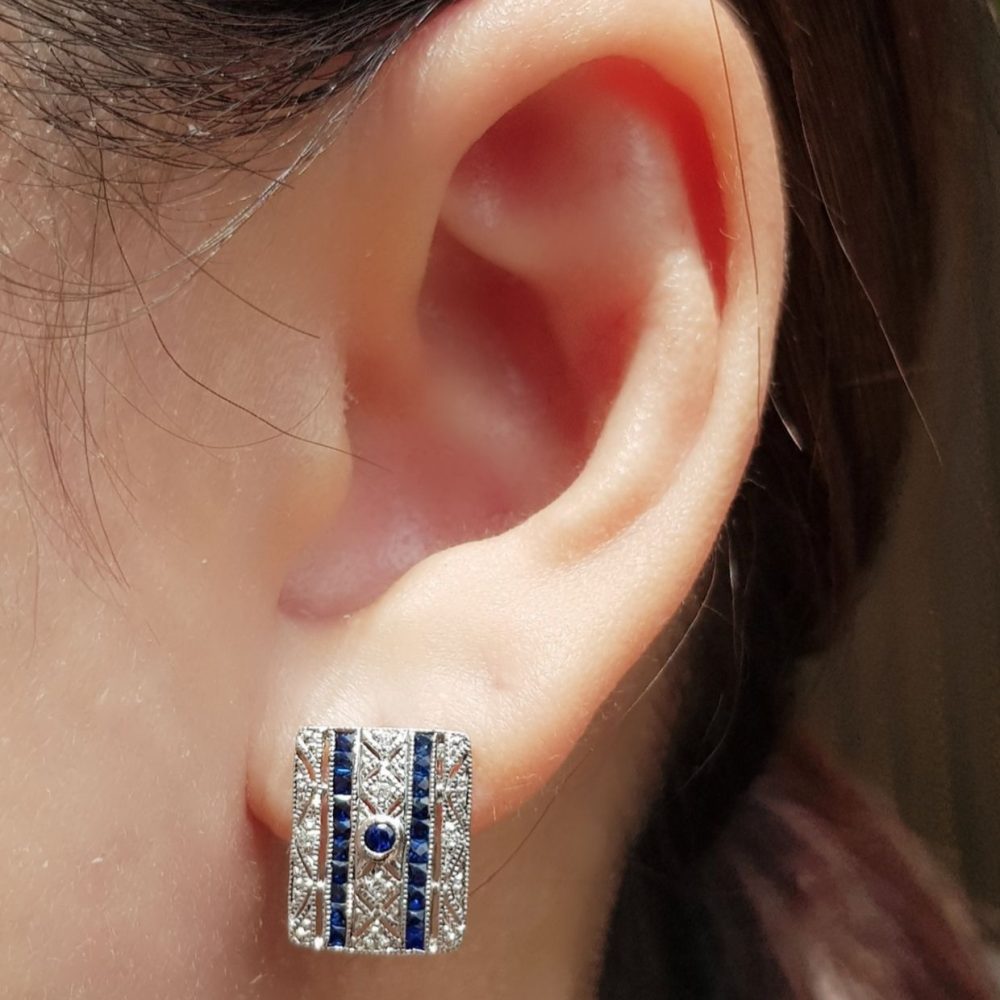
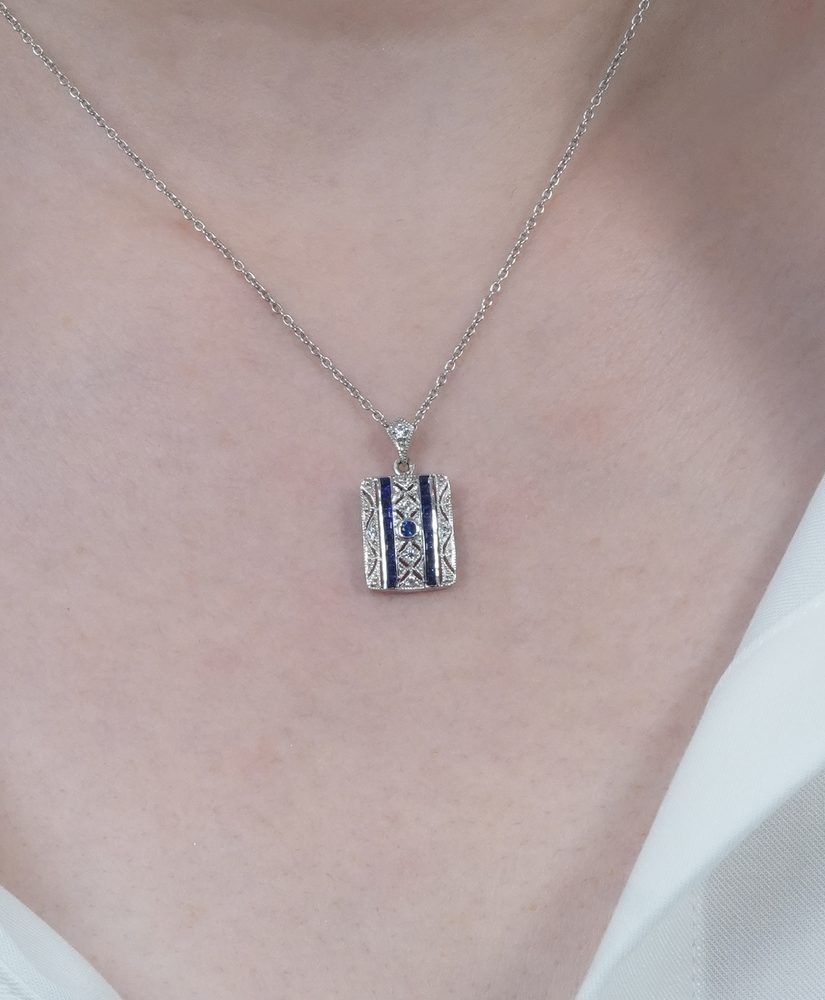
Yes. We hand-finish new pieces with milgrain detailing in solid gold and platinum, drawing on the same beaded-edge technique that defined Edwardian and Art Deco jewelry. Every piece is newly made at our bench and is never represented as a period original or antique — it is new work that honors a historical detail honestly.
Understanding what is milgrain and how it is made helps when evaluating a vintage-inspired piece before buying: look for crisp, evenly spaced beads with real depth, and ask whether the detailing is hand-cut or rolled, since both are legitimate but feel different under close inspection.
Related: Bespoke & Personalization
What Should You Remember About Milgrain?
What is milgrain, in short: a fine beaded edge, hand-cut or rolled into metal, that is purely decorative but is the single detail most associated with vintage-inspired jewelry. It appears along bezels, shanks, halos, and filigree panels across Edwardian, Art Deco, and modern vintage-style design, and it can wear down over decades, though it is usually repairable by a jeweler experienced with the technique.
If you remember one shortcut: look closely at the beads themselves, checking for crisp, even, well-defined texture rather than a shallow or blurred impression, and that quick check tells you most of what you need to know about a setting’s quality. We hand-finish new milgrain detailing in solid gold and platinum, and are always upfront that the detail draws on history even though the piece itself was made recently, by us. Whether a piece is hand-cut or rolled, platinum or gold, what is milgrain comes down to the same small, light-catching row of beads that has quietly defined “vintage-inspired” for more than a century.
Sources: GIA — Jewelry History and Techniques Reference · The Metropolitan Museum of Art — Decorative Arts Reference
Stud Earrings
Frequently Asked Questions: What Is Milgrain?
What is milgrain, in the simplest terms?
It is a fine beaded or dotted edge, hand-cut or rolled into metal, most often along the border of a bezel, band, or filigree panel. It is purely decorative and does not hold a stone in place.
Is “milgrain” spelled differently from “millegrain”?
Yes, but they mean the same thing. “Millegrain,” with two L’s, is the more formal spelling, from the French for “thousand grains.” Both spellings describe the identical beaded-edge technique, and the shorter spelling is more common in everyday use.
Does milgrain wear down over time?
Yes, gradually, especially on softer gold alloys under decades of regular contact with other jewelry or rough fabric. Platinum milgrain holds its detail longer. Worn milgrain can usually be re-cut by a jeweler experienced with the technique.
Is milgrain the same as filigree?
No. Filigree is a wirework technique that builds open, lace-like patterns from twisted wire. Milgrain is a beaded edge finish on solid metal. A piece can have one, both, or neither — they are separate decorative choices.
Does Lilly M. use milgrain detailing?
Yes. We hand-finish new pieces with milgrain detailing in solid gold and platinum. Our jewelry is never represented as a period original or antique — it is new work that honors a historical finishing technique.